

P0234 on 2024-2025 Chevrolet Trax: Engine Overboost Causes and Fixes
On a 2024-2025 Trax, code P0234 indicates the turbocharger is creating excessive boost. The most likely causes are a faulty boost control solenoid or a binding turbocharger wastegate. Since this vehicle is new, diagnosis and repair should be covered under the factory powertrain warranty. This issue is also common on its platform mates: the Buick Encore GX, Buick Envista, and Chevy Trailblazer.
- P0234 means your Trax's engine is experiencing dangerously high turbo boost pressure.
- Do not attempt a DIY repair. The vehicle is under warranty, and the issue should be diagnosed and fixed by a Chevrolet dealer for free.
- The most likely causes are a sticking wastegate or a bad control solenoid, issues which are documented in GM service bulletins for related problems on this exact vehicle.
- Drive the vehicle as little as possible and avoid heavy acceleration until it can be serviced to prevent potential engine damage.
What's Unique About the 2024-2025 Chevrolet Trax
The 2024-2025 Trax uses a relatively new 1.2L 3-cylinder turbocharged engine (RPO: LBP). While P0234 is a generic code, on this platform, it's often linked to the same components causing the more frequently discussed P0299 (Underboost) code. GM has issued Technical Service Bulletins (TSBs) for the 2024 Trax and its platform mates that point to a binding turbocharger wastegate (TSB #PIP6058A) and restricted wastegate vacuum lines (TSB #PIP5978) as causes for boost issues. A wastegate that sticks closed will cause an overboost (P0234), making these TSBs highly relevant. In extremely cold weather (below 0°F/-18°C), TSB #21-NA-293 notes that moisture can freeze in the charge air cooler (CAC), causing erratic boost and setting P0234.
Symptoms You May Notice
- Check Engine Light illuminated
- Significant loss of engine power (limp mode)
- Sluggish or erratic acceleration, especially on the highway
- Loud whooshing or whining noises from the engine bay
- Possible engine knocking or pinging sounds under load.
- Replacing the turbocharger immediately without first testing the external control components like the solenoid and vacuum lines. The issue is often a cheaper, external part rather than the turbo itself.
- Failing to perform the 'Intake System Learned Values Reset' with a GDS2 scan tool after replacing the turbocharger or wastegate solenoid, which can cause the P0234 code to reappear.
Most Likely Causes
- Sticking or Binding Turbocharger Wastegate 🔴 High Probability A binding wastegate is a known issue on this platform, as identified in GM TSB #PIP6058A for the related P0299 code. The wastegate can stick closed, preventing it from bypassing exhaust gases, which causes the turbo to spin too fast and create excessive boost. This is a common cause for both P0234 and P0299 on the 1.2L engine.
How to confirm: With the engine cool, a technician will attempt to move the wastegate actuator arm by hand or with a vacuum pump. It should move smoothly through its full range of motion without sticking or binding.
Typical fix: If the wastegate is integral to the turbocharger and is binding, the entire turbocharger assembly must be replaced. This repair is covered under the vehicle's powertrain warranty. For some 2020 models with the 1.2L engine, GM issued Special Coverage N232407740, extending the turbo warranty to 15 years/150,000 miles for this failure.
Est. part cost: $0 (Warranty) - Faulty Turbocharger Wastegate Regulator Solenoid Valve 🟡 Medium Probability This solenoid is a common failure point on most modern turbo engines. On similar GM engines, it's known to fail due to internal moisture freezing in cold climates, causing it to stick (TSB #PIP5812C). This prevents it from correctly commanding the wastegate.
How to confirm: A technician can use a bidirectional scan tool to command the solenoid on and off, listening for an audible click and checking for a change in vacuum/pressure at the output port. The solenoid can also be removed and bench-tested. Specific vacuum tests are outlined in service literature.
Typical fix: Replace the turbocharger wastegate regulator solenoid valve. This is an external part that is relatively simple to replace.
Est. part cost: $35-$100 - Restricted, Leaking, or Disconnected Wastegate Control Hose 🟡 Medium Probability GM TSB #PIP5978 specifically mentions the vacuum line to the wastegate solenoid being restricted from the factory on some 2024 models. A crack, leak, or blockage in this hose will prevent the solenoid from properly controlling the wastegate actuator, potentially causing it to remain closed.
How to confirm: Visually inspect the vacuum lines running from the intake manifold to the control solenoid and from the solenoid to the wastegate actuator. Check for cracks, kinks, loose fittings, or blockages. A smoke test can be used to find small leaks.
Typical fix: Repair or replace the damaged or restricted vacuum hose.
Est. part cost: $5-$25 - Faulty Boost Pressure Sensor (MAP Sensor) ⚪ Low Probability While less common than mechanical control failures, a faulty sensor can send erroneously high pressure readings to the ECM, falsely triggering the P0234 code. A user on a Reddit forum reported having both P0234 and P2227 (BARO sensor code) simultaneously, pointing to a potential sensor issue.
How to confirm: With the key on and engine off, the boost/MAP sensor reading should be equal to the barometric pressure (BARO) sensor reading, within 1-10 kPa of each other. A technician can also compare its live data readings to a known-good manual gauge.
Typical fix: Replace the Manifold Absolute Pressure (MAP) sensor.
Est. part cost: $30-$80
Rare But Worth Checking
- Improper ECM Calibration After Component Replacement:
Diagnosis Steps
- Verify the code with an OBD-II scanner. Note any other active or pending codes, especially P0299 or P2227.
- Contact a Chevrolet dealership, as the vehicle is under warranty. The following steps describe a typical professional diagnosis:
- Perform a thorough visual inspection of the turbocharger system, focusing on the vacuum lines to the wastegate actuator and control solenoid. Check for cracks, disconnections, or restrictions as noted in TSB #PIP5978.
- With the engine cool, manually check the movement of the wastegate actuator arm to ensure it moves freely without binding, as suggested by TSB #PIP6058A.
- Use a bidirectional scan tool to monitor live data. Compare 'Desired Boost Pressure' with 'Actual Boost Pressure' (MAP sensor reading) while driving under load. The difference should be less than 14 kPa (2.0 PSI).
- Command the wastegate control solenoid on and off with the scan tool to verify its operation.
- If the solenoid and linkage appear to be working, test the MAP sensor's accuracy against a manual pressure gauge.
- If any components like the turbocharger or solenoid are replaced, perform the 'Intake System Learned Values Reset' as per TSB #PIP5892B to prevent the code from returning.
Parts You'll Likely Need
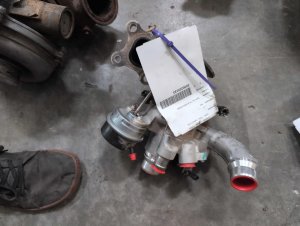
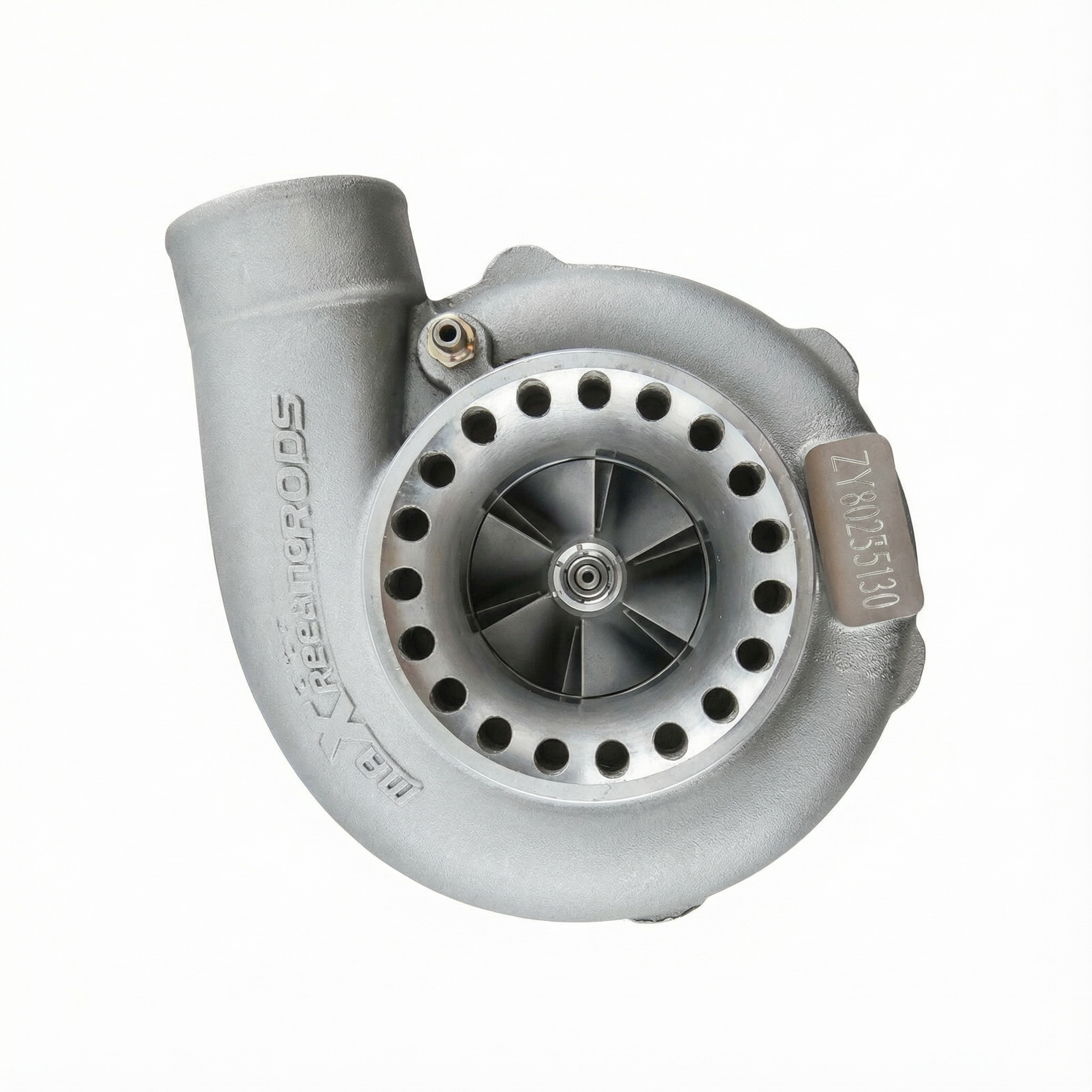
- Turbocharger Assembly — If the internal wastegate is binding, which is a known issue on this platform, the entire turbocharger must be replaced. This should be covered under the factory powertrain warranty.
Trusted brands: ACDelco (OEM)
OEM price range: $1000-$1500
Aftermarket price range: $600-$900 - Turbocharger Wastegate Regulator Solenoid Valve
(OEM #55599331)— This solenoid is a common failure point for boost control issues and is a likely cause if the wastegate itself moves freely. It is relatively inexpensive and easy to access.
Trusted brands: ACDelco (OEM), Dorman
OEM price range: $35-$60
Aftermarket price range: $25-$50
Related Codes That Often Appear With This One
- P0299 — This code for 'Turbocharger Underboost' can appear with P0234 if the root cause is an intermittently sticking wastegate or faulty solenoid that sometimes fails closed (overboost) and sometimes fails open (underboost).
- P2227 — This code relates to the Barometric Pressure (BARO) sensor. An issue with the BARO sensor can cause the ECM to miscalculate desired boost levels, potentially leading to an overboost condition. A Trax owner on a forum reported having both codes appear together.
Technical Service Bulletins (TSBs) & Recalls
- A242435780: Emission recall to reprogram the ECM for improper ignition timing after an auto-stop event, which can cause engine knock.
- PIP6058A: Addresses P0299 (Underboost) caused by a binding turbocharger wastegate, a component that could also cause P0234 if it sticks closed.
- PIP5978: Addresses P0299 (Underboost) caused by a restricted vacuum line to the wastegate solenoid, which could also cause P0234.
- PIP5892B: States that after replacing a turbocharger or wastegate solenoid, an 'Intake System Learned Values Reset' must be performed, or a false P0234 code may be set.
- 21-NA-293: Addresses poor performance and codes P0234/P0299 in extreme cold due to charge air cooler (CAC) icing. The fix is an ECM recalibration.
Platform-Specific Known Issues
- GM has issued TSBs #PIP6058A and #PIP5978 for the 2024 Trax which address boost control problems (binding wastegate and restricted vacuum lines) that can cause P0234.
- A class-action lawsuit has been filed concerning premature and catastrophic internal failures of the 1.2L LBP engine. The suit alleges a defect causes connecting rods to break, leading to engine seizure and potential fire risk, with failures reported at very low mileage.
Mechanic-Grade Diagnostic Values
- Vacuum at Wastegate Solenoid Actuator Supply Port (Engine at Idle) — expected: Less than -17 kPa (-0.17 bar, 5 in Hg). Failure: If the vacuum is -17 kPa or greater, the wastegate regulator solenoid valve may be faulty.
- Vacuum at Wastegate Solenoid Actuator Supply Port (WOT for 2 seconds) — expected: Greater than -50 kPa (-0.5 bar, 15 in Hg). Failure: If the vacuum is less than -50 kPa, the wastegate regulator solenoid valve may be faulty.
- Vacuum Supply from Vacuum Pump (Engine at Idle) — expected: -50 kPa (-0.5 bar, 15 in Hg). Failure: If desired vacuum cannot be achieved or does not hold steady, the vacuum pump or its hoses may be faulty.
- Desired vs. Actual Boost Pressure Differential (Scan Tool) — expected: Less than 14 kPa (2.0 PSI). Failure: A difference greater than 14 kPa (2.0 PSI) during a GDS2 Turbocharger Boost Control Test points to a system fault.
- MAP Sensor vs. BARO Sensor (Key On, Engine Off) — expected: Readings should be within 1-10 kPa of each other.. Failure: A significant difference suggests a faulty MAP or BARO sensor.
Hidden / Shadow Codes Worth Checking
- P0234 5A: This is a GM-specific symptom byte indicating a 'Signal Plausibility Failure'. It means the ECM has detected a boost pressure reading that is illogical for the current operating conditions (e.g., high boost at idle), pointing more toward a sensor or control system fault rather than a purely mechanical overboost. (see via GM GDS2 (Global Diagnostic System 2) or a high-end professional scan tool with manufacturer-specific data capabilities.)
Scan Tool Commands That Help
- GDS2 (GM): Intake System Learned Values Reset — This is mandatory after replacing the turbocharger or wastegate solenoid. Failure to perform this reset can cause the ECM to use old adaptive values, resulting in an immediate P0234 code on the new part, as noted in TSB PIP5892B.
- GDS2 (GM): Turbocharger Boost Control Test — This function allows a technician to graph desired vs. actual boost pressure while driving to confirm if an overboost condition is actually occurring and by how much.
- GDS2 (GM): Solenoid Valve Control / Wastegate Actuator Test — This bidirectional test allows the technician to command the wastegate control solenoid on and off to verify its electrical function (listening for a click) and observe the corresponding change in vacuum or movement of the actuator rod.
Wiring & Ground Locations
- X125 Connector — This is the main connector between the engine wiring harness and the body wiring harness, located on the driver's side in front of the tire.. Damage to this harness from an accident or corrosion can disrupt signals between the ECM and the turbo control components. A Reddit user reported significant damage to this connector on a 2024 Trax, which required extensive wire repair. The MAP sensor, wastegate solenoid, and other critical engine sensors run through this connector.
- ECM/PCM Ground — On similar GM engine platforms, a primary ECM ground is located on the engine block, often near the top rear of the engine. Another key ground point is from the battery negative terminal to the chassis near the radiator support.. A poor ground connection for the ECM can cause erratic sensor readings and incorrect actuator commands. If the ECM's ground reference is unstable, it may misinterpret the MAP sensor voltage, leading to false overboost or underboost codes.
OEM Part Supersession History
55493530→12694431— Part number consolidation or minor design update.55493483→12713907— Part number consolidation or minor design update for the MAP sensor.
Diagnostic Flowchart
Other Known Issues on This Vehicle
Issues unrelated to this code that are worth knowing about as an owner of this generation:
- Catastrophic Engine Failure 🔴 High — Reported at low mileage (e.g., ~11,000 miles), leading to a class-action lawsuit. Failures involve broken connecting rods piercing the engine block. (Ref: Class-action lawsuit filed (Cook et al. v. General Motors LLC).)
- Electrical System Malfunctions 🟠 Medium — Widespread complaints of blank instrument panel/infotainment screens, flickering headlights, and intermittent dead batteries. (Ref: Recall NHTSA #23V744000 issued for the blank screen issue, requiring a software update to the Virtual Cockpit Unit (VCU).)
- Active Safety System Defects 🔴 High — Complaints of erratic Lane Keep Assist behavior and system inoperability have prompted a class-action investigation. (Ref: TSBs PIC6552D and PIC6587 acknowledge modules can become inoperable and require resets.)
- Excessive Oil Consumption or Leaks 🟠 Medium — Owners have reported oil levels dropping faster than expected and visible leaks around gaskets, which can lead to engine damage if not monitored.
- Rough or Jerky Transmission Shifting 🟡 Low — A common owner complaint is that the transmission can feel sluggish or shift roughly, particularly during acceleration.
Used vs. New Parts: Buying Guide for This Vehicle
When a used part is the smart pick: For a vehicle as new as the 2024-2025 Trax, using used parts for a powertrain issue is strongly discouraged. The vehicle is under the factory 5-year/60,000-mile powertrain warranty, meaning all diagnosis and repairs for a P0234 code should be performed by a Chevrolet dealer at no cost to the owner. Using used parts would be financially unwise and could void the warranty.
What to inspect on the donor part:
- Not applicable due to warranty coverage.
OEM-only on this vehicle (don't cheap out):
- Turbocharger Assembly
- Turbocharger Wastegate Regulator Solenoid Valve
- Manifold Absolute Pressure (MAP) Sensor
- Engine Control Module (ECM)
Aftermarket brands forum-validated for this vehicle:
- Given the vehicle's age and warranty status, there is insufficient data from forums or mechanics to validate any aftermarket brands as 'known good' for this specific application. Stick to OEM/ACDelco parts provided by the dealership.
Brands owners have reported issues with on this vehicle:
- Any aftermarket electronic sensors or turbo components should be avoided while the vehicle is under warranty to prevent compatibility issues and potential denial of warranty claims.
Real Owner Stories
Aggregated from forums and TSBs cited above. Mileages and costs reflect what owners reported in those sources.
2024 Chevrolet Trax 1.2L LBP — 11000 miles
Symptoms: The vehicle is part of a class-action lawsuit alleging catastrophic internal failure where connecting rods break, leading to engine seizure and potential fire risk.
What fixed it: The context indicates these failures are subject to legal action and involve premature engine failure rather than a simple sensor fix.
Source hint: vehicle_specific_issues section regarding class-action lawsuit
2020 Chevrolet Trax 1.2L — ~160000 miles
Symptoms: Owner reported getting codes P0234 and P2227 together on a high-mileage vehicle.
What fixed it: The discussion pointed toward the boost control solenoid and MAP/BARO sensors as the likely culprits.
Source hint: r/ChevyTrax - "Please positive thoughts!"
Chevrolet Cruze (GM Turbo Platform)
Symptoms: The car hesitates to accelerate and triggers an overboost code.
What fixed it: A mechanic's diagnosis confirmed a failed turbocharger.
Source hint: r/cruze - "Help! Getting a code(P0234) for “overboost” and car hesitates to accelerate."
Related OBD-II Codes
Frequently Asked Questions
Is the turbocharger replacement for a P0234 code covered under warranty on my 2024 Chevrolet Trax?
I heard there is a TSB for restricted vacuum lines on the 2024 Trax; could this cause an overboost code?
What should be done after replacing the wastegate solenoid to ensure the P0234 code doesn't return?
Can cold weather cause my Trax to trigger an overboost code?
My Trax is making a loud whooshing noise and lost power; is this related to P0234?
Does the 2024 Trax have any known issues with the wastegate sticking?
Helpful Videos

We Have This Part in Stock

The information in this article is provided for general reference and educational purposes only. Vehicle specifications, procedures, and part compatibility can vary by production date, trim level, and region. Always consult your vehicle's factory service manual and verify part numbers before purchasing or performing repairs. Safety-critical components such as airbags, seat belts, and braking systems should be installed by a qualified professional.
- Chevrolet Trax:
- 🎬 Helpful Videos
- 🛍️ Shop This Part
- What's Unique About the 2024-2025 Chevrolet Trax
- Symptoms You May Notice
- Most Likely Causes
- Rare But Worth Checking
- Diagnosis Steps
- Parts You'll Likely Need
- Related Codes That Often Appear With This One
- Technical Service Bulletins (TSBs) & Recalls
- Platform-Specific Known Issues
- Mechanic-Grade Diagnostic Values
- Hidden / Shadow Codes Worth Checking
- Scan Tool Commands That Help
- Wiring & Ground Locations
- OEM Part Supersession History
- Diagnostic Flowchart
- Other Known Issues on This Vehicle
- Used vs. New Parts: Buying Guide for This Vehicle
- Real Owner Stories
- 2024 Chevrolet Trax 1.2L LBP — 11000 miles
- 2020 Chevrolet Trax 1.2L — ~160000 miles
- Chevrolet Cruze (GM Turbo Platform)
- Related OBD-II Codes
- Frequently Asked Questions
- 🎟️ Get 5% Off