

P0234 on 2015-2022 Chevrolet Trax 1.4L Turbo: Engine Overboost Causes and Fixes
On a 2015-2022 Trax, P0234 almost always means the turbo is creating too much pressure due to a sticking wastegate control solenoid, especially in cold weather. This is a common, well-documented issue, and the solenoid is a relatively inexpensive part to replace, costing around $40-$100. This problem is shared with its platform mates: the Buick Encore, Chevy Sonic, and Chevy Cruze.
- P0234 on a 1.4L Trax is most often caused by a faulty Turbocharger Wastegate Regulator Solenoid Valve, not the turbo itself.
- This issue is especially common in cold weather due to moisture freezing inside the solenoid, a problem acknowledged by GM in service bulletins.
- Before considering an expensive turbo replacement, thoroughly inspect vacuum hoses and test the wastegate solenoid.
- Due to its low cost and high failure rate, replacing the solenoid ($40-$100) is a logical first step in the repair process.
- If the code appears with P0299 (Underboost), it points strongly to a component in the boost control system that is sticking or acting erratically.
What's Unique About the 2015-2022 Chevrolet Trax
The 1.4L turbo engine used in the Trax and its siblings (Buick Encore, Chevy Sonic/Cruze) is notorious for a specific failure that causes P0234. GM has issued technical service bulletins acknowledging that moisture and oil can get inside the turbo's wastegate control solenoid. In cold weather, this mixture can freeze, causing the valve to stick and leading to an overboost condition. This means that unlike on many other vehicles where P0234 might point to an expensive turbo failure, on the Trax, the cause is very often a cheap and simple-to-replace solenoid.
Generation note: The 2015-2022 range covers the first generation of the Chevrolet Trax. The 1.4L LUV engine (138 hp) was used through the 2020 model year. The 2021-2022 models use a similar but updated 1.4L LE2 engine (155 hp) with direct injection. The causes and fixes described here, particularly the sticking wastegate solenoid, are common to both engines within this platform.
Symptoms You May Notice
- Check Engine Light is illuminated
- Reduced engine power or acceleration (Limp Mode)
- Hesitation or erratic acceleration during acceleration
- Unusual hissing or whistling sounds from the engine bay
- Engine knocking or pinging sounds under boost (a sign of severe stress) 🎬 Watch: Understanding overboost symptoms and causes
- Replacing the entire turbocharger when only the inexpensive wastegate control solenoid was faulty.
- Replacing the MAP sensor without verifying its readings against a known-good gauge or checking for the more common mechanical faults first.
- Replacing the wastegate actuator when the control solenoid or its vacuum lines were the actual problem.
Most Likely Causes
- Sticking/Failed Turbocharger Wastegate Regulator Solenoid Valve 🔴 High Probability A known GM issue where oil/moisture contaminates the solenoid, causing it to freeze and stick in cold weather. TSBs #PIP5812C and #PIP5495 address this directly, noting it can cause both P0234 (overboost) and P0299 (underboost).
How to confirm: With the engine off, apply vacuum to the wastegate actuator port on the solenoid; it should hold vacuum. Command the solenoid on with a scan tool; it should release the vacuum. TSB PIP5812C provides a specific test: remove the valve, turn it upside down to drain any liquid, and blow low-pressure air (15-20 PSI) through the ports. If air doesn't pass correctly through port #2, or if hardened deposits are present, the valve is bad and must be replaced.
Typical fix: Replace the Turbocharger Wastegate Regulator Solenoid Valve. Cleaning is sometimes possible per the TSB, but replacement is recommended due to the low part cost and high likelihood of internal deposits.
Est. part cost: $40-$100 - Sticking Turbocharger Wastegate Actuator or Linkage 🟡 Medium Probability The wastegate arm is exposed to intense heat and the elements, which can cause rust and binding over time, preventing it from opening to release excess boost.
How to confirm: With the engine cool, disconnect the actuator rod from the wastegate arm on the turbo. Manually move the arm back and forth; it should move freely without binding. If it's stuck, the turbo needs repair or replacement. A scan tool can also be used to command the wastegate open and closed to visually check for movement.
Typical fix: Free up the sticking linkage if possible. If the actuator diaphragm is ruptured or the wastegate is internally seized, the turbocharger assembly often needs to be replaced.
Est. part cost: $500-$900 for a new turbocharger assembly - Cracked, Leaking, or Blocked Vacuum Hoses 🟡 Medium Probability
How to confirm: Visually inspect all small rubber hoses connected to the wastegate solenoid and actuator for cracks, brittleness, or loose connections. A torn hose leading to the wastegate was the confirmed fix for one owner. Use a smoke machine or vacuum pump to test for leaks.
Typical fix: Replace the damaged vacuum hose section(s).
Est. part cost: $10-$30 - Failed PCV Check Valve in Intake Manifold ⚪ Low Probability This is a well-documented failure on the 1.4L LUV/LE2 engine family. A non-return valve inside the intake manifold fails, allowing boost pressure to enter the crankcase. This pressurizes the crankcase and can rupture the PCV diaphragm in the valve cover, creating a massive vacuum leak that confuses the boost control system.
How to confirm: This is difficult to confirm without specific tests. A key symptom is a loud hissing or whistling from the valve cover at idle. Removing the oil cap while idling will reveal strong vacuum if the valve cover diaphragm is ruptured. The root cause is often a missing orange check valve nub inside the intake manifold port. 🎬 Watch: DIY intake manifold and valve cover fix
Typical fix: The intake manifold must be replaced, as the check valve is not serviced separately. Often, the valve cover must be replaced at the same time.
Est. part cost: $150-$300
Rare But Worth Checking
- Faulty Manifold Absolute Pressure (MAP) Sensor: The MAP sensor tells the ECM how much boost is being produced. If it sends an artificially low signal, the ECM may command too much boost, triggering P0234.
- Internal Turbocharger Failure: While the external control parts are far more likely to fail, a mechanical issue inside the turbo (like a seized bearing or damaged turbine) can cause erratic boost control, leading to both overboost (P0234) and underboost (P0299) codes.
- Ice in Charge Air Cooler (CAC): In extremely cold weather, moisture from the PCV system can freeze inside the charge air cooler, creating a restriction. This can trigger P0234 along with other codes. TSB 17-NA-221 and 22-NA-007 address this issue, recommending updated ECM calibrations and potentially a grille cover.
Diagnosis Steps
- Check for other stored DTCs to see if other codes provide clues (e.g., P0299, P2261, P2227).
- Visually inspect all vacuum lines connected to the turbocharger, wastegate actuator, and wastegate control solenoid. Look for cracks, kinks, or loose fittings. A user on a forum fixed their P0234 by repairing a torn vacuum hose.
- With the engine cool, manually check the wastegate actuator arm for free movement. It should not be stuck or binding.
- Test the wastegate control solenoid. Given its high failure rate and low cost on this engine, many choose to replace it as a primary diagnostic step, especially if the code appeared in cold weather. Follow the test procedure in TSB PIP5812C.
- Using a scan tool, monitor the Manifold Absolute Pressure (MAP) sensor reading at idle and compare it to the Barometric Pressure (BARO) reading. They should be nearly identical. If not, the MAP sensor may be faulty.
- If all external components test good, the issue may be a more complex internal problem like the intake manifold's PCV check valve or the turbocharger itself, which may require professional diagnosis.
Parts You'll Likely Need
- Turbocharger Wastegate Regulator Solenoid Valve
(OEM #55574902)— This is the most common failure point for P0234 on this specific engine, often due to contamination and sticking, especially in cold weather as documented by GM.
Trusted brands: ACDelco, Dorman
OEM price range: $70-$110
Aftermarket price range: $40-$80 - Turbocharger Assembly
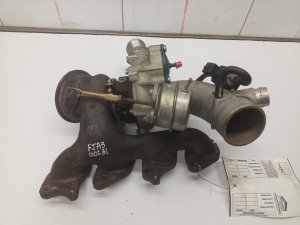
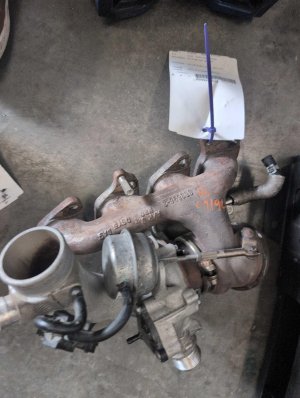
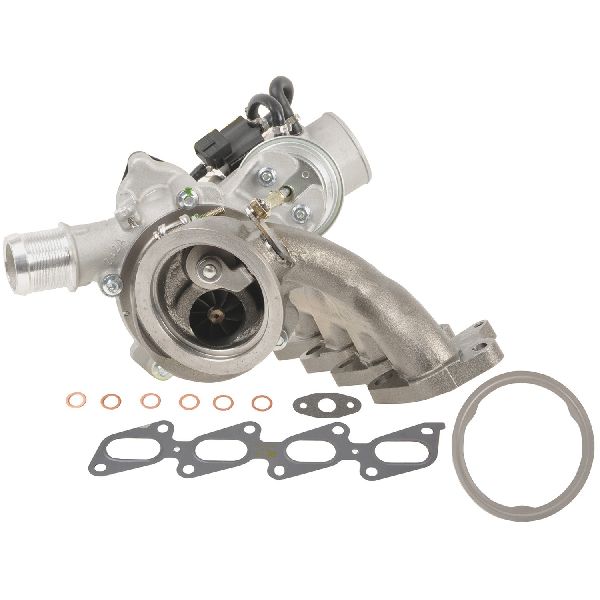
(OEM #25201063)— Needed if the internal wastegate is seized, the actuator has failed in a way that is not serviceable, or the turbo has failed internally.
Trusted brands: ACDelco, Garrett
OEM price range: $700-$900
Aftermarket price range: $400-$600 - Intake Manifold
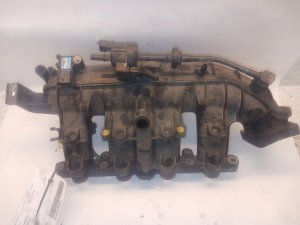
(OEM #25200449)— Required if the internal, non-serviceable PCV check valve has failed, causing boost to leak into the crankcase and rupture the valve cover diaphragm.
Trusted brands: ACDelco, Dorman
OEM price range: $250-$350
Aftermarket price range: $150-$250
Related Codes That Often Appear With This One
- P0299 — Engine Underboost. It's common to see both P0234 and P0299 because a single faulty component, like a sticking wastegate or a bad solenoid, can cause boost to be erratic—sometimes too high, sometimes too low. TSB PIP5812C explicitly mentions this pairing.
- P2261 — Turbocharger Bypass Valve Stuck. This valve is part of the same boost control system, and contamination or failure can affect overall boost regulation. A sticking bypass valve can cause boost spikes or losses.
- P2227 — Barometric Pressure Sensor Performance. This code can appear with P0234 in cold weather when charge air cooler icing is the cause, as noted in TSB 17-NA-221.
Technical Service Bulletins (TSBs) & Recalls
- PIP5812C: Addresses frozen/sticking Turbocharger Wastegate Regulator Solenoid Valve causing P0234/P0299. Provides a detailed test procedure involving draining the valve and blowing compressed air through its ports.
- 17-NA-221: Notes potential for ice in the Charge Air Cooler affecting performance and setting codes like P0234. Recommends potential ECM calibration updates.
- PIP5495: A general TSB for the 1.4L engine family that guides technicians on diagnosing boost control issues to avoid needlessly replacing turbochargers.
Platform-Specific Known Issues
- GM Technical Service Bulletin #PIP5812C and others address the wastegate regulator solenoid valve freezing or sticking due to moisture/oil contamination, a primary cause of P0234 in cold climates. The TSB provides a specific cleaning and testing procedure.
- GM Technical Service Bulletin #17-NA-221 points to ice accumulation in the Charge Air Cooler (CAC) which can cause similar boost-related issues in cold weather. The fix may involve an ECM software update to change transmission shift patterns and keep engine temperatures higher.
- A Reddit user with a Chevy Cruze (platform mate) experienced P0234 and found the cause to be a simple torn vacuum hose going to the wastegate, which they temporarily patched with aluminum tape, resolving the code.
Mechanic-Grade Diagnostic Values
- Turbocharger Wastegate Regulator Solenoid Valve Coil Resistance — expected: 29-32 Ohms. Failure: A reading significantly outside this range, an open circuit (OL), or a short (near zero) indicates a faulty coil.
- MAP Sensor Voltage (Key On, Engine Off) — expected: ~4.5 V at sea level. Failure: Voltage that is significantly different from the Barometric Pressure sensor reading or is outside the 4.0-4.9V range.
- MAP Sensor Voltage (Engine at Idle) — expected: 1.0 - 1.5 V. Failure: Voltage that is significantly higher than 1.5V suggests a vacuum leak or a faulty sensor.
- Live Data: Actual vs. Desired Boost Pressure — expected: Actual pressure should closely track desired pressure.. Failure: Code P0234 sets when actual boost pressure exceeds desired boost by 4 PSI or more for over 5 seconds.
Hidden / Shadow Codes Worth Checking
- P0234 5A: This is a GM-specific symptom byte indicating a 'Signal Plausibility Failure'. It suggests the ECM is seeing a boost pressure reading that is illogical for the current engine conditions, pointing more strongly to a sensor or control system fault. (see via GM GDS2 (Global Diagnostic System 2) or other high-end bidirectional scan tool with manufacturer-specific data.)
Scan Tool Commands That Help
- GDS2 (GM Tech Tool): Turbocharger Boost Control Solenoid Valve Test — This bidirectional control allows a technician to command the solenoid's duty cycle from 5% to 95%. It is used to verify if the solenoid is mechanically functioning (clicking) as commanded, which helps isolate a faulty solenoid from a wiring or ECM driver problem.
- GDS2 (GM Tech Tool): Live Data: Desired vs. Actual Boost Pressure — During a test drive, monitoring and graphing the 'Boost Pressure' PID against the 'Desired Boost Pressure' PID is the definitive way to confirm if a true overboost condition is occurring relative to what the ECM is commanding.
Wiring & Ground Locations
- G105 — Located at the left front of the engine compartment, often behind the cooling fan relays.. This is a primary engine bay ground point. While not directly for the solenoid, a poor ground here can cause erratic behavior in various engine systems and sensors that share grounding paths, potentially leading to incorrect readings and fault codes.
- Wastegate Solenoid Connector — On the wastegate regulator solenoid valve itself, which is typically mounted on or near the turbocharger assembly.. This connector and its wiring are exposed to high heat and vibration, making them susceptible to damage. The pins are used to test for resistance across the solenoid coil and to apply a test voltage (12V) to check for mechanical operation (clicking).
Real Owner Repair Stories
- CruzeTalk Forum & YouTube (2015 Chevrolet Cruze 1.4L Turbo (LUV engine, same platform)) — Intermittent low power, Check Engine Light with both P0299 (Underboost) and P0234 (Overboost) codes.
❌ Tried (didn't work) Initial diagnosis focused on external boost control components like the wastegate solenoid and actuator.
✅ What actually fixed it The internal turbine of the turbocharger was not spinning freely. Replacing the entire turbocharger assembly resolved both the P0234 and P0299 codes. This serves as a counterexample to the common wisdom that the turbo itself is rarely the cause. - Reddit r/FocusST (different vehicle, same code & component) (Ford Focus ST) — P0234, vehicle would go into limp mode on Wide-Open Throttle (WOT).
❌ Tried (didn't work) Purchased a cheap non-OEM solenoid valve from Amazon, but the hose ports were undersized and the hoses slipped off.
✅ What actually fixed it Replacing the wastegate solenoid control valve with a quality OEM part finally resolved the issue. This highlights the importance of part quality for this specific component.
OEM Part Supersession History
55574902→55587751— Standard part revision and improvement by the manufacturer.
Model Year Variations Within This Range
- 2021-2022: These model years use the updated 1.4L LE2 engine (155 hp) with direct injection, replacing the 1.4L LUV (138 hp). While the fundamental turbo architecture and P0234 causes are similar, TSB 17-NA-221 recommends a potential ECM calibration update for 2021 models to address cold-weather issues, which alters transmission shift patterns to keep engine temperatures higher.
Diagnostic Flowchart
Other Known Issues on This Vehicle
Issues unrelated to this code that are worth knowing about as an owner of this generation:
- PCV System Failure (Valve Cover & Intake Manifold) 🔴 High — Extremely common, often occurs between 60,000-120,000 miles. A failed check valve in the intake manifold allows boost pressure to rupture the diaphragm in the valve cover. (Ref: Multiple TSBs exist, including PIP5197M. GM also issued special coverage adjustments like N202299080 for some models.)
- Water Pump Failure 🔴 High — Common failure point, often leaking coolant from the weep hole or bearing after 60,000 miles. Can lead to rapid overheating and severe engine damage if ignored. (Ref: Special coverage (e.g., 14371B) was issued for some platform mates like the Cruze/Sonic.)
- Valve Cover Gasket Oil Leak 🟠 Medium — Gasket becomes brittle from engine heat over time, causing oil to leak onto the engine or into spark plug wells. Often occurs after 50,000 miles.
- Oil Consumption 🟠 Medium — Some 1.4L turbo engines are known to consume oil, often related to the complex PCV system issues or turbocharger seals. (Ref: TSB PIP5197 addresses oil consumption related to PCV issues.)
Used vs. New Parts: Buying Guide for This Vehicle
When a used part is the smart pick: A used part is generally not recommended for the common failure items for this code. The wastegate solenoid is inexpensive new, and a used one may have the same contamination issues. A used intake manifold may have the same failed internal PCV valve. A used turbocharger assembly from a low-mileage, verified-running donor vehicle could be a cost-effective option if the entire turbo has been confirmed as the failure point, but it remains a gamble.
Donor-vehicle mileage cap: roughly under 60000 miles for the part to have meaningful remaining life.
What to inspect on the donor part:
- For a used turbo: check for minimal shaft play (in/out and side-to-side), ensure the turbine and compressor wheels spin freely without noise or binding, and inspect for any signs of oil leaks or housing cracks.
- Verify the donor vehicle was not in a severe front-end collision.
- Ask for the VIN to check the donor vehicle's history for recurring engine problems.
OEM-only on this vehicle (don't cheap out):
- Turbocharger Wastegate Regulator Solenoid Valve: While aftermarket versions exist, some owner reports indicate fitment issues with hose ports on cheaper versions. Given the low cost of the OEM part, it is the recommended choice to avoid diagnostic headaches.
Aftermarket brands forum-validated for this vehicle:
- Dorman (Intake Manifold): Dorman offers an OE-FIX version (615-380) of the intake manifold with a redesigned, pinned check valve to prevent the common failure mode of the original.
Brands owners have reported issues with on this vehicle:
- Unbranded/generic wastegate solenoids: As noted in one repair story, very cheap solenoids from online marketplaces may have incorrect physical dimensions (e.g., port sizes), making them unusable.
Real Owner Stories
Aggregated from forums and TSBs cited above. Mileages and costs reflect what owners reported in those sources.
2011-2019 Chevrolet Cruze 1.4L Turbo
Symptoms: The owner experienced a P0234 overboost code and reduced engine power. Upon inspection, they found a torn vacuum hose leading to the wastegate.
What fixed it: The owner temporarily patched the torn vacuum hose with aluminum tape, which resolved the code.
Source hint: Reddit r/cruze: Overboost P0234
2013 Chevrolet Cruze 1.4L Turbo
Symptoms: The vehicle triggered a P0234 Overboost code. The owner attempted to fix it by replacing the boost sensor and the wastegate solenoid, but the issue persisted.
What fixed it: The owner was planning to replace the wastegate actuator next as the previous sensor and solenoid replacements did not work.
Source hint: Reddit r/MechanicAdvice: 2013 Chevy Cruze 1.4L P0234 Overboost code
2016 Chevrolet Malibu 1.4L Turbo
Symptoms: The owner was dealing with boost-related codes and followed TSB PIP5812C for diagnosis.
What fixed it: The owner noted difficulty with the repair as even new replacement solenoid valves failed the TSB's air-flow test, suggesting potential part quality issues.
Source hint: GM Forum: 2016 Malibu, P0299 (turbo underboost) and TSB PIP 5812C
Related OBD-II Codes
Frequently Asked Questions
My 2016 Trax is losing power in cold weather; does TSB PIP5812C apply to my overboost code?
Can a problem with the PCV system on my 1.4L LUV engine cause a P0234 overboost code?
Is there a TSB for ice buildup affecting the turbo system on the Chevrolet Trax?
How can I test if the wastegate solenoid is bad on my Trax without buying a new one?
I hear a loud whistling sound from the engine bay along with the P0234 code; what could it be?
Does the 1.4L engine in the Buick Encore have the same P0234 issues as my Trax?
Helpful Videos
Used OEM Parts in Stock
New Aftermarket Parts Available

The information in this article is provided for general reference and educational purposes only. Vehicle specifications, procedures, and part compatibility can vary by production date, trim level, and region. Always consult your vehicle's factory service manual and verify part numbers before purchasing or performing repairs. Safety-critical components such as airbags, seat belts, and braking systems should be installed by a qualified professional.
- Chevrolet Trax:
- 🎬 Helpful Videos
- 🛍️ Shop This Part
- What's Unique About the 2015-2022 Chevrolet Trax
- Symptoms You May Notice
- Most Likely Causes
- Rare But Worth Checking
- Diagnosis Steps
- Parts You'll Likely Need
- Related Codes That Often Appear With This One
- Technical Service Bulletins (TSBs) & Recalls
- Platform-Specific Known Issues
- Mechanic-Grade Diagnostic Values
- Hidden / Shadow Codes Worth Checking
- Scan Tool Commands That Help
- Wiring & Ground Locations
- Real Owner Repair Stories
- OEM Part Supersession History
- Model Year Variations Within This Range
- Diagnostic Flowchart
- Other Known Issues on This Vehicle
- Used vs. New Parts: Buying Guide for This Vehicle
- Real Owner Stories
- 2011-2019 Chevrolet Cruze 1.4L Turbo
- 2013 Chevrolet Cruze 1.4L Turbo
- 2016 Chevrolet Malibu 1.4L Turbo
- Related OBD-II Codes
- Frequently Asked Questions
- 🎟️ Get 5% Off