

P0234 on 2008-2010 Chevrolet Cobalt SS: LNF Turbo Overboost Causes and Fixes
On the 2008-2010 Cobalt SS with the 2.0L LNF turbo engine, code P0234 is most often caused by a misadjusted wastegate actuator rod or a faulty boost control solenoid. Adjusting the rod is a no-cost fix detailed in a GM TSB. A new solenoid, often a Borg-Warner replacement as GM may no longer sell it separately, costs around $70-$150.
- Do not immediately assume you need a new turbocharger. The problem is almost always a cheaper, external component.
- The first step should be to attempt the wastegate actuator rod adjustment as described in TSB #09-06-93-004. This is a free fix.
- If the adjustment doesn't work, the next most likely culprit is the boost control solenoid.
- Check for other codes, especially P0299 (underboost), as it points to the same set of common failures.
- If the car is tuned, the tune itself could be the cause of the overboost code.
What's Unique About the 2008-2010 Chevrolet Cobalt
The LNF engine in the Cobalt SS is a performance-oriented direct-injection turbo engine. Unlike many other turbo cars where P0234 immediately points to a failed turbo, on the LNF platform, the issue is very frequently related to the external control components. GM even released a specific Technical Service Bulletin (TSB #09-06-93-004) acknowledging that a simple wastegate actuator rod adjustment can resolve the overboost (P0234) or underboost (P0299) condition. This makes diagnosis unique, as a mechanical adjustment is a primary diagnostic step before replacing parts. This same issue applies to other vehicles with the LNF engine, such as the HHR SS, Pontiac Solstice GXP, and Saturn Sky Redline.
Symptoms You May Notice
- Check Engine Light is on
- Engine enters 'Reduced Power' or 'Limp Mode'
- Noticeable loss of power and acceleration
- Sudden, uncontrolled spikes in boost gauge reading, sometimes exceeding 25 PSI
- Audible fluttering, 'whooshing', or squealing sound from the engine bay during acceleration
- Erratic boost delivery, where boost may surge and drop rapidly with steady throttle
- Replacing the entire turbocharger without first checking the wastegate adjustment and boost control solenoid. Many shops will condemn the turbo when a much cheaper external part is the actual cause.
- Replacing camshaft position actuator solenoids, which are related to variable valve timing, not boost control. One owner was quoted for this incorrect repair by a dealer.
Most Likely Causes
- Misadjusted Turbocharger Wastegate Actuator 🔴 High Probability This is a known issue documented by GM in Technical Service Bulletin #09-06-93-004 for the LNF engine and its platform mates. Over time, the linkage can fall out of its precise required adjustment due to vibration and heat cycles, causing the wastegate to not open correctly to bleed off excess boost.
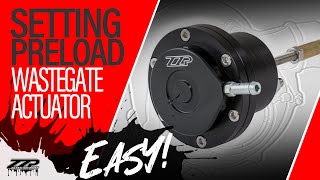
How to confirm: Follow the procedure in TSB #09-06-93-004. This involves making very small, one-turn adjustments to the nuts on the actuator rod. To reduce boost (fix overboost), you lengthen the rod by adjusting the nuts towards the end of the shaft. A forum member suggests a good starting point is to adjust the nut until it contacts the arm with no slack, then add two full turns of preload. 🎬 Watch: How to set wastegate preload correctly
Typical fix: Adjust the wastegate actuator rod per the TSB. This is a fine-tuning process and may require several test drives at full operating temperature to get right.
Est. part cost: $0 - Faulty Boost Control Solenoid (Wastegate Solenoid) 🔴 High Probability This solenoid, mounted in a high-heat area on the turbocharger, controls the pressure sent to the wastegate actuator. It is a very common failure point, often sticking internally and failing to vent pressure to open the wastegate. Forum members on ChevyHHR.net and CobaltSS.net report this as a frequent cause of P0234.
How to confirm: With the engine running, a technician can command the solenoid on and off with a scan tool. A DIY method involves applying 12V to the solenoid to see if it clicks audibly. If it doesn't click or seems weak, it has likely failed.
Typical fix: Replace the boost control solenoid. GM may no longer sell this part individually, requiring the purchase of a whole turbo assembly. However, the original manufacturer, Borg-Warner, sells a replacement solenoid (Part No. 55574902) that fits. Some owners report needing to slightly modify the mounting bracket for a perfect fit.
Est. part cost: $70-$150 - Faulty Manifold Absolute Pressure (MAP) Sensors 🟡 Medium Probability The LNF engine uses two MAP sensors (upper and lower). One can fail or become contaminated with oil from the PCV system, sending inaccurate pressure readings to the ECM. If the ECM gets a false low reading, it may command the turbo to produce more boost, leading to an actual overboost condition.
How to confirm: Use a scan tool to monitor the live data from both MAP sensors with the key on, engine off. Both sensors should read close to atmospheric pressure for your altitude. Compare their readings under idle and load; they should track logically. A sensor that is slow, stuck, or reads incorrectly is likely faulty.
Typical fix: Replace the faulty MAP sensor. It's often recommended to clean the sensors and their electrical connections with appropriate electronic cleaner before replacement. The upper MAP sensor is GM part number 55569994 or ACDelco 12653327. 🎬 See this step-by-step MAP sensor replacement walkthrough
Est. part cost: $40-$80 per sensor
Rare But Worth Checking
- Aftermarket Engine Tune: If the vehicle has been tuned (reflashed), the tuner may have set the boost targets too high, or the boost control parameters may be too aggressive, causing overboost spikes that trip the factory safety limits. One owner with a tune saw spikes to 30 PSI. Always consult the tuner first if the vehicle is modified.
- Sticking Turbocharger Wastegate: The internal wastegate flapper inside the turbocharger housing itself can become seized due to carbon buildup or mechanical failure. This is less common than the external control components failing but is a possibility. You can test this by manually moving the actuator arm to feel for smooth movement.
- Boost/Vacuum Leak: While usually causing an underboost code (P0299), a leak in a critical vacuum line to the wastegate solenoid or a loose charge pipe connection can cause erratic boost control, sometimes resulting in an overboost spike.
Diagnosis Steps
- Check for an aftermarket engine tune. If the vehicle is tuned, revert to the stock tune for diagnosis or consult the tuner.
- Using a scan tool, verify the P0234 code and check for any other codes, especially P0299 or P2261.
- Monitor live data for both MAP sensors with Key On, Engine Off. Verify they read atmospheric pressure. Then, watch their values at idle and under load to ensure they track logically.
- Inspect all vacuum lines connected to the turbocharger and boost control solenoid for cracks, heat damage, leaks, or blockages.
- Inspect all charge air cooler (intercooler) piping and connections for leaks or loose clamps, which can cause erratic boost.
- Following TSB #09-06-93-004, perform the wastegate actuator adjustment procedure. To fix overboost, lengthen the rod by turning the nuts 'out' one turn at a time. This may take a few tries to get perfect.
- If adjustment doesn't work, test the boost control solenoid. Apply 12V and listen for a distinct click. If there's no click or it sounds weak, it's likely failed and needs replacement.
- If all external controls are verified to be working, disconnect the actuator rod from the wastegate arm and manually move the arm to ensure the internal wastegate flapper is not seized or binding.
Parts You'll Likely Need
- Turbocharger Boost Solenoid
(OEM #55574902)— This is a very common failure point on the LNF engine that directly causes overboost conditions. It's often the culprit if the wastegate adjustment doesn't solve the problem.
Trusted brands: Borg-Warner, ACDelco
OEM price range: $100-$150
Aftermarket price range: $70-$120 - Manifold Absolute Pressure (MAP) Sensor
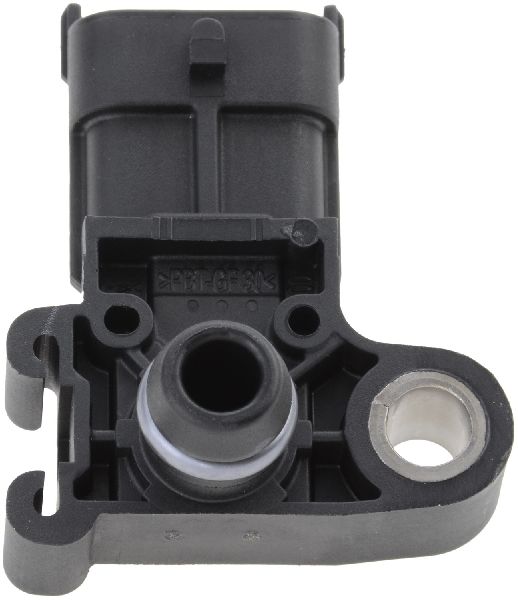
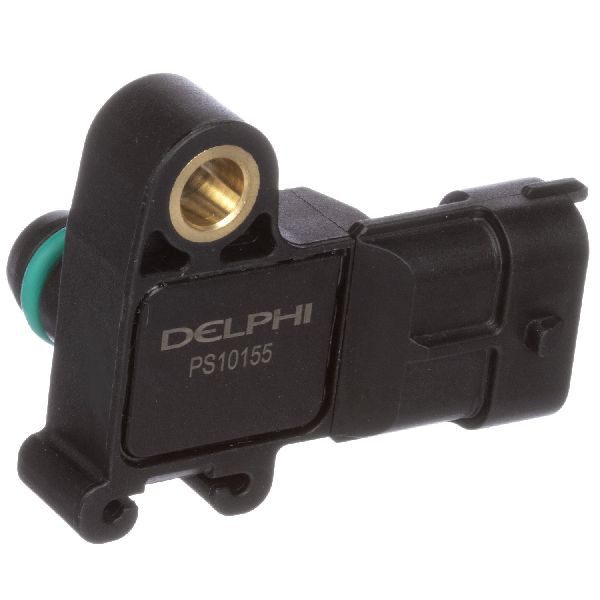
(OEM #12653327)— The LNF has two of these sensors (upper part number listed), and failure or oil contamination can lead to incorrect boost control, causing this code.
Trusted brands: Bosch, ACDelco
OEM price range: $60-$90
Aftermarket price range: $40-$70
Related Codes That Often Appear With This One
- P0299 — This code is for 'Turbocharger Underboost'. Seeing P0234 and P0299 together often points to an intermittent problem with the boost control system, like a sticking solenoid or misadjusted wastegate that sometimes fails to build boost and other times fails to release it. TSB #09-06-93-004 explicitly lists both codes as being caused by a misadjusted wastegate.
- P2261 — This code for 'Turbocharger/Supercharger Bypass Valve - Mechanical' can sometimes appear alongside P0234, indicating a broader issue within the boost control system, potentially involving a faulty bypass valve or leaks causing erratic operation.
Technical Service Bulletins (TSBs) & Recalls
- GM TSB #09-06-93-004: Intermittent MIL/Check Engine Light On, DTC P0299 or P0234 Set (Adjust Turbocharger Wastegate Actuator). This TSB is the primary diagnostic path for this code on this specific vehicle and its platform mates. It details the procedure for lengthening the actuator rod to correct an overboost condition.
Platform-Specific Known Issues
- Sensitive Wastegate Adjustment: The wastegate actuator rod adjustment is a very sensitive process. The TSB notes that adjustments should be made one turn at a time, as a small change can have a large effect on boost pressure.
- Boost Control Solenoid Sourcing: GM dealers may no longer offer the boost control solenoid as a separate part, instead requiring the purchase of a complete turbocharger assembly. Owners have found that the Borg-Warner part (55574902) is a direct replacement.
Mechanic-Grade Diagnostic Values
- Boost Control Solenoid Coil Resistance — expected: 20-35 ohms. Failure: A reading significantly outside this range indicates a faulty solenoid coil.
- MAP Sensor Voltage (Key On, Engine Off) — expected: 4.5V - 4.8V (should match BARO reading). Failure: Voltage is stuck high (near 5.0V) or does not correlate with the barometric pressure sensor reading.
- MAP Sensor Voltage (Engine at Idle) — expected: 1.0V - 1.5V. Failure: Voltage remains high (near the KOEO reading) and does not drop when the engine is running, indicating it's not reading engine vacuum.
- MAP Sensor 5V Reference at Connector — expected: 4.8V - 5.2V. Failure: Voltage is below 4.8V or absent, indicating a wiring or ECM problem rather than a sensor failure.
Scan Tool Commands That Help
- GM Tech 2 / GDS2: Turbocharger Wastegate Solenoid Control — This bidirectional control allows a technician to command the boost control solenoid on and off while the engine is running to verify its mechanical operation. A change in engine sound or vacuum reading should be observed if the solenoid is working.
- GM Tech 2 / GDS2: Live Data: Desired Boost vs. Actual Boost — During a test drive, comparing the ECM's commanded boost pressure to the actual boost pressure reported by the MAP sensors is critical. For P0234, you will see the 'Actual Boost' significantly exceeding the 'Desired Boost' value, confirming the overboost condition.
Wiring & Ground Locations
- ECM Connector X1, Pin 18 — On the main engine control module (ECM) located in the driver's side of the engine bay, in front of the fuse box.. This is the specific pin that sends the control signal to the wastegate solenoid. The wire color is Yellow. Testing for a signal at this pin can confirm if the ECM is attempting to control the solenoid.
- ECM Connector X1, Pin 37 — On the main engine control module (ECM).. This is the pin that receives the signal from the (upper) MAP sensor. The wire color is Light Green. Checking for correct voltage here can help diagnose a wiring issue between the sensor and the ECM.
- G103 / G105 / G107 — These are primary engine bay ground points. A common location for a major ground is on the frame rail underneath the driver's side headlight, requiring headlight removal to access.. The ECM and its related sensors rely on clean ground connections. A corroded or loose ground at one of these locations can cause erratic voltage readings from sensors, potentially leading the ECM to make incorrect boost control decisions.
Real Owner Repair Stories
- User on cobaltss.net (2009 Cobalt SS with LNF engine) — Car was running a 23psi tune and lost its second engine. After installing a third engine, the car would not boost correctly.
❌ Tried (didn't work) Initially, the user suspected the tune or a mechanical engine issue.
✅ What actually fixed it The user replaced the boost control solenoid (also called a BPV solenoid) which resolved the boost issue. This highlights that even with a history of major engine failure and an aggressive tune, the simple solenoid can still be the root cause of boost control problems.
OEM Part Supersession History
12592016 (Stock MAP) / 12592017 (Stock TMAP)→55206797 (GM Stage 1 / 3-Bar Sensor)— The stock 2.5-bar sensors were often replaced with 3-bar sensors as part of the GM Stage 1 tune or for aftermarket tuning to read higher boost levels (up to 30-33 psi).
Heads up: Installing the 3-bar sensors (GM PN 55206797 or equivalent) REQUIRES an ECM retune. The vehicle will not run correctly if you install these sensors on a stock tune, as the voltage scaling is different.Unknown→55574902 (Boost Control Solenoid)— This is the widely accepted service part number for the boost control solenoid, manufactured by Borg-Warner. GM often includes this solenoid only with a full turbocharger assembly.
Heads up: While this part is a direct functional replacement, some users report needing to slightly modify the mounting bracket for a perfect fit on the LNF turbo.
Model Year Variations Within This Range
- Late 2008 - Early 2009: A number of these vehicles suffered from porous block castings, leading to coolant loss issues. While not directly related to P0234, it's a significant issue for these specific model years.
- 2009-2010: These models had improved fuel injector seals compared to 2008 models. The Reconfigurable Performance Display (RPD) was optional in 2009 and became standard in 2010.
- 2010: The ECU's operating system is reportedly more flexible for tuning but also more emissions-oriented. Some standard equipment changed, making the G85 limited-slip differential (LSD) one of the only major options.
Diagnostic Flowchart
Other Known Issues on This Vehicle
Issues unrelated to this code that are worth knowing about as an owner of this generation:
- Timing Chain Tensioner and Guide Failure 🔴 High — Becomes a concern around 70,000-100,000 miles. A rattle on cold startup is the primary warning sign. Failure can lead to jumped timing and catastrophic engine damage. (Ref: GM released updated tensioner designs, but even the revised parts have been known to fail.)
- High-Pressure Fuel Pump (HPFP) Failure 🔴 High — A widely documented failure point. The primary symptom is a strong smell of gasoline in the engine oil, caused by the pump's internal seal failing and leaking fuel into the crankcase. This can lead to rapid engine wear and failure if not addressed.
- Intake Valve Carbon Buildup 🟠 Medium — Common to all early direct-injection (DI) engines. Since fuel is injected directly into the cylinder, it doesn't wash over the intake valves, allowing oil and carbon deposits from the PCV system to bake on. This typically becomes noticeable after 40,000-60,000 miles, causing misfires, hesitation, or poor performance. Requires manual cleaning (e.g., walnut blasting).
Used vs. New Parts: Buying Guide for This Vehicle
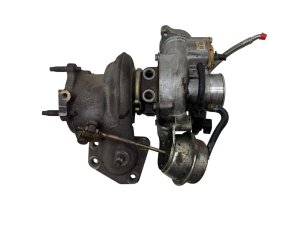
When a used part is the smart pick: A used part makes sense for larger, more expensive assemblies like a complete low-mileage turbocharger if the internal wastegate is confirmed to be the issue. It can also be a cost-effective source for charge pipes or intercoolers that may have cracked.
Donor-vehicle mileage cap: roughly under 80000 miles for the part to have meaningful remaining life.
What to inspect on the donor part:
- For a used turbo: check for excessive shaft play (in-and-out and side-to-side movement of the turbine wheel).
- Manually move the wastegate actuator arm to ensure the internal flapper is not seized.
- Inspect the turbine and compressor wheels for any signs of chipping, scoring, or contact with the housing.
- Look for signs of oil leaks around the turbo's center housing.
OEM-only on this vehicle (don't cheap out):
- While aftermarket is common, sticking to OEM/OES (Borg-Warner, Bosch) for critical electronic components like the Boost Control Solenoid and MAP sensors is highly recommended for reliability.
Aftermarket brands forum-validated for this vehicle:
- Borg-Warner (for the boost control solenoid, as they are the original manufacturer)
- Bosch (for MAP sensors, often the OEM supplier)
- ZZPerformance (A popular vendor for LNF-specific performance parts, including upgraded MAP sensors and tunes)
Brands owners have reported issues with on this vehicle:
- Unnamed, no-brand electronic sensors from online marketplaces. These often have high failure rates, incorrect calibration, and can cause persistent diagnostic headaches.
Real Owner Stories
Aggregated from forums and TSBs cited above. Mileages and costs reflect what owners reported in those sources.
2008-2010 Chevrolet HHR SS 2.0L LNF
Symptoms: The car was hitting boost, the gauge would max out, and then the vehicle would immediately enter limp mode.
What fixed it: Replacement of the boost control solenoid.
Source hint: ChevyHHR.net - P0234 Turbo overboosting then going limp
2008-2010 Chevrolet Cobalt SS 2.0L LNF
Symptoms: Intermittent Check Engine Light with P0234 or P0299 codes set.
What fixed it: Adjusting the turbocharger wastegate actuator rod by lengthening it (turning the nuts 'out') one turn at a time per the TSB procedure.
Source hint: CobaltSS.net - TSB :LNF Wastegate
2008-2010 Chevrolet HHR SS 2.0L LNF
Symptoms: P0234 code triggered; dealer claimed the solenoid wasn't sold separately and required a full turbo replacement.
What fixed it: Sourcing and installing the Borg-Warner replacement solenoid (Part No. 55574902) instead of replacing the entire turbocharger.
Source hint: ChevyHHR.net - P0234 code - Leading cause discussion
Related OBD-II Codes
Frequently Asked Questions
Does GM TSB #09-06-93-004 apply to my 2008-2010 Chevrolet Cobalt SS?
My dealer says I have to buy a whole new turbo to fix the boost solenoid. Is there a cheaper option?
How do I adjust the wastegate rod on my Cobalt LNF to stop the overboosting?
Which MAP sensor is usually the problem on the 2.0L Turbo engine?
Why does my Cobalt SS go into 'Reduced Power' mode when the boost gauge spikes?
Helpful Videos


Used OEM Parts in Stock

New Aftermarket Parts Available


The information in this article is provided for general reference and educational purposes only. Vehicle specifications, procedures, and part compatibility can vary by production date, trim level, and region. Always consult your vehicle's factory service manual and verify part numbers before purchasing or performing repairs. Safety-critical components such as airbags, seat belts, and braking systems should be installed by a qualified professional.
- Chevrolet Cobalt:
- 🎬 Helpful Videos
- 🛍️ Shop This Part
- What's Unique About the 2008-2010 Chevrolet Cobalt
- Symptoms You May Notice
- Most Likely Causes
- Rare But Worth Checking
- Diagnosis Steps
- Parts You'll Likely Need
- Related Codes That Often Appear With This One
- Technical Service Bulletins (TSBs) & Recalls
- Platform-Specific Known Issues
- Mechanic-Grade Diagnostic Values
- Scan Tool Commands That Help
- Wiring & Ground Locations
- Real Owner Repair Stories
- OEM Part Supersession History
- Model Year Variations Within This Range
- Diagnostic Flowchart
- Other Known Issues on This Vehicle
- Used vs. New Parts: Buying Guide for This Vehicle
- Real Owner Stories
- 2008-2010 Chevrolet HHR SS 2.0L LNF
- 2008-2010 Chevrolet Cobalt SS 2.0L LNF
- 2008-2010 Chevrolet HHR SS 2.0L LNF
- Related OBD-II Codes
- Frequently Asked Questions
- 🎟️ Get 5% Off