

P0223 on 2011-2018 Volkswagen Jetta 2.0L TSI: Causes and Fixes for High Voltage
On a 2011-2018 VW Jetta with the 2.0L TSI engine, code P0223 most often points to a faulty accelerator pedal assembly. The car will likely enter a low-power 'limp mode,' accompanied by an EPC light. Replacing the pedal assembly costs around $100-$200 for the part and is a straightforward DIY job that can be done in under 30 minutes.
- P0223 on a Mk6 Jetta will cause the EPC light to come on and put the car in a low-power 'limp mode'.
- The most likely cause is a failed accelerator pedal assembly, which is a relatively simple and affordable DIY replacement.
- Before buying parts, use a scan tool with live data to determine if the fault is from the pedal sensor or the throttle body sensor.
- Always inspect the wiring and connectors at both the pedal and the throttle body for damage, as this is a known issue on VWs.
- If you replace the throttle body, a throttle alignment procedure is required.
What's Unique About the 2011-2018 Volkswagen Jetta
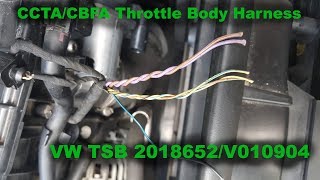
While P0223 is a generic code, its most common cause on Volkswagen and Audi vehicles of this era is specific. Experience shows the fault on these cars frequently lies with the accelerator pedal assembly, which houses the pedal position sensors, rather than the throttle body itself. Additionally, a Technical Service Bulletin (TSB 2018652) for the 2.0T engine family points to wiring issues at the throttle body connector as a known problem, where the harness wires were sometimes too short, putting stress on the connection. This makes a thorough wiring inspection critical before replacing any parts.
Symptoms You May Notice
- Check Engine Light and/or EPC (Electronic Power Control) light is on 🎬 Watch: Understanding the VW EPC light and its common causes
- Vehicle enters 'limp mode' with drastically reduced engine power
- Poor, delayed, or no acceleration
- Unresponsive accelerator pedal.
- Engine may hesitate, surge, or stall.
- Cruise control is disabled.
- Rough or unstable idle
- Replacing the throttle body when the actual fault is in the accelerator pedal assembly. This is a common mistake because the code name includes 'Throttle Position Sensor', but on this specific vehicle, the pedal sensor is a more frequent cause.
- Replacing a sensor when the root cause is a poor connection, corroded pin, or chafed wire in the harness.
Most Likely Causes
- Faulty Accelerator Pedal Assembly 🔴 High Probability On VW/Audi platforms from this period, the integrated sensors in the pedal assembly are a very common failure point for this specific code. Forum discussions and technician reports for MK6 Jettas and GTIs frequently cite the pedal assembly as the definitive fix.
How to confirm: Use an OBD-II scanner with live data capability. Monitor the voltage of the Accelerator Pedal Position (APP) sensors 1 and 2 (often labeled G79 and G185 in VAG-specific tools). If sensor 2 ('B' circuit) shows a constant high voltage (near 5V) that doesn't change as you press the pedal, the assembly is faulty.
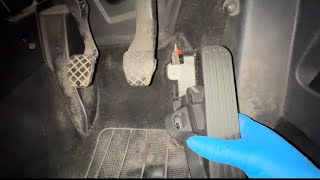
Typical fix: Replace the entire accelerator pedal assembly. It is a single unit with integrated sensors held by three 10mm nuts and is easily accessible 🎬 See this step-by-step accelerator pedal replacement walkthrough in the driver's footwell.
Est. part cost: $90-$200 - Wiring Harness or Connector Issue 🟡 Medium Probability VW TSB 2018652 (also known as 01-09-04) identifies contact resistance and wiring problems at the 6-pin throttle body connector as a known issue. Wires in the original harness were sometimes too short, causing stress and intermittent connection failures. Corrosion on connector pins can also distort voltage signals.
How to confirm: Visually inspect the wiring and connectors at both the accelerator pedal assembly (under the dashboard) and the throttle body. Look for any signs of corrosion, damage, or loose pins. Perform a continuity and short-to-power test on the signal wire for sensor 'B'. Wiggle the harness while monitoring live data to see if the voltage reading fluctuates.
Typical fix: Repair the damaged section of wiring or replace the faulty connector pigtail. VW issued a wiring repair kit for the throttle body connector under TSB 2018652. 🎬 Watch: How to splice a new throttle body connector
Est. part cost: $10-$50 - Faulty Throttle Body Assembly ⚪ Low Probability The Throttle Position Sensors (TPS) are integrated into the throttle body and cannot be replaced separately. While less common than the pedal assembly on this platform for P0223, internal failure of the TPS can still occur, sometimes due to a dirty or sticking throttle plate causing the sensors to report incorrect values.
How to confirm: If the accelerator pedal sensors are functioning correctly in live data, check the live data for the Throttle Position Sensors (G187/G188 in VW terms). If sensor 'B' (G188) shows a fixed high voltage, and the wiring has been confirmed good, the throttle body is the likely culprit.
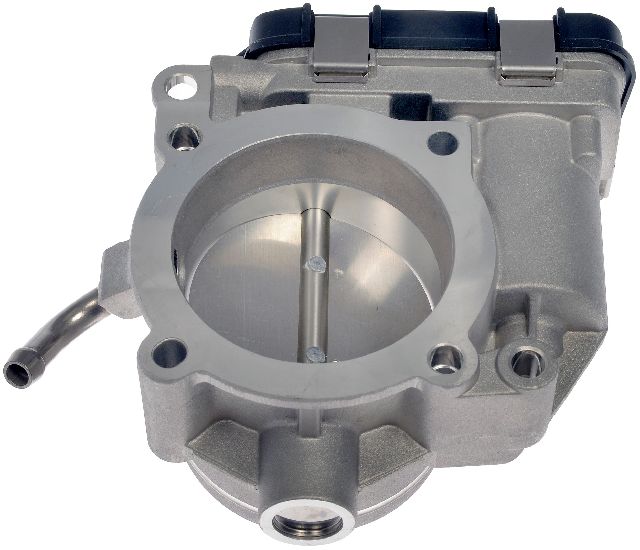
Typical fix: Replace the entire throttle body assembly. A throttle body alignment procedure using a compatible scan tool (like VCDS or OBDeleven) is required after replacement.
Est. part cost: $150-$350
Rare But Worth Checking
- Faulty Engine Control Module (ECM): This is very rare. The ECM should only be considered after all other possibilities, including sensors and wiring, have been exhaustively tested and ruled out.
- Jammed or Incorrect Floor Mats: An improperly placed or bunched-up floor mat can potentially interfere with the accelerator pedal's movement, although this is unlikely to cause a 'circuit high' electrical fault. It's more likely to cause a correlation error or a 'circuit low' fault if it prevents the pedal from returning fully.
Diagnosis Steps
- Connect an OBD-II scanner and confirm P0223 is the primary code. Check for any other related codes like P0123 or P2138, as they can help pinpoint the issue.
- Access the live data stream on the scanner. Observe the voltage readings for both Accelerator Pedal Position (APP) Sensor 1 and Sensor 2.
- With the engine off and key on, slowly press and release the accelerator pedal. The voltage for both sensors should sweep smoothly up and down (typically ~0.5V to ~4.5V). If Sensor 2 ('B') is stuck at a high voltage (e.g., ~5V) and does not change, the accelerator pedal assembly is the most likely cause.
- If the pedal sensors appear to work correctly, inspect the wiring harness and connector at the accelerator pedal for any visible damage, corrosion, or pushed-out pins.
- Move to the engine bay and inspect the wiring harness and 6-pin connector at the throttle body. Look for chafed wires or corrosion, as noted in VW TSB 2018652. Gently wiggle the connector and harness while watching live data to see if the fault is intermittent.
- If wiring appears intact, use the scanner's live data to monitor Throttle Position Sensor 1 and 2 (G187/G188). If Sensor 2 shows a fixed high voltage here, and the pedal/wiring have been ruled out, the throttle body is suspect.
- If a sensor is confirmed to be faulty, replace the corresponding component (either the accelerator pedal assembly or the throttle body assembly).
- After replacing a throttle body, perform a throttle body alignment/adaptation using a compatible scan tool (VCDS, OBDeleven, etc.). This step is crucial for proper idle and throttle response.
- Clear all fault codes and perform a test drive to ensure the issue is resolved and the EPC light does not return.
Parts You'll Likely Need
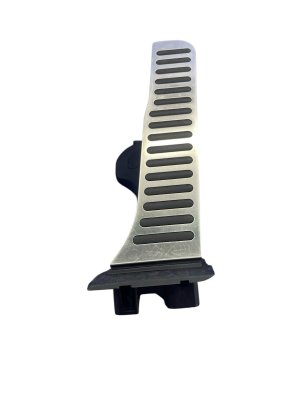
- Accelerator Pedal Assembly
(OEM #1K1721503AS)— This is the most common failure part for a P0223 code on this specific VW platform. The sensors are integrated into the assembly and cannot be replaced individually. This part number supersedes several previous versions.
Trusted brands: Hella, Bosch, Genuine VW
OEM price range: $150-$250
Aftermarket price range: $90-$170 - Throttle Body Assembly
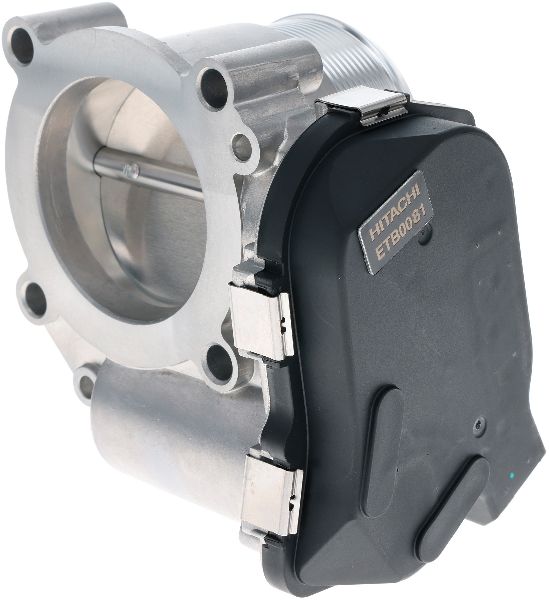
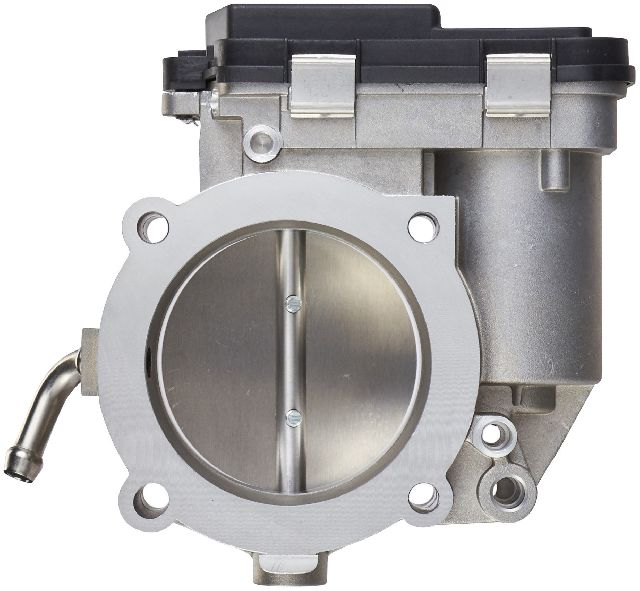
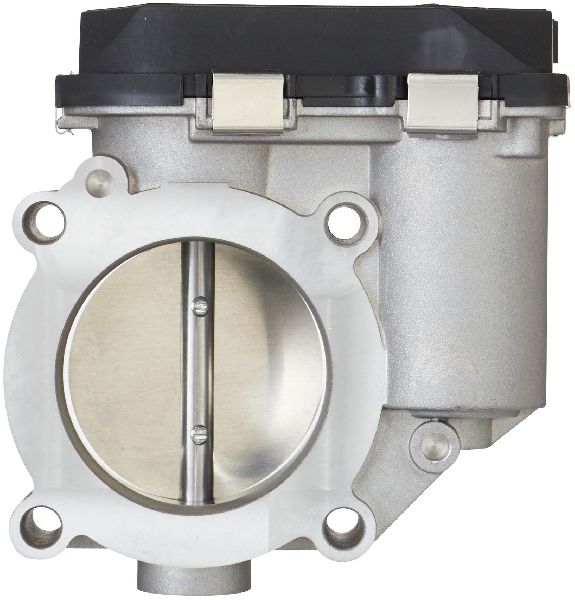
(OEM #06F133062T (Verify by VIN))— If the accelerator pedal is ruled out, the fault may lie in the integrated Throttle Position Sensor (TPS), requiring replacement of the entire throttle body. Note: The part number from Pass 1 (06F133062E) is for an earlier FSI engine, not the TSI. The correct number is typically 06F133062T or a similar variant for the TSI engine; always verify with VIN.
Trusted brands: VDO, Bosch, Genuine VW
OEM price range: $250-$400
Aftermarket price range: $150-$250 - Throttle Body Connector Repair Kit
(OEM #Varies by VIN (see TSB 2018652))— If the wiring at the throttle body is found to be faulty, a repair kit with a new connector and pigtail wires is the official fix per VW's TSB.
Trusted brands: Genuine VW
OEM price range: $30-$60
Aftermarket price range: N/A
Related Codes That Often Appear With This One
- P0123 — This code is for 'Throttle/Pedal Position Sensor 'A' Circuit High'. Seeing it with P0223 could point to a shared power or ground issue affecting both sensor circuits, or a more significant internal failure of the component.
- P2138 — This code indicates a 'Voltage Correlation' error between sensor 'A' and 'B' (VW designations G79/G185 for the pedal). It is often triggered alongside P0223 because the ECM sees that the high voltage from the 'B' sensor doesn't match the plausible reading from the 'A' sensor.
Technical Service Bulletins (TSBs) & Recalls
- TSB 01-09-04 / 2018652: Addresses contact resistance and stressed wiring in the harness between the ECM and throttle valve on 2.0L TSI engines, recommending a wiring repair with an updated connector.
- TSB 01 16 12: Addresses similar throttle system DTCs on earlier 2.0L engines due to high contact resistance in wiring, corroborating the pattern of wiring-related throttle faults on VW platforms.
Platform-Specific Known Issues
- A Technical Service Bulletin (TSB 2018652 / 01-09-04) was issued for 2.0T engines regarding a wiring fault at the throttle body connector, which can cause various throttle-related
Mechanic-Grade Diagnostic Values
- Accelerator Pedal Sensor (G79 & G185) Voltage Sweep — expected: Both sensors should show a smooth voltage sweep from ~0.5V (pedal released) to ~4.5V (pedal fully depressed). The two signals are often inverse or offset for redundancy.. Failure: Sensor 'B' (G185) voltage is stuck high (near 5.0V) and does not change with pedal movement. Any spikes or dropouts during the sweep indicate a faulty sensor.
- Accelerator Pedal Sensor Internal Resistance — expected: Between signal and ground pins, resistance should sweep smoothly as the pedal is pressed. Typical values might range from ~1.0 kΩ to ~2.5 kΩ. Between the two signal pins, a steady resistance of around 3.0-5.0 kΩ might be seen.. Failure: An open circuit (infinite resistance) or a short (zero resistance), or erratic jumps in the reading as the pedal is moved.
- Throttle Body Connector (T6) - 5V Reference Voltage — expected: A steady ~5.0V should be present at Pin 1 with the key on, engine off.. Failure: Voltage is significantly below 5.0V or is absent, pointing to a wiring issue or an ECM fault.
- Throttle Body Connector (T6) - Ground — expected: Near 0.0V at Pin 3 (sensor ground).. Failure: Voltage significantly above 0V indicates a bad ground connection, which can cause high signal voltage faults.
Scan Tool Commands That Help
- VCDS (VAG-COM): Measuring Value Blocks (MVB) - Group 062 — This is the primary screen to view live data from the accelerator pedal position sensors (G79 and G185). It shows the percentage of pedal travel for each sensor, allowing a technician to see if one is stuck high or not responding.
- VCDS (VAG-COM): Basic Settings - Group 060 — This command initiates the Throttle Body Adaptation (TBA). It must be performed after replacing the throttle body to allow the ECM to learn the new sensor's end-stop positions. Failure to do this will result in erratic idle and poor throttle response.
- VCDS (VAG-COM): Advanced Measuring Values — For newer control modules using the UDS protocol, this function replaces Measuring Blocks. It allows the user to select specific values to monitor, such as 'Fuel high pressure actual value' or individual throttle sensor voltages, without being tied to predefined groups.
Wiring & Ground Locations
- T6aa Connector — The 6-pin electrical connector at the accelerator pedal assembly, located in the driver's side footwell above the pedal.. This is the primary connection point for the APP sensors (G79/G185). A loose connection, pushed-out pin, or corrosion here can directly cause a P0223 by interrupting the signal or reference voltage from sensor 'B'.
- T6 Connector (Throttle Body) — The 6-pin electrical connector on the throttle body assembly, located on the engine's intake manifold.. This connector carries power, ground, and signal for the throttle position sensors (G187/G188). It is the subject of TSB 2018652, which notes that stress on the wiring can lead to high resistance or intermittent faults, including P0223.
- ECM Ground Point — Primary engine control grounds are typically located on the chassis near the battery or on the engine block itself. A common location for VWs of this era is on the driver's side frame rail under the battery tray.. A poor ECM ground can cause floating voltages across multiple sensor circuits. If several 'circuit high' codes appear simultaneously with P0223, a bad ground is a strong possibility as the circuits seek an alternative path to ground.
Real Owner Repair Stories
- Ross-Tech Forums user (2009 VW Tiguan 2.0T (similar engine and electronics)) — EPC light and 'Engine Fault Workshop' message, intermittent limp mode, particularly on long downhill coasts.
❌ Tried (didn't work) Replaced throttle body assembly, Performed TSB wiring repair for the throttle body connector, Replaced accelerator pedal position sensor, Replaced coil packs and spark plugs
✅ What actually fixed it The user's problem was intermittent and appeared after previous repairs. The forum discussion pointed towards a potential recurring wiring issue or a less common cause like an ECM fault, as all primary components had been replaced. The final resolution was not posted, but the story highlights that even after replacing all common culprits, the issue can persist, suggesting a deeper electrical problem.
OEM Part Supersession History
06F133062E, 06F133062G, 06F133062J, 06F133062Q→06F133062T, which was then superseded by 06F133062AG, and finally 06F133062AK— Revisions to address internal component reliability and performance of the integrated throttle position sensors and actuator motor.
Heads up: While all are physically interchangeable, it is always recommended to use the latest revision (06F133062AK) to benefit from all reliability updates.
Model Year Variations Within This Range
- 2012-2015 vs 2016-2018: The 2.0L TSI engine in the early Mk6 GLI (2012-2015) produced 200 hp. For the 2016 model year, it was updated to 210 hp. While the fundamental throttle control system is the same, there may be minor software differences in the ECM.
Diagnostic Flowchart
Other Known Issues on This Vehicle
Issues unrelated to this code that are worth knowing about as an owner of this generation:
- Timing Chain Tensioner Failure 🔴 High — Very common on earlier 2.0L TSI engines (approx. 2008-2013). Failure can be sudden and cause catastrophic engine damage. An updated tensioner was later introduced. (Ref: A class-action lawsuit was settled regarding this issue. VW also issued TSB 15-12-01 / TPI 2028302.)
- Water Pump / Thermostat Housing Failure 🟠 Medium — Common across all years. The plastic housing becomes brittle and cracks, or the gasket fails, leading to coolant leaks. Failure can occur anywhere from 40k to 100k+ miles. (Ref: VW has extended warranties for this component on some models.)
- Intake Manifold Runner Flap Failure 🟠 Medium — Common issue, typically occurring after 60k miles. The plastic manifold's runner control motor or position sensor fails, causing fault code P2015, rough idle, and poor performance. (Ref: Warranty was extended for this part on many affected vehicles.)
- Carbon Buildup on Intake Valves 🟠 Medium — Inevitable on all direct-injection (TSI) engines. Performance degradation is noticeable every 60k-80k miles, requiring manual cleaning.
- PCV Valve Failure 🟡 Low — The diaphragm in the Positive Crankcase Ventilation (PCV) valve tears, causing a large vacuum leak, rough idle, and potential oil consumption. A relatively common and inexpensive fix.
- Ignition Coil Failure 🟡 Low — Fairly common failure item leading to engine misfires (P0300-P0304 codes). Easy and inexpensive to replace.
Used vs. New Parts: Buying Guide for This Vehicle
When a used part is the smart pick: A used throttle body can be a cost-effective option if sourced from a low-mileage, reputable salvage yard. However, given that the internal sensors are a wear item, the risk of premature failure is higher. A used accelerator pedal assembly is generally a safer bet, as it is a less complex part and less exposed to engine heat, but it is still an electronic component with a finite lifespan.
Donor-vehicle mileage cap: roughly under 60000 miles for the part to have meaningful remaining life.
What to inspect on the donor part:
- For a throttle body, inspect the bore for excessive carbon buildup or scoring.
- Check all electrical connector pins on both parts for corrosion, bending, or signs of water intrusion.
- Verify the part number on the donor part matches or is a compatible supersession of your original part.
- Ask for the donor vehicle's VIN to check its mileage and history if possible.
OEM-only on this vehicle (don't cheap out):
- Throttle Body Connector Repair Kit: The official VW repair kit (per TSB 2018652) is the only guaranteed way to get the correct gauge wires and weather-proof seals for a lasting repair.
Aftermarket brands forum-validated for this vehicle:
- Bosch (Often the OEM supplier)
- VDO (Often the OEM supplier)
- Hella
Brands owners have reported issues with on this vehicle:
- Unbranded, no-name parts from online marketplaces. These often have poor quality control for the internal potentiometers, leading to incorrect voltage readings, premature failure, and the code returning shortly after installation.
Real Owner Stories
Aggregated from forums and TSBs cited above. Mileages and costs reflect what owners reported in those sources.
2011-2014 Volkswagen GTI (MK6) 2.0L TSI
Symptoms: Owner experienced throttle system DTCs and EPC light issues related to high contact resistance in the wiring harness.
What fixed it: Performed a 6-wire splice repair using the updated connector specified in the TSB.
Source hint: TSB# 2018652/2 - Golfmk6.com
Volkswagen Golf (MK5) 2.0L TSI
Symptoms: The vehicle had a faulty Accelerator Pedal Position Sensor (G79/G185) causing throttle response issues.
What fixed it: Replacement of the entire accelerator pedal assembly.
Source hint: DIY: Replacing Accelerator Pedal Position Sensor - VWWatercooled Australia
Related OBD-II Codes
Frequently Asked Questions
Does TSB 2018652 apply to my 2011-2018 Jetta with the 2.0L TSI engine?
Can I just replace the sensor on my Jetta's accelerator pedal to fix P0223?
Is there a specific wiring repair kit for the throttle body issues on the 2.0T engine?
Do I need any special tools to calibrate a new throttle body on my Jetta?
Why is my Jetta in 'limp mode' with the EPC light on for code P0223?
How can I tell if the problem is the pedal or the throttle body using VAG-specific data?
Helpful Videos

Used OEM Parts in Stock




New Aftermarket Parts Available


The information in this article is provided for general reference and educational purposes only. Vehicle specifications, procedures, and part compatibility can vary by production date, trim level, and region. Always consult your vehicle's factory service manual and verify part numbers before purchasing or performing repairs. Safety-critical components such as airbags, seat belts, and braking systems should be installed by a qualified professional.
- Volkswagen Jetta:
- 🎬 Helpful Videos
- 🛍️ Shop This Part
- What's Unique About the 2011-2018 Volkswagen Jetta
- Symptoms You May Notice
- Most Likely Causes
- Rare But Worth Checking
- Diagnosis Steps
- Parts You'll Likely Need
- Related Codes That Often Appear With This One
- Technical Service Bulletins (TSBs) & Recalls
- Platform-Specific Known Issues
- Mechanic-Grade Diagnostic Values
- Scan Tool Commands That Help
- Wiring & Ground Locations
- Real Owner Repair Stories
- OEM Part Supersession History
- Model Year Variations Within This Range
- Diagnostic Flowchart
- Other Known Issues on This Vehicle
- Used vs. New Parts: Buying Guide for This Vehicle
- Real Owner Stories
- 2011-2014 Volkswagen GTI (MK6) 2.0L TSI
- Volkswagen Golf (MK5) 2.0L TSI
- Related OBD-II Codes
- Frequently Asked Questions
- 🎟️ Get 5% Off