

P0222 on 2011-2014 Ford Mustang 5.0L: Causes, Symptoms, and Fixes for Throttle Sensor 'B' Circuit Low
On a 2011-2014 Mustang 5.0L, P0222 almost always means the electronic throttle body has failed. This triggers the wrench light and a severe loss of power (limp mode). The fix is replacing the entire throttle body assembly, which costs about $150-$300 for the part and is a 2/5 difficulty DIY job.
- P0222 on a 2011-2014 Mustang 5.0L is a very specific and common problem: a failed electronic throttle body.
- Symptoms are sudden and severe, including a wrench light and the car entering 'limp mode' with very little power.
- Do not waste time or money cleaning the throttle body; this is an internal electronic failure, not a carbon buildup issue.
- Replacing the throttle body is a DIY-friendly job that can be done in under an hour with basic tools.
What's Unique About the 2011-2014 Ford Mustang
The electronic throttle body (ETB) on the S197 Mustang platform is a widely documented weak point. Unlike many vehicles where cleaning the throttle body can resolve performance issues, P0222 on this specific Mustang almost always points to an internal electronic failure of the sensors, which are integrated within the throttle body assembly. The internal components of the sensor, such as the carbon-based potentiometer tracks or motor contacts, wear out or become contaminated, leading to the low voltage signal that triggers the code. Ford has acknowledged widespread issues with ETBs on various models through warranty extensions and customer satisfaction programs, though no specific recall exists for this exact model and code.
Symptoms You May Notice
- Wrench light illuminated on the dashboard
- Vehicle enters 'limp mode' with drastically reduced engine power
- Poor, delayed, or non-existent throttle response
- Hesitation or jerky acceleration
- Rough or unstable idle
- Check Engine Light illuminated
- Stalling shortly after starting
- Cleaning the throttle body. While a dirty throttle body can cause other issues, it will not fix the internal electronic failure that triggers P0222 on this vehicle.
Most Likely Causes
- Faulty Electronic Throttle Body (ETB) Assembly 🔴 High Probability The integrated throttle position sensors are a known high-failure item on this platform due to internal electronic wear of the sensor tracks and contacts.
How to confirm: Use a scan tool to monitor live data for the Throttle Position Sensor 'B' voltage (PID: TP_B or TP2). If the voltage is stuck low (typically <0.5V) and does not change as you press the accelerator pedal (with the key on, engine off), and the wiring is confirmed to be good, the throttle body assembly is faulty.
Typical fix: Replace the entire electronic throttle body assembly. The sensors are not sold separately. After installation, a throttle relearn procedure is required: Turn the key to 'On' (engine off), wait 10 seconds, slowly press the gas pedal completely to the floor, slowly release it completely, turn the key off, and wait a few seconds before starting the engine.
Est. part cost: $150-$350 - Wiring Harness or Connector Issue ⚪ Low Probability While not specific to this platform, wiring can become chafed or damaged near the engine, and connector pins can corrode over time.
How to confirm: Visually inspect the wiring harness and connector going to the throttle body for any signs of damage, chafing, or corrosion. Use a multimeter to check for a stable 5-volt reference signal and a good ground at the connector with the key on.
Typical fix: Repair the damaged section of the wiring harness or clean/replace the connector pins.
Est. part cost: $10-$50
Rare But Worth Checking
- Powertrain Control Module (PCM) Failure: This is very rare. Before condemning the PCM, all other possibilities, especially the throttle body and its wiring, must be exhaustively ruled out.
Diagnosis Steps
- Connect an OBD-II scanner and check for any other accompanying codes to get a full picture of the fault.
- Use the scanner's live data function to observe the voltage of Throttle Position Sensor 'B' (TPPSB). With the key on and engine off, the voltage should be low but not zero, and it should increase smoothly as the accelerator is pressed.
- If the TPPSB voltage is stuck below 0.5V and does not respond, the next step is to check the wiring.
- Disconnect the throttle body connector and visually inspect it and the harness for damage, corrosion, or loose pins.
- Use a multimeter to verify that the connector is receiving a 5-volt reference signal and has a solid ground connection from the PCM.
- If the wiring provides correct voltage and ground, but the sensor signal remains low on the scan tool, the electronic throttle body assembly has failed and must be replaced.
Parts You'll Likely Need
- Electronic Throttle Body Assembly
(OEM #BR3Z-9E926-C)— This is the primary cause of code P0222 on this vehicle. The throttle position sensors are integrated into the assembly and cannot be replaced separately. This part number supersedes BR3Z-9E926-A and BR3Z-9E926-B.
Trusted brands: Motorcraft, Standard Motor Products, Hitachi, BBK
OEM price range: $250-$350
Aftermarket price range: $150-$250
Related Codes That Often Appear With This One
- P2135 — This code means 'Throttle/Pedal Position Sensor/Switch A/B Voltage Correlation'. It often appears with P0222 because the PCM sees a conflict between the 'A' and 'B' sensor readings when one of them fails.
- P2112 — This code for 'Throttle Actuator Control System - Stuck Closed' can be triggered when the PCM can't trust the position sensors and defaults to closing the throttle plate as a fail-safe.
- P0223 — This code indicates a 'Circuit High' condition for the same sensor. Seeing it alongside or intermittently with P0222 points strongly to a failing sensor within the throttle body.
- P2104 — This code indicates 'Throttle Actuator Control System - Forced Idle' and is another common companion code when the PCM triggers a fail-safe limp mode due to a throttle body fault.
Technical Service Bulletins (TSBs) & Recalls
- SSM 46085 — Ford issued a technical service bulletin advising technicians that the PC/ED manual was revised for diagnosing electronic throttle bodies and that certain PIDs (ETC_ACT and ETC_DSD) should not be used for diagnosis.
Platform-Specific Known Issues
- Ford's Customer Satisfaction Program 13N03 extended the warranty on the Electronic Throttle Body (ETB) for many Ford vehicles to 10 years or 150,000 miles, acknowledging a widespread problem with the part's reliability. However, this program primarily listed Fusion, Milan, Escape, and Mariner models and has since expired for all eligible vehicles (the final deadline was January 31, 2015 for vehicles already over the limits). While the Mustang was not explicitly named in the public documents for 13N03, the underlying issue of 'contamination on the internal motor contacts' is the same.
- A separate Customer Satisfaction Program, 16B23, did cover 2011-2012 Mustangs (but only those with the 3.7L V6 engine) for the same ETB internal contamination issue, extending the warranty through September 30, 2017. This further confirms the prevalence of this failure mode on the S197 platform.
Mechanic-Grade Diagnostic Values
- Throttle Position Sensor 'B' (TP2) Signal Voltage — expected: At Key On, Engine Off (KOEO), voltage should sweep smoothly from a closed-throttle reading of ~0.3V-1.0V up to ~4.1V-4.9V at wide-open throttle (WOT).. Failure: The voltage is stuck below the PCM's minimum threshold (typically < 0.5V, with codes setting as low as < 0.25V) and does not change when the accelerator pedal is pressed.
- Throttle Position Sensor 'A' (TP1) Signal Voltage — expected: This sensor often has an opposing sweep for redundancy. For example, it may read ~3.7V-4.7V at closed throttle and sweep down to ~0.7V-2.9V at WOT. The key is a smooth, inverse reaction to TP2.. Failure: While not the direct cause of P0222, an erratic or non-responsive TP1 signal will typically set a P0122 (TP1 Low) or P2135 (Correlation) code along with P0222.
- Throttle Body Connector 5V Reference (VREF) — expected: With the connector unplugged and Key On, Engine Off, the voltage between the VREF pin and a known good ground should be approximately 5.0 volts.. Failure: No voltage or significantly low voltage indicates a wiring issue or a problem with the PCM's 5V reference circuit.
- Throttle Body Motor Resistance — expected: With the throttle body disconnected, the resistance between the two throttle motor control pins (TACM+ and TACM-) should be between 1 and 900 ohms.. Failure: An open circuit (infinite resistance) or a direct short (zero ohms) indicates a failed motor within the throttle body assembly, requiring replacement.
Hidden / Shadow Codes Worth Checking
- N/A (Enhanced Data via IDS): While Ford does not use 'shadow codes' in the same way as some German manufacturers, the dealer-level Integrated Diagnostic System (IDS) can retrieve more detailed Continuous Memory, KOEO, and KOER diagnostic trouble codes (DTCs) and freeze frame data than standard OBD-II scanners. This enhanced data can provide more context about the failure. (see via Ford IDS software with a compatible VCM interface.)
Scan Tool Commands That Help
- Ford IDS (Integrated Diagnostic System): Datalogger - Live Data Graphing — Use this to simultaneously graph the voltage PIDs for TP1, TP2, APP1, and APP2. With the key on (engine off), slowly press and release the accelerator pedal. The TP1 and TP2 graphs should show smooth, opposing sweeps. P0222 will be evident as a flat line or erratic dropouts on the TP2 trace.
- Ford IDS (Integrated Diagnostic System): Powertrain > Service Functions > Reset All Adaptations — After replacing the electronic throttle body, this function should be used to clear all learned fuel and adaptive values from the PCM. This forces the system to relearn parameters with the new hardware, which is more comprehensive than a simple battery disconnect.
- Ford IDS (Integrated Diagnostic System): Datalogger - Recording Function — For intermittent faults, a technician can set up the IDS to record relevant PIDs (TP1, TP2, RPM, Load) and perform a specific drive cycle, such as a 3rd gear pull from 1500 to 4500 RPM, to try and capture the fault as it occurs.
Wiring & Ground Locations
- C175B — The 6-pin electrical connector directly on the electronic throttle body assembly.. This is the primary connection point for the two throttle position sensors and the throttle actuator motor. All voltage and resistance checks are performed at this connector or its terminals. It is a critical point for checking for corrosion or pushed-out pins.
- G106 (5.0L) — Right (passenger) side of the engine block.. This is a major engine ground point. A loose or corroded connection here can create electrical noise and voltage drops, potentially affecting sensor readings and causing intermittent issues that are difficult to diagnose.
- G201 — Right (passenger) side of the dash, typically behind the kick panel near the PCM.. This is a primary ground for the Powertrain Control Module (PCM). A poor connection here can cause a wide range of bizarre electronic issues, including incorrect sensor readings and false codes.
- Engine Ground Strap — A braided strap connecting the engine block to the chassis/firewall, typically on the driver's side.. This provides the main ground return path from the engine sensors to the chassis. If this strap is broken, loose, or corroded, the electrical system will try to find ground through other paths (like throttle or shifter cables), leading to erratic behavior and potential sensor signal corruption.
OEM Part Supersession History
BR3Z-9E926-A→BR3Z-9E926-B— Internal revision for improved reliability of electronic components.BR3Z-9E926-B→BR3Z-9E926-C— Internal revision for improved reliability of electronic components.
Heads up: BR3Z-9E926-C is the current, most reliable OEM replacement and is fully backwards compatible with vehicles that originally used -A or -B versions.
Model Year Variations Within This Range
- 2011-2012 vs 2013-2014: The 2013-2014 5.0L Coyote engine was rated at 420 hp, up from 412 hp in 2011-2012. This was achieved by removing the piston oil squirters and using pistons with a new low-friction coating. However, the electronic throttle control system, the throttle body part number, and the P0222 failure mode are identical across the entire 2011-2014 range. These engine changes do not affect the diagnosis or repair of this code.
Diagnostic Flowchart
Other Known Issues on This Vehicle
Issues unrelated to this code that are worth knowing about as an owner of this generation:
- MT-82 Manual Transmission Issues 🟠 Medium — Common complaint, especially on cars driven aggressively. Issues include high-RPM lockout (especially 3rd/4th gear), grinding, and premature wear of synchronizers and shift forks. (Ref: No official recall, but the subject of a class-action lawsuit.)
- "Coyote Tick" or "Typewriter Tick" 🟡 Low — A common, rhythmic ticking noise from the engine at idle, especially when warm or after an oil change. It is widely reported across 2011-2024 5.0L engines in both Mustangs and F-150s. (Ref: Ford has issued Special Service Messages (SSMs) stating the noise is a normal operating characteristic and does not affect durability, advising no repairs should be attempted.)
- Coolant Leaks 🟡 Low — Leaks can develop from the plastic T-connector in the upper radiator hose or from the water pump itself.
- Hood Corrosion/Paint Bubbling 🟡 Low — Corrosion and bubbling can occur on the leading edge of the aluminum hood, a common issue on S197 Mustangs.
Used vs. New Parts: Buying Guide for This Vehicle
When a used part is the smart pick: For this specific failure, a used part is generally NOT recommended. The primary cause of P0222 is internal electronic wear and contamination of the non-serviceable sensors. A used throttle body from a salvage yard carries a high risk of having the same issue or developing it shortly after installation. It only makes sense if the budget is extremely tight and the part comes from a very low-mileage donor vehicle with some form of short-term warranty.
Donor-vehicle mileage cap: roughly under 40000 miles for the part to have meaningful remaining life.
What to inspect on the donor part:
- Verify the donor vehicle's mileage; lower is always better.
- Inspect the electrical connector pins for any signs of corrosion, moisture, or damage.
- Check the throttle plate for smooth movement by hand (if possible); it should not bind or stick.
- Ideally, source from a vehicle that suffered a rear-end collision to minimize the chance of frontal impact damage to the engine components.
Aftermarket brands forum-validated for this vehicle:
- Motorcraft (OEM)
- Standard Motor Products (SMP)
- Hitachi
Brands owners have reported issues with on this vehicle:
- Unbranded, no-name parts from online marketplaces. While tempting due to low cost, they often have poor quality control, leading to premature failure or incorrect voltage signals right out of the box.
Real Owner Stories
Aggregated from forums and TSBs cited above. Mileages and costs reflect what owners reported in those sources.
2015+ Ford Mustang (S550 platform)
Symptoms: Vehicle experienced a stall shortly after starting and had no response from the accelerator pedal.
What fixed it: Replacement of the electronic throttle body assembly.
Source hint: Mustang6G.com - Thread Title: 'P0222 & P2101 no response from accelerator'
2011-2014 Ford F-150 5.0L Coyote
Symptoms: The vehicle entered 'limp mode' due to throttle issues.
What fixed it: Replacement of the electronic throttle body, which is the common culprit for this engine platform.
Source hint: 2011-2014 Ford F-150 5.0L platform mate description
Related OBD-II Codes
Frequently Asked Questions
Does the Customer Satisfaction Program 13N03 cover my 2011-2014 Mustang 5.0L?
I have a 2012 Mustang; is there any extended warranty for the throttle body like the V6 models have?
Can I just clean the throttle body to fix the P0222 code on my Coyote V8?
Which PIDs should I avoid using when diagnosing the throttle body according to Ford?
What is the 'Coyote Tick' and is it related to my P0222 throttle code?
How do I perform the throttle relearn procedure after replacing the ETB?
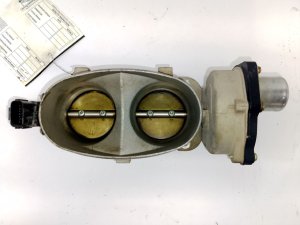
Used OEM Parts in Stock


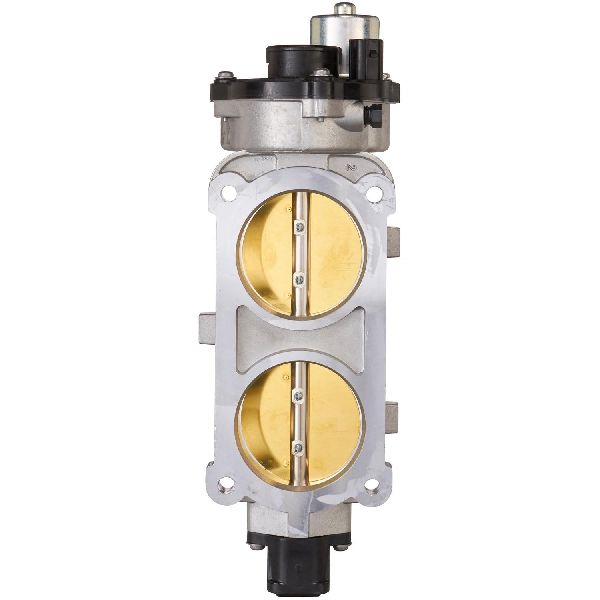
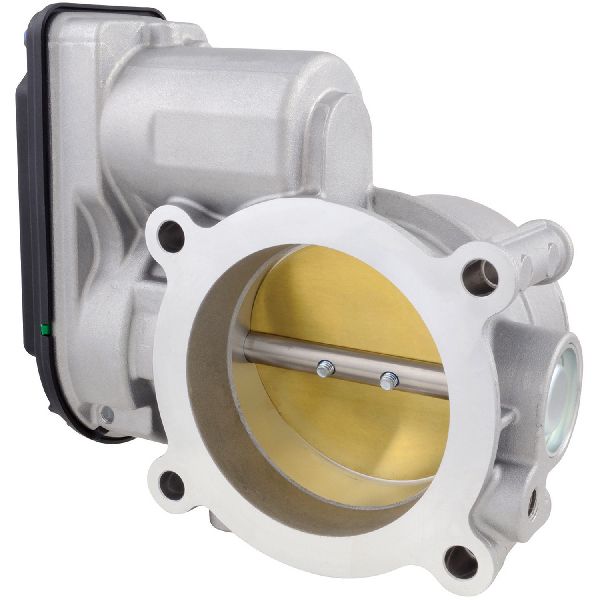
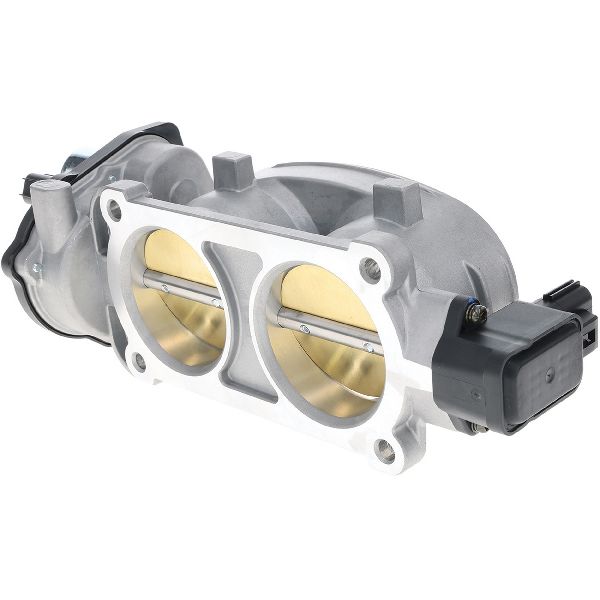
New Aftermarket Parts Available


The information in this article is provided for general reference and educational purposes only. Vehicle specifications, procedures, and part compatibility can vary by production date, trim level, and region. Always consult your vehicle's factory service manual and verify part numbers before purchasing or performing repairs. Safety-critical components such as airbags, seat belts, and braking systems should be installed by a qualified professional.
- Ford Mustang:
- 🛍️ Shop This Part
- What's Unique About the 2011-2014 Ford Mustang
- Symptoms You May Notice
- Most Likely Causes
- Rare But Worth Checking
- Diagnosis Steps
- Parts You'll Likely Need
- Related Codes That Often Appear With This One
- Technical Service Bulletins (TSBs) & Recalls
- Platform-Specific Known Issues
- Mechanic-Grade Diagnostic Values
- Hidden / Shadow Codes Worth Checking
- Scan Tool Commands That Help
- Wiring & Ground Locations
- OEM Part Supersession History
- Model Year Variations Within This Range
- Diagnostic Flowchart
- Other Known Issues on This Vehicle
- Used vs. New Parts: Buying Guide for This Vehicle
- Real Owner Stories
- 2015+ Ford Mustang (S550 platform)
- 2011-2014 Ford F-150 5.0L Coyote
- Related OBD-II Codes
- Frequently Asked Questions
- 🎟️ Get 5% Off