

P0217 on 2015-2019 Lincoln MKZ: Engine Overheat and Coolant Intrusion Fixes
P0217 indicates an engine overheat. On 2017-2019 MKZ models with the 2.0L EcoBoost engine, this code is a strong indicator of a known coolant intrusion issue requiring engine replacement, as detailed in Ford TSB 22-2229. Do not drive the vehicle. This issue is part of a wider problem affecting multiple Ford/Lincoln models with 1.5L and 2.0L EcoBoost engines, leading to class-action lawsuits.
- P0217 signifies a critical engine overheat condition; stop driving immediately to prevent catastrophic damage.
- On 2017-2019 Lincoln MKZs with the 2.0L EcoBoost engine, this code is strongly linked to a known engine defect (coolant intrusion) detailed in TSB 22-2229.
- Look for accompanying symptoms like unexplained coolant loss, white exhaust smoke, and misfire codes (P03xx), which are classic signs of the coolant intrusion issue.
- Diagnosis must begin with checking for coolant intrusion via a cooling system pressure test and borescope inspection before considering other causes.
- The official fix for the coolant intrusion defect is a complete long block engine replacement, which is a complex and expensive repair.
What's Unique About the 2015-2019 Lincoln MKZ

For the 2017-2019 Lincoln MKZ with the 2.0L EcoBoost engine, P0217 is not just a generic overheat code. It is specifically listed in Ford's Technical Service Bulletins (including the latest, TSB 22-2229) as a key indicator of a serious, well-documented engine defect. The original engine block design has a flaw in the open-deck cooling passages between the cylinders. This design can allow coolant to leak directly into the cylinders, causing overheating, misfires, and eventual catastrophic engine failure. This turns a common code into a symptom of a much more severe, platform-specific problem that has prompted class-action lawsuits.
Diagnostic Flowchart
Tap your situation to follow the diagnostic path that matches what you're seeing on this vehicle.
Symptoms You May Notice

- Check Engine Light is on
- Engine temperature gauge reading high or in the red zone
- Engine temperature warning light is illuminated
- Rough running condition or engine misfires, especially at startup.
- Unexplained loss of engine coolant with no visible external leaks.
- White, sweet-smelling smoke from the exhaust, particularly on a cold start.
- Reduced engine power or vehicle entering 'limp mode'.
- Gurgling or sloshing sound from behind the dashboard or from the engine bay.
- Spark plugs, when removed, may appear unusually clean or white from being steam-cleaned by burning coolant.
- Replacing only the spark plugs and ignition coils when misfire codes are present. If coolant intrusion is the root cause, the new parts will quickly be fouled by coolant, and the problem will return.
- Replacing the head gasket. The issue is a flaw in the engine block itself, not typically the head gasket. Replacing only the gasket will not solve the problem.
Most Likely Causes

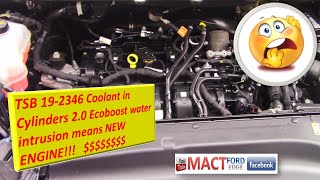
- Engine Coolant Intrusion into Cylinders 🔴 High Probability A known design flaw in the 2.0L EcoBoost engine block used in 2017-2019 MKZ models (built on or before April 8, 2019) can cause a crack between coolant passages and the cylinder wall. The open-deck design features a thin channel for coolant between cylinders, which can fail and allow coolant to seep into the combustion chamber. This is documented in a series of Ford TSBs, culminating in TSB 22-2229. 🎬 See how technicians identify coolant intrusion per the TSB.
How to confirm: Perform a cooling system pressure test; per the TSB, the system is pressurized and should not drop more than 4 psi over 5 hours. If a leak is detected, remove spark plugs and use a borescope to visually inspect the inside of the cylinders for coolant, which may look like small puddles or unusually clean piston tops. Cylinders 2 and 3 are the most common failure points.
Typical fix: Replacement of the long block engine assembly with a redesigned part that has updated cooling passages. The repair is explicitly detailed in TSB 22-2229.
Est. part cost: $4000-$8000 - Low Engine Coolant Level 🟡 Medium Probability If not caused by internal intrusion, coolant can be lost from common leaks in hoses, the radiator, or the water pump. Always rule out the more severe internal leak first on this platform.
How to confirm: Visually inspect the coolant reservoir and check for puddles under the vehicle. A cooling system pressure test can reveal external leaks if no internal leak is found.
Typical fix: Identify and repair the source of the leak, then refill and bleed the cooling system.
Est. part cost: $20-$600 - Failed Thermostat ⚪ Low Probability
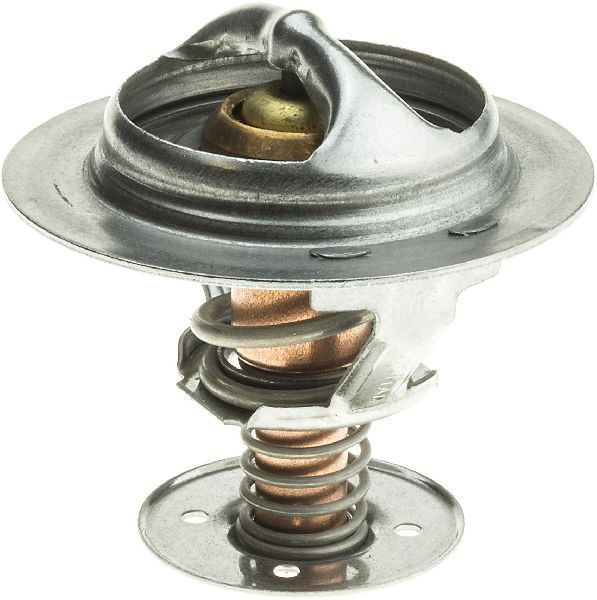
How to confirm: Monitor coolant temperature via a scan tool. If the engine overheats but the radiator hoses are not hot, the thermostat is likely stuck closed. This is a standard cooling system check.
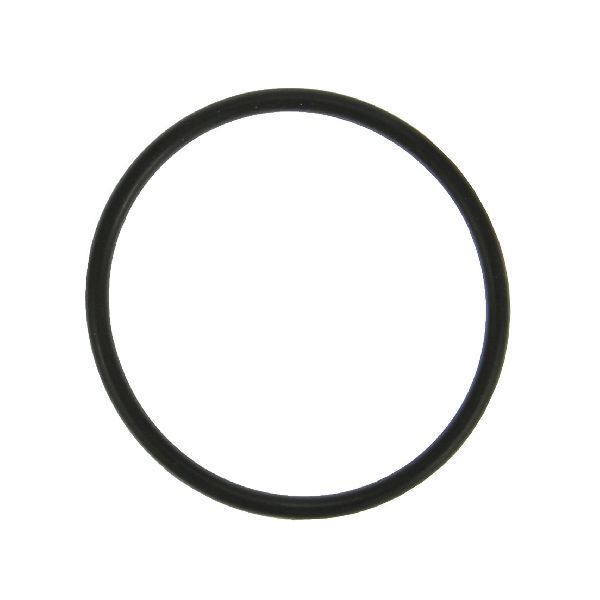
Typical fix: Replace the thermostat and gasket.
Est. part cost: $30-$100 - Malfunctioning Cooling Fan ⚪ Low Probability
How to confirm: With the engine at operating temperature, verify that the cooling fans are running. If not, check fuses, relays, and the fan motor itself. This is a basic overheating diagnostic step.
Typical fix: Replace the faulty cooling fan assembly, relay, or fuse.
Est. part cost: $150-$500 - Faulty Cylinder Head Temperature (CHT) Sensor ⚪ Low Probability
How to confirm: Compare the CHT sensor reading on a scan tool to a known good temperature reading from an infrared thermometer aimed at the sensor housing. An erratic or illogical reading, or a resistance value that doesn't match the service manual's temperature/resistance chart, indicates a faulty sensor.
Typical fix: Replace the CHT sensor.
Est. part cost: $25-$75
Rare But Worth Checking
- Water Pump Failure: While less common than the coolant intrusion issue, a failing water pump will prevent coolant circulation and cause a rapid overheat. The pump is located on the side of the engine and can be visually inspected for leaks from its weep hole.
- Restricted Radiator: Internal or external blockages in the radiator can impede airflow and coolant flow, reducing the system's efficiency.
Diagnosis Steps

- Verify the code with an OBD-II scanner. Note all other stored codes, especially misfire (P03xx) and cylinder head temp (P1299, P1285) codes.
- Check the engine coolant level and condition. A low level without external leaks is a major red flag for coolant intrusion. Milky or frothy oil on the oil cap is another sign, though less common with this specific failure mode.
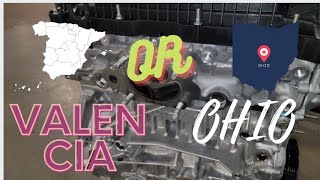
- For 2.0L EcoBoost engines, immediately suspect coolant intrusion 🎬 Watch: Why this engine design flaw affects all manufacturing plants. per TSB 22-2229.
- Perform a cooling system pressure test. Pressurize to 20 psi and monitor for several hours. According to the TSB, a pressure drop greater than 4 psi over 5 hours indicates a leak.
- If the pressure test confirms a leak, remove all spark plugs and use a borescope to inspect inside the cylinders for any signs of moisture, coolant residue, or unusually clean, steam-cleaned piston tops. Cylinders 2 and 3 are the most common failure points.
- If no internal leak is found, proceed with standard cooling system diagnostics: check for external leaks (hoses, radiator, water pump), test cooling fan operation, and verify thermostat function.
- Monitor live data from the Cylinder Head Temperature (CHT) sensor to ensure it is providing a rational reading compared to an external temperature measurement. A faulty sensor can incorrectly trigger an overheat condition.
Parts You'll Likely Need
- Long Block Engine Assembly
(OEM #J2GZ-6006-E (supersedes previous versions))— This is the official Ford-mandated repair for the coolant intrusion issue on affected 2.0L EcoBoost engines, as per TSB 22-2229. This part is the redesigned engine block intended to permanently fix the flaw.
Trusted brands: Motorcraft
OEM price range: $4000-$8000
Aftermarket price range: $3500-$6000 - Engine Coolant Thermostat — A common failure point in any cooling system that can cause an overheat condition if it sticks closed. It's a standard diagnostic check if coolant intrusion is ruled out.
Trusted brands: Motorcraft, Gates
OEM price range: $50-$100
Aftermarket price range: $30-$70
Related Codes That Often Appear With This One
- P0300 — Random/Multiple Cylinder Misfire Detected. This occurs when coolant in the cylinders disrupts combustion.
- P0301-P0304 — Cylinder-specific misfire codes that often accompany coolant intrusion into one or more cylinders. Cylinders 2 and 3 are commonly affected.
- P0316 — Misfire Detected on Startup (First 1000 Revolutions). Coolant that has leaked into a cylinder overnight will cause a misfire immediately upon starting the engine.
- P1299 — Cylinder Head Overtemperature Protection Active. This is a Ford/Lincoln specific code that is triggered alongside the generic P0217 when the cylinder head sensor detects excessive heat, putting the car in limp mode.
- P1285 — Cylinder Head Overtemperature Sensed. Another Ford/Lincoln specific code indicating the cylinder head temperature has exceeded its limit, often seen with P0217 and P1299 in relation to this issue.
Technical Service Bulletins (TSBs) & Recalls
- TSB 22-2229: The most current bulletin. Addresses a rough running condition, white smoke, and DTCs including P0217, P0300-P0304, P0316, and P1299 due to coolant intrusion into the cylinders on 2.0L EcoBoost engines. The prescribed fix is engine long block replacement.
- TSB 19-2346, 19-2208, 19-2172: Earlier, superseded versions of the same TSB. Their existence shows a documented history of Ford attempting to address this ongoing problem.
Platform-Specific Known Issues
- TSB 22-2229 (superseding earlier versions like 19-2346) documents a defect in 2017-2019 MKZ models with the 2.0L EcoBoost engine (built on or before April 8, 2019) where coolant can intrude into the cylinders. This is the most probable cause of P0217 when accompanied by misfires.
- A class-action lawsuit has been filed against Ford covering multiple vehicles, including the 2017-2019 Lincoln MKZ, for this specific coolant intrusion defect, alleging the company knew about the flaw but did not provide an adequate remedy for customers.
- Owners often report being denied warranty or goodwill assistance from Ford/Lincoln if the vehicle is even slightly outside the warranty period, leading to out-of-pocket repair costs of $7,000-$10,000.
Mechanic-Grade Diagnostic Values
- Cylinder Head Temperature (CHT) Sensor Resistance (cold engine) — expected: Approximately 43 kΩ at 60°F (15°C). The resistance should correspond to the ambient temperature as per the vehicle's service manual chart.. Failure: A reading that is wildly different from the expected value for a given temperature, or an open/short circuit.
- Cylinder Head Temperature (CHT) Sensor Voltage (unplugged) — expected: 5 volts. Failure: With the sensor connector unplugged, the scan tool live data for CHT voltage should read the full 5V reference from the PCM. The temperature reading will default to a fail-safe value like -40°F. If 5V is not present, there may be a wiring or PCM issue.
- Normal Operating Cylinder Head Temperature — expected: 195°F to 220°F (90°C to 105°C). Failure: Sustained temperatures above this range, especially when not under heavy load, indicate an overheating condition. The P1299 protection mode often activates around 260°F (127°C).
Scan Tool Commands That Help
- Ford IDS or equivalent professional scan tool: Clear Codes / Reset KAM (Keep Alive Memory) — After replacing a faulty CHT sensor or performing other cooling system repairs, the P1299 'Cylinder Head Overtemperature Protection Active' mode may remain active even if the fault is gone. A hard reset using a scan tool might be necessary to clear the limp mode and extinguish the warning messages.
Wiring & Ground Locations
- Cylinder Head Temperature (CHT) Sensor — On the 2.0L EcoBoost, the CHT sensor is typically located on the cylinder head, often between cylinders 2 and 3, sometimes near a water outlet housing above the turbocharger.. The CHT sensor provides the primary temperature reading that triggers P0217 and P1299. A faulty sensor or corroded connector/wiring can send false overheat signals to the PCM.
- G100 / G101 / G102 — Located on the left front of the engine compartment, near the strut tower and Battery Junction Box (BJB).. These are major chassis ground points for powertrain electronics. A poor ground connection can cause erratic sensor readings, including from the CHT sensor, leading to false overheat codes.
- G104 / G106 — Located on the right side of the engine compartment.. These are additional chassis grounds for powertrain components. Ensuring all grounds are clean and tight is a crucial step in diagnosing any electronic fault code.
Real Owner Repair Stories
- Lincoln MKZ Forum user (2017 Lincoln MKZ 2.0L EcoBoost, 48,000 miles) — Check engine light came on (P0302 - Misfire Cylinder 2), followed by a worsening rough idle and eventually white smoke from the exhaust and an overheat event on the way to the dealer.
❌ Tried (didn't work) Clearing the initial P0302 code, which came back.
✅ What actually fixed it The dealer diagnosed the vehicle per the relevant TSB (at the time, a predecessor to TSB 22-2229) and confirmed coolant intrusion. The fix was a complete long block engine replacement, which was performed under warranty. - Reddit user r/fordfusion (2017 Ford Fusion SE 2.0L EcoBoost (same powertrain)) — Coolant intrusion confirmed by dealer.
❌ Tried (didn't work) Initial dealer visit resulted in a 'nothing we can do' response.
✅ What actually fixed it After the owner called Ford corporate, the dealer acknowledged TSB 22-2229 and replaced the engine under warranty with the redesigned long block, part number J2GZ-6006-E.
OEM Part Supersession History
jj7z6006b, js7z6006a, js7z6006c→J2GZ-6006-E— This is the updated long block engine assembly with the redesigned block casting to correct the coolant intrusion flaw between cylinders.
Model Year Variations Within This Range
- 2017-2019: The 2017 model year facelift introduced the updated 2.0L twin-scroll EcoBoost engine to the MKZ lineup. This new engine design, produced in Valencia, Spain, is the version susceptible to the coolant intrusion issue detailed in TSB 22-2229. Earlier 2015-2016 2.0L models used a different engine design and are not listed as being affected by this specific TSB.
Helpful Videos
Used OEM Parts in Stock

New Aftermarket Parts Available


The information in this article is provided for general reference and educational purposes only. Vehicle specifications, procedures, and part compatibility can vary by production date, trim level, and region. Always consult your vehicle's factory service manual and verify part numbers before purchasing or performing repairs. Safety-critical components such as airbags, seat belts, and braking systems should be installed by a qualified professional.
- Lincoln MKZ:
- 🎬 Helpful Videos
- 🛍️ Shop This Part
- What's Unique About the 2015-2019 Lincoln MKZ
- Diagnostic Flowchart
- Symptoms You May Notice
- Most Likely Causes
- Rare But Worth Checking
- Diagnosis Steps
- Parts You'll Likely Need
- Related Codes That Often Appear With This One
- Technical Service Bulletins (TSBs) & Recalls
- Platform-Specific Known Issues
- Mechanic-Grade Diagnostic Values
- Scan Tool Commands That Help
- Wiring & Ground Locations
- Real Owner Repair Stories
- OEM Part Supersession History
- Model Year Variations Within This Range
- 🎟️ Get 5% Off