

P0217 on 2015-2019 Lincoln MKC: Engine Overheating and Coolant Intrusion Fixes
P0217 on a 2015-2019 Lincoln MKC indicates a critical engine overheat condition. This is most often caused by a known engine design flaw where coolant leaks into the cylinders. This is a severe issue that typically requires a complete engine replacement with a redesigned block, costing between $7,000 and $11,500.
- P0217 on a 2015-2019 Lincoln MKC with the 2.0L engine is a strong indicator of a critical internal engine failure known as 'coolant intrusion,' not just a simple overheating part.
- The root cause is a documented design flaw in the engine block that requires a complete long block engine replacement with a redesigned part as the only permanent solution.
- This is a well-known issue affecting several Ford and Lincoln models, covered by multiple Technical Service Bulletins and the subject of class-action lawsuits.
- Repair is extremely expensive, typically costing between $7,000 and $11,500. Driving the vehicle with this code is not recommended and can lead to catastrophic engine seizure.
What's Unique About the 2015-2019 Lincoln MKC

The 2015-2019 Lincoln MKC, equipped with 2.0L and 2.3L EcoBoost engines, is susceptible to a specific design flaw in the 2.0L engine block. The original 'open-deck' block design features a narrow slit for coolant to pass between the cylinders. This design leaves insufficient surface area for the head gasket to create a durable seal, which can lead to the cylinder block cracking and allowing coolant to leak, or 'intrude,' directly into the engine's cylinders. This isn't a typical coolant leak from a hose or radiator; it's an internal failure that causes overheating, misfires, and often triggers the P0217 code, ultimately requiring major engine repair or replacement with a redesigned block.
Diagnostic Flowchart

Tap your situation to follow the diagnostic path that matches what you're seeing on this vehicle.
Symptoms You May Notice

- Temperature gauge reading hot or in the red zone
- Low coolant level in the reservoir with no visible external leaks
- White, sweet-smelling smoke from the exhaust, especially on a cold start
- Engine running rough or misfiring, particularly on cylinders 2 or 3
- Check Engine Light is on
- Reduced engine power or 'limp mode' activation
- Gurgling or boiling sounds from the engine area.
- Replacing the thermostat or water pump without first confirming the coolant intrusion issue. If the vehicle is losing coolant with no visible leaks, these parts are unlikely to be the root cause.
- Performing only a head gasket replacement. Due to the flaw in the engine block itself, a new head gasket will not solve the problem and the leak will return.
Most Likely Causes

- Internal Coolant Intrusion into Cylinders 🔴 High Probability A known design flaw in the open-deck 2.0L EcoBoost engine block can cause a crack to form in the thin wall between cylinders, allowing coolant to leak internally. Ford/Lincoln has issued multiple Technical Service Bulletins (TSBs) for this issue, which affects MKC models built on or before April 18, 2019.
How to confirm: A mechanic will perform a cooling system pressure test. Per TSB 19-2208 and SSM 47204, the system is pressurized to 20 psi (138 kPa) and held for 5 hours; a pressure drop of more than 4 psi (27.57 kPa) indicates a leak. If no external leak is found, an internal leak is likely. A chemical 'block test' can detect exhaust gases in the coolant. Finally, a borescope inspection of the cylinders can provide visual confirmation of coolant, which often appears as an unusually clean or 'steam-cleaned' piston top.
Typical fix: The only permanent repair is to replace the engine with a redesigned long block assembly that uses improved cooling passages between the cylinders. This is a very expensive and labor-intensive job, with Ford quoting 14.7 labor hours for an AWD model.
Est. part cost: $4000-$8000 - Failed Thermostat ⚪ Low Probability
How to confirm: If the engine overheats quickly but the upper radiator hose remains cool, the thermostat may be stuck closed, preventing coolant circulation. A thermostat stuck open will more likely trigger a P0128 code for taking too long to warm up.
Typical fix: Replace the thermostat and housing as a complete assembly. It is recommended to replace the engine coolant at the same time.
Est. part cost: $50-$150 - Failing Water Pump ⚪ Low Probability
How to confirm: Listen for grinding or whining noises from the engine's belt area. A visual inspection may reveal coolant leaking from the pump's weep hole or a wobble in its pulley.
Typical fix: Replace the water pump and serpentine belt.
Est. part cost: $100-$300 - Clogged Radiator or Cooling Fan Failure ⚪ Low Probability
How to confirm: Check for debris blocking airflow through the radiator fins. Verify the electric cooling fans turn on when the engine gets hot or when the A/C is activated. A technician can use a bidirectional scan tool like the Ford IDS to command the fans on to verify functionality.
Typical fix: Clean or replace the radiator; replace the faulty cooling fan motor or relay.
Est. part cost: $50-$600
Rare But Worth Checking
- Faulty Engine Coolant Temperature (ECT) Sensor: A failing ECT sensor can send an incorrect high-temperature signal to the PCM, triggering code P0217 even if the engine is not actually overheating. This should be ruled out before assuming a major mechanical failure.
Diagnosis Steps

- DO NOT open the coolant cap when the engine is hot. Allow the vehicle to cool completely.
- Check the coolant level in the reservoir. If it is low, proceed with diagnosis.
- Scan the PCM for all stored trouble codes. Note if misfire codes (P030x) or P1299 are present with P0217, as this strongly points to coolant intrusion.
- Visually inspect the engine bay for any signs of external coolant leaks from hoses, the radiator, or the water pump.
- If no external leaks are found, perform a cooling system pressure test per TSB guidelines: pressurize to 20 psi and hold for 5 hours. A pressure drop over 4 psi indicates a leak.
- Perform a chemical block test (combustion leak test) to check for the presence of exhaust gases in the cooling system.
- Use a borescope to visually inspect the inside of the cylinders for coolant. A 'steam-cleaned' piston top is a tell-tale sign of coolant intrusion.
Parts You'll Likely Need
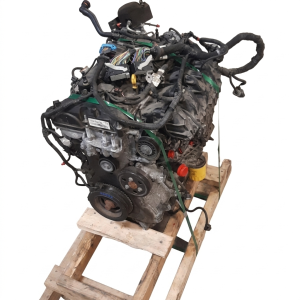
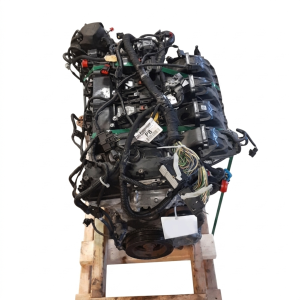
- Engine Long Block Assembly
(OEM #VIN-specific, reference catalog code 6006. Example: J2GZ-6006-E)— This is the official fix recommended by Lincoln's TSB for the coolant intrusion issue. It replaces the entire engine assembly with a redesigned block that corrects the flaw.
Trusted brands: Motorcraft
OEM price range: $5000-$8000
Aftermarket price range: $4000-$6000
Related Codes That Often Appear With This One
- P0300, P0301, P0302, P0303, P0304 — These are misfire codes. Coolant in the cylinders prevents proper combustion, leading to misfires, most commonly in cylinders 2 and 3.
- P0316 — This code indicates a misfire was detected within the first 1,000 engine revolutions, which is common when coolant has pooled in a cylinder overnight.
- P1299 — This is a manufacturer-specific code for 'Cylinder Head Overtemperature Protection Active', which is triggered when the PCM detects excessive heat and may limit engine power to prevent damage.
Technical Service Bulletins (TSBs) & Recalls
- TSB 22-2229: Supersedes previous bulletins, confirming that DTC P0217 with misfire codes on 2017-2019 MKC (built on or before 18-Apr-2019) may be due to coolant intrusion, requiring long block replacement.
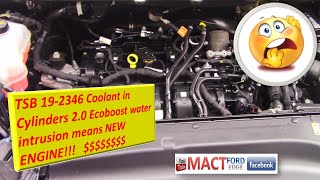
- TSB 19-2346: Details the issue of coolant intrusion for 2017-2019 MKC vehicles with the 2.0L EcoBoost, specifying that the fix is to replace the long block engine assembly.
- TSB 19-2208: An earlier version of the bulletin that provides specific diagnostic parameters, such as the 5-hour, 20-psi pressure test.
- SSM 47204: A Special Service Message from Ford acknowledging that a rough run with misfire codes may be due to coolant intrusion from block corrosion and providing the 20 psi / 5 hour pressure test diagnostic criteria.
Platform-Specific Known Issues
- A design defect in the 2.0L EcoBoost engine block can cause coolant to leak into the cylinders, a problem known as 'coolant intrusion'.
- Ford/Lincoln has issued multiple Technical Service Bulletins (TSBs), including TSB 19-2346 and TSB 22-2229, which acknowledge the problem and recommend a long block engine replacement for affected vehicles, specifically 2017-2019 MKC models built on or before April 18, 2019.
- This issue has led to numerous owner complaints and multiple class-action lawsuits against Ford Motor Company, alleging the company knew of the defect and concealed it.
Mechanic-Grade Diagnostic Values
- Cooling System Pressure Test — expected: Pressure drop of less than 4 psi (27.57 kPa) after being held at 20 psi (138 kPa) for 5 hours.. Failure: A pressure drop of more than 4 psi indicates a leak. If no external leak is visible, an internal leak (coolant intrusion) is highly probable.
- Engine Coolant Temperature (ECT) Sensor Live Data — expected: Normal operating temperature is typically between 195–220°F (90–104°C).. Failure: A sustained reading above ~260°F (127°C) will trigger the P0217 code.
- Engine Coolant Temperature (ECT) Sensor Resistance — expected: ECT sensors are thermistors, so resistance changes with temperature. A general baseline is ~2.0-2.5 kΩ at room temperature (~70°F/21°C).. Failure: An open circuit (infinite resistance) or short circuit (zero resistance), or values that do not decrease smoothly as the sensor is heated.
Scan Tool Commands That Help
- Ford IDS (Integrated Diagnostic System): Cooling Fan Control / Output State Control — When diagnosing a potential cooling fan failure as a cause for overheating. This bidirectional command allows the technician to manually turn the cooling fans on and off to verify the functionality of the fan motors, relays, and wiring, helping to rule out these components before suspecting a more complex issue.
Wiring & Ground Locations
- Engine Coolant Temperature (ECT) Sensor — Typically screwed into the cylinder head or thermostat housing on the 2.0L and 2.3L EcoBoost engines.. This sensor provides the primary temperature reading to the PCM. A faulty sensor or a corroded connector/wiring at this location can send an incorrect signal, falsely triggering P0217 or failing to report a true overheat condition.
Real Owner Repair Stories
- Reddit user post on r/personalfinance (2017 Lincoln MKC, 44,000 miles) — Engine light on, coolant issues, and a diagnosis of a coolant leak causing engine problems.
❌ Tried (didn't work) An independent mechanic offered a '$4500 band-aid' fix but advised against it, stating it wouldn't be a permanent solution.
✅ What actually fixed it The Lincoln dealership confirmed the coolant intrusion defect and stated the only fix was a complete engine replacement, quoting a cost of $11,500.
OEM Part Supersession History
Original Engine Block (Pre-2019 2.0L EcoBoost)→Redesigned Long Block Assembly (Example P/N: J2GZ-6006-E)— The original block had an open-deck design with a slot cast between the cylinders for coolant flow. This created a weak point with insufficient surface area for the head gasket to seal, leading to cracks and coolant intrusion. The redesigned block eliminates this slot and uses cross-drilled passages for coolant, providing a much more robust sealing surface.
Heads up: Using an old-design block or only replacing the head gasket will result in a repeat failure. It is critical to use the updated long block assembly specified in TSB 22-2229 for a permanent repair.JJ7Z-6006-B, JS7Z-6006-A, JS7Z-6006-C→J2GZ-6006-E— Part number updates reflecting the redesigned long block assembly for service replacement.
Model Year Variations Within This Range
- 2017-2019 (built on or before April 18, 2019): These models use the 2nd generation 'twin-scroll' 2.0L EcoBoost engine with the flawed open-deck block design, making them highly susceptible to the coolant intrusion issue. Models built after this date, and the subsequent 2020 Lincoln Corsair which replaced the MKC, use a redesigned engine block that resolves this specific problem.
Helpful Videos
We Have This Part in Stock

The information in this article is provided for general reference and educational purposes only. Vehicle specifications, procedures, and part compatibility can vary by production date, trim level, and region. Always consult your vehicle's factory service manual and verify part numbers before purchasing or performing repairs. Safety-critical components such as airbags, seat belts, and braking systems should be installed by a qualified professional.
- Lincoln MKC:
- 🎬 Helpful Videos
- 🛍️ Shop This Part
- What's Unique About the 2015-2019 Lincoln MKC
- Diagnostic Flowchart
- Symptoms You May Notice
- Most Likely Causes
- Rare But Worth Checking
- Diagnosis Steps
- Parts You'll Likely Need
- Related Codes That Often Appear With This One
- Technical Service Bulletins (TSBs) & Recalls
- Platform-Specific Known Issues
- Mechanic-Grade Diagnostic Values
- Scan Tool Commands That Help
- Wiring & Ground Locations
- Real Owner Repair Stories
- OEM Part Supersession History
- Model Year Variations Within This Range
- 🎟️ Get 5% Off