

P0206 on 2015-2020 Ford F-150 3.5L EcoBoost: Injector Circuit Causes and Fixes
On a 2015-2020 F-150 with the 3.5L EcoBoost, code P0206 almost always points to a failed cylinder 6 fuel injector. A wiring or connector issue is less common but possible. Expect to pay around $70-$150 for a new Motorcraft injector; it's a moderately difficult DIY job.
- P0206 is an electrical code for the cylinder 6 injector circuit, not a mechanical or fuel flow problem.
- The most likely cause on a 2015-2020 F-150 3.5L is a failed port fuel injector with an internal open circuit.
- Always diagnose the circuit before replacing parts. A multimeter test of the injector resistance and a noid light test of the harness are essential first steps.
What's Unique About the 2015-2020 Ford F-150
For the 13th generation F-150 (2015-2020), the P0206 code is typically a straightforward electrical fault. Unlike the later 14th generation (2021+) which has a known wiring harness chafing issue documented in a TSB, this generation is more likely to experience a simple injector failure due to heat and age. The 3.5L EcoBoost engine in this generation (specifically 2017-2020 models) uses a dual-injection system (both port and direct injection), but P0206 almost always refers to the more accessible low-pressure port fuel injector.
Symptoms You May Notice
- Check Engine Light (CEL) illuminated
- Rough or shaking idle
- Engine misfire, which may be more noticeable under load.
- Reduced engine power and poor acceleration.
- Decreased fuel economy.
- Hard starting.
- Faint smell of raw fuel in the engine bay if the injector connector is loose or the injector O-ring is compromised.
- Replacing the spark plug or ignition coil for cylinder 6. While these parts can cause a misfire (P0306), they will not cause an injector circuit code (P0206). The P0206 code is specifically for an electrical fault in the fuel injector circuit, not a combustion failure.
Most Likely Causes
- Failed Cylinder 6 Fuel Injector 🔴 High Probability Fuel injectors are subjected to millions of high-heat and pressure cycles. The internal coil winding can eventually break, creating an open circuit. This is the most common failure point for a P0206 code on this platform.
How to confirm: Disconnect the injector and measure the resistance across its two terminals with a multimeter. A healthy port injector for this engine will have a resistance between 11 and 18 ohms. An infinite resistance reading (OL) confirms the injector has failed internally. Another method is to swap the cylinder 6 injector with the cylinder 5 injector. If the code changes to P0205, the injector is confirmed to be the faulty part.
Typical fix: Replace the faulty fuel injector. The updated Motorcraft part is BL3Z-9F593-B, which supersedes the original CM-5253.
Est. part cost: $70-$150 - Wiring or Connector Issue 🟡 Medium Probability Engine bay heat can make wiring insulation and plastic connectors brittle over time. A wire can break, or the locking tab on the connector can fail, leading to a poor connection at the injector. Rodents can also chew through wiring, causing an open circuit.
How to confirm: Visually inspect the wiring harness leading to the cylinder 6 injector for any signs of damage, melting, or chafing. Ensure the connector is fully seated and the lock is engaged. Use a 'noid light' to confirm the PCM is sending a pulse signal to the connector; if it flashes, the wiring and PCM driver are likely good.
Typical fix: If the connector is damaged, replace it with a new pigtail connector (e.g., Motorcraft WPT-1051). If the wiring is damaged, repair the broken section of the harness by soldering in a new piece of wire and using heat-shrink tubing.
Est. part cost: $20-$40
Rare But Worth Checking
- Powertrain Control Module (PCM) Failure: This is very rare. The internal driver circuit in the PCM that controls the injector can fail. This should only be considered after all other possibilities (injector, wiring) have been definitively ruled out with a noid light and multimeter tests.
Diagnosis Steps
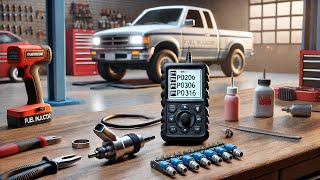
- Confirm the presence of P0206 using an OBD-II scanner. Note any other codes, like P0306 or P0316.
- Locate cylinder 6. On the longitudinally mounted 3.5L EcoBoost V6, the cylinders are numbered 1-2-3 on the passenger side (Bank 1, front to back) and 4-5-6 on the driver's side (Bank 2, front to back). Cylinder 6 is the rearmost cylinder on the driver's side, closest to the firewall.
- Perform a thorough visual inspection of the cylinder 6 fuel injector wiring and connector. Look for any obvious damage, corrosion, loose connections, or signs of rodent activity.
- Test the injector circuit signal using a 'noid light'. Disconnect the injector, plug in the noid light, and have an assistant crank the engine. The light should flash rhythmically, indicating the PCM is sending a signal. If it doesn't flash, the problem is in the wiring or the PCM.
- If the noid light flashes, the circuit is likely okay. The next step is to test the injector itself. Turn the engine off and disconnect the injector.
- Using a multimeter set to Ohms (Ω), measure the resistance between the two pins on the fuel injector. Compare this reading to the manufacturer's specification, which is 11-18 ohms for a port injector.
- If the resistance is out of spec (especially if it reads as an open circuit or 'OL'), the fuel injector is faulty and must be replaced.
- If the injector resistance is within spec, consider swapping the cylinder 6 injector with the adjacent cylinder 5 injector. Clear the codes, run the engine, and see if the code returns as P0205. If it does, the injector is intermittently faulty. If P0206 returns, there is likely an intermittent wiring issue that was not visible.
- If a wiring issue is suspected, perform a 'wiggle test' on the harness between the injector and the PCM while monitoring continuity with a multimeter to pinpoint the location of the intermittent open.
Parts You'll Likely Need
- Port Fuel Injector (Cylinder 6)
(OEM #BL3Z-9F593-B (Supersedes CM-5253))— This is the most common failure point for a P0206 code on this vehicle. The internal coil winding fails, creating an open circuit.
Trusted brands: Motorcraft, Bosch, Standard Motor Products
OEM price range: $70-$150
Aftermarket price range: $50-$100 - Fuel Injector Connector Pigtail
(OEM #WPT-1051)— The connector can become brittle from heat and break, or the wires can fail right at the connector, causing an open circuit.
Trusted brands: Motorcraft, Dorman
OEM price range: $25-$40
Aftermarket price range: $15-$30
Related Codes That Often Appear With This One
- P0306 — This code means "Cylinder 6 Misfire Detected." Since P0206 indicates an electrical problem is preventing the injector from delivering fuel, the cylinder cannot combust properly, which the PCM detects as a misfire. P0206 is the cause, and P0306 is the effect.
- P0316 — This code indicates a misfire was detected within the first 1,000 engine revolutions after startup. It often accompanies P0306 when the injector fails completely and the misfire is present immediately.
- P0300 — This code for "Random/Multiple Misfire" may appear if the wiring issue is intermittent or if there are other contributing factors causing misfires on other cylinders.
Mechanic-Grade Diagnostic Values
- Port Fuel Injector Coil Resistance — expected: 11 - 18 Ohms. Failure: Infinite resistance (OL) indicates an open coil. A reading below 10 Ohms may indicate a shorted coil.
- Injector Power Wire Voltage (Key On, Engine Off) — expected: Battery Voltage (~12V). Failure: Low or no voltage indicates a problem with the power supply wire from the PCM or a blown fuse.
- Injector Pulse Width (at idle, via scan tool) — expected: 1 - 5 ms. Failure: A value of 0 ms for cylinder 6 while others show a reading confirms the PCM is not commanding the injector to fire, or has shut down the circuit due to the fault.
- Injector Circuit Voltage Drop (during wiggle test) — expected: Stable battery voltage on power side, stable pulsing ground on control side.. Failure: A sudden drop or fluctuation in voltage while wiggling the harness indicates an intermittent open or short in the wiring.
Scan Tool Commands That Help
- FORScan / Ford IDS: Power Balance Test — This is a crucial bidirectional test. It graphically displays the contribution of each cylinder to engine speed. A P0206 fault will cause cylinder 6 to show a significant drop in performance compared to the others, confirming the misfire's location in real-time. It's used to verify the symptom before tearing into the engine.
- FORScan / Ford IDS: Injector On/Off State — This allows a technician to manually command individual injectors on or off. If commanding the cylinder 6 injector on and off produces no change in engine idle, while doing the same for cylinder 5 causes a noticeable stumble, it further isolates the problem to the cylinder 6 injector or its circuit.
Wiring & Ground Locations
- Cylinder 6 Injector Connector — On the driver's side of the engine (Bank 2), the rearmost fuel injector closest to the firewall.. This is the primary connection point to test. Pin 1 (Power) should have battery voltage with key on. Pin 2 (Control) is the ground-side wire pulsed by the PCM.
- PCM Connector C175E, Pin 2 (INJ6) — This is one of the main connectors on the Powertrain Control Module, typically located on the passenger side firewall.. The control signal for the cylinder 6 injector originates here. The wire is typically Brown/Green (BN-GN). Testing for a pulse here can confirm if the PCM driver is functioning, ruling out a PCM failure.
- Ground G104 — Typically located on the passenger side front of the engine block or nearby on the frame, near the battery.. This is a primary engine and PCM ground. While a failure here would likely cause multiple codes, a loose or corroded connection can introduce electrical noise and intermittent issues across various systems, including injector circuits.
- Firewall Ground Strap — A braided strap connecting the firewall (body) to the rear of the engine block.. Ensures the engine block has a solid ground reference to the vehicle's body, where the PCM is also grounded. A broken or corroded strap can lead to hard starting and various electrical fault codes as the engine seeks a ground path through other means.
Real Owner Repair Stories
- YouTube video comment/description (2014 Ford F-150 3.7L V6 (similar architecture)) — Rough running, engine missing, codes P0206 and P0306.
❌ Tried (didn't work) Replaced the ignition coil, Replaced the spark plug
✅ What actually fixed it The owner found fuel residue inside the electrical connector for the injector. Testing the injector with a multimeter showed it had failed (open circuit). The shop initially replaced the connector pigtail unnecessarily before replacing the faulty injector, which ultimately solved the problem. - Reddit user r/MechanicAdvice (2017 Ford F-150 3.5L EcoBoost) — Intermittent CEL with P0206, P0306, P0300 after driving through a large puddle. Very slight rough idle on cold start, but no noticeable misfire while driving.
❌ Tried (didn't work) Replacing the coil pack for cylinder 6, Using fuel system cleaners, Replacing all spark plugs (which were overdue)
✅ What actually fixed it The user was in the process of diagnosing, with the next logical step being the replacement of the cylinder 6 injector. The story highlights how water intrusion can trigger intermittent electrical faults and how other tune-up parts are commonly replaced in error before addressing the injector circuit code directly.
OEM Part Supersession History
BL3Z-9F593-A→BL3Z-9F593-B— Standard part revision by the manufacturer, likely for improved durability or minor design changes.
Heads up: BL3Z-9F593-B is the correct and current part for this application and is backward compatible, replacing the -A version.
Model Year Variations Within This Range
- 2017-2020: These models feature the second-generation 3.5L EcoBoost with a dual fuel system (port and direct injection). Code P0206 on these trucks refers specifically to the port fuel injector. The earlier 2015-2016 models have a first-generation engine with only direct injection, which uses different injector codes.
- 2015-2016: These models use the first-generation 3.5L EcoBoost, which is direct-injection only. While a P0206 code is still possible, the fuel system components and diagnostic approach differ from the later dual-injection models.
Diagnostic Flowchart
Other Known Issues on This Vehicle
Issues unrelated to this code that are worth knowing about as an owner of this generation:
- Cam Phaser Rattle on Cold Start 🔴 High — Common issue, particularly on 2017-2020 models. Can occur from 40,000 miles onward. Causes a brief but loud rattling/clattering noise for 2-5 seconds after a cold start. (Ref: Covered by Ford's Customer Satisfaction Program 21B10 and TSB 21-2350, which involve reprogramming the PCM and replacing the cam phasers with an updated design.)
- Harsh/Erratic Shifting (10R80 Transmission) 🟠 Medium — Widespread on 2017-2020 models equipped with the 10-speed automatic. Symptoms include harsh shifts (especially 3-5), delayed engagement, and shuddering. (Ref: Multiple TSBs exist, such as TSB 21-2145, which provides a software calibration update. In some cases, valve body or torque converter replacement is required.)
- Leaking Plastic Oil Pan 🟠 Medium — The RTV sealant on the factory composite oil pan is known to fail, causing oil leaks. This is particularly noted on 2017 models but affects the generation. (Ref: Ford has issued TSBs (e.g., for the related 2.7L, TSB 19-2189) that replace the original pan and RTV seal with an updated pan that uses a more reliable press-in-place gasket.)
- Vacuum Pump Oil Leak 🟡 Low — The gasket on the mechanical vacuum pump, located on the back of the passenger-side cylinder head, can leak oil. It's often misdiagnosed as a rear main seal or valve cover leak.
Used vs. New Parts: Buying Guide for This Vehicle
When a used part is the smart pick: A used fuel injector is generally not recommended. The cost of a new, high-quality aftermarket or OEM injector is relatively low, and the labor to access it is significant. A used injector carries unknown history and risk of premature failure, potentially forcing you to do the job twice. A used wiring connector pigtail from a junkyard is a viable option if the connector body is in good condition and you have enough wire to splice it in properly.
Donor-vehicle mileage cap: roughly under 80000 miles for the part to have meaningful remaining life.
What to inspect on the donor part:
- For a connector pigtail, ensure the plastic is not brittle or cracked.
- Check that the locking tab is intact and functional.
- Inspect the wire insulation for any signs of cracking, melting, or previous repairs.
- Look for clean, corrosion-free terminals inside the connector.
OEM-only on this vehicle (don't cheap out):
- While not strictly 'OEM-only', using a Motorcraft fuel injector (BL3Z-9F593-B) is highly recommended for reliability and to avoid compatibility issues.
Aftermarket brands forum-validated for this vehicle:
- Bosch (often the OEM manufacturer)
- Standard Motor Products (SMP)
Brands owners have reported issues with on this vehicle:
- Unnamed, no-brand injectors from online marketplaces should be avoided due to inconsistent quality control and high failure rates.
Real Owner Stories
Aggregated from forums and TSBs cited above. Mileages and costs reflect what owners reported in those sources.
2017 Ford F-150 3.5L EcoBoost — 155000 miles
Symptoms: Check Engine Light was intermittent then became solid; throwing P0206 and P0306. The owner noted the truck actually drove perfectly and maintained 18.5 MPG without a noticeable misfire.
What fixed it: The owner attempted to fix it by replacing the coil pack on cylinder 6 and all spark plugs, though the context ends before the final resolution.
Source hint: reddit.com/r/f150
Related OBD-II Codes
Frequently Asked Questions
Where is cylinder 6 located on my 3.5L EcoBoost F-150?
What is the correct replacement part number for a failed fuel injector on this engine?
Is there a specific TSB for the cam phaser rattle often seen on 2017-2020 F-150s?
What should the resistance reading be for a healthy port fuel injector on the 3.5L EcoBoost?
My 10-speed transmission is shifting harshly; is this related to the P0206 code?
Can I use a specific connector if my injector plug is damaged?
Helpful Videos
Used OEM Parts in Stock


New Aftermarket Parts Available


The information in this article is provided for general reference and educational purposes only. Vehicle specifications, procedures, and part compatibility can vary by production date, trim level, and region. Always consult your vehicle's factory service manual and verify part numbers before purchasing or performing repairs. Safety-critical components such as airbags, seat belts, and braking systems should be installed by a qualified professional.
- Ford F-150:
- 🎬 Helpful Videos
- 🛍️ Shop This Part
- What's Unique About the 2015-2020 Ford F-150
- Symptoms You May Notice
- Most Likely Causes
- Rare But Worth Checking
- Diagnosis Steps
- Parts You'll Likely Need
- Related Codes That Often Appear With This One
- Mechanic-Grade Diagnostic Values
- Scan Tool Commands That Help
- Wiring & Ground Locations
- Real Owner Repair Stories
- OEM Part Supersession History
- Model Year Variations Within This Range
- Diagnostic Flowchart
- Other Known Issues on This Vehicle
- Used vs. New Parts: Buying Guide for This Vehicle
- Real Owner Stories
- 2017 Ford F-150 3.5L EcoBoost — 155000 miles
- Related OBD-II Codes
- Frequently Asked Questions
- 🎟️ Get 5% Off