

P0204 on 2013-2016 Mazda CX-5: Injector Circuit Malfunction Causes and Fixes
On a 2013-2016 Mazda CX-5, P0204 often points to a known PCM failure, especially if code P0201 is also present. This is documented in a Mazda TSB. If P0204 appears alone, the cause is more likely a faulty cylinder 4 fuel injector. A PCM replacement can cost over $1000, while a single injector is typically $150-$400.
- Before buying any parts, scan for codes. If P0204 appears with P0201, the PCM is the most likely culprit per Mazda TSBs.
- If P0204 appears alone, the cylinder 4 fuel injector is the primary suspect. Confirm by swapping it with another cylinder.
- Do not immediately replace spark plugs or ignition coils; this code is for an electrical fault in the fuel circuit.
- Driving with this code is not recommended as it can cause expensive damage to the catalytic converter due to unburnt fuel.
- If the PCM needs to be replaced, it will require programming by a dealer or a specialized shop.
What's Unique About the 2013-2016 Mazda CX-5
For this generation of CX-5, P0204 has a very specific history documented by Mazda. Technical Service Bulletins (TSBs) confirm that an internal failure in certain DENSO-made PCMs can cause injector circuit codes to appear in pairs, most commonly P0201 and P0204 together. This means that unlike on many other vehicles where P0204 almost always points to the injector itself, on this CX-5 it is a very strong indicator of a faulty engine computer, a much more expensive repair. This issue also affects the Mazda3 and Mazda6 models from the same era that share the same engine and PCM architecture.
Symptoms You May Notice
- Check Engine Light is on
- Rough or shaking engine idle
- Engine misfire, which may also trigger a P0304 code
- Hesitation or stumbling during acceleration
- Reduced engine power and poor performance
- Increased fuel consumption
- Vehicle may stall or be difficult to keep running
- Replacing the spark plug or ignition coil for cylinder 4. While a misfire code (P0304) may be present, P0204 specifically points to an electrical fault in the fuel injector's control circuit, not the ignition system.
- Confusing a cold-start misfire from a separate known issue. TSB #01-002/17 addresses rough idle and misfire codes in cold temperatures caused by frozen water in the muffler, which could be mistaken for an injector problem.
Most Likely Causes
- Internal Powertrain Control Module (PCM) Failure 🔴 High Probability Mazda issued TSBs #01-004/17 and #01-017/16 for an internal failure in DENSO-produced PCMs affecting Japan-built 2013-16 CX-5s with VINs lower than JM3KE**820183 (produced before May 23, 2016).
How to confirm: Scan for other codes. If DTC P0201 is present along with P0204, a PCM failure is the most likely cause. A technician can also inspect the PCM's label to verify it is a DENSO unit as described in the TSB. Dealer-level repair requires obtaining authorization from Mazda's service hotline before replacement.
Typical fix: Replace the Powertrain Control Module. This requires programming by a dealer or qualified shop with access to Mazda software (M-MDS).
Est. part cost: $600-$1200 - Faulty Cylinder 4 Fuel Injector 🟡 Medium Probability This is the most common cause if P0204 appears without other injector codes. Direct injection injectors operate under high pressure and can fail electrically or become clogged over time.
How to confirm: Swap the cylinder 4 injector with another cylinder (e.g., cylinder 3). If the code changes to P0203, the injector is faulty. Alternatively, use a multimeter to check the injector's resistance; the specification is approximately 1.74–2.04 ohms at 68°F (20°C). A failed injector will often show an open circuit (OL) or a reading far outside this range.
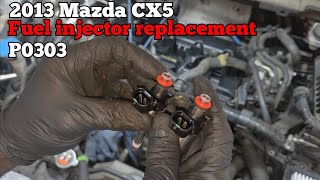
Typical fix: Replace the fuel injector for cylinder 4. 🎬 Watch: This video shows a fuel injector replacement walkthrough. It's often recommended to replace the full set if the vehicle has high mileage.
Est. part cost: $80-$210 - Wiring Harness or Connector Issue ⚪ Low Probability
How to confirm: Visually inspect the wiring and connector at the cylinder 4 injector for damage, corrosion, or loose pins. Use a 'noid light' to verify that the connector is receiving a pulse signal from the PCM when the engine is cranked. If no pulse is present, perform a continuity test on the wires between the injector connector and the PCM connector terminals 1DS and 1DT.
Typical fix: Repair the damaged section of the wiring harness or replace the injector pigtail connector.
Est. part cost: $15-$50
Rare But Worth Checking
- Fuel Injector Relay Malfunction: Mazda's official diagnostic procedure lists a faulty fuel injector relay as a possible, though uncommon, cause to investigate after checking the injector and its direct wiring.
Diagnosis Steps
- Scan for Codes: Use an OBD-II scanner to confirm P0204. Crucially, check if P0201 is also present.
- TSB Check (Critical Step): If P0201 and P0204 are stored together, refer to Mazda TSB #01-004/17 or #01-017/16. If your vehicle's VIN falls within the affected range (Japan-built, VIN lower than JM3KE**820183), the DENSO PCM is the highly probable cause. Proceed with PCM replacement, which requires dealer authorization and programming.
- Visual Inspection (if P0204 is alone): If only P0204 is present, turn off the ignition. Visually inspect the wiring harness and electrical connector at the cylinder 4 fuel injector. Look for frayed wires, corrosion, or a loose connection.
- Check for Injector Pulse: Disconnect the injector and plug in a 'noid light'. Crank the engine. If the light flashes, the PCM and wiring are sending a signal. If it does not flash or stays on continuously, the problem is in the wiring or the PCM itself.
- Test the Injector: If a pulse is present, the injector is the next suspect. Turn off the ignition. Use a multimeter to measure the electrical resistance across the two pins of the fuel injector. It should be between 1.74 and 2.04 ohms. A reading of 'OL' (open) or near zero indicates a failed injector.
- Swap Injectors: To be certain, swap the cylinder 4 injector with one from another cylinder (e.g., cylinder 2). Clear the codes and run the engine. If the code returns as P0202, you have confirmed the injector is faulty.
- Final Wiring Checks: If the injector tests good but there was no pulse at the connector, perform a continuity test on the two wires between the injector connector and the PCM to rule out an open or short in the harness. The relevant pins on the PCM connector are 1DS and 1DT.
Parts You'll Likely Need
- Powertrain Control Module (PCM)
(OEM #PE5R-18-881 (example, verify by VIN))— This is the most likely cause if P0204 is paired with P0201, due to a known internal failure documented in Mazda TSBs #01-004/17 and #01-017/16.
Trusted brands: Denso (OEM)
OEM price range: $900-$1200
Aftermarket price range: $600-$900 (Remanufactured) - Fuel Injector
(OEM #PE01-13-250D (supersedes PE01-13-250B/C))— This is the most common part to fail if P0204 appears by itself. The electrical coil inside the injector can fail, creating an open circuit.
Trusted brands: Mazda (OEM), GB Remanufacturing, Beck Arnley
OEM price range: $210-$265
Aftermarket price range: $85-$160
Related Codes That Often Appear With This One
- P0201 — According to Mazda TSBs, an internal PCM failure often causes injector circuit codes for cylinders 1 and 4 to appear together. This is the strongest indicator that the PCM is the root cause.
- P0304 — This code means 'Cylinder 4 Misfire Detected.' Since P0204 indicates a problem with fuel delivery to cylinder 4, a misfire is an expected and direct consequence.
- P0300 — This code indicates a random or multiple cylinder misfire. It can be triggered if the primary fault in the cylinder 4 injector circuit is severe enough to disrupt the engine's overall balance and timing.
Technical Service Bulletins (TSBs) & Recalls
- 01-004/17: Supersedes the earlier TSB. Confirms that a rough running engine with paired injector codes (P0201/P0204 or P0202/P0203) may be caused by an internal PCM failure on certain vehicles.
- 01-017/16: The original bulletin identifying the PCM internal failure on DENSO units for 2013-16 CX-5, 2014-16 Mazda3, and 2014-16 Mazda6, providing specific VIN ranges for affected vehicles.
Platform-Specific Known Issues
- Mazda issued Technical Service Bulletin #01-004/17 (superseding #01-017/16) for 2013-2016 CX-5s built in Japan (VINs lower than JM3KE**820183). It states that a rough running engine with DTCs P0201 and P0204 (or P0202 and P0203) is likely caused by an internal failure of the DENSO-produced PCM.
Mechanic-Grade Diagnostic Values
- Fuel Injector Coil Resistance — expected: 1.74–2.04 ohms at 68°F (20°C). Failure: A reading of 'OL' (Open Loop) or near zero ohms indicates a failed injector.
- PCM Open Circuit Detection Logic — expected: The PCM expects to receive a verification signal after commanding the injector to fire.. Failure: If the verification signal is not received for 25 consecutive attempts, the PCM logs P0204.
- Injector Control Circuit Voltage (at PCM pins 1DS/1DT) — expected: A pulsing voltage between approximately 0V and battery voltage when the engine is running.. Failure: No voltage, constant voltage, or voltage that does not pulse indicates a wiring or PCM driver fault.
Scan Tool Commands That Help
- Mazda IDS (Integrated Diagnostic System): Powertrain > Service Functions > PCM > Fuel Injector Correction Factors — This function is used to write the calibration code from a new injector to the PCM. While more critical for diesel engines, it's a required step if the replacement injector has a new code.
- Mazda IDS (Integrated Diagnostic System): Module Programming > As-Built > PCM — This is a mandatory step when replacing the PCM. It configures the new module to the vehicle's specific options and immobilizer system.
- FORScan: Active Test > Turn Fuel Injector On/Off — This bidirectional command allows a technician to manually disable cylinder 4's injector while the engine is idling. If the engine's running condition does not change, it confirms that cylinder 4 was not contributing, helping to isolate the fault.
Wiring & Ground Locations
- PCM Connector Pins 1DS & 1DT — On the main PCM electrical connector, located on the PCM which is mounted to the battery tray in the engine compartment.. These are the specific terminals for the cylinder 4 fuel injector control circuit. A technician can backprobe these pins to test for the correct pulse signal directly from the PCM, or perform a continuity test from these pins to the injector connector to rule out a wiring harness break.
- PCM (Powertrain Control Module) — In the engine bay, mounted on the battery tray.. Knowing the physical location is necessary to inspect the module for a DENSO part number (per the TSB) and to access its connectors for testing or replacement.
Real Owner Repair Stories
- Mazda Forum user (2016 Mazda CX-5) — Immobilizer active and 'Theft detected' error on the dash after replacing a broken PCM.
❌ Tried (didn't work) Physically swapping the old PCM with a used one., Using FORScan to write the configuration from the old module to the new one.
✅ What actually fixed it The user was unable to resolve the immobilizer lock-out with FORScan and was advised they needed to take the vehicle to a dealer or a specialized shop with Mazda's official software (M-MDS) to perform a proper pass-through programming and sync the new PCM with the car's immobilizer system. This highlights that even with the correct part, the repair is incomplete without dealer-level software access.
When the Usual Fixes Don't Work
- While replacing the PCM is the correct fix for paired P0201/P0204 codes, simply swapping the physical module is not enough. As documented in forums, a DIY replacement using a used PCM can result in a no-start condition due to the immobilizer system, even if tools like FORScan are used to copy module data. The repair is only complete after successful programming with dealer-level software like Mazda IDS, a step that some shops may refuse to perform on customer-supplied parts.
OEM Part Supersession History
PE01-13-250B, PE01-13-250C, PEAR13250→PE01-13-250D— Standard part revision and improvement by the manufacturer.****-18-881* (Various Denso PCM part numbers)→Same Part Number— The internal fault within the PCM was corrected in production, but Mazda did not change the external part numbers.
Heads up: It is critical to order the PCM based on the vehicle's VIN using the official parts catalog, not just by matching the number on the old unit, to ensure you receive a corrected module.
Model Year Variations Within This Range
- 2013-2016 (pre-May 23, 2016 production): Japan-built vehicles with VINs lower than JM3KE**820183 are susceptible to the PCM failure described in TSB #01-017/16. Vehicles built after this date or in other locations are not covered by this specific bulletin and a P0204 code is more likely to be a standard injector or wiring fault.
Diagnostic Flowchart
Other Known Issues on This Vehicle
Issues unrelated to this code that are worth knowing about as an owner of this generation:
- Leaking Drive Belt Auto Tensioner 🟠 Medium — Common enough to warrant a TSB. The hydraulic tensioner seal can fail, causing oil to leak onto the serpentine belt. This leads to rattling/squealing noises and potential belt slippage or failure. (Ref: TSB #01-019/19)
- Intake Valve Carbon Buildup 🟡 Low — A potential long-term issue for all direct injection (GDI) engines, including SKYACTIV-G. While Mazda's design mitigates it better than some rivals, it can cause rough idle, misfires, and reduced efficiency at higher mileage (80k+ miles), especially with frequent short trips.
- Failing LED Daytime Running Lights (2016 model) 🟡 Low — A well-documented issue on 2016 models where moisture enters the headlamp assembly, corroding the DRL circuit board and causing flickering or complete failure. (Ref: Safety Recall 4320A)
- Spontaneously Cracking Windshields 🟡 Low — Numerous owner reports of windshields developing stress cracks without any impact, often starting from the top edge.
- Prematurely Worn Rear Brakes 🟠 Medium — The rear brake pads and rotors can wear out faster than expected due to the design of the caliper brackets, which can trap moisture and cause the pads to bind.
Used vs. New Parts: Buying Guide for This Vehicle
When a used part is the smart pick: A used fuel injector from a reputable salvage yard is a cost-effective and viable option for this repair, especially if from a low-mileage donor vehicle.
Donor-vehicle mileage cap: roughly under 80000 miles for the part to have meaningful remaining life.
What to inspect on the donor part:
- Verify the donor vehicle's mileage.
- Inspect the injector's electrical connector for corrosion or damage.
- Check for any physical cracks or damage to the injector body.
- If possible, ask the seller to provide a resistance (ohm) reading before purchase.
OEM-only on this vehicle (don't cheap out):
- Powertrain Control Module (PCM) - Due to the mandatory and complex immobilizer programming required, purchasing a new OEM module or a professionally remanufactured unit that comes with programming support is strongly recommended. Many dealers and independent shops are unwilling to program a used PCM supplied by a customer.
Aftermarket brands forum-validated for this vehicle:
- Injectors: Beck Arnley, GB Remanufacturing
- PCM: Denso (OEM), Flagship One (Remanufactured)
Real Owner Stories
Aggregated from forums and TSBs cited above. Mileages and costs reflect what owners reported in those sources.
2013-2016 Mazda CX-5 SKYACTIV-G
Symptoms: Rough running engine with paired diagnostic trouble codes P0201 and P0204 (or P0202 and P0203).
What fixed it: Replacement of the internal DENSO-produced Powertrain Control Module (PCM) as authorized by Mazda's service hotline.
Source hint: TSB #01-004/17
Mazda SKYACTIV-G engine
Symptoms: The P0204 and P0304 codes appeared intermittently specifically on cold starts after the injectors had been serviced. The issue would resolve itself after restarting the engine several times.
What fixed it: Troubleshooting steps were discussed regarding injector service and intermittent electrical connections.
Source hint: mazdaspeeds.org thread regarding P0204 and P0304
2013-2016 Mazda CX-5 SKYACTIV-G
Symptoms: Multiple injector codes (P0201-P0206) appearing simultaneously.
What fixed it: Investigation into the wiring harness, ground connections, or the ECU/PCM rather than replacing individual injectors.
Source hint: mazdas247.com forum discussion
Related OBD-II Codes
Frequently Asked Questions
Does TSB #01-004/17 apply to my 2015 Mazda CX-5?
My CX-5 has both P0201 and P0204 codes. Does this mean I have two bad injectors?
What is the specific resistance range for a SKYACTIV-G 2.0L/2.5L fuel injector?
Can I use a used PCM from a salvage yard to fix the P0204 code?
Are there specific wiring terminals I should check for the Cylinder 4 injector circuit?
Is the P0204 code related to the LED daytime running light recall on my 2016 CX-5?
Helpful Videos
Used OEM Parts in Stock


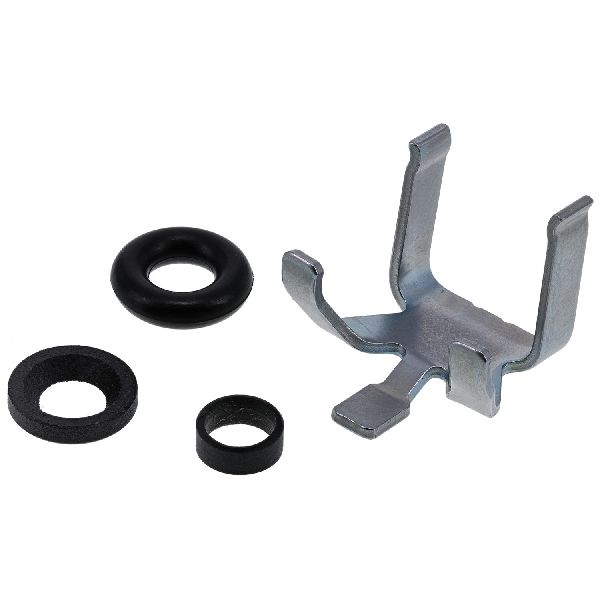
New Aftermarket Parts Available


The information in this article is provided for general reference and educational purposes only. Vehicle specifications, procedures, and part compatibility can vary by production date, trim level, and region. Always consult your vehicle's factory service manual and verify part numbers before purchasing or performing repairs. Safety-critical components such as airbags, seat belts, and braking systems should be installed by a qualified professional.
- Mazda CX-5:
- 🎬 Helpful Videos
- 🛍️ Shop This Part
- What's Unique About the 2013-2016 Mazda CX-5
- Symptoms You May Notice
- Most Likely Causes
- Rare But Worth Checking
- Diagnosis Steps
- Parts You'll Likely Need
- Related Codes That Often Appear With This One
- Technical Service Bulletins (TSBs) & Recalls
- Platform-Specific Known Issues
- Mechanic-Grade Diagnostic Values
- Scan Tool Commands That Help
- Wiring & Ground Locations
- Real Owner Repair Stories
- When the Usual Fixes Don't Work
- OEM Part Supersession History
- Model Year Variations Within This Range
- Diagnostic Flowchart
- Other Known Issues on This Vehicle
- Used vs. New Parts: Buying Guide for This Vehicle
- Real Owner Stories
- 2013-2016 Mazda CX-5 SKYACTIV-G
- Mazda SKYACTIV-G engine
- 2013-2016 Mazda CX-5 SKYACTIV-G
- Related OBD-II Codes
- Frequently Asked Questions
- 🎟️ Get 5% Off