

P0204 on 2020-2022 Chevrolet Silverado 1500: Injector Circuit Malfunction Causes & Fixes
On 2020-2022 Silverado 1500s, code P0204 is most often caused by a damaged engine wiring harness, as cited in GM Technical Service Bulletins. Other likely causes are a failed fuel injector or a bad connection at the injector. Inspecting the wiring harness for chafing against the ECM bracket, upper control arm, and other specific points is the critical first step.
- For a 2020-2022 Silverado, P0204 strongly suggests a wiring harness problem; inspect it thoroughly before buying parts.
- The most common chafe points are near the PCV system, the main ECM bracket, and where the harness passes near suspension components.
- A simple 'noid light' test can quickly tell you if the injector is receiving an electrical signal.
- If the injector itself is bad, swapping it with one from another cylinder is a no-cost way to confirm the diagnosis.
- Always check for active TSBs and recalls, as GM has documented this issue extensively.
What's Unique About the 2020-2022 Chevrolet SILVERADO 1500

For this generation of Silverado (and its T1 platform mates), General Motors has issued multiple Technical Service Bulletins (TSBs) that directly address code P0204. TSB #22-NA-087 and #PIT5751C point to wiring harness damage as a primary cause. TSB #21-NA-149 is particularly important, as it details numerous specific locations where the engine wiring harness chafes against components, causing shorts or open circuits. Key chafe points include the ECM/TCM bracket, the driver's side upper control arm, the shock tower bolt, and the generator bracket. This makes a targeted wiring inspection a much higher priority on these trucks compared to other vehicles where the injector itself is more commonly the sole point of failure.
Diagnostic Flowchart

Tap your situation to follow the diagnostic path that matches what you're seeing on this vehicle.
Symptoms You May Notice

- Check Engine Light is on (can be solid or flashing)
- Rough idle or engine shaking
- Engine misfires, sometimes felt as a stumble or skip
- Hesitation or lack of power during acceleration
- Reduced fuel economy
- In some cases, the traction control light may also illuminate
- Vehicle may enter 'limp mode' or reduced engine power mode.
- Prolonged crank time before the engine starts.
- Replacing the spark plug or ignition coil for cylinder 4. While these can cause a misfire (P0304), they will not cause an injector circuit code (P0204).
- Replacing the fuel injector without first testing the connector and wiring. Many owners and shops replace the injector only to have the problem return because the root cause was a loose pigtail or a chafed wire.
Most Likely Causes

- Damaged Engine Wiring Harness 🔴 High Probability Multiple GM TSBs (#22-NA-087, #PIT5751C, #21-NA-149) confirm the engine wiring harness is prone to chafing. TSB #21-NA-149 provides detailed chafe points for each engine: (L3B 2.7L) top of camshaft carrier cover, lower air cleaner housing, generator bracket; (LM2 3.0L) on top of the generator, on the PCV hose clamp; (L84/L87 5.3L/6.2L) corner of the cylinder head, ECM/TCM bracket, and driver's side upper control arm. A forum member with a 2015 model found wires chafed through where the harness was pinched by the transmission bell housing.
How to confirm: Carefully inspect the entire engine wiring harness, paying close attention to the areas mentioned in TSBs. Look for rubbed-through plastic loom, exposed copper wires, or shiny spots on brackets where contact is occurring. A continuity test with a multimeter from the ECM connector to the injector connector can confirm an open or short. A 'wiggle test' on the harness while monitoring live data can also reveal intermittent faults.
Typical fix: Repair the damaged section of wire using solder and heat-shrink tubing or a quality butt connector. Re-route the harness and secure it with zip ties, anti-abrasion tape, or updated clips (as specified in TSBs) to prevent future contact. In severe cases, the entire harness may need replacement.
Est. part cost: $10-$60 for repair materials (tape, sleeves, connectors) - Failed Fuel Injector 🟡 Medium Probability Injectors are wear items that can fail electrically (internal coil shorting or opening) or become clogged. TSB #22-NA-087 mentions replacing the fuel injector as part of the fix for P020x codes on the 3.0L LM2 diesel. While less common than wiring issues on this platform, injector failure is still a significant possibility, especially on higher mileage trucks.
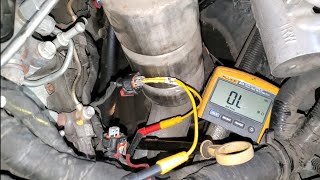
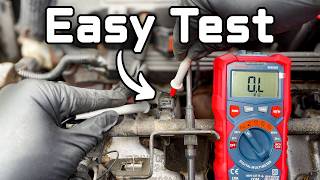
How to confirm: Check the injector's resistance with a multimeter. For the gas engines, it should be in the 11-14 ohm range. For the LM2 diesel, which uses solenoid injectors, the resistance is much lower. A reading that is infinite (open) or near zero (short) indicates a bad injector. The easiest confirmation is to swap the cylinder 4 injector with another cylinder (e.g., cylinder 2). If the code changes to P0202, the injector is faulty.
Typical fix: Replace the failed fuel injector. It is often recommended to replace them as a set, or at least per bank, if they have high mileage. For direct injection engines, this is a more involved job requiring removal of the intake manifold.
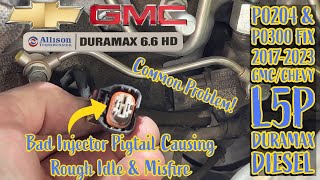
Est. part cost: $70-$185 per injector - Poor Electrical Connection at Injector 🟡 Medium Probability Engine vibrations can cause the female pins inside the injector connector pigtail to loosen over time, creating high resistance and fretting corrosion (black dust). This is a known issue, particularly for cylinder #4 on Duramax engines, and the principle applies to the gas engines as well. TSB #23-NA-027 and TSB #22-NA-087 both address connector issues, including poor terminal tension and broken terminal pins.
How to confirm: Disconnect the electrical connector at the fuel injector. Inspect for any bent, loose, or corroded pins. Check for signs of black dust (fretting corrosion). Use a noid light to verify that the ECM is sending a pulse signal to the connector. A wiggle test on the connector itself while the engine is running can often trigger the misfire if the connection is loose. A terminal tension test using a specific probe (e.g., J-35616-35) can definitively identify a loose pin.
Typical fix: Sometimes, simply re-seating the connector firmly can fix it temporarily. For a permanent fix, either carefully re-tension the female pins inside the connector or replace the connector pigtail. Applying dielectric grease to the connector seal before reconnecting can help prevent moisture and vibration issues. A Reddit user with a 3.0L engine fixed their P0204 by replacing the injector harness for $40.
Est. part cost: $15-$45 for a new pigtail connector or injector sub-harness
Rare But Worth Checking
- Faulty Engine Control Module (ECM): This is the least likely cause. The internal driver circuit for the #4 injector can fail, but TSBs specifically warn against replacing the ECM unnecessarily before thoroughly inspecting all wiring and connectors. All other possibilities must be exhausted before condemning the ECM.
Diagnosis Steps
- Read the trouble codes with an OBD-II scanner and note any other codes present.
- Visually inspect the engine wiring harness for any signs of chafing, pinching, or melting. Focus on the specific locations identified in GM TSB #21-NA-149: ECM/TCM bracket, upper control arm, shock tower, generator bracket, and top of the cam cover (engine dependent).
- Disconnect the cylinder 4 fuel injector connector. Inspect the connector and injector pins for corrosion, damage, or looseness.
- With the ignition on (engine off), use a multimeter to check for 12V power on one of the pins in the injector connector.
- Use a noid light plugged into the injector connector to verify a pulse signal from the ECM while cranking the engine. A flashing light indicates the ECM and wiring are likely okay up to that point.
- Measure the resistance of the fuel injector using a multimeter. Compare the reading to a known good injector on another cylinder. A typical reading for a gas engine is 11-14 ohms. A reading that is infinite (open) or near zero (short) indicates a bad injector.
- If the injector tests good, perform a continuity test on both wires from the injector connector back to the ECM connector to rule out an open or short in the harness.
- If the harness and connector test good, swap the cylinder 4 injector with another cylinder (e.g., cylinder 2). Clear the codes and run the engine. If the code changes to P0202, the injector is confirmed to be faulty.
- If the code remains on cylinder 4 after swapping injectors, the problem is definitively in the wiring or the ECM.
- If all wiring and components are confirmed to be good, the final, least likely possibility is a faulty injector driver in the ECM.
Parts You'll Likely Need
- Engine Wiring Harness Repair Materials
(OEM #84826758 (Kevlar Velcro Sleeve, per TSB 21-NA-149))— This is the most probable cause according to manufacturer TSBs for the 2020-2022 Silverado. Needed to repair chafed wires and protect the harness from future damage.
Trusted brands: 3M, Delphi, ACDelco
OEM price range: $10-$60
Aftermarket price range: $5-$30 - Fuel Injector
(OEM #ACDelco 12710481 (5.3L L84 / 6.2L L87), ACDelco 12709476 (2.7L L3B), ACDelco 55506244 (3.0L LM2 Injector))— The second most likely cause after wiring issues. The injector can fail electrically or become clogged.
Trusted brands: ACDelco (OEM), Standard Motor Products, GB Remanufacturing
OEM price range: $70-$185
Aftermarket price range: $45-$120 - Fuel Injector Connector Pigtail
(OEM #19368140 (Per TSB 23-NA-027))— Loose terminal tension at the injector connector is a very common failure point, causing an intermittent open circuit. Replacing the pigtail is the standard repair.
Trusted brands: ACDelco (OEM), Fleece Performance, Dorman
OEM price range: $25-$50
Aftermarket price range: $15-$35
Related Codes That Often Appear With This One
- P0304 — P0304 means 'Cylinder 4 Misfire Detected.' Since a P0204 fault prevents the injector from delivering fuel, a misfire in that cylinder is an almost guaranteed side effect.
- P0300 — P0300 means 'Random/Multiple Cylinder Misfire Detected.' This can occur if the wiring harness chafe is intermittent or affecting multiple circuits, or if the initial P0204 fault causes instability in engine operation.
- P0201, P0202, P0203, P0205, P0206 — If the wiring harness is chafed, it's common for multiple injector circuits to be damaged at the same time, leading to multiple injector codes being stored. The TSBs from GM list all of these codes together as a group of potential faults stemming from the same harness issue.
Technical Service Bulletins (TSBs) & Recalls
- 22-NA-087: Mentions correcting MIL illumination with DTCs including P0204 by addressing the fuel injector and wiring harness, specifically for the 3.0L LM2 diesel engine.
- PIT5751C: An earlier bulletin, now superseded by 21-NA-149, instructing dealerships to inspect the engine wiring harness for damage when P020x codes are present on the 3.0L LM2.
- 21-NA-149: A comprehensive bulletin covering multiple engines (L3B, LM2, L84, L87) that details specific harness chafe points on the frame, brackets, and engine components.
- 23-NA-027: While for the L5P Duramax, it establishes a pattern of GM recognizing injector connector terminal fretting and looseness as a primary cause for circuit codes, advising diagnosis before injector replacement.
Platform-Specific Known Issues
- TSB #21-NA-149 (supersedes PIT5751C) is the most critical document, providing detailed diagrams of where the engine harness is likely to chafe against the ECM/TCM bracket, upper control arm, and shock tower on all engine types.
- TSB #22-NA-087 specifically addresses P020x codes on the 3.0L LM2 diesel, often caused by a broken terminal pin inside the injector harness connector, requiring replacement of both the injector and the injector wiring harness.
- A real-world repair documented on a forum for a similar generation truck found the injector harness chafed and pinched against the transmission bell housing, causing intermittent P0204 and P0202 codes that were resolved by repairing the wires.
- On the 3.0L LM2 Diesel, the #4 injector connector is located under the EGR pipe, where heat can contribute to the connector becoming loose over time, leading to P0204.
Mechanic-Grade Diagnostic Values
- Gasoline Engine (L84/L87/L3B) Fuel Injector Resistance — expected: 11-14 Ohms. Failure: Infinite resistance (open circuit) or near-zero resistance (short circuit).
- Diesel Engine (LM2) Fuel Injector Resistance — expected: Very low, approximately 0.2 to 3.0 Ohms (Solenoid type). Failure: A reading outside of the very low Ohm range, or infinite resistance.
- Injector Connector Voltage (Key On, Engine Off) — expected: Battery Voltage (approx. 12V) on the ignition voltage circuit pin.. Failure: No voltage indicates an open in the power supply circuit or a blown fuse.
- Injector Pulse Width (Scan Tool Live Data at Idle) — expected: Approximately 2-4 milliseconds (ms). Failure: A value of 0 ms for cylinder 4 while others show normal readings indicates the ECM is not commanding the injector, or a complete circuit failure.
Scan Tool Commands That Help
- GDS2 (GM Dealer Tool) or high-end aftermarket: Fuel Injector Balance Test / Cylinder Power Balance — This bidirectional test allows the technician to disable one injector at a time while monitoring the drop in engine RPM. If disabling cylinder 4 causes no change in engine speed, while disabling other cylinders does, it confirms cylinder 4 is not contributing power. This helps isolate the fault to a specific cylinder.
- GDS2 (GM Dealer Tool) or high-end aftermarket: Injector Test (Command ON/OFF) — This function is used with a noid light or test lamp connected to the injector harness. The technician can command the injector circuit to pulse, which should make the light flash. If the light does not flash, it points to a problem in the wiring or the ECM driver, not the injector itself.
Wiring & Ground Locations
- G110 / G114 — On the frame, typically near the front of the vehicle. G114 is specifically for the engine harness.. GM issued an engineering information bulletin (PIE0548) regarding loose connections at these specific ground points on 2019-2020 models. A poor engine harness ground can cause a variety of electrical issues, including intermittent injector circuit faults.
- Injector #4 Control Circuit Pin — This will be a specific pin at one of the main ECM connectors (e.g., X1, X2). The exact pin number varies by engine and model year.. For a definitive diagnosis of a wiring issue, a technician must test continuity from this specific ECM pin to the corresponding pin at the fuel injector connector. For example, on some L84 V8s, the cylinder 4 injector control is pin 56 in the X2 connector at the ECM.
- Injector #4 Power Supply Pin — This pin at the injector connector receives ignition voltage.. Testing for battery voltage at this pin with the key on is the first step to confirm the injector is receiving power. No power here points to a blown fuse or a break in the power feed wire.
Real Owner Repair Stories
- Reddit user in r/gmcsierra (2021 GMC Sierra with 3.0L LM2 engine, 115,000 miles) — Check engine light with codes P0204 and P0304. Limped the truck along.
❌ Tried (didn't work) Temporarily used dielectric grease on the connector, but the issue persisted.
✅ What actually fixed it Replaced the entire fuel injector harness. The user noted that the #4 connector is located just under the EGR pipe, gets hot, and the connection eventually loosens. The new harness cost $40 from a GM parts supplier and the repair took about 4 hours. - YouTube video by 'Blue Collar Garage' (2018 GMC Sierra 2500 with L5P Duramax (similar principle to LM2)) — Rough running, Check Engine Light, traction control light, 'Service Emissions System' message, speed limited to 55 mph. Codes P0204 and P0300.
✅ What actually fixed it The problem was identified as high resistance in the pigtail connector for the #4 fuel injector. The video demonstrates replacing only the pigtail connector by cutting the old one off and crimping a new one on. This fixed the misfire and cleared the codes. - YouTube video by 'Calibrated Power Solutions' (High-mileage (180k) 2017+ L5P Duramax) — Codes P0204, P026D (Injection Timing), and P0300. Intermittent or dead misfire.
❌ Tried (didn't work) Replacing the #4 fuel injector did not fix the problem.
✅ What actually fixed it The issue was a loose pin inside the #4 injector pigtail connector, causing a loss of continuity. The fix was to either replace the pigtail or carefully remove and re-tension the female pin to ensure a tight connection. This is presented as a very common issue on the #4 cylinder specifically.
When the Usual Fixes Don't Work
- While the TSBs heavily point towards wiring harness chafing as the primary cause, a significant number of real-world mechanic and owner reports, especially for the Duramax engines (L5P and LM2), indicate the root cause is not harness chafing against the chassis, but rather a failure of the injector pigtail connector itself due to heat and vibration. In these cases, replacing the entire engine harness would be unnecessary and costly. The fix is often a simple, inexpensive pigtail replacement on the affected cylinder, with cylinder #4 being the most frequent culprit. This suggests that for a P0204 code, the first diagnostic step after checking for codes should be a 'wiggle test' and pin inspection at the injector connector before moving on to the more time-consuming harness chafe inspection.
OEM Part Supersession History
Unknown→12710481— Standard part lifecycle updates.
Heads up: Part 12710481 is specified for the 5.3L L84 and 6.2L L87 gas engines in the 2020-2022 Silverado.Unknown→55506244— Standard part lifecycle updates.
Heads up: Part 55506244 is the specific injector for the 3.0L LM2 Duramax diesel engine. It is not interchangeable with gas engine injectors.
Model Year Variations Within This Range
- 2022 (Refresh): The 2022 model year saw a significant interior and technology refresh, which introduced the 'Global B' electrical architecture on most models. While the base engine and fuel system components remained largely the same, the ECMs and associated wiring can be different. For example, the 3.0L LM2 in a 2022 'Global B' truck uses an E66 ECM that requires specific tuning and diagnostic procedures compared to the E46 ECM in 2020-2021 models. This can affect diagnostic steps and part compatibility for the ECM itself.
Helpful Videos
Used OEM Parts in Stock
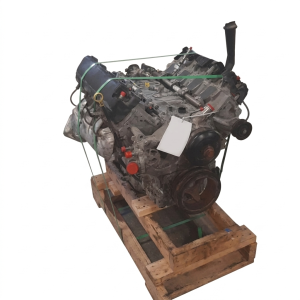
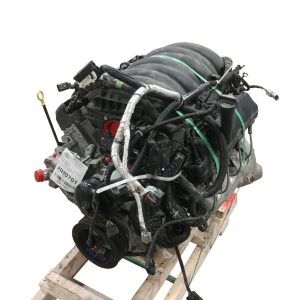


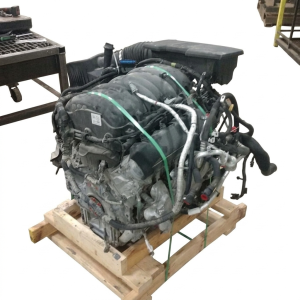
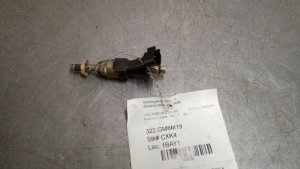
New Aftermarket Parts Available


The information in this article is provided for general reference and educational purposes only. Vehicle specifications, procedures, and part compatibility can vary by production date, trim level, and region. Always consult your vehicle's factory service manual and verify part numbers before purchasing or performing repairs. Safety-critical components such as airbags, seat belts, and braking systems should be installed by a qualified professional.
- Chevrolet SILVERADO 1500:
- 🎬 Helpful Videos
- 🛍️ Shop This Part
- What's Unique About the 2020-2022 Chevrolet SILVERADO 1500
- Diagnostic Flowchart
- Symptoms You May Notice
- Most Likely Causes
- Rare But Worth Checking
- Diagnosis Steps
- Parts You'll Likely Need
- Related Codes That Often Appear With This One
- Technical Service Bulletins (TSBs) & Recalls
- Platform-Specific Known Issues
- Mechanic-Grade Diagnostic Values
- Scan Tool Commands That Help
- Wiring & Ground Locations
- Real Owner Repair Stories
- When the Usual Fixes Don't Work
- OEM Part Supersession History
- Model Year Variations Within This Range
- 🎟️ Get 5% Off