

P0203 on 2013-2016 Mazda CX-5 2.2L Diesel: Injector Circuit Malfunction Causes and Fixes
P0203 indicates an electrical fault with the cylinder 3 fuel injector. On the SKYACTIV-D 2.2L engine, this is often a failed injector, but it's critical to also inspect for failing injector seals, a known issue that can lead to catastrophic engine damage. Expect to pay $300-$500 for a replacement Denso injector. If P0202 is also present, a failed PCM is the most likely cause per a Mazda TSB.
- P0203 on a SKYACTIV-D 2.2L engine is a serious code that points to a fault in the cylinder 3 injector circuit.
- The most likely direct cause is a failed fuel injector, but a wiring issue is also possible.
- This engine has a critical, well-known flaw with its injector seals. A P0203 code should prompt an immediate inspection for leaking seals and a clogged oil pickup strainer to prevent catastrophic engine failure.
- When replacing an injector, it is mandatory to also replace the injector seal with the updated part (SH01-13-H51A).
- This is not a simple DIY job; it requires specialized tools for the high-pressure fuel system and for coding the new injector to the car's computer.
What's Unique About the 2013-2016 Mazda CX-5

The SKYACTIV-D 2.2L engine has a well-documented, critical issue with its injector seals (copper washers). These seals can fail, allowing hot combustion gases to leak into the valve cover area. This contaminates the engine oil with hard carbon deposits, which can clog the oil pump pickup strainer and lead to oil starvation and catastrophic engine failure. Therefore, while P0203 points to an electrical circuit fault, it can be related to the mechanical stress and extreme heat caused by a failing seal, or it may be an early warning sign of this much larger, potentially engine-destroying problem. One owner on PistonHeads forum noted this is a "less well known issue and potentially catastrophic."
Symptoms You May Notice
- Check Engine Light is on
- Rough or shaking idle
- Engine misfire or juddering, especially under acceleration
- Loss of engine power and vehicle in 'limp mode'
- Increased fuel consumption
- Engine may stall
- Excessive smoke from exhaust
- Replacing only the fuel injector without checking the injector seal and oil pickup strainer. If the seal has failed, simply replacing the injector will not solve the root problem and can lead to repeated failures or catastrophic engine damage.
- Replacing the fuel injector when codes P0202 and P0203 are both present. The TSB strongly indicates this specific combination is due to PCM failure, not a faulty injector.
Most Likely Causes

- Failed Cylinder 3 Fuel Injector 🔴 High Probability The SKYACTIV-D engines are known for injector issues, including internal electrical failures and coking (carbon buildup), which can lead to electrical faults. Some batches may have been made of softer metal, leading to excessive fuel flow and oil dilution.
How to confirm: A technician can perform a 'leak-down' test to check the injector's mechanical state. Another common method is to swap the cylinder 3 injector with another cylinder (e.g., cylinder 2). If the fault code changes to P0202, the injector is confirmed to be faulty. You can also test the injector's internal coil resistance with a multimeter.
Typical fix: Replace the faulty fuel injector and its corresponding seal and top o-ring. The new injector must be coded to the vehicle's PCM. It is often recommended to service or replace all injectors at once to ensure balanced flow rates.
Est. part cost: $300-$500 - Leaking Injector Seal (Copper Washer) 🔴 High Probability This is arguably the most significant known issue with the SH-VPTS SKYACTIV-D 2.2L engine. The original copper seals fail, allowing combustion gas to leak, creating hard carbon that contaminates the oil. This clogs the oil pickup strainer, leading to oil starvation, worn camshafts, and turbo failure.
How to confirm: Visually inspect the area around the injectors for black, tar-like carbon buildup. Remove the oil pan and inspect the oil pickup strainer for clogging. A rising oil level or oil that smells strongly of diesel is another key indicator.
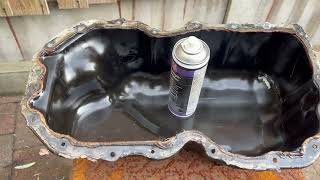
Typical fix: Replace all four injector seals with the updated part, not just the one for cylinder 3. It is mandatory to also clean or replace the oil pickup strainer 🎬 See how to remove and replace the oil strainer. and change the engine oil and filter. Mazda reportedly added this to the 75k mile service interval due to the frequency of failures.
Est. part cost: $5-$15 per seal - Wiring Harness or Connector Issue 🟡 Medium Probability
How to confirm: Visually inspect the wiring harness and connector for cylinder 3's injector for any signs of damage, corrosion, or loose pins. Use a multimeter to check for continuity between the injector connector and the PCM connector, specifically PCM terminal 1CS on the diesel model.
Typical fix: Repair the damaged section of the wiring harness or replace the faulty connector.
Est. part cost: $10-$100
Rare But Worth Checking
- Powertrain Control Module (PCM) Failure: Mazda issued a Technical Service Bulletin (TSB 01-017/16) for some 2013-2016 CX-5s where an internal PCM failure could cause injector codes, specifically P0202 and P0203 together. This primarily affected Japan-built models with DENSO PCMs with a VIN lower than JM3KE**820183 (produced before May 23, 2016). If both codes are present, this is the most likely cause and replacing the injector will not fix the issue.
Diagnosis Steps

- Read the fault codes with an OBD-II scanner and record the freeze frame data. Check for companion codes, especially P0202.
- Visually inspect the wiring and connector for fuel injector #3 for any obvious damage, corrosion, or loose connections.
- Check the engine oil level and smell. A high oil level or a strong diesel smell indicates oil dilution, likely from a leaking injector seal or excessive DPF regeneration.
- If P0202 and P0203 are present together, consult TSB 01-017/16. Verify if the vehicle is a Japan-built model with a DENSO PCM and VIN lower than JM3KE**820183. If so, the PCM is the likely culprit.
- If only P0203 is present, swap the #3 fuel injector with another cylinder (e.g., #2). Clear the codes and run the engine. If the code changes to P0202, the injector is faulty.
- If the code does not move, test the injector circuit for continuity and voltage. Check for an open or short in the wiring harness between the injector and the PCM (terminal 1CS).
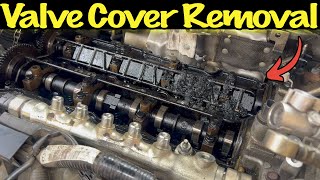
- Regardless of the electrical fault, it is highly recommended to remove the valve cover to inspect the injector seals for leakage and drop the oil pan to inspect the oil pickup strainer for carbon clogging due to the prevalence of this issue on the SKYACTIV-D 2.2L engine.
Parts You'll Likely Need
- Fuel Injector
(OEM #SH01-13-H50)— This is the most common part to fail electrically, causing the P0203 code directly.
Trusted brands: Denso (OEM, p/n DCRI200260 or 295900-0260)
OEM price range: $400-$550
Aftermarket price range: $250-$400 (Remanufactured) - Fuel Injector Seal (Washer)
(OEM #SH01-13-H51A)— This is a mandatory replacement part whenever an injector is removed. The original seals are a known high-failure item on this engine, and their failure is the root cause of many major engine problems.
Trusted brands: Mazda (OEM)
OEM price range: $5-$15
Aftermarket price range: $2-$10 - Engine Oil Pump Pickup Strainer
(OEM #SH01-14-240)— If the injector seals have failed, this part often becomes clogged with carbon deposits, starving the engine of oil. It must be inspected and likely replaced to prevent engine failure.
Trusted brands: Mazda (OEM)
OEM price range: $50-$80
Aftermarket price range: $30-$60 - Valve Cover to Injector Oil Seal
(OEM #SH01-10-508)— This seal on the valve cover for the injector should also be replaced whenever an injector is removed to prevent oil leaks.
Trusted brands: Mazda (OEM)
OEM price range: $15-$25
Related Codes That Often Appear With This One
- P0303 — This code for 'Cylinder 3 Misfire Detected' is a direct symptom of the P0203 fault, as the cylinder is not receiving the correct amount of fuel. The TSB confirms misfire codes are usually stored at the same time.
- P0202 — A Mazda TSB notes that P0202 and P0203 often appear together, which strongly points towards a PCM failure as the cause.
- P0522 — 'Engine Oil Pressure Sensor Circuit Low'. On this engine, low oil pressure is a common result of leaking injector seals causing a clogged oil strainer. This code can be a precursor to catastrophic engine failure.
- P0101 — 'Mass Air Flow (MAF) Circuit Range/Performance'. A worn exhaust camshaft, a known issue on this engine, can cause this code to appear as the engine's breathing characteristics change.
Technical Service Bulletins (TSBs) & Recalls
- 01-017/16: Addresses a rough running engine with DTCs P0202 and P0203 (or P0201 and P0204) caused by an internal failure of the DENSO-made PCM on certain VIN ranges of 2013-2016 CX-5, Mazda3, and Mazda6 models.
- TSB Bulletin #01-004-17: Notes that multi-model vehicles may experience a rough running engine and check engine light with paired DTCs P0201/P0204 or P0202/P0203.
- TSB Bulletin #01-004-17-3317a: Confirms that when P0202 and P0203 are stored, engine misfire related DTCs (P0301, P0302, P0303, P0304) are usually stored at the same time.
Platform-Specific Known Issues

- Injector Seal Failure: The most critical issue for the 2.2L SKYACTIV-D engine is the failure of the copper injector seals. This allows combustion gases to contaminate the engine oil, forming hard carbon sludge that clogs the oil pickup strainer, leading to oil starvation, turbo failure, and camshaft wear.
- PCM Failure TSB: Mazda issued TSB 01-017/16 for 2013-2016 CX-5s (and other models) where an internal PCM failure could cause paired injector codes (P0202/P0203). This is specific to Japan-built models with DENSO PCMs before a certain VIN.
Mechanic-Grade Diagnostic Values
- Fuel Injector Internal Resistance — expected: 0.9–1.1 MΩ (Megohms) at 20°C (68°F). Failure: A reading outside this range indicates an internal electrical fault in the piezo injector.
- Injector Correction Values (Live Data) — expected: Between -1.0 and +1.0 mm³/stroke at idle.. Failure: A value significantly outside this range indicates the PCM is attempting to correct for a major fueling deviation, which could be caused by a faulty injector.
- Voltage at Injector Connector (Control Wire) — expected: A flashing signal when tested with a noid light or oscilloscope while the engine is cranking/running.. Failure: A steady light/voltage or no light/voltage indicates a problem in the wiring or the PCM driver, not the injector itself.
Scan Tool Commands That Help
- Mazda M-MDS (or equivalent like FORScan): Injector Correction Factors / Injector Code Programming — This is a mandatory procedure after replacing a fuel injector. The unique calibration code from the new injector must be programmed into the PCM to ensure correct fuel delivery and engine performance.
- Mazda M-MDS (or equivalent): KOER (Key On, Engine Running) Self-Test — Used after a repair to verify that the fault has been resolved and no other DTCs are present under operating conditions.
- FORScan: Read Injector Correction Data Values — To monitor the live performance of each injector. Values outside the normal range (typically +/- 1.0 mm³/stroke) can indicate a failing or clogged injector before it completely fails.
Wiring & Ground Locations
- PCM Terminal 1CS — At the Powertrain Control Module connector.. This is the specific terminal for the control circuit of the #3 fuel injector. A continuity test should be performed between this pin and terminal B at the injector connector to rule out an open circuit in the wiring harness.
- G02 — Under the left (driver's side in LHD) headlight assembly.. This is a primary ground point for components in the front-left of the engine bay. A corroded or loose connection here can cause various intermittent electrical issues, including faults in sensor and actuator circuits.
- G03 — Located on the left front of the engine compartment.. This is another critical engine compartment ground point. The PCM and its related circuits rely on clean ground connections. Verifying the integrity of this ground is a key step in diagnosing any electrical fault code.
- Fuel Injector Connector — Directly on top of the #3 fuel injector, under the engine cover.. This is the most common point of failure for wiring issues. Check for corrosion, pushed-out pins, or damage from heat and vibration.
Real Owner Repair Stories
- Mazdaspeeds.org user 'Davejb' (2011 Mazdaspeed 3 (different model but demonstrates a relevant electrical fix for the same code)) — Misfiring and P0203 code.
❌ Tried (didn't work) Checked wiring to the injectors., Checked resistance of injector #3 and compared it to injector #2 (readings were the same).
✅ What actually fixed it The user cleaned the main PCM connector with contact cleaner, suggesting a loose or dirty connection was the root cause.
OEM Part Supersession History
SH01-13-H51→SH01-13-H51A— Updated design for the copper injector seal (washer) to improve longevity and prevent the common leakage issue.TSB 01-017/16→TSB 01-004/17— The later TSB expanded the list of affected models and VIN ranges for the PCM failure issue, confirming the same root cause and repair procedure.
Model Year Variations Within This Range
- 2013 - May 23, 2016: Japan-built CX-5 models with VINs lower than JM3KE**820183 are subject to TSB 01-017/16 for potential PCM failure if codes P0202 and P0203 appear together. Vehicles produced after this date have an updated PCM where the internal failure was corrected.
- 2016.5: A mid-2016 refresh introduced an upgraded interior, better noise insulation, and the Mazda Connect infotainment system with a commander switch. While not directly related to P0203, it's a key demarcation point for the first generation.
Diagnostic Flowchart
Other Known Issues on This Vehicle
Issues unrelated to this code that are worth knowing about as an owner of this generation:
- Premature Exhaust Camshaft Wear 🔴 High — Common on pre-2018 models, often becoming apparent after 70,000 miles. Caused by a combination of oil dilution from DPF regeneration and potentially soft cam material.
- Turbocharger Failure 🔴 High — Often a secondary failure caused by oil starvation from a clogged oil pickup strainer (due to injector seal leaks) or oil dilution. Can also be caused by a loose wastegate bolt.
- Vacuum Pump Failure 🔴 High — Common on 2012-2016 models, leading to reduced or lost braking assistance. Caused by premature wear, sometimes accelerated by metal filings from a worn camshaft. (Ref: Recall AJ024A / R/2018/236)
- Oil Dilution from DPF Regeneration 🟠 Medium — Very common, especially for vehicles used primarily for short trips, which prevents the DPF from completing its regeneration cycle. This leads to diesel fuel mixing with the engine oil.
- Intake Shutter Valve Carbon Buildup 🟠 Medium — Widespread issue affecting models sold between 2012 and 2018, can cause power loss, warning lights, and engine stalling. (Ref: Recall (Australia) - Multiple models)
Used vs. New Parts: Buying Guide for This Vehicle
When a used part is the smart pick: A used fuel injector from a low-mileage donor vehicle can be a cost-effective option, as they are generally robust components if not subjected to the known seal failure. A used PCM is also a viable option to fix the TSB-related issue, but it will require dealer programming to the vehicle's VIN.
Donor-vehicle mileage cap: roughly under 80000 miles for the part to have meaningful remaining life.
What to inspect on the donor part:
- For injectors: Ensure the donor vehicle did not suffer from the injector seal leak. Ask for photos of the valve cover area around the injectors; any black, tarry buildup is a major red flag.
- Check the injector tip for heavy carbon deposits.
- For PCMs: Verify the part number matches exactly and that the donor vehicle is not from a flood or fire.
- Obtain the VIN of the donor car to cross-reference its history if possible.
OEM-only on this vehicle (don't cheap out):
- Fuel Injector Seals (Copper Washers): The cost is minimal, and the risk of using a pre-compressed or incorrect used seal is catastrophic engine damage. Always use new, genuine Mazda seals (part number SH01-13-H51A).
Aftermarket brands forum-validated for this vehicle:
- Denso: Denso is the Original Equipment Manufacturer (OEM) for the injectors. A new or remanufactured Denso injector is the most reliable choice.
Brands owners have reported issues with on this vehicle:
- Unbranded, no-name injectors from online marketplaces. These often have incorrect flow rates or poor-quality internal components, leading to performance issues, poor fuel economy, and premature failure.
Real Owner Stories
Aggregated from forums and TSBs cited above. Mileages and costs reflect what owners reported in those sources.
2012-2016 Mazda CX-5 SKYACTIV-D 2.2L
Symptoms: Reduced or lost braking assistance due to vacuum pump failure.
What fixed it: Recall AJ024A / R/2018/236 was issued to address the vacuum pump, though failures were often accelerated by metal filings from worn camshafts.
Source hint: Recall AJ024A / R/2018/236
Mazda 6 2.2 SKYACTIV-D — ~75000 miles
Symptoms: Cascade of failures stemming from oil contamination, including worn camshafts and turbos.
What fixed it: The user describes this as an 'inherent issue' related to timing chain and oil contamination.
Source hint: mazda6forums.com - 'Mazda 6 2.2 skyactiv-d timing chain issues'
Mazda 2.2D (SH-VPTS)
Symptoms: Vacuum pump failure and worn camshaft putting metal filings in the oil.
What fixed it: Replacement of the vacuum pump and camshaft.
Cost: $1,200-$1,300
Source hint: mazda-forum.com - 'Vacuum Pump Failure - Camshaft failure'
2013-2016 Mazda CX-5 SKYACTIV-D 2.2L
Symptoms: Rough running engine with paired DTCs P0202 and P0203.
What fixed it: Replacement of the DENSO-made PCM as per TSB 01-017/16.
Source hint: TSB 01-017/16
Mazda 2.2D SKYACTIV-D
Symptoms: Injector seals leaking, leading to soot clogging the pre-filter (oil pickup strainer).
What fixed it: Replacing injector seals and opening the lower part of the engine to clean the oil pickup strainer.
Source hint: Reddit r/mazda6 - 'Did 2.2 skyactive D is that problematic'
Related OBD-II Codes
Frequently Asked Questions
Does TSB 01-017/16 apply to my 2014 Mazda CX-5 with codes P0202 and P0203?
Why is my oil level rising and smelling like diesel along with the P0203 code?
Is there a recall for the vacuum pump failure mentioned in the context of my CX-5 diesel?
Can I just replace the seal for Cylinder 3 to fix the P0203 issue?
What is the risk of ignoring a P0203 code on this specific engine?
Do I need to do anything special after replacing the Cylinder 3 injector?
Helpful Videos


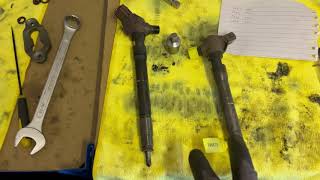
Used OEM Parts in Stock
New Aftermarket Parts Available


The information in this article is provided for general reference and educational purposes only. Vehicle specifications, procedures, and part compatibility can vary by production date, trim level, and region. Always consult your vehicle's factory service manual and verify part numbers before purchasing or performing repairs. Safety-critical components such as airbags, seat belts, and braking systems should be installed by a qualified professional.
- Mazda CX-5:
- 🎬 Helpful Videos
- 🛍️ Shop This Part
- What's Unique About the 2013-2016 Mazda CX-5
- Symptoms You May Notice
- Most Likely Causes
- Rare But Worth Checking
- Diagnosis Steps
- Parts You'll Likely Need
- Related Codes That Often Appear With This One
- Technical Service Bulletins (TSBs) & Recalls
- Platform-Specific Known Issues
- Mechanic-Grade Diagnostic Values
- Scan Tool Commands That Help
- Wiring & Ground Locations
- Real Owner Repair Stories
- OEM Part Supersession History
- Model Year Variations Within This Range
- Diagnostic Flowchart
- Other Known Issues on This Vehicle
- Used vs. New Parts: Buying Guide for This Vehicle
- Real Owner Stories
- 2012-2016 Mazda CX-5 SKYACTIV-D 2.2L
- Mazda 6 2.2 SKYACTIV-D — ~75000 miles
- Mazda 2.2D (SH-VPTS)
- 2013-2016 Mazda CX-5 SKYACTIV-D 2.2L
- Mazda 2.2D SKYACTIV-D
- Related OBD-II Codes
- Frequently Asked Questions
- 🎟️ Get 5% Off