

P0202 on 2009-2018 Ram 1500: Injector Circuit Open - Cylinder 2 Causes and Fixes
P0202 on a 4th Gen Ram 1500 means there's an electrical problem with the cylinder 2 fuel injector. Before replacing the injector, inspect the wiring harness near the passenger-side valve cover, as it's a very common failure point. A bad injector is the next likely cause, followed by rare issues like a faulty TIPM or PCM.
- P0202 on a 4th Gen Ram 1500 points to an electrical fault with the cylinder 2 injector, which is the front cylinder on the passenger side.
- Always inspect the wiring harness for damage near the valve cover before buying a new fuel injector; this is the most common point of failure.
- A simple 'injector swap' with a neighboring cylinder is the best DIY method to confirm whether the injector itself is bad or if the problem is in the wiring.
- Do not ignore this code. Driving with a P0202 will cause a rough misfire and can lead to expensive catalytic converter damage over time.
What's Unique About the 2009-2018 Ram 1500
On this generation of Ram 1500 with the 4.7L and 5.7L V8 engines, the P0202 code is frequently caused by a faulty wiring harness, not the fuel injector itself. The wiring loom is a known weak point, especially where it is exposed to engine heat and vibration near the valve covers. This issue is so common that a Technical Service Bulletin (TSB #9002688) was issued advising technicians to inspect the wiring thoroughly before replacing an injector, which can save significant time and money on misdiagnosis. While this TSB number appears in many third-party databases, an official OEM TSB for later models, #18-054-21 REV. A, also lists P020x codes as a potential symptom of other systemic issues.
Symptoms You May Notice
- Check Engine Light is on (may be flashing if misfire is severe).
- Rough idle or engine stumbling.
- Noticeable engine misfire (may feel like a shake or shudder).
- Poor acceleration and loss of power.
- Reduced fuel economy.
- Engine may be hard to start.
- Replacing the fuel injector without first thoroughly inspecting the wiring harness. Many owners and even shops replace a perfectly good injector only to find the problem was a simple broken wire.
Most Likely Causes
- Faulty Fuel Injector Wiring or Connector 🔴 High Probability The wiring harness is subjected to significant heat and vibration, especially near the engine's valve covers and exhaust manifolds. Over time, wires can become brittle, chafe, and break, causing an open or short circuit. This is a well-documented issue for this platform.
How to confirm: Visually inspect the wiring harness leading to the cylinder 2 injector (front-most cylinder on the passenger side) for any signs of melting, chafing, or broken wires. Perform a 'wiggle test' on the harness with the engine running to see if it affects the misfire. Check for continuity from the PCM connector to the injector connector using a multimeter; resistance should be less than 5.0 Ohms. Also check the (K12) Injector Control No. 2 circuit for a short to ground.
Typical fix: Repair the damaged section of the wire or replace the injector connector pigtail. Splicing in a new connector is a common and effective repair.
Est. part cost: $15-$40 - Failed Fuel Injector 🟡 Medium Probability Injectors can fail internally from heat cycles and wear over time. While wiring is a more common issue on this platform, injector failure is still a frequent cause.
How to confirm: After confirming the wiring is good, test the injector. Measure the resistance across the injector's two terminals using a multimeter set to Ohms. A healthy injector for a 5.7L Hemi should read between 11-15 Ohms. A reading of infinity (OL) indicates an open circuit and a bad injector. The most definitive test is to swap the cylinder 2 injector with another cylinder (e.g., cylinder 4). Clear the codes and run the engine. If the code changes to P0204, the injector is faulty.
Typical fix: Replace the failed fuel injector. It is often recommended to replace the O-rings and seals at the same time.
Est. part cost: $50-$130 - Blown Fuel Injector Fuse ⚪ Low Probability
How to confirm: Locate the fuse box (Totally Integrated Power Module or TIPM) in the engine bay. For 2013-2018 models, check the 25A fuse designated for the fuel injectors. If the fuse is blown, replace it.
Typical fix: Replace the blown fuse. If the fuse blows again immediately, it indicates a short circuit in the injector wiring that must be found and repaired.
Est. part cost: $1-$5
Rare But Worth Checking
- Faulty Powertrain Control Module (PCM): This is the least likely cause. The internal driver transistor for the cylinder 2 injector can fail inside the PCM. This should only be considered after all wiring and the injector itself have been proven to be good. One owner on a forum swapped the PCM and the code remained, indicating it's a very rare failure point.
- Faulty Totally Integrated Power Module (TIPM): For models up to 2012, the TIPM itself can fail. While more commonly associated with fuel pump or lighting issues, a fault within the TIPM's internal relays or circuits could theoretically cause an injector circuit code. This is an uncommon cause for a single injector code.
Diagnosis Steps
- Identify Cylinder 2: On the 4.7L and 5.7L V8 engines, cylinder 2 is the front-most cylinder on the passenger side of the engine (Bank 2). The Hemi firing order is 1-8-4-3-6-5-7-2.
- Check for Other Codes: Use a scanner to check for any other codes. A P0302 code is expected and is a symptom of P0202.
- Inspect the Fuse: Check the fuel injector fuse in the engine bay fuse box (TIPM). On 2013-2018 models, this is often a 25A fuse. If it's blown, replace it and see if the code returns.
- Inspect the Wiring: Carefully inspect the wiring harness and connector for the cylinder 2 injector. Look for any visible damage like chafing, melting, or corrosion. Pay close attention to the harness section near the valve cover and exhaust manifold.
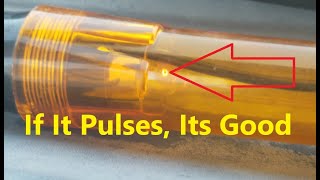
- Test the Circuit with a Noid Light: Disconnect the injector connector and plug in a 'noid' light. Start the engine. The light should flash steadily, indicating the PCM is sending a signal. 🎬 See how to test the injector circuit using a test light. If it doesn't flash, the problem is in the wiring or the PCM.
- Test the Injector Resistance: With the injector disconnected, use a multimeter to measure the resistance between its two electrical terminals. The reading should be between approximately 11 and 15 Ohms for a Hemi. A reading of infinity (OL) means the injector is open and bad. Compare the reading to an adjacent, working injector to confirm.
- Swap Injectors: If the wiring seems okay and the noid light flashes, swap the cylinder 2 injector with an adjacent one (like cylinder 4). Clear the codes and run the engine. If the code returns as P0204, the injector is the confirmed problem. If P0202 returns, the fault is in the wiring or PCM.
- Check for a Bad PCM: If all previous steps prove the wiring and injector are good, the PCM may have a faulty injector driver. This is rare and should be the last component to be condemned.
Parts You'll Likely Need
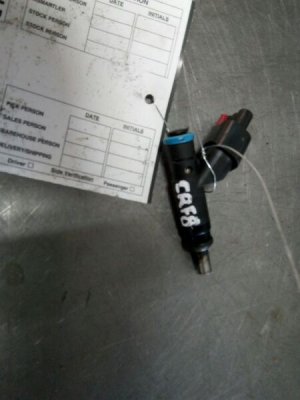
- Fuel Injector
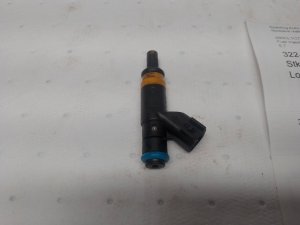
(OEM #68361162AB)— If the wiring is confirmed to be good, the internal coil of the fuel injector has likely failed, requiring replacement. This part number supersedes 68361162AA.
Trusted brands: Mopar, Bosch, Standard Motor Products
OEM price range: $60-$95.
Aftermarket price range: $40-$80 - Fuel Injector Connector Pigtail
(OEM #68052577AA)— Often the plastic connector or the wires leading directly to it become brittle and break, causing an open circuit. Splicing in a new pigtail is the standard repair. An alternative OEM part number for the connector is 05183448AA.
Trusted brands: Mopar, Dorman
OEM price range: $20-$40
Aftermarket price range: $10-$25
Related Codes That Often Appear With This One
- P0302 — P0302 means 'Cylinder 2 Misfire Detected.' Since the P0202 code indicates a problem with the fuel supply to cylinder 2, a misfire on that cylinder is a direct and expected consequence.
Technical Service Bulletins (TSBs) & Recalls
- TSB #9002688: A widely referenced TSB in third-party repair databases that advises technicians to inspect the injector wiring loom and connector before replacing fuel injectors for P020x codes due to the high likelihood of a wiring fault.
- TSB #18-054-21 REV. A: An official FCA bulletin for 2019-2020 Ram HD trucks with the Cummins engine that lists P0201-P0206 codes as a possible symptom of a failing high-pressure fuel pump causing system contamination. While for a different engine, it shows that injector circuit codes can be triggered by systemic fuel issues.
Platform-Specific Known Issues
- A known issue for this platform is the injector wiring harness becoming brittle and failing where it is exposed to high engine heat, particularly near the valve covers. This is referenced in third-party databases under TSB #9002688.
- On some 2011-2012 models, failure of the Totally Integrated Power Module (TIPM) is a known issue, though it more commonly causes fuel pump or lighting problems rather than a single injector code.
Mechanic-Grade Diagnostic Values
- Fuel Injector Coil Resistance (5.7L Hemi) — expected: 11.0 - 15.0 Ohms. Failure: A reading of infinity (OL) indicates an open circuit. A reading significantly higher or lower than other injectors (e.g., a 5+ Ohm difference) points to a failing coil. Readings near zero indicate a shorted injector.
- Injector Control Circuit Continuity (PCM to Injector) — expected: Less than 5.0 Ohms, ideally less than 1.0 Ohm.. Failure: Resistance higher than 5.0 Ohms indicates a break or high resistance in the wiring harness.
- Injector Power Wire Voltage (Key On, Engine Off) — expected: Battery Voltage (approx. 12V) at the injector connector power pin.. Failure: No voltage or low voltage suggests a problem with the ASD (Auto Shutdown) relay, its fuse, or the power feed wire from the TIPM/PDC.
- Injector Inductive Voltage Spike (Oscilloscope) — expected: A sharp voltage spike of approximately 50-70 volts when the injector driver in the PCM turns off, collapsing the magnetic field.. Failure: A missing or significantly diminished voltage spike indicates the PCM is not seeing the injector fire, which is the primary trigger for the P0202 code.
Scan Tool Commands That Help
- Witech (or capable bidirectional scanner): Fuel Injector Kill Test / Injector Cutout Test — With the engine running, this command allows a technician to individually disable cylinder 2's injector. If there is no change in engine idle when cylinder 2 is disabled, it confirms that cylinder is not contributing (i.e., the fault is active). This is a quick way to verify the symptom before testing components.
- Witech (or capable bidirectional scanner): Fuel Injector Control State / Actuation Test — With the key on but engine off, this command attempts to cycle the injector solenoid. You should hear an audible 'click' from the injector. If other injectors click but cylinder 2 does not, it points to a failure in the injector itself or its immediate wiring, assuming the PCM driver is good.
Wiring & Ground Locations
- (K12) Injector Control No. 2 Circuit — This is the specific wire that runs from the Powertrain Control Module (PCM) connector to the fuel injector #2 connector. It is the ground-side wire that the PCM pulses to fire the injector.. This is the primary circuit monitored by the PCM for the P0202 code. All continuity and short-to-ground tests for the control side of the circuit are performed on this wire.
- ASD Relay Output Circuit — This circuit provides the 12V+ power supply to the bank of injectors that includes cylinder 2. It originates at the Auto Shutdown (ASD) relay, which is located in the TIPM (pre-2013) or Power Distribution Center (2013+).. A failure in this power supply circuit would typically cause codes for multiple injectors on the same bank (e.g., P0202, P0204, P0206, P0208), not just P0202 alone. However, a specific wiring issue affecting only the branch to cylinder 2 could be a cause.
- Engine Ground Straps — There are multiple critical ground points. A common one is G300, located on the engine block. Technicians should check that all main engine-to-chassis ground straps are clean, tight, and free of corrosion.. While not a direct cause of a single injector circuit code, a poor engine ground can cause widespread electrical issues and erratic sensor readings, potentially leading to misdiagnosis. It's a foundational check for any electrical fault.
Real Owner Repair Stories
- Reddit user /u/SemperFiMaryne (2015 Ram 1500) — Check engine light with codes P0202 and P0302.
❌ Tried (didn't work) Self-diagnosis via Bluetooth OBD reader.
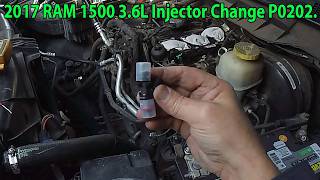
✅ What actually fixed it The vehicle was taken to a shop, which diagnosed and replaced a faulty fuel injector. - YouTube channel 'Emanualonline' (2017 Ram 1500 (3.6L V6, but diagnostic process is identical)) — Rough idle and P0202 'Fuel Injector 2 Circuit Open'.
❌ Tried (didn't work) Initial visual inspection showed no obvious wiring damage.
✅ What actually fixed it The technician tested injector resistance from the main harness connector. Injector #2 showed 21.9 Ohms, while injectors #4 and #6 showed 14.1 and 13.7 Ohms respectively. This significant difference in resistance confirmed the injector coil was failing internally. Replacing the injector fixed the issue.
Model Year Variations Within This Range
- 2009-2012: These model years use a Totally Integrated Power Module (TIPM) that is known for high failure rates, particularly affecting the fuel pump relay. While less common for a single injector code, a failing TIPM can cause a wide range of erratic electrical issues and should be considered if multiple, unrelated electrical faults are present.
- 2013-2018: Starting in 2013, the TIPM was replaced by a standard Power Distribution Center (PDC). While still a fuse and relay box, it is generally considered more reliable than the earlier TIPMs and is less likely to be the source of the problem for a P0202 code.
Diagnostic Flowchart
Used vs. New Parts: Buying Guide for This Vehicle
When a used part is the smart pick: A used wiring harness pigtail or a section of the engine harness from a low-mileage donor vehicle is a perfectly acceptable and cost-effective repair. Given that the failure is often a simple broken wire, a used connector is a smart choice.
Donor-vehicle mileage cap: roughly under 80000 miles for the part to have meaningful remaining life.
What to inspect on the donor part:
- For wiring: Ensure the plastic connector is not brittle, the locking tab is intact, and there are several inches of clean, un-nicked wire attached.
- For injectors: Ask for the resistance reading if possible. Avoid injectors from engines with known sludge or water damage.
- Visually inspect for any signs of fire, flood, or major collision damage on the donor vehicle.
OEM-only on this vehicle (don't cheap out):
- Powertrain Control Module (PCM) - While a used PCM can be purchased, it MUST be reprogrammed to the vehicle's VIN and options. This often requires dealer-level tools, making a pre-programmed unit from a specialized remanufacturer a more reliable, though more expensive, choice than a junkyard part.
Aftermarket brands forum-validated for this vehicle:
- Injectors: Bosch (often the OEM supplier), Standard Motor Products (SMP), DeatschWerks, Fuel Injector Clinic.
- Connectors: Dorman, Mopar.
Brands owners have reported issues with on this vehicle:
- Unbranded, ultra-low-cost fuel injectors from online marketplaces are frequently reported to have inconsistent flow rates, poor spray patterns, and high failure rates, often causing more problems than they solve.
Real Owner Stories
Aggregated from forums and TSBs cited above. Mileages and costs reflect what owners reported in those sources.
2017 Ram 1500
Symptoms: The truck had a rough idle and a check engine light with code P0202, indicating an injector circuit fault for cylinder 2.
What fixed it: The problem was resolved by replacing the fuel injector for cylinder #2. The repair involved accessing the injector under the intake manifold and replacing it with a new one (BOSCH 62410).
Source hint: youtube_comment from Pine Hollow Auto Diagnostics, referenced in '2017 RAM 1500 Injector Diagnosis and Replacement due to Code P0202 and Rough Idle.'
Related OBD-II Codes
Frequently Asked Questions
Where is cylinder #2 located on my 2011 Ram 1500 5.7L Hemi?
What is the most common reason for a P0202 code on these trucks?
I have a P0302 (Cylinder 2 Misfire) code along with P0202. Is this normal?
How can I test the fuel injector on my Ram to see if it's bad?
Is there an official TSB for the P0202 wiring problem?
Could a bad TIPM cause just a single P0202 code on my 2012 Ram?
Helpful Videos
We Have This Part in Stock



The information in this article is provided for general reference and educational purposes only. Vehicle specifications, procedures, and part compatibility can vary by production date, trim level, and region. Always consult your vehicle's factory service manual and verify part numbers before purchasing or performing repairs. Safety-critical components such as airbags, seat belts, and braking systems should be installed by a qualified professional.
- Ram 1500:
- 🎬 Helpful Videos
- 🛍️ Shop This Part
- What's Unique About the 2009-2018 Ram 1500
- Symptoms You May Notice
- Most Likely Causes
- Rare But Worth Checking
- Diagnosis Steps
- Parts You'll Likely Need
- Related Codes That Often Appear With This One
- Technical Service Bulletins (TSBs) & Recalls
- Platform-Specific Known Issues
- Mechanic-Grade Diagnostic Values
- Scan Tool Commands That Help
- Wiring & Ground Locations
- Real Owner Repair Stories
- Model Year Variations Within This Range
- Diagnostic Flowchart
- Used vs. New Parts: Buying Guide for This Vehicle
- Real Owner Stories
- 2017 Ram 1500
- Related OBD-II Codes
- Frequently Asked Questions
- 🎟️ Get 5% Off