

P0202 on 2011-2017 Hyundai Accent 1.6L CRDi: Injector Circuit Malfunction Causes and Fixes
P0202 on your 1.6L CRDi Accent means there's an electrical fault with the cylinder 2 fuel injector. It's most often a failed injector, but can also be a wiring issue. A new diesel injector is the common fix, but diagnosis is key to avoid replacing good parts.
- P0202 on a 2011-2017 Accent CRDi points specifically to an electrical fault in the cylinder 2 injector circuit.
- The most common cause is a failed fuel injector, but always check the wiring and connector first to avoid unnecessary expense.
- A definitive DIY test is to swap the suspect injector with one from another cylinder and see if the fault code follows the injector.
- Any replacement diesel injector MUST be coded to the engine's computer using a professional scan tool.
- Do not drive the vehicle extensively with this code, as it can lead to costly damage to the Diesel Particulate Filter (DPF).
What's Unique About the 2011-2017 Hyundai Accent
The 2011-2017 Hyundai Accent (often called the 'RB' generation) uses the D4FB version of the 1.6L CRDi engine. A key feature of this common-rail diesel system is that replacement injectors must be 'coded' to the ECM. Each new injector has a unique Injector Quantity Adjustment (IQA) code, typically a 16 or 20-digit alphanumeric string, that must be programmed into the vehicle's computer. Skipping this step will result in poor engine performance, rough running, and incorrect fueling even with a brand new part. This requires a professional-grade scan tool with specific Hyundai software, such as the Hyundai GDS, Autel, Launch, or Fcar F5G.
Symptoms You May Notice
- Check Engine Light is on
- Rough, shaking engine idle
- Noticeable loss of power and poor acceleration
- Engine misfiring or running on three cylinders
- Increased engine noise or 'diesel knock'
- Worse fuel economy
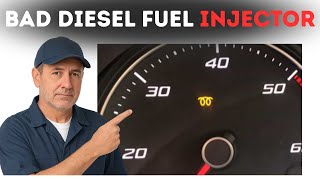
- Possible hard starting 🎬 Learn more about the top symptoms of failing diesel injectors.
- Replacing the fuel filter, which would not cause a single-cylinder electrical fault code.
- Assuming the engine has a mechanical problem without first diagnosing the electrical circuit indicated by the code.
Most Likely Causes
- Faulty Cylinder 2 Fuel Injector 🔴 High Probability Diesel injectors operate under extreme pressure and heat, and the internal coil windings can fail over time, creating an open circuit. This is the most common reason for a P0202 code.
How to confirm: Swap the cylinder 2 injector with an injector from another cylinder (e.g., cylinder 1). If the code changes to P0201, the injector is confirmed bad. Alternatively, use a multimeter to check the resistance across the injector's two pins. A Hyundai technical document specifies a resistance of 14.7 ~ 16.1Ω at 20℃ (68℉) for a similar CRDi engine; a reading of infinite resistance (open circuit) or a value far outside this range indicates failure. A short to the injector body can also occur.
Typical fix: Replace the faulty fuel injector and its copper sealing washer. The new injector must be coded to the ECM. 🎬 See how to perform injector coding using a scan tool.
Est. part cost: $150-$350 - Damaged Wiring or Connector 🟡 Medium Probability Engine vibrations and heat can cause wires to chafe or the plastic connector at the injector to become brittle and fail, leading to a poor connection or an open circuit.
How to confirm: Visually inspect the wiring harness and connector for cylinder 2. Look for any signs of breaks, corrosion, or loose pins. Use a multimeter to perform a continuity test on the two wires from the ECM connector to the injector connector. Unlike older port injection, you should only see millivolts at the connector with the ignition on, as both wires run directly to the ECM.
Typical fix: Repair the broken wire or replace the injector pigtail connector.
Est. part cost: $15-$50
Rare But Worth Checking
- Faulty Engine Control Module (ECM): This is the least likely cause. The ECM's internal injector driver can fail, but all other possibilities (injector, wiring) must be exhaustively ruled out before condemning the ECM.
Diagnosis Steps
- Verify the code with an OBD-II scanner. Note any other codes present.
- Visually inspect the wiring harness and electrical connector for the cylinder 2 fuel injector (second from the engine's belt side). Look for obvious damage, corrosion, or loose connections.
- If the connector looks good, disconnect it and check the resistance of the fuel injector with a multimeter. A healthy injector should read around 14.7-16.1 Ohms. An open circuit (infinite resistance) or a reading significantly different from the others indicates a bad injector.
- The most definitive test is to swap the cylinder 2 injector with one from another cylinder (e.g., cylinder 1).
- Clear the codes, start the engine, and let it run.
- Re-scan for codes. If the code has moved to P0201 ('Injector Circuit / Open - Cylinder 1'), the fuel injector itself is faulty and must be replaced.
- If the P0202 code returns after the swap, the problem is in the wiring harness or the ECM.
- Perform a continuity test on the two wires running from the injector connector back to the ECM to check for any breaks or shorts. Check for shorts to ground as well.
- If the wiring is confirmed to be good, the ECM is the likely, though rare, culprit.
Parts You'll Likely Need
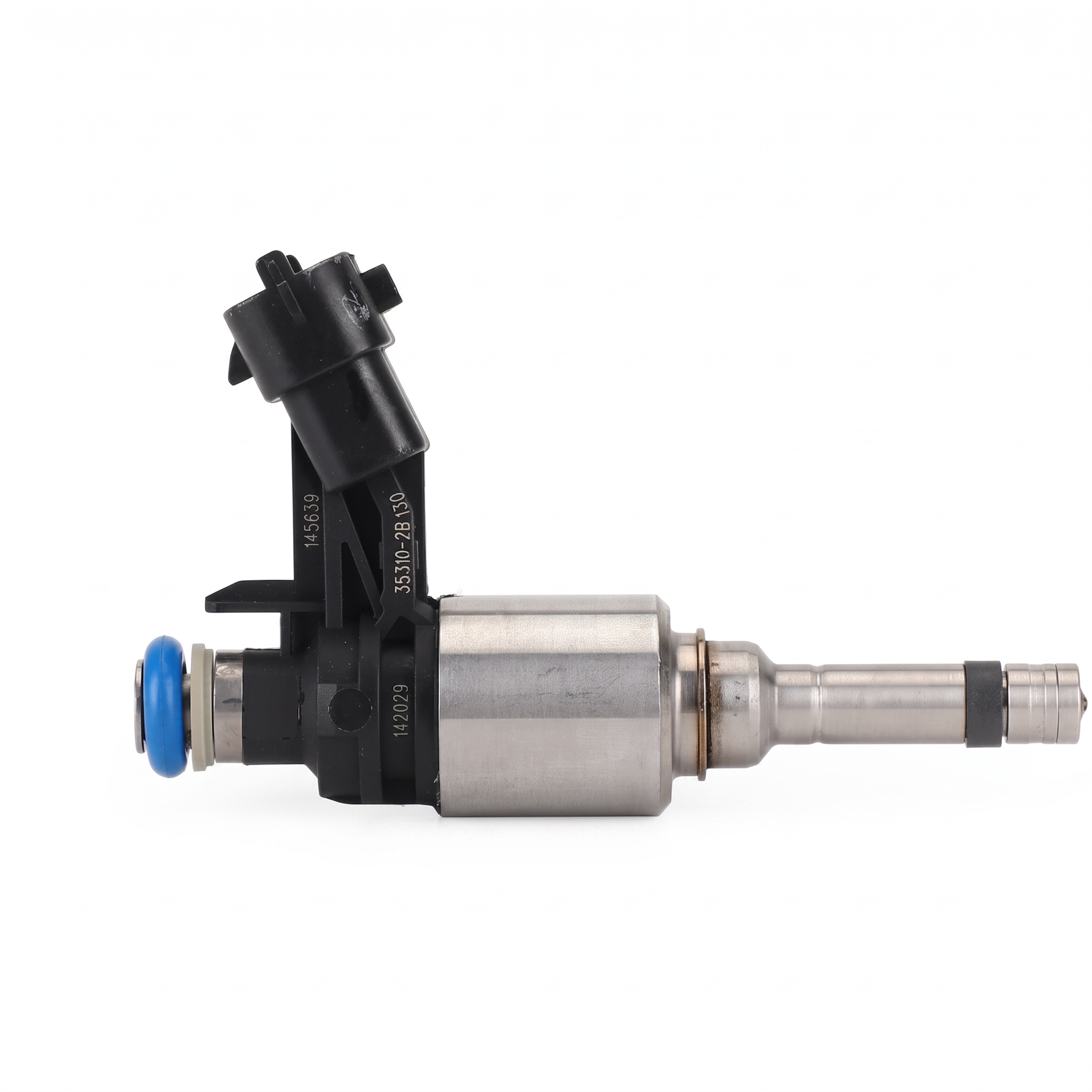
- Diesel Fuel Injector
(OEM #33800-2A900)— The internal coil of the injector is the most common failure point that causes an open circuit and triggers code P0202.
Trusted brands: Genuine Hyundai/Kia, Bosch (Original Manufacturer)
OEM price range: $250-$350
Aftermarket price range: $150-$250 - Fuel Injector Connector Pigtail — If the wiring or connector at the injector is damaged, replacing the pigtail is the standard repair.
Trusted brands: Standard Motor Products, Dorman
OEM price range: $30-$50
Aftermarket price range: $15-$30
Related Codes That Often Appear With This One
- P0302 — P0302 means 'Cylinder 2 Misfire Detected'. Since P0202 indicates the fuel injector for cylinder 2 isn't working, that cylinder can't combust properly, which directly causes a misfire.
- P0200 — P0200 is a general 'Injector Circuit Malfunction' code. It may be set alongside P0202 if the ECM detects a broader fault affecting the injector driver system, or if multiple injector circuits have intermittent issues.
Platform-Specific Known Issues
- Wiring Harness Chafe Point: On some Hyundai/Kia platforms, the engine wiring harness has been known to rub against sharp edges, particularly in the area around the battery tray or where it routes near the engine block. While not documented with a specific TSB for this exact code on the Accent, it is a worthwhile area to inspect closely for any signs of abrasion that could lead to an open or short in the injector circuit.
Mechanic-Grade Diagnostic Values
- Injector Circuit Voltage — expected: 12V ± 2V. Failure: A reading significantly outside this range points to a fault in the wiring or the ECM's injector driver circuit.
Scan Tool Commands That Help
- Hyundai GDS (Global Diagnostic System): Actuation Test: Fuel Injector Disable — This is a power balance test that lets the technician turn off each injector one by one. When the cylinder 2 injector is disabled, there should be no change in engine RPM if it's already faulty. Disabling a good injector will cause a noticeable RPM drop, confirming the fault is on the cylinder 2 circuit.
- Hyundai GDS (Global Diagnostic System): Injection Quantity Comparison Test — This function displays the fuel correction value for each cylinder. For a P0202 fault, the value for cylinder 2 will typically be maxed out as the ECM tries to compensate for the non-responsive injector, providing quantitative data to confirm the fault.
Wiring & Ground Locations
- ECM Connector Pin for Injector #2 — At the main Engine Control Module (ECM), typically located in the engine bay behind the battery.. This is the specific control wire for the cylinder 2 injector. Performing a continuity test from this pin to the injector connector is the final check to isolate a wiring fault from an ECM fault. NOTE: Pin numbers vary by model year and specific ECM used. One document for a 2010 Accent shows Pin 52, while another for a different Accent model shows Pin 3. Always verify with a vehicle-specific wiring diagram.
Real Owner Repair Stories
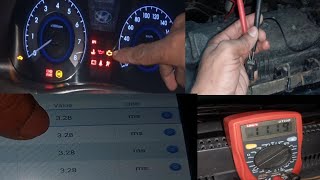
- Mechanic Brother YouTube Channel (Hyundai Verna (Accent) with D4FB engine) — Engine misfiring and Check Engine Light with code P0202. Unplugging the cylinder 2 injector connector caused no change in engine operation, confirming it was the dead cylinder.
❌ Tried (didn't work) The wiring harness was checked and found to be okay.
✅ What actually fixed it The injector was tested with a multimeter and found to be shorted to its own body (casing). Replacing the cylinder 2 fuel injector (Bosch part number ending in 320) resolved the fault.
Diagnostic Flowchart
Other Known Issues on This Vehicle
Issues unrelated to this code that are worth knowing about as an owner of this generation:
- Timing Chain Tensioner Wear 🔴 High — More common on higher mileage vehicles (over 150,000 km / 90,000 miles). Listen for a distinct rattle for 2-3 seconds on a cold start.
- DPF Clogging / Frequent Regeneration 🟠 Medium — Common for vehicles used primarily for short, city-based trips where the exhaust doesn't get hot enough for passive regeneration. Can lead to poor fuel economy and oil dilution.
- EGR Valve Carbon Buildup 🟠 Medium — Can occur over time, leading to stumbling, rough idle, or black smoke under acceleration. Cleaning the EGR valve is a common maintenance task.
- Suspension Component Wear 🟡 Low — Owners report premature wear of sway bar end links and struts, leading to clunking noises over bumps.
Used vs. New Parts: Buying Guide for This Vehicle
When a used part is the smart pick: For this repair, a used part is only recommended for the injector's electrical pigtail connector, provided it is in good physical condition with no brittle plastic or corrosion. A used fuel injector is highly discouraged.
Donor-vehicle mileage cap: roughly under 75000 miles for the part to have meaningful remaining life.
What to inspect on the donor part:
- For a wiring pigtail, ensure the locking tab is intact.
- Check that the wires are flexible and the insulation is not cracked or heat-damaged.
- Look for clean, corrosion-free metal terminals inside the connector.
OEM-only on this vehicle (don't cheap out):
- Fuel Injector: Due to the extreme pressures and tight tolerances of a common-rail system, a new Genuine Hyundai or OEM Bosch injector is the most reliable choice.
Aftermarket brands forum-validated for this vehicle:
- Bosch (This is the Original Equipment Manufacturer, so new Bosch parts are equivalent to Genuine Hyundai parts).
Brands owners have reported issues with on this vehicle:
- Unknown/white-box brands: Non-authorized remanufactured or cheap new injectors have a very high failure rate. A study by Bosch found 70% of such injectors failed performance testing out of the box.
- Refurbished injectors: A 'refurbished' injector may simply be a used part that has been cleaned externally and tested, but may have significant internal wear.
Real Owner Stories
Aggregated from forums and TSBs cited above. Mileages and costs reflect what owners reported in those sources.
2010 Hyundai Accent 1.6 CRDi
Symptoms: P0202 cylinder 2 fault code caused by an internal injector leak.
What fixed it: The issue was resolved by replacing the injector with a 338002A900 unit.
Source hint: AliExpress owner report: '338002A900 Diesel Fuel Injector for Hyundai and Kia: Real-World Performance, Fitment, and Replacement Guide'
2012 Hyundai Accent 1.6 CRDi
Symptoms: A drop in power during rapid acceleration, difficult cold starts, increased fuel consumption (from 5.6-6.0 to 6.8-7.5 L/100km), visible black smoke on startup, and obvious idle vibrations.
What fixed it: Replacing the faulty injector (part 0445110319) with a new original model.
Source hint: AliExpress owner report: 'Injecteur de carburant 0445110319 Analyse complète et recommandation pour les véhicules Hyundai et Kia'
Related OBD-II Codes
Frequently Asked Questions
What is the specific resistance range for a fuel injector on the 1.6L CRDi engine?
Can I just swap the injector, or does the 2011-2017 Accent require programming?
Which cylinder is associated with the P0202 code on my Accent?
Is there a specific part number I should look for when replacing the Cylinder 2 injector?
Are there any known wiring harness issues on the Accent that could cause P0202?
What other maintenance should I consider while fixing the injector on a high-mileage Accent?
Helpful Videos
Used OEM Parts in Stock
New Aftermarket Parts Available


The information in this article is provided for general reference and educational purposes only. Vehicle specifications, procedures, and part compatibility can vary by production date, trim level, and region. Always consult your vehicle's factory service manual and verify part numbers before purchasing or performing repairs. Safety-critical components such as airbags, seat belts, and braking systems should be installed by a qualified professional.
- Hyundai Accent:
- 🎬 Helpful Videos
- 🛍️ Shop This Part
- What's Unique About the 2011-2017 Hyundai Accent
- Symptoms You May Notice
- Most Likely Causes
- Rare But Worth Checking
- Diagnosis Steps
- Parts You'll Likely Need
- Related Codes That Often Appear With This One
- Platform-Specific Known Issues
- Mechanic-Grade Diagnostic Values
- Scan Tool Commands That Help
- Wiring & Ground Locations
- Real Owner Repair Stories
- Diagnostic Flowchart
- Other Known Issues on This Vehicle
- Used vs. New Parts: Buying Guide for This Vehicle
- Real Owner Stories
- 2010 Hyundai Accent 1.6 CRDi
- 2012 Hyundai Accent 1.6 CRDi
- Related OBD-II Codes
- Frequently Asked Questions
- 🎟️ Get 5% Off