

P0202 on 2018-2023 Ford Transit Custom: 2.0L EcoBlue Injector Circuit Fault Guide
On a 2018-2023 Transit Custom with the 2.0L EcoBlue engine, code P0202 almost always means the piezoelectric fuel injector for cylinder #2 has failed internally. This is a very common failure on this platform. Diagnosis involves a resistance check (~200 kΩ is good). Replacement is complicated by a high likelihood of the injector being seized by rust, a result of a known water leak from the scuttle panel above the engine. Special hydraulic pullers are often required for removal, and the new injec
- P0202 on your Transit Custom almost certainly points to a bad fuel injector in cylinder 2.
- A simple resistance test with a multimeter can confirm the diagnosis: a good injector is ~200 kΩ.
- Do not attempt this repair unless you are prepared to deal with a potentially seized injector and have access to a scan tool that can code the new injector to the van.
- Ignoring the issue can lead to costly damage to the DPF.
- Check for signs of water leaks under the windshield scuttle panel, as this is a likely root cause of the injector corrosion and failure.
What's Unique About the 2018-2023 Ford Transit Custom
The 2.0L EcoBlue diesel engine in this generation of Transit Custom is known for having injector issues. Unlike a generic P0202 fault, on this specific platform, the cause is overwhelmingly a failed piezoelectric injector rather than wiring. Diagnosis is unique because a healthy injector has a specific resistance of approximately 190-200 kΩ (kilo-ohms), a value confirmed by mechanics and owners in forums. Furthermore, these injectors are notoriously prone to seizing in the cylinder head. This is caused by a well-documented design flaw where water leaks from the windshield scuttle panel directly onto the top of the engine, causing severe rust and corrosion around the injector bodies. This can turn a straightforward electronic swap into a major mechanical job requiring special hydraulic pullers to extract the seized injector without damaging the cylinder head.
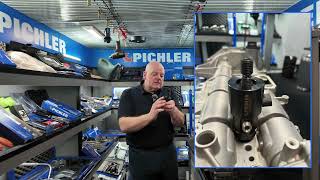
🎬 Watch a demonstration of removing a seized EcoBlue injector.Symptoms You May Notice
- Check Engine Light is on
- Engine running rough or vibrating (misfire)
- Noticeable loss of power and poor acceleration
- Engine may hesitate or stumble, especially under load
- Increased fuel consumption
- Engine may stall unexpectedly
- Excessive black or white smoke from the exhaust
- A knocking or "cracking" sound from the engine, especially when cold.
- Replacing the fuel filter. While a clogged filter can cause fuel pressure issues, it will not cause a specific injector circuit code like P0202.
- Replacing spark plugs. This is a diesel engine and does not have spark plugs.
Most Likely Causes
- Faulty Cylinder 2 Fuel Injector 🔴 High Probability The piezoelectric injectors on the 2.0L EcoBlue engine have a widely documented history of internal electronic failure. Water ingress from the scuttle panel often accelerates this failure.
How to confirm: Using a multimeter set to resistance (kΩ), disconnect the injector and measure across its two pins. A good injector should read approximately 200 kΩ. A significantly lower or higher reading (or an open circuit) indicates a failed injector. Alternatively, swap the injector from cylinder 2 with an adjacent cylinder (e.g., cylinder 1). If the code changes to P0201, the injector is confirmed faulty.
Typical fix: Replace the faulty fuel injector, its copper washer, and the stretch-to-yield hold-down bolt. The new injector's unique calibration code (IMA) must be programmed into the ECU.
Est. part cost: $250-$400 - Wiring Harness or Connector Issue 🟡 Medium Probability Engine vibrations and heat can cause wiring to fray or connector pins to corrode over time. Corrosion is exacerbated by the common water leak from the scuttle panel directly onto the engine's top end and wiring harness.
How to confirm: Visually inspect the wiring going to the cylinder 2 injector for any signs of damage, melting, or green/white corrosion. Unplug the connector and check for bent or corroded pins. With the injector unplugged and the ignition on, use a multimeter to verify that one of the pins in the connector has 12V power.
Typical fix: Repair the damaged section of the wiring harness or replace the injector connector pigtail. Clean corroded terminals with electrical contact cleaner.
Est. part cost: $15-$50 - Powertrain Control Module (PCM) Fault ⚪ Low Probability While less common, a failed injector can sometimes damage the internal driver circuit within the PCM, requiring replacement of both components.
How to confirm: This is diagnosed by exclusion. If the injector and wiring have both been tested and are known to be good, but the P0202 code persists, the PCM's internal driver for that injector may be at fault. This requires advanced diagnostics by a specialist.
Typical fix: The PCM would need to be repaired by a specialist or replaced and programmed to the vehicle.
Est. part cost: $500-$1200
Rare But Worth Checking
- Water Ingress Causing Corrosion: A widely known design flaw on Transit models involves the windshield scuttle panel failing to properly drain water, allowing it to drip directly onto the engine. This causes the injectors and their wiring to corrode, leading to electronic failure (P0202) and causing the injector body to rust and seize physically in the cylinder head, making removal extremely difficult.
Diagnosis Steps
- Read the fault code using an OBD-II scanner to confirm P0202 is the primary code.
- Perform a thorough visual inspection of the cylinder 2 injector area. Look for signs of water pooling, rust trails, damaged wires, or corrosion on the injector connector.
- Check the scuttle panel area at the base of the windshield for blockages (leaves, debris) that cause water to overflow onto the engine.
- Disconnect the electrical connector from the cylinder 2 injector.
- Set a multimeter to resistance (kΩ) and measure across the two pins on the injector itself. A healthy 2.0L EcoBlue injector should measure around 200 kΩ. An open circuit (OL) or very low resistance (e.g., 1 kΩ) indicates failure.
- If the resistance is incorrect, the injector is faulty and must be replaced.
- If the resistance is correct, the issue is likely in the wiring. The most definitive test is to swap the cylinder 2 injector with the cylinder 1 injector.
- Clear the codes and start the engine. If the fault code changes to P0201 ('Injector Circuit/Open - Cylinder 1'), the injector you moved is bad. If the P0202 code returns, the problem is in the wiring or PCM.
- To test the wiring, use a noid light plugged into the injector connector. When cranking the engine, the light should flash rapidly, indicating the PCM is sending a signal. If it does not flash, check for 12V power at the connector with the key on.
- If power is present but there's no flash signal from the noid light, there is a break in the signal wire back to the PCM or a faulty PCM driver circuit.
Parts You'll Likely Need
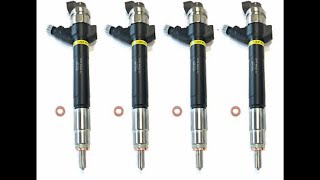
- Diesel Fuel Injector
(OEM #GK2Q-9K546-AC / GK2Q-9K546-AD / 2675955)— This is the most common failure point for a P0202 code on the 2.0L EcoBlue engine.
Trusted brands: Ford (Motorcraft), Bosch
OEM price range: $250-$400
Aftermarket price range: $180-$280 - Injector Hold-Down Bolt and Copper Seal — The hold-down bolt is a stretch-to-yield type and must be replaced. The copper seal is a single-use item critical for preventing combustion gases from leaking.
Trusted brands: Ford, Elring
OEM price range: $15-$30
Aftermarket price range: $5-$15 - Windshield Scuttle Panel Sealant — To fix the root cause of injector corrosion, the scuttle panel should be removed and resealed to the windshield using butyl tape or a suitable automotive sealant to prevent water ingress. 🎬 See how to properly seal the scuttle panel to stop water leaks.
Trusted brands: 3M, Sikaflex
OEM price range: N/A
Aftermarket price range: $20-$40
Related Codes That Often Appear With This One
- P0302 — P0302 means 'Cylinder 2 Misfire Detected'. An electrical fault in the injector circuit (P0202) will prevent the injector from firing correctly, which directly causes a misfire in that cylinder.
- P0201, P0203, P0204 — If multiple injector codes are present (e.g., P0201, P0202, P0203, P0204), it could suggest a common wiring harness problem, a power supply issue, or potentially a corrupted PCM, rather than multiple injectors failing at once.
- P1202 — This is a Ford-specific code for 'Injector Circuit Open / Shorted - Cylinder 2'. It is a more specific version of P0202 and often appears alongside it, confirming the fault is with the cylinder 2 injector circuit.
Technical Service Bulletins (TSBs) & Recalls
- SSM 49759: While for a different model (Ford Expedition), this TSB acknowledges that codes P0201-P0206 can occur and directs technicians to follow standard diagnostic procedures. [SSM 49759]
Platform-Specific Known Issues
- Injectors on the 2.0L EcoBlue are known to fail electronically, with a healthy injector having a resistance of about 200 kΩ.
- Water ingress from a poorly designed scuttle panel is common and causes severe rust on the injector bodies, leading to them becoming seized in the cylinder head.
- A specialized hydraulic puller (e.g., Pichler) or a heavy-duty slide hammer is often required to remove a seized injector without damaging the engine. Attempting removal with pry bars can crack the camshaft carrier.
- After replacement, the new injector's unique calibration code (a multi-digit IMA string printed on the injector) must be programmed into the ECU using a diagnostic tool like FORScan to ensure correct fuel trimming. Skipping this step will cause rough running, excessive noise, and other fault codes.
Mechanic-Grade Diagnostic Values
- Piezo Fuel Injector Resistance — expected: ~200 kΩ (kilo-ohms). Failure: A significantly lower reading (e.g., 1-112 kΩ) or an open circuit (OL).
- Injector Circuit Voltage — expected: 12V ± 2V at the connector with key on, engine off.. Failure: Values outside this range suggest a wiring or PCM driver fault.
- Wiring Harness Continuity — expected: Near 0 Ω. Failure: Any reading above 5 Ω between the PCM pin and the injector connector suggests a broken wire or corroded pin.
Hidden / Shadow Codes Worth Checking
- P1202: Ford-specific code for 'Injector Circuit Open / Shorted - Cylinder 2'. (see via Standard OBD-II scanners and tools like FORScan will display this code. It is more specific than the generic P0202 and often appears with it.)
- P062D: Fuel Injector Driver Circuit Performance Bank 1. This code can appear alongside P0202 and may indicate a problem with the injector driver module (part of the PCM) or the power supply to it. (see via Advanced scan tools like FORScan or Ford's IDS.)
Scan Tool Commands That Help
- FORScan / Ford IDS: Fuel Injector Correction Factors / Injector Coding — This is a mandatory step after replacing a fuel injector. The unique multi-digit code from the new injector must be entered into the PCM to ensure correct fueling and performance.
- FORScan / Ford IDS: Injector Pilot Learn / Pilot Correction Learn — After coding a new injector, this procedure should be run. The PCM performs a series of tests at different RPMs to fine-tune the injector's operation. This process can take up to 20 minutes and requires the engine to be at operating temperature.
- FORScan / Ford IDS: KOEO Injector Electrical Self Test (Buzz Test) — This Key-On-Engine-Off test commands the PCM to cycle each injector's solenoid, creating an audible 'buzz' or 'click'. It can help identify an electrically dead injector without starting the engine. While more common on older 7.3L Powerstroke engines, the principle is available in modern diagnostics.
Real Owner Repair Stories
- Ford Transit Forum user 'Solid_State' (2019 Transit Custom 2.0, Engine code BKFB) — Running on three cylinders, limp-home mode, DTC P0202 - injector 2 open circuit.
❌ Tried (didn't work) A garage replaced the turbocharger, which did not solve the misfire issue.
✅ What actually fixed it The owner diagnosed the fault by measuring the resistance of the injectors. Injectors 1, 3, and 4 measured 200 kΩ, while the faulty injector #2 measured 112 kΩ. Swapping injector #2 with injector #1 caused the fault code to move to P0201, confirming the injector was bad. The final fix was to replace the faulty injector and code the new one to the van.
OEM Part Supersession History
GK2Q-9K546-AC→GK2Q-9K546-AD, 2675955— Part revision and updates by the manufacturer.
Heads up: The 'AC' and 'AD' revisions are generally interchangeable for the 2.0L EcoBlue in this year range, but it is always critical to verify fitment with the vehicle's VIN. Some part suppliers also list JB3Q-9K546-AB as a compatible number, often for the Ranger variant of the EcoBlue engine.JB3Q-9K546-AB→REJB3J-9K546-AB, 2672673— Part revision. Primarily associated with the Ford Ranger 2.0 EcoBlue but sometimes cross-referenced.
Heads up: While mechanically similar, using a Ranger-specific injector in a Transit Custom without confirming compatibility via VIN could lead to performance issues even if it fits and codes correctly.
Model Year Variations Within This Range
- 2018+: The 2.0L EcoBlue engine was introduced to replace the older 2.2L TDCi. The 2018 facelifted Custom received this new engine range with 105PS, 130PS, and 170PS power outputs. A 185PS version was added in 2019. These engines are Euro 6 compliant and require AdBlue.
- 2022+: Later model year engines (e.g., 2022) may have different engine codes (e.g., BKFB vs YFL6) and are compliant with stricter Euro 6d standards. While the core architecture is the same, there can be minor differences in sensors, wiring, and the injection system, making direct engine swaps from a newer van to an older one complex.
Diagnostic Flowchart
Other Known Issues on This Vehicle
Issues unrelated to this code that are worth knowing about as an owner of this generation:
- Premature Wet Timing Belt Degradation 🔴 High — Failures can occur as early as 60,000-80,000 miles, well before the 144,000 mile/10-year interval. It is a very common and well-documented issue. (Ref: Ford has issued service actions/recalls for inspection and replacement, though specific numbers vary by region. Owners report being notified for a free inspection/replacement.)
- DPF Blockage and Regeneration Failures 🟠 Medium — Common on vans used primarily for short, urban journeys where the engine doesn't get hot enough to complete a DPF regeneration cycle.
- EGR Valve and Cooler Clogging 🟠 Medium — Soot buildup is common, especially on higher-mileage vehicles or those used for frequent short trips, leading to rough running and loss of power.
- Turbocharger Actuator Malfunction 🔴 High — The electronic actuator for the variable geometry turbo can fail, causing overboost or underboost conditions and putting the van in limp mode.
- Manual Gearbox Synchronizer Wear 🟠 Medium — Premature wear on the synchro rings for 1st and 2nd gear is a known issue, causing crunching noises and difficulty engaging gears.
Used vs. New Parts: Buying Guide for This Vehicle
When a used part is the smart pick: A used wiring harness pigtail or a complete engine wiring harness can be a cost-effective fix if the issue is confirmed to be wiring damage. For the injector itself, a used part is a very high-risk gamble and generally not recommended.
Donor-vehicle mileage cap: roughly under 50000 miles for the part to have meaningful remaining life.
What to inspect on the donor part:
- For wiring: Check for any signs of brittleness, melting, or previous repairs. Ensure connectors are intact with no broken locking tabs.
- For injectors (if you must): Ask for the resistance reading (should be ~200 kΩ). Visually inspect for heavy rust, which indicates it was exposed to the scuttle leak. Insist on getting the IMA code printed on the injector body.
OEM-only on this vehicle (don't cheap out):
- Fuel Injector: Given the high failure rate and the requirement for precise coding, using a new, genuine Ford/Motorcraft or OEM-equivalent (Bosch) injector is strongly recommended. Used or cheap aftermarket injectors are a common source of repeat failures.
Aftermarket brands forum-validated for this vehicle:
- Bosch (Often the original OEM supplier)
Brands owners have reported issues with on this vehicle:
- Unbranded, no-name injectors from online marketplaces. These often fail quickly, may not come with a valid IMA code for programming, and can cause engine running issues even if they work initially.
Real Owner Stories
Aggregated from forums and TSBs cited above. Mileages and costs reflect what owners reported in those sources.
2018+ Ford Transit Custom 2.0L EcoBlue
Symptoms: Water leaking from the scuttle panel directly into the engine bay, causing rust to form on the injectors and other top-end components.
What fixed it: Owners discussed DIY fixes using sealant or modifying the scuttle drainage to prevent water ingress.
Source hint: Ford Transit Forum (fordtransit.org) - Thread 'Mk8 scuttle leak into engine bay'
Ford Transit 2.0L EcoBlue
Symptoms: Harsh engine noise and rough running after an injector replacement.
What fixed it: Inputting the multi-digit IMA calibration code into the ECU using FORScan.
Source hint: Ford Transit Forum (fordtransit.org) - Thread 'Injector coding'
2018+ Ford Transit Custom 2.0L EcoBlue — ~70000 miles
Symptoms: Premature degradation of the wet timing belt before the official service interval.
What fixed it: Replacement of the timing belt following a Ford service action/inspection notification.
Source hint: Known Issues section citing wet timing belt degradation reports
Related OBD-II Codes
Frequently Asked Questions
What is the correct resistance for a 2.0L EcoBlue piezoelectric injector?
Why do the injectors on my Transit Custom keep failing and getting stuck in the head?
Can I just swap the injector and drive, or do I need to program it?
Is there a specific tool needed to remove a seized injector on this engine?
Does Ford acknowledge these injector codes in any official service bulletins?
Are there other major issues I should watch for on my 2018-2023 Transit Custom?
Helpful Videos
We Have This Part in Stock

The information in this article is provided for general reference and educational purposes only. Vehicle specifications, procedures, and part compatibility can vary by production date, trim level, and region. Always consult your vehicle's factory service manual and verify part numbers before purchasing or performing repairs. Safety-critical components such as airbags, seat belts, and braking systems should be installed by a qualified professional.
- Ford Transit Custom:
- 🎬 Helpful Videos
- 🛍️ Shop This Part
- What's Unique About the 2018-2023 Ford Transit Custom
- Symptoms You May Notice
- Most Likely Causes
- Rare But Worth Checking
- Diagnosis Steps
- Parts You'll Likely Need
- Related Codes That Often Appear With This One
- Technical Service Bulletins (TSBs) & Recalls
- Platform-Specific Known Issues
- Mechanic-Grade Diagnostic Values
- Hidden / Shadow Codes Worth Checking
- Scan Tool Commands That Help
- Real Owner Repair Stories
- OEM Part Supersession History
- Model Year Variations Within This Range
- Diagnostic Flowchart
- Other Known Issues on This Vehicle
- Used vs. New Parts: Buying Guide for This Vehicle
- Real Owner Stories
- 2018+ Ford Transit Custom 2.0L EcoBlue
- Ford Transit 2.0L EcoBlue
- 2018+ Ford Transit Custom 2.0L EcoBlue — ~70000 miles
- Related OBD-II Codes
- Frequently Asked Questions
- 🎟️ Get 5% Off