

P0202 on 2012-2016 Chevrolet Impala 3.6L V6: Injector Circuit Malfunction Causes and Fixes
On a 2012-2016 Impala with the 3.6L LFX engine, code P0202 is most often caused by a chafed fuel injector wiring harness, a known issue covered by a GM TSB. The second most likely cause is a failed cylinder 2 fuel injector. Inspect the wiring before buying parts.
- P0202 is an electrical fault in the cylinder 2 injector circuit, not a fuel pressure or ignition problem.
- Before buying any parts, thoroughly inspect the engine wiring harness for chafing, as this is a very common and documented problem (TSB #PIP4924D) on the 3.6L LFX engine.
- If the wiring is intact, the fuel injector is the next most likely culprit. A simple swap with a neighboring injector can confirm if it's faulty.
- Cylinder 2 is on the front bank (near the radiator), making it more accessible than the rear cylinders, but the intake manifold must still be removed for service.
- Do not drive extensively with this code, as the resulting misfire can cause expensive damage to the catalytic converter.
What's Unique About the 2012-2016 Chevrolet Impala
For the Impala and other GM vehicles with the 3.6L LFX V6, the fuel injector wiring harness is a known weak point. GM issued Technical Service Bulletin #PIP4924D, which specifically addresses injector circuit codes like P0202. The bulletin highlights that the harness is prone to rubbing against engine components like the intake plenum, valve cover bolts, and the sharp edge of the cylinder head, causing wires to chafe and create an open or short circuit. This makes a wiring fault a higher-than-usual probability on this specific vehicle.
Generation note: The 2012-2016 year range covers two Impala generations: the ninth generation (2012-2013, and as the 'Impala Limited' fleet vehicle from 2014-2016) and the tenth generation (2014-2016). Both generations used the 3.6L LFX V6 engine, and the causes and repair procedures for code P0202 are identical for both.
Symptoms You May Notice
- Check Engine Light is on (may be flashing in severe cases)
- Engine runs rough, especially at idle
- Noticeable hesitation or lack of power during acceleration
- Reduced fuel economy
- Engine misfire, often feeling like a shudder or vibration
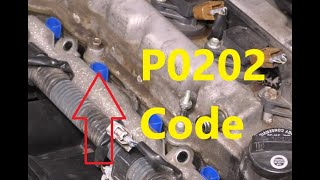
- Replacing the spark plug or ignition coil for cylinder 2. While these parts can cause a misfire (P0302), they will not cause an injector circuit code (P0202). The code P0202 specifically points to an electrical fault in the fuel injector's control circuit. 🎬 Watch: Understanding the causes and fixes for code P0202
Most Likely Causes
- Chafed/Damaged Fuel Injector Wiring Harness 🔴 High Probability A known issue documented in GM Technical Service Bulletin #PIP4924D. The harness routing makes it susceptible to rubbing against the intake plenum, valve cover bolts, fuel lines, or cylinder head.
How to confirm: Carefully and thoroughly inspect the entire fuel injector wiring harness, especially where it makes contact with other engine components. Look for bare wires, melted insulation, or sharp bends.
Typical fix: Repair the damaged section of wire with a new piece of wire, solder, and heat-shrink tubing. In severe cases, the injector harness pigtail or the entire engine harness may need replacement.
Est. part cost: $10-$250 - Faulty Cylinder 2 Fuel Injector 🟡 Medium Probability The direct injection (DI) injectors on the LFX engine operate under high pressure and can fail internally over time.
How to confirm: Swap the cylinder 2 injector with another accessible injector (e.g., cylinder 4 on the same bank). If the code changes to P0204, the injector is faulty. Alternatively, test the injector's resistance with a multimeter; it should be 1.2-1.8 Ohms for the LFX engine. A reading of infinity (OL) means it's open, and near zero means it's shorted; either indicates a bad injector.
Typical fix: Replace the faulty fuel injector. It is critical to also replace the Teflon seal and retaining clip. Many technicians recommend replacing all injectors on the same bank at the same time.
Est. part cost: $50-$180 - Loose or Corroded Injector Connector ⚪ Low Probability
How to confirm: Disconnect and inspect the electrical connector for the cylinder 2 injector. Look for bent pins, corrosion, or a loose fit. Ensure the locking tab is intact and clicks securely into place.
Typical fix: Clean the connector terminals with electrical contact cleaner. If the connector is damaged, replace the pigtail.
Est. part cost: $5-$25
Rare But Worth Checking
- Faulty Powertrain Control Module (PCM): This is very rare. The internal driver circuit for the injector can fail. This should only be considered after all wiring and the injector itself have been proven to be good.
Diagnosis Steps
- Verify the presence of code P0202 with an OBD-II scanner. Note any other codes, especially P0302.
- Locate cylinder 2. On the transverse 3.6L LFX, the cylinders are numbered 1-3-5 on the rear bank (firewall side) and 2-4-6 on the front bank (radiator side). Cylinder 2 is on the front bank, passenger side.
- Perform a thorough visual inspection of the fuel injector wiring harness, paying close attention to the chafe points identified in TSB #PIP4924D: where the harness runs near the intake plenum, valve cover bolts, fuel lines, and cylinder head.
- If no wiring damage is visible, disconnect the connector at the cylinder 2 injector. Check for a pulse signal using a noid light while cranking the engine. If the light flashes, the PCM and wiring are likely sending a signal.
- With the ignition off, use a multimeter to test the resistance of the fuel injector. Measure across the two pins of the injector. A good LFX injector should read between 1.2 and 1.8 ohms. A reading of infinity (OL) means it's open, and near zero means it's shorted; either indicates a bad injector.
- If resistance is good but the problem persists, perform a swap test. Swap the cylinder 2 injector with the cylinder 4 injector. Clear the codes and drive the vehicle. If the code returns as P0204, the injector is confirmed bad. If P0202 returns, the fault is in the wiring or PCM.
- If the swap test points to a wiring issue, perform a continuity test on the injector control and power wires from the PCM connector to the injector connector to find the open or short.
Parts You'll Likely Need
- Fuel Injector
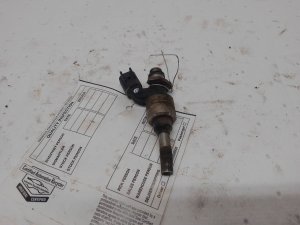
(OEM #12634126)— The internal coil windings of the direct fuel injector can fail, creating an open or short circuit. This is the second most common cause after wiring issues.
Trusted brands: ACDelco, Hitachi, Bosch, Standard Motor Products
OEM price range: $85-$150
Aftermarket price range: $40-$95 - Fuel Injector Connector Pigtail — If the wiring harness is damaged only near the connector, replacing the pigtail is an effective repair.
Trusted brands: ACDelco, Dorman
OEM price range: $20-$40
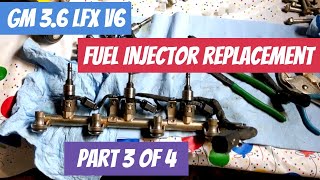
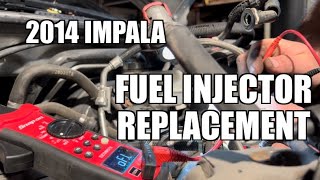
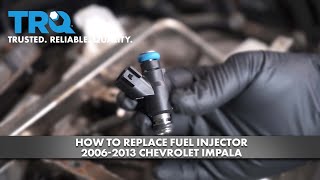
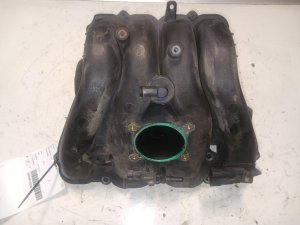
Aftermarket price range: $10-$25 - Upper Intake Manifold Gasket Set — The intake manifold must be removed to access the fuel injectors. The gaskets are single-use and must be replaced to prevent vacuum leaks. 🎬 Watch: Detailed LFX V6 fuel injector installation guide
Trusted brands: Fel-Pro, ACDelco
OEM price range: $40-$60
Aftermarket price range: $25-$45
Related Codes That Often Appear With This One
- P0302 — P0302 means 'Cylinder 2 Misfire Detected.' Since P0202 indicates a failure in the fuel delivery circuit for cylinder 2, a misfire is the direct and immediate result. You will almost always see P0302 alongside P0202.
- P0200 — This is a general 'Injector Circuit Malfunction' code. It may appear with P0202 if there is a problem affecting the injector driver system as a whole, such as a power or ground issue.
Technical Service Bulletins (TSBs) & Recalls
- PIP4924D: SES Light And Misfire With Injector Codes - Instructs technicians to carefully inspect the fuel injector wiring harness for rubbing/chafing against the intake plenum, valve cover bolts, fuel lines, and cylinder head.
Platform-Specific Known Issues
- GM Technical Service Bulletin #PIP4924D (and subsequent revisions) was issued for a range of vehicles with the 3.6L V6, including the 2012-2013 Impala, due to injector circuit codes caused by the engine wiring harness chafing on various engine components.
Mechanic-Grade Diagnostic Values
- Fuel Injector Resistance — expected: 1.2 - 1.8 Ohms. Failure: Near 0 Ohms (shorted) or infinite/OL (open).
- Low-Pressure Fuel Pump (In-Tank) — expected: 55-60 PSI (Key On, Engine Off prime pulse). Failure: Significantly lower pressure indicates a weak in-tank pump, which can cause drivability issues but will not directly set a P0202 circuit code.
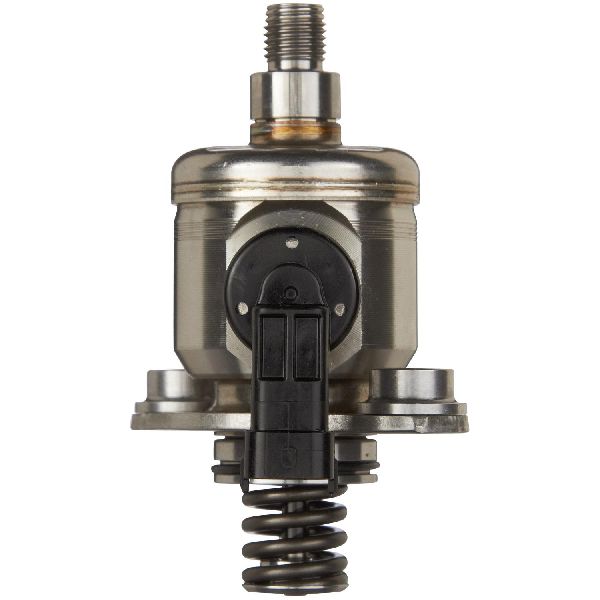
- High-Pressure Fuel Pump (Engine-Mounted) — expected: Up to 2,000+ PSI (while running). Failure: Failure to build pressure, monitored via scan tool PID, indicates a failing HPFP. This typically sets other codes related to fuel pressure, not a specific injector circuit code.
- Injector Connector Voltage (Key On, Engine Off) — expected: Near 0 Volts on both pins when measured to ground.. Failure: Unlike older port injection, the LFX GDI injectors are controlled entirely by the ECM; there is no constant 12V feed with the key on. Seeing battery voltage may indicate a short to power.
- Injector Inductive Spike (Lab Scope) — expected: ~50-60 Volts. Failure: A missing or significantly different voltage spike on cylinder 2 compared to other cylinders indicates a failing injector coil or a wiring problem. The absolute value is less important than the comparison between cylinders.
Scan Tool Commands That Help
- GM GDS2 / High-End Aftermarket: Fuel Injector Balance Test — To identify a mechanically failing or clogged injector that may not have a clear electrical fault. The command disables each injector sequentially and measures the corresponding drop in fuel rail pressure. If the pressure drop for cylinder 2 is significantly different from the others, the injector is suspect.
- GM GDS2 / Most Bidirectional Scanners: Injector Kill / Cylinder Power Balance — To confirm which cylinder is misfiring. Disabling cylinder 2 should result in no change to the engine's idle if the injector is already dead. If disabling another cylinder makes the engine run worse, it confirms that cylinder was working.
Wiring & Ground Locations
- ECM Connectors X1 / X2 — The main engine control module, typically located in the engine bay.. The two wires for the cylinder 2 injector run from the injector directly to pins on these connectors. Testing for continuity between the injector connector and the corresponding pins at the ECM connector is the definitive way to rule out a wiring break.
- Injector Connector Pins — At the cylinder 2 fuel injector.. On many GM harnesses, one wire is for the high control circuit and the other is for the low control circuit (driver). Both originate at the ECM. Checking for continuity and shorts to ground starts at this connector.
- Engine Block Grounds (e.g., G103, G104) — Typically bolted to the cylinder heads or the engine block itself. On similar GM V6/V8 platforms, common locations are the front of the passenger-side head and the rear of the driver-side head.. The fuel injectors are grounded through the driver circuits inside the ECM. However, the ECM itself relies on these main engine block grounds to function. A loose or corroded main ground can cause a multitude of erratic electrical issues, including injector driver problems.
Real Owner Repair Stories
- Camaro5 Forums User Report (Chevrolet Camaro with 3.6L LFX V6 (engine shared with Impala)) — Check engine light with codes P0302 (Cylinder 2 Misfire) and P0202 (Injector Circuit Malfunction).
❌ Tried (didn't work) Initial diagnosis pointed towards common misfire causes.
✅ What actually fixed it The combination of the misfire code (P0302) and the specific injector circuit code (P0202) correctly pointed to the fuel injector itself being the root cause. Replacing the cylinder 2 fuel injector resolved both codes.
OEM Part Supersession History
12642128→12634126— Part has been updated by the manufacturer.
Heads up: One source suggests this supersession, but always confirm with a dealer using your VIN. The ACDelco service part number is often listed as 217-3445.
Diagnostic Flowchart
Used vs. New Parts: Buying Guide for This Vehicle
When a used part is the smart pick: A used engine wiring harness from a documented low-mileage vehicle can be a cost-effective solution if the original harness has extensive, hard-to-find damage. Used fuel injectors are generally not recommended due to unknown history and potential for clogging, but can be useful for a temporary 'swap test' for diagnosis.
Donor-vehicle mileage cap: roughly under 60000 miles for the part to have meaningful remaining life.
What to inspect on the donor part:
- For a wiring harness, inspect for any signs of prior chafing, brittle conduit, oil saturation, or previous repairs (e.g., splices with electrical tape).
- Ensure all connector locking tabs are intact and not broken.
- For a used injector (for testing), ensure the tip is clean and free of heavy carbon, and the plastic connector body is not cracked.
OEM-only on this vehicle (don't cheap out):
- Fuel Injector Teflon Seal: This is a single-use part that is crushed during installation to create a seal in the cylinder head. Reusing an old seal will cause compression and fuel leaks. Always replace.
- Fuel Injector Retaining Clip: These can lose tension or become brittle with heat cycles. A new clip ensures the injector stays properly seated.
Aftermarket brands forum-validated for this vehicle:
- ACDelco (OEM Supplier)
- Hitachi (Often an OEM for Japanese brands, high quality)
- Bosch (OEM for many European and domestic brands)
- Fel-Pro (For gaskets and seals)
Brands owners have reported issues with on this vehicle:
- Unbranded, 'white-box' injectors from online marketplaces. GDI injectors are high-precision components, and manufacturing quality is critical for proper fuel atomization and longevity. Poorly made injectors can fail quickly or cause performance issues.
Real Owner Stories
Aggregated from forums and TSBs cited above. Mileages and costs reflect what owners reported in those sources.
2012 Chevrolet Impala 3.6L V6
Symptoms: Service Engine Soon (SES) light and engine misfire.
What fixed it: Technicians inspected the fuel injector wiring harness and found it was chafing against engine components as described in TSB #PIP4924D. The damaged wiring was repaired.
Source hint: TSB PIP4924D
Related OBD-II Codes
Frequently Asked Questions
Does GM Technical Service Bulletin #PIP4924D apply to my 2012 Chevrolet Impala?
Where is the cylinder 2 fuel injector located on my 2014 Impala LFX engine?
What resistance should I see when testing the cylinder 2 injector on my 2015 Impala?
Can I reuse the seals if I pull the injectors to perform a swap test?
Is there a specific area I should check for wiring damage on my 2013 Impala?
What brands of replacement injectors are recommended for the LFX engine?
Helpful Videos
Used OEM Parts in Stock




New Aftermarket Parts Available


The information in this article is provided for general reference and educational purposes only. Vehicle specifications, procedures, and part compatibility can vary by production date, trim level, and region. Always consult your vehicle's factory service manual and verify part numbers before purchasing or performing repairs. Safety-critical components such as airbags, seat belts, and braking systems should be installed by a qualified professional.
- Chevrolet Impala:
- 🎬 Helpful Videos
- 🛍️ Shop This Part
- What's Unique About the 2012-2016 Chevrolet Impala
- Symptoms You May Notice
- Most Likely Causes
- Rare But Worth Checking
- Diagnosis Steps
- Parts You'll Likely Need
- Related Codes That Often Appear With This One
- Technical Service Bulletins (TSBs) & Recalls
- Platform-Specific Known Issues
- Mechanic-Grade Diagnostic Values
- Scan Tool Commands That Help
- Wiring & Ground Locations
- Real Owner Repair Stories
- OEM Part Supersession History
- Diagnostic Flowchart
- Used vs. New Parts: Buying Guide for This Vehicle
- Real Owner Stories
- 2012 Chevrolet Impala 3.6L V6
- Related OBD-II Codes
- Frequently Asked Questions
- 🎟️ Get 5% Off