

P0202 on 2010-2015 Chevrolet Camaro: Injector Circuit Malfunction Causes and Fixes
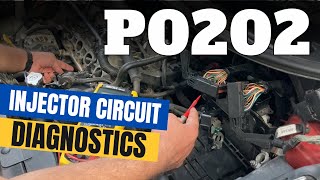
P0202 on a 5th Gen Camaro almost always points to a bad fuel injector in cylinder #2. Less commonly, it can be a wiring issue. Expect to pay around $50-$90 for an OEM ACDelco injector, with DIY difficulty being low to moderate. The job can often be done in under an hour.
- P0202 on your Camaro means the fuel injector circuit for cylinder 2 has an electrical problem.
- The most likely culprit is a failed fuel injector, which is a relatively inexpensive and easy part to replace for a DIYer.
- A simple and effective diagnostic test is to swap the cylinder 2 injector with another one (like cylinder 4) and see if the trouble code follows the injector.
- Always check the wiring and connector for damage before buying parts, especially for signs of melting or chafing near the intake manifold or valve covers.
- This code is almost always accompanied by a P0302 misfire code and a 'Service StabiliTrak' message; fixing the P0202 injector circuit will resolve all three issues.
What's Unique About the 2010-2015 Chevrolet Camaro
On the 5th generation Camaro with the LS3 or L99 V8, the P0202 code is a straightforward diagnostic. While GM has had documented issues with engine wiring harnesses chafing on other platforms, for the Camaro, this code most frequently isolates the problem to the injector itself. The USCAR-style injectors are generally reliable but can fail electrically over time, leading to the open circuit condition that the PCM detects. The 'Service StabiliTrak' message often appears simultaneously because the ECU detects a misfire and disables the traction/stability system as a precaution.
Symptoms You May Notice
- Check Engine Light is on
- "Service StabiliTrak" message appears on the dash
- Rough, unstable idle
- Noticeable engine misfire, shuddering, or shaking
- Hesitation and poor acceleration
- Reduced engine power, sometimes referred to as 'limp mode'
- Increased fuel consumption
- Smell of gasoline from the exhaust if the injector is stuck open
- Replacing the spark plug or ignition coil for cylinder 2. While a P0302 (Cylinder 2 Misfire) code is almost always present with P0202, the P0202 code specifically points to an electrical circuit issue with the injector, not the ignition system. Fixing the P0202 injector circuit problem will resolve the P0302 misfire.
- Assuming a major engine problem. A user on Camaro5.com with a P0300 misfire code suspected a catastrophic lifter failure, but the community advised diagnosing simpler electrical and fuel issues first.
Most Likely Causes
- Faulty Cylinder 2 Fuel Injector 🔴 High Probability The fuel injector is an electro-mechanical part with an internal coil winding that can break over time, creating an open circuit. This is the most common point of failure for this specific code.
How to confirm: Use a multimeter to check the resistance of the injector; it should be around 12 ohms. A simpler method is to swap the cylinder 2 injector with another cylinder (e.g., cylinder 4). Clear the codes, run the engine, and if the code changes to P0204, the injector is confirmed bad. You can also use a mechanic's stethoscope or a long screwdriver to listen for a 'clicking' sound from the injector; no click means it's not activating.
Typical fix: Replace the faulty fuel injector. It is often recommended to replace them in a full set if they are high-mileage, but replacing a single failed injector is a common and effective repair.
Est. part cost: $50-$90 for a single OEM injector. - Wiring Harness or Connector Issue 🟡 Medium Probability Engine vibration and heat can cause wires to break or chafe, or the connector pins to become loose or corroded. TSB #PIP4924D specifically calls out inspecting the fuel injector wiring harness for rubbing against the intake plenum, valve cover bolts, or fuel lines.
How to confirm: Visually inspect the wiring harness and the connector going to the cylinder 2 injector for any signs of damage, melting, or corrosion. Use a 'noid light' in the injector connector; it should flash when the engine is cranked, indicating the PCM is sending a signal. If the light doesn't flash, the problem is in the wiring or PCM.
Typical fix: Repair the damaged section of wire or replace the connector pigtail. In some cases of widespread damage, the entire engine harness may need replacement.
Est. part cost: $10-$30 for a pigtail, $200+ for a harness
Rare But Worth Checking
- Faulty Powertrain Control Module (PCM): This is very rare. The injector driver circuit within the PCM can fail, but all other possibilities (injector, wiring) should be exhaustively tested before condemning the PCM. A forum user on Camaro5.com ultimately traced their Stabilitrak errors to a communication problem between the ECM and ABS module caused by damaged wiring, not a faulty ECM itself.
Diagnosis Steps
- Confirm the presence of the P0202 code using an OBD-II scanner. Note any other codes, such as P0302.
- Identify Cylinder 2: On the LS3/L99 V8, cylinders are numbered 1-3-5-7 on the driver's side (Bank 1) and 2-4-6-8 on the passenger's side (Bank 2), from front to back. Cylinder 2 is the front-most cylinder on the passenger side.
- Visually inspect the wiring and connector for the cylinder 2 fuel injector. Look for chafing, melting, or corrosion, paying attention to areas where the harness is near the intake, valve covers, or fuel lines as noted in TSB #PIP4924D.
- Perform an injector swap. This is the most definitive and common DIY diagnostic. Disconnect the battery. Relieve fuel pressure by removing the fuel pump relay and cranking the engine. Use a towel to wrap around the fuel line connection to catch any residual fuel. Unbolt the fuel rail (10mm bolts) on the passenger side. You may only need to lift the front of the rail to get enough clearance. Swap the cylinder 2 injector with the cylinder 4 injector (middle cylinder, passenger side).
- Reconnect everything, start the engine, and re-scan for codes. If the code is now P0204 ('Injector Circuit/Open - Cylinder 4'), the fuel injector you moved is faulty and needs to be replaced.
- If the code remains P0202 after the swap, the problem is in the wiring or the PCM. Use a noid light in the cylinder 2 connector to verify if the PCM is sending a pulse signal. A flashing light means the PCM and wiring up to the connector are likely okay.
- If the noid light does not flash, test the wiring harness for continuity and shorts between the injector connector and the PCM. If the wiring is confirmed to be good, the issue may be a rare failure of the PCM's injector driver.
Parts You'll Likely Need
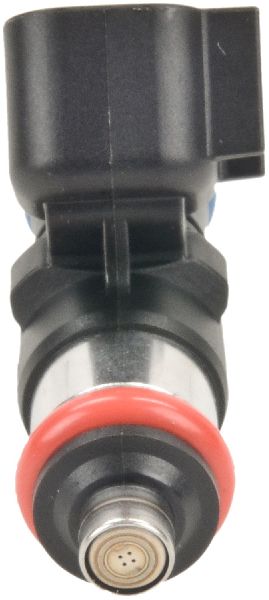
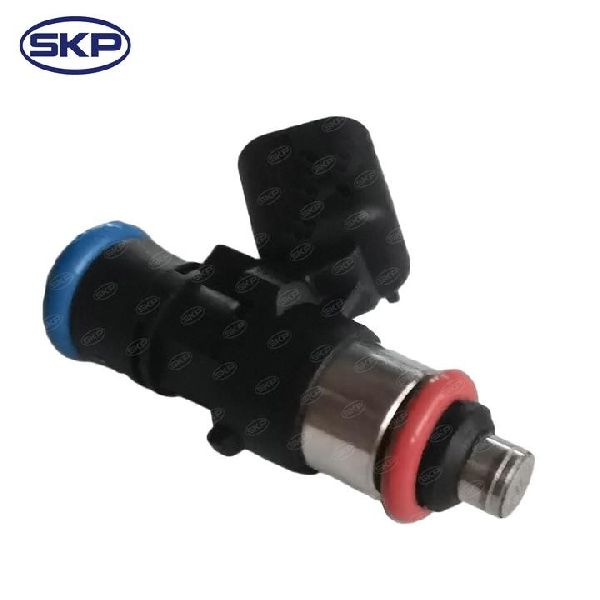
- Fuel Injector
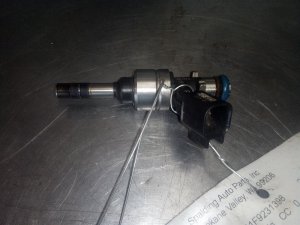
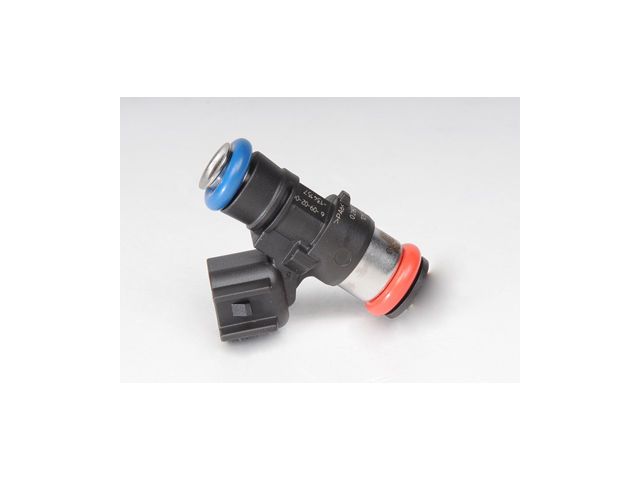
(OEM #ACDelco 217-3445 (supersedes 12611801))— This is the most common failure point for a P0202 code. The internal coil of the injector fails, creating an open circuit.
Trusted brands: ACDelco, GM Genuine
OEM price range: $50-$90
Aftermarket price range: $30-$60 - Fuel Injector Connector Pigtail
(OEM #ACDelco PT2160 (or equivalent))— Needed if the original connector or its wiring is damaged, corroded, or melted.
Trusted brands: ACDelco, Dorman
OEM price range: $15-$25
Aftermarket price range: $10-$20
Related Codes That Often Appear With This One
- P0302 — P0302 means 'Cylinder 2 Misfire Detected'. Since the P0202 code indicates the injector isn't firing correctly, the cylinder won't have proper combustion, which the PCM detects as a misfire. The P0202 is the root cause, and P0302 is the symptom.
- P0200 — P0200 is a general 'Injector Circuit Malfunction' code. It may appear alongside P0202 if the problem is intermittent or if there's a wiring issue affecting the entire injector bank.
- P0174 — P0174 means 'System Too Lean (Bank 2)'. This can sometimes accompany a P0202 if the unmetered air from the non-firing cylinder is detected by the oxygen sensor, leading the PCM to believe the entire bank is lean.
Technical Service Bulletins (TSBs) & Recalls
- PIP4924D: This is the most relevant TSB. It covers a wide range of GM vehicles, including the 2010-2014 Camaro, for injector circuit codes (P0201-P0206, etc.) causing misfires. The primary instruction is to inspect the injector harness for chafing and repair as needed.
Platform-Specific Known Issues
- The official GM Technical Service Bulletin #PIP4924D acknowledges a range of injector circuit codes (P0201-P0206) that can cause a misfire and turn on the check engine light. It specifically directs technicians to inspect the fuel injector wiring harness for chafing against engine components like the intake plenum and valve covers.
- The appearance of the "Service StabiliTrak" message is a very common secondary symptom of this code, as the engine's misfire causes the ECU to disable the stability control system as a safety measure.
Mechanic-Grade Diagnostic Values
- Stock Fuel Injector Resistance — expected: 11.2 to 12.9 Ohms. Failure: A reading of infinity (open circuit) or significantly outside this range. Comparing to a known-good injector on the same engine is a reliable method.
- Fuel Pressure (Key On, Engine Off) — expected: 58 psi (400 kPa). Failure: Pressure significantly below 58 psi may indicate a weak fuel pump or leak, though this is not a typical cause for a P0202 circuit code. The PCM may command lower pressure at high RPM.
- Injector Pulse Width at Idle — expected: ~2 to 4 milliseconds. Failure: A scan tool showing 0 ms for cylinder 2 while others are pulsing would confirm the PCM is not commanding the injector to fire. Unusually high pulse width on other cylinders can indicate the PCM is trying to compensate for the dead cylinder.
- Injector Connector Voltage (Key On, Engine Off) — expected: 12V on the power wire (typically pink). Failure: No voltage indicates a problem with the fuse, relay, or power supply wiring to the fuel injector bank.
Scan Tool Commands That Help
- GDS2 (GM Global Diagnostic System 2) or high-end aftermarket scanner: Fuel Injector Balance Test / Cylinder Power Balance — This bidirectional test allows the technician to disable injectors one by one and observe the RPM drop for each cylinder. If disabling cylinder 2 results in no change in RPM, it confirms that the cylinder was not contributing in the first place. This helps isolate the issue to a specific cylinder when symptoms are ambiguous.
Wiring & Ground Locations
- ECM Connector X1, Pin 37 — On the main Engine Control Module (ECM). For the 2010 Camaro, this is the black 73-pin connector.. This is the specific control circuit pin for the cylinder 2 fuel injector. A technician can back-probe this pin to see if the ECM is sending the grounding signal to fire the injector. The wire color is typically Red or Tan/Black.
- G100 (V8) — On the lower right side of the engine block, above the starter solenoid.. This is a primary engine block ground. A loose or corroded connection here can cause a host of electrical issues, including intermittent sensor and actuator problems.
- G102 — In the engine compartment, attached to the front of the right (passenger side) wheelhouse.. This is a major chassis ground point on the same side as the cylinder 2 injector. While not directly in the injector circuit, a poor ground here can create electrical noise and voltage drop issues that can affect sensor readings and module behavior.
- Cylinder Head Grounds — There are ground straps/wires attached to the rear of both cylinder heads.. These are critical grounds for the ECM and ignition system. Forum users have reported that a loose or corroded ground on the back of the passenger-side head can cause intermittent misfires and injector codes.
Real Owner Repair Stories
- Camaro5 forum user (2010 Camaro SS) — Check Engine Light, Service Stabilitrak message, codes P0202 and P0302.
❌ Tried (didn't work) Replacing the fuel injector on cylinder 2, Swapping ignition coils, Checking wiring harness for visible damage
✅ What actually fixed it The user found a loose ground wire on the back of the passenger side cylinder head. After cleaning the contact point and tightening the bolt, the codes were cleared and did not return.
OEM Part Supersession History
12611801→217-3445— Standard part lifecycle update by GM/ACDelco. The replacement part is a direct fit with no functional differences for this application.
Model Year Variations Within This Range
- 2010-2015: The 6.2L V8 came in two forms: the LS3 (paired with the manual transmission) and the L99 (paired with the automatic transmission). While the core P0202 diagnosis is identical, the L99 engine features Active Fuel Management (AFM) and Variable Valve Timing (VVT). These systems are not directly related to the P0202 injector circuit code, but it's a key difference between the powertrains. The fuel injectors themselves are physically identical and interchangeable between LS3 and L99 engines of this generation.
Diagnostic Flowchart
Other Known Issues on This Vehicle
Issues unrelated to this code that are worth knowing about as an owner of this generation:
- AFM Lifter Failure (L99 Engine) 🔴 High — Common on 2010-2011 models, but can occur on any L99 engine, typically over 70,000 miles. Failure can cause a ticking noise, misfires (e.g., P0300), and in severe cases, camshaft damage. (Ref: TSB #PIP4568P addresses diagnosis for misfires related to AFM lifters.)
- Torque Converter Shudder (Automatic Transmission) 🟠 Medium — Widespread issue causing a vibration or shudder feeling at light throttle, often between 40-50 mph, feeling like driving over rumble strips. (Ref: TSB #16-NA-175 (later revised) initially recommended torque converter replacement, but the primary fix became a transmission fluid flush with an updated fluid.)
- Air Conditioning Blend Door Failure 🟠 Medium — A very common failure where the plastic blend door inside the HVAC case breaks, resulting in a loss of temperature control (e.g., stuck on heat). Repair is labor-intensive, often requiring dashboard removal. (Ref: No specific recall, but it is a widely documented problem in owner forums.)
- Premature Timing Chain Wear (V6 Models) 🔴 High — Primarily affects the 3.6L V6 engine, not the V8s. The timing chains can stretch, leading to codes like P0008 and requiring a costly replacement. (Ref: Covered under a special coverage adjustment by GM for some vehicles.)
- Ignition Key Rotation / Stuck Key 🔴 High — A recall was issued because the driver's knee could bump the key fob and turn the engine off. A separate issue involves the key getting stuck in the ignition due to a faulty shifter interlock on automatic models. (Ref: Recall #14294 for the key rotation issue.)
- HVAC System Evaporator Freeze-up / BCM Reprogram 🟡 Low — Some 2011 models had issues where the A/C would stop working. GM issued a customer satisfaction program to reprogram the Body Control Module (BCM). (Ref: Customer Satisfaction Program #11160.)
Used vs. New Parts: Buying Guide for This Vehicle
When a used part is the smart pick: A used OEM wiring harness from a reputable salvage yard can be a cost-effective solution if the original harness has extensive damage (e.g., from heat or rodents) that makes a simple pigtail repair impossible. A single used OEM fuel injector is generally not recommended due to unknown history and risk of clogging, but can be used for temporary diagnosis (swapping).
Donor-vehicle mileage cap: roughly under 80000 miles for the part to have meaningful remaining life.
What to inspect on the donor part:
- For a wiring harness, inspect for any cuts, melted sections, or brittle connectors. Ensure all connector locking tabs are intact.
- Check the vehicle history of the donor car, if possible, to avoid parts from flood or fire-damaged vehicles.
- For an injector, look for physical damage, cracks in the plastic body, and corrosion on the electrical pins.
OEM-only on this vehicle (don't cheap out):
- Powertrain Control Module (PCM). Due to VIN-locking and programming requirements, a new or professionally remanufactured and programmed OEM unit is the only reliable option.
Aftermarket brands forum-validated for this vehicle:
- Bosch (often the original OEM manufacturer)
- Fuel Injector Clinic (FIC) (For performance upgrades)
- Injector Dynamics (For performance upgrades)
Brands owners have reported issues with on this vehicle:
- No-name, unbranded injectors sold on marketplaces like Amazon or eBay. These often have inconsistent flow rates and high failure rates, even if they are advertised as direct replacements.
Real Owner Stories
Aggregated from forums and TSBs cited above. Mileages and costs reflect what owners reported in those sources.
2010-2014 Chevrolet Camaro 6.2L V8
Symptoms: Intermittent P0302 and P0202 codes accompanied by the StabiliTrak light appearing on the dash.
What fixed it: The community advised that since the code was an electrical circuit code (P0202), the owner should swap the injector to confirm failure rather than performing mechanical tests like compression.
Source hint: Camaro5.com: Stabilitrak P0302 & P0202
2010-2015 Chevrolet Camaro LS3
Symptoms: Service StabiliTrak message, P0202, and P0302 codes. The owner checked spark plugs and wiring first.
What fixed it: Replaced the front-most injector on the passenger side (Cylinder #2) after partially lifting the fuel rail.
Source hint: YouTube: How To Fix LS3 Camaro Service Stabilitrak- P0202, P0302 Fuel Injector Change
Chevrolet Camaro (Modified Twin-Turbo)
Symptoms: P0202 code appearing after installing new, larger fuel injectors; the system was dumping fuel.
What fixed it: Correcting the software calibration/tuning in the PCM to properly scale the data for the new injectors.
Source hint: Camaro5.com: New Injectors dumping fuel, P0202
Related OBD-II Codes
Frequently Asked Questions
Why is my 'Service StabiliTrak' message on when the problem seems to be a fuel injector?
Is there an official GM bulletin for injector circuit issues on the 2010-2014 Camaro?
Where is Cylinder 2 located on my 6.2L LS3/L99 engine?
Can I test the P0202 code by moving parts around?
What is the correct resistance for a replacement LS3 fuel injector?
My L99 Camaro has a misfire; could it be something other than the injector?
Helpful Videos
Used OEM Parts in Stock
New Aftermarket Parts Available



The information in this article is provided for general reference and educational purposes only. Vehicle specifications, procedures, and part compatibility can vary by production date, trim level, and region. Always consult your vehicle's factory service manual and verify part numbers before purchasing or performing repairs. Safety-critical components such as airbags, seat belts, and braking systems should be installed by a qualified professional.
- Chevrolet Camaro:
- 🎬 Helpful Videos
- 🛍️ Shop This Part
- What's Unique About the 2010-2015 Chevrolet Camaro
- Symptoms You May Notice
- Most Likely Causes
- Rare But Worth Checking
- Diagnosis Steps
- Parts You'll Likely Need
- Related Codes That Often Appear With This One
- Technical Service Bulletins (TSBs) & Recalls
- Platform-Specific Known Issues
- Mechanic-Grade Diagnostic Values
- Scan Tool Commands That Help
- Wiring & Ground Locations
- Real Owner Repair Stories
- OEM Part Supersession History
- Model Year Variations Within This Range
- Diagnostic Flowchart
- Other Known Issues on This Vehicle
- Used vs. New Parts: Buying Guide for This Vehicle
- Real Owner Stories
- 2010-2014 Chevrolet Camaro 6.2L V8
- 2010-2015 Chevrolet Camaro LS3
- Chevrolet Camaro (Modified Twin-Turbo)
- Related OBD-II Codes
- Frequently Asked Questions
- 🎟️ Get 5% Off