

P0202 on 2008-2014 Cadillac CTS: Injector Circuit Malfunction Cylinder 2 Causes and Fixes
For a 2008-2014 Cadillac CTS, code P0202 almost always points to a failed fuel injector in cylinder #2 or a chafed wire in the engine harness. The easiest way to confirm a bad injector is to swap it with another cylinder and see if the code follows. A known issue, detailed in GM TSB PIP4924D, is the wiring harness rubbing against engine parts. Expect to pay around $50-$120 for a new ACDelco direct injector.
- P0202 on a 2008-2014 CTS indicates an electrical problem with the cylinder 2 fuel injector circuit.
- The most likely causes are a failed fuel injector or a chafed wire in the engine harness, an issue documented in GM TSB PIP4924D.
- A simple and effective diagnostic step is to swap the cylinder 2 injector with another one and see if the code follows.
- Do not mistake this for an ignition problem; replacing spark plugs or coils will not fix a P0202 code.
- Cylinder #2 is located at the front of the engine on the driver's side.
What's Unique About the 2008-2014 Cadillac CTS
The 3.0L (LF1) and 3.6L (LLT/LFX) V6 engines in this generation of CTS use a direct injection (DI) fuel system. While this improves efficiency, the injectors operate under high pressure and voltage. A critical factor for this platform is a known wiring harness vulnerability. GM issued Technical Service Bulletin #PIP4924D which specifically addresses injector circuit codes (including P0202) caused by the harness chafing against the intake plenum, valve cover bolts, and fuel lines. This makes a thorough wiring inspection a mandatory diagnostic step before condemning the injector.
Symptoms You May Notice
- Rough or shaking idle
- Engine hesitation or stumbling during acceleration
- Noticeable loss of power
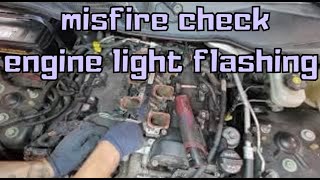
- Solid or flashing Check Engine Light 🎬 Watch: Diagnosing a flashing check engine light and misfire
- Poor fuel economy
- The "Service StabiliTrak" message may appear on the dashboard, as the engine misfire can affect traction control system calculations.
- Replacing the spark plug or ignition coil for cylinder 2. While these parts can cause a misfire code (P0302), they will not cause an injector circuit code like P0202, which is specifically an electrical fault.
Most Likely Causes
- Failed Fuel Injector #2 🔴 High Probability Direct injectors operate in a high-heat, high-pressure environment inside the cylinder, leading to a higher failure rate than traditional port injectors. The internal coil windings can fail, creating an open circuit.
How to confirm: Swap the fuel injector from cylinder 2 with an adjacent cylinder (e.g., cylinder 4). Clear the codes. If the trouble code changes to P0204, the injector is confirmed bad. Alternatively, measure the injector's resistance with a multimeter. For the 3.6L LFX engine, it should be 1.2-1.8 ohms; for the 3.0L LF1 engine, it's around 12 ohms. A reading of OL (open) or near zero indicates failure.
Typical fix: Replace the faulty fuel injector. It is required to replace the Teflon seal and decoupler at the same time. Given the labor involved, many owners and shops recommend replacing all injectors on that bank (or all six) to prevent future failures.
Est. part cost: $50-$120 - Wiring Harness or Connector Issue 🔴 High Probability GM TSB #PIP4924D specifically identifies that the engine wiring harness is prone to chafing against engine components. Common rub points include the intake plenum, valve cover bolts, fuel lines, and the side of the cylinder head, leading to an open or shorted circuit.
How to confirm: Visually inspect the wiring harness leading to the cylinder 2 injector for any signs of chafing, melting, or breaks, especially at the contact points mentioned in the TSB. Disconnect the connector and check for corrosion or bent pins. Use a 'noid' light to verify that the ECM is sending a pulse signal to the injector connector.
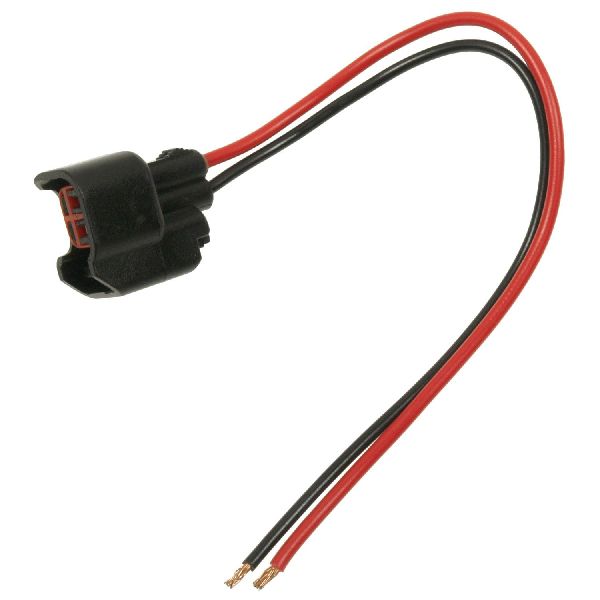
Typical fix: Repair the damaged section of wiring by soldering and using heat-shrink tubing, or replace the pigtail connector for the fuel injector. Ensure the harness is re-routed or protected to prevent future chafing.
Est. part cost: $15-$40 - Failed ECM Injector Driver ⚪ Low Probability
How to confirm: This is a diagnosis of exclusion. If the injector and wiring have both been tested and are known to be good (e.g., noid light doesn't flash, but wiring has continuity), the fault likely lies with the ECM. This is rare, but there are documented cases on forums.
Typical fix: The ECM must be replaced and programmed to the vehicle's VIN, or sent to a specialist for repair.
Est. part cost: $300-$800
Rare But Worth Checking
- Carbon Buildup on Injector Tip:
Diagnosis Steps
- Connect an OBD-II scanner and confirm the P0202 code. Check for any other codes, especially P0302.
- Locate cylinder #2. On the 3.0L and 3.6L V6 engines, this is the front-most cylinder on the driver's side (Bank 2).
- Inspect the wiring harness. Following the guidance of TSB PIP4924D, carefully check the harness for chafing against the intake plenum, valve cover bolts, and fuel lines.
- Test the circuit with a 'noid' light. Disconnect the injector and plug the noid light into the connector. Crank the engine. If the light flashes, the ECM and wiring are likely good, pointing to a bad injector. If it does not flash, there is a problem with the wiring or ECM.
- If the noid light test passes, perform an injector swap. Swap the cylinder 2 fuel injector with the cylinder 4 injector (middle cylinder, same bank).
- Clear the codes with the scanner, start the engine, and let it run for a few minutes.
- Re-scan for codes. If the code has moved to P0204, the fuel injector is faulty and must be replaced.
- If the code P0202 returns after the swap, the injector is good. The problem is in the wiring harness or the ECM. Perform continuity and short-to-ground tests on the injector control wire between the ECM connector and the injector connector.
- If wiring is confirmed good and the code persists, the final possibility is a faulty injector driver in the ECM, which is rare.
Parts You'll Likely Need
- Direct Fuel Injector
(OEM #12669384 (supersedes 12638530, 12632255, 12611545))— This is a very common failure point for a P0202 code on this platform. The internal coil windings can fail, creating an open circuit.
Trusted brands: ACDelco, Bosch
OEM price range: $70-$120
Aftermarket price range: $40-$80 - Fuel Injector Seal Kit
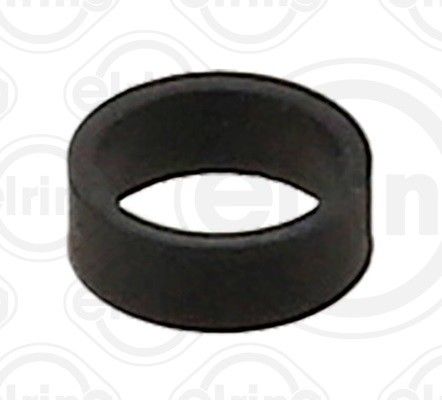
(OEM #ACDelco 217-3426 (example, verify by VIN))— The Teflon seal at the tip of the direct injector is single-use and must be replaced whenever an injector is removed and reinstalled to prevent compression and fuel leaks.
Trusted brands: ACDelco, Fel-Pro
OEM price range: $10-$20
Aftermarket price range: $5-$15 - Upper Intake Manifold Gasket Set
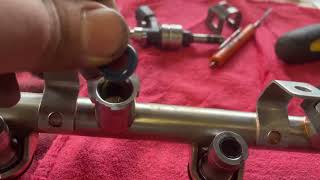
(OEM #Fel-Pro MS 97214 (example, verify by VIN))— On the V6 engines, the upper intake manifold must be removed to access the fuel rail and injectors. These gaskets are single-use and must be replaced to prevent vacuum leaks after reassembly. 🎬 Watch: A professional walkthrough on how to replace fuel injectors
Trusted brands: Fel-Pro, ACDelco
OEM price range: $30-$50
Aftermarket price range: $20-$40
Related Codes That Often Appear With This One
- P0302 — P0302 means "Cylinder 2 Misfire Detected." Since P0202 indicates a problem with the fuel supply to cylinder 2, a misfire is the direct and expected result.
- P0204, P0206 — If codes for other injectors on the same bank (Bank 2, driver's side) appear at the same time, it strongly suggests a shared wiring problem, such as a damaged harness or a bad ground connection for that bank, rather than three injectors failing simultaneously.
Technical Service Bulletins (TSBs) & Recalls
- PIP4924D - Diagnostic Tips for various DTCs including P0201 - P0206, P0300. This TSB advises technicians to inspect the fuel injector wiring harness for chafing against engine components before replacing injectors. According to Bulletin #PIP4924D, technicians may find the Malfunction Indicator Lamp on with a misfire and codes ranging from P0201 to P0206, as well as injector circuit voltage codes like P2146 or P2149.
Platform-Specific Known Issues
- TSB PIP4924D: This Technical Service Bulletin is the most significant vehicle-specific issue. It explicitly documents that the fuel injector wiring harness is prone to chafing against engine components like the intake plenum, valve cover bolts, and fuel lines, causing various injector circuit codes, including P0202.
Mechanic-Grade Diagnostic Values
- Fuel Injector Coil Resistance (3.6L LFX V6, 2012-2014) — expected: 1.2 - 1.8 Ohms. Failure: A reading of OL (open circuit), near 0 (short circuit), or significantly outside this range indicates a failed low-impedance injector.
- Fuel Injector Coil Resistance (3.0L LF1 / 3.6L LLT V6, 2008-2011) — expected: 11 - 15 Ohms. Failure: A significant deviation from this range indicates a failed high-impedance injector.
- Injector Pulse Width (at warm idle, all engines) — expected: 2.0 - 4.0 milliseconds (ms). Failure: A value of 0 ms for cylinder 2 while others are normal indicates the ECM has disabled the injector. A value significantly different from other cylinders points to a problem.
- Low-Side Fuel Pressure (Key ON, Engine OFF) — expected: 380-410 kPa (55-60 psi). Failure: Pressure below this range indicates a weak in-tank pump, but does not directly cause a P0202 circuit code.
- High-Side Fuel Pressure (at idle) — expected: 1.9 - 5.0 MPa (276 - 725 PSI). Failure: While not a direct cause of P0202, erratic high-side pressure can indicate other fuel system issues.
- Injector Circuit Control Wire Continuity — expected: Near 0 Ω. Failure: Resistance above 5 Ω between the ECM connector pin and the injector connector pin suggests a broken or high-resistance wire.
Scan Tool Commands That Help
- GDS2 (GM Global Diagnostic System 2): Injector Balance Test / Cylinder Power Balance — This bidirectional command allows a technician to individually disable injectors while the engine is running. Disabling cylinder 2 should cause no change in RPM if P0202 is active (as it's already off). It can also be used to confirm other cylinders are firing correctly, helping to isolate the problem to cylinder 2.
- High-End Scan Tool (Autel/Snap-on): Injector Kill / Actuator Test — Similar to the GDS2 command, this function disables one injector at a time to test its effect on engine operation. This is a primary step to confirm the misfire is isolated to cylinder 2 before performing physical parts swaps.
Wiring & Ground Locations
- ECM (K20) — Located below the left (driver's side) headlamp assembly, in front of the wheel well.. This is the source of the control signal. Advanced diagnostics require checking continuity from the injector connector back to the correct pin on the ECM's X1 or C2 connector.
- Injector 2 Control Wire (ECM Connector C1, Pin 62) — On a 2006 model (representative of the architecture), the control wire for injector 2 is a Light Green/Black wire at Pin 62 of the C1 connector.. This is the specific pin and wire to test for continuity, shorts to ground, or shorts to voltage when diagnosing a wiring fault between the ECM and the injector.
- G131 / G136 — Located on the rear of the left cylinder head (Bank 2, driver's side).. These are critical grounds for the cylinder head where the injector is seated. A loose or corroded ground here can cause electrical noise or a poor ground path for multiple components on Bank 2, potentially leading to intermittent circuit codes.
- G102 — Located at the left rear of the engine.. This is the primary ground for the ignition coils. While not directly for the injectors, a poor ground here can cause electrical interference and misfires that might complicate diagnosis of an injector code.
OEM Part Supersession History
12611545, 12632255, 12638530→12669384— Revisions to improve reliability and performance.
Heads up: While the listed parts are for the LLT/LFX engines, it is critical to distinguish between the high-impedance injectors for the 2008-2011 LLT/LF1 and the low-impedance injectors for the 2012-2014 LFX. They are not interchangeable and using the wrong type can damage the ECM.
Model Year Variations Within This Range
- 2008-2011: These models primarily used the 3.0L LF1 and 3.6L LLT engines. They utilize high-impedance fuel injectors (approx. 11-15 Ohms) and a Bosch ECM.
- 2012-2014: The main V6 was the updated 3.6L LFX. This engine uses different, low-impedance fuel injectors (approx. 1.2-1.8 Ohms) and a Delphi ECM. Installing an LLT injector in an LFX engine (or vice-versa) will cause an immediate circuit fault and could potentially damage the injector driver in the ECM.
Diagnostic Flowchart
Used vs. New Parts: Buying Guide for This Vehicle
When a used part is the smart pick: A used wiring harness pigtail or a complete engine harness from a low-mileage donor can be a cost-effective repair for a damaged wire, especially if the damage is far from the connector. A used ECM is also a possibility if it is professionally cleared ('unlocked') and can be reprogrammed to your vehicle's VIN by a dealer or specialist.
Donor-vehicle mileage cap: roughly under 80000 miles for the part to have meaningful remaining life.
What to inspect on the donor part:
- For wiring: Check for intact, flexible insulation. Avoid any harness that is brittle, cracked, or shows signs of previous repairs or melting.
- For injectors: Visually inspect the tip for heavy carbon buildup and the body for cracks. Ensure the electrical connector is clean and free of corrosion. However, internal function cannot be verified visually.
- For ECM: Ensure no physical damage, corrosion on pins, or signs that the case has been opened.
OEM-only on this vehicle (don't cheap out):
- Direct Fuel Injector: Given the precision and high-pressure nature of DI injectors, OEM (ACDelco, which is often made by Bosch) is strongly recommended for reliability and correct performance.
- Engine Control Module (ECM): While rebuilt units can work, a new or certified re-programmed OEM unit is the safest bet to avoid compatibility and software issues.
Aftermarket brands forum-validated for this vehicle:
- Bosch (Often the OEM supplier for ACDelco)
- Standard Motor Products (SMP)
Brands owners have reported issues with on this vehicle:
- Unknown, no-name brands from online marketplaces. Forum discussions frequently warn against cheap, unbranded injectors that fail prematurely or have incorrect flow rates, causing persistent performance issues.
Real Owner Stories
Aggregated from forums and TSBs cited above. Mileages and costs reflect what owners reported in those sources.
2011 Cadillac CTS 3.6L
Symptoms: Engine running extremely rough, check engine light on with code P2149, and misfires on cylinders 2, 4, and 6.
What fixed it: The owner found a section of the wiring harness on the driver's side where the loom had worn through and repaired the damaged wires. This was after a shop had already replaced all three injectors on that bank without fixing the problem.
Source hint: cadillacforums.com user report on P2149 / 2011 Cadillac CTS 3.6L
2010 Chevrolet Camaro
Symptoms: The vehicle initially showed a P0302 misfire code, which later changed to a P0202 open circuit code.
What fixed it: The owner confirmed the fuel injector for cylinder #2 had failed and resolved the issue by replacing it.
Source hint: Camaro5.com - 'Cylinder 2 Misfire' thread
2008 GMC Acadia
Symptoms: The vehicle was triggering codes P0202, P0204, and P0206 for the entire driver's side bank, but only after the engine warmed up.
What fixed it: The root cause was found to be a corroded ground connection that served the coils and also affected the injectors for that bank.
Source hint: ScannerDanner Forum - '[FIXED] Bank two miss' thread
Related OBD-II Codes
Frequently Asked Questions
Where is cylinder #2 on my 2008-2014 CTS 3.0L or 3.6L V6?
What is TSB PIP4924D and does it apply to my Cadillac CTS?
Why did the 'Service StabiliTrak' message appear along with the P0202 code?
If my fuel injector is bad, should I replace just the one for cylinder #2 or all of them?
How can I test the fuel injector myself to see if it's bad?
What are the most common places for the wiring harness to get damaged on this engine?
Helpful Videos
Used OEM Parts in Stock


New Aftermarket Parts Available


The information in this article is provided for general reference and educational purposes only. Vehicle specifications, procedures, and part compatibility can vary by production date, trim level, and region. Always consult your vehicle's factory service manual and verify part numbers before purchasing or performing repairs. Safety-critical components such as airbags, seat belts, and braking systems should be installed by a qualified professional.
- Cadillac CTS:
- 🎬 Helpful Videos
- 🛍️ Shop This Part
- What's Unique About the 2008-2014 Cadillac CTS
- Symptoms You May Notice
- Most Likely Causes
- Rare But Worth Checking
- Diagnosis Steps
- Parts You'll Likely Need
- Related Codes That Often Appear With This One
- Technical Service Bulletins (TSBs) & Recalls
- Platform-Specific Known Issues
- Mechanic-Grade Diagnostic Values
- Scan Tool Commands That Help
- Wiring & Ground Locations
- OEM Part Supersession History
- Model Year Variations Within This Range
- Diagnostic Flowchart
- Used vs. New Parts: Buying Guide for This Vehicle
- Real Owner Stories
- 2011 Cadillac CTS 3.6L
- 2010 Chevrolet Camaro
- 2008 GMC Acadia
- Related OBD-II Codes
- Frequently Asked Questions
- 🎟️ Get 5% Off