

P0201 on 2007-2011 Toyota Camry 3.5L V6: Injector Circuit Malfunction Causes and Fixes
On a 2007-2011 Camry with the 3.5L V6, code P0201 is an electrical fault with the cylinder 1 fuel injector. The most likely cause is a failed injector, but wiring should be checked first. Since cylinder 1 is on the difficult-to-access rear bank, expect a repair cost of $450-$700 at a shop.
- P0201 points specifically to an electrical problem with the cylinder 1 injector circuit, not a clog or fuel pressure issue.
- The most likely fix is replacing the cylinder 1 fuel injector, but always test the wiring and connector first.
- Cylinder 1 is on the rear bank of the engine against the firewall, requiring the removal of the upper intake manifold for access.
- Due to the high labor involved, consider replacing all three rear injectors and the intake gaskets at the same time to prevent future repairs.
- Do not waste money on a new spark plug or ignition coil for this specific code; they are not the cause.
What's Unique About the 2007-2011 Toyota Camry
The key challenge for this P0201 code on the Camry's 3.5L 2GR-FE engine is the location of cylinder 1. The V6 engine is mounted transversely (sideways), and cylinder 1 is part of the rear cylinder bank, which is tucked against the firewall underneath the upper intake manifold. This makes accessing the injector, its connector, and wiring for testing or replacement significantly more difficult and time-consuming than for the injectors on the front bank. This accessibility issue is the primary driver of higher labor costs for this repair and is a common complaint in owner forums.
Symptoms You May Notice
- Check Engine Light is on
- Rough or shaky idle
- Engine misfires, which may feel like a hesitation or stumble during acceleration
- Noticeable loss of power
- Reduced fuel economy
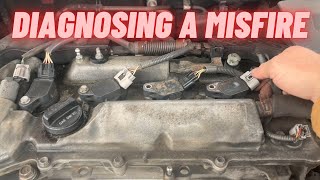
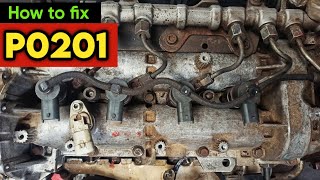
- Replacing the spark plug or ignition coil for cylinder 1. While these parts can cause a misfire code (P0301), they will not cause an injector circuit code like P0201. The P0201 code is specifically for the injector's electrical circuit. 🎬 Watch: A quick guide on what to check first for P0201.
Most Likely Causes
- Failed Cylinder 1 Fuel Injector 🔴 High Probability Injectors are wear-and-tear components that can fail electrically after many years and millions of cycles. The internal coil winding can break, creating an 'open' circuit, which is the most common failure mode for this code.
How to confirm: The most definitive test is to swap the cylinder 1 injector with another accessible injector (e.g., cylinder 3 on the same bank). If the code changes to P0203, the injector is faulty. Alternatively, a multimeter can be used to check the resistance of the injector. According to Toyota's service data for the 2GR-FE, it should be between 11.6 and 12.4 Ω at 20°C (68°F). A reading of infinite resistance (OL) confirms an open circuit.
Typical fix: Replace the failed fuel injector. Since accessing the rear bank is labor-intensive (requiring removal of the intake manifold), many owners and shops choose to replace all three rear injectors and their seals at the same time as a preventative measure.
Est. part cost: $65-$120 for one OEM Denso injector. - Wiring or Connector Fault 🟡 Medium Probability Engine vibrations and heat can cause wiring to chafe, break, or become brittle over time. The connector itself can also become corroded, have a pin back out, or be damaged by rodents, leading to a poor or open electrical connection.
How to confirm: Visually inspect the wiring harness leading to the cylinder 1 injector for any signs of damage, melting, or rodent activity. Use a noid light to test if an electrical pulse is being sent from the ECM to the injector connector. If the noid light flashes, the wiring and ECM are likely good, pointing to the injector. If it does not flash, the problem is in the wiring or the ECM.
Typical fix: Repair the broken section of wire 🎬 Watch: How to diagnose and fix the P0201 circuit code. or replace the injector connector pigtail. Ensure any repairs are sealed against moisture.
Est. part cost: $10-$40 for a connector pigtail.
Rare But Worth Checking
- Faulty Powertrain Control Module (PCM/ECM): This is very rare. The internal driver circuit in the ECM that controls the injector can fail. This should only be considered after all other possibilities (injector and wiring) have been exhaustively ruled out. A failed ECM can cause a variety of other symptoms and codes, such as P0606.
Diagnosis Steps
- Confirm the presence of code P0201 (and any other codes like P0301) using an OBD-II scanner.
- Locate cylinder 1. On the 2GR-FE engine in a Camry, it is on the rear bank (against the firewall), closest to the passenger side of the vehicle.
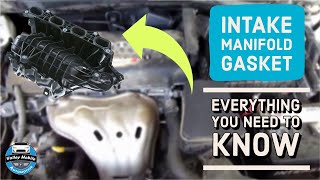
- Due to the difficulty in accessing the rear bank, a professional may use advanced diagnostics first. For a DIYer, you must first remove the upper intake manifold (surge tank) to gain access to the rear fuel rail and injectors. Torque for surge tank bolts is 13 ft-lbf. 🎬 See this walkthrough for removing the intake manifold and gaskets.
- Once accessible, visually inspect the wiring and connector for cylinder 1. Look for any obvious damage, corrosion, or loose connections.
- Disconnect the injector and test its resistance with a multimeter. Compare the reading to the factory specification of 11.6 to 12.4 ohms. An infinite resistance reading means the injector coil is open and has failed.
- If you have a noid light, connect it to the injector's electrical connector and have a helper crank the engine. The light should flash, indicating the ECM is sending a signal. If it does not flash, the problem is in the wiring or the ECM.
- The most reliable test: Swap the cylinder 1 injector with the cylinder 3 injector (on the same bank). Reassemble, clear the codes, and run the engine. If the code returns as P0203, the fuel injector is confirmed to be the faulty part. If P0201 returns, the issue is in the wiring or ECM.
- If the wiring is suspected, check for continuity between the ECM connector and the injector connector.
- When re-installing the fuel rail, torque the bolts to 15 ft-lbf.
Parts You'll Likely Need
- Fuel Injector
(OEM #23209-31050 (supersedes 23250-31050, also cross-references to 23209-0P040))— This is the most common cause of a P0201 code, resulting from an internal electrical failure of the injector's coil.
Trusted brands: Denso (OEM), Standard Motor Products, Beck/Arnley
OEM price range: $65-$120
Aftermarket price range: $40-$80 - Upper Intake Manifold Gasket Set
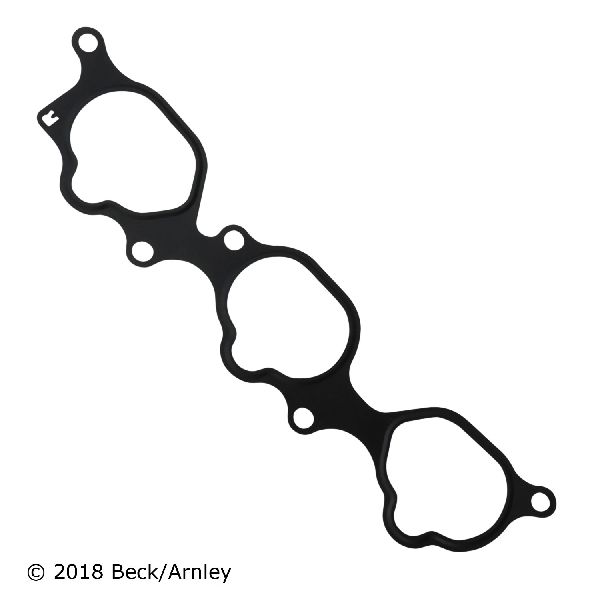
(OEM #Toyota 17176-0P021 (Plenum Gasket))— Required for reinstallation of the intake manifold, which must be removed to access the rear bank of injectors where cylinder 1 is located. It's best practice to replace these gaskets anytime the manifold is removed.
Trusted brands: Toyota (Genuine), Fel-Pro, Mahle
OEM price range: $15-$40
Aftermarket price range: $10-$30
Related Codes That Often Appear With This One
- P0301 — P0301 means 'Cylinder 1 Misfire Detected'. Since the P0201 code indicates an electrical fault is preventing the injector from firing, the cylinder cannot combust fuel, which the ECM detects as a misfire.
Platform-Specific Known Issues
- The primary vehicle-specific issue is the labor-intensive process of removing the upper intake manifold to access the rear bank of fuel injectors (cylinders 1, 3, 5). This turns a simple component replacement into a more involved job.
- A forum member on GMTNation described the process of getting to the injectors on a similar engine as making their 'fingers now have eyeballs,' highlighting the tight and blind access.
Mechanic-Grade Diagnostic Values
- Injector Resistance — expected: 11.6 to 12.4 Ω at 20°C (68°F). Failure: Infinite resistance (OL) indicates an open coil; a reading significantly outside the range indicates a faulty injector.
- Injector Inductive Kick (via Oscilloscope) — expected: A sharp voltage spike to approximately 60-80V immediately after the ECM's ground pulse ends.. Failure: The absence of this sharp spike is the primary indicator the ECM uses to set code P0201.
- Injector Pulse Width (at warm idle, no load) — expected: Typically 1.5 - 4.5 milliseconds (ms), varies by engine temp and condition.. Failure: A value of 0 ms for cylinder 1 on a live data scanner while other cylinders show a normal pulse width would point to the ECM not commanding the injector to fire, or a complete circuit failure.
- Voltage at Injector Connector (Pin 1, L-W wire) — expected: Battery voltage (approx. 12V) with key on, engine off.. Failure: No voltage indicates a problem with the power supply side of the circuit, possibly the EFI relay or fuse.
Scan Tool Commands That Help
- Toyota Techstream: Active Test: Control the Injection Volume — This allows a technician to command each injector to fire individually. If cylinder 1 does not produce an audible click or a change in engine rhythm while other cylinders do, it confirms the fault is isolated to the cylinder 1 injector or its circuit.
- Toyota Techstream: Active Test: Cut Fuel to Cylinder — This test helps confirm if a cylinder is contributing power. When you cut fuel to a healthy cylinder, the engine RPM will drop. If you cut fuel to cylinder 1 and there is NO change in engine operation, it confirms that cylinder was not firing in the first place, which is the expected result with a P0201.
Wiring & Ground Locations
- Injector #1 ECM Pin — The ground-side control wire for injector #1 is a Light Green (LG) wire that runs to pin #10 on the 'A' ECM connector (A55).. This allows for a definitive end-to-end continuity test. If the wire from the injector connector to this specific ECM pin shows high resistance or is open, the fault is in the wiring harness. If continuity is good, the problem is more likely the injector or the ECM's internal driver.
- Injector Power Source — All six injectors receive power from a common Light Blue/White (L-W) wire. This wire gets its voltage from the EFI MAIN relay.. While a failure here would typically cause codes for multiple injectors (P0201, P0202, P0203, etc.), a partial break or corrosion in the harness could theoretically affect only the branch leading to cylinder 1.
- Engine Harness Grounds — There are several critical ground points for the engine harness on the 2GR-FE. One is on the side of the cylinder head under the throttle body, and another is on the front valve cover.. The ECM relies on these main engine grounds for a stable reference. A corroded or loose ground can cause a host of bizarre electrical issues, including intermittent injector faults. While it would likely affect more than just one cylinder, it's a crucial check for hard-to-diagnose electrical problems.
Real Owner Repair Stories
- YouTube Channel 'Automotive Diagnostics & Programming' (2009 Toyota Camry (engine not specified, but symptoms are analogous)) — Persistent misfire code on one cylinder even after replacing plugs and coils.
❌ Tried (didn't work) Replaced spark plugs, Replaced ignition coils
✅ What actually fixed it The issue was diagnosed as a faulty fuel injector, reinforcing that misfire codes can stem from fuel delivery issues, not just ignition components.
OEM Part Supersession History
23250-31050→23209-31050, which was later superseded by 23209-0P040.— Standard part revision and consolidation by the manufacturer.
Heads up: The parts are generally cross-compatible for the 2GR-FE engine within this vehicle's year range. However, it is always best practice to replace injectors in sets (or at least bank-by-bank) to ensure consistent flow rates, especially when using a newer revision part with older original parts.
Diagnostic Flowchart
Other Known Issues on This Vehicle
Issues unrelated to this code that are worth knowing about as an owner of this generation:
- Rupturing VVT-i Oil Supply Hose 🔴 High — Common on 2007-2010 models. The original rubber section of the hose degrades, leading to a sudden and catastrophic loss of engine oil. (Ref: Toyota issued a Limited Service Campaign (LSC) to replace the rubber hose with an all-metal line (Part No. 15772-31030). This campaign expired, but the repair is critical.)
- Water Pump Failure 🟠 Medium — Known to fail prematurely. Symptoms include a coolant leak (pink residue) from the passenger side of the engine and grinding noises. Labor is intensive due to location.
- Melting/Cracked Dashboard 🟡 Low — Very common in hot climates. The dashboard material becomes sticky, shiny, and can crack over time due to sun exposure. (Ref: Toyota initiated a Warranty Enhancement Program (ZE6) to address this, but it has since expired.)
- Front Timing Cover Oil Leak 🟠 Medium — A well-documented issue where the sealant for the front timing cover fails, causing a significant oil leak. The repair is extremely labor-intensive, often requiring engine removal in transverse applications like the Camry.
Used vs. New Parts: Buying Guide for This Vehicle
When a used part is the smart pick: A used wiring harness connector (pigtail) or a complete used engine harness from a low-mileage donor vehicle can be a cost-effective and reliable repair if the original wiring is damaged. A used ECM is also a possibility, but it must be from an identical vehicle and may require programming.
Donor-vehicle mileage cap: roughly under 80000 miles for the part to have meaningful remaining life.
What to inspect on the donor part:
- For wiring: Check for any signs of brittleness, cracking, or previous repairs. Ensure connector locking tabs are intact.
- For injectors: Avoid used injectors. There is no way to visually confirm their condition, and they may be clogged or have a poor spray pattern, leading to other performance issues.
- For ECM: Verify the part number matches exactly. Inspect for any signs of water damage or corrosion on the case or pins.
OEM-only on this vehicle (don't cheap out):
- Fuel Injector: Strongly recommended to use OEM (Denso) or a reputable OEM-rebuilt injector. The market is flooded with cheap, low-quality aftermarket injectors that are known to fail prematurely or perform poorly.
Aftermarket brands forum-validated for this vehicle:
- Denso (This is the Original Equipment Manufacturer)
- Standard Motor Products (SMP)
- Beck/Arnley
Brands owners have reported issues with on this vehicle:
- Unbranded, no-name injectors from online marketplaces like eBay or Amazon should be avoided. These are often poorly manufactured copies that can cause more problems than they solve.
Real Owner Stories
Aggregated from forums and TSBs cited above. Mileages and costs reflect what owners reported in those sources.
2008 Toyota Camry 3.5L 2GR-FE — 142000 miles
Symptoms: The engine started running rough and the check engine light flashed multiple cylinder misfire codes. The owner checked spark plugs and vacuum lines but found no issues.
What fixed it: The owner considered replacing ignition coils or fuel injectors based on a mechanic's advice.
Source hint: owner_reports: AliExpress forum quote
2007-2011 Toyota Camry 3.5L 2GR-FE
Symptoms: Described the process of reaching the injectors as making their 'fingers now have eyeballs' due to the tight and blind access behind the engine.
What fixed it: Removal of the upper intake manifold to access the rear fuel rail.
Source hint: vehicle_specific_issues: GMTNation forum member
Related OBD-II Codes
Frequently Asked Questions
Where is cylinder 1 located on my 2GR-FE Camry V6?
What is the correct resistance for a new fuel injector on a 2007-2011 Camry 3.5L?
Why is the labor for P0201 so high on the Camry V6 compared to other cars?
Should I replace all the injectors while the intake manifold is off?
What are the torque specs for reassembling the intake after an injector replacement?
Is there a specific part number for the oil line issue mentioned in the known issues?
Helpful Videos


Used OEM Parts in Stock


New Aftermarket Parts Available


The information in this article is provided for general reference and educational purposes only. Vehicle specifications, procedures, and part compatibility can vary by production date, trim level, and region. Always consult your vehicle's factory service manual and verify part numbers before purchasing or performing repairs. Safety-critical components such as airbags, seat belts, and braking systems should be installed by a qualified professional.
- Toyota Camry:
- 🎬 Helpful Videos
- 🛍️ Shop This Part
- What's Unique About the 2007-2011 Toyota Camry
- Symptoms You May Notice
- Most Likely Causes
- Rare But Worth Checking
- Diagnosis Steps
- Parts You'll Likely Need
- Related Codes That Often Appear With This One
- Platform-Specific Known Issues
- Mechanic-Grade Diagnostic Values
- Scan Tool Commands That Help
- Wiring & Ground Locations
- Real Owner Repair Stories
- OEM Part Supersession History
- Diagnostic Flowchart
- Other Known Issues on This Vehicle
- Used vs. New Parts: Buying Guide for This Vehicle
- Real Owner Stories
- 2008 Toyota Camry 3.5L 2GR-FE — 142000 miles
- 2007-2011 Toyota Camry 3.5L 2GR-FE
- Related OBD-II Codes
- Frequently Asked Questions
- 🎟️ Get 5% Off