

P0201 on 2011-2022 Ram 1500 3.6L V6: Injector Circuit Malfunction Causes and Fixes
P0201 on a Ram 1500 3.6L indicates an electrical fault with the cylinder 1 fuel injector circuit. The most likely causes are a failed fuel injector or a wiring problem. Swapping the injector to another cylinder is the best way to confirm if the injector is the culprit before buying parts. A noid light test is the first step to verify if the computer is sending a signal.
- P0201 means an electrical problem with the cylinder 1 injector or its circuit.
- Do not immediately buy a new injector. First, test the circuit with a noid light.
- The most reliable DIY test is to swap the cylinder 1 injector with another cylinder (like #3) and see if the trouble code follows the injector.
- Always check the wiring connector for damage or a loose fit before performing complex diagnostics.
- Cylinder 1 on the 3.6L V6 is the front-most cylinder on the passenger side.
What's Unique About the 2011-2022 Ram 1500
For the 3.6L Pentastar V6, the P0201 code is a straightforward electrical fault. Unlike older Ram engines that had well-documented Technical Service Bulletins (TSBs) for injector harnesses failing where they pass through the valve cover (e.g., TSB 18-024-03 for Magnum engines), the Pentastar does not share this specific widespread issue. However, some technicians note that the wiring harness near the main engine computer (PCM) connector can become brittle over time from heat and vibration. On some GM models with similar engine layouts, harness chafing against the ECM bracket, shock tower, and upper control arm has been noted, a potential issue to be aware of on any platform.
Generation note: This range covers the fourth generation Ram 1500 (2011-2018) and the fifth generation (2019-2022), including the 'Classic' models. The 3.6L Pentastar V6 was a core engine for both generations. An updated version of the 3.6L Pentastar was introduced around 2016 with a new intake manifold, injectors, and ignition coils, but this does not significantly alter the diagnostic process for P0201. The injector part number is consistent across these years.
Symptoms You May Notice
- Check Engine Light is on
- Rough, shaking, or vibrating idle
- Engine misfires, which may feel like a stutter or hesitation during acceleration
- Noticeable loss of power
- Poor fuel economy
- Engine may be difficult to start
- Smell of raw fuel from the exhaust due to unburnt gasoline passing through the cylinder
- Replacing the spark plug or ignition coil for cylinder 1. While these parts can cause a misfire (P0301), they will not cause an injector circuit code like P0201. The P0201 code specifically points to an electrical fault in the fuel delivery circuit.
Most Likely Causes
- Faulty Cylinder 1 Fuel Injector 🔴 High Probability Injectors are electro-mechanical parts that can fail over time from heat cycles and wear. The internal coil can develop an open circuit (infinite resistance) or high resistance, preventing it from firing. The expected resistance for a good 3.6L Pentastar injector is approximately 12-16 Ohms. Readings significantly outside this range, such as 22 Ohms or higher, indicate a failing injector.
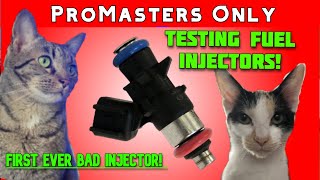
How to confirm: The most definitive test is to swap the cylinder 1 fuel injector with another cylinder (e.g., cylinder 3). Clear the codes and run the engine. If the code changes to P0203, the injector is bad. If P0201 returns, the problem is in the wiring or PCM. Before swapping, you can also test the injector's resistance with a multimeter; a reading far outside the 12-16 Ohm range indicates failure. 🎬 Watch: A step-by-step guide to testing Pentastar fuel injectors.
Typical fix: Replace the faulty fuel injector. It is often recommended to replace all injectors on a high-mileage engine to ensure balanced fuel delivery and prevent future failures.
Est. part cost: $50-$150 - Wiring Harness or Connector Issue 🟡 Medium Probability Engine vibration and heat can cause wires to break, chafe, or corrode over time. The issue could be at the injector connector itself (broken locking tab, corroded pins) or further up the harness where it may rub against brackets or other components. Wires can break internally with no visible damage to the insulation.
How to confirm: Visually inspect the wiring to the cylinder 1 injector for any obvious damage. Use a noid light to test for an electrical pulse at the injector connector; it should flash steadily while cranking. If the light doesn't flash, test for 12V power on one wire and then check the ground control wire for continuity back to the PCM. A 'wiggle test' (wiggling the harness while the engine is running) can also help identify intermittent shorts or opens.
Typical fix: Repair the broken or shorted section of wire. If the connector is damaged or corroded, replace it with a new pigtail connector (e.g., Mopar P/N 5148037AM or aftermarket equivalent).
Est. part cost: $15-$40
Rare But Worth Checking
- Faulty Powertrain Control Module (PCM): This is the least likely cause. The internal driver circuit for the injector can fail, but this should only be considered after the injector and wiring have been thoroughly tested and proven to be good. This is a last-resort diagnosis. 🎬 Watch: Troubleshooting injector circuit codes on 2011-2022 Ram engines.
Diagnosis Steps
- Read the codes with an OBD-II scanner and confirm P0201 is present. Note any other codes, especially P0301.
- Locate Cylinder 1. On the 3.6L Pentastar, the cylinders are numbered front to rear, with the right (passenger side) bank being 1-3-5 and the left (driver's side) bank being 2-4-6. Cylinder 1 is the front-most cylinder on the passenger side.
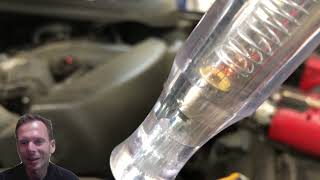
- Disconnect the electrical connector from the cylinder 1 fuel injector. Plug a 'noid light' into the injector connector and start the engine. The light should flash steadily. If it does, the wiring and PCM are likely good, and the injector is the probable cause. If it does not flash or is steady on, proceed to the next steps.
- If the noid light does not flash, use a multimeter to check for 12-volt power at one of the two pins in the connector (with the key on, engine off).
- If power is present but the noid light didn't flash, the problem is in the ground control wire running back to the PCM or the PCM itself. Check this wire for continuity (resistance should be less than 5 ohms).
- If the noid light flashed correctly in step 3, the injector is the primary suspect. Turn the engine off. Use a multimeter to measure the resistance across the two terminals of the injector itself. A good injector should read between 12 and 16 ohms. A reading of infinity (OL) means it's open and definitely bad.
- To be 100% certain, swap the cylinder 1 injector with the cylinder 3 injector (the middle cylinder on the same bank).
- Reassemble, clear the codes, and start the engine. If the code returns as P0201, the fault is in the wiring. If the code is now P0203, you have confirmed the fuel injector is faulty and needs to be replaced.
Parts You'll Likely Need
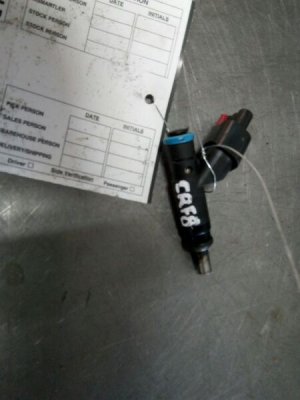
- Fuel Injector
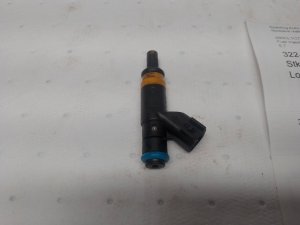
(OEM #05184085AD)— This is the most common part to fail for a P0201 code after wiring is ruled out. The internal coil windings can break or develop high resistance, causing an open circuit. This part number supersedes previous versions like 5184085AC and RL184085AC.
Trusted brands: Mopar, Bosch (OEM supplier, P/N 0280158233), Standard Motor Products (SMP, P/N FJ1147), SKP
OEM price range: $120-$180
Aftermarket price range: $50-$100 - Fuel Injector Connector Pigtail
(OEM #5148037AM)— If the plastic connector or its locking tab is broken, or if the terminals inside are corroded, replacing the connector is necessary to ensure a solid electrical connection. This part number has superseded many previous versions.
Trusted brands: Mopar, Dorman, Standard Motor Products (HP3945), Wells
OEM price range: $25-$40
Aftermarket price range: $15-$30
Related Codes That Often Appear With This One
- P0301 — This code means 'Cylinder 1 Misfire Detected'. Since P0201 indicates a failure in the fuel injector circuit for cylinder 1, that cylinder is not receiving fuel, which directly causes it to misfire. P0201 is the cause, and P0301 is the effect. 🎬 See this video for more ways to diagnose a misfire.
Technical Service Bulletins (TSBs) & Recalls
- No specific TSBs for P0201 on the 3.6L Pentastar were found. TSBs like 18-024-03 and 9002688 apply to older Magnum and HEMI engines with known valve-cover-harness issues and should not be confused with this platform. Other TSBs for this vehicle range address different issues like cold start misfires or water pumps.
- Manufacturer TSB Bulletin #9002688 notes that before replacing injectors for codes P0201 through P0206, technicians should ensure that the wiring loom and/or connector in the valve cover gasket is not the root cause.
Platform-Specific Known Issues
- Real-World Repair Story: Intermittent P0201 and P0301: A user on DodgeForum.com with a similar engine family experienced a rough idle and codes P0301 and P0201. After replacing the injector, the problem persisted. The issue was ultimately traced to a faulty electrical connector on the injector that was not fully seated, highlighting the importance of checking simple connections before replacing expensive parts.
Mechanic-Grade Diagnostic Values
- Fuel Injector Coil Resistance — expected: 12 to 16 Ohms. Failure: A reading of infinity (OL) indicates an open circuit. A reading near zero indicates a short. A reading outside the spec (e.g., 21-22 Ohms) indicates a failing injector.
- Injector Pulse Width at Idle — expected: ~2.5 milliseconds (2500 microseconds). Failure: While a circuit fault code like P0201 is less about pulse width, a scan tool may show the PCM commanding a slightly higher pulse width on the affected cylinder to compensate before setting the code. However, the primary failure is electrical, not a response to engine conditions.
- Injector Control Circuit Continuity — expected: Less than 5.0 Ohms. Failure: High resistance (greater than 5.0 Ohms) on the control wire between the injector connector and the PCM indicates an open or corroded wire.
- Injector Driver Voltage Waveform (Oscilloscope) — expected: A sharp drop from battery voltage to near zero when the injector fires, followed by a large inductive spike (60-80V) when it closes.. Failure: A missing or diminished inductive spike is what the PCM detects to set code P0201. A rounded-off or low-voltage pattern can indicate a shorted or high-resistance injector coil.
Scan Tool Commands That Help
- wiTECH, Launch, Autel: Fuel Injector Kill / Cylinder Contribution Test — This bidirectional command allows the technician to manually disable one injector at a time while the engine is running. If disabling cylinder 1 causes no change in the engine's idle, it confirms that cylinder was not contributing in the first place, supporting the P0201 diagnosis. If disabling another cylinder (e.g., cylinder 3) produces a noticeable drop in RPM, it proves that cylinder's injector is working correctly.
Wiring & Ground Locations
- Cylinder 1 Injector Control Wire — This wire runs from the fuel injector connector for cylinder 1 (front, passenger side) to the C1 connector at the Powertrain Control Module (PCM).. This is the specific wire the PCM uses to ground-pulse the injector. A break or short in this wire is a direct cause of P0201. The wire color is typically Dark Blue/Tan.
- PCM Connector C1, Pin 11 — The Powertrain Control Module (PCM) is located in the engine bay. C1 is one of the main connectors. Pin 11 is the specific terminal for the cylinder 1 injector control circuit on some model years.. This is the exact pin to test for continuity back to the injector connector. Probing here can confirm if the wiring harness is intact without having to trace the entire wire length. Always verify pinouts for your specific model year.
- ASD Relay Output (Power Supply) — Power for the fuel injectors comes from the Auto Shut Down (ASD) relay, located in the underhood fuse box (Power Distribution Center).. This circuit provides the 12V+ supply to all injectors on the bank. While a failure here would typically set codes for multiple injectors (P0201, P0203, P0205), a localized wiring issue from the main splice to the cylinder 1 injector could still be the cause. The wire is often a shared color for the bank, such as Brown/White.
- Engine/Chassis Grounds — Key ground points are located near the battery negative terminal to the body, from the engine block to the chassis, and near the windshield wiper motor.. While a bad main ground usually causes multiple, widespread electrical issues, a poor ground can create floating voltages and intermittent problems that could, in rare cases, affect injector driver performance. Checking that main grounds are clean and tight is a good practice during any electrical diagnosis.
Real Owner Repair Stories
- YouTube channel 'Dr. Marcus Hale' (2017 Ram 1500 3.6L V6) — Rough idle and a P0202 code (Cylinder 2 Injector Circuit).
❌ Tried (didn't work) Initial scan confirmed the code. Scan tool live data showed injector pulse widths were all similar, though cylinder 2 was slightly higher at times.
✅ What actually fixed it The technician tested the resistance of injectors #2, #4, and #6 directly at the common harness connector. Injector #2 read 21.9 Ohms, while #4 and #6 read a normal ~14 Ohms. This confirmed the high resistance in the #2 injector coil without having to remove the intake manifold first. Replacing the #2 fuel injector resolved the code. - Reddit user in r/MechanicAdvice (2015 Jeep Grand Cherokee 3.6L Pentastar (102k miles)) — Engine cranks but stalls immediately. Will run roughly if throttle is held above 2000 RPM. Pending code for Bank 1 rich.
❌ Tried (didn't work) Adding fuel (in case of bad gauge)., Replacing all six spark plugs., Checking ignition coil resistance., Unplugging the O2 sensor to force a default fuel map.
✅ What actually fixed it The owner disconnected injectors one by one. Disconnecting the middle or rear injector on Bank 1 allowed the engine to start and idle roughly, indicating a problem on that bank. Resistance tests showed the front and rear injectors were slightly out of spec (11.4 and 11.8 Ohms vs 12-16 Ohm spec), but the middle one was good. The problem was ultimately caused by faulty injectors on Bank 1.
Model Year Variations Within This Range
- 2016-2022: An updated version of the 3.6L Pentastar was introduced in 2016, featuring a new intake manifold, different fuel injectors, and new ignition coils. While the fundamental diagnostic process for P0201 remains the same, technicians should be aware that part numbers for injectors and related components may differ from the earlier 2011-2015 engines.
Diagnostic Flowchart
Used vs. New Parts: Buying Guide for This Vehicle
When a used part is the smart pick: For this repair, using a used fuel injector from a reputable salvage yard is a reasonable option, especially if trying to minimize cost. Since it's an electrical failure, a used injector that tests within the correct resistance range (12-16 Ohms) is likely to function correctly. It is a good way to confirm a diagnosis before spending on a new part.
Donor-vehicle mileage cap: roughly under 80000 miles for the part to have meaningful remaining life.
What to inspect on the donor part:
- Check the resistance of the used injector with a multimeter before purchase; it must be within the 12-16 Ohm specification.
- Inspect the plastic connector housing for cracks or a broken locking tab.
- Look at the nozzle end for any signs of physical damage or heavy carbon buildup.
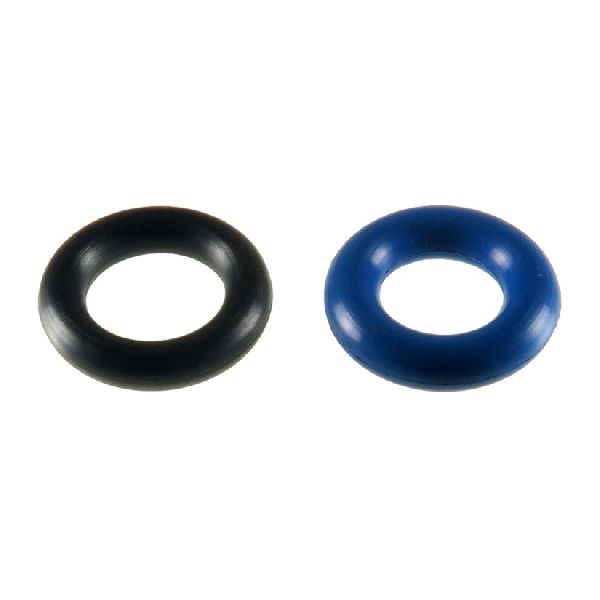
- Ensure the O-rings are present and not brittle, though it is always recommended to install new O-rings regardless.
OEM-only on this vehicle (don't cheap out):
- Powertrain Control Module (PCM) - Due to the need for VIN programming and software flashing, a PCM replacement must be done with a new or professionally refurbished OEM unit.
Aftermarket brands forum-validated for this vehicle:
- Bosch (often the original OEM supplier)
- Standard Motor Products (SMP)
- TRQ (as shown in repair videos)
Brands owners have reported issues with on this vehicle:
- No-name, unbranded injectors from online marketplaces are a gamble. They may have incorrect flow rates or poor longevity, leading to performance issues or premature failure.
Real Owner Stories
Aggregated from forums and TSBs cited above. Mileages and costs reflect what owners reported in those sources.
2017 Ram 1500 3.6L V6
Symptoms: Check engine light on, code P0202 (injector 2 circuit open), and a rough idle.
What fixed it: The owner diagnosed a high resistance of 21.9 ohms on the #2 injector, compared to 14.1 ohms on a good one. The fix was to replace the faulty fuel injector.
Source hint: youtube_comment from '737mechanic'
Ram 1500 (similar 3.6L engine family)
Symptoms: A rough idle and codes P0301 and P0201.
What fixed it: After replacing the injector, the problem persisted. The issue was ultimately traced to a faulty electrical connector on the injector that was not fully seated, highlighting the importance of checking connections.
Source hint: DodgeForum.com: 'P0301/P0201 Trouble Code'
Related OBD-II Codes
Frequently Asked Questions
Where is cylinder 1 located on my 2011-2022 Ram 1500's 3.6L Pentastar engine?
What is the correct resistance for a fuel injector on my 3.6L Pentastar V6?
What is the best way to confirm my fuel injector is bad before buying a new one?
I found a TSB online (18-024-03) about wiring issues causing injector codes. Does this apply to my Ram 1500?
What Mopar part number is the replacement pigtail connector for the fuel injector?
Could the P0201 code on my Ram be caused by something other than a bad injector?
Helpful Videos
Used OEM Parts in Stock


New Aftermarket Parts Available

The information in this article is provided for general reference and educational purposes only. Vehicle specifications, procedures, and part compatibility can vary by production date, trim level, and region. Always consult your vehicle's factory service manual and verify part numbers before purchasing or performing repairs. Safety-critical components such as airbags, seat belts, and braking systems should be installed by a qualified professional.
- Ram 1500:
- 🎬 Helpful Videos
- 🛍️ Shop This Part
- What's Unique About the 2011-2022 Ram 1500
- Symptoms You May Notice
- Most Likely Causes
- Rare But Worth Checking
- Diagnosis Steps
- Parts You'll Likely Need
- Related Codes That Often Appear With This One
- Technical Service Bulletins (TSBs) & Recalls
- Platform-Specific Known Issues
- Mechanic-Grade Diagnostic Values
- Scan Tool Commands That Help
- Wiring & Ground Locations
- Real Owner Repair Stories
- Model Year Variations Within This Range
- Diagnostic Flowchart
- Used vs. New Parts: Buying Guide for This Vehicle
- Real Owner Stories
- 2017 Ram 1500 3.6L V6
- Ram 1500 (similar 3.6L engine family)
- Related OBD-II Codes
- Frequently Asked Questions
- 🎟️ Get 5% Off