

P0201 on 2011-2020 Kia Sorento 2.4L GDI: Injector Circuit Fault Causes and Fixes
On the 2011-2020 Kia Sorento with the 2.4L GDI engine, code P0201 almost always points to a faulty cylinder 1 fuel injector or its wiring. A failing injector is the most common cause, a known issue on the Theta II GDI engine. Swapping the injector with another cylinder is the best diagnostic test. Expect to pay $70-$150 for a new injector, but dealer costs can be significantly higher.
- P0201 on your Sorento means the cylinder 1 fuel injector circuit has an electrical problem.
- The most likely cause is a failed fuel injector, followed by a wiring issue at the injector's connector.
- A simple and effective diagnostic is to swap the cylinder 1 injector with another one (like cylinder 2) and see if the code follows the injector (changing to P0202).
- Do not ignore this code. Continued driving can lead to a rough-running engine and will likely damage your expensive catalytic converter.
- Given the known issues with the 2.4L GDI engine, it's wise to address any engine-related trouble codes immediately.
What's Unique About the 2011-2020 Kia Sorento
The 2.4L GDI 'Theta II' engine in this Sorento is known for having fuel system and engine-related issues. While P0201 is a generic electrical code, these GDI (Gasoline Direct Injection) injectors are exposed to intense heat and carbon buildup directly inside the combustion chamber, which can lead to a higher failure rate compared to older port-injected engines. This engine family and its platform mates (like the Hyundai Santa Fe and Kia Optima) have been subject to recalls, class-action lawsuits, and numerous Technical Service Bulletins (TSBs) for internal problems, including injector failures. Any engine-related code on this platform warrants immediate investigation.
Generation note: This guide covers the 2011-2020 Kia Sorento, which includes the Second Generation (XM, 2011-2015) and the Third Generation (UM, 2016-2020). Both generations used a version of the 2.4L GDI Theta II engine. While the fundamental causes of P0201 are the same, the OEM fuel injector part number 35310-2G710 is primarily listed for 2011-2016 models. Later models may use a different part number, so VIN verification is crucial.
Symptoms You May Notice
- Check Engine Light is on (may be flashing)
- Rough, shaky, or vibrating idle
- Engine misfiring or stumbling, especially on acceleration.
- Noticeable loss of power and poor acceleration.
- Decreased fuel economy.
- Hard starting or stalling
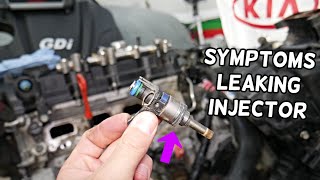
- Strong smell of gasoline from the exhaust if the injector is stuck open. 🎬 Learn more about the symptoms of a leaking fuel injector.
- Replacing the spark plug or ignition coil for cylinder 1. While these parts can cause a misfire (P0301), the P0201 code specifically points to an electrical fault in the fuel injector circuit, not the ignition system. The presence of P0201 makes the injector or its wiring the primary suspect.
Most Likely Causes
- Faulty Cylinder 1 Fuel Injector 🔴 High Probability The GDI injectors on the Theta II engine are subjected to high heat and pressure inside the cylinder, which can lead to internal coil failure or clogging from carbon buildup over time. This is a widely documented issue across both Kia and Hyundai vehicles using this engine. Some TSBs for later models note that fuel containing ethanol can accelerate injector damage.
How to confirm: The most definitive DIY test is to swap the cylinder 1 fuel injector with the injector from another cylinder (e.g., cylinder 2). Clear the codes and drive the vehicle. If the code changes to P0202, the injector is confirmed to be faulty. If P0201 returns, the problem is in the wiring or PCM. You can also test the injector's internal resistance with a multimeter; a typical range for many injectors is 10-18 ohms, but an open circuit (infinite resistance) confirms failure. Always consult the specific service manual for your vehicle's exact resistance specification.
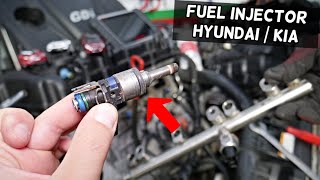
Typical fix: Replace the faulty fuel injector. 🎬 See this walkthrough for fuel injector removal and replacement. It is often recommended to replace all four injectors as a set, especially on higher mileage vehicles, as they tend to fail around the same time. Some Hyundai/Kia technicians on forums recommend this as a best practice to prevent repeat repairs.
Est. part cost: $70-$150 per injector - Wiring Harness or Connector Issue 🟡 Medium Probability Engine vibration and heat can cause wires to become brittle, break, or chafe against engine components over time. The connector itself can become loose, corroded, or have pins back out, causing an intermittent or total loss of connection. A loose or broken connector locking clip is a common finding.
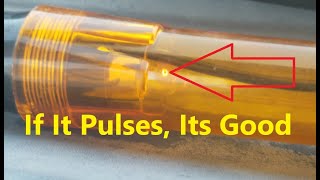
How to confirm: Visually inspect the wiring harness leading to the cylinder 1 injector for any signs of melting, chafing, or breaks. Check that the connector is securely clipped on and free of corrosion. Use a multimeter to check for continuity between the PCM and the injector connector. A 'noid light' is an excellent tool to verify if the PCM is sending a pulse signal to the connector; if it flashes, the wiring and PCM are likely good.
Typical fix: Repair the damaged section of wire or replace the injector connector pigtail. Ensure the connector 'clicks' into place and the locking tab is secure.
Est. part cost: $15-$40
Rare But Worth Checking
- Powertrain Control Module (PCM) Failure: This is the least likely cause. The internal driver circuit in the PCM that controls the injector can fail. This should only be considered after definitively ruling out the injector and wiring as the cause.
Diagnosis Steps
- Read the codes with an OBD-II scanner and confirm P0201 is present. 🎬 Watch: Diagnosing GDI injector codes on Kia and Hyundai engines. Note any other codes, especially P0301, and review freeze frame data.
- Perform a detailed visual inspection of the wiring harness and connector for the cylinder 1 fuel injector (closest to the serpentine belt). Look for any obvious signs of damage, melting, chafing, or corrosion. Ensure the connector is fully seated and the locking clip is engaged.
- Disconnect the connector and check for a secure fit and clean terminals. Apply dielectric grease upon reconnection.
- If the wiring looks good, the next step is to test the injector itself. The easiest method is to swap the cylinder 1 injector with the cylinder 2 injector.
- After swapping, clear the codes with the scanner and start the engine. Let it run for a few minutes.
- Re-scan for codes. If you now have a P0202 code, the fuel injector you moved is bad and needs to be replaced.
- If the P0201 code returns, the injector is not the problem. The issue lies in the wiring harness or the PCM.
- At this point, use a 'noid light' to test the electrical connector for cylinder 1. The light should flash when the engine is cranked or running, indicating the PCM is sending a signal. If it doesn't flash, you have a wiring or PCM issue.
- If the noid light test fails, use a multimeter to check for continuity on the ground and signal wires between the injector connector and the PCM connector. Repair any open or shorted wires found. Also check for 12V power at the connector with the key on.
- If all wiring tests pass and the noid light doesn't flash, the fault is likely within the PCM, which is a rare failure.
Parts You'll Likely Need
- Fuel Injector
(OEM #35310-2G710)— This is the most common cause of a P0201 code on the 2.4L GDI engine due to the high-stress operating environment of direct injection. This part number is confirmed for 2011-2016 Sorento, Optima, and Sportage models. Later models (2017-2020) may use a different part number; VIN verification is essential.
Trusted brands: Bosch, Delphi, Standard Motor Products, Genuine Hyundai/Kia
OEM price range: $120-$240
Aftermarket price range: $70-$130 - Fuel Injector Connector Pigtail — The plastic connector and its locking tab can become brittle from heat cycles and break, or the terminal connections can fail, causing an open circuit.
Trusted brands: Dorman, Standard Motor Products, ACDelco
OEM price range: $25-$40
Aftermarket price range: $15-$30
Related Codes That Often Appear With This One
- P0301 — P0301 means 'Cylinder 1 Misfire Detected.' Since P0201 indicates a failure in the cylinder 1 injector circuit, that cylinder is not receiving fuel, which directly causes a misfire. P0201 is the cause, and P0301 is the effect.
- P0200 — P0200 indicates a general 'Injector Circuit/Open' fault. If you see this along with P0201 and other injector codes (P0202, P0203, etc.), it often points to a problem common to all injectors, like a blown fuse, a faulty main relay, or a damaged shared power/ground wire in the harness.
- P2146 — This code for 'Fuel Injector Group 'A' Supply Voltage Circuit/Open' indicates a problem with the power supply circuit that feeds a bank of injectors (often cylinders 1 and 2). It points towards a wiring issue or a failing injector driver box rather than a single injector.
Technical Service Bulletins (TSBs) & Recalls
- TSB ENG149: While this specific TSB addresses a cylinder contribution/balance fault (like P0269) on the 2.4L GDI, it acknowledges a pattern of fuel injector failures and directs technicians to replace them, which is relevant context for any injector-related code on this engine.
- Hyundai TSB 23-FL-002H-1: Pertains to newer 2.5L GDI engines but is relevant context. It addresses misfire DTCs (P030x) caused by internally leaking GDI injectors and instructs dealers to perform a fuel pressure leak-down test. If it fails, the affected injectors are replaced. This shows a known pattern of GDI injector issues from the manufacturer.
- Kia TSB FUE068/CA2505: Also for newer 2.5L GDI engines, this TSB notes that GDI injectors can be damaged by fuel containing ethanol, leading to misfires. It directs replacement of all four GDI injectors if misfire DTCs are present.
Platform-Specific Known Issues
- The Theta II 2.4L GDI engine has a well-documented history of issues, including excessive oil consumption, carbon buildup, and in severe cases, connecting rod bearing failure leading to engine replacement under an extended warranty/class action settlement. A P0201 code should be addressed immediately to prevent unburnt fuel from washing oil from cylinder walls or damaging the catalytic converter, which could exacerbate existing engine problems.
- Some owners on forums report dealers quoting extremely high prices for injector replacement ($1200 for one injector), making DIY or independent shop repair a much more cost-effective option.
- Later model year Hyundai/Kia vehicles with GDI engines have TSBs (e.g., 23-FL-002H-1) related to misfires caused by internally leaking GDI injectors, sometimes requiring replacement of all four. While these TSBs don't specifically name P0201, they confirm a pattern of GDI injector failures on these engines.
Mechanic-Grade Diagnostic Values
- Fuel Injector Internal Resistance — expected: 10 - 18 Ohms (typical for many injectors, but verify spec for your specific part). Failure: A reading of infinite resistance (OL) indicates an open coil. A reading significantly outside the specified range indicates a faulty injector.
- Low-Pressure Fuel System Pressure (at idle) — expected: ~55 PSI (3.8 bar). Failure: While not a direct cause for an electrical P0201, a low reading (e.g., <45 PSI) indicates a separate fuel delivery problem (pump, filter) that should be addressed.
- Injector Connector Voltage (Key On, Engine Off) — expected: 10V+ (Battery Voltage). Failure: No voltage or significantly low voltage on the power supply wire at the injector connector points to a problem upstream in the wiring, fuse, or relay, not the injector itself.
Scan Tool Commands That Help
- Kia GDS (or equivalent professional scanner): Injector Active Test / Actuation Test — This bidirectional command allows a technician to force a specific injector to fire (or disable it) while the engine is running. If you can command the injector to click and hear a change in engine idle, it confirms the PCM driver and wiring are capable of firing the injector, pointing more strongly to a clogged or mechanically stuck injector rather than an electrical open.
Wiring & Ground Locations
- Cylinder 1 Injector — The fuel injector for the cylinder closest to the serpentine belt on the front of the engine.. This is the component and location the P0201 code is specifically referencing.
- GC101 / GC102 — Key engine ground points located on the engine block and cylinder head.. A corroded or loose main engine ground can cause unstable voltage across all engine electrical systems, potentially leading to intermittent and hard-to-diagnose circuit faults like P0201.
- Injector Connector — The 2-pin electrical connector that plugs directly into the top of the fuel injector.. This is a primary failure point. The locking clip can break, causing a loose connection, or the terminals inside can corrode or back out, creating an open circuit.
Real Owner Repair Stories
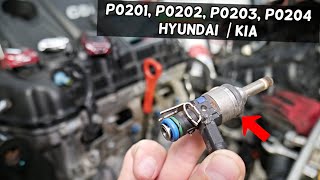
- YouTube Channel 'How to Fix P0201...' (Generic vehicle, but demonstrating a common Kia/Hyundai issue.) — Check engine light with code P0204 (same issue, different cylinder).
❌ Tried (didn't work) Initial diagnosis pointed towards a bad injector.
✅ What actually fixed it The injector connector was not fully seated because the metal locking spring clip was missing/not installed correctly. The connector had worked itself loose, creating an open circuit. The final fix was to secure the connector properly with a new clip, resolving the code without replacing any major parts.
OEM Part Supersession History
35310-2G710→N/A - Different part number used for later models— Model generation change.
Heads up: Part number 35310-2G710 is for the second generation (XM) Sorento and early third generation (UM) up to about 2016. Later 2017-2020 models use a different injector. The parts are not interchangeable. Always verify by VIN.
Model Year Variations Within This Range
- 2011-2015 (Second Gen 'XM'): Uses the earlier version of the 2.4L Theta II GDI engine. The primary fuel injector part number is 35310-2G710. The engine ground strap part number is 918601U020.
- 2016-2020 (Third Gen 'UM'): Uses a revised 2.4L Theta II GDI engine with slightly different power output. While some early 2016 models may still use the older injector, most from this era use a different, non-interchangeable fuel injector. The transmission ground cable part number changes to 91865-C6520 for later models. VIN verification for parts is critical for this generation.
Diagnostic Flowchart
Used vs. New Parts: Buying Guide for This Vehicle
When a used part is the smart pick: For this repair, a used part is only recommended for the 'Fuel Injector Connector Pigtail'. If the plastic connector is broken, sourcing a used one from a junkyard harness is a very cost-effective and reliable fix.
Donor-vehicle mileage cap: roughly under 150000 miles for the part to have meaningful remaining life.
What to inspect on the donor part:
- For a connector pigtail, ensure the plastic isn't brittle or cracked.
- Check that the locking tab is intact and functional.
- Ensure there are at least 4-6 inches of wire attached to allow for easy splicing.
OEM-only on this vehicle (don't cheap out):
- Fuel Injector
Aftermarket brands forum-validated for this vehicle:
- Bosch
- Delphi
Brands owners have reported issues with on this vehicle:
- Avoid unbranded, no-name injector sets from online marketplaces. Forum discussions frequently mention these failing prematurely or having inconsistent flow rates, causing performance issues. It is not worth the risk on a GDI engine.
Real Owner Stories
Aggregated from forums and TSBs cited above. Mileages and costs reflect what owners reported in those sources.
2020 Kia Sorento 2.4L GDI
Symptoms: A recurring issue with misfires, shuttering, and vibration even after dealer service.
What fixed it: The source describes a chronic fuel injector issue that persisted even after dealer service, indicating ongoing problems with the injectors.
Source hint: reddit.com/r/KiaSorento - '2020 Sorento - chronic fuel injector issue'
2016 Kia Sorento 2.4L GDI
Symptoms: Symptoms consistent with a fuel injector failure leading to a dealer diagnosis.
What fixed it: A single fuel injector replacement was recommended by the dealer to resolve the issue.
Cost: $1200-$1200
Source hint: reddit.com/r/KiaSorento - '2020 Sorento - chronic fuel injector issue'
Hyundai/Kia with GDI engine
Symptoms: The injectors tend to leak internally.
What fixed it: A Hyundai technician stated they recommend replacing all four injectors at once because they eventually all fail, preventing the customer from having to return for the same issue on another cylinder.
Source hint: reddit.com/r/Hyundai - 'Class action for fuel injector'
Related OBD-II Codes
Frequently Asked Questions
Is the fuel injector failure causing my P0201 code a known issue on the 2.4L GDI Sorento?
My dealer quoted me over $1000 to replace one injector. Is that a normal price?
Should I replace just the one bad injector for cylinder 1, or all four?
How can I be sure it's the injector and not the wiring before I buy parts?
My Sorento has the Theta II engine with other known problems. Could the P0201 code make things worse?
I heard about TSBs for Kia injector problems. Do any apply to my P0201 code?
Helpful Videos
Used OEM Parts in Stock


New Aftermarket Parts Available



The information in this article is provided for general reference and educational purposes only. Vehicle specifications, procedures, and part compatibility can vary by production date, trim level, and region. Always consult your vehicle's factory service manual and verify part numbers before purchasing or performing repairs. Safety-critical components such as airbags, seat belts, and braking systems should be installed by a qualified professional.
- Kia Sorento:
- 🎬 Helpful Videos
- 🛍️ Shop This Part
- What's Unique About the 2011-2020 Kia Sorento
- Symptoms You May Notice
- Most Likely Causes
- Rare But Worth Checking
- Diagnosis Steps
- Parts You'll Likely Need
- Related Codes That Often Appear With This One
- Technical Service Bulletins (TSBs) & Recalls
- Platform-Specific Known Issues
- Mechanic-Grade Diagnostic Values
- Scan Tool Commands That Help
- Wiring & Ground Locations
- Real Owner Repair Stories
- OEM Part Supersession History
- Model Year Variations Within This Range
- Diagnostic Flowchart
- Used vs. New Parts: Buying Guide for This Vehicle
- Real Owner Stories
- 2020 Kia Sorento 2.4L GDI
- 2016 Kia Sorento 2.4L GDI
- Hyundai/Kia with GDI engine
- Related OBD-II Codes
- Frequently Asked Questions
- 🎟️ Get 5% Off