

P0201 on 2010-2013 Kia Forte 2.4L GDI: Injector Circuit Fault Causes and Fixes
On a 2010-2013 Kia Forte with the 2.4L GDI engine, code P0201 almost always means the cylinder 1 fuel injector has failed or its wiring is damaged. A replacement GDI injector is the most common fix. Expect to pay $150-$300 for an OEM injector.
- P0201 on this Kia Forte points to an electrical issue with the cylinder 1 fuel injector.
- The most likely culprit is a failed fuel injector with an open internal coil, followed by a damaged wire or connector.
- This is a serious code that should be addressed promptly to avoid expensive catalytic converter damage from the resulting misfire.
- The GDI fuel system operates under extremely high pressure; follow safety procedures like relieving fuel pressure before starting work.
- Always check for related engine recalls and warranty extensions for the Theta II engine, as this platform has a history of significant issues.
What's Unique About the 2010-2013 Kia Forte
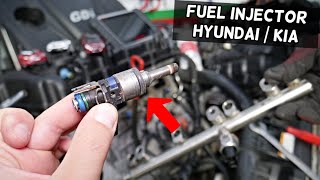
The 2.4L Theta II engine in this Forte is a Gasoline Direct Injection (GDI) model. Unlike older port injection systems, GDI injectors are located directly in the combustion chamber, exposing them to extreme heat and pressure. This environment makes them more prone to internal coil failure over time. Additionally, replacing them is more complex than on a port-injected engine, as it requires removing the intake manifold to access 🎬 Watch: Step-by-step guide to locating and removing these GDI injectors. the high-pressure fuel rail and injectors.
Symptoms You May Notice
- Check Engine Light is on
- Engine running rough or vibrating, especially at idle
- Noticeable loss of power and poor acceleration
- Engine hesitation or stumbling
- Reduced fuel economy
- Flashing Check Engine Light (if the misfire is severe)
- Engine stall
- Replacing the spark plug or ignition coil. While these can cause a misfire (P0301), the P0201 code specifically points to an electrical fault in the fuel injector circuit, not the ignition system.
Most Likely Causes
- Failed Cylinder 1 Fuel Injector 🔴 High Probability GDI injectors are exposed to high heat and pressure directly within the cylinder, leading to a higher failure rate of the internal coil compared to port injectors. Carbon buildup on the injector tip is also a common GDI issue that can lead to failure.
How to confirm: Swap the cylinder 1 injector with another cylinder (e.g., cylinder 2). If the code changes to P0202, the injector is faulty. You can also test the injector's internal resistance with a multimeter; a good injector should read between 11-15 ohms. An open circuit (infinite resistance or 'OL') confirms failure.
Typical fix: Replace the faulty fuel injector. It is highly recommended to replace all single-use Teflon seals and clips at the same time.
Est. part cost: $150-$300 for OEM, $70-$150 for aftermarket - Wiring Harness or Connector Issue 🟡 Medium Probability Engine vibrations and heat can cause wires to fray, break, or become brittle over time. The plastic locking tab on the connector itself can also break, leading to a loose connection.
How to confirm: Visually inspect the wiring and connector leading to the cylinder 1 injector for any signs of damage, melting, or corrosion. Ensure the connector is fully seated and the safety pin is locked. Use a 'noid light' to confirm the PCM is sending a pulse signal. No flashing light points to a wiring or PCM issue.
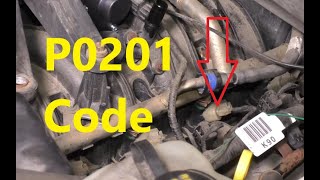
Typical fix: Repair the broken wire or replace 🎬 See how to diagnose and fix the injector circuit wiring. the injector connector pigtail.
Est. part cost: $10-$30 for a connector pigtail
Rare But Worth Checking
- Faulty Powertrain Control Module (PCM): This is very rare. The PCM's internal driver for the injector can fail. All other possibilities, especially the injector and wiring, should be exhaustively ruled out before considering PCM replacement, as it is expensive and requires programming.
Diagnosis Steps
- Verify the code: Use an OBD-II scanner to confirm P0201 is present and check for any other codes like P0301.
- Visual Inspection: Inspect the wiring harness and connector for the cylinder 1 fuel injector (closest to the passenger side). Look for any obvious signs of damage, loose connections, or corrosion. Ensure the connector's locking clip is not broken.
- Check for Injector Pulse: Use a 'noid light' plugged into the injector connector. Start the engine. A flashing light indicates the PCM is sending a signal, suggesting the wiring is likely okay and the injector itself may be the problem. No flashing light points to a wiring or PCM issue.
- Test Injector Resistance: Disconnect the injector and use a multimeter set to Ohms to measure the resistance across the two pins. A good injector on this engine should read between 11-15 Ohms. A reading of infinite resistance ('OL') means the injector's internal coil is open and has failed.
- Swap the Injector: The most definitive test is to swap the cylinder 1 injector with another cylinder (e.g., cylinder 2). Clear the codes and run the engine. If the code returns as P0202, you have confirmed the injector is the problem. If P0201 returns, the issue is in the wiring or PCM.
- Check Wiring Continuity: If the injector tests good, disconnect the battery and the PCM connector. Use a multimeter to check for continuity on the two wires running between the PCM and the injector connector to rule out a broken wire.
Parts You'll Likely Need
- GDI Fuel Injector
(OEM #35310-2G710)— This is the most common failure point for a P0201 code on this GDI engine due to an internal open circuit in the injector coil caused by high heat and pressure exposure.
Trusted brands: Kia (OEM), Hyundai (OEM), Bosch, Standard Motor Products
OEM price range: $150-$300
Aftermarket price range: $70-$150 - Fuel Injector Seal Kit
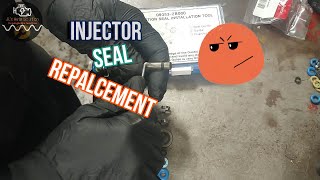
(OEM #35312-2G700 (VIN verification recommended))— The Teflon combustion seals and O-rings for GDI injectors are single-use and must be replaced whenever an injector is removed to prevent 🎬 Watch: How to properly install new GDI injector Teflon seals. high-pressure fuel and compression leaks.
Trusted brands: Kia (OEM), Fel-Pro
OEM price range: $15-$30
Aftermarket price range: $10-$20
Related Codes That Often Appear With This One
- P0301 — P0301 means 'Cylinder 1 Misfire Detected'. Since the P0201 code indicates the cylinder 1 injector isn't working, the cylinder can't produce power, which the PCM detects as a misfire.
- P0300 — P0300 means 'Random/Multiple Cylinder Misfire Detected'. This can occur if the P0201 fault is intermittent or if the severe engine imbalance from the dead cylinder causes the crankshaft position sensor to incorrectly detect misfires on other cylinders.
Technical Service Bulletins (TSBs) & Recalls
- TSB ENG083 - This TSB provides specific warnings and procedures for handling the high-pressure fuel system components on GDI engines, which is critical when replacing an injector.
Platform-Specific Known Issues
- The Theta II 2.4L GDI engine family has been subject to multiple recalls and a massive class-action lawsuit for connecting rod bearing failure, which can lead to engine seizure and fire risk. While not directly for code P0201, it's critical to check your vehicle's VIN on the NHTSA website for open recalls like SC147 and SC200. Many vehicles received a lifetime warranty on the engine short block as part of the settlement.
Mechanic-Grade Diagnostic Values
- GDI Injector Peak Voltage — expected: 65V - 95V (briefly, to open the injector). Failure: A standard 12V noid light may not be sufficient; an oscilloscope is needed to see this peak voltage.
- GDI Injector Hold Signal — expected: Pulse-width modulated 12V signal. Failure: Absence of this signal after the initial peak voltage indicates a PCM driver or wiring fault.
- Injector Pulse Width (at hot idle) — expected: 1.5ms - 2.9ms. Failure: A consistently longer pulse width (e.g., >3.0ms) on the affected cylinder suggests the PCM is trying to compensate for a clogged or failing injector.
- High-Pressure Fuel System Pressure (HPFP) — expected: Can exceed 2,000 PSI (13,790 kPa) under load, read via scan tool.. Failure: Inability to build or maintain pressure (often with code P0087) points to a failing HPFP, though this is not a direct cause of P0201.
- Low-Pressure Fuel System Pressure (in-tank pump) — expected: 72-75 PSI (495-520 kPa) at idle.. Failure: Pressure significantly below this range indicates a weak in-tank pump, which can starve the HPFP.
- Wiring Continuity (Injector harness to PCM) — expected: < 0.5 ohms. Failure: A reading of 'OL' (Open Line) or significantly higher resistance indicates a broken wire in the harness.
Scan Tool Commands That Help
- Kia GDS (Global Diagnostic System): Actuation Test > Fuel System > Injector Drive Test — This allows a technician to command the injector for cylinder 1 to fire individually with the engine off. Hearing a 'click' from the injector confirms the PCM driver and wiring are capable of activating it, pointing towards a clogged injector rather than an electrical open.
- Kia GDS (Global Diagnostic System): Resetting Adaptive Values > Fuel Trim Reset — This is required after replacing a fuel injector. TSB ENG149 for the related Sorento explicitly states that fuel adaptive values must be reset to allow the PCM to learn the flow characteristics of the new part.
Wiring & Ground Locations
- Injector Harness Ground — On the intake manifold, often sharing a bolt with a harness bracket near the injectors.. The injectors are ground-side switched by the PCM. A corroded or loose main ground for the injector harness can cause intermittent open circuits and high resistance for multiple injectors, though it may initially manifest as a fault on a single cylinder.
- Cylinder 1 Injector Connector Pinout — The two-pin connector on the cylinder 1 fuel injector.. One pin should show battery voltage with the key on, engine off. The other pin is the control wire, which the PCM pulses to ground to fire the injector. Testing for voltage here is a primary diagnostic step.
Real Owner Repair Stories
- Kia-Forums Thread (2011 Kia Optima 2.4L GDI (sister vehicle with identical engine/wiring)) — P0201 and P0301, rough idle, engine shaking.
❌ Tried (didn't work) Replaced spark plugs, Swapped ignition coils, Swapped fuel injectors (code P0201 did not move to the other cylinder)
✅ What actually fixed it The ground wire for the fuel injector harness, located on the intake manifold, was found to be corroded. After removing the bolt, cleaning the terminal and the manifold surface with a wire brush, and re-securing the ground, the P0201 code was resolved.
OEM Part Supersession History
35320-2G730→35320-2G720— This is the part number for the High-Pressure Fuel Pump (HPFP), not the injector itself. The supersession indicates a design revision by the manufacturer. While not a direct cause of P0201, a failing HPFP can cause related fuel system issues.
Heads up: The injector part number 35310-2G710 appears to be stable for the 2010-2013 model years and is shared with many other Kia/Hyundai 2.4L GDI engines.
Diagnostic Flowchart
Other Known Issues on This Vehicle
Issues unrelated to this code that are worth knowing about as an owner of this generation:
- Catastrophic Engine Failure (Rod Bearing Wear) 🔴 High — Very common, affecting a large percentage of Theta II 2.4L GDI engines. Can occur at any mileage, but often cited between 60k-120k miles. (Ref: Multiple recalls (e.g., SC147 / NHTSA 17V226000, SC200) and a class-action lawsuit led to a lifetime warranty extension for the engine short block for many affected vehicles.)
- Worn Steering Coupler 🟠 Medium — Extremely common. A clicking or knocking sound from the steering column when turning at low speeds is a tell-tale sign. The rubber coupler degrades over time. (Ref: No recall, but a very well-documented issue with inexpensive parts available (e.g., APDTY 112837, Dorman 926-990).)
- Engine Compartment Fire Risk (HECU) 🔴 High — Affects a wide range of 2010-2013 Forte models. An electrical short can occur in the Hydraulic Electronic Control Unit (HECU), potentially causing a fire while parked or driving. (Ref: NHTSA Recall 23V-339000)
- Airbag Control Unit (ACU) Short Circuit 🔴 High — A recall was issued for 2010-2013 Forte models where the ACU could short circuit in a crash, preventing airbags and seatbelt pretensioners from deploying. (Ref: NHTSA Recall 18V-363000)
- Intake Valve Carbon Buildup 🟠 Medium — Common to all GDI engines, including the Theta II. Fuel is injected directly into the cylinder, so it no longer cleans the back of the intake valves, leading to deposit buildup over 40k-60k miles that can restrict airflow and cause performance issues. (Ref: No recall; periodic walnut blasting or chemical cleaning is the recommended service.)
Used vs. New Parts: Buying Guide for This Vehicle
When a used part is the smart pick: A used wiring harness pigtail or a complete engine harness from a low-mileage donor vehicle can be a cost-effective fix if the issue is confirmed to be wiring-related. Buying a single used GDI injector is generally not recommended due to the risk of it being clogged or having a similar amount of wear as the failed part.
Donor-vehicle mileage cap: roughly under 60000 miles for the part to have meaningful remaining life.
What to inspect on the donor part:
- For wiring: Check for any signs of brittleness, cracking, or previous repairs (splices, electrical tape).
- Ensure all connector locking tabs are intact and not broken.
- Verify the donor vehicle was not in a front-end collision that could have stressed the engine harness.
OEM-only on this vehicle (don't cheap out):
- GDI Fuel Injector: While some aftermarket brands are reputable, the extreme tolerances and pressures of GDI systems make OEM (Kia/Hyundai) or OEM-supplier (Bosch) injectors the safest bet to avoid performance issues.
- Injector Seals: Always use new, OEM single-use Teflon seals. Re-using seals or using low-quality aftermarket seals will cause compression and fuel leaks.
Aftermarket brands forum-validated for this vehicle:
- Bosch (often the OEM supplier)
- Standard Motor Products (SMP)
Brands owners have reported issues with on this vehicle:
- Unbranded, no-name injectors from online marketplaces. These often have inconsistent flow rates and high failure rates.
Real Owner Stories
Aggregated from forums and TSBs cited above. Mileages and costs reflect what owners reported in those sources.
2011 Hyundai Sonata 2.4L GDI
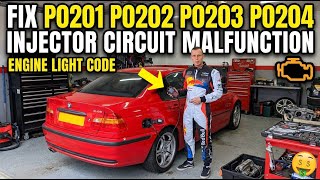
Symptoms: Check engine light on for P0201, P0202, P0203, or P0204.
What fixed it: Checking the injector connector and ensuring the safety pin is locked to resolve a loose connection.
Source hint: YouTube - 'HYUNDAI SONATA CODE P0201 P0202 P0203 P0204 FUEL INJECTOR CHECK ENGINE LIGHT ON' by Auto Repair Guys
2011 Kia Optima 2.4L GDI
Symptoms: Code P0201, P0202, P0203, or P0204 present.
What fixed it: Replacing a bad injector or repairing a wiring issue.
Source hint: YouTube - 'KIA OPTIMA CODE P0201 P0202 P0203 P0204 FUEL INJECTOR FIX' by World Mechanics
Related OBD-II Codes
Frequently Asked Questions
Is there a specific TSB I should follow when replacing the cylinder 1 injector on my Kia Forte GDI?
Could my P0201 code be related to the major Kia engine recalls like SC147 or SC200?
I noticed the plastic clip on my injector is loose; could this cause the P0201 code?
What is the correct resistance for a fuel injector on the 2.4L GDI engine?
Are there other safety recalls for the 2010-2013 Forte I should be aware of while fixing this?
Can I just clean the injector to fix P0201?
Helpful Videos

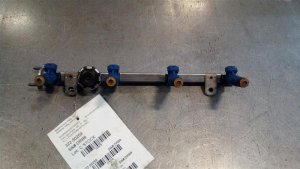
Used OEM Parts in Stock

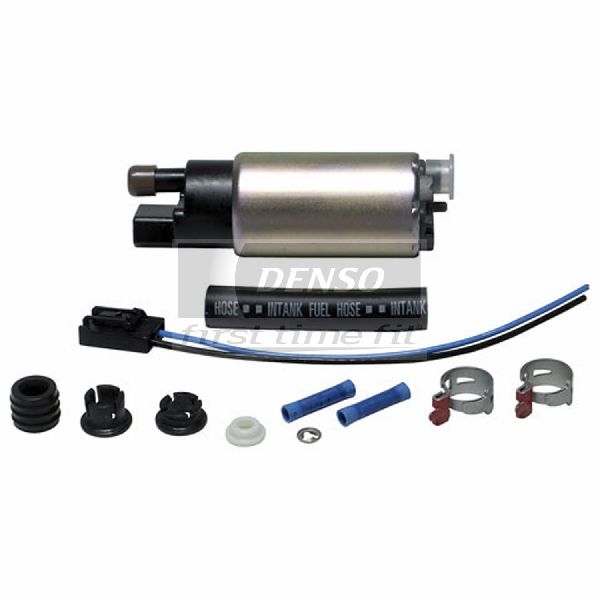
New Aftermarket Parts Available



The information in this article is provided for general reference and educational purposes only. Vehicle specifications, procedures, and part compatibility can vary by production date, trim level, and region. Always consult your vehicle's factory service manual and verify part numbers before purchasing or performing repairs. Safety-critical components such as airbags, seat belts, and braking systems should be installed by a qualified professional.
- Kia Forte:
- 🎬 Helpful Videos
- 🛍️ Shop This Part
- What's Unique About the 2010-2013 Kia Forte
- Symptoms You May Notice
- Most Likely Causes
- Rare But Worth Checking
- Diagnosis Steps
- Parts You'll Likely Need
- Related Codes That Often Appear With This One
- Technical Service Bulletins (TSBs) & Recalls
- Platform-Specific Known Issues
- Mechanic-Grade Diagnostic Values
- Scan Tool Commands That Help
- Wiring & Ground Locations
- Real Owner Repair Stories
- OEM Part Supersession History
- Diagnostic Flowchart
- Other Known Issues on This Vehicle
- Used vs. New Parts: Buying Guide for This Vehicle
- Real Owner Stories
- 2011 Hyundai Sonata 2.4L GDI
- 2011 Kia Optima 2.4L GDI
- Related OBD-II Codes
- Frequently Asked Questions
- 🎟️ Get 5% Off