

P0201 on 2012-2017 Hyundai Veloster: Injector Circuit Malfunction Causes and Fixes
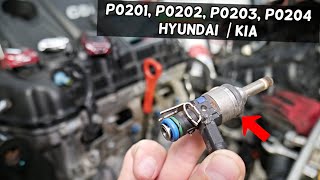
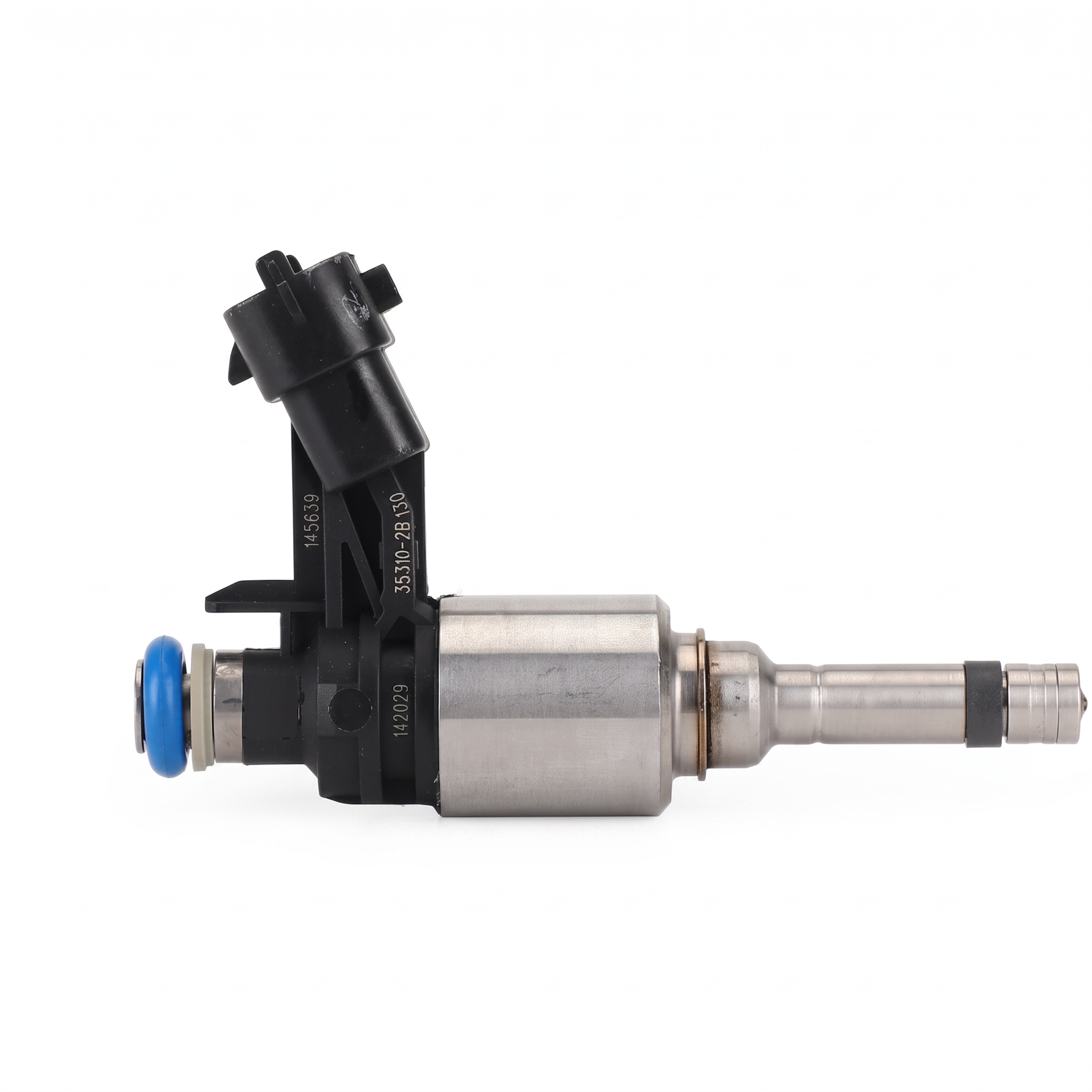
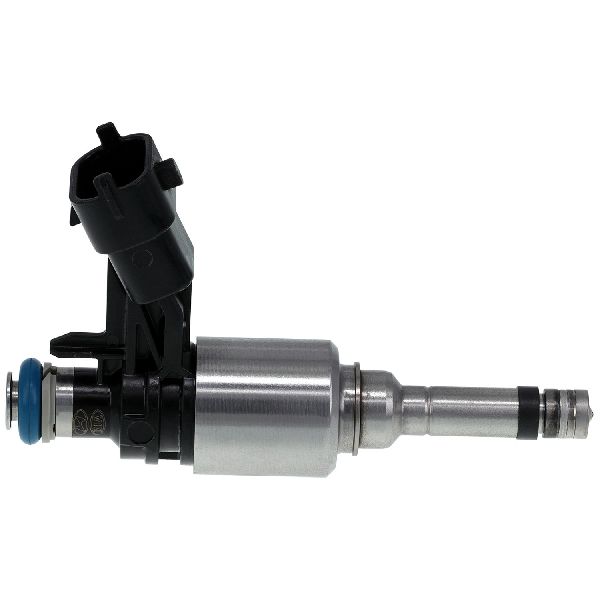
On the 2012-2017 Veloster 1.6L GDI, code P0201 almost always means the cylinder 1 fuel injector has failed. A quick diagnostic is to swap the injector with cylinder 2; if the code changes to P0202, the injector is bad. The OEM part number is 35310-2B130, which supersedes 35310-2B110. Expect to pay around $40-$100 for a replacement GDI injector.
- P0201 on your Veloster points to an electrical problem with the cylinder 1 fuel injector circuit.
- The most likely cause is a failed fuel injector itself.
- A simple and effective diagnostic is to swap the injector with an adjacent cylinder (e.g., swap #1 and #2) and see if the trouble code follows the injector (e.g., changes to P0202).
- Avoid driving with a flashing check engine light, as this indicates a severe misfire that can quickly damage your expensive catalytic converter.
- If replacing the injector, the correct OEM part number is 35310-2B130, which replaces the older 35310-2B110.
What's Unique About the 2012-2017 Hyundai Veloster
The Hyundai Veloster's 1.6L Gamma engine uses Gasoline Direct Injection (GDI). Unlike traditional port injection, GDI injectors are mounted directly in the combustion chamber and operate under extremely high pressure (over 2,000 PSI) and heat. This harsh environment makes them more susceptible to both electronic failure of the internal coil and clogging from carbon buildup, which is a common failure pattern for this code on GDI engines. The last digit of the code corresponds to the cylinder number, with P0201 always indicating cylinder 1.
Symptoms You May Notice
- Check Engine Light is on
- Rough, unstable idle
- Engine misfire, which may feel like a shake or shudder
- Poor acceleration and loss of power
- Reduced fuel economy
- Flashing Check Engine Light under load (severe misfire)
- Hard starting or extended cranking
- Replacing the spark plug or ignition coil for cylinder 1. While these can cause a misfire (P0301), they will not cause an injector circuit code (P0201). P0201 is an electrical fault, not a combustion or ignition fault. Always fix the P0201 code first.
Most Likely Causes
- Faulty Cylinder 1 Fuel Injector 🔴 High Probability The high-pressure, high-heat GDI environment can lead to internal electronic failure of the injector's solenoid coil. This is the most common reason for a P0201 code. The injector can fail open-circuit, short-circuit, or become clogged, all of which can trigger a circuit malfunction code.
How to confirm: Swap the cylinder 1 fuel injector with the cylinder 2 injector. Clear the codes and drive the vehicle. If the code returns as P0202, the injector is confirmed to be faulty. Alternatively, use a multimeter to check the resistance of the injector; it should be between 11-15 ohms. An open circuit (infinite resistance) or a short (near zero resistance) indicates a failed injector.
Typical fix: Replace the faulty fuel injector. It is often recommended to replace all four injectors at the same time, especially on higher mileage vehicles, as they tend to fail around the same age. Ensure you use new o-rings and seals.
Est. part cost: $40-$150 - Wiring or Connector Issue 🟡 Medium Probability The injector connector sits on top of the engine and is exposed to heat and vibration, which can make the plastic brittle or cause terminals to lose connection over time. Wires can also chafe against other components, leading to an open or short in the harness.
How to confirm: Visually inspect the wiring harness and connector for cylinder 1's injector. Look for any signs of damage, corrosion, or loose pins. Wiggle the connector with the engine running to see if it affects the idle. Use a noid light to confirm that the connector is receiving a pulse signal from the PCM. If the noid light flashes, the wiring and PCM are likely good, pointing to the injector.
Typical fix: Repair the damaged section of wire or replace the injector connector pigtail. Ensure the connection is secure and use dielectric grease to prevent future corrosion.
Est. part cost: $15-$40 - Faulty Powertrain Control Module (PCM) ⚪ Low Probability
How to confirm: This should be the last resort after confirming the injector and wiring are both good. If a noid light shows no pulse at the injector connector and the wiring has been tested for continuity back to the PCM, the injector driver circuit within the PCM may have failed. This is a rare failure.
Typical fix: Replace and reprogram the Powertrain Control Module. This typically requires a professional shop or dealer.
Est. part cost: $500-$1000+
Diagnosis Steps
- Scan the vehicle for codes. Confirm P0201 is present, likely accompanied by P0301.
- Visually inspect the wiring and electrical connector for the cylinder 1 fuel injector (the first injector from the left, near the belts). Check for obvious damage, corrosion, loose connections, or pulled wires from the back of the connector.
- If a multimeter is available, disconnect the injector and measure the resistance between its two pins. A typical reading for a good injector is 11-15 ohms. A reading of 'OL' (Open Loop) or infinite resistance means the injector has failed internally.
- The most definitive DIY test is to swap the fuel injector from cylinder 1 with the one from cylinder 2. This requires removing the fuel rail. Clear the codes from the PCM.
- Drive the vehicle until the Check Engine Light returns.
- Re-scan for codes. If the code has changed to P0202 (Injector Circuit Malfunction - Cylinder 2), the fuel injector you moved is faulty and needs to be replaced.
- If the code remains P0201 after the swap, the problem is in the wiring or the PCM. Use a noid light plugged into the cylinder 1 connector to check for a pulse signal from the PCM while cranking the engine. A flashing light indicates the wiring and PCM are likely okay.
- If the wiring is good but there is no pulse from the noid light, the PCM's injector driver is the most likely culprit, which is a rare failure.
Parts You'll Likely Need
- Fuel Injector
(OEM #35310-2B130)— This is the most common failure point for a P0201 code on the Veloster's GDI engine due to the high-stress operating environment. This part number supersedes the older 35310-2B110.
Trusted brands: Hyundai (OEM), Bosch, Precision Auto Injectors (Rebuilt OEM)
OEM price range: $80-$150
Aftermarket price range: $40-$90
Related Codes That Often Appear With This One
- P0301 — P0301 means 'Cylinder 1 Misfire Detected'. Since P0201 indicates the injector circuit has failed, cylinder 1 is not receiving fuel, which directly causes a misfire. P0201 is the cause, and P0301 is the effect.
Technical Service Bulletins (TSBs) & Recalls
- TSB 21-EM-010H-1: While for a newer 1.6L Turbo engine, this TSB addresses misfires caused by burnt injector tip seals, highlighting a potential failure point for GDI injectors in this engine family.
Platform-Specific Known Issues
- The GDI fuel injectors on the 1.6L Gamma engine are known to have a higher failure rate compared to traditional port injectors, often leading to misfire and circuit codes like P0201.
- While not directly causing P0201, the 1.6L GDI engine is prone to carbon buildup on intake valves, which can cause performance issues over time. Regular use of quality fuel system cleaners or periodic manual cleaning (walnut blasting) is recommended.
Mechanic-Grade Diagnostic Values
- Fuel Injector Coil Resistance (for Turbo GDI) — expected: 1.5 ± 0.075 ohms at 20°C (68°F). Failure: A reading of 'OL' (Open Loop/infinite resistance) or near zero ohms indicates a failed injector. Note: This value is for the Turbo model's injector and may differ slightly from the non-turbo, but serves as a close GDI reference.
- Low-Pressure Fuel Pump Pressure — expected: 50-60 PSI. Failure: Significantly lower pressure indicates a failing in-tank fuel pump, which can starve the high-pressure pump.
- High-Pressure Fuel Pump (HPFP) Pressure — expected: ~500 PSI at idle to over 2,000 PSI under load. Failure: While not a direct cause of P0201 (an electrical code), low high-side pressure would indicate a failing HPFP and cause different performance issues and codes.
- Injector Control Circuit Voltage — expected: Pulsed ground from the ECM/PCM. When using a noid light, it should flash during cranking/running.. Failure: A noid light that does not flash, or stays on continuously, points to a problem with the wiring or the PCM's injector driver.
Scan Tool Commands That Help
- Hyundai GDS (Global Diagnostic System): Injector Kill / Disable Injector — This function allows a technician to disable individual injectors one by one while the engine is running. If disabling cylinder 2 causes a big drop in RPM, but disabling cylinder 1 causes no change, it confirms cylinder 1 was not contributing, which is expected with a P0201. This is a software-based way to confirm the misfire location without swapping parts.
- Hyundai GDS (Global Diagnostic System): Resetting Adaptive Values — After replacing a fuel system component like an injector, it is best practice to reset the PCM's long-term fuel trim and other learned values. The GDS provides a specific function for this.
- Hyundai GDS (Global Diagnostic System): Injection Quantity Comparison Test — This is an advanced test that monitors the fuel injection volume correction for each cylinder. If the ECU needs to drastically increase the correction value for one cylinder compared to others, it can indicate a partially clogged or inefficient injector.
Wiring & Ground Locations
- Injector 1 Ctrl (-) — This is the ground pulse wire from the ECM to the fuel injector. On a 2013 Veloster wiring diagram, this is listed as a specific pin on the ECM connector (e.g., Pin 1 on connector EGGA-A for the Turbo model).. To test for a wiring fault, a technician would check for continuity between the pin at the injector connector and the corresponding pin at the ECM. A break in this wire will cause a P0201.
- EGGTINJ — This identifier in wiring diagrams refers to the power supply for the injectors.. This circuit provides battery voltage to all injectors. While a failure here would likely cause codes for multiple injectors, a partial short or high resistance affecting only the branch to injector 1 could theoretically cause P0201.
- GND (Ground) — The main engine and PCM ground points are typically located on the chassis, engine block, or transmission housing. Specific ground distribution diagrams show multiple ground points like Gggt01 and Gm02.. A poor engine or PCM ground can cause a host of electrical issues, including erratic sensor readings and injector driver problems. While unlikely to cause a single injector code, it should be checked if multiple, seemingly unrelated electrical faults are present.
OEM Part Supersession History
35310-2B110→35310-2B130— Likely an internal revision for improved reliability or manufacturing efficiency. This is a common practice for parts with known failure patterns.
Heads up: The parts are interchangeable. 35310-2B130 is the correct service replacement for a vehicle originally equipped with 35310-2B110. These injectors are also shared with the Hyundai Accent and Kia Rio/Soul of the same era with the 1.6L GDI engine.
Model Year Variations Within This Range
- 2012-2017: The core engine (G4FD) and fuel system design remained consistent for the non-turbo Veloster throughout its first generation. While minor ECU software updates may have occurred, the primary causes and diagnostic procedures for P0201 are identical for all model years in this range.
Diagnostic Flowchart
Other Known Issues on This Vehicle
Issues unrelated to this code that are worth knowing about as an owner of this generation:
- Connecting Rod Bearing Failure 🔴 High — Primarily affects 2015-2016 models, but a class-action lawsuit extended warranty coverage for 2012-2017 models. Can occur at any mileage but is a known catastrophic failure. (Ref: Hyundai Recall 198 (NHTSA 20V746000) and a related class-action settlement extending the powertrain warranty to 15 years/150,000 miles after a KSDS (Knock Sensor Detection System) update is performed.)
- GDI Intake Valve Carbon Buildup 🟠 Medium — A common issue for all GDI engines, not just Hyundai. Becomes noticeable after 60,000-100,000 miles, causing rough idle, hesitation, and reduced power. (Ref: No specific recall, but it is a widely documented characteristic of GDI engines. Preventative measures include regular fuel system treatments or periodic manual cleaning (walnut blasting).)
- Dual-Clutch Transmission (DCT) Issues 🟠 Medium — More common on 2016-2017 models, but can affect all years. Complaints include hesitation from a stop, shuddering, and premature failure of clutch components or actuators. (Ref: Multiple owner complaints and some dealer-level software updates, but no universal recall for the Veloster's DCT. Problems are well-documented in owner forums.)
Used vs. New Parts: Buying Guide for This Vehicle
When a used part is the smart pick: A used OEM fuel injector from a low-mileage donor vehicle can be a cost-effective option, as OEM injectors often have better longevity than cheap aftermarket alternatives. Given the high failure rate, a used part is a gamble, but acceptable if the budget is tight and the part can be tested or comes with a short warranty from the seller.
Donor-vehicle mileage cap: roughly under 50000 miles for the part to have meaningful remaining life.
What to inspect on the donor part:
- Verify the part number (35310-2B130 or 35310-2B110) matches.
- Inspect the injector tip for heavy carbon buildup or physical damage.
- Check the electrical connector for cracks or broken locking tabs.
- If possible, test the coil resistance with a multimeter before purchase; it should be within the 11-15 ohm range.
- Ask the salvage yard for the mileage of the donor vehicle.
OEM-only on this vehicle (don't cheap out):
- Powertrain Control Module (PCM) - A used PCM will not work without specialized dealer programming to match the vehicle's VIN and immobilizer system.
Aftermarket brands forum-validated for this vehicle:
- Bosch (often the original OEM supplier)
- GB Remanufacturing (rebuilds original OEM cores)
Brands owners have reported issues with on this vehicle:
- No-name, unbranded injectors sold on marketplaces at exceptionally low prices. These often have inconsistent flow rates and high failure rates right out of the box.
Real Owner Stories
Aggregated from forums and TSBs cited above. Mileages and costs reflect what owners reported in those sources.
2012 Hyundai Accent 1.6L GDI — 95000 miles
Symptoms: The car has been 'bulletproof' with only routine maintenance required.
What fixed it: Routine maintenance (demonstrating longevity is possible for this engine platform).
Source hint: BobIsTheOilGuy.com
2012-2017 Hyundai Veloster 1.6L GDI
Symptoms: Misfire codes as a result of leaking or failed injectors.
What fixed it: Replacement of the faulty fuel injectors.
Source hint: Reddit r/Hyundai technician thread
2016-2017 Hyundai Veloster 1.6L GDI
Symptoms: Hesitation from a stop, shuddering, and premature failure of components.
What fixed it: Dealer-level software updates or replacement of clutch components/actuators.
Source hint: Dual-Clutch Transmission (DCT) Issues section / owner forums
Related OBD-II Codes
Frequently Asked Questions
Is there a recall for the fuel injectors on my 2012-2017 Hyundai Veloster?
Does TSB 21-EM-010H-1 apply to my 1.6L GDI Gamma engine?
What is the correct replacement part number for the fuel injectors on my Veloster?
Can carbon buildup cause the P0201 code on my Veloster?
Should I replace all four injectors if only Cylinder 1 is failing?
What should the resistance be when testing my Veloster's fuel injector?
Helpful Videos
Used OEM Parts in Stock
New Aftermarket Parts Available


The information in this article is provided for general reference and educational purposes only. Vehicle specifications, procedures, and part compatibility can vary by production date, trim level, and region. Always consult your vehicle's factory service manual and verify part numbers before purchasing or performing repairs. Safety-critical components such as airbags, seat belts, and braking systems should be installed by a qualified professional.
- Hyundai Veloster:
- 🎬 Helpful Videos
- 🛍️ Shop This Part
- What's Unique About the 2012-2017 Hyundai Veloster
- Symptoms You May Notice
- Most Likely Causes
- Diagnosis Steps
- Parts You'll Likely Need
- Related Codes That Often Appear With This One
- Technical Service Bulletins (TSBs) & Recalls
- Platform-Specific Known Issues
- Mechanic-Grade Diagnostic Values
- Scan Tool Commands That Help
- Wiring & Ground Locations
- OEM Part Supersession History
- Model Year Variations Within This Range
- Diagnostic Flowchart
- Other Known Issues on This Vehicle
- Used vs. New Parts: Buying Guide for This Vehicle
- Real Owner Stories
- 2012 Hyundai Accent 1.6L GDI — 95000 miles
- 2012-2017 Hyundai Veloster 1.6L GDI
- 2016-2017 Hyundai Veloster 1.6L GDI
- Related OBD-II Codes
- Frequently Asked Questions
- 🎟️ Get 5% Off