

P0201 on 2015-2017 Chrysler 200 2.4L: Injector Circuit Malfunction Causes and Fixes
On a 2015-2017 Chrysler 200 with the 2.4L engine, code P0201 most often points to a failed cylinder 1 fuel injector or a bad wiring connector. Expect to pay $300-$500 for a shop to replace the injector, or around $40-$100 for the part to do it yourself. The repair is moderately difficult as the intake manifold must be removed for access, which also requires replacing the intake manifold gasket.
- P0201 on your Chrysler 200 means there is an electrical problem with the cylinder 1 fuel injector, not a spark or compression issue.
- The most likely causes are a bad fuel injector or a loose/damaged wiring connector.
- A definitive DIY test is to swap the cylinder 1 injector with another one and see if the trouble code follows the injector.
- Accessing the injectors requires removing the intake manifold, making the job moderately difficult (3/5).
- Do not drive extensively with this code, as the resulting misfire can damage your catalytic converter.
What's Unique About the 2015-2017 Chrysler 200
The 2.4L Tigershark MultiAir engine is used across many Chrysler, Dodge, and Jeep vehicles. On this platform, the fuel injectors are located under the plastic intake manifold, making access more labor-intensive than on other engines. While a bad injector is common, these vehicles have also been known to suffer from wiring harness chafing issues and, in some cases, have had technical service bulletins (TSBs) issued for related models to fix erroneous injector codes with a PCM software update. The MultiAir valve actuation system is also highly sensitive to oil level and quality, and low oil levels can cause a variety of drivability issues.
Symptoms You May Notice
- Check Engine Light is on
- Rough or shaking idle
- Engine misfire, which may cause a flashing Check Engine Light
- Poor acceleration and significant loss of power
- Reduced fuel economy
- Engine stalling or difficulty starting
- Replacing the spark plug or ignition coil. While these can cause a misfire (P0301), they will not cause a P0201 code, which is specific to the injector's electrical circuit.
Most Likely Causes
- Faulty Cylinder 1 Fuel Injector 🔴 High Probability The fuel injector's internal coil windings can fail over time due to heat cycles and vibration, creating an open circuit. This is a common failure point on many modern engines, including the 2.4L MultiAir.
How to confirm: After confirming the wiring is good, swap the cylinder 1 injector with another cylinder (e.g., cylinder 2). Clear the codes and run the engine. If the code changes to P0202, the injector is faulty. Alternatively, disconnect the injector and measure its resistance with a multimeter; a typical high-impedance injector reads 10-16 ohms. A reading of 'OL' (Open Loop) or one that is significantly different from the other injectors indicates failure.
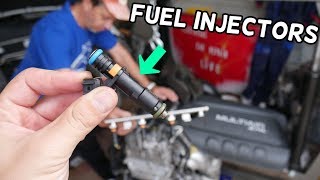
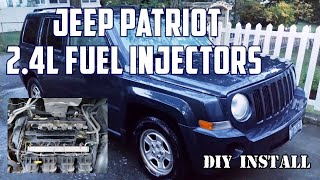
Typical fix: Replace the faulty fuel injector. It is highly recommended to replace the intake manifold gasket (Mopar P/N 4627326AD) and any injector O-rings that are removed. Some owners choose to replace all four injectors at once 🎬 See this step-by-step walkthrough for replacing the 2.4L fuel injectors. as a preventative measure.
Est. part cost: $40-$120 - Damaged Wiring or Loose Connector 🟡 Medium Probability The injector wiring harness is in a high-heat area, and the plastic connectors can become brittle. On platform mates like the Dodge Dart and Jeep Cherokee, the main engine harness has been known to chafe against the firewall or other components, damaging the injector wires. A loose connection at the injector, a broken locking tab, or chafed/melted wires can cause an open or short in the circuit.
How to confirm: Visually inspect the wiring and connector for cylinder 1 (closest to the serpentine belt). Check for signs of melting, corrosion, or loose pins. With the engine running, carefully wiggle the connector to see if it causes a change in the engine's idle. Use a 'noid light' to confirm if the PCM is sending a pulse signal to the connector; a flashing light means the PCM and wiring up to that point are likely good.
Typical fix: Repair the damaged section of wire or replace the connector pigtail. Ensure the connector is fully seated and the locking tab is engaged. If chafing is found, re-route or protect the harness to prevent future damage.
Est. part cost: $10-$30 - PCM Software Glitch ⚪ Low Probability Chrysler has issued TSBs for other vehicles with this engine family to correct false injector circuit codes via a PCM software update (reflash). For example, TSB #18-014-14 addressed a false P0204 code. The diagnostic parameters can be overly sensitive and trigger a code when no hardware fault exists. Multiple TSBs exist for this platform for PCM updates to address other drivability issues, establishing it as a common repair strategy.
How to confirm: This can only be confirmed by a dealership or a qualified shop with access to Chrysler's wiTECH software update database. If all hardware (injector, wiring) tests good but the code persists, a software issue is possible.
Typical fix: Reprogram the Powertrain Control Module (PCM) to the latest software version. This requires specialized tools and a subscription to FCA's technical service portal.
Est. part cost: $0-$200
Rare But Worth Checking
- Failed Powertrain Control Module (PCM): This is rare. The internal driver circuit for the injector can fail. This should only be considered after the injector and wiring have been definitively ruled out as the cause. In some cases on other Chrysler models, multiple injector circuit high codes appearing at once have required a PCM replacement per TSBs like 18-033-15.
Diagnosis Steps
- Scan for codes and confirm P0201 is present. Note any other codes, especially P0301.
- Locate cylinder 1. On the 2.4L Tigershark engine, it is the cylinder closest to the serpentine belt on the passenger side of the engine bay.
- Visually inspect the wiring harness and electrical connector for cylinder 1. Look for any signs of melting, chafing, or corrosion. Check common chafe points near the firewall.
- Perform a 'wiggle test' by starting the engine and carefully moving the connector and wire for the #1 injector to see if the idle changes, indicating a loose connection.
- Use a 'noid light' to test the circuit. Disconnect the injector, plug in the noid light, and crank the engine. A rhythmic flashing light indicates the PCM and wiring are sending a pulse signal. No light or a steady light points to a wiring or PCM issue.
- If the noid light flashes, test the injector itself. Disconnect the injector and use a multimeter set to Ohms to measure the resistance across its two pins. It should be between 10-16 Ohms. Compare the reading to the other injectors. A reading of infinity/OL or a significantly different value indicates a bad injector.
- To gain access for further testing or replacement, the upper intake manifold must be removed. This involves disconnecting various hoses and electrical connectors. It is critical to replace the intake manifold gasket (Mopar P/N 4627326AD) during reassembly.
- For a definitive test, swap the cylinder 1 injector with the cylinder 2 injector. Reassemble the intake, clear the codes, and drive the vehicle. If the code returns as P0202, the injector is confirmed to be bad. If P0201 returns, the problem is in the wiring or PCM.
- If the injector and wiring are confirmed to be good, contact a dealership to check for any available PCM software updates before condemning the PCM.
Parts You'll Likely Need
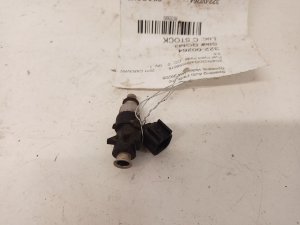
- Fuel Injector
(OEM #04593986AA)— This is the most common component to fail for this code, typically due to an internal electrical open in the injector's coil.
Trusted brands: Mopar, Bosch, Standard Motor Products, GB Remanufacturing
OEM price range: $80-$120
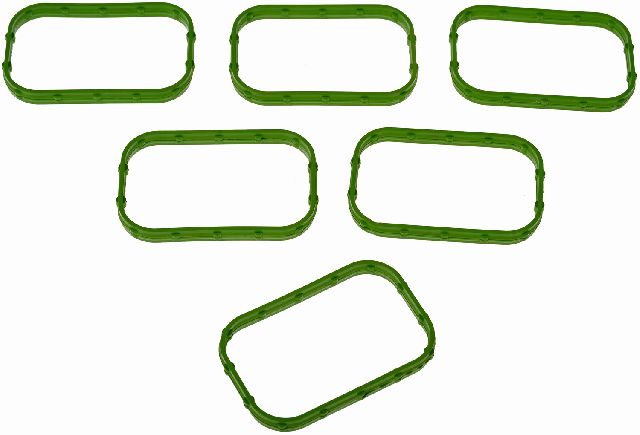
Aftermarket price range: $40-$80 - Intake Manifold Gasket
(OEM #4627326AD)— This gasket must be replaced anytime the intake manifold is removed to access the fuel injectors. It is a one-time use part.
Trusted brands: Mopar, Fel-Pro, Mahle
OEM price range: $15-$25
Aftermarket price range: $10-$20
Related Codes That Often Appear With This One
- P0301 — This code means 'Cylinder 1 Misfire Detected'. Since P0201 indicates the injector for cylinder 1 isn't working due to an electrical fault, it cannot deliver fuel, which directly causes a misfire in that cylinder.
Technical Service Bulletins (TSBs) & Recalls
- TSB #18-014-14 (for previous generation with same engine family): Addresses a false P0204 code fixed by a PCM software update, indicating a potential for software-related issues for this code type on this engine.
- TSB #18-033-16: Details a PCM reflash for the 2015 Jeep Cherokee to fix various DTCs and improve drivability, showing that software updates are a common fix for this powertrain.
- TSB #09-003-23: Pertains to the well-known 2.4L engine oil consumption issue and provides dealers with a testing procedure under an extended warranty (XB1).
Platform-Specific Known Issues
- The 2.4L Tigershark engine is known for oil consumption issues. While not a direct cause of P0201, it's critical to keep the oil level correct as low oil can affect the MultiAir valvetrain and cause other drivability problems.
- A TSB (#08-027-20) was issued for misfires on this engine due to oil leaking from the valve cover gasket into the spark plug tubes. If you have misfire codes, this is a likely related issue to investigate.
Mechanic-Grade Diagnostic Values
- Fuel Injector Coil Resistance — expected: 11.4 to 15 Ohms when cold.. Failure: A reading of OL (Open Line), 0 ohms, or a value significantly outside the expected range indicates a failed injector.
- Injector Connector Voltage (Power Feed) — expected: Approximately 12 Volts (battery voltage) on one of the two pins with Key On, Engine Off (KOEO).. Failure: No voltage or low voltage (less than 0.5V drop from battery voltage) indicates a problem with the power supply wire or the ASD relay.
- Injector Pulse Width (at idle) — expected: Typically 2.0 - 4.0 milliseconds (ms) on a scan tool.. Failure: A value of 0 ms on cylinder 1 while others are pulsing indicates the PCM has disabled the injector. A value significantly different from other cylinders can also indicate a problem.
- Injector Inductive Kick (Oscilloscope) — expected: A sharp voltage spike of approximately 50-80 volts immediately after the PCM turns the injector off.. Failure: The absence of this spike is the primary way the PCM detects an open circuit and sets the P0201 code.
Scan Tool Commands That Help
- wiTECH 2.0 (Chrysler Dealer Tool): Injector Activation Test / Actuator Test — This bidirectional command allows a technician to manually command the cylinder 1 injector to fire. By listening for an audible 'click' from the injector during the test, a technician can confirm if the injector is mechanically capable of functioning. If it clicks, the problem is likely intermittent or not present. If it doesn't click, and the wiring is confirmed good, the injector has failed internally.
Wiring & Ground Locations
- PCM Connector C2, Pin 86 — On the Powertrain Control Module (PCM), which is located in the engine bay, typically near the firewall or fender.. This is the specific pin on the PCM that provides the ground-side control for the cylinder 1 fuel injector. The wire color is typically White/Dark Blue. Testing for a pulsed ground signal at this pin can definitively isolate the problem to either the PCM itself or the wiring/injector downstream. A break in this wire between the PCM and the injector will cause P0201.
- Injector Power Feed (ASD Relay) — Power is supplied to all injectors from the Auto Shutdown (ASD) relay, located in the underhood fuse box (Power Distribution Center).. The power wire (typically Dark Green/Gray) is shared among the injectors. While a problem here would likely cause multiple injector codes (P0201, P0202, etc.), a partial failure or high resistance affecting only the cylinder 1 branch is possible, though less common.
- Main Engine Ground (G300) — A critical ground strap is typically located on the engine block or transmission housing, connecting to the vehicle's chassis.. A poor main engine ground can cause a variety of electrical issues, including intermittent circuit codes. While not a direct cause for a single injector code, it can create unstable voltages that lead to erroneous fault detection by the PCM. It should be checked for corrosion and tightness if other tests are inconclusive.
Real Owner Repair Stories
- YouTube video comment section (2015 Chrysler 200 2.4L) — P0201 and P0301 codes, rough idle, misfiring.
❌ Tried (didn't work) Replaced spark plugs, Swapped ignition coils
✅ What actually fixed it The owner reported that after removing the intake manifold, they found the wiring connector for the #1 fuel injector was not fully seated and the red locking tab was not engaged. After securely plugging it in and engaging the lock, the codes were cleared and did not return. - NHTSA ODI #10339808 — An owner of a related Chrysler model reported experiencing smoke after applying gas; a diagnostic check indicated code P0201 for a #1 fuel injector open circuit. The owner, being handy with repairs, proceeded to disassemble the top half of the intake to address the issue.
OEM Part Supersession History
04593986AA→Not publicly listed, but often sold as a set with the fuel rail.— Standard part lifecycle updates.
Diagnostic Flowchart
Other Known Issues on This Vehicle
Issues unrelated to this code that are worth knowing about as an owner of this generation:
- Excessive Engine Oil Consumption 🔴 High — Widespread. Many owners report consuming 1 quart of oil every 1,000-2,000 miles. Can start at any mileage. (Ref: TSB 09-003-23; Warranty Extension XB1. Caused by defective piston rings that allow oil to burn off.)
- ZF 9-Speed Transmission Faults 🔴 High — Very common. Issues include harsh/erratic shifting, lurching, and sudden shifts to neutral. (Ref: Multiple software update TSBs (e.g., 21-021-15 REV-C) and a recall (NHTSA 16V-529) for unexpected shifts to neutral due to a wiring harness fault.)
- Engine Stalling While Driving 🔴 High — Frequently reported by owners, often without warning. Can be related to low oil levels from the consumption issue or other electronic faults.
- Electronic Throttle Control (ETC) Light / Limp Mode 🟠 Medium — Common complaint where the vehicle suddenly loses power and the ETC warning light illuminates, often requiring a restart to temporarily fix.
- Random Active Head Restraint (AHR) Deployment 🟠 Medium — Reported in some 2011-2017 models where the plastic bracket inside the headrest fails, causing it to deploy without an impact.
Used vs. New Parts: Buying Guide for This Vehicle
When a used part is the smart pick: A used fuel injector from a low-mileage donor vehicle can be a cost-effective option, especially if you are replacing all four as a preventative measure. Given the labor involved, getting a complete used fuel rail with all four injectors can be a smart choice.
Donor-vehicle mileage cap: roughly under 75000 miles for the part to have meaningful remaining life.
What to inspect on the donor part:
- Check the donor vehicle's mileage; lower is always better.
- Inspect the electrical connector pins on the injector for any signs of corrosion or damage.
- Look at the injector tip for heavy carbon buildup. While some is normal, excessive buildup may indicate other engine issues in the donor car.
- Ensure the O-rings are present, though you should always replace these with new ones before installation regardless.
OEM-only on this vehicle (don't cheap out):
- While aftermarket injectors are available, OEM (Mopar) or reputable OEM-supplier brands (like Bosch, if applicable) are recommended for best compatibility and longevity. The PCM is calibrated for the specific flow rate and electrical characteristics of the factory injector.
Aftermarket brands forum-validated for this vehicle:
- Bosch
- Standard Motor Products (SMP)
- GB Remanufacturing
Brands owners have reported issues with on this vehicle:
- Unnamed, no-brand injectors from online marketplaces should be avoided as their quality control, flow rates, and electrical properties can be inconsistent, potentially causing performance issues or recurring codes.
Real Owner Stories
Aggregated from forums and TSBs cited above. Mileages and costs reflect what owners reported in those sources.
2015 Chrysler 200 2.4L
Symptoms: Check Engine Light on with codes P0201 and P0301.
What fixed it: The owner was advised to perform a diagnostic process of swapping injectors to confirm failure before removing the intake manifold.
Source hint: 200forums.com - 'P0201 and P0301'
Chrysler Owner Report (NHTSA ODI #10339808)
Symptoms: Smoke appearing after applying gas; Check Engine Light indicating P0201.
What fixed it: The owner identified the code as a #1 fuel injector open circuit and performed a repair involving the removal of the top half of the intake manifold.
Source hint: NHTSA ODI #10339808
Related OBD-II Codes
Frequently Asked Questions
Where is the cylinder 1 fuel injector located on the 2.4L Tigershark engine?
Is there a specific intake manifold gasket I should use when repairing a P0201 on my Chrysler 200?
Could my P0201 code be caused by a software issue rather than a broken part?
My Chrysler 200 has a P0201 and a misfire; could this be related to oil leaks?
How can I test if the fuel injector itself is bad without buying new parts?
Does the 2.4L Tigershark engine have any other known issues that might affect drivability alongside P0201?
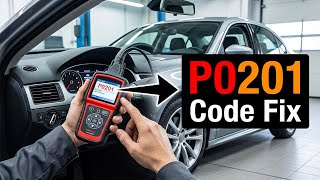
Helpful Videos
Used OEM Parts in Stock



New Aftermarket Parts Available


The information in this article is provided for general reference and educational purposes only. Vehicle specifications, procedures, and part compatibility can vary by production date, trim level, and region. Always consult your vehicle's factory service manual and verify part numbers before purchasing or performing repairs. Safety-critical components such as airbags, seat belts, and braking systems should be installed by a qualified professional.
- Chrysler 200:
- 🎬 Helpful Videos
- 🛍️ Shop This Part
- What's Unique About the 2015-2017 Chrysler 200
- Symptoms You May Notice
- Most Likely Causes
- Rare But Worth Checking
- Diagnosis Steps
- Parts You'll Likely Need
- Related Codes That Often Appear With This One
- Technical Service Bulletins (TSBs) & Recalls
- Platform-Specific Known Issues
- Mechanic-Grade Diagnostic Values
- Scan Tool Commands That Help
- Wiring & Ground Locations
- Real Owner Repair Stories
- OEM Part Supersession History
- Diagnostic Flowchart
- Other Known Issues on This Vehicle
- Used vs. New Parts: Buying Guide for This Vehicle
- Real Owner Stories
- 2015 Chrysler 200 2.4L
- Chrysler Owner Report (NHTSA ODI #10339808)
- Related OBD-II Codes
- Frequently Asked Questions
- 🎟️ Get 5% Off