

P0201 on 2006-2013 BMW 3-Series N52: Injector Circuit Malfunction Causes and Fixes
This code indicates an electrical fault with the fuel injector in cylinder 1. The most common cause on the N52 engine is a failed fuel injector. A DIY replacement costs around $50-$150 for the part and is a common repair. Swapping the injector to another cylinder is the definitive test.
- P0201 on a BMW N52 engine points to an electrical problem with the cylinder 1 fuel injector circuit.
- The most likely cause is a failed fuel injector, which can be confirmed by swapping it with an injector from another cylinder.
- Do not immediately replace spark plugs or ignition coils for this code; it is a fuel circuit fault, not an ignition fault.
- The repair is DIY-friendly, with the most common fix being a new fuel injector, which costs between $50 and $180.
- If a new injector doesn't solve the issue, inspect the wiring and connector carefully before considering the rare possibility of a DME fault.
What's Unique About the 2006-2013 BMW 3-Series
The 2006-2013 E9x 3-Series with the N52 engine uses standard multi-port fuel injection, which is generally reliable. However, like many components, the fuel injectors can fail with age and heat cycles. While not as complex as the direct injection systems on later turbocharged BMWs, a failed injector is a frequent cause for P0201 on this platform. A less common but notable issue is the failure of the injector driver (MOSFET) within the DME itself, which can mimic the symptoms of a bad injector after the injector and wiring have been proven to be good.
Symptoms You May Notice
- Check Engine Light is on
- Engine misfires, especially at idle or on startup.
- Rough or unstable idle
- Shaking under acceleration, which may clear at higher RPM.
- Hesitation or stumbling during acceleration
- Noticeable loss of engine power
- Increased fuel consumption
- Engine may enter 'limp mode' with reduced performance
- Replacing the ignition coil or spark plug. While these parts can cause a misfire (P0301), they will not cause an injector circuit code (P0201). A forum user confirmed swapping the coil did not resolve the P0201 code, pointing the diagnosis back to the fuel system.
Most Likely Causes
- Failed Cylinder 1 Fuel Injector 🔴 High Probability The internal coil winding of the fuel injector can fail over time due to heat and age, creating an open circuit. This is the most frequent reason for a P0201 code on the N52 engine, as reported by owners.
How to confirm: Swap the fuel injector from cylinder 1 with another cylinder (e.g., cylinder 2). Clear the codes and drive the vehicle. If the code changes to P0202, the injector is faulty. This is the most common and definitive diagnostic step recommended in forums. Alternatively, use a multimeter to check the resistance across the injector's two pins; an open circuit (infinite resistance) or a reading outside of the ~12 Ohm spec confirms failure.
Typical fix: Replace the faulty fuel injector. It is recommended to replace the O-rings on the new injector and lubricate them with clean engine oil before installation.
Est. part cost: $50-$180 - Damaged Wiring or Loose Connector 🟡 Medium Probability Engine vibration and heat can cause the wiring harness leading to the injector to become brittle, chafed, or broken. The plastic connector itself can become fragile, and the internal pins can corrode, leading to a poor or open connection.
How to confirm: Visually inspect the wiring harness and connector for cylinder 1. Look for any signs of damage, melting, or corrosion. Wiggle the connector with the engine running to see if it affects the idle. Use a multimeter to check for continuity between the DME connector (at the main computer) and the injector connector plug.
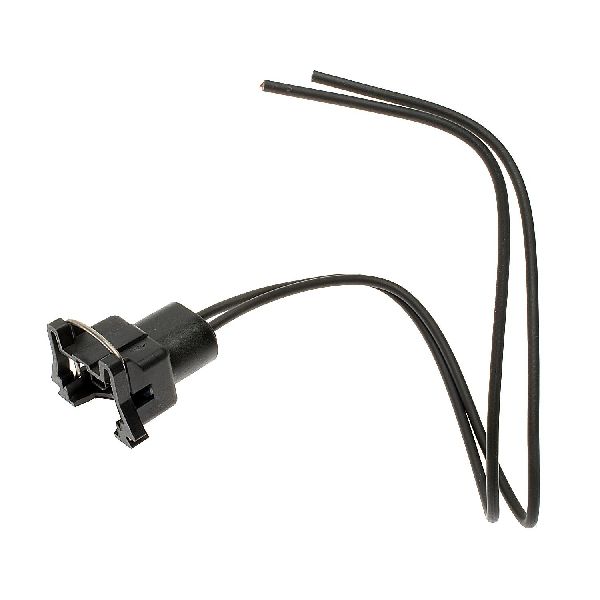
Typical fix: Repair the damaged section of wire or replace the injector pigtail connector. Clean any corrosion from the connector pins using electrical contact cleaner.
Est. part cost: $10-$30
Rare But Worth Checking
- Faulty DME (Engine Computer): Although rare, the MOSFET driver chip inside the DME that controls the injector for cylinder 1 can fail. This creates an open circuit symptom that persists even after replacing the injector and verifying the wiring is intact. This should only be considered after definitively ruling out the injector and wiring. A forum post confirmed a DME failure was the root cause after swapping injectors and testing wiring yielded no solution.
Diagnosis Steps
- Read the fault codes with an OBD-II scanner to confirm P0201 is present. Note any other codes, such as P0301.
- Visually inspect the wiring harness and electrical connector for the cylinder 1 fuel injector. Cylinder 1 is the front-most cylinder on the N52 engine. Check for obvious signs of damage, corrosion, or loose connections.
- Perform an injector swap test. This is the most definitive and common diagnostic step. Swap the injector from cylinder 1 with the injector from cylinder 2.
- Clear the fault codes using the scanner.
- Start the engine and let it run for a few minutes. Re-scan for codes.
- If the code has moved to P0202 ('Injector Circuit/Open - Cylinder 2'), the fuel injector is the faulty component and must be replaced.
- If the P0201 code returns, the problem lies in the wiring or the DME, not the injector itself.
- To test the wiring, disconnect the injector connector and the DME connector. Use a multimeter set to continuity mode to check for a solid connection on both wires between the injector plug and the corresponding pins at the DME.
- If wiring and the injector are confirmed to be good, the fault may lie within the DME itself, which is a rare but possible failure. This typically requires professional diagnosis or sending the DME to a specialist for testing and repair.
Parts You'll Likely Need
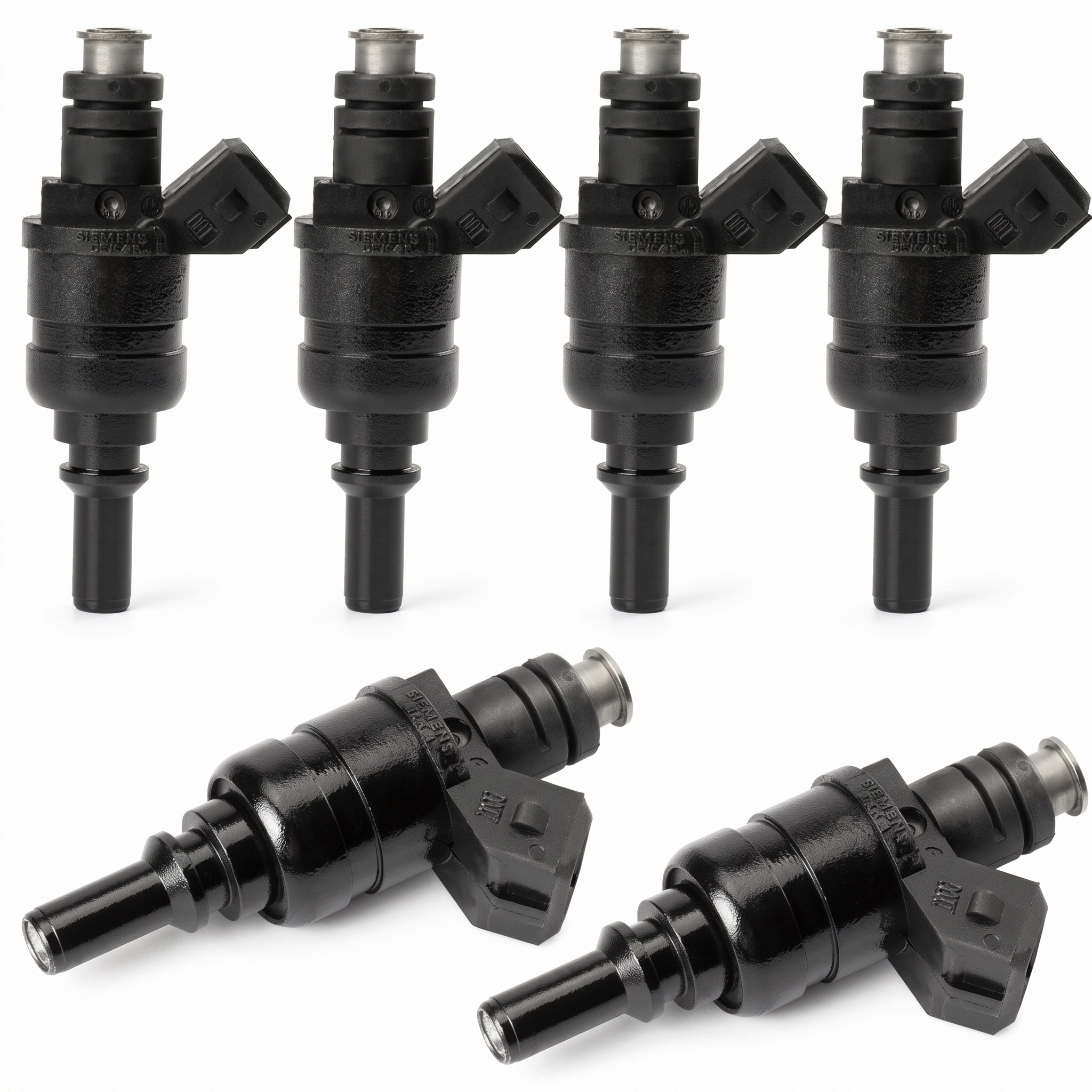
- Fuel Injector
(OEM #13537531634)— This is the most common failure point for a P0201 code on the N52 engine.
Trusted brands: Bosch, Continental/VDO, Standard Motor Products
OEM price range: $120-$180
Aftermarket price range: $50-$100
Related Codes That Often Appear With This One
- P0301 — P0301 means 'Cylinder 1 Misfire Detected'. Since P0201 indicates a problem with the fuel injector circuit for cylinder 1, that cylinder isn't receiving the correct amount of fuel, which directly causes a misfire.
Mechanic-Grade Diagnostic Values
- Fuel Injector Coil Resistance — expected: 8.7-17.5 Ohms. A common reading on a good injector is around 11.8 Ohms.. Failure: Infinite resistance (open circuit) or a reading significantly outside the specified range.
- Injector Connector Voltage (Key On, Engine Off) — expected: Approximately 12V (battery voltage) at Pin 1 (Orange wire) and 0V at Pin 2 (ground pulse wire).. Failure: No voltage at Pin 1 indicates a power supply issue (fuse/relay). Voltage at Pin 2 with the injector disconnected can indicate a short in the harness or a DME driver fault.
- Injector Pulse Width (at idle) — expected: Typically 1-5 milliseconds (ms).. Failure: A value of 0 ms on cylinder 1 while others show normal readings indicates the DME is not commanding the injector to fire.
Hidden / Shadow Codes Worth Checking
- 2E30: Fuel injector, cylinder 1, activation. This is the BMW-specific hexadecimal code that corresponds to the generic P0201 code. (see via BMW-specific diagnostic software like ISTA or INPA.)
Scan Tool Commands That Help
- ISTA (Rheingold): Injector Activation Test / Service Plan — To audibly check if the injector is mechanically actuating (clicking) when commanded by the software. This can be done with the engine off and helps distinguish a completely dead injector from an intermittent electrical issue.
- INPA: Activate -> Actuator Activation -> Electrical Fuel Pump (EKP) — While not a direct injector test, this function allows you to prime and test the low-pressure fuel system to ensure adequate fuel pressure is available at the rail before diagnosing individual injectors.
- INPA: Engine -> F9 (Test Blocks) -> F2 (Cylinder Cut-off) — To selectively disable individual cylinders while the engine is running. Disabling cylinder 1 should produce no change in engine RPMs if the injector is already non-functional, confirming it's the source of the misfire.
Wiring & Ground Locations
- Injector Connector (Cylinder 1) — On the fuel rail, connected to the front-most fuel injector on the N52 engine.. This is the primary connection point. Pin 1 receives 12V+ (Orange wire), and Pin 2 is the ground pulse from the DME (White wire for cylinder 1).
- DME Connector X60007 — This is one of several large multi-pin connectors on the DME, which is located in the electronics box (E-box) in the engine bay, typically on the passenger side under the cabin air filter housing.. The ground signal for the cylinder 1 injector originates here. A poor connection at this specific pin can cause a P0201 code even if the injector and wiring harness are good.
- Pin 1 of DME Connector X60007 — Within the 26-pin connector X60007 that plugs into the DME.. This specific pin sends the ground pulse signal to the cylinder 1 fuel injector via a White (WS) wire. Checking for continuity between this pin and Pin 2 of the injector connector is a key wiring test.
Real Owner Repair Stories
- Bimmerpost user 'antoniog' (BMW E9x with N54 (similar DME architecture)) — Car running in 'half power' mode with code 2E30 (P0201) after a DME upgrade and injector replacement.
❌ Tried (didn't work) Swapping injector, coil, and spark plug from cylinder 1 to cylinder 2., Performing a voltage drop test on the wiring harness (which passed)., Ensuring new injectors were coded correctly.
✅ What actually fixed it The problem was a weak pin connection at the main DME connector. The user disassembled the connector, re-tensioned the female pins with a small screwdriver, cleaned the male pins on the DME, and reassembled. This resolved the fault. - Bimmerpost user 'mweisdorfer' (BMW E9x with N52) — Random misfire with an injector circuit code.
❌ Tried (didn't work) Initial diagnosis pointed towards a bad injector.
✅ What actually fixed it The issue was the electrical plug not making consistent contact with the pins on the injector itself. Lightly tensioning the female pins inside the plastic connector with a pick tool created a secure connection and fixed the problem permanently.
Model Year Variations Within This Range
- 2006-2013: While the injector part number and function remained consistent for the N52 engine, it's important to note that these port-injected injectors DO NOT require coding to the DME. This is a significant difference from the direct-injection injectors used in the contemporary N53/N54 engines, which do require coding.
Diagnostic Flowchart
Other Known Issues on This Vehicle
Issues unrelated to this code that are worth knowing about as an owner of this generation:
- Electric Water Pump and Thermostat Failure 🔴 High — Commonly fails between 60,000 and 100,000 miles. Failure can be sudden and lead to rapid overheating.
- Valve Cover and Gasket Oil Leaks 🟠 Medium — Extremely common; considered a 'when, not if' maintenance item. The plastic cover can crack and the gasket hardens over time.
- Oil Filter Housing Gasket (OFHG) Leak 🔴 High — Very common leak point. The gasket hardens and degrades from heat.
- VANOS Solenoid Failure/Clogging 🟡 Low — Common as the engine ages, often due to oil sludge or debris.
- Eccentric Shaft Sensor Failure 🟠 Medium — Commonly fails due to oil leaking through its own seal and contaminating the electrical connector.
- Hydraulic Valve Lifter Ticking ('N52 Tick') 🟡 Low — More common on earlier N52 engines (pre-2009). Often occurs on cold starts or after short trips. (Ref: SI B11 09 07)
Used vs. New Parts: Buying Guide for This Vehicle
When a used part is the smart pick: A used fuel injector from a reputable junkyard is a reasonable choice for the N52 engine. These injectors are known to be reliable and rarely fail, so a part from a low-mileage donor vehicle can be a cost-effective solution.
Donor-vehicle mileage cap: roughly under 100000 miles for the part to have meaningful remaining life.
What to inspect on the donor part:
- Check for physical damage to the plastic body and electrical connector.
- Ensure the O-rings are present, though they should always be replaced with new ones before installation.
- If possible, check the resistance with a multimeter before purchase to ensure it's within the ~12 Ohm range and not an open circuit.
Aftermarket brands forum-validated for this vehicle:
- Bosch (often the original OEM supplier)
- Continental/VDO
Brands owners have reported issues with on this vehicle:
- Be cautious with unbranded or extremely cheap 'remanufactured' injectors from online marketplaces, as forum members have reported mixed reliability.
Real Owner Stories
Aggregated from forums and TSBs cited above. Mileages and costs reflect what owners reported in those sources.
2006-2011 BMW 3-Series N52
Symptoms: Rough idle and misfire at startup that cleared after a restart; swapping the ignition coil did not fix the issue.
What fixed it: Fuel injector replacement (after diagnostic advice to perform an injector swap).
Source hint: Bimmerpost.com thread titled 'P0201 code'
2006-2011 BMW 3-Series N52
Symptoms: Shaking under acceleration that resolved temporarily after restarting the car.
What fixed it: Fuel injector swap was used as the primary diagnostic step to identify the failure.
Source hint: Bimmerpost.com thread titled 'P0201 code'
Related OBD-II Codes
Frequently Asked Questions
Does BMW TSB SI B11 09 07 regarding engine ticking apply to my P0201 code?
Can I use a multimeter to verify if my N52 fuel injector has failed?
Is there a common diagnostic trick for the N52 engine to confirm a P0201 code?
Could an oil leak cause drivability issues similar to a P0201 on my 3-Series?
What is the typical cost for a replacement fuel injector on the N52 3.0L?
If I replace the injector, do I need to do anything special during installation?
Used OEM Parts in Stock



New Aftermarket Parts Available


The information in this article is provided for general reference and educational purposes only. Vehicle specifications, procedures, and part compatibility can vary by production date, trim level, and region. Always consult your vehicle's factory service manual and verify part numbers before purchasing or performing repairs. Safety-critical components such as airbags, seat belts, and braking systems should be installed by a qualified professional.
- BMW 3-Series:
- 🛍️ Shop This Part
- What's Unique About the 2006-2013 BMW 3-Series
- Symptoms You May Notice
- Most Likely Causes
- Rare But Worth Checking
- Diagnosis Steps
- Parts You'll Likely Need
- Related Codes That Often Appear With This One
- Mechanic-Grade Diagnostic Values
- Hidden / Shadow Codes Worth Checking
- Scan Tool Commands That Help
- Wiring & Ground Locations
- Real Owner Repair Stories
- Model Year Variations Within This Range
- Diagnostic Flowchart
- Other Known Issues on This Vehicle
- Used vs. New Parts: Buying Guide for This Vehicle
- Real Owner Stories
- 2006-2011 BMW 3-Series N52
- 2006-2011 BMW 3-Series N52
- Related OBD-II Codes
- Frequently Asked Questions
- 🎟️ Get 5% Off