

P0196 on 2021-2025 Nissan Rogue: Engine Oil Temperature Sensor Causes and Fixes
On a 2021-2025 Nissan Rogue, code P0196 is most often caused by a faulty Engine Oil Temperature (EOT) sensor. It frequently appears with code P0012. The fix may also involve a related water control valve per a Nissan TSB. Replacing the sensor is a common first step, but diagnosis per the TSB is critical.
- P0196 on a 2021-2025 Rogue points to an issue with the Engine Oil Temperature (EOT) sensor's performance.
- This code is very frequently seen with P0012 (Intake Valve Timing). Always diagnose the P0196 code first, per Nissan's official TSB.
- The fix is not always the sensor itself. A specific diagnostic procedure in TSB NTB25-007 must be followed to determine if the EOT sensor or a related water control valve is the cause.
- Always check your engine oil level and condition first, as low or degraded oil can cause temperature-related codes.
- Be aware that this engine has known issues with oil temperature regulation, as detailed in several NHTSA recalls.
What's Unique About the 2021-2025 Nissan ROGUE

For the 2021-2025 Rogue with the 1.5L VC-Turbo engine, P0196 is a well-documented issue. It is specifically addressed by Nissan Technical Service Bulletin NTB25-007, which notes that it frequently appears alongside code P0012 (Intake Valve Timing Control). This connection, seen in multiple owner complaints, suggests a link between oil temperature regulation and the complex variable compression and valve timing systems in this engine. The TSB provides a unique diagnostic procedure for this platform that supersedes the standard Electronic Service Manual (ESM), which may lead to replacing either the EOT sensor or a water control valve—a specific nuance for this vehicle.
Diagnostic Flowchart

Tap your situation to follow the diagnostic path that matches what you're seeing on this vehicle.
Symptoms You May Notice
- Check Engine Light (MIL) is on
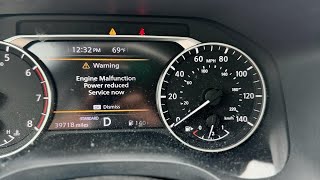
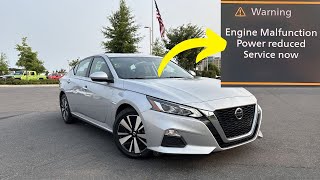
- Vehicle enters limp mode with "Engine Malfunction Power Reduced Service Now" or similar warning on the dash. 🎬 Watch: What this dashboard warning looks like in action.
- Reduced engine power and acceleration.
- Inability to drive over a certain speed or RPM (e.g., 60 mph).
- Rough or unstable idle.
- In some cases, a P0012 code for camshaft timing is also present.
- Replacing camshaft position sensors or VVT solenoids for the P0012 code without first addressing the P0196 code. TSB NTB25-007 explicitly states to diagnose P0196 first and disregard P0012 when they appear together. 🎬 See why VVT solenoids are often misdiagnosed on these engines.
Most Likely Causes

- Faulty Engine Oil Temperature (EOT) Sensor 🔴 High Probability The sensor is a common failure point identified in both owner complaints and as a primary outcome of Nissan's own diagnostic procedure for this code. Multiple owners on forums and in NHTSA complaints report dealers replacing this sensor as the first step.
How to confirm: Follow the diagnostic procedure in TSB NTB25-007. If, after the specified engine run cycle, the oil temperature does NOT exceed the coolant temperature by 22°F (12°C) or more, the EOT sensor is the prescribed component to replace.
Typical fix: Replace the Engine Oil Temperature sensor. This is a labor-intensive job requiring removal of the intake and intercooler.
Est. part cost: $30-$60 - Faulty Water Control Valve 🟡 Medium Probability Nissan TSB NTB25-007 specifically identifies this part as a potential cause for P0196 on this engine if the oil temperature gets too high relative to the coolant temperature. A Reddit user also mentioned a technician replacing a "thermo control valve" to fix P0196 and P0012 codes. This part acts as an electronic thermostat.
How to confirm: Follow the diagnostic procedure in TSB NTB25-007. After running the engine at 3,000 RPM for a set time, if the engine oil temperature exceeds the coolant temperature by more than 22°F (12°C), the water control valve should be replaced.
Typical fix: Replace the water control valve assembly. The assembly often includes the valve, seal, and coolant temperature sensor.
Est. part cost: $150-$400 - Low or Dirty Engine Oil ⚪ Low Probability The 1.5L VC-Turbo engine has a complex design and has been subject to recalls and complaints related to internal engine bearings and oil lubrication issues. Degraded, overfilled, or low oil can affect temperature and hydraulic pressure, potentially triggering this code along with timing-related codes like P0012.
How to confirm: Check the engine oil level on the dipstick and inspect its condition. One owner on Reddit noted the issue appeared after an oil change where the engine was overfilled by about a quart. If the oil is very low, black, or sludgy, it should be changed.
Typical fix: Perform an engine oil and filter change using the manufacturer-specified oil grade and ensure the level is correct.
Est. part cost: $40-$80 - Wiring or Connector Issue ⚪ Low Probability While less common than sensor failure, any wiring can be susceptible to damage. The EOT sensor is located on the lower part of the engine, making its wiring potentially vulnerable to road debris or corrosion.
How to confirm: Visually inspect the wiring harness and connector going to the EOT sensor for any signs of fraying, corrosion, or loose pins.
Typical fix: Repair the damaged wiring or clean/replace the connector.
Est. part cost: $5-$30
Rare But Worth Checking
- Engine Control Module (ECM) Fault: This is very rare. The ECM should only be considered after all other possibilities, including the specific diagnostics in TSB NTB25-007, have been exhausted. Other TSBs for this engine do involve ECM reprogramming for different issues, but not specifically for P0196.
Diagnosis Steps
- Check the engine oil level and condition. Ensure it is not overfilled or low. Top off or change if necessary.
- Scan the ECM for stored codes. Note if P0012 is present with P0196.
- Follow the specific diagnostic procedure outlined in Nissan TSB NTB25-007. Do not use the standard Electronic Service Manual (ESM) procedure.
- Connect a diagnostic scan tool (like Nissan's CONSULT) and monitor live data for Engine Oil Temperature and Engine Coolant Temperature.
- Warm the engine until both temperatures are at least 176°F (80°C).
- With the transmission in Neutral, run the engine at 3,000 RPM for 4 minutes, let it idle, then run at 3,000 RPM for another 4 minutes.
- Immediately compare the oil and coolant temperatures without letting the engine cool down.
- If oil temp exceeds coolant temp by 22°F (12°C) or more, replace the water control valve.
- If oil temp does NOT exceed coolant temp by 22°F (12°C) or more, replace the Engine Oil Temperature sensor.
- If the TSB procedure does not resolve the issue, inspect the EOT sensor wiring and connector for damage, corrosion, or looseness.
Parts You'll Likely Need

- Engine Oil Temperature Sensor
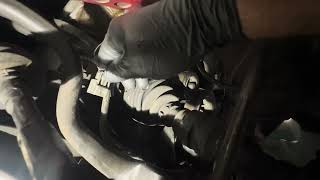
(OEM #22630-ZJ70A)— This is the most common failure part identified by Nissan's own service bulletin for resolving code P0196. However, it is very difficult to access, requiring significant labor. 🎬 Watch: A helpful walkthrough of the EOT sensor replacement process.
Trusted brands: Genuine Nissan, Hitachi, Delphi
OEM price range: $30-$60
Aftermarket price range: $20-$40 - Water Control Valve
(OEM #21250-6RC1A (replaces 21250-6RC0A))— This is the second component identified in TSB NTB25-007 as a potential fix for P0196, depending on the diagnostic results. It functions as an electronic thermostat for the engine.
Trusted brands: Genuine Nissan
OEM price range: $395-$590
Aftermarket price range: $150-$300
Related Codes That Often Appear With This One
- P0012 — Stands for 'Intake Valve Timing Control Performance B1'. Nissan TSB NTB25-007 and multiple owner complaints confirm that P0196 and P0012 frequently appear together on this vehicle. The oil temperature issue likely affects the performance of the hydraulic variable valve timing system, as oil viscosity and pressure are critical for its operation.
Technical Service Bulletins (TSBs) & Recalls
- NTB25-007: MIL ON WITH DTC P0196 STORED IN THE ECM. This TSB provides a specific diagnostic procedure for P0196, noting it may be stored with P0012 and that the TSB procedure should be used instead of the standard ESM.
Platform-Specific Known Issues
- TSB NTB25-007: Nissan issued this bulletin specifically for the 2021-2025 Rogue with the KR15DDT engine to address MIL ON with DTC P0196. It provides a unique diagnostic flow and acknowledges the common co-occurrence with code P0012.
- Owner Complaints: Multiple NHTSA complaints and forum posts for 2022 and 2023 Rogues document the appearance of P0196 and P0012 together, often leading to limp mode. In one case, a dealer charged $1200 to replace the EOT sensor. Another owner was quoted $1700 due to 5 hours of labor.
- Engine Design Context: The 1.5L VC-Turbo engine is a complex design that has faced scrutiny for reliability, including recalls for bearing failure and oil lubrication issues. While P0196 is a sensor code, it exists in the context of a powertrain known to have oil temperature regulation problems.
Mechanic-Grade Diagnostic Values
- EOT Sensor Resistance — expected: ~2.37 – 2.63 kΩ at 68°F (20°C). Failure: Resistance is far outside the expected range at a known temperature.
- EOT Sensor Resistance — expected: ~0.236 – 0.260 kΩ at 194°F (90°C). Failure: Resistance does not decrease significantly as the sensor is heated.
- EOT Sensor Signal Voltage (General) — expected: 0.5V – 4.5V. Failure: A fluctuating voltage points to wiring or sensor problems; a steady voltage with erratic temperature readings on a scan tool may indicate a software issue.
- EOT Sensor Wiring Harness Continuity — expected: ≤ 0.2 Ω. Failure: Higher resistance indicates a break or corrosion in the wire.
- EOT Sensor Wiring Harness Resistance-to-Ground — expected: > 10 kΩ. Failure: Lower resistance indicates a short to ground.
Scan Tool Commands That Help
- Nissan CONSULT: Data Monitor for Engine — This function is required to monitor live Engine Oil Temperature and Engine Coolant Temperature data simultaneously, which is the core of the diagnostic procedure in TSB NTB25-007.
Wiring & Ground Locations
- EOT Sensor Connector — The EOT sensor is generally located on the engine block, often near the oil filter or oil pan. On the KR15DDT, it is in a difficult-to-access location requiring removal of other components.. This connector and its wiring are the primary interface between the sensor and the ECM. Damage, corrosion, or loose pins at this connector can directly cause the P0196 code.
- Engine Harness Grounds — Engine ground locations (e.g., G103 on some models) are typically found on the engine block, cylinder head, or chassis near the engine. Specific diagrams for the T33 Rogue are needed for exact locations.. A poor engine ground can cause floating or incorrect readings from various sensors, including the EOT sensor, leading to range/performance codes.
Real Owner Repair Stories
- Reddit user Marblehead203, r/NissanRogue (2022 Nissan Rogue) — Car went into limp mode, "malfunction see owners manual" and "engine malfunction service now power reduced" warnings. Unable to exceed 60 mph or 3,500 RPM. Codes P0196 and P0012 present.
❌ Tried (didn't work) Dealer performed an oil change., Dealer replaced the Engine Oil Temperature (EOT) sensor for $1200.
✅ What actually fixed it A responding technician stated that for P0196 and P0012 codes together, the fix is to replace the 'thermo control valve' (Water Control Valve), which is part of a coolant hose assembly going to the CVT cooler. - Reddit user, r/MechanicAdvice (2024 Nissan Rogue) — Check engine light came on, car went into limp mode on the freeway. Codes P0012 and P0196 were read.
✅ What actually fixed it The user discovered the engine oil was overfilled by approximately one quart after a recent oil change at a quick-lube shop. The story implies this was the cause, though a final repair confirmation was not posted. The user made a service appointment for further diagnosis.
When the Usual Fixes Don't Work
- In at least one detailed owner account, the common fix of replacing the Engine Oil Temperature sensor (even at a cost of $1200 at a dealership) did not resolve the P0196 and P0012 codes. The problem persisted until a technician identified the actual cause as a faulty 'thermo control valve' (Water Control Valve), which aligns with the secondary diagnostic path in TSB NTB25-007. This highlights that simply replacing the EOT sensor is a common misdiagnosis if the full TSB procedure is not followed.
OEM Part Supersession History
21250-6RC0A→21250-6RC1A— This is a common practice for manufacturers to revise parts for improved reliability or to address known issues.
Heads up: The new part number 21250-6RC1A is a direct replacement for the older 21250-6RC0A and should be used for all repairs.
Helpful Videos

We Have This Part in Stock



The information in this article is provided for general reference and educational purposes only. Vehicle specifications, procedures, and part compatibility can vary by production date, trim level, and region. Always consult your vehicle's factory service manual and verify part numbers before purchasing or performing repairs. Safety-critical components such as airbags, seat belts, and braking systems should be installed by a qualified professional.
- Nissan ROGUE:
- 🎬 Helpful Videos
- 🛍️ Shop This Part
- What's Unique About the 2021-2025 Nissan ROGUE
- Diagnostic Flowchart
- Symptoms You May Notice
- Most Likely Causes
- Rare But Worth Checking
- Diagnosis Steps
- Parts You'll Likely Need
- Related Codes That Often Appear With This One
- Technical Service Bulletins (TSBs) & Recalls
- Platform-Specific Known Issues
- Mechanic-Grade Diagnostic Values
- Scan Tool Commands That Help
- Wiring & Ground Locations
- Real Owner Repair Stories
- When the Usual Fixes Don't Work
- OEM Part Supersession History
- 🎟️ Get 5% Off