

P0193 on 2011-2015 Honda Civic: Fuel Rail Pressure Sensor High Input Causes and Fixes
On a 2011-2015 Honda Civic, this code almost exclusively applies to the Natural Gas (CNG) model, also known as the Civic GX. It's most often caused by a failed fuel rail pressure sensor or a wiring issue. The OEM sensor is surprisingly expensive, so thorough diagnosis is key to avoid unnecessary parts replacement.
- P0193 on a 2011-2015 Civic almost certainly means you are working on a Natural Gas (CNG) model, also known as the Civic GX.
- The most likely cause is a faulty Fuel Rail Pressure sensor, followed by a wiring issue.
- Do not replace the fuel pump; this is an electrical circuit code.
- The OEM sensor (part # 37850-PMS-A01) is very expensive, so confirm the diagnosis before purchasing parts by checking for a stuck 5V signal.
What's Unique About the 2011-2015 Honda Civic
For the 2011-2015 ninth-generation Honda Civic, the P0193 code is primarily associated with the Natural Gas (CNG) models equipped with the 1.8L engine. These models are sometimes badged as 'Civic Natural Gas' or 'Civic GX'. Standard gasoline-powered Civics from this era have a different fuel system design and rarely, if ever, report this specific fault code. Therefore, if you see P0193 on a 2011-2015 Civic, it is critical to confirm you are working on a CNG variant.
Symptoms You May Notice
- Check Engine Light is on
- Engine hesitation or stumbling during acceleration.
- Rough idle
- Difficulty starting the engine, or extended cranking followed by entering limp mode.
- Reduced engine power or 'limp mode', where RPMs may be limited.
- Decreased fuel economy.
- Engine may not rev past a certain point, like 2,000 RPM.
- Replacing the fuel pump. P0193 is an electrical circuit code, not a low-pressure code, making the pump an unlikely cause.
- Replacing the fuel pressure regulator without first diagnosing the electrical circuit.
Most Likely Causes
- Failed Fuel Rail Pressure (FRP) Sensor 🔴 High Probability This code is specific to the CNG models, and the sensor itself is the most common point of failure. An internal short can cause it to send a constant high voltage signal (near 5V) to the PCM, regardless of actual pressure.
How to confirm: With the key on and engine off, use a scan tool to read the FRP sensor voltage. If it's stuck at or near 5 volts, the sensor has likely failed internally. You can also disconnect the sensor; if the scan tool reading then drops to 0 volts, it further points to a bad sensor. A reading above 4.89V is often considered out of range by the PCM.
Typical fix: Replace the fuel rail pressure sensor.
Est. part cost: $450-$600 for OEM - Wiring or Connector Issue 🟡 Medium Probability The engine bay environment can cause wiring to become brittle, insulation to crack, or connectors to corrode over time, leading to a short to voltage on the signal wire.
How to confirm: Visually inspect the FRP sensor's wiring harness and connector for any signs of damage, melting, or corrosion. Perform a continuity test on the signal, reference, and ground wires between the sensor connector and the PCM. With the sensor disconnected and key on, check for 5V reference and good ground at the connector. A short to voltage can be found by checking for voltage on the signal wire with the sensor unplugged.
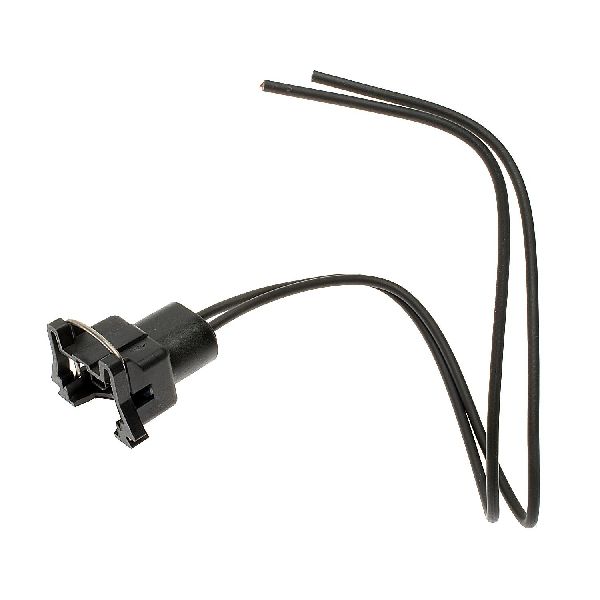
Typical fix: Repair the damaged section of wiring or replace the connector pigtail.
Est. part cost: $10-$50
Rare But Worth Checking
- Faulty Powertrain Control Module (PCM): This is very uncommon, but if the sensor and wiring have been proven to be good through rigorous testing, the PCM's internal circuit for processing the sensor signal may have failed. This should be the last item to consider after all other possibilities are exhausted. Sometimes a PCM software update may be available to address interpretation issues.
Diagnosis Steps
- Confirm the code P0193 is present using an OBD-II scanner and check for any other codes.
- Use the scanner's live data function to monitor the 'Fuel Rail Pressure' voltage reading. With the Key On, Engine Off (KOEO), a reading stuck at or near 5.0 volts strongly suggests a circuit high fault.
- Locate the Fuel Rail Pressure sensor on the fuel rail of the CNG engine.
- Visually inspect the sensor's electrical connector and wiring harness for any visible damage, corrosion, or loose connections.
- Disconnect the sensor's 3-pin connector. With the key on, check the live data reading again. If the voltage drops to 0V, the wiring is likely okay and the sensor is the primary suspect.
- With the sensor still disconnected and key on, use a multimeter to verify a 5-volt reference signal on one pin and a good ground on another pin at the harness connector. The third pin is the signal wire.
- If reference voltage and ground are present, the sensor has a very high probability of being faulty. If either is missing, or if there is voltage present on the signal wire with the sensor unplugged, there is a wiring fault that needs to be traced and repaired.
- If both the wiring and sensor check out (e.g., you test with a known-good sensor and the problem persists), the issue may be with the PCM, though this is rare.
Parts You'll Likely Need
- Fuel Rail Pressure Sensor (for CNG model)
(OEM #37850-PMS-A01)— This sensor is the most common cause of a P0193 code on these specific vehicles due to internal electrical failure. Its specific design for the high-pressure CNG system makes it unique.
Trusted brands: Honda (Genuine OEM)
OEM price range: $550-$800
Aftermarket price range: Not commonly available or recommended.
Technical Service Bulletins (TSBs) & Recalls
- Honda Service Bulletin 15-015 (March 31, 2015): While not for P0193 specifically, it covers troubleshooting for the fuel gauge on all Civic CNG models up to 2015 and involves checking components like the fuel pressure regulator and PCM, which are part of the same system.
Platform-Specific Known Issues
- Owner Experience: Intermittent Starting and Limp Mode: An owner on a VXOC forum with a different vehicle but the same P0193 code described an issue where the car would randomly struggle to start, then enter a limp mode where it would not rev past 2,000 RPM. Clearing the code would temporarily resolve the issue. Even after replacing the sensor, the problem persisted, highlighting the importance of thoroughly checking wiring and other electrical factors like the battery before concluding the repair.
- Related Honda Service Bulletin for Fuel Gauge Issues: While not directly for P0193, Honda Service Bulletin 15-015, released March 31, 2015, addresses fuel gauge issues on 2001-2015 Civic CNG models. It details complex diagnostic procedures involving the fuel pressure regulator and PCM, indicating the intricate nature of the CNG fuel system. If other fuel system-related symptoms are present, this TSB may provide useful diagnostic context.
Mechanic-Grade Diagnostic Values
- Fuel Rail Pressure Sensor Voltage (Live Data) — expected: 0.5V to 4.5V depending on pressure.. Failure: A reading of 4.89V or higher with Key On, Engine Off. A value stuck near 5.0V is a definitive sign of a circuit high fault.
- FRP Sensor Connector Voltage (Harness Side) — expected: One pin should have ~5.0V (Reference), one pin should have near 0V (Ground), and the signal pin should be tested for stray voltage.. Failure: Missing 5V reference or ground indicates a wiring issue upstream. Any voltage present on the signal wire with the sensor disconnected indicates a short to voltage in the harness.
Scan Tool Commands That Help
- Honda Diagnostic System (HDS): Data List -> Fuel Pressure Sensor Voltage — This is the primary function used to see the voltage the PCM is receiving from the sensor in real-time. It's the first step to confirm the P0193 fault condition (voltage > 4.89V).
- Honda Diagnostic System (HDS): Jump SCS Line — This is a generic Honda procedure to put the system into a service check mode. For this DTC, it's used in conjunction with manual electrical checks (like continuity tests to the PCM) as part of advanced diagnostics outlined in service literature.
Wiring & Ground Locations
- G201 — Under the right front (passenger side) headlight assembly.. This is a major chassis ground point in the engine bay. While not exclusively for the FRP sensor, corrosion or looseness here can cause a host of intermittent electrical issues and unstable sensor readings. Verifying its integrity is a crucial step when diagnosing hard-to-find electrical faults.
- G301 — Under the left front (driver side) headlight assembly.. Similar to G201, this is another primary engine bay ground. Checking both G201 and G301 ensures that the overall grounding scheme for engine bay components is solid, which is foundational for any sensor circuit diagnosis.
Real Owner Repair Stories
- TypeAccord forum user 'vitamin' (Honda Accord (diesel, but same P0193 electrical principle)) — Check Engine Light with P0193 (Fuel pressure sensor high input).
❌ Tried (didn't work) Replacing the fuel rail pressure sensor.
✅ What actually fixed it The user reported that the ECU was still reading 180 bar (a high, fixed value) even when the sensor was completely disconnected. This definitively proved the fault was not the sensor, but rather a short in the wiring harness (signal wire shorting to reference/power) or a fault within the ECU itself. The final fix was not posted, but the diagnosis isolated the problem to the wiring or ECU.
OEM Part Supersession History
37850-PMS-A01→37850-PMS-A01— No supersession found for this generation. This part number appears stable for all 2011-2015 Civic Natural Gas models.
Diagnostic Flowchart
Used vs. New Parts: Buying Guide for This Vehicle
When a used part is the smart pick: Given the extremely high cost of a new OEM sensor (often exceeding $550), a used part from a reputable salvage yard is a calculated risk that many owners may choose. It makes the most sense if you can get the part from a low-mileage donor vehicle and have some form of return policy if it's dead on arrival.
Donor-vehicle mileage cap: roughly under 80000 miles for the part to have meaningful remaining life.
What to inspect on the donor part:
- Check for any physical damage to the sensor body or connector.
- Ensure the electrical pins inside the connector are straight, clean, and free of corrosion.
- If possible, get the VIN of the donor car to verify it's from a low-mileage, non-flood, non-fire vehicle.
OEM-only on this vehicle (don't cheap out):
- Fuel Rail Pressure Sensor
Aftermarket brands forum-validated for this vehicle:
- No widely available or recommended aftermarket brands exist for this specific CNG sensor. The repair is effectively limited to Genuine Honda OEM parts, either new or used.
Brands owners have reported issues with on this vehicle:
- Any unbranded, no-name sensors from online marketplaces should be avoided. The risk of incorrect calibration or immediate failure is very high for this sensitive, high-pressure application.
Real Owner Stories
Aggregated from forums and TSBs cited above. Mileages and costs reflect what owners reported in those sources.
2011-2015 Honda Civic CNG (by example)
Symptoms: The car would randomly struggle to start, then enter a limp mode where it would not rev past 2,000 RPM. Clearing the code would only temporarily fix it.
What fixed it: The owner reported that replacing the sensor did not fix the issue, which persisted afterward. This highlights the importance of performing a full electrical diagnosis on the wiring and other factors before assuming the sensor is the only possible cause.
Source hint: VXOC.org.uk - A forum thread titled 'P0193 Code Help'
Related OBD-II Codes
Frequently Asked Questions
Is the P0193 code an issue for all 2011-2015 Honda Civics, or only specific models?
The OEM Fuel Rail Pressure sensor is very expensive. Can I use a cheaper aftermarket part for my Civic CNG?
What should I look for if I buy a used Fuel Rail Pressure sensor to save money?
How can I quickly test if the FRP sensor is the problem on my Civic using a basic scan tool?
What specific voltage reading from the FRP sensor indicates a fault on this vehicle?
My Civic CNG's fuel gauge is also acting up. Is this related to Honda Service Bulletin 15-015?
Does the older 8th generation (2006-2010) Civic GX have the same P0193 sensor issue?
We Have This Part in Stock


The information in this article is provided for general reference and educational purposes only. Vehicle specifications, procedures, and part compatibility can vary by production date, trim level, and region. Always consult your vehicle's factory service manual and verify part numbers before purchasing or performing repairs. Safety-critical components such as airbags, seat belts, and braking systems should be installed by a qualified professional.
- Honda Civic:
- 🛍️ Shop This Part
- What's Unique About the 2011-2015 Honda Civic
- Symptoms You May Notice
- Most Likely Causes
- Rare But Worth Checking
- Diagnosis Steps
- Parts You'll Likely Need
- Technical Service Bulletins (TSBs) & Recalls
- Platform-Specific Known Issues
- Mechanic-Grade Diagnostic Values
- Scan Tool Commands That Help
- Wiring & Ground Locations
- Real Owner Repair Stories
- OEM Part Supersession History
- Diagnostic Flowchart
- Used vs. New Parts: Buying Guide for This Vehicle
- Real Owner Stories
- 2011-2015 Honda Civic CNG (by example)
- Related OBD-II Codes
- Frequently Asked Questions
- 🎟️ Get 5% Off