

P0193 on 2000-2007 Ford Taurus 3.0L V6: Causes and Fixes for Fuel Rail Pressure Sensor Circuit High
On a 2000-2007 Taurus with the 3.0L V6, code P0193 is almost always caused by a failed Fuel Rail Pressure (FRP) sensor. It's an inexpensive part and a relatively easy DIY fix, typically costing $30-$80 for the sensor. Before replacing, check the wiring and connector, as a short can mimic a bad sensor.
- P0193 on a 2000-2007 Taurus 3.0L almost always means you need a new Fuel Rail Pressure (FRP) sensor.
- Before buying parts, use a scan tool to check the fuel pressure reading with the key on and engine off. A very high reading (near 5V) confirms a sensor or circuit fault.
- This is a DIY-friendly repair that can be done in under an hour with basic tools (typically an 8mm socket).
- Always inspect the wiring and connector for damage before replacing the sensor, as a shorted wire can mimic a failed sensor.
- Be sure to relieve fuel pressure before removing the old sensor to prevent fuel spray. Placing a rag underneath is recommended.
What's Unique About the 2000-2007 Ford Taurus
For the fourth-generation Ford Taurus and its twin, the Mercury Sable, with the 3.0L V6 (both OHV Vulcan and DOHC Duratec versions), the Fuel Rail Pressure (FRP) sensor is a well-known failure point that commonly triggers the P0193 code. Unlike some vehicles where this code might point to complex fuel pump or module issues, on this specific platform, the fix is most often a simple and inexpensive sensor swap. The sensor is mounted on the fuel rail in a relatively accessible location, making it a common DIY repair that can be done in under 30 minutes.
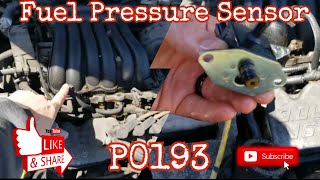
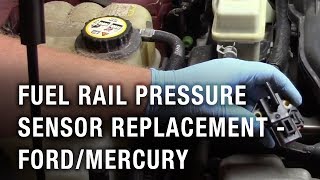
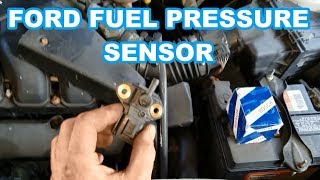
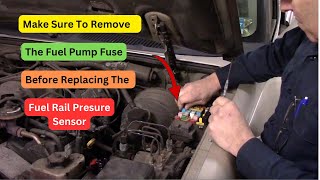
🎬 Watch: Step-by-step Taurus 3.0L V6 sensor replacementSymptoms You May Notice
- Check Engine Light is on
- Engine stalling, especially when coming to a stop or at idle
- Hard starting or extended cranking time
- Hesitation or lack of power during acceleration
- Rough or erratic idle
- Decreased fuel economy
- In some cases, black smoke from the exhaust if the PCM defaults to a rich condition.
- Replacing the fuel pump without confirming the Fuel Rail Pressure sensor is good. The P0193 code is an electrical circuit code, making the sensor or wiring the primary suspect, not the pump itself.
- Replacing the fuel filter. A clogged fuel filter typically causes low pressure, not a high circuit voltage code.
Most Likely Causes
- Faulty Fuel Rail Pressure (FRP) Sensor 🔴 High Probability The FRP sensor is a very common failure item on this platform, often failing internally and sending a constant high voltage signal (short to VREF) to the PCM. Owners on forums and in repair videos frequently cite this as the definitive fix.
How to confirm: With the key on and engine off, use a scan tool to view the live data for the FRP sensor. If the reading is abnormally high (often maxed out at 70+ PSI on a scan tool) or the voltage is stuck at 5 volts, the sensor is bad.
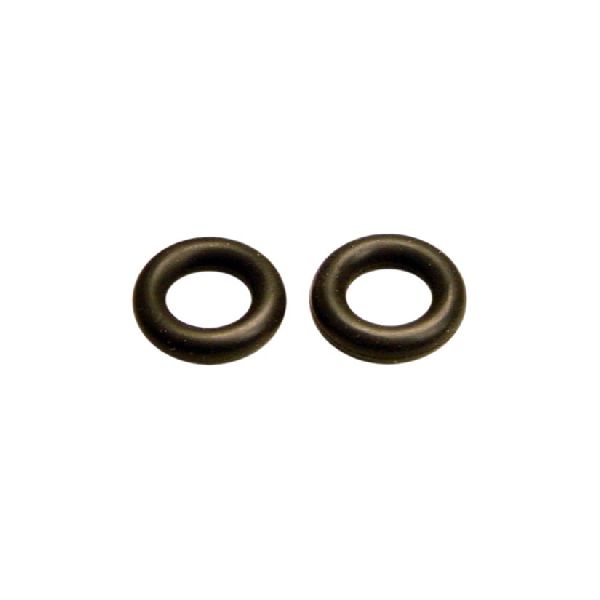
Typical fix: Replace the Fuel Rail Pressure sensor. This involves relieving fuel system pressure, disconnecting the electrical connector and vacuum line, removing two 7mm or 8mm bolts, and swapping the old sensor for a new one. It is recommended to apply a light coat of motor oil or grease to the new O-rings before installation.
Est. part cost: $25-$80 - Wiring Harness or Connector Issue 🟡 Medium Probability The wiring harness in the engine bay is exposed to heat and vibration, which can lead to chafed insulation or corrosion in the connector pins over time. A short to the 5-volt reference wire will cause this code. A manufacturer service bulletin for other Ford models, TSB Bulletin #SSM 47337, notes that P0193 can be caused by engine harness chaffing at the cylinder head.
How to confirm: Visually inspect the wiring harness and connector for the FRP sensor. Look for any signs of chafing, melting, corrosion on the pins, or broken wires. With the sensor unplugged and key on, use a multimeter to confirm you have a 5V reference, a good ground, and that the signal wire is not shorted to voltage.
Typical fix: Repair the damaged section of the wiring harness. If the connector is corroded or damaged, replace the connector pigtail.
Est. part cost: $15-$50
Rare But Worth Checking
- Clogged Fuel Filter or Failing Fuel Pump: While a 'circuit high' code usually points to an electrical fault, it's possible (though rare) for a mechanical issue to cause excessively high fuel pressure that pushes the sensor's reading out of range. However, this is an uncommon cause for P0193, which is almost always electrical. One owner tried replacing the filter first without success before replacing the sensor.
- Faulty Powertrain Control Module (PCM): This is extremely rare. A forum expert notes that this code is almost NEVER caused by a PCM problem. The PCM should only be considered after all other possibilities, including the sensor and wiring, have been exhaustively tested and ruled out.
- Reference Voltage Circuit Faults: In some Ford vehicles, manufacturer bulletins TSB Bulletin #SSM 46456 and TSB Bulletin #SSM 46351 indicate that P0193 may set due to concerns with the reference voltage or signal return circuit shared with other sensors, such as the crankshaft position sensor.
Diagnosis Steps
- Connect an OBD-II scanner and verify P0193 is the active code. Check for any other related codes.
- Access the live data stream on the scanner. With the Key On, Engine Off (KOEO), observe the Fuel Rail Pressure (FRP) sensor reading. A reading that is excessively high or a voltage that is stuck at or near 5V strongly indicates a problem with the sensor or its circuit.
- Turn the vehicle off and let the engine cool. Locate the FRP sensor on the fuel rail. It has an electrical connector and a vacuum line attached.
- Inspect the sensor's electrical connector and the nearby wiring harness for any visible damage, corrosion, or loose connections.
- Disconnect the sensor. With the key on, use a multimeter to check for 5 volts on the reference wire and a good ground on the ground wire at the connector.
- If wiring checks out and the KOEO pressure reading was high, the FRP sensor is almost certainly faulty. If the code remains after replacing the sensor, there may be an intermittent wiring issue.
- As a diagnostic trick, if P0193 is present, disconnect the sensor. If the code changes to P0190 (Circuit Malfunction), this points heavily toward an internally shorted sensor.
- To relieve fuel pressure before replacement, you can remove the fuel cap and let the vehicle sit, or pull the fuel pump relay and start the engine until it stalls. Place a rag under the sensor to catch any spilled fuel.
- If all circuit tests are good and the sensor has been replaced but the code persists, the issue may be with the PCM, but this is highly unlikely.
Parts You'll Likely Need
- Fuel Rail Pressure Sensor
(OEM #3R3Z-9F972-AA)— This sensor is the most common point of failure for a P0193 code on this specific vehicle.
Trusted brands: Motorcraft, Bosch, Standard Motor Products (SMP), Delphi
OEM price range: $70-$100
Aftermarket price range: $25-$60
Related Codes That Often Appear With This One
- P0190 — If you disconnect the FRP sensor to test the circuit, the PCM may log P0190 (Fuel Rail Pressure Sensor Circuit Malfunction). Seeing this happen can help confirm the wiring to the PCM is likely intact.
- P0171 — If the PCM receives an incorrect high-pressure signal, it may command less fuel, leading to a lean condition on Bank 1.
- P0174 — Similar to P0171, this indicates a lean condition on Bank 2, caused by the PCM's incorrect response to the faulty sensor data.
- P06A6, P02E9, P0335 — As noted in TSB Bulletin #SSM 46456, these codes may appear alongside P0193 if there is a shared reference voltage circuit issue.
Technical Service Bulletins (TSBs) & Recalls
- No specific, widely-documented Ford TSB exists for P0193 on the 2000-2007 Taurus. The general mechanical wisdom points directly to sensor failure. The TSB mentioned in Pass 1 (14041) is not a Ford TSB.
- TSB Bulletin #SSM 47337: While for the F-150, this bulletin notes that P0193 can be caused by engine harness chaffing near the cylinder head, leading to an illuminated MIL or rough running condition.
- TSB Bulletin #SSM 46456 / #SSM 46351: These bulletins for the F-Super Duty series highlight that P0193 can be triggered by concerns with the reference voltage or signal return circuit of the crankshaft position sensor.
Platform-Specific Known Issues
- The issue is prevalent on both the 3.0L OHV Vulcan and 3.0L DOHC Duratec engines used in the Taurus/Sable platform, as they use a similar electronic returnless fuel system and sensor design.
- While the sensor is the overwhelming cause, one owner on a Reddit forum reported a persistent P0193 code despite multiple sensor and fuel pump replacements, suggesting a rare but possible underlying electrical issue in the harness or elsewhere that was difficult to trace.
Mechanic-Grade Diagnostic Values
- FRP Sensor VREF Voltage — expected: 4.0 - 6.0 Volts. Failure: Voltage outside this range indicates a fault in the VREF circuit from the PCM.
- FRP Sensor Signal Voltage (KOEO) — expected: 0.5V - 1.5V (varies with residual pressure). Failure: A reading stuck at or near 5.0V indicates an internally shorted sensor or a signal wire shorted to the 5V reference wire.
- FRP Sensor Circuit Resistance (at PCM connector) — expected: Greater than 10,000 Ohms. Failure: Resistance less than 10k Ohms between the FRP signal circuit and the SIG RTN circuit (or ground) indicates a short.
- Fuel Pressure (KOER - Key On, Engine Running) — expected: 39 - 65 PSI. Failure: While P0193 is an electrical code, actual pressure readings can be useful. Pressure significantly outside this range points to a mechanical fuel system issue (pump, regulator).
Wiring & Ground Locations
- G101 — Left rear of engine, above the starter motor.. This is a primary engine ground. A poor connection here can cause erratic behavior from various engine sensors, including the FRP, by creating an unstable ground reference for the PCM and sensor circuits.
- G102 / G103 — Right rear side of the engine compartment, on the firewall.. These are important chassis and engine harness ground points. Corrosion or looseness at these locations can introduce electrical noise and voltage offsets that may affect sensor readings.
- FRP Sensor Connector — On the fuel rail, connected to the FRP sensor.. The connector itself is a common failure point. The three key wires are VREF (5V reference), SIG RTN (ground), and the FRP signal wire. A P0193 is often caused by the signal wire shorting to the VREF wire within the harness or connector.
Real Owner Repair Stories
- Car Forums at Edmunds.com (Ford Taurus (year not specified, but within generation)) — Stalling and other fuel-related issues.
❌ Tried (didn't work) Multiple fuel pump replacements.
✅ What actually fixed it The owner discovered a faulty factory ground for the fuel pump assembly. Running a new, dedicated ground wire from the pump sender module to a clean chassis ground point permanently resolved the issue. - NHTSA ODI #10593745: An owner of a similar Ford model reported the engine light had been on for several months with the only code being P0193 (Fuel Rail Pressure Sensor High Input), which required professional diagnosis and repair.
- NHTSA ODI #11234304: A report on a related Ford platform noted that while P0193 was the only active code, the vehicle also experienced unrelated electrical glitches like door sensor malfunctions.
OEM Part Supersession History
3R3Z-9F972-AA→3R3Z-9F972-AB— Standard part revision by the manufacturer.
Heads up: The two part numbers are interchangeable. 3R3Z-9F972-AB is the current service part.
Diagnostic Flowchart
Other Known Issues on This Vehicle
Issues unrelated to this code that are worth knowing about as an owner of this generation:
- Automatic Transmission Failure (AX4S/AX4N) 🔴 High — Very common, often occurring between 60,000 and 100,000 miles. Failures include stripped torque converter splines leading to a no-move condition, harsh shifting, and overheating. (Ref: Ford TSB 94-24-7 was issued for an earlier version of the transmission concerning a weak forward clutch piston.)
- Camshaft Synchronizer Failure 🟠 Medium — Common issue on the 3.0L OHV Vulcan engine. The upper bushing fails, causing a characteristic 'chirping' or 'squeaking' noise, especially when warm. If ignored, it can lead to incorrect cam position signals, misfires, and eventual engine damage.
- Oil Leaks (Valve Covers, Oil Pan) 🟡 Low — Frequent but typically minor. Valve cover and oil pan gaskets are prone to leaking, causing oil to drip onto hot exhaust components, resulting in a burning smell and smoke from the engine bay.
- Failed Idle Air Control (IAC) Valve 🟡 Low — A common cause of rough or unstable idling, and sometimes stalling when coming to a stop. It's a relatively simple and inexpensive part to replace.
- Cracked/Leaking Hydraulic Motor Mounts 🟠 Medium — The fluid-filled lower motor mounts are known to leak and fail, causing a noticeable 'clunk' during acceleration from a stop as the engine shifts excessively.
Used vs. New Parts: Buying Guide for This Vehicle
When a used part is the smart pick: A used OEM (Motorcraft) Fuel Rail Pressure Sensor from a low-mileage donor vehicle is a viable option if on a tight budget. Given the high failure rate, a new part is preferred, but a used OEM part is often better than a new, unproven aftermarket brand.
Donor-vehicle mileage cap: roughly under 80000 miles for the part to have meaningful remaining life.
What to inspect on the donor part:
- Check for a clean electrical connector with no corrosion on the pins.
- Inspect the vacuum port (if applicable) to ensure no signs of fuel leakage.
- Avoid parts from vehicles that show signs of major engine bay damage or fire.
Aftermarket brands forum-validated for this vehicle:
- Bosch
- Delphi
- Standard Motor Products (SMP)
Brands owners have reported issues with on this vehicle:
- Unbranded, 'white-box' parts from online marketplaces are frequently cited in forums as failing prematurely, sometimes within weeks or months.
Real Owner Stories
Aggregated from forums and TSBs cited above. Mileages and costs reflect what owners reported in those sources.
2003 Ford Taurus 3.0L V6
Symptoms: The vehicle was throwing a code for the fuel pressure sensor reading high pressure. The owner had already replaced the fuel filter and fuel pump trying to resolve it.
What fixed it: Replacing the Fuel Rail Pressure sensor with a new part (purchased for approximately $23-$24).
Cost: $23-$24
Source hint: youtube_comment from Grime Time Garage
2005 Ford Taurus 3.0L V6
Symptoms: Hard starting and an inaccurate fuel gauge. The owner replaced the sensor twice and the fuel pump once, but the P0193 code persisted.
What fixed it: The source suggests a potential wiring or other electrical fault in the harness as the sensor and pump replacements did not fix the issue.
Source hint: Reddit r/FordTaurus - '05 taurus with P0193 code'
2000-2007 Ford Taurus 3.0L V6
Symptoms: The owner reported that an aftermarket sensor fixed the P0193 code initially, but the code returned after about a month of driving.
What fixed it: The source suggests either the aftermarket part failed prematurely or there was an underlying issue that wasn't fully addressed.
Source hint: Reddit r/MechanicAdvice - 'P0193 code (fuel rail pressure sensor)'
Related OBD-II Codes
Frequently Asked Questions
Is there a specific Ford TSB for the P0193 code on my 2000-2007 Taurus?
How can I tell if the FRP sensor is actually bad on my 3.0L V6 Taurus without just guessing?
My 2005 Taurus has a P0193 code and the fuel gauge is acting up. Are these related?
Does this issue affect both the Vulcan and Duratec 3.0L engines?
What is the recommended way to install the new sensor to prevent leaks?
Could my Taurus's rough idle be caused by something other than the fuel pressure sensor?
Helpful Videos
We Have This Part in Stock


The information in this article is provided for general reference and educational purposes only. Vehicle specifications, procedures, and part compatibility can vary by production date, trim level, and region. Always consult your vehicle's factory service manual and verify part numbers before purchasing or performing repairs. Safety-critical components such as airbags, seat belts, and braking systems should be installed by a qualified professional.
- Ford Taurus:
- 🎬 Helpful Videos
- 🛍️ Shop This Part
- What's Unique About the 2000-2007 Ford Taurus
- Symptoms You May Notice
- Most Likely Causes
- Rare But Worth Checking
- Diagnosis Steps
- Parts You'll Likely Need
- Related Codes That Often Appear With This One
- Technical Service Bulletins (TSBs) & Recalls
- Platform-Specific Known Issues
- Mechanic-Grade Diagnostic Values
- Wiring & Ground Locations
- Real Owner Repair Stories
- OEM Part Supersession History
- Diagnostic Flowchart
- Other Known Issues on This Vehicle
- Used vs. New Parts: Buying Guide for This Vehicle
- Real Owner Stories
- 2003 Ford Taurus 3.0L V6
- 2005 Ford Taurus 3.0L V6
- 2000-2007 Ford Taurus 3.0L V6
- Related OBD-II Codes
- Frequently Asked Questions
- 🎟️ Get 5% Off