

P0193 on 2007-2010 Ford Explorer Sport Trac: Fuel Rail Pressure Sensor Causes and Fixes
For the 2007-2010 Explorer Sport Trac, P0193 almost always points to a failed Fuel Rail Pressure (FRP) sensor. On the 4.6L V8, it's an easy 15-minute fix. On the 4.0L V6, it's a more involved job requiring removal of the upper intake manifold.
- P0193 on your Sport Trac almost always means you need a new Fuel Rail Pressure (FRP) sensor.
- Before buying parts, identify your engine. The fix is simple on the 4.6L V8 but much more involved on the 4.0L V6.
- Always inspect the sensor's electrical
What's Unique About the 2007-2010 Ford Explorer Sport Trac

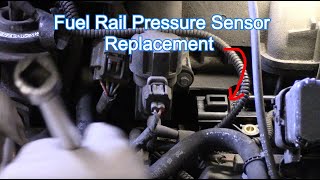
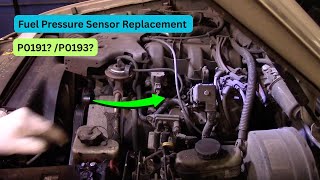
The key difference on the 2007-2010 Explorer Sport Trac is the engine. On the 4.6L V8, the Fuel Rail Pressure (FRP) sensor is conveniently located 🎬 Watch: 4.6L V8 fuel rail pressure sensor repair walkthrough on the driver's side fuel rail, making it a very simple DIY replacement. However, on the 4.0L V6, the sensor is buried underneath the upper intake manifold, turning a simple sensor swap into a more complex 2+ hour repair 🎬 See how to replace the sensor on 4.0L V6 engines that requires removing the manifold and replacing its gaskets. Owners often report this code after experiencing sudden hesitation or stalling that feels like running out of gas.
Symptoms You May Notice
- Check Engine Light is on
- Engine is hard to start or will not start
- Rough or erratic idle
- Engine stalling or hesitating, especially during acceleration
- Noticeable loss of power
- Reduced fuel economy
- Smell of gasoline near the engine (if the sensor diaphragm ruptures and leaks fuel into the vacuum line)
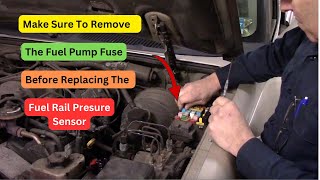
- Replacing the fuel pump without testing the FRP sensor circuit first. P0193 is an electrical circuit code, making the sensor or wiring the most likely culprits, not the pump itself.
Most Likely Causes

- Faulty Fuel Rail Pressure (FRP) Sensor 🔴 High Probability The FRP sensor is a very common failure item on this generation 🎬 Watch: Diagnostic and replacement guide for the P0193 code of Ford trucks and SUVs, often failing internally and causing a high resistance or open circuit condition.
How to confirm: On the 4.6L V8, the sensor is easily accessible on the driver's side fuel rail. On the 4.0L V6, it is under the intake manifold. A diagnostic scan tool can monitor the sensor's voltage reading; a reading pegged high (around 5 volts) with the key on, engine off, points to a bad sensor. Another check is to inspect the vacuum line attached to the sensor for the presence of raw fuel, which indicates a ruptured internal diaphragm. A good diagnostic step is to disconnect the sensor's electrical connector; if a different code like P0190 (Circuit Low) appears, it strongly suggests the sensor itself is internally shorted or open.
Typical fix: Replace the Fuel Rail Pressure sensor. On the 4.0L V6, the upper intake manifold gaskets must also be replaced.
Est. part cost: $60-$120 - Damaged Wiring or Electrical Connector 🟡 Medium Probability Engine heat and vibration can cause wires to become brittle, chafe against other components, or cause the connector pins to become loose or corroded over time.
How to confirm: Visually inspect the wiring harness and connector leading to the FRP sensor for any signs of corrosion, chafing, or loose pins. Use a multimeter to check for 5V reference voltage and a good ground at the connector. Also, check for high resistance (should be near zero ohms) on the signal wire between the sensor connector and the PCM.
Typical fix: Repair the damaged section of the wiring harness or replace the pigtail connector.
Est. part cost: $15-$40
Rare But Worth Checking
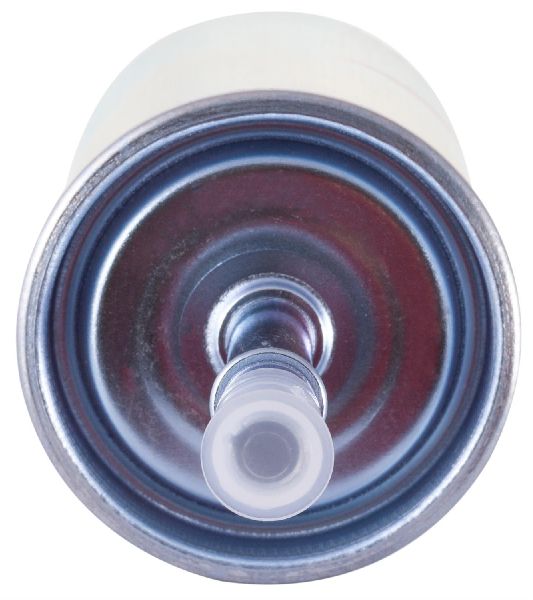
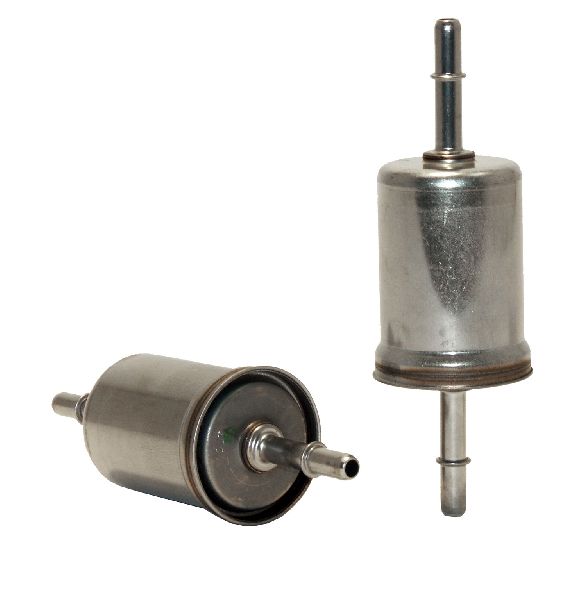
- Clogged Fuel Filter: While less common for a 'Circuit High' code, a severely clogged fuel filter can cause erratic fuel pressure behavior that may contribute to the code. It's often replaced as a preventative maintenance item during diagnosis.
- Failing Fuel Pump Driver Module (FPDM): The FPDM, typically mounted on the frame, controls the fuel pump. While failure usually results in low pressure codes (no-start), an erratic FPDM could potentially contribute to voltage spikes or unusual readings. A corroded FPDM is a known culprit for P0193 on some Ford vehicles.
- Faulty Powertrain Control Module (PCM): This is extremely rare. The PCM should only be considered after all other possibilities, including the sensor and wiring, have been exhaustively tested and ruled out.
Diagnosis Steps

- Use an OBD-II scanner to confirm P0193 is the only code present. If other codes exist, address them first.
- With the scanner, observe the live data for the Fuel Rail Pressure (FRP) PID. With the key on and engine off, a reading pegged at the maximum value (e.g., 5 volts or a very high PSI reading) strongly suggests a sensor or circuit fault.
- Locate the FRP sensor. On the 4.6L V8, it's on the driver's side fuel rail. On the 4.0L V6, it's under the upper intake manifold.
- Inspect the sensor's electrical connector and wiring for any visible damage, corrosion, or loose connections.
- Disconnect the vacuum line from the sensor (if equipped) and check for any smell or presence of raw fuel. If fuel is present, the sensor has failed internally and must be replaced.
- If the wiring looks good, disconnect the FRP sensor connector. Turn the key on and check for a different trouble code (e.g., P0192, Circuit Low). If a low circuit code appears, this heavily implicates the sensor itself as the faulty component.
- If the sensor is not clearly the issue, test the circuit with a multimeter. With the key on, you should have a 5-volt reference, a good ground, and a signal wire. A high resistance reading on the signal or ground wire points to a wiring issue between the sensor and the PCM.
- If the wiring and connections test good, the Fuel Rail Pressure sensor itself is the most likely cause and should be replaced.
Parts You'll Likely Need
- Fuel Rail Pressure Sensor
(OEM #Motorcraft CM5229 (cross-references to 3F2Z-9G756-AC, Bosch 0261230093). Note: Some earlier 4.6L/5.4L engines used 3R3Z-9F972-AA, verify by VIN.)— This is the most common cause of code P0193 on this vehicle. The sensor's internal electronics fail, sending a high voltage signal to the PCM.
Trusted brands: Motorcraft, Bosch, Standard Motor Products
OEM price range: $80-$120
Aftermarket price range: $50-$90 - Upper Intake Manifold Gasket Set
(OEM #Fel-Pro MS 96432 (for 4.0L V6))— Required for 4.0L V6 models only. The intake manifold must be removed to access the FRP sensor, and the gaskets are single-use and must be replaced to prevent vacuum leaks.
Trusted brands: Fel-Pro, Motorcraft
OEM price range: $40-$60
Aftermarket price range: $20-$40
Technical Service Bulletins (TSBs) & Recalls
- TSB 08-20-5: While not directly for P0193, this TSB addresses transmission issues (delayed/harsh shifts) in the 5R55S transmission common to these vehicles. It's notable because severe drivability problems can sometimes be misdiagnosed between engine and transmission.
Platform-Specific Known Issues
- The location of the FRP sensor on the 4.0L V6 engine significantly increases the labor and complexity of the repair compared to the 4.6L V8 engine, requiring about 2 hours of work and removal of the intake manifold.
Mechanic-Grade Diagnostic Values
- FRP Sensor Signal Voltage (Key On, Engine Off) — expected: ~0.5V. Failure: A reading near 5.0V or battery voltage indicates a short to power or an internally failed sensor.
- FRP Sensor Reference Voltage at Connector — expected: 5.0V. Failure: No voltage or significantly lower voltage points to a wiring or PCM issue.
- FRP Sensor Ground at Connector — expected: Near 0V (low millivolts). Failure: High voltage or resistance on the ground line indicates a bad ground connection.
- FRP Sensor Signal Wire Continuity — expected: Near 0 ohms. Failure: High resistance or an open reading (OL) indicates a broken wire between the sensor connector and the PCM.
- FRP Sensor Pin 1 to Pin 4 Resistance (Sensor-Side) — expected: Should be within a specific kilo-ohm range (e.g., 40k ohms), but this varies. An open or shorted reading is a definitive failure.. Failure: Open circuit (OL) or 0 ohms indicates a failed sensor.
Wiring & Ground Locations

- FRP Sensor Connector Pins (Typical 4-pin) — On the Fuel Rail Pressure Sensor itself.. Knowing the pinout allows for precise testing. Pin 1 is typically the pressure signal to the PCM (the wire involved in P0193). Pin 2 is the 5V reference. Pin 3 is for the integrated temperature sensor (if equipped). Pin 4 is the signal return/ground.
- G102 — On the 4.0L, this ground is at the center rear of the engine compartment. On the 4.6L, it's at the rear of the engine compartment.. This is a primary engine ground. A poor connection here can cause erratic sensor readings and various electrical faults, including P0193.
- G105 / G106 — Located on the left and right sides of the engine compartment, respectively.. These are chassis grounds that serve various components in the engine bay. A corroded or loose ground at these points can affect the PCM's reference and cause sensor circuit codes.
Real Owner Repair Stories
- Ford Truck Enthusiasts Forums (2005 F-250 5.4L V8 (similar fuel system architecture)) — P0193 code, scan tool showing 77.4 PSI at all times, fuel pump runs continuously.
❌ Tried (didn't work) Replaced Fuel Rail Pressure Sensor (FRPS), Replaced Fuel Pump Driver Module (FPDM)
✅ What actually fixed it The user confirmed wiring was good back to the PCM. The issue was that even with a new FPDM, the fuel pump was commanded to run at maximum duty cycle, causing extremely high rail pressure that maxed out the sensor's voltage range. The final resolution pointed towards a PCM command issue, though the thread ends before the final fix was confirmed, it highlights a critical diagnostic path: P0193 can be caused by *actual* overpressure forcing the sensor to its electrical limit.
OEM Part Supersession History
3R3Z-9F972-AA→3F2Z-9G756-AC (Motorcraft CM5229)— Part update/consolidation by Ford.
Heads up: The earlier part number 3R3Z-9F972-AA was used on some early 4.6L/5.4L 3V engines. While the newer CM5229/3F2Z-9G756-AC is the primary replacement for the 2007-2010 Sport Trac, it's critical to verify by VIN, as some early production models or engine swaps could cause confusion. Using the wrong sensor can lead to incorrect pressure readings even if it physically fits.
Diagnostic Flowchart
Other Known Issues on This Vehicle
Issues unrelated to this code that are worth knowing about as an owner of this generation:
- 4.0L SOHC Timing Chain Cassette Failure 🔴 High — Very common, especially on higher mileage (100k+) engines. Often presents as a rattling or ticking noise from the engine, particularly at startup or idle.
- 5R55S/5R55W Transmission Problems 🔴 High — Widespread issues include harsh shifting, delayed engagement, blinking O/D light, and outright failure. Often caused by worn servo bores in the transmission case or solenoid pack failure. (Ref: Multiple TSBs exist, though not a full recall. For example, TSB 08-20-5 addresses delayed/harsh shifts.)
- Cracked Rear Liftgate Applique Panel 🟡 Low — Extremely common cosmetic issue where the plastic trim panel below the rear window cracks, usually near the emblem. This can allow water intrusion, potentially damaging the latch or wiring.
- Cracked Plastic Thermostat Housing 🟠 Medium — The plastic thermostat housing is prone to cracking or seam failure, leading to coolant leaks. This is a common failure point after 60,000-100,000 miles.
Used vs. New Parts: Buying Guide for This Vehicle
When a used part is the smart pick: A used part is a reasonable choice for the wiring harness pigtail connector if the original is damaged. It is generally not recommended to buy a used electronic sensor like the FRP sensor itself.
Donor-vehicle mileage cap: roughly under 80000 miles for the part to have meaningful remaining life.
What to inspect on the donor part:
- For a pigtail connector, inspect for any brittleness, cracking, or corrosion on the pins.
- Ensure there is at least 4-6 inches of wire attached to allow for easy splicing.
- Avoid connectors from vehicles with obvious signs of engine fire or flood damage.
OEM-only on this vehicle (don't cheap out):
- While not strictly OEM-only, using a Motorcraft or Bosch (the OEM supplier) Fuel Rail Pressure Sensor is highly recommended for reliability and correct calibration.
Aftermarket brands forum-validated for this vehicle:
- Motorcraft (OEM)
- Bosch (OEM supplier)
- Standard Motor Products (SMP) is generally considered a reliable aftermarket option.
Brands owners have reported issues with on this vehicle:
- Avoid unbranded, 'white-box' parts from online marketplaces. Users often report these fail quickly or are not calibrated correctly, causing the code to return.
Real Owner Stories
Aggregated from forums and TSBs cited above. Mileages and costs reflect what owners reported in those sources.
2007 Explorer Sport Trac 4.6L V8
Symptoms: Check engine light with code P0193 fuel rail pressure sensor A circuit high.
What fixed it: Replaced the fuel pressure sensor (Standard Ignition FP5).
Source hint: youtube_comment from 'Returning to Basics' (P0193 DTC Check Engine Light Repair - 07 Sport Trac 4.6 - YouTube)
2007 Explorer 4.0L
Symptoms: P0193 code and stalling symptoms.
What fixed it: Replacing the sensor, which required removing the intake manifold and replacing the gaskets.
Source hint: Ford Truck Enthusiasts Forums - P0193 Code - Questions
2004 Sport Trac
Symptoms: The P0193 code appeared and the check engine light came on.
What fixed it: The owner replaced the sensor, but the light returned. Further diagnosis included checking the fuel filter and resetting the computer.
Source hint: FordSportTrac.org - p0193
Related OBD-II Codes
Frequently Asked Questions
Where is the Fuel Rail Pressure (FRP) sensor located on my 2007-2010 Sport Trac?
Why is the P0193 repair so much more difficult on the 4.0L V6 engine?
How can I test the FRP sensor myself before replacing it?
My Sport Trac is shifting hard and has a P0193 code. Are these issues related?
Besides a bad sensor, what else commonly causes the P0193 code on this truck?
Are other Ford vehicles prone to this same P0193 sensor failure?
Helpful Videos
Used OEM Parts in Stock


New Aftermarket Parts Available


The information in this article is provided for general reference and educational purposes only. Vehicle specifications, procedures, and part compatibility can vary by production date, trim level, and region. Always consult your vehicle's factory service manual and verify part numbers before purchasing or performing repairs. Safety-critical components such as airbags, seat belts, and braking systems should be installed by a qualified professional.
- Ford Explorer Sport Trac:
- 🎬 Helpful Videos
- 🛍️ Shop This Part
- What's Unique About the 2007-2010 Ford Explorer Sport Trac
- Symptoms You May Notice
- Most Likely Causes
- Rare But Worth Checking
- Diagnosis Steps
- Parts You'll Likely Need
- Technical Service Bulletins (TSBs) & Recalls
- Platform-Specific Known Issues
- Mechanic-Grade Diagnostic Values
- Wiring & Ground Locations
- Real Owner Repair Stories
- OEM Part Supersession History
- Diagnostic Flowchart
- Other Known Issues on This Vehicle
- Used vs. New Parts: Buying Guide for This Vehicle
- Real Owner Stories
- 2007 Explorer Sport Trac 4.6L V8
- 2007 Explorer 4.0L
- 2004 Sport Trac
- Related OBD-II Codes
- Frequently Asked Questions
- 🎟️ Get 5% Off