

P0193 on 2006-2019 Ford E-350 6.8L V10: Causes, Fixes, and Parts
P0193 on a Ford E-350 almost always points to a failed Fuel Rail Pressure (FRP) sensor. It's a common failure item that sends a false high voltage signal to the computer. Replacing the sensor is the most likely fix, with an OEM part costing around $90-$140.
- P0193 on this vehicle is almost always caused by a bad Fuel Rail Pressure (FRP) sensor.
- Before buying parts, check the sensor's electrical connector for corrosion or damage, as it's a common and easy-to-fix issue.
- The correct OEM replacement part is Motorcraft CM-5229 (Ford part number 3F2Z-9G756-AC). Using a quality part is recommended.
- The repair is straightforward and accessible after removing the interior engine cover ('doghouse'), making it a good DIY task for most owners.
- Do not immediately assume the fuel pump is bad; this code points to a sensor or circuit issue first.
What's Unique About the 2006-2019 Ford E-350
The Ford E-350 with the 6.8L V10 engine uses a returnless fuel system that relies heavily on the Fuel Rail Pressure (FRP) sensor to regulate fuel delivery. Unlike many other vehicles that operate around 40 psi, the correct fuel pressure for this specific V10 engine is notably higher, around 65-70 psi. Because of this higher operating pressure and the sensor's critical role, a failure can cause immediate and noticeable drivability problems. The sensor itself is a known failure point across many Ford models from this era that use the same part, including the E-150, E-250, F-Series trucks, and F53 motorhome chassis.
Generation note: The 2006-2019 range covers the end of the third generation (2006-2007) and the fourth generation (2008-2019) of the E-350. However, the 6.8L 2-valve V10 powertrain and its electronic returnless fuel system design were largely unchanged in relation to this specific code. The diagnosis and repair parts are consistent across this entire year span. It's important to note that all E-Series vans retained the 2-valve V10 throughout their production, unlike the F-Series trucks which switched to a 3-valve design in 2005.
Symptoms You May Notice
- Check Engine Light is on
- Engine is hard to start or won't start
- Engine stalls, especially at idle
- Poor acceleration and loss of power
- Rough idling or misfiring
- Reduced fuel economy
- Engine may enter a 'limp mode' with limited RPM.
- Replacing the fuel pump without confirming the Fuel Rail Pressure sensor and its circuit are functioning correctly. A P0193 is most often an electrical circuit or sensor fault, not a mechanical pump failure.
Most Likely Causes
- Faulty Fuel Rail Pressure (FRP) Sensor 🔴 High Probability The FRP sensor is a common failure point on many Ford vehicles of this era due to heat and vibration exposure over time. The sensor can fail internally, causing a short to its own 5V reference voltage, which the PCM reads as a 'circuit high' fault.
How to confirm: With a scan tool, observe the FRP sensor voltage (KOEO - Key On, Engine Off). If it reads near 5 volts (specifically >4.8V), the sensor is likely shorted internally. You can also disconnect the sensor; if the voltage reading on the scan tool drops to near zero, it confirms the sensor is the source of the high voltage signal and needs replacement. A visual inspection may reveal fuel leaking from the sensor's vacuum port, which is a definitive sign of failure.
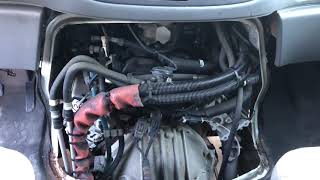
Typical fix: Replace the Fuel Rail Pressure sensor. On the 6.8L V10 in an E-350, it is located on the passenger side fuel rail, accessible after removing the engine 'doghouse' cover.
Est. part cost: $40-$140 - Wiring Harness or Connector Issue 🟡 Medium Probability The engine cover ('doghouse') in E-Series vans can sometimes lead to wiring being disturbed or damaged during service. The connector pins can also corrode or back out, and the harness can chafe against engine components, causing a short to power. Manufacturer service bulletins like SSM 47337 have documented cases where P0193 is triggered by engine harness chafing at the cylinder head.
How to confirm: Visually inspect the FRP sensor connector and wiring for any signs of corrosion, damage, melted insulation, or loose pins. With the sensor disconnected, use a multimeter to check for a 5-volt reference signal and a good ground at the connector. Wiggle the harness while monitoring voltage to check for intermittent faults.
Typical fix: Repair the damaged section of the wiring harness or replace the pigtail connector.
Est. part cost: $15-$40 - Faulty Fuel Pump Driver Module (FPDM) ⚪ Low Probability On E-Series vans, the FPDM is often mounted to the frame rail, where it is susceptible to corrosion. The original design mounted an aluminum module directly to a steel frame, causing galvanic corrosion that compromises the module's housing and electronics.
How to confirm: This is less likely for a 'circuit high' code, which is usually electrical at the sensor. However, a failing FPDM can cause erratic fuel pressure and a host of similar symptoms like stalling and no-starts. A visual inspection of the module for heavy corrosion is often the best diagnostic step. The FPDM typically throws its own code, P1233, when it fails.
Typical fix: Replace the Fuel Pump Driver Module. Newer replacement kits often include spacers to create an air gap and prevent future corrosion.
Est. part cost: $50-$150
Rare But Worth Checking
- Powertrain Control Module (PCM) Fault: This is extremely rare. The PCM should only be considered after all other possibilities, including the sensor and wiring, have been exhaustively tested and ruled out. A PCM failure is more likely to cause multiple, unrelated codes.
- Reference Voltage Circuit Interference: Manufacturer bulletin SSM 46351 notes that a P0193 can sometimes be caused by a concern with the reference voltage or signal return circuit of the crankshaft position sensor, which may share a circuit path.
Diagnosis Steps
- Connect an OBD-II scanner and verify P0193 is the primary code. Note any other codes present and check freeze frame data.
- Using the scanner's live data, check the Fuel Rail Pressure (FRP) sensor voltage with the Key On, Engine Off (KOEO). A reading at or near 5.0 volts (above 4.8V) strongly suggests an electrical fault in the sensor or its circuit.
- Locate the FRP sensor on the passenger side fuel rail. Visually inspect its electrical connector and surrounding wiring for obvious signs of damage, corrosion, melting, or loose connections.
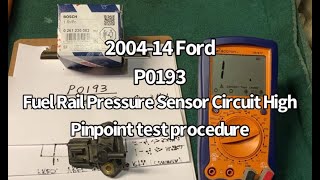
- Disconnect the FRP sensor. The voltage on the scan tool should drop to near zero. 🎬 See: Step-by-step Ford P0193 diagnostic testing procedure If it does, the sensor is very likely faulty and needs replacement.
- If the voltage does not drop after disconnecting the sensor, there is a short to power in the wiring harness. Inspect the harness between the sensor and the PCM for chafing or damage.
- If the voltage does drop, use a multimeter to verify the integrity of the connector. With the key on and sensor disconnected, check for a 5-volt reference on one pin and a good ground on another.
- If wiring is confirmed good and the sensor is the suspected issue, replace the Fuel Rail Pressure sensor. Use a quality part like Motorcraft.
- After replacement, clear the codes and perform a test drive, monitoring live data to ensure the FRP reading is stable and within the correct range (around 65-70 psi at idle).
Parts You'll Likely Need
- Fuel Rail Pressure Sensor
(OEM #3F2Z-9G756-AC)— This sensor is the most common point of failure for a P0193 code. It fails internally, causing a short that sends a constant high voltage signal to the PCM.
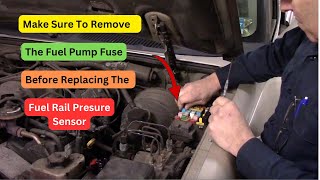
Trusted brands: Motorcraft (CM-5229), Bosch (0261230093), Standard Motor Products (FPS5), Walker (2451052) 🎬 Watch: How to replace the fuel rail pressure sensor
OEM price range: $90-$140
Aftermarket price range: $40-$80
Technical Service Bulletins (TSBs) & Recalls
- While no TSBs specifically for P0193 on the E-350 V10 were found, Ford has issued related TSBs for other models. For example, SSM 47337 addresses a wiring harness chafing issue on 2018 F-150s causing P0193, and SSM 46456 points to damaged crankshaft position sensor wiring on 2017 Super Duty trucks that can also trigger this code. This highlights the importance of checking for wiring issues.
- Additionally, SSM 46351 indicates that for some vehicles, a MIL with DTC P0193 may be due to a concern with the reference voltage or signal return circuit of the crankshaft position sensor.
Platform-Specific Known Issues
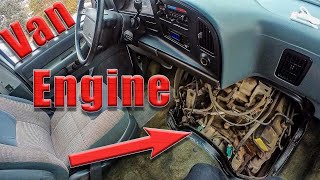
- FRP Sensor Location and Access: The Fuel Rail Pressure sensor is located on the passenger side fuel rail. Access requires removing the interior engine cover, often called the 'doghouse'. While not mechanically complex, it can be cumbersome to work in the tight space.
- Returnless Fuel System: The E-350 uses an electronic returnless fuel system where the PCM controls fuel pressure by modulating the fuel pump via the Fuel Pump Driver Module (FPDM), based on input from the FRP sensor. This makes the sensor's signal critical for proper operation.
Mechanic-Grade Diagnostic Values
- FRP Sensor Signal Voltage (KOEO) — expected: 0.5V - 4.5V. Failure: Voltage is > 4.8V for 5+ seconds. A reading near 5.0V indicates a short to voltage or internal sensor failure.
- FRP Sensor Internal Resistance — expected: Greater than 6.5k Ohms between the Ground and Reference Voltage pins.. Failure: Resistance is less than 6.5k Ohms, indicating an internal short.
- FRP Sensor Connector VREF (Sensor Disconnected, KOEO) — expected: 4.5V - 5.5V. Failure: Voltage is below 4.5V or absent, indicating an open or short in the VREF circuit from the PCM.
- FRP Sensor Connector Ground Circuit Resistance — expected: Less than 5.0 Ohms to a known good chassis ground.. Failure: Resistance is greater than 5.0 Ohms, indicating a poor ground connection.
Scan Tool Commands That Help
- Manual Test (Jumper Wire): Bypass the Fuel Pump Driver Module (FPDM) — If the FRP sensor and wiring test good but fuel pressure is still incorrect (either too high or too low), this test can isolate the FPDM. By jumping the fuel pump power and ground wires at the FPDM connector, you send full battery voltage directly to the pump. If the pump runs and pressure builds to its maximum (often 75+ PSI), the pump is good and the FPDM is the likely culprit. This is more commonly used for no-start or low-pressure codes like P1233 but can help rule out components.
Wiring & Ground Locations
- Powertrain Control Module (PCM) — In the engine compartment on the driver's side, mounted to or near the cowl/firewall.. The PCM is the source of the 5V reference voltage and the destination for the FRP signal wire. All circuit tests terminate at the PCM connector, so knowing its location is critical for advanced diagnosis.
- G105 — On the left (driver's) front of the engine compartment.. This is a primary engine compartment ground point. While the FRP sensor uses a dedicated signal return wire to the PCM, a poor main PCM ground can cause floating voltages and erratic sensor readings across the system.
- FRP Sensor Connector Pins — On the sensor itself, located on the passenger side fuel rail.. Testing requires knowing the function of each pin: 5V Reference (VREF), Signal Return (Ground), and the FRP Signal wire. A P0193 is caused by high voltage on the signal wire, often due to a short to the VREF wire either in the harness or inside the sensor.
Real Owner Repair Stories
- Ford Truck Enthusiasts Forum (2006 Ford E-350 6.8L V10) — Check Engine Light with code P0193, no initial change in performance.
❌ Tried (didn't work) The owner first cleared the code to see if it was an intermittent fluke.
✅ What actually fixed it The immediate discussion among experienced members pointed to checking the FRP sensor connector and wiring for corrosion or damage as the most probable cause, confirming the standard diagnostic path. The thread also validated that the ~65 psi fuel pressure reading seen by the owner was correct for this specific engine, a key piece of diagnostic information. - Ford Truck Enthusiasts Forum (2005 Ford F-250 5.4L (similar electronic returnless fuel system)) — P0193, fuel pressure stuck at maximum (77.4 PSI) on scan tool, fuel pump runs continuously with key on.
❌ Tried (didn't work) Replacing the Fuel Rail Pressure Sensor (FRPS)., Replacing the Fuel Pump Driver Module (FPDM).
✅ What actually fixed it After confirming the wiring harness was good via multimeter tests, the user suspected a faulty PCM. The PCM was not correctly commanding the FPDM, causing it to default to running the pump at 100% duty cycle. Replacing the PCM would be the final step. This is a valuable story showing a rare but possible PCM failure after all common components are ruled out.
Documented NHTSA Reports
- An owner reported in NHTSA ODI #10593745 that their engine light had been on for several months with P0193 (Fuel Rail Pressure Sensor High Input) as the only code, eventually requiring a repair costing $275.
- NHTSA ODI #11234304 describes a situation where a vehicle exhibited a P0193 code alongside unrelated electrical issues, such as being unable to reset driver controls until doors showed closed, despite no door codes being present.
OEM Part Supersession History
3F2E-9G756-AD→3F2Z-9G756-AC (Motorcraft CM-5229)— Standard part revision and improvement over time.
Heads up: Both parts are generally interchangeable, but using the latest revision (3F2Z-9G756-AC / CM-5229) is always recommended for reliability.
Diagnostic Flowchart
Other Known Issues on This Vehicle
Issues unrelated to this code that are worth knowing about as an owner of this generation:
- Spark Plug Ejection (2-Valve V10) 🔴 High — More common on pre-2003 models with fewer spark plug threads in the aluminum heads, but can occur on later 2-valve engines. Often happens between 50k-150k miles if plugs are not torqued correctly.
- Broken Exhaust Manifold Studs 🟠 Medium — Very common across all years of the V10. The rearmost studs on both sides are most prone to breaking due to heat cycles.
- Cracked PCV Hose Elbow 🟡 Low — Common failure item due to heat and age. Can happen at any mileage.
- Failing Ignition Coil-on-Plugs (COPs) 🟠 Medium — Common as the vehicle ages, typically over 100,000 miles. Failure is often intermittent at first.
Used vs. New Parts: Buying Guide for This Vehicle
When a used part is the smart pick: For this repair, a used part is generally not recommended for the electronic sensors (FRP, FPDM, PCM). However, obtaining a used wiring harness pigtail from a junkyard is a viable and cost-effective option if only the connector is damaged.
Donor-vehicle mileage cap: roughly under 100000 miles for the part to have meaningful remaining life.
What to inspect on the donor part:
- For a wiring pigtail, inspect for brittle insulation, corrosion on pins, or previous shoddy repairs.
- Ensure there is enough wire length to splice it properly into the vehicle's harness.
- Avoid parts from vehicles with obvious signs of fire, flood, or major engine bay damage.
OEM-only on this vehicle (don't cheap out):
- Fuel Rail Pressure (FRP) Sensor
- Powertrain Control Module (PCM)
Aftermarket brands forum-validated for this vehicle:
- Bosch (often the original OE manufacturer)
- Standard Motor Products (SMP)
- NTK/NGK
Brands owners have reported issues with on this vehicle:
- No-name, unbranded sensors from online marketplaces. Forum discussions frequently highlight that these cheap sensors often fail quickly or are dead-on-arrival, making the low price a false economy.
Real Owner Stories
Aggregated from forums and TSBs cited above. Mileages and costs reflect what owners reported in those sources.
2006 Ford E-350 6.8L V10
Symptoms: The Check Engine Light came on with code P0193, though there was no initial change in vehicle performance.
What fixed it: Inspecting the FRP sensor connector for corrosion or wiring faults was the recommended first step for this specific owner.
Source hint: Ford Truck Enthusiasts Forums - 'P0193'
2010 Ford E-450 V10 (Motorhome Chassis)
Symptoms: High fuel pressure readings peaking over 75 psi and a P0191 code.
What fixed it: Diagnosis focused on the electronic returnless system and the function of the Fuel Pump Driver Module (FPDM).
Source hint: Ford Truck Enthusiasts Forums - 'High Fuel Pressure - Need help'
2004 Ford E-350
Symptoms: Sputtering and stalling symptoms that mimicked a failing fuel pump.
What fixed it: Addressing Fuel Pump Driver Module (FPDM) issues and correcting improper previous wiring repairs.
Source hint: Ford Truck Enthusiasts Forums - '2004 Ford E-350 Fuel Pump Driver Module Mess'
Related OBD-II Codes
Frequently Asked Questions
Where is the Fuel Rail Pressure sensor located on my E-350 V10?
What should the fuel pressure reading be for a 6.8L V10 at idle?
Does TSB SSM 47337 apply to my E-350?
Can a bad Fuel Pump Driver Module (FPDM) cause P0193 on my Ford van?
What specific FRP sensor part should I use for the 6.8L V10?
How can I tell if my FRP sensor has failed internally?
Helpful Videos
We Have This Part in Stock


The information in this article is provided for general reference and educational purposes only. Vehicle specifications, procedures, and part compatibility can vary by production date, trim level, and region. Always consult your vehicle's factory service manual and verify part numbers before purchasing or performing repairs. Safety-critical components such as airbags, seat belts, and braking systems should be installed by a qualified professional.
- Ford E-350:
- 🎬 Helpful Videos
- 🛍️ Shop This Part
- What's Unique About the 2006-2019 Ford E-350
- Symptoms You May Notice
- Most Likely Causes
- Rare But Worth Checking
- Diagnosis Steps
- Parts You'll Likely Need
- Technical Service Bulletins (TSBs) & Recalls
- Platform-Specific Known Issues
- Mechanic-Grade Diagnostic Values
- Scan Tool Commands That Help
- Wiring & Ground Locations
- Real Owner Repair Stories
- Documented NHTSA Reports
- OEM Part Supersession History
- Diagnostic Flowchart
- Other Known Issues on This Vehicle
- Used vs. New Parts: Buying Guide for This Vehicle
- Real Owner Stories
- 2006 Ford E-350 6.8L V10
- 2010 Ford E-450 V10 (Motorhome Chassis)
- 2004 Ford E-350
- Related OBD-II Codes
- Frequently Asked Questions
- 🎟️ Get 5% Off