

P0193 on 2014-2020 Chevrolet Impala 3.6L V6: Fuel Pressure Sensor Circuit High Causes and Fixes
For a 2014-2020 Impala 3.6L, code P0193 most often means the Fuel Rail Pressure Sensor has failed. This sensor is located under the intake manifold, making replacement a 2-3 hour job. Expect to pay $60-$90 for an OEM ACDelco sensor. Before replacing, verify the wiring harness isn't chafed, a known issue on this engine platform.
- P0193 on your Impala almost always points to a bad Fuel Rail Pressure Sensor.
- Verify which 3.6L V6 engine you have (LFX for 2014-2017, LGX for 2018-2020) before ordering a new sensor, as they are different parts.
- This repair is complex due to the sensor's location under the intake manifold and the dangers of the high-pressure fuel system; professional service is strongly recommended.
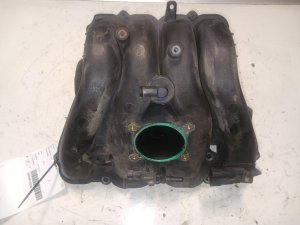
- Always replace the upper intake manifold gaskets when performing this repair to prevent future vacuum leaks.
- If you or a mechanic must disconnect any high-pressure fuel lines, they are single-use and must be replaced to prevent dangerous fuel leaks.
What's Unique About the 2014-2020 Chevrolet Impala
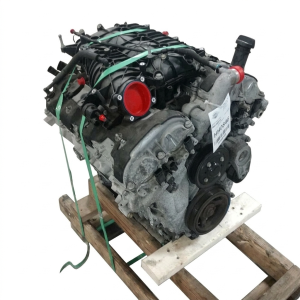
The 3.6L V6 in this generation of Impala is a gasoline direct injection (GDI) engine, which uses a high-pressure fuel system. Unlike older port injection systems, it has two fuel pumps: a low-pressure pump in the tank and a high-pressure fuel pump (HPFP) driven by the engine. This system operates at pressures over 2,000 PSI, making the Fuel Rail Pressure (FRP) sensor's accuracy critical. While the 🎬 Watch: This video explains how P0193 affects your fuel system. sensor itself is the most common failure point for P0193, the HPFP on this engine family is a known weak point that can also cause fuel pressure issues, though it more commonly sets low-pressure codes.
Generation note: The 2014-2020 Impala is a single vehicle generation (10th), but it uses two different versions of the 3.6L V6 engine. 2014-2017 models use the LFX engine, while 2018-2020 models use the updated LGX engine. The Fuel Rail Pressure Sensor part number is different for each engine.
Symptoms You May Notice
- Check Engine Light is on
- Engine is hard to start or will not start
- Hesitation or stumbling during acceleration
- Reduced engine power or 'limp mode'
- Rough or unstable idle
- Engine stalling
- Decreased fuel economy
- Engine will not rev past a certain limit (e.g., 2000 RPMs)
- Replacing the high-pressure fuel pump (HPFP) before confirming the fuel rail pressure sensor and its wiring are good. The sensor is a more common and less expensive failure for this specific code.
- Replacing the in-tank low-pressure fuel pump. The P0193 code relates to the high-pressure side of the fuel system.
Most Likely Causes
- Faulty Fuel Rail Pressure (FRP) Sensor 🔴 High Probability The sensor is located in a high-heat, high-vibration environment under the intake manifold, which can lead to internal electronic failure over time, causing a short that sends a constant high-voltage signal.
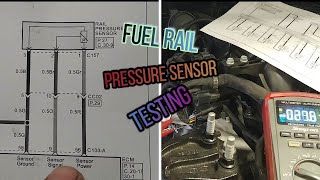
How to confirm: With a scan tool, observe the live data for Fuel Rail Pressure with the Key On, Engine Off (KOEO). If the reading is stuck at a maximum value or shows a voltage at or near 5V, the sensor is likely shorted internally. The code may set instantly upon clearing, even without starting the engine. 🎬 See how a pro diagnoses a faulty fuel rail sensor.
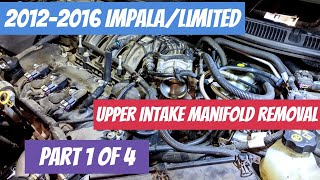
Typical fix: Replace the Fuel Rail Pressure Sensor. This requires removing the upper intake manifold 🎬 Watch: Step-by-step guide to removing the LFX intake manifold. for access.
Est. part cost: $60-$90 - Wiring Harness or Connector Issue 🟡 Medium Probability GM has a Technical Service Bulletin (TSB #PIP4924D, superseded by newer versions) for the 3.6L V6 family regarding the engine harness chafing. Common chafe points are against the intake plenum, valve cover bolts, or the edge of the transmission case, which can cause a short to voltage on the sensor's signal wire.
How to confirm: Inspect the wiring harness leading to the FRP sensor for any signs of chafing, melting, or corrosion, particularly where it might rub against the intake manifold or cylinder head. Test the sensor connector for a stable 5V reference, good ground, and check the signal wire for a short to voltage.
Typical fix: Repair the damaged section of the wiring harness with solder and heat-shrink tubing, then protect it from future damage using loom or re-routing with zip ties. Clean or replace the connector if it is corroded.
Est. part cost: $5-$50 - Failing High-Pressure Fuel Pump (HPFP) ⚪ Low Probability The HPFP is a known failure point on the GM 3.6L engine family. While it typically fails by producing low pressure (setting codes like P0087 or P228C), it can mechanically fail in a way that causes pressure spikes, triggering a P0193.
How to confirm: This is difficult to confirm without ruling out the sensor and wiring first. If a new sensor and verified wiring do not fix the code, and a mechanical gauge confirms actual fuel pressure is too high, the HPFP is the likely culprit.
Typical fix: Replace the high-pressure fuel pump and the single-use fuel line that connects it to the rail.
Est. part cost: $200-$400 - Swapped Electrical Connectors ⚪ Low Probability On some GM V6 engines, there are multiple connectors in the same area with similar plugs. It is possible, especially after a major repair like an intake manifold gasket replacement, to accidentally swap the FRP sensor connector with another nearby connector, which can cause a circuit high fault.
How to confirm: If the P0193 code appeared immediately after the engine was reassembled, carefully trace the wiring and verify that the correct harness connector is plugged into the FRP sensor.
Typical fix: Unplug the incorrect connector and plug in the correct one.
Est. part cost: $0
Rare But Worth Checking
- Faulty Engine Control Module (ECM): This is very rare. The ECM should only be considered after all other possibilities, including the sensor, wiring, and mechanical fuel system components, have been thoroughly tested and ruled out.
Diagnosis Steps
- Connect an OBD-II scanner and confirm P0193 is the primary code. Note any other codes present.
- View live data on the scanner. Observe the 'Fuel Rail Pressure' and 'FRP Sensor Voltage' readings with the Key On, Engine Off (KOEO). A reading stuck at maximum pressure or a voltage of ~4.9-5.0V points to a sensor or wiring short.
- Turn the vehicle off and disconnect the FRP sensor connector. Inspect the connector and sensor pins for corrosion or damage.
- With the key on and sensor disconnected, test the connector terminals. You should find a 5-volt reference, a good ground, and the signal wire should read 0 volts.
- If the 5V reference and ground are correct, and the signal wire is 0V with the sensor unplugged, the wiring is likely okay and the sensor itself is the primary suspect.
- If the signal wire shows voltage with the sensor unplugged, there is a short to voltage in the harness that must be located and repaired. Carefully inspect the harness at known chafe points near the transmission and intake manifold.
- If recent engine work was performed, verify the correct harness connector is attached to the FRP sensor and has not been swapped with another.
- If the sensor and wiring are deemed good, the issue may be mechanical. Use a fuel pressure gauge to test the low-pressure system (should be 55-60 PSI). Testing the high-pressure side requires specialized tools and should be done by a professional.
- If actual fuel pressure is confirmed to be excessively high, suspect a faulty high-pressure fuel pump (HPFP).
Parts You'll Likely Need
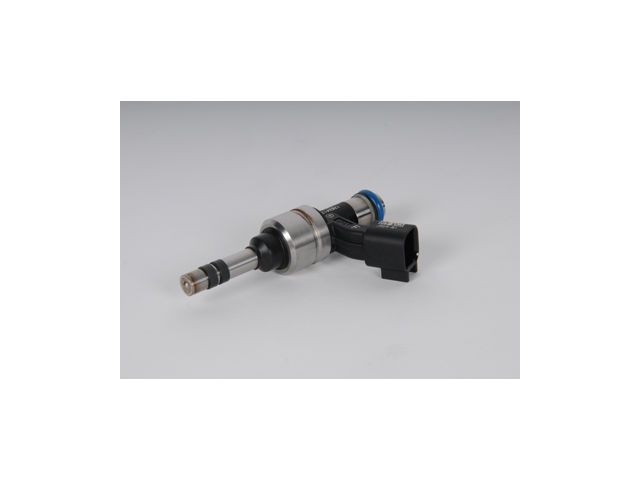
- Fuel Rail Pressure Sensor (2014-2017 LFX Engine)
(OEM #12635273)— This is the most common failure part for a P0193 code on the LFX engine. It fails internally, sending a constant high voltage signal.
Trusted brands: ACDelco, Bosch, Standard Motor Products
OEM price range: $60-$90
Aftermarket price range: $35-$60 - Fuel Rail Pressure Sensor (2018-2020 LGX Engine)
(OEM #12682589)— This is the most common failure part for a P0193 code on the LGX engine. It fails internally, sending a constant high voltage signal.
Trusted brands: ACDelco, Bosch
OEM price range: $55-$75
Aftermarket price range: $30-$55 - Upper Intake Manifold Gasket Set — The intake manifold must be removed to access the fuel rail pressure sensor. The gaskets are single-use and must be replaced to prevent vacuum leaks.
Trusted brands: ACDelco, Fel-Pro
OEM price range: $30-$50
Aftermarket price range: $15-$30
Related Codes That Often Appear With This One
- P0192 — Fuel Rail Pressure Sensor Circuit Low Input. If seen with P0193, it can indicate an intermittent wiring problem or a sensor that is failing erratically.
- P0089 — Fuel Pressure Regulator Performance. This code can appear if there is a genuine mechanical issue causing erratic or high fuel pressure, pointing more towards the high-pressure fuel pump.
- P228C — Fuel Pressure Regulator 1 Exceeded Control Limits. Similar to P0089, this code suggests a mechanical control problem with the high-pressure pump, which could be triggered by faulty sensor data or an actual pump failure.
Technical Service Bulletins (TSBs) & Recalls
- PIP4924D (and later revisions like PIP4924E): While not explicitly for the Impala, this TSB applies to the 3.6L engine family and warns of the engine wiring harness chafing on engine components like the intake plenum, valve cover bolts, and transmission case. This can cause shorts leading to various sensor codes, including P0193.
- Bulletin #PIP5279A: This manufacturer bulletin notes that vehicles may exhibit a Service Engine Soon Malfunction Indicator Lamp with codes including P0193, P0089, P0192, and P228C. Technicians are advised to follow published Service Information diagnostics for the specific stored codes.
Mechanic-Grade Diagnostic Values
- FRP Sensor Signal Voltage (KOEO) — expected: Approximately 1.5V to 1.8V. Failure: A reading stuck near 0V or 5V. For P0193, a reading stuck at or near 4.5V-5.0V is the key indicator of a shorted sensor or circuit.
- FRP Sensor 5V Reference Voltage — expected: 4.8V to 5.2V (at the connector, with sensor unplugged, KOEO). Failure: Voltage significantly lower or higher than 5V indicates a wiring or ECM issue, not a sensor failure.
- Low-Pressure Fuel System Pressure (KOEO) — expected: 55-60 PSI. Failure: Pressure below 55 PSI indicates a problem with the in-tank fuel pump, not the high-pressure system.
- High-Pressure Fuel System Pressure (Idle) — expected: Should be stable and match scan tool's 'Desired' value, typically around 4 MPa (580 PSI).. Failure: Actual pressure significantly different from desired pressure, or erratic readings, can point to a HPFP or sensor issue.
Scan Tool Commands That Help
- GDS2 / Tech2: Fuel Pump Relay Command ON — When testing the low-pressure fuel pump, this command allows you to run the pump without the engine running to verify it can build and hold the specified 55-60 PSI.
- GDS2 / Tech2: Fuel Rail Pressure Data Display — Use this to compare 'Desired Fuel Rail Pressure' vs. 'Actual Fuel Rail Pressure'. A large discrepancy under load can help differentiate between a sensor lying (reporting high pressure) and a mechanical pump issue.
Wiring & Ground Locations
- G103 / G105 — G103 is typically in the left front of the engine compartment. G105 is often at the rear of the engine compartment on the instrument panel bulkhead/firewall.. These are primary engine and ECM ground points. A loose or corroded ground at these locations can create an unstable voltage reference for sensors, potentially causing a false high voltage reading from the FRP sensor.
- ECM Connectors X1, X2, X3 (LFX Engine) — On the Engine Control Module (ECM), located on the driver's side of the engine bay. X1 is typically blue, X2 is black, and X3 is gray.. The FRP sensor wiring terminates at one of these connectors. Advanced electrical diagnosis requires checking for voltage, ground, and signal continuity at the specific ECM pins to isolate a wiring fault from a sensor or ECM fault.
- FRP Sensor ECM Pins (LFX Example) — At the ECM connectors. For example, a 5V reference might come from J1-34.. Knowing the specific pin numbers (which requires a service manual for the exact year/model) allows a technician to test the entire circuit from end to end without guessing.
Real Owner Repair Stories
- YouTube video by 'Gears and Gasoline' (paraphrased from similar documented repairs) (2016 Chevy Silverado 5.3L V8 (different engine, but identical failure pattern)) — Crank no-start condition after engine replacement. Codes for fuel rail pressure sensor circuit low (P0192) were present.
❌ Tried (didn't work) Initial diagnosis pointed towards a bad sensor or wiring.
✅ What actually fixed it Two similar-looking harness connectors near the fuel rail were swapped during reassembly. One connector was for the fuel rail pressure sensor, and the other was for a different component. The incorrect connection resulted in getting a ground on the 5V reference wire and voltage on the ground wire. Swapping the connectors to their correct positions restored the proper 5V reference and ground, resolving the codes and the no-start condition.
OEM Part Supersession History
Multiple older numbers→12691088 (for HPFP)— The High-Pressure Fuel Pump for the 3.6L V6 has undergone several revisions to improve reliability. Earlier part numbers were superseded.
Heads up: Older part numbers like 12673750, 12673141, and 12647366 have been replaced by newer versions. Always use the latest recommended part number for replacement.
Model Year Variations Within This Range
- 2014-2017 vs 2018-2020: The 2014-2017 models use the LFX version of the 3.6L V6, while 2018-2020 models use the updated LGX engine. The Fuel Rail Pressure Sensor is different between these two engines, requiring different part numbers (LFX: 12635273, LGX: 12682589). The ECMs and some harness connectors may also differ.
Diagnostic Flowchart
Other Known Issues on This Vehicle
Issues unrelated to this code that are worth knowing about as an owner of this generation:
- Premature Timing Chain Stretch (LFX Engine) 🔴 High — Common on 2014-2017 models, typically appearing between 70,000 and 120,000 miles. Sets codes like P0008, P0016, P0017, P0018, or P0019. (Ref: TSB #12-06-01-009F)
- Transmission Torque Converter Shudder 🟠 Medium — Widespread issue on vehicles with the 6T70/6T75 transmission. Feels like driving over rumble strips at steady speeds. Often occurs between 40,000 and 80,000 miles. (Ref: TSB #18-NA-358)
- MyLink/CUE Infotainment Black or Unresponsive Screen 🟡 Low — Common complaint where the center screen goes black, freezes, or becomes unresponsive to touch. Can be intermittent.
- High-Pressure Fuel Pump (HPFP) Failure 🔴 High — A known weak point on the 3.6L engine family. While it usually causes low-pressure codes (P0087, P228C), it's a significant potential repair.
- Cracked Front Catalytic Converter Pipe 🟠 Medium — Some 2014-2017 models may develop cracks in the catalytic converter pipe near the mounting flange weld, causing an exhaust leak.
Used vs. New Parts: Buying Guide for This Vehicle
When a used part is the smart pick: A used wiring harness pigtail from a junkyard can be a cost-effective solution if only the sensor's plastic connector is damaged. A complete used engine wiring harness could be an option if multiple sections are chafed or damaged, but it carries the risk of having its own hidden faults.
Donor-vehicle mileage cap: roughly under 80000 miles for the part to have meaningful remaining life.
What to inspect on the donor part:
- For a wiring harness, inspect for any signs of previous repairs (e.g., electrical tape, butt connectors).
- Check for brittleness in the plastic loom and connectors; avoid parts from sun-baked or high-heat environments.
- Ensure all connector locking tabs are intact.
- If considering a used HPFP, check the donor vehicle's oil dipstick for any smell of fuel, which indicates a failed pump seal.
OEM-only on this vehicle (don't cheap out):
- Fuel Rail Pressure Sensor
- High-Pressure Fuel Pump (HPFP)
Aftermarket brands forum-validated for this vehicle:
- Bosch (often the OEM supplier for fuel components)
- Fel-Pro (for intake manifold gaskets)
Brands owners have reported issues with on this vehicle:
- No-name, unbranded electronic sensors from online marketplaces should be avoided, as their calibration and reliability are often questionable and can cause persistent diagnostic issues.
Real Owner Stories
Aggregated from forums and TSBs cited above. Mileages and costs reflect what owners reported in those sources.
2011 Chevrolet Camaro 3.6L V6
Symptoms: A persistent P0193 code appeared instantly with the key on, and the engine was limited to 2000 RPMs. This occurred after other fuel system parts were replaced.
What fixed it: The issue was identified as a hard electrical fault, pointing strongly to a failed Fuel Rail Pressure sensor or a short in the wiring harness.
Source hint: Camaro5.com forum thread titled 'Fuel Injector issues 2011 v6'
Related OBD-II Codes
Frequently Asked Questions
I heard about a TSB for wiring harness problems on the 3.6L V6. Does TSB #PIP4924D apply to my 2014-2020 Impala?
Why is the Fuel Rail Pressure (FRP) sensor such a common cause for P0193 on my Impala's engine?
I just had work done on my engine and now I have a P0193 code. What could have happened?
Can a bad high-pressure fuel pump (HPFP) cause a P0193 code? I thought it would cause a low-pressure code.
Is there a quick way to tell if the P0193 on my Impala is the sensor or the wiring?
My friend has a Cadillac XTS with the 3.6L V6. Could they have the same P0193 issue?
Helpful Videos
Used OEM Parts in Stock



New Aftermarket Parts Available


The information in this article is provided for general reference and educational purposes only. Vehicle specifications, procedures, and part compatibility can vary by production date, trim level, and region. Always consult your vehicle's factory service manual and verify part numbers before purchasing or performing repairs. Safety-critical components such as airbags, seat belts, and braking systems should be installed by a qualified professional.
- Chevrolet Impala:
- 🎬 Helpful Videos
- 🛍️ Shop This Part
- What's Unique About the 2014-2020 Chevrolet Impala
- Symptoms You May Notice
- Most Likely Causes
- Rare But Worth Checking
- Diagnosis Steps
- Parts You'll Likely Need
- Related Codes That Often Appear With This One
- Technical Service Bulletins (TSBs) & Recalls
- Mechanic-Grade Diagnostic Values
- Scan Tool Commands That Help
- Wiring & Ground Locations
- Real Owner Repair Stories
- OEM Part Supersession History
- Model Year Variations Within This Range
- Diagnostic Flowchart
- Other Known Issues on This Vehicle
- Used vs. New Parts: Buying Guide for This Vehicle
- Real Owner Stories
- 2011 Chevrolet Camaro 3.6L V6
- Related OBD-II Codes
- Frequently Asked Questions
- 🎟️ Get 5% Off