

P0192 on 2020-2023 Jeep Gladiator (JT): Fuel Rail Pressure Sensor Circuit Low Causes and Fixes
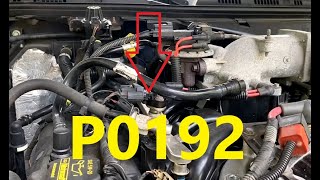
P0192 indicates a low voltage signal from the Fuel Rail Pressure Sensor. On the Jeep Gladiator, this is most often a faulty sensor or a wiring issue. For models with the 3.0L EcoDiesel, this code demands an immediate check for recalls related to the high-pressure fuel pump (HPFP), as related failures can trigger it.
- P0192 is an electrical fault in the fuel rail pressure sensor circuit, indicating the sensor's voltage signal is too low.
- For any Gladiator with a 3.0L EcoDiesel engine, the first step should be to check for open recalls regarding the high-pressure fuel pump (HPFP), as this is a known critical issue.
- The most common fixes are replacing a faulty fuel rail pressure sensor or repairing a damaged wire/connector in its circuit.
- Do not immediately assume the fuel pump is bad; P0192 points to an electrical fault, whereas P0087 points to a mechanical low-pressure problem.
What's Unique About the 2020-2023 Jeep Gladiator (JT)
For the Jeep Gladiator, particularly models equipped with the 3.0L EcoDiesel engine, the P0192 code carries extra weight. This engine has been subject to major recalls for high-pressure fuel pump (HPFP) failures. The Bosch CP4.2 HPFP is known to fail prematurely, sending metal debris throughout the fuel system, which can lead to catastrophic engine damage and sudden stalling. While P0192 is an electrical circuit code, it can sometimes appear in relation to the broader fuel system issues caused by a failing HPFP. Therefore, any fuel-related code on an EcoDiesel Gladiator should prompt an immediate check for open recalls (NHTSA 23V-263) before any parts are replaced.
Symptoms You May Notice
- Check Engine Light is on
- Engine is hard to start or requires longer cranking
- Hesitation or stumbling during acceleration
- Loss of engine power or entering 'limp mode'
- Rough or unstable idle
- Engine may stall, especially at low speeds
- Decreased fuel economy
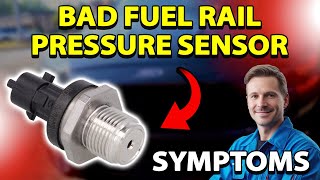
- Automatic start/stop system may be disabled 🎬 See: Common symptoms of a bad fuel rail pressure sensor
- Replacing the fuel pump without diagnosing the sensor circuit. P0192 is an electrical circuit code, not a low-pressure code (like P0087). Replacing the pump will not fix a sensor or wiring problem.
Most Likely Causes
- Faulty Fuel Rail Pressure (FRP) Sensor 🔴 High Probability The sensor itself can fail internally due to heat and pressure, causing it to send a voltage signal that is lower than the expected range (below 0.5V).
How to confirm: Using a scan tool, check the live data for the FRP sensor voltage with the key on, engine off. A reading near 0 volts suggests a failed sensor or circuit issue. If the 5-volt reference and ground test good at the connector, the sensor is the primary suspect.
Typical fix: Replace the fuel rail pressure sensor.
Est. part cost: $130-$325 - Wiring or Connector Issue 🟡 Medium Probability The wiring harness to the sensor can become damaged, frayed, or corroded from engine vibration and heat. This can cause a short to ground or an open in the 5-volt reference or signal wire, leading to a low voltage reading.
How to confirm: Visually inspect the wiring harness and connector for any signs of damage. Use a multimeter to check for continuity and to verify the 5-volt reference and ground at the sensor connector. Wiggle the harness during testing to check for intermittent faults.
Typical fix: Repair the damaged section of the wiring harness or replace the connector pigtail.
Est. part cost: $20-$100 - High-Pressure Fuel Pump (HPFP) Failure (3.0L EcoDiesel Only) ⚪ Low Probability The 3.0L EcoDiesel engine has a known issue with HPFP failure, which was subject to recalls (NHTSA 23V-263). While P0087 is the more common code for this failure, erratic fuel system behavior during pump failure can sometimes trigger electrical codes like P0192, or the wiring may be disturbed during the recall repair.
How to confirm: Check the vehicle's VIN for open recalls on the NHTSA website or by calling a dealer. A technician will need to perform a comprehensive fuel system diagnosis, which may include checking for metal debris in the fuel filter.
Typical fix: The recall involves replacing the HPFP with an updated part. If metal contamination is found, the entire fuel system may need to be replaced. This must be performed by a Jeep dealer.
Est. part cost: $0 if covered by recall
Rare But Worth Checking
- Powertrain Control Module (PCM) Fault: This is very rare, but a fault within the PCM's internal circuits can cause it to misinterpret the sensor's signal. All other possibilities, especially sensor and wiring issues, should be exhaustively ruled out before considering PCM replacement.
Diagnosis Steps
- Check for Recalls: If you have the 3.0L EcoDiesel engine, the absolute first step is to check your VIN for open recalls related to the high-pressure fuel pump (HPFP), specifically NHTSA recall 23V-263.
- Scan for Other Codes: Use an OBD-II scanner to check for any other pending or active trouble codes. Codes like P0087, P0191, or P0193 can provide additional diagnostic clues.
- Monitor Live Data: Use a scan tool to observe the Fuel Rail Pressure sensor voltage with the Key On, Engine Off (KOEO). A normal reading is typically around 0.5V. A reading near 0V strongly suggests a circuit issue or failed sensor.
- Visual Inspection: Carefully inspect the Fuel Rail Pressure (FRP) sensor and its electrical connector. Look for any signs of damage, corrosion, or loose connections. Trace the wiring harness as far as possible, looking for chafing, breaks, or heat damage.
- Check the Circuit with a Multimeter: Disconnect the FRP sensor. With the key on and engine off, use a multimeter to test the connector. You should find a 5-volt reference wire, a good ground wire, and a signal wire.
- Test the Signal Wire: If the power and ground are good, check the signal wire for a short to ground by performing a continuity test between the signal wire and the chassis ground. There should be no continuity.
- Assess the Sensor: If the wiring, power, and ground are all confirmed to be good, the Fuel Rail Pressure sensor itself is the most likely cause of the problem. 🎬 Watch: How to tell if your fuel pressure sensor is bad
- Replace the FRP Sensor: If the sensor is determined to be faulty, replace it with a new, high-quality part. The OEM part number for the 3.0L EcoDiesel is Mopar 68247772AA.
Parts You'll Likely Need
- Fuel Rail Pressure Sensor
(OEM #68247772AA (for 3.0L EcoDiesel))— This sensor is the most common failure point for a P0192 code once the wiring has been confirmed to be intact.
Trusted brands: Mopar, Bosch, Standard Motor Products
OEM price range: $150-$325
Aftermarket price range: $80-$200 - Fuel Rail Pressure Sensor (3.6L Pentastar)
(OEM #68335037AC)— This is the corresponding sensor for the gasoline V6 engine, which can also fail and cause a P0192 code.
Trusted brands: Mopar
OEM price range: $50-$100
Aftermarket price range: $30-$70
Related Codes That Often Appear With This One
- P0087 — This code for 'Fuel Rail/System Pressure - Too Low' is commonly associated with the catastrophic High-Pressure Fuel Pump (HPFP) failures on the 3.0L EcoDiesel engine.
- P0193 — This code for 'Fuel Rail Pressure Sensor Circuit High Input' is the opposite of P0192. If there is an intermittent wiring issue, the voltage could fluctuate between too high and too low, potentially logging both codes over time.
- P0191 — This code for 'Fuel Rail Pressure Sensor Circuit Range/Performance' indicates the sensor's signal is not correlating with other engine sensor inputs, which can happen with a failing sensor or an intermittent wiring fault.
Technical Service Bulletins (TSBs) & Recalls
- TSB 18-037-23: While for the Ram 1500 platform mate, this TSB involves a PCM software update to address fuel system complaints, showing that software flashes are a potential, though less common, fix for such issues.
- TSB 14-010-25: An informational TSB for dealers on how to check for fuel system contamination before replacing components on diesel engines, relevant due to the HPFP issue.
Platform-Specific Known Issues
- For 3.0L EcoDiesel models, this code must be taken very seriously due to the known High-Pressure Fuel Pump (HPFP) issues covered under NHTSA recall 23V-263. A failing HPFP can cause catastrophic engine damage.
- Some owners have reported the P0192 code appearing shortly after the HPFP recall service was performed, suggesting the wiring harness may have been disturbed or damaged during the extensive repair.
Mechanic-Grade Diagnostic Values
- Fuel Rail Pressure Sensor Signal Voltage (KOEO) — expected: ~0.5V. Failure: A reading near 0V or significantly below 0.5V (e.g., <0.2V) indicates a short to ground, a bad sensor, or an open in the 5V reference circuit.
- Fuel Rail Pressure Sensor 5V Reference Wire Voltage — expected: 4.9V - 5.1V DC. Failure: Voltage significantly below 4.9V indicates a wiring issue between the PCM and the sensor, or a faulty PCM.
- Fuel Rail Pressure Sensor Ground Wire Voltage — expected: ~0V (Good ground). Failure: Voltage significantly above 0V indicates a poor ground connection.
- 3.0L EcoDiesel Fuel Rail Pressure at Idle — expected: 25 to 35 MPa (approx. 3,625 to 5,076 PSI). Failure: Pressure readings that are erratic or do not respond to engine RPM changes can indicate a failing sensor or pump.
Wiring & Ground Locations
- Engine Bay Ground Studs — Located on the fender, to the left side of the battery when viewing from the front of the vehicle.. The Fuel Rail Pressure sensor requires a clean ground to send an accurate signal. A corroded or loose connection at these main engine bay ground points can cause intermittent and difficult-to-diagnose low voltage codes like P0192.
- FRP Sensor Connector (3.0L EcoDiesel) — On the driver's side fuel rail.. This is the primary connection point to test for 5V reference, ground, and signal voltage. The connector tab faces downward and can be difficult to release without a pick tool. It is often disturbed during the HPFP recall service, making it a prime suspect for post-repair issues.
Real Owner Repair Stories
- JLwranglerforums.com user (2022 Jeep Wrangler EcoDiesel (same powertrain)) — Check Engine Light with code P0192 and an issue with the auto start-stop system appeared immediately after the HPFP recall service was performed.
❌ Tried (didn't work) Initial dealer diagnosis
✅ What actually fixed it The dealer replaced the fuel rail pressure sensor under warranty, which resolved the P0192 code. This suggests the sensor may have been damaged or compromised during the extensive recall repair. - JeepGladiatorForum.com user (2021 Jeep Gladiator 3.0L EcoDiesel) — P0192 code appeared intermittently four times with no noticeable change in vehicle performance or drivability.
✅ What actually fixed it The issue was identified as an intermittent electrical fault, or 'electrical ghost,' likely within the sensor or its wiring, that had not yet become a hard failure. The owner continued to monitor the situation.
OEM Part Supersession History
68335037AA, 68335037AB→68335037AC— Standard part revision and update by Mopar.
Heads up: These parts are for the 3.6L Pentastar V6 engine. The 3.0L EcoDiesel uses a different sensor (68247772AA). Ensure you order the correct part for your engine.
Diagnostic Flowchart
Other Known Issues on This Vehicle
Issues unrelated to this code that are worth knowing about as an owner of this generation:
- Steering Wander / Vague Steering Feel 🟠 Medium — Very common on earlier models (2020-2021), leading to driver fatigue. Less frequent on later models. (Ref: TSB 08-074-20 was issued to replace the original aluminum steering gear with a steel version and update software.)
- Manual Transmission Clutch Overheating 🔴 High — Affects a significant number of 2020-2023 models with manual transmissions, posing a fire risk. (Ref: Recall 23V-116 (Stellantis 19A) was issued because the clutch pressure plate can fracture, potentially causing a fire.)
- EcoDiesel High-Pressure Fuel Pump (HPFP) Failure 🔴 High — A critical and well-documented failure on all 2021-2023 models with the 3.0L EcoDiesel engine. (Ref: Recall 23V-263 (Stellantis 01A) was issued to replace the failure-prone Bosch CP4.2 pump.)
- Auxiliary Battery / ESS System Problems 🟡 Low — Common complaint across many model years. The secondary battery for the Engine-Start-Stop system can fail prematurely, causing various electrical gremlins.
- Paint Bubbling / Corrosion 🟡 Low — Often reported around hood edges and door hinges, even on relatively new vehicles.
- Leaking Rear Window or Hardtop 🟡 Low — A recurring complaint among owners, with leaks often originating from the rear sliding window or hardtop seals.
- Faulty Fuel Level Sensor (2020 & 2023 models) 🟠 Medium — Specific build ranges in 2020 and 2023 had issues with the fuel level sending unit, causing erratic or incorrect fuel gauge readings. (Ref: TSB 14-001-20, TSB 9004083, TSB 14-006-23.)
Used vs. New Parts: Buying Guide for This Vehicle
When a used part is the smart pick: For a simple wiring connector pigtail, a used part from a reputable salvage yard is a perfectly acceptable and cost-effective repair. If the issue is a damaged connector housing, sourcing a used pigtail to splice in is a common and reliable fix.
Donor-vehicle mileage cap: roughly under 80000 miles for the part to have meaningful remaining life.
What to inspect on the donor part:
- For a pigtail, ensure the plastic is not brittle or cracked.
- Check for any signs of corrosion (green or white powder) on the metal pins inside the connector.
- Make sure the locking tab is intact and functional.
- Verify the donor vehicle was not in a front-end collision that could have stressed the engine harness.
OEM-only on this vehicle (don't cheap out):
- Fuel Rail Pressure Sensor: Given the critical nature of fuel pressure monitoring and the known issues with the EcoDiesel fuel system, using a genuine Mopar or original equipment (Bosch) sensor is strongly recommended. Aftermarket sensors can have different voltage scaling, leading to incorrect readings, poor performance, or persistent codes.
Aftermarket brands forum-validated for this vehicle:
- Bosch (Often the OEM supplier for Mopar)
Brands owners have reported issues with on this vehicle:
- Generic, unbranded sensors from online marketplaces should be avoided due to a high rate of premature failure and incorrect calibration.
Real Owner Stories
Aggregated from forums and TSBs cited above. Mileages and costs reflect what owners reported in those sources.
2021 Jeep Gladiator (JT) 3.0L EcoDiesel
Symptoms: The owner reported getting the P0192 code intermittently four times without any immediate drivability symptoms.
What fixed it: The owner suspected an 'electrical ghost' or a potential sensor issue before a hard failure occurred.
Source hint: JeepGladiatorForum.com - 'P0192 Code | Jeep Gladiator (JT) News, Forum, Community'
2021-2023 Jeep Wrangler (JL) 3.0L EcoDiesel
Symptoms: Experienced the P0192 code on the same EcoDiesel engine used in the Gladiator.
What fixed it: The dealer replaced the fuel rail pressure sensor under warranty.
Source hint: JLwranglerforums.com - 'P0192'
Related OBD-II Codes
Frequently Asked Questions
Is there a recall for the fuel system on my 2021 Jeep Gladiator EcoDiesel that could cause P0192?
I just had the HPFP recall performed and now I have a P0192 code. Is this common?
What is the specific Mopar part number for the Fuel Rail Pressure sensor on the EcoDiesel JT?
Does TSB 18-037-23 apply to my Gladiator's fuel system issues?
Will my Gladiator's automatic start/stop system work if P0192 is active?
How can I tell if my P0192 code is caused by fuel contamination on my diesel Gladiator?
Helpful Videos
We Have This Part in Stock


The information in this article is provided for general reference and educational purposes only. Vehicle specifications, procedures, and part compatibility can vary by production date, trim level, and region. Always consult your vehicle's factory service manual and verify part numbers before purchasing or performing repairs. Safety-critical components such as airbags, seat belts, and braking systems should be installed by a qualified professional.
- Jeep Gladiator (JT):
- 🎬 Helpful Videos
- 🛍️ Shop This Part
- What's Unique About the 2020-2023 Jeep Gladiator (JT)
- Symptoms You May Notice
- Most Likely Causes
- Rare But Worth Checking
- Diagnosis Steps
- Parts You'll Likely Need
- Related Codes That Often Appear With This One
- Technical Service Bulletins (TSBs) & Recalls
- Platform-Specific Known Issues
- Mechanic-Grade Diagnostic Values
- Wiring & Ground Locations
- Real Owner Repair Stories
- OEM Part Supersession History
- Diagnostic Flowchart
- Other Known Issues on This Vehicle
- Used vs. New Parts: Buying Guide for This Vehicle
- Real Owner Stories
- 2021 Jeep Gladiator (JT) 3.0L EcoDiesel
- 2021-2023 Jeep Wrangler (JL) 3.0L EcoDiesel
- Related OBD-II Codes
- Frequently Asked Questions
- 🎟️ Get 5% Off