

P0192 on 2017-2022 Honda CR-V 1.5T: Causes and Fixes for Fuel Rail Pressure Sensor Circuit Low
On a 2017-2022 Honda CR-V, code P0192 is most often caused by a faulty Fuel Rail Pressure (FRP) sensor or a wiring issue. This is an electrical fault code, not a guarantee of low fuel pressure. Expect a repair cost of $150-$450 for a professional sensor replacement.
- P0192 is an electrical fault code, most likely caused by a failed Fuel Rail Pressure (FRP) sensor or a wiring issue.
- Do not immediately assume a fuel pump has failed; this code requires electrical diagnosis first.
- Symptoms include stalling, hesitation, rough idle, and a Check Engine Light.
- Diagnosis involves checking the sensor's voltage with a scan tool and inspecting the wiring.
- Due to the high-pressure nature of the direct injection system, professional repair is recommended for safety.
What's Unique About the 2017-2022 Honda CR-V
The 2017-2022 CR-V uses the 1.5L Turbo (L15B7) direct-injection engine, which has a complex high-pressure fuel system operating up to 200 bar (nearly 2900 PSI). While this engine platform is known for several fuel system issues like high-pressure pump failures (often causing P0088) and a major recall on the low-pressure pump (causing P0087), the P0192 code specifically points to an electrical fault. It's crucial for owners not to confuse this electrical code with the more widely discussed mechanical pump failures, as the diagnostic path is different. The first step for P0192 is always to investigate the sensor and its circuit, not to immediately suspect the expensive fuel pumps.
Symptoms You May Notice
- Check Engine Light is on
- Engine hesitation or stumbling during acceleration
- Difficulty starting the engine or extended cranking time
- Rough or unstable idle
- Reduced engine power and acceleration (limp mode)
- Decreased fuel economy
- Engine may stall, especially at low speeds or idle
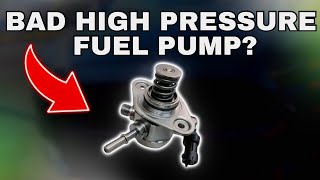
- Replacing the high-pressure fuel pump (HPFP) 🎬 Watch: Symptoms of a bad high pressure fuel pump or low-pressure fuel pump. P0192 is an electrical circuit code. While pump failures are known on this platform, they typically trigger different codes like P0087 (pressure too low) or P0088 (pressure too high). Diagnosing the sensor circuit first is critical to avoid unnecessary expensive repairs.
Most Likely Causes
- Faulty Fuel Rail Pressure (FRP) Sensor 🔴 High Probability The FRP sensor is an electronic component that can fail internally, often developing a short to ground. This causes it to send a persistent low voltage signal (below 0.3V) to the PCM, regardless of actual fuel pressure.
How to confirm: Using a scan tool, monitor the live data for 'Fuel Rail Pressure Sensor Voltage'. With the Key On, Engine Off (KOEO), the voltage should be approximately 0.5V. If the reading is near zero or significantly below 0.5V, disconnect the sensor. If the voltage on the scan tool jumps to 5V, the sensor is shorted internally and is faulty.
Typical fix: Replace the Fuel Rail Pressure sensor. It is located on the engine's high-pressure fuel rail. The OEM part number is reported to be 37890-6A0-A01.
Est. part cost: $80-$200 - Wiring or Connector Issue 🟡 Medium Probability The wiring harness in the engine bay is exposed to heat and vibration, which can lead to chafed wires creating a short to ground, loose connections, or corrosion in the sensor's 3-pin connector over time.
How to confirm: Visually inspect the wiring harness and 3-pin connector going to the FRP sensor for any signs of damage, melting, or corrosion. Use a multimeter to test the connector (with sensor unplugged, KOEO). Pin 3 to Pin 2 should show ~5V (reference voltage). Pin 3 should have continuity to ground. If the 5V reference is missing or the ground is bad, trace the wiring back to the PCM. A short to ground can be confirmed by checking for continuity between the signal wire (Pin 1) and the body ground.
Typical fix: Repair the damaged section of the wiring harness or clean/replace the sensor connector. Apply dielectric grease to the new connector to prevent future moisture intrusion.
Est. part cost: $10-$50
Rare But Worth Checking
- Faulty Powertrain Control Module (PCM): This is extremely rare and should only be considered after the FRP sensor and all related wiring have been thoroughly tested and confirmed to be in good working order. The internal circuit that reads the sensor's voltage can fail, but this is a last resort diagnosis.
Diagnosis Steps
- Connect an OBD-II scanner and confirm P0192 is the primary code. Record any freeze-frame data.
- Using the scanner's live data, monitor 'Fuel Rail Pressure Sensor' voltage (KOEO). A normal reading is ~0.5V. A reading near 0V or below 0.31V confirms the low circuit fault.
- Turn the ignition off and locate the FRP sensor on the high-pressure fuel rail.
- Visually inspect the sensor's connector and wiring for damage, corrosion, or loose pins.
- Disconnect the sensor. Turn ignition to KOEO. Use a multimeter on the harness-side connector. Check for ~5V reference between terminals 2 and 3. Check for continuity to ground on terminal 3.
- If 5V reference or ground is missing, there is a wiring issue between the connector and the PCM that must be traced.
- If reference and ground are present, the issue is likely the sensor itself or a short in the signal wire (terminal 1). Check for continuity between terminal 1 and a good chassis ground. If continuity exists, the signal wire is shorted to ground.
- If the wiring is good, replace the Fuel Rail Pressure Sensor.
- After repair, clear codes and perform a test drive to ensure the code does not return.
- If the code persists after replacing the sensor and verifying the wiring, a PCM fault is possible but highly unlikely.
Parts You'll Likely Need
- Fuel Rail Pressure Sensor
(OEM #37890-6A0-A01)— This is the most common cause of P0192, as the sensor can fail internally and send a false low voltage signal.
Trusted brands: Honda (Genuine OEM), Bosch, Denso, Standard Motor Products
OEM price range: $120-$200
Aftermarket price range: $70-$150
Platform-Specific Known Issues
- While not directly causing P0192, this vehicle platform was subject to a major safety recall (NHTSA #21V-215, #23V-858) for the in-tank low-pressure fuel pump, which typically causes a P0087 code. It is worth checking if the vehicle has had this recall service performed to ensure overall fuel system health.
Mechanic-Grade Diagnostic Values
- FRP Sensor Voltage (Key On, Engine Off) — expected: ~0.5V. Failure: A reading near 0V or significantly below 0.5V suggests a short to ground or internal sensor failure.
- FRP Sensor Voltage (Engine at Idle) — expected: ~1.3V - 1.8V. Failure: Voltage is static, near 0V, or does not respond to changes in engine RPM.
- PCM Fault Trigger Threshold (FRP Voltage) — expected: Above 0.31V. Failure: A reading below 0.31V for a specified time will set the P0192 DTC.
- FRP Sensor 5V Reference at Harness Connector — expected: 4.8V - 5.2V. Failure: 0V indicates an open/short in the reference circuit; voltage significantly above 5.2V may indicate a PCM fault.
- High-Pressure Fuel System (Contextual) — expected: ~500-600 PSI at idle; 2,000-3,000+ PSI under load.. Failure: While P0192 is electrical, these are the pressures the sensor should be reporting. A sensor stuck at 0V is inconsistent with a running engine.
Hidden / Shadow Codes Worth Checking
- On-Board Snapshot Data: Honda's HDS does not typically use proprietary 'shadow codes' for this fault. Instead, it captures a detailed 'On-Board Snapshot' or 'Freeze Frame' of all engine parameters at the exact moment the P0192 fault was detected. This data is more valuable than a sub-code for diagnosis. (see via Honda Diagnostic System (HDS) or equivalent professional scan tool.)
Scan Tool Commands That Help
- Honda Diagnostic System (HDS): Data List > Fuel Pressure (converted from sensor) — This is the primary live data parameter to monitor. It is used to confirm if the sensor voltage is below the 0.31V threshold, which is the first step in the official diagnostic procedure.
- Honda Diagnostic System (HDS): Jumping SCS Line — Mentioned as part of a specific diagnostic tree for checking for shorts in the signal wire after disconnecting the PCM connector. This is an advanced, dealer-level procedure.
Wiring & Ground Locations
- PCM Connector C, Pin 41 — This is a pin on one of the main connectors to the Powertrain Control Module (PCM).. According to service procedures, this specific pin provides the VCC1 (5V reference) voltage to the FRP sensor. A continuity check between this pin and Terminal 3 of the sensor connector is used to verify the integrity of the 5V reference wire.
- FRP Sensor Connector Terminals — On the 3-pin connector at the Fuel Rail Pressure sensor itself.. Terminal 1 is the signal wire, Terminal 2 is typically the 5V reference, and Terminal 3 is the ground. Testing for a short between Terminal 1 and chassis ground is a key step to identify a grounded signal wire.
OEM Part Supersession History
37890-6A0-A01→No supersession found.— The part number appears to be stable for the specified vehicle range.
Model Year Variations Within This Range
- 2017-2022: While the platform had a facelift in 2020 and known issues like oil dilution were more prevalent in early years (2017-2019), the core 1.5T engine (L15B7) and its high-pressure fuel system components, including the FRP sensor and its wiring, remained fundamentally the same. The diagnostic procedure for P0192 is consistent across all model years in this range.
Diagnostic Flowchart
Other Known Issues on This Vehicle
Issues unrelated to this code that are worth knowing about as an owner of this generation:
- Engine Oil Dilution 🔴 High — Common on 2017-2018 models, especially in cold climates with short-trip driving. Less frequent on later models after software updates. (Ref: Honda issued software updates and extended warranties in some regions to address the issue, which aims to warm the engine faster to evaporate fuel from the oil.)
- Parasitic Battery Drain 🟠 Medium — Widespread issue where the battery dies after the vehicle sits for a few days. Often traced to software logic in the VSA modulator or PCM. (Ref: Honda TSB A19-039 and TSB 17-032 address software updates to fix modules that fail to 'sleep' correctly.)
- Infotainment System Glitches 🟡 Low — Frequently reported problems include the screen freezing, going black, phantom beeping, or making random inputs. (Ref: Honda TSB A19-066 provides a software update to fix these glitches. A simple system reboot (holding the power/volume knob) can provide a temporary fix.)
- Leaking Fuel Injectors / Cold Start Misfire 🟠 Medium — Some owners report rough running and misfires on a cold start, sometimes attributed to leaking direct injectors.
- A/C Condenser Leaks 🟠 Medium — A known defect in the A/C condenser can lead to leaks and loss of cooling. Honda extended the warranty for this specific part on many models. (Ref: Warranty Extension for A/C Condensers.)
Used vs. New Parts: Buying Guide for This Vehicle
When a used part is the smart pick: A used part is a smart choice for the sensor's wiring connector pigtail if the original is damaged or corroded. It is a low-cost, effective fix.
Donor-vehicle mileage cap: roughly under 80000 miles for the part to have meaningful remaining life.
What to inspect on the donor part:
- For a used sensor: ensure connector pins are clean, straight, and free of any green or white corrosion. The plastic housing should be free of cracks.
- For a wiring pigtail: inspect for at least 6 inches of flexible, non-brittle wire. Avoid any connectors with signs of melting or heat stress.
OEM-only on this vehicle (don't cheap out):
- Fuel Rail Pressure Sensor: While aftermarket options exist, this is a critical sensor for engine operation. Using a Genuine Honda, Denso, or Bosch sensor is strongly recommended to avoid premature failure, inaccurate readings, or compatibility issues that are common with no-name online brands.
Aftermarket brands forum-validated for this vehicle:
- Bosch
- Denso
- Standard Motor Products (SMP)
Brands owners have reported issues with on this vehicle:
- Unbranded, low-cost sensors from online marketplaces, which are frequently cited in forums as having high failure rates.
Real Owner Stories
Aggregated from forums and TSBs cited above. Mileages and costs reflect what owners reported in those sources.
2017-2018 Honda CR-V L15B7
Symptoms: Owners in cold climates reported the engine failing to warm up quickly, leading to fuel evaporating into the oil and rising oil levels.
What fixed it: Honda issued software updates and extended warranties to help the engine warm up faster and evaporate fuel from the oil.
Source hint: crvownersclub.com discussions on oil dilution and L15B7 engine characteristics
2017-2022 Honda CR-V
Symptoms: The vehicle would sit for a few days and the battery would be completely dead upon return.
What fixed it: Software updates to the VSA modulator or PCM as per TSB A19-039 and TSB 17-032.
Source hint: TSB A19-039 and TSB 17-032 cited in known_issues
Related OBD-II Codes
Frequently Asked Questions
Is there a recall for the fuel system on my 2017-2022 Honda CR-V that might be related to P0192?
What is the specific Honda part number for the Fuel Rail Pressure sensor if I need to replace it?
Can I use an aftermarket sensor to fix the P0192 error on my CR-V?
My CR-V is also experiencing oil dilution; could this be causing my P0192 code?
How can I tell if the problem is the FRP sensor or just the wiring connector?
Is there a TSB for the battery drain I'm having alongside these engine issues?
Helpful Videos
We Have This Part in Stock


The information in this article is provided for general reference and educational purposes only. Vehicle specifications, procedures, and part compatibility can vary by production date, trim level, and region. Always consult your vehicle's factory service manual and verify part numbers before purchasing or performing repairs. Safety-critical components such as airbags, seat belts, and braking systems should be installed by a qualified professional.
- Honda CR-V:
- 🎬 Helpful Videos
- 🛍️ Shop This Part
- What's Unique About the 2017-2022 Honda CR-V
- Symptoms You May Notice
- Most Likely Causes
- Rare But Worth Checking
- Diagnosis Steps
- Parts You'll Likely Need
- Platform-Specific Known Issues
- Mechanic-Grade Diagnostic Values
- Hidden / Shadow Codes Worth Checking
- Scan Tool Commands That Help
- Wiring & Ground Locations
- OEM Part Supersession History
- Model Year Variations Within This Range
- Diagnostic Flowchart
- Other Known Issues on This Vehicle
- Used vs. New Parts: Buying Guide for This Vehicle
- Real Owner Stories
- 2017-2018 Honda CR-V L15B7
- 2017-2022 Honda CR-V
- Related OBD-II Codes
- Frequently Asked Questions
- 🎟️ Get 5% Off