

P0192 on 2011-2017 Ford F-150 EcoBoost: Causes and Fixes for Fuel Pressure Sensor Circuit Low
This code almost always points to a failed Fuel Rail Pressure (FRP) sensor or its wiring. On EcoBoost F-150s, the sensor is difficult to access, making replacement costly. Expect to pay $580-$750 for a professional repair, with the part itself costing around $80-$120. A wiring issue right at the sensor connector is also a common culprit due to heat exposure.
- P0192 on your EcoBoost F-150 is an electrical fault code for the Fuel Rail Pressure (FRP) sensor.
- The most likely cause is a failed sensor, followed by damaged wiring near the sensor.
- This is not a simple DIY job for most people. The sensor is located behind the intake manifold, making replacement a labor-intensive process (3.5-5 hours).
- Do not replace fuel pumps before thoroughly testing the FRP sensor and its circuit, as the sensor is the most common point of failure for this code.
- When the sensor is replaced, you must also replace the intake manifold gaskets to prevent future vacuum leaks.
What's Unique About the 2011-2017 Ford F-150
Ford's EcoBoost engines use a high-pressure direct injection fuel system to achieve their power and efficiency. This system operates at pressures far greater than traditional port injection, making the Fuel Rail Pressure (FRP) sensor's accuracy critical for performance and engine safety. On the 3.5L EcoBoost F-150, the FRP sensor is notoriously located on the back of the passenger-side fuel rail, against the firewall. This makes what would be a simple sensor swap on other vehicles a labor-intensive job that often requires removing the entire intake manifold for access.
Generation note: This range covers the twelfth (2011-2014) and thirteenth (2015-2017) generations of the F-150. For the popular 3.5L EcoBoost engine, the location of the high-pressure fuel rail sensor and the primary causes of code P0192 are consistent across both generations. The issue is also common on other platforms using this engine.
Symptoms You May Notice
- Check Engine Light is on
- Engine hesitates or stumbles during acceleration
- Rough or unstable idle, sometimes with RPM 'hunting'
- Hard starting or extended cranking time
- Loss of engine power and weak throttle response
- Vehicle may stall unexpectedly, especially when coming to a stop
- Decreased fuel economy and potentially black smoke from exhaust
- Replacing the in-tank low-pressure fuel pump. P0192 relates to the high-pressure side of the system; while a failing low-pressure pump can cause drivability issues, it's not the direct cause of this specific electrical circuit code.
- Replacing the high-pressure fuel pump without first testing the FRP sensor and its circuit. The sensor and its wiring are much more common failure points and significantly cheaper to replace.
Most Likely Causes
- Faulty Fuel Rail Pressure (FRP) Sensor 🔴 High Probability The sensor is subjected to high pressure, extreme heat cycles, and engine vibration. Internal electronic failure or shorts are common over time, leading to a signal voltage below the 0.5V threshold.
How to confirm: After verifying wiring is intact, this is the most likely component failure. A scan tool monitoring live data will show FRP sensor voltage consistently below 0.5V (often near 0V) with the key on, engine off. This points to an internally shorted or failed sensor.
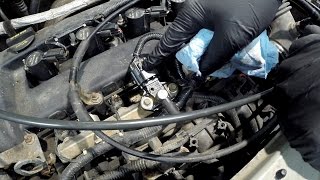
Typical fix: Replace the Fuel Rail Pressure sensor. On the 3.5L EcoBoost, this requires removing the intake manifold to gain access. Always use a high-quality OEM (Motorcraft) sensor for reliability.
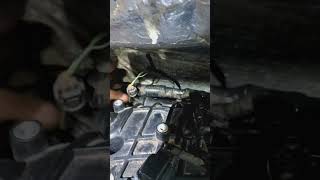
Est. part cost: $80-$140 - Damaged Wiring or Connector 🟡 Medium Probability The wiring harness and connector for the FRP sensor are in a hot, tight area near the back of the engine. Heat can make the wires brittle and insulation crack, leading to shorts or open circuits. A video of a 2011 F-150 with a P0192 code showed the signal wire was broken right at the connector due to heat damage.
How to confirm: Visually inspect the wiring harness leading to the FRP sensor for any signs of melting, rubbing, or breaks. Check the connector for corrosion or loose pins. Use a multimeter to check for a 5V reference, good ground, and signal continuity back to the ECM.
Typical fix: Repair the damaged section of the wiring harness or replace the connector pigtail. Ensure the repaired harness is protected from heat and chafing.
Est. part cost: $15-$40
Rare But Worth Checking
- Failing High-Pressure Fuel Pump (HPFP): While P0192 is an electrical circuit code, a mechanically failing high-pressure fuel pump (HPFP) can sometimes cause erratic pressure that leads to confusing sensor readings. This is more likely if accompanied by other fuel codes like P0087 (Fuel Rail/System Pressure Too Low).
- Powertrain Control Module (PCM) Failure: This is very rare. Before condemning the PCM, all other possibilities (sensor, wiring, fuel pumps) must be exhaustively ruled out. A failed driver circuit within the PCM can cause it to misinterpret the sensor's signal. A diagnostic step involves grounding the signal wire; if the PCM doesn't set a different code, it may indicate an internal PCM fault.
- Fuel Pump Driver Module (FPDM) or Fuse Issue: For 2009-2014 F-150s, TSB 15-0137 addresses an issue where the fuel pump fuse (Fuse 27) in the battery junction box can overheat and melt, causing a loss of fuel pressure and stalling. While this often throws other codes, it can be a contributing factor to fuel delivery problems that might be misdiagnosed.
Diagnosis Steps
- Connect an OBD-II scanner and confirm P0192 is the active code. Note any other codes present, like P0193, P0087, or P0191.
- Using the scanner's live data function, monitor the 'FRP Sensor Voltage' with the key on, engine off. A reading below 0.5V (often near 0V) strongly suggests a problem in the circuit or sensor.
- Perform a thorough visual inspection of the FRP sensor connector and its wiring harness, which is located at the back of the engine against the firewall. Look for signs of melting from heat, chafing, or broken wires right at the connector.
- If wiring looks good, disconnect the sensor and test the circuit at the connector with a multimeter. With the key on, you should find a 5-volt reference wire, a ground wire (near 0V), and the signal wire.
- Test the signal wire for continuity back to the PCM to rule out a break in the wire. Check for a short to ground on the signal wire, which is a very common cause for a 'Circuit Low' code.
- If the 5V reference is missing, check for related fuses before suspecting the PCM.
- If the wiring and connector are confirmed to be good (good 5V reference, good ground, no shorts), the Fuel Rail Pressure sensor itself is the most likely culprit and should be replaced.
- Before replacing the sensor, relieve the high-pressure fuel system pressure. This is a critical safety step. Pull the fuel pump fuse and run the engine until it stalls, or use a scan tool to command the fuel pump off.
Parts You'll Likely Need
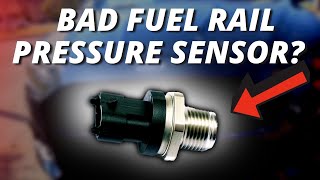
- Fuel Rail Pressure Sensor (High Pressure)
(OEM #BL3Z-9F972-B (replaces BL3Z-9F972-A, CM-5224))— This is the most common failure point for code P0192. It is a high-wear item that fails electronically over time. Using an OEM Motorcraft part is highly recommended for accuracy and longevity.
Trusted brands: Motorcraft, Bosch, Standard Motor Products, Dorman
OEM price range: $80-$140
Aftermarket price range: $50-$90 - Intake Manifold Gaskets
(OEM #BL3Z-9439-A (Varies by specific 3.5L engine year))— The intake manifold must be removed to access the sensor on the 3.5L EcoBoost. The gaskets are considered one-time use and must be replaced to prevent vacuum leaks.
Trusted brands: Motorcraft, Fel-Pro, Mahle
OEM price range: $30-$50
Aftermarket price range: $15-$30 - FRP Sensor Connector Pigtail — If the wiring is damaged right at the connector due to heat or vibration, replacing the pigtail is the most robust repair.
Trusted brands: Motorcraft, Dorman, Standard Motor Products
OEM price range: $25-$45
Aftermarket price range: $15-$30
Related Codes That Often Appear With This One
- P0193 — Fuel Rail Pressure Sensor Circuit High Input. Seeing both P0192 and P0193 intermittently can strongly suggest a faulty sensor or a loose electrical connection causing erratic voltage swings from one extreme to the other.
- P0087 — Fuel Rail/System Pressure - Too Low. If you see P0192 and P0087 together, it increases the likelihood of a mechanical fuel delivery problem, such as a failing high-pressure or low-pressure fuel pump, rather than just an electrical sensor fault.
- P0191 — Fuel Rail Pressure Sensor Circuit Range/Performance. This code indicates the sensor's readings are not plausible for the current engine conditions, which often points to a failing sensor that hasn't completely shorted or opened yet.
Technical Service Bulletins (TSBs) & Recalls
- TSB 15-0137: For 2009-2014 F-150s, this TSB addresses a crank/no-start or stall condition caused by overheating at the fuel pump power fuse (Fuse 27). It involves relocating the fuse to a more robust circuit in the fuse box. While not directly for P0192, it relates to fuel delivery interruptions that can cause various fuel-related codes and drivability issues.
Platform-Specific Known Issues
- The location of the FRP sensor on the 3.5L EcoBoost is extremely difficult to reach, tucked between the engine and firewall. This significantly increases labor time and cost, as the intake manifold must be removed for access.
- Ford specifies that the FRP sensor is a one-time-use part. If it is uninstalled for any reason, it must be replaced with a new one and cannot be reused.
- The wiring connector is prone to heat damage, causing wires to become brittle and break, leading to a P0192 code even with a perfectly good sensor.
Mechanic-Grade Diagnostic Values
- FRP Sensor Voltage (Key On, Engine Off) — expected: 0.5V - 4.5V (Normal); typically 1.5V - 2.5V at idle pressure.. Failure: Consistently below 0.5V, often near 0V, indicates a short to ground or internal sensor failure.
- FRP Sensor 5V Reference Voltage (at connector, sensor unplugged, KOEO) — expected: 4.8V - 5.2V.. Failure: Low or no voltage points to a wiring issue or a problem with the PCM's voltage supply. Check related fuses.
- High-Pressure Fuel System Pressure (at idle) — expected: Approximately 200-400 PSI.. Failure: Significantly lower pressure when commanded, especially if accompanied by P0087, points toward a mechanical issue with the High-Pressure Fuel Pump (HPFP).
- High-Pressure Fuel System Pressure (under load/WOT) — expected: Can reach up to 2,000-2,175 PSI.. Failure: Failure to build pressure under load indicates a failing HPFP or significant leak.
- Low-Pressure Fuel System Pressure (supplying the HPFP) — expected: 58 - 75 PSI.. Failure: Low pressure from the in-tank pump will starve the HPFP and can cause a variety of fuel codes, though not typically P0192 directly.
Scan Tool Commands That Help
- Ford IDS / High-End Scan Tool: Fuel Pump On/Off Command — Used to safely relieve fuel system pressure before servicing components like the FRP sensor or HPFP. It can also be used to test the low-pressure pump's ability to build pressure with the engine off.
- Ford IDS / High-End Scan Tool: Jumper Wire Test (Manual) — A technician can use a fused jumper wire to connect the 5V reference pin to the signal wire pin at the sensor connector. If the scan tool reading jumps from low (P0192) to high (P0193), it confirms the wiring and PCM are good, definitively isolating the fault to the sensor itself.
Wiring & Ground Locations
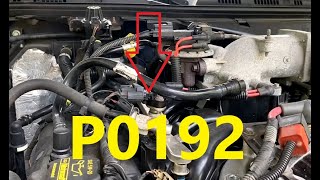
- FRP Sensor Connector — On the high-pressure fuel rail, at the rear of the engine against the firewall, passenger side.. This is the primary point of failure for wiring. The three pins are 5V Reference, Signal, and Ground. Heat damage and vibration can cause wires to break or short at this connector.
- Engine Block Ground — There are multiple grounds on the engine. A key ground is a single bolt on the cylinder head where the main harness grounds to the engine.. A poor engine ground can cause floating or incorrect readings from various sensors, including the FRP sensor, which uses the engine block as its ground reference path back to the battery.
- Firewall/Chassis Ground — Main chassis grounding point from the battery is on the firewall/inner fender area.. While less direct, a compromised main chassis ground can introduce electrical noise and voltage drops throughout the vehicle's systems, potentially affecting PCM operation and sensor readings.
- Relay 10 (3.5L Engine) — In the engine compartment Power Distribution Box (fuse box).. This relay supplies power to the Powertrain Control Module (PCM) for the 3.5L engine. A faulty relay could cause the PCM to lose power or function erratically, leading to false codes.
Real Owner Repair Stories
- YouTube video comment section (paraphrased) (2011 Ford F-150 3.5L EcoBoost) — P0192 code, engine stalling, and poor performance.
❌ Tried (didn't work) Initially suspected the sensor itself due to the code definition.
✅ What actually fixed it Found the signal wire was broken right at the back of the FRP sensor connector. The heat and vibration in that tight space had caused the wire to become brittle and snap. Repairing the wire and securing the harness resolved the code and all symptoms.
OEM Part Supersession History
BL3Z-9F972-A→BL3Z-9F972-B (also known as Motorcraft CM-5224)— Standard part revision and improvement by the manufacturer.
Model Year Variations Within This Range
- 2017: The 2017 model year introduced the second-generation 3.5L EcoBoost engine. While the P0192 code's meaning and general diagnosis remain the same, some components, including the high-pressure fuel pump and potentially sensor calibration, may differ from the 2011-2016 first-generation engine. Always verify part numbers by VIN for 2017 models.
Diagnostic Flowchart
Used vs. New Parts: Buying Guide for This Vehicle
When a used part is the smart pick: For this repair, using used parts is generally not recommended. The primary failure items are electronic (sensor) or wear-and-tear items (gaskets). A used wiring pigtail from a junkyard could be a viable option if the connector is in excellent condition with no signs of heat damage or brittleness.
Donor-vehicle mileage cap: roughly under 50000 miles for the part to have meaningful remaining life.
What to inspect on the donor part:
- For a wiring pigtail: check for flexible, intact insulation with no cracking.
- Ensure the connector's locking tab is present and functional.
- Look for clean, corrosion-free pins inside the connector.
OEM-only on this vehicle (don't cheap out):
- Fuel Rail Pressure Sensor: Aftermarket sensors have a high rate of premature failure or inaccurate readings for this critical high-pressure system. The cost savings do not outweigh the risk of repeat labor, especially given the difficult access. Stick with Motorcraft.
Aftermarket brands forum-validated for this vehicle:
- Fel-Pro (for intake manifold gaskets)
Brands owners have reported issues with on this vehicle:
- Generic, unbranded, or 'white-box' fuel pressure sensors from online marketplaces.
Real Owner Stories
Aggregated from forums and TSBs cited above. Mileages and costs reflect what owners reported in those sources.
2011 Ford F-150 3.5 EcoBoost
Symptoms: The Check Engine Light was on with code P0192, indicating the fuel pressure sensor signal was too low.
What fixed it: The owner found a broken signal wire right at the fuel pressure sensor connector, which was damaged by heat. The planned fix was to replace the connector pigtail.
Source hint: YouTube - Code P0192 2011 Ford F-150 3.5 Ecoboost
2013 F150 3.5L Ecoboost
Symptoms: After the truck was warm, it would take 10 seconds to start, then have a really rough idle with no throttle response, and then stall. It was throwing code P0087.
What fixed it: Replacing the low-pressure fuel pump in the gas tank resolved the issue after a high-pressure fuel pump replacement did not fix it.
Source hint: Reddit - 2013- Hot engine f150 rough idles before dying. Restart takes ~10 seconds until engine starts. Throws P0087 Fuel Rail Low
Related OBD-II Codes
Frequently Asked Questions
How difficult is it to replace the Fuel Rail Pressure (FRP) sensor on my 3.5L EcoBoost F-150?
I'm taking the intake manifold off for another reason. Can I just put the old FRP sensor back on?
My F-150 has a P0192 code, but I already replaced the sensor. What else should I check?
What brand of replacement FRP sensor is recommended for the 2011-2017 F-150?
Is there a critical safety step I need to take before changing the FRP sensor?
Does TSB 15-0137 provide a direct fix for the P0192 code?
I have a 2016 Ford Expedition with a P0192 code. Is the cause likely the same as on the F-150?
Helpful Videos

Used OEM Parts in Stock


New Aftermarket Parts Available


The information in this article is provided for general reference and educational purposes only. Vehicle specifications, procedures, and part compatibility can vary by production date, trim level, and region. Always consult your vehicle's factory service manual and verify part numbers before purchasing or performing repairs. Safety-critical components such as airbags, seat belts, and braking systems should be installed by a qualified professional.
- Ford F-150:
- 🎬 Helpful Videos
- 🛍️ Shop This Part
- What's Unique About the 2011-2017 Ford F-150
- Symptoms You May Notice
- Most Likely Causes
- Rare But Worth Checking
- Diagnosis Steps
- Parts You'll Likely Need
- Related Codes That Often Appear With This One
- Technical Service Bulletins (TSBs) & Recalls
- Platform-Specific Known Issues
- Mechanic-Grade Diagnostic Values
- Scan Tool Commands That Help
- Wiring & Ground Locations
- Real Owner Repair Stories
- OEM Part Supersession History
- Model Year Variations Within This Range
- Diagnostic Flowchart
- Used vs. New Parts: Buying Guide for This Vehicle
- Real Owner Stories
- 2011 Ford F-150 3.5 EcoBoost
- 2013 F150 3.5L Ecoboost
- Related OBD-II Codes
- Frequently Asked Questions
- 🎟️ Get 5% Off