

P0191 on 2014-2019 Jeep Grand Cherokee 3.0L EcoDiesel: Fuel Rail Pressure Causes and Fixes
On a 2014-2019 Grand Cherokee EcoDiesel, P0191 most often points to a failing High-Pressure Fuel Pump (HPFP), which is subject to a major recall (NHTSA 22V-406). It can also be caused by a faulty fuel rail pressure sensor or a simple wiring issue. Check for the HPFP recall immediately, as failure can cause catastrophic engine damage by sending metal debris through the entire fuel system.
- P0191 on a 3.0L EcoDiesel is a critical code that should be addressed immediately.
- Your first step should be to check if your vehicle is affected by the recall for the High-Pressure Fuel Pump (FCA recall Z46).
- Do not continue to drive the vehicle, as a sudden stall is possible and you risk catastrophic, multi-thousand-dollar damage to the entire fuel system.
- While the issue could be a simple sensor or wiring problem, the high probability of HPFP failure on this engine makes professional diagnosis essential.
- When diagnosing, always check the fuel filter for metal shavings, as this is a clear sign of pump failure.
What's Unique About the 2014-2019 Jeep Grand Cherokee
The 3.0L EcoDiesel V6 uses a high-pressure common-rail fuel system that is sensitive to any disruption. This engine platform is notorious for failures of the Bosch CP4.2 High-Pressure Fuel Pump (HPFP), which led to a widespread safety recall. The pump's design is susceptible to premature wear, especially with the lower lubricity of US diesel fuel, causing it to disintegrate internally. Therefore, unlike on many other vehicles where P0191 might just be a bad sensor, on this specific Jeep it serves as a critical warning sign of potential catastrophic HPFP failure.
Symptoms You May Notice
- Check Engine Light is on
- Engine stalling or shutting off while driving, sometimes with no ability to restart.
- Reduced engine power or entering 'limp mode'
- Hesitation or stumbling during acceleration
- Rough or unstable idle
- Long crank times or difficulty starting
- Whining or grinding noise from the engine bay, indicating HPFP failure.
- Fuel leak at the HPFP.
- Replacing the fuel rail pressure sensor when the actual cause is the high-pressure fuel pump beginning to fail. The code may clear temporarily but will return.
- Replacing the high-pressure fuel pump without checking for and cleaning out metal contamination, leading to repeat failure of the new pump and injectors.
- Assuming the code is purely an electrical circuit fault because of the code's definition, when it is often a mechanical pressure problem.
Most Likely Causes
- Failing High-Pressure Fuel Pump (HPFP) 🔴 High Probability The factory-installed Bosch CP4.2 pump is known to fail prematurely, leading to a major safety recall (FCA Z46 / NHTSA 22V-406). The pump can disintegrate internally due to design flaws and lack of lubrication from US diesel, sending metal shavings into the entire fuel system.
How to confirm: Check if the vehicle's VIN is part of the recall. A technician can inspect the fuel filter housing and the fuel quantity solenoid screen for metallic 'glitter', which is a definitive sign of HPFP failure. This must be the first check.
Typical fix: If the recall has not been performed, a dealer must replace the HPFP with a redesigned, more durable part, free of charge. If the system is contaminated with metal debris, the recall service includes inspection and, if necessary, replacement of additional fuel system components like injectors, rails, and lines. Out of warranty, this is an extremely expensive repair.
Est. part cost: $800-$1500 for the pump alone; $8,000-$12,000+ for a full system replacement. - Faulty Fuel Rail Pressure (FRP) Sensor 🟡 Medium Probability The sensor operates in a high-stress environment and can fail electronically, sending incorrect voltage signals to the ECM. It can become biased, reading pressure when there is none (e.g., with key-on, engine-off).
How to confirm: Using a scan tool with live data, compare 'Commanded Fuel Rail Pressure' to 'Actual Fuel Rail Pressure'. With Key On, Engine Off, the pressure should be near zero; if it reads high, the sensor is biased. If the actual reading is erratic, stuck, or clearly incorrect while the engine is running, and the wiring is confirmed to be good, the sensor is likely faulty.
Typical fix: Replace the fuel rail pressure sensor. It is located on the fuel rail and can be replaced by a DIYer with care, ensuring the system is not under pressure.
Est. part cost: $150-$320 for an OEM Mopar sensor. - Damaged Wiring or Connector for FRP Sensor ⚪ Low Probability The wiring harness connector can become corroded or the wires can be damaged from engine heat and vibration over time, causing intermittent or incorrect signals.
How to confirm: Visually inspect the FRP sensor's electrical connector and surrounding wires for signs of corrosion (green crust), melted plastic, or frayed insulation. Wiggle the connector with the engine running to see if it affects the idle or live data readings. Forum users report success by cleaning connectors with contact cleaner and applying dielectric grease.
Typical fix: Clean the connector pins with electrical contact cleaner and apply dielectric grease. If the connector or wiring is damaged, a new pigtail may need to be spliced in.
Est. part cost: $5-$30 - Clogged Fuel Filter ⚪ Low Probability As a routine maintenance item, a clogged filter can restrict fuel flow, causing pressure to drop below the commanded value under load. This is a simple and crucial first step in diagnosis.
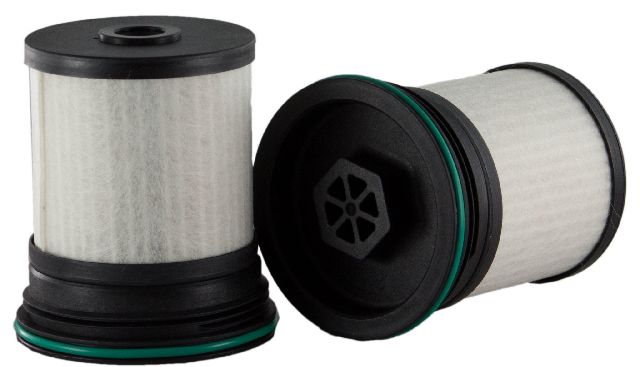
How to confirm: If the filter's service history is unknown, replace it. When replacing, pour the contents of the fuel filter housing into a clean glass jar and inspect the old filter media for any signs of metallic debris, which would point to HPFP failure.
Typical fix: Replace the fuel filter.
Est. part cost: $50-$90
Rare But Worth Checking
- Faulty Fuel Pressure Regulator (Fuel Quantity Solenoid): This solenoid, located on the HPFP, controls how much fuel enters the high-pressure chambers. It can fail, but is less common than the pump itself or the rail sensor.
- Leaking Fuel Injector: An injector can stick open or leak internally, causing a loss of rail pressure. This can typically be identified with an injector return flow test, which measures the amount of fuel bypassing each injector.
- Powertrain Control Module (PCM) Issue: In very rare cases, the PCM itself can have an internal fault, misinterpreting a correct sensor signal. This should only be considered after all other possibilities have been exhausted.
Diagnosis Steps
- First, check if your vehicle's VIN is part of FCA recall Z46 (NHTSA ID 22V-406) for the high-pressure fuel pump. If it is, contact a Jeep dealer immediately. Do not proceed with other repairs until the recall status is known.
- Scan the vehicle for any other fault codes. Note if P0087, P0088, or P2BAC are present.
- If service history is unknown, replace the fuel filter. Carefully pour the contents of the filter housing into a clean glass jar and inspect for any metallic glitter or sheen. The presence of metal confirms HPFP failure and you should stop and have the vehicle towed to a dealer.
- Inspect the fuel rail pressure sensor connector and wiring for any visible damage, corrosion, or loose connections. Clean the terminals and apply dielectric grease as a preventative measure.
- Using a scan tool, observe 'Actual Fuel Rail Pressure' with the Key On, Engine Off. It should read close to 0 PSI. A reading over 100 PSI indicates a biased, faulty sensor.
- With the engine running, monitor the desired versus actual fuel rail pressure at idle and while carefully increasing engine RPM. Note any large discrepancies, dropouts, or erratic readings from the sensor. If the sensor readings are irrational and the wiring is good, the fuel rail pressure sensor is the likely culprit.
- If the actual pressure consistently fails to meet the desired pressure under load, and no metal was found in the filter, further diagnosis of the low-pressure lift pump and high-pressure fuel pump is required by a qualified technician.
Parts You'll Likely Need
- High-Pressure Fuel Pump (HPFP) — This is the most common major failure point on this engine and is the subject of a safety recall. Failure triggers fuel pressure codes like P0191.
Trusted brands: Bosch (OEM), Mopar
OEM price range: $800-$1500
Aftermarket price range: $500-$1000 - Fuel Rail Pressure Sensor
(OEM #68247772AA)— This sensor is the second most likely cause. It can fail electronically and send incorrect data to the ECM, directly causing a P0191 code.
Trusted brands: Bosch, Mopar
OEM price range: $200-$320
Aftermarket price range: $150-$2
Related Codes That Often Appear With This One
- P0087 — P0087 ('Fuel Rail/System Pressure - Too Low') is a very common companion code, as the performance issue detected by P0191 is often a pressure drop caused by a failing HPFP or clogged filter.
- P0088 — P0088 ('Fuel Rail/System Pressure - Too High') can appear if the fuel pressure regulator fails or if the sensor provides an erroneously high reading.
- P2BAC — This is an informational code indicating that another code (like P0191) has caused the EGR system to be disabled. It does not require a separate repair and will clear once the root cause of P0191 is fixed.
Technical Service Bulletins (TSBs) & Recalls
- source — This is the primary safety recall for the Bosch CP4.2 HPFP. It states that the pump can fail prematurely, introducing debris into the fuel system and causing fuel starvation, which can lead to a stall and increase the risk of a crash. The remedy is to replace the HPFP and inspect/replace other fuel system components if contaminated.
Platform-Specific Known Issues
- A major safety recall (FCA Z46 / NHTSA 22V-406) was issued for the Bosch CP4.2 high-pressure fuel pump on 2014-2020 models. The pump can fail without warning, causing the engine to stall and potentially sending metal debris throughout the fuel system, requiring a complete system replacement.
Mechanic-Grade Diagnostic Values
- Fuel Rail Pressure Sensor (FRP) Reading, Key On Engine Off (KOEO) — expected: Near 0 PSI.. Failure: A reading over 100 PSI indicates a biased, faulty sensor that is reading pressure when there is none.
- Low-Pressure Fuel Pump (Lift Pump) Pressure — expected: 54-64 PSI, measured with a mechanical gauge.. Failure: Pressure drops below 53 PSI during cranking or is consistently low. Scan tool readings for this value can be misleading.
- High-Pressure Fuel Rail Pressure (Cranking) — expected: Must exceed 3,500 - 4,000 PSI for the engine to start.. Failure: Scan tool shows actual pressure is significantly below desired pressure (e.g., only 800-1500 PSI) while cranking, indicating a potential HPFP or major leak issue.
- Injector Return Flow (Leak-off) Test — expected: Little to no fuel return from any injector during 10 seconds of cranking.. Failure: Any single injector returning more than 2.5 ml of fuel in 10 seconds is leaking internally and bleeding off rail pressure.
- Fuel Injector Resistance — expected: 185k Ohms +/- 10%.. Failure: Resistance reading outside of this range indicates a faulty injector coil.
- Fuel Pressure Limiting Valve Leak Test — expected: No fuel leakage from the valve's return port during a 10-second crank.. Failure: Any fuel coming out of the valve during cranking indicates the valve is stuck open and bleeding off rail pressure.
Scan Tool Commands That Help
- wiTECH or capable high-end scanner: Fuel Quantity Control Valve (FCA) unplug test — This is a critical test if low rail pressure is observed and the HPFP is suspected. Unplugging the FCA (also called the fuel pressure regulator) on the HPFP should cause the fuel pressure to default to its maximum mechanical setting (can exceed 23,000 PSI). If pressure does not rise significantly, the HPFP is very likely faulty. This confirms the pump's inability to generate pressure.
Wiring & Ground Locations
- Fuel Rail Pressure Sensor Connector — On the passenger side fuel rail, near the firewall. Access often requires removing the main air intake tube that runs from the airbox to the back of the engine.. This connector is in a high-heat, high-vibration area, making it prone to corrosion and loose pin connections, which can cause intermittent P0191 codes. Cleaning the pins and applying dielectric grease is a common, low-cost fix.
- Fuel Pump Controller Connector — Varies, but its connector is another key point to check for corrosion or damage.. A poor connection at the pump controller can cause erratic fuel pump operation, leading to pressure fluctuations that trigger P0191. A forum user reported fixing their P0191 by applying dielectric grease to this connector in addition to the FRP sensor connector.
Real Owner Repair Stories
- EcoDieselRam.com user post (2014 Ram 1500 Laramie (3.0L EcoDiesel), ~90,000 miles) — Initial P0191 code, followed by engine stalling at idle and a crank-no-start condition.
❌ Tried (didn't work) Changing the fuel filter., Cleaning the EGR crossover tube., Applying dielectric grease to related electrical fittings (this worked for 3 weeks before final failure).
✅ What actually fixed it Catastrophic internal failure of the High-Pressure Fuel Pump (HPFP). The dealer replaced the HPFP, all 6 fuel injectors, and the fuel rail pressure sensor. The repair was covered under the emissions settlement extended warranty and would have cost over $7,000. - EcoDieselRam.com user 'trace2008' (2014 Ram 1500 (3.0L EcoDiesel)) — Intermittent P0191 Check Engine Light that would appear and disappear over several weeks with no noticeable performance issues.
❌ Tried (didn't work) Multiple dealer visits where the code was cleared or sensors were allegedly replaced without success.
✅ What actually fixed it The owner cleaned and applied dielectric grease to the electrical connectors for both the fuel rail pressure sensor and the fuel pump controller. The code did not return after two weeks, indicating the issue was a poor electrical connection.
OEM Part Supersession History
68501449AA (Bosch CP4.2)→Recall-specific part numbers, e.g., CSSMZ461AA— Original High-Pressure Fuel Pump (HPFP) was prone to premature failure, leading to multiple safety recalls (Z46, 01A).
Heads up: The recall service uses special, non-standard part numbers that mask the actual replacement pump's number, making aftermarket cross-referencing difficult. The recall also requires a specific fuel line replacement kit (e.g., CSGNZ965AA) to be installed with the new pump.
Model Year Variations Within This Range
- 2014-2019: The 3.0L EcoDiesel engine used in this generation of Grand Cherokee was fundamentally the same. It was discontinued in the Grand Cherokee after 2019 and significantly updated for the 2020+ Ram 1500, with changes including a new piston design and lower compression ratio. Therefore, diagnostics and parts are consistent across the 2014-2019 model years for this vehicle.
Diagnostic Flowchart
Other Known Issues on This Vehicle
Issues unrelated to this code that are worth knowing about as an owner of this generation:
- EGR Cooler Failure 🔴 High — Common issue, can occur around 70,000+ miles. Subject to recall W79/NHTSA 20V-701. (Ref: Recall W79 / NHTSA 20V-701)
- Oil Cooler Leaks 🟠 Medium — A frequent problem where the oil cooler housing, located in the engine valley, develops leaks. Can be either oil or coolant.
- DPF/DEF System Problems 🟠 Medium — Common, especially for vehicles used for short trips where the DPF cannot complete a full regeneration cycle. (Ref: TSB 25-001-19)
- Timing Cover Oil Leak 🟡 Low — Less common than oil cooler leaks, but a known issue.
Used vs. New Parts: Buying Guide for This Vehicle
When a used part is the smart pick: Only for non-critical, external components like a wiring harness pigtail for the fuel rail pressure sensor. Due to the high risk of contamination from a failed High-Pressure Fuel Pump (HPFP), using any core used fuel system part is strongly discouraged.
Donor-vehicle mileage cap: roughly under 100000 miles for the part to have meaningful remaining life.
What to inspect on the donor part:
- For a wiring pigtail, ensure the plastic is not brittle and the locking tab is intact.
- Check for any signs of corrosion (green crust) on the connector pins.
- Verify there is no visible fraying or heat damage to the wires near the connector.
OEM-only on this vehicle (don't cheap out):
- High-Pressure Fuel Pump (HPFP)
- Fuel Injectors
- Fuel Rail Pressure Sensor
Aftermarket brands forum-validated for this vehicle:
- Bosch (This is the Original Equipment Manufacturer for the fuel system components)
- Mopar (OEM)
Brands owners have reported issues with on this vehicle:
- Unbranded, low-cost sensors and fuel pumps from online marketplaces. The risk of premature failure and catastrophic engine damage is too high to justify the small cost savings for this specific repair.
Real Owner Stories
Aggregated from forums and TSBs cited above. Mileages and costs reflect what owners reported in those sources.
2014 Ram 1500 3.0L EcoDiesel
Symptoms: The vehicle threw a P0191 code, which led to a diagnosis of a failed high-pressure fuel pump and contaminated fuel system.
What fixed it: Replacement of the HPFP and all 6 fuel injectors.
Cost: $7,000-$7,500
Source hint: EcoDieselRam.com thread titled 'It all started with a P0191 code.....'
2014-2019 Jeep Grand Cherokee 3.0L EcoDiesel
Symptoms: P0191 code appearing specifically during very cold weather conditions.
What fixed it: The owner attempted to replace the FRP sensor, but the issue persisted, suggesting a wiring or connector fault exacerbated by temperature.
Source hint: EcoDieselRam.com thread titled 'p0191 fuel rail pressure sensor circuit range/performance'
2014-2019 Jeep Grand Cherokee 3.0L EcoDiesel
Symptoms: P019100 Fuel Rail Pressure Sensor 'A' Circuit Performance code.
What fixed it: Applying dielectric grease to the electrical connectors for the fuel pressure sensor and the pump controller.
Source hint: EcoDieselRam.com thread titled 'P019100 Fuel Rail Pressure Sensor "A" Circuit Performance-'
Related OBD-II Codes
Frequently Asked Questions
Is there a recall for the high-pressure fuel pump on my 2014-2019 Jeep Grand Cherokee EcoDiesel?
How can I tell if my P0191 code is caused by a total HPFP failure?
Can I fix the P0191 code myself by just cleaning the sensor?
What happens if the HPFP failure contaminated my entire fuel system?
My Jeep is stalling and won't restart; could this be the P0191 code?
How much does it cost to fix the fuel system if it's not covered by the recall?
Used OEM Parts in Stock



New Aftermarket Parts Available


The information in this article is provided for general reference and educational purposes only. Vehicle specifications, procedures, and part compatibility can vary by production date, trim level, and region. Always consult your vehicle's factory service manual and verify part numbers before purchasing or performing repairs. Safety-critical components such as airbags, seat belts, and braking systems should be installed by a qualified professional.
- Jeep Grand Cherokee:
- 🛍️ Shop This Part
- What's Unique About the 2014-2019 Jeep Grand Cherokee
- Symptoms You May Notice
- Most Likely Causes
- Rare But Worth Checking
- Diagnosis Steps
- Parts You'll Likely Need
- Related Codes That Often Appear With This One
- Technical Service Bulletins (TSBs) & Recalls
- Platform-Specific Known Issues
- Mechanic-Grade Diagnostic Values
- Scan Tool Commands That Help
- Wiring & Ground Locations
- Real Owner Repair Stories
- OEM Part Supersession History
- Model Year Variations Within This Range
- Diagnostic Flowchart
- Other Known Issues on This Vehicle
- Used vs. New Parts: Buying Guide for This Vehicle
- Real Owner Stories
- 2014 Ram 1500 3.0L EcoDiesel
- 2014-2019 Jeep Grand Cherokee 3.0L EcoDiesel
- 2014-2019 Jeep Grand Cherokee 3.0L EcoDiesel
- Related OBD-II Codes
- Frequently Asked Questions
- 🎟️ Get 5% Off