

P0191 on 2006-2011 Honda Civic: Fuel Rail Pressure Sensor Causes and Fixes
P0191 on an 8th generation Honda Civic usually points to a faulty fuel rail pressure (FRP) sensor or its wiring. Before replacing the sensor (OEM Part # 37250-PNE-G01), it's critical to test the actual fuel pressure with a mechanical gauge to rule out a weak fuel pump or clogged filter. Expected pressure at idle is 55-63 PSI. A new sensor costs about $50-$160.
- P0191 means the fuel pressure sensor reading is illogical.
- Symptoms often include hesitation, stalling, and poor fuel economy.
- The most common cause is a faulty sensor, but wiring issues and a weak fuel pump are also frequent culprits.
- **Do not** replace the sensor without first testing the actual fuel pressure with a mechanical gauge to confirm if the problem is electrical or mechanical.
- If pressure is low, suspect the fuel pump; if pressure is good but the reading is bad, suspect the sensor or wiring.
What's Unique About the 2006-2011 Honda Civic

On the 8th generation Honda Civic, the fuel system is a relatively straightforward port fuel injection system. The P0191 code is most often an electrical issue with the sensor or its connector, but it's important not to overlook mechanical causes like the in-tank fuel pump. A key diagnostic challenge on this platform is the lack of a Schrader valve on the fuel rail for easily checking pressure; a 'T' fitting must be inserted into the fuel line. While no major recalls exist for this specific issue on the 2006-2011 models, a later recall for 2019 Civics (TSB 21-022) involved fuel pumps that could seize, causing a P0087 code and stalling, highlighting the importance of checking the entire fuel delivery system.
Symptoms You May Notice
- Check Engine Light is on
- Engine hesitation or stumbling during acceleration
- Engine stalling, sometimes when coming to a stop
- Reduced engine power and sluggish performance
- Noticeable decrease in fuel economy
- Hard starting or extended cranking time
- Replacing the fuel rail pressure sensor without verifying the actual fuel pressure with a mechanical gauge. 🎬 See why you should test before replacing the sensor The true fault could be a weak fuel pump, leading to the new sensor reporting the same (correctly low) pressure and the code returning.
Most Likely Causes

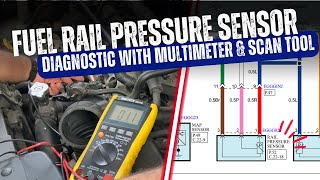
- Faulty Fuel Rail Pressure (FRP) Sensor 🔴 High Probability The sensor's internal electronics can fail over time due to heat cycles and vibration, leading to incorrect or erratic signal outputs. 🎬 Watch: Diagnostic walkthrough for the P0191 sensor circuit This is a common failure point for many modern vehicles.
How to confirm: After confirming actual fuel pressure is correct (55-63 PSI at idle) with a mechanical gauge, if the scan tool shows an incorrect or fluctuating reading, the sensor is the likely culprit. A sensor stuck at a high voltage (e.g., 4.8V) regardless of engine state is a strong indicator of failure.
Typical fix: Replace the fuel rail pressure sensor.
Est. part cost: $50-$160 - Wiring or Connector Issue 🟡 Medium Probability The wiring harness near the engine is exposed to heat and vibration, which can cause wires to become brittle or connectors to corrode or loosen over time.
How to confirm: Visually inspect the sensor's 3-pin connector and wiring for damage, corrosion, or loose pins. Perform a 'wiggle test' on the harness while monitoring live data on a scan tool to see if the reading jumps or drops out. Check for 5V reference, ground, and signal continuity. With the sensor unplugged and key on, the signal wire at the connector should read ~5V due to a pull-up resistor in the PCM.
Typical fix: Repair the damaged section of the wiring harness or replace the connector pigtail. Clean any corrosion from the connector pins and apply dielectric grease.
Est. part cost: $10-$50 - Failing Fuel Pump 🟡 Medium Probability The in-tank fuel pump can weaken with age and high mileage, failing to supply adequate pressure to the fuel rail, especially under load.
How to confirm: Connect a mechanical fuel pressure gauge. If the pressure is below Honda's specification (55-63 PSI at idle), the fuel pump is likely weak or failing. A user on YourMechanic reported this scenario after unnecessarily replacing other parts first.
Typical fix: Replace the in-tank fuel pump assembly.
Est. part cost: $200-$400 - Clogged Fuel Filter ⚪ Low Probability The fuel filter is integrated into the fuel pump module in the tank. While designed to last the vehicle's lifetime, it can become restricted if the vehicle has been run with poor quality fuel or has very high mileage, leading to low pressure.
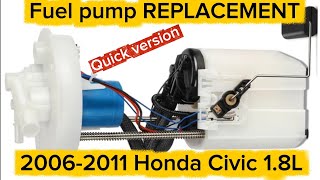
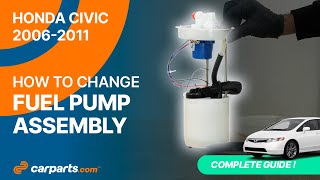
How to confirm: This is diagnosed by confirming low fuel pressure with a mechanical gauge and ruling out a bad pump. Often, the filter is replaced as part of the entire pump assembly. 🎬 Watch: Step-by-step fuel pump replacement for 8th gen Civics
Typical fix: Replace the fuel pump module, which includes the filter.
Est. part cost: $200-$400
Rare But Worth Checking
- Faulty Fuel Pressure Regulator: The regulator maintains steady pressure in the rail. If it sticks open or closed, it can cause the pressure to be too low or too high, triggering the code. On the 8th gen Civic, the regulator is part of the fuel pump assembly in the tank.
- Powertrain Control Module (PCM) Issue: In very rare cases, the PCM itself can have an internal fault in the circuit that interprets the FRP sensor's signal. This should only be considered after all other possibilities, including wiring, have been exhaustively ruled out.
Diagnosis Steps

- Connect an OBD-II scanner and check for P0191 and any other stored codes. Note the freeze-frame data, which shows the engine conditions when the code was set.
- Visually inspect the fuel rail pressure sensor, its electrical connector, and the surrounding wiring for any signs of damage, corrosion, or loose connections.
- Use the scanner's live data function to monitor the fuel rail pressure reading with the key on, engine off, and then at idle. The reading should be stable and respond to engine RPM changes.
- Crucial Step: Relieve fuel system pressure. As there is no Schrader valve, disconnect the fuel feed line from the rail and insert a 'T' adapter to connect a mechanical fuel pressure gauge.
- Start the engine and let it idle. Compare the reading on the mechanical gauge to the live data on your scan tool. The mechanical gauge should read between 55 to 63 PSI (380 to 430 kPa).
- If the gauge reading is correct but the scan tool reading is not, the problem is electrical (sensor or wiring). Proceed to step 8.
- If the gauge reading and scan tool reading match but are below specification, the problem is mechanical (likely a weak fuel pump, clogged filter, or faulty regulator).
- For suspected electrical issues, turn the ignition off and disconnect the sensor. Check the connector for a 5-volt reference signal, a good ground (near 0V), and inspect the signal wire for continuity back to the PCM.
- If wiring and power/ground are good, the fuel rail pressure sensor is faulty and should be replaced.
Parts You'll Likely Need

- Fuel Rail Pressure Sensor
(OEM #37250-PNE-G01 (Note: This part is often listed as a VTEC Oil Pressure Switch but is used for fuel pressure on some applications; verify with dealer based on VIN))— This is the most common failure point when the code is triggered by an electrical fault rather than a mechanical fuel delivery issue.
Trusted brands: Honda OEM, Denso, Standard Motor Products (SMP)
OEM price range: $110-$180
Aftermarket price range: $50-$120 - Fuel Pump Module Assembly
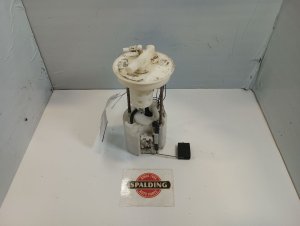
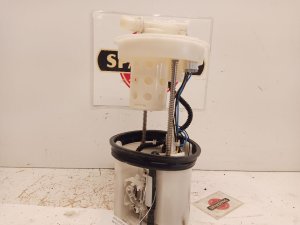
(OEM #17045-SNA-010 (Verify by VIN))— If diagnosis reveals that the actual fuel pressure is too low, a weak or failing in-tank fuel pump is the most likely mechanical cause.
Trusted brands: Denso, Walbro, Spectra Premium
OEM price range: $300-$450
Aftermarket price range: $200-$350
Related Codes That Often Appear With This One
- P0087 — This code means 'Fuel Rail Pressure Too Low'. It often appears with P0191 when there is a mechanical failure, like a weak fuel pump, causing the pressure to drop below the minimum threshold.
- P0171 — This code means 'System Too Lean'. If the fuel pressure is erroneously low, the engine will not receive enough fuel, creating a lean condition that this code will detect.
Technical Service Bulletins (TSBs) & Recalls
- Honda Service Bulletin 21-022: While for a much newer 2019 Civic Type R, this TSB addresses a fuel pump motor that could seize, causing stalling and a P0087 (Fuel Rail Pressure Too Low) code. It's a relevant example of how a faulty pump directly impacts fuel pressure readings and sets codes.
Platform-Specific Known Issues
- The 8th generation Civic's fuel rail does not have a built-in Schrader valve for testing. A technician must use a 'T' adapter in the fuel line to connect a mechanical pressure gauge, making diagnosis slightly more involved than on some other vehicles.
Mechanic-Grade Diagnostic Values
- Mechanical Fuel Pressure at Idle (1.8L Engine) — expected: 55 - 63 PSI (380 - 430 kPa). Failure: Pressure below 55 PSI indicates a fuel delivery problem (pump, filter, regulator). Pressure above 63 PSI may indicate a regulator issue.
- FRP Sensor Signal Voltage (Key On, Engine Off) — expected: ~0.5 V. Failure: A voltage of 0V or a high voltage (e.g., 4.5V or higher) with the key on and engine off suggests a faulty sensor or wiring issue.
- FRP Sensor Connector - Signal Wire Voltage (Sensor Unplugged, Key On) — expected: ~5.0 V. Failure: A reading significantly lower than 5V indicates a problem with the wiring or the PCM's internal pull-up resistor.
- FRP Sensor Connector - Reference Wire Voltage (Key On) — expected: ~5.0 V. Failure: Voltage significantly below 5V indicates a wiring issue or a problem with the PCM's 5V reference circuit.
- FRP Sensor Connector - Ground Wire Resistance to Chassis Ground — expected: < 1.0 Ohm. Failure: High resistance indicates a poor ground connection for the sensor, which can cause erratic readings.
Scan Tool Commands That Help
- Honda HDS (or equivalent professional scanner): Live Data Monitoring (FRP) — This is the primary function used to diagnose P0191. It allows you to compare the PCM's reported pressure to the actual pressure measured with a mechanical gauge. A mismatch points to a sensor/wiring fault, while a matching low reading points to a mechanical fuel delivery fault.
- N/A - Standard PCM Function: Fuel Pump Prime — When turning the ignition switch to ON (II), you should hear the fuel pump run for 2 seconds. If you do not hear the pump prime, it indicates a problem in the fuel pump circuit (relay, wiring, or pump itself) that must be diagnosed before investigating the FRP sensor.
Wiring & Ground Locations
- Fuel Pressure Sensor — Located on the fuel rail at the right rear of the engine (for the 1.8L R18 engine).. This is the primary component for code P0191. Its location is necessary for visual inspection, connector testing, and replacement.
- Main Engine Grounds — Key grounds for Honda engines are typically found on the thermostat housing, from the transmission case to the chassis, and from the cylinder head/valve cover area to the chassis.. A corroded or loose main engine ground can create an unstable ground reference for the PCM. This can cause multiple sensors, including the FRP sensor, to send erratic voltage signals, potentially triggering a P0191 code even if the sensor and its direct wiring are good. This is a common but often overlooked cause of intermittent electrical issues.
OEM Part Supersession History
37250-PNE-G01→No official supersession found, part is still active.— N/A
Heads up: CRITICAL: This part number is cross-listed in catalogs as a 'VTEC Oil Pressure Switch' or 'Valve Timing Oil Pressure Switch'. While it is used for that purpose on many Hondas, it is also the correct part for the fuel rail pressure sensor on this Civic application. A parts store or technician may mistakenly believe it is the wrong part based on the description. Always verify fitment by VIN and be aware of this dual application to avoid misdiagnosis or incorrect parts orders.37850-PMS-A01→N/A— N/A
Heads up: This is a fuel pressure sensor for the Civic Natural Gas (NGV) model. It is not compatible with gasoline engines and should not be used.
Model Year Variations Within This Range
- 2006 - early 2009: Models in this range with the 1.8L R18 engine were prone to developing cracks in the engine block, leading to coolant loss. Honda extended the warranty for this issue. While not directly causing P0191, it's a major known issue for early 8th generation Civics.
- 2011 only: A recall was issued for some 2011 Civics for a potential fault in the fuel pump module that could cause the engine to stall. Owners of a 2011 model experiencing fuel pressure issues should check if their vehicle was part of this recall, as a faulty pump is a primary cause of fuel pressure codes.
Diagnostic Flowchart
Real Owner Stories
Aggregated from forums and TSBs cited above. Mileages and costs reflect what owners reported in those sources.
2008 Honda Civic Si
Symptoms: Needed to test fuel pressure for diagnostics but could not locate a test port on the fuel rail.
What fixed it: Learned that a special T-fitting adapter is required to tap into the fuel line, as this specific generation of Civic does not come with a factory Schrader valve.
Source hint: civicforums.com thread titled 'How do I check my fuel pressure on my 08 si?'
Honda Civic
Symptoms: The P0191 code remained active even after the owner unnecessarily replaced the fuel pump, fuel pressure sensor, and driver fuel module.
What fixed it: A mechanic advised stopping the 'parts cannon' approach and instead performing proper diagnostics by checking mechanical fuel pressure at different RPMs to isolate a potential bad regulator or clogged filter.
Source hint: YourMechanic question titled 'P0191 code coming on - I already changed the fuel pump, fuel pressure sensor, and driver fuel module.'
2019 Honda Civic Type R
Symptoms: Engine stalling and triggering a fuel pressure code.
What fixed it: Replaced the fuel pump motor which was prone to seizing, restoring proper fuel pressure to the rail.
Source hint: Honda Service Bulletin 21-022
Related OBD-II Codes
Frequently Asked Questions
How do I test the fuel pressure on my 2006-2011 Honda Civic if I can't find the test port?
What is the correct fuel pressure specification for the 8th generation Civic at idle?
My scan tool shows the fuel rail pressure sensor is stuck at 4.8V. Is this normal?
Does Honda Service Bulletin 21-022 apply to my 2006-2011 Civic?
I already replaced the fuel pump and pressure sensor on my Civic, but P0191 keeps coming back. What else could it be?
Are there other vehicles that share this exact P0191 diagnostic process with the 2006-2011 Civic?
Helpful Videos
Used OEM Parts in Stock


New Aftermarket Parts Available


The information in this article is provided for general reference and educational purposes only. Vehicle specifications, procedures, and part compatibility can vary by production date, trim level, and region. Always consult your vehicle's factory service manual and verify part numbers before purchasing or performing repairs. Safety-critical components such as airbags, seat belts, and braking systems should be installed by a qualified professional.
- Honda Civic:
- 🎬 Helpful Videos
- 🛍️ Shop This Part
- What's Unique About the 2006-2011 Honda Civic
- Symptoms You May Notice
- Most Likely Causes
- Rare But Worth Checking
- Diagnosis Steps
- Parts You'll Likely Need
- Related Codes That Often Appear With This One
- Technical Service Bulletins (TSBs) & Recalls
- Platform-Specific Known Issues
- Mechanic-Grade Diagnostic Values
- Scan Tool Commands That Help
- Wiring & Ground Locations
- OEM Part Supersession History
- Model Year Variations Within This Range
- Diagnostic Flowchart
- Real Owner Stories
- 2008 Honda Civic Si
- Honda Civic
- 2019 Honda Civic Type R
- Related OBD-II Codes
- Frequently Asked Questions
- 🎟️ Get 5% Off