

P0191 on 2015-2023 Ford Mustang 2.3L EcoBoost: Fuel Pressure Sensor Causes and Fixes
Code P0191 on a 2.3L EcoBoost Mustang usually points to a faulty Fuel Rail Pressure Sensor or a failing High-Pressure Fuel Pump (HPFP). The PCM detects that the sensor's signal is irrational or doesn't match the expected pressure. Replacing the sensor is a common first step and costs around $70-$120 for the OEM part. If that fails, the HPFP is the next likely culprit.
- P0191 on your EcoBoost Mustang means there's a problem with the high-pressure fuel system.
- The most likely cause is a bad fuel rail pressure sensor. Start your diagnosis by checking its signal with a scanner.
- If the sensor is good, the next most probable cause is a failing High-Pressure Fuel Pump (HPFP), a known issue with these engines.
- Do not ignore this code. It can lead to dangerous stalling and leave you stranded.
- When replacing the sensor, using a quality OEM or Motorcraft part (CM-5233 / EJ7Z-9F972-A) is highly recommended to avoid repeat failures.
What's Unique About the 2015-2023 Ford Mustang
The 2.3L EcoBoost is a Gasoline Direct Injection (GDI) engine, which uses both a low-pressure fuel pump in the tank and a high-pressure fuel pump (HPFP) driven by the camshaft to achieve pressures that can exceed 2,000 PSI. This dual-pump system adds diagnostic complexity. While P0191 points to the high-pressure side, the problem can originate from the low-pressure pump failing to supply the HPFP, the HPFP itself failing mechanically, or the sensor providing a false reading. Failures of both the sensor and the HPFP are well-documented by owners of these vehicles and other Fords with the same engine.
Symptoms You May Notice
- Check Engine Light is on
- Significant loss of power or hesitation, especially during acceleration or climbing hills.
- Rough or erratic idle.
- Engine stalling, sometimes unexpectedly after starting or while driving.
- Hard starting or extended cranking time before the engine fires.
- Reduced fuel economy.
- Engine surging or lurching without throttle input.
- Replacing the O2 sensors. While fuel pressure issues can cause rich or lean conditions that O2 sensors detect, the P0191 code points directly to the fuel pressure circuit, not the exhaust sensors. 🎬 See this step-by-step fuel injector and sensor replacement walkthrough The PCM may even adjust fuel trims based on O2 sensor data to compensate for incorrect fuel pressure, masking the root cause.
- Replacing fuel injectors. Unless accompanied by specific injector codes or misfire codes for a single cylinder, it's unlikely that an injector is the root cause of a system-wide pressure code like P0191.
Most Likely Causes
- Faulty Fuel Rail Pressure Sensor 🔴 High Probability Sensors are a common failure point in modern electronic fuel injection systems and are often the first part to be replaced for this code. They are sensitive electronic devices that can fail from heat, vibration, or internal faults.
How to confirm: Use an OBD-II scanner to monitor 'Actual Fuel Rail Pressure'. If the pressure reading is erratic, stuck at one value, or clearly doesn't match the engine's demand (e.g., reads low when accelerating), the sensor is likely bad. Compare the scanner's reading to a mechanical gauge; a discrepancy of more than 5 PSI points to a bad sensor. If the sensor seems plausible, check its electrical connector for corrosion or damage.
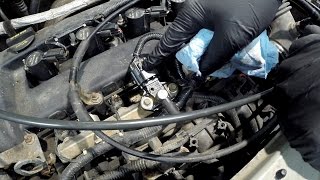
Typical fix: Replace the fuel rail pressure sensor. It is located on the high-pressure fuel rail on the engine. It is critical to use a high-quality OEM (Motorcraft) or OEM-equivalent (Bosch) sensor, as aftermarket sensors are known to cause persistent issues.
Est. part cost: $70-$120 - Failing High-Pressure Fuel Pump (HPFP) 🟡 Medium Probability The HPFP is a mechanical pump that operates under high stress and is a known failure point on EcoBoost engines, leading to low fuel pressure under load. Wear on the internal components or the camshaft follower that drives it can reduce its ability to generate pressure.
How to confirm: If the fuel rail pressure sensor is known to be good, monitor 'Desired Fuel Rail Pressure' vs. 'Actual Fuel Rail Pressure' with a scan tool during a test drive with hard acceleration. If the actual pressure cannot keep up with the desired pressure and drops significantly, the HPFP is likely weak or failing.
Typical fix: Replace the high-pressure fuel pump and the associated high-pressure fuel line, which is typically a one-time use part. It is also highly recommended to replace the camshaft follower (tappet) at the same time to prevent premature failure of the new pump.
Est. part cost: $250-$600 - Failing Low-Pressure Fuel Pump (LPFP) ⚪ Low Probability The in-tank low-pressure pump feeds the HPFP. If it becomes weak, it can starve the HPFP of fuel, causing high-side pressure to drop and trigger P0191, even though the HPFP itself is fine. This can sometimes be accompanied by a whining sound from the rear of the car.
How to confirm: Test the low-pressure fuel system pressure at the feed line to the HPFP. It should maintain a steady pressure (typically 40-75 PSI) under all conditions. A drop in low-side pressure indicates a failing in-tank pump or a clogged filter.
Typical fix: Replace the in-tank fuel pump assembly. The fuel filter is integrated into this assembly.
Est. part cost: $150-$350 - Damaged Wiring or Electrical Connector ⚪ Low Probability Engine bay heat and vibration can cause wiring to become brittle or connectors to loosen over time, leading to an intermittent or out-of-range signal. Corrosion can also build up on the connector pins, causing a poor connection.
How to confirm: Visually inspect the wiring harness and connector for the fuel rail pressure sensor. Look for any signs of corrosion, frayed wires, or loose pins. Use a multimeter to check for proper voltage, ground, and signal continuity at the connector. Sometimes, simply cleaning the connector with electrical contact cleaner and applying dielectric grease can resolve the issue.
Typical fix: Repair the damaged section of the wiring harness or replace the connector pigtail.
Est. part cost: $20-$50
Rare But Worth Checking
- Clogged Fuel Filter: The fuel filter is integrated into the in-tank fuel pump assembly on this vehicle. While not a separate part to replace, a severely clogged filter can cause the entire assembly to fail, leading to low-pressure symptoms that trigger P0191.
- Powertrain Control Module (PCM) Fault: This is extremely rare, but a software glitch or internal failure in the PCM could cause it to misinterpret the fuel pressure sensor's signal. This should only be considered after all other possibilities have been exhaustively ruled out.
Technical Service Bulletins (TSBs) & Recalls
Manufacturer records for other Ford platforms with similar fuel architectures highlight specific failure modes. For instance, TSB Bulletin #TSB 19-2231 notes that P0191 can be caused by an engine harness chafe on the powertrain control module (PCM) bracket. Additionally, TSB Bulletin #TSB 18-2326 indicates that P0191 may appear alongside other codes like P06EA and P0401, requiring specific PCM service procedures to correct the condition.
Diagnosis Steps
- Connect a high-quality OBD-II scanner and check for any other accompanying codes. Note the freeze frame data for P0191 to see the conditions under which the code was set.
- Using the scanner's live data function, monitor both 'Desired Fuel Rail Pressure' and 'Actual Fuel Rail Pressure'.
- At idle, the values should be very close. Rev the engine. The actual pressure should track the desired pressure closely. If the actual pressure is erratic, stuck, or unresponsive, the sensor is the primary suspect.
- If the sensor readings seem plausible, perform a test drive while monitoring the pressure data. Under heavy acceleration, if the actual pressure falls far below the desired pressure, suspect a mechanical fuel delivery issue (HPFP or LPFP).
- Visually inspect the fuel rail pressure sensor connector and its wiring for any signs of damage, corrosion, or loose connections. Clean the connector if necessary.
- If a weak fuel pump is suspected, test the low-pressure side first. Connect a mechanical gauge to the low-pressure line. Pressure should be stable (typically 40-75 PSI). If it drops, the in-tank pump is likely the issue.
- If the low-pressure side is healthy and the sensor is good, but pressure still drops under load, the High-Pressure Fuel Pump (HPFP) is the most likely culprit.
Parts You'll Likely Need
- Fuel Rail Pressure Sensor
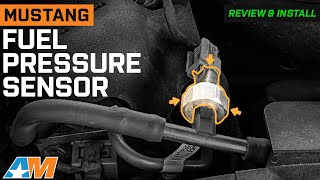
(OEM #EJ7Z-9F972-A)— This sensor is the most common failure point for code P0191. It provides the direct reading that the PCM uses to set the code, and false readings are frequent. It is critical to use an OEM part. 🎬 Watch: How to replace a faulty Ford fuel rail pressure sensor
Trusted brands: Motorcraft (CM-5233), Bosch (OEM manufacturer)
OEM price range: $70-$112
Aftermarket price range: $50-$90 - High-Pressure Fuel Pump (HPFP)
(OEM #FR3Z-9350-A (Verify by VIN))— If the sensor is good, the next most likely cause is the mechanical HPFP failing to generate the required pressure, a known issue on EcoBoost engines.
Trusted brands: Motorcraft, Bosch
OEM price range: $400-$600
Aftermarket price range: $250-$450 - In-Tank Fuel Pump Assembly
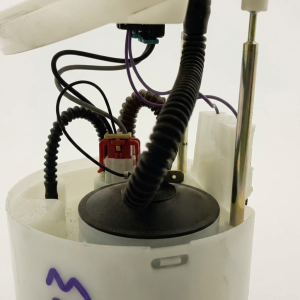
(OEM #FR3Z-9H307-A)— A weak in-tank pump can starve the HPFP, causing this code. This part is the primary low-pressure pump. Note: VIN verification is highly recommended as multiple pump configurations exist.
Related Codes That Often Appear With This One
- P0087 — P0087 means 'Fuel Rail/System Pressure - Too Low'. This is a mechanical fault code that often appears with P0191 when the root cause is a failing HPFP or LPFP that cannot supply enough pressure.
- P2196 — P2196 means 'O2 Sensor Signal Biased/Stuck Rich'. Incorrectly high fuel pressure can cause a rich running condition, which the upstream oxygen sensor will detect and flag.
- P030x — A P030x code (e.g., P0301, P0302) indicates a misfire on a specific cylinder. Inconsistent fuel pressure can lead to misfires, and a user on MustangForums.com reported P0191 appearing alongside a P0301 misfire code.
Platform-Specific Known Issues
- Owner Experience: Sensor Replacement is Key First Step: On MustangForums.com, a user with an '07 GT (different engine but similar fault logic) experienced P0191 along with misfire and lean codes. After replacing the fuel filter, plugs, and coils, the issue persisted. Another user advised them to ensure they used a quality Bosch or Motorcraft sensor, as cheap aftermarket sensors are known to fail quickly or be faulty out of the box, a common pitfall in diagnosing this code.
- DIY Safety Precautions: When replacing the fuel rail pressure sensor, it is crucial to work on a cold engine to minimize fuel pressure. Even so, residual pressure can exist. A DIY video guide recommends cracking the sensor bolts loose slowly and evenly to allow any trapped pressure to bleed off safely. It is also stressed to only use hand tools, as electric tools can create sparks, which is extremely dangerous around fuel vapors.
Mechanic-Grade Diagnostic Values
- Fuel Rail Pressure Sensor (FRPS) Signal Voltage — expected: Key On, Engine Off: ~0.5V. Engine Idling: ~1.3V. Snap Acceleration: ~3.8V+.. Failure: Voltage is stuck (e.g., at 4.8V) regardless of engine state, or does not change with engine RPM.
- FRPS Connector - 5V Reference Voltage — expected: 5.0V with key on, engine off, and connector unplugged.. Failure: Significantly lower or no voltage indicates a wiring or PCM issue, not a sensor failure.
- Low-Pressure Fuel System Pressure — expected: 40-75 PSI, stable under all conditions.. Failure: Pressure drops under load or is consistently low, indicating a failing in-tank pump (LPFP).
- High-Pressure Fuel System Pressure (Scan Tool Live Data) — expected: Idle: 200-500 PSI. Wide-Open Throttle (WOT): Can exceed 2,000 PSI. 'Actual' pressure should closely track 'Desired' pressure.. Failure: 'Actual' pressure significantly lags behind 'Desired' pressure during acceleration, pointing to a weak HPFP.
- FRPS Circuit Resistance — expected: 0-2 kΩ between the signal wire and ground/reference.. Failure: Values outside this range suggest a short or open circuit in the wiring harness.
Scan Tool Commands That Help
- Ford IDS / FORScan: Fuel Pump Command (FPC) & Fuel Pump Duty Cycle — To manually command the low-pressure fuel pump on and monitor its duty cycle. This helps isolate whether a low-pressure issue is due to the pump itself or the Fuel Pump Driver Module (FPDM) not commanding it correctly.
- High-End OBD-II Scanners: Live Data Graphing: Desired vs. Actual Fuel Rail Pressure — This is the primary diagnostic method for determining if the HPFP is failing. Graphing both PIDs during a test drive under load will clearly show if the actual pressure can't keep up with the PCM's request.
Wiring & Ground Locations
- Fuel Rail Pressure Sensor Connector — On the high-pressure fuel rail, located on the top/front of the 2.3L EcoBoost engine, easily visible once the engine cover is removed.. This is the primary connection point to test for 5V reference, ground, and the signal wire's voltage. Corrosion or loose pins here are a common cause of the code.
- Fuel Pump Driver Module (FPDM) — On 2015+ Mustangs, the FPDM is integrated differently than prior generations of Fords where it was notoriously mounted near the spare tire. For the S550, it is less prone to corrosion but can still fail electronically.. The FPDM controls the voltage to the low-pressure pump. A failure in the module or its wiring can starve the high-pressure pump, causing P0191 even if both pumps are mechanically sound.
Real Owner Repair Stories
- Ford F150 Forum user (2011 Ford F-150 EcoBoost (similar fuel system architecture)) — P0191 code triggered.
❌ Tried (didn't work) Replacing the Fuel Rail Pressure (FRP) sensor.
✅ What actually fixed it The Fuel Pump Driver Module (FPDM), located near the spare tire on that model, was found to have a hole corroded through the back of it. Replacing the FPDM resolved the code. - NHTSA ODI #11478786 — An owner reported multiple fuel system equipment failures listing code P0191 two and three times per day on a vehicle with only 22,000 miles.
- NHTSA ODI #10780588 — A driver experienced a sudden stall at 45mph; technicians found code P0191 and discovered broken bolts holding the internal fuel pump.
- NHTSA ODI #10446792 — An owner reported that replacing the fuel rail pressure sensor for a P0191 code did not resolve their issue, suggesting deeper systemic faults in some Ford fuel systems.
Model Year Variations Within This Range
- 2015-2017 vs 2018-2023: The 2018 model year refresh introduced a revised 2.3L EcoBoost engine with both port and direct injection. This adds a low-pressure set of injectors and changes the fuel rail and control strategy. While the P0191 code still points to the high-pressure rail sensor, diagnostics on a 2018+ model must account for the dual-injection system, which may have different pressure targets and potential failure modes compared to the direct-injection-only 2015-2017 engines.
Diagnostic Flowchart
Other Known Issues on This Vehicle
Issues unrelated to this code that are worth knowing about as an owner of this generation:
- Head Gasket Failure ('Ecoboom') 🔴 High — More common on 2015-2019 models, especially when modified or tuned. A design flaw in the cooling channels between cylinders on earlier blocks is a suspected cause. Ford reportedly improved the head gasket and block design in later years.
- A/C Evaporator Core Leak 🟠 Medium — A very common failure across the S550 platform (2015+). Symptoms include poor A/C performance and loss of refrigerant. The repair is extremely labor-intensive, requiring full dashboard removal. (Ref: TSB 18-2256 (supersedes 18-2166) for 2015-2017 models, though the problem persists in later years.)
- Carbon Buildup on Intake Valves 🟡 Low — An inherent issue for all Gasoline Direct Injection (GDI) engines, including the 2.3L EcoBoost. Over time (typically 50k-100k miles), carbon deposits can build up on the intake valves, leading to rough idle and loss of power.
- 10R80 Automatic Transmission Whine 🟠 Medium — Affects some early 2020 models with the 10-speed automatic transmission built between Oct-Dec 2019. A high-pitched whine may be heard at low speeds due to a faulty output shaft bearing. The repair is complex and expensive if out of warranty. (Ref: TSB 20-2083)
Used vs. New Parts: Buying Guide for This Vehicle
When a used part is the smart pick: Used parts are generally not recommended for critical fuel system components on this vehicle due to the high pressures and wear-and-tear nature of the parts. However, a used wiring harness pigtail for the fuel rail pressure sensor could be a viable option if the original connector is damaged, provided it is in excellent condition with no corrosion or brittleness.
Donor-vehicle mileage cap: roughly under 40000 miles for the part to have meaningful remaining life.
What to inspect on the donor part:
- For a wiring pigtail, inspect for any signs of cracking, melting, or corrosion on the pins.
- Ensure the locking tab on the connector is intact and functional.
- Verify the donor vehicle has low mileage and no signs of engine bay fire or flood damage.
OEM-only on this vehicle (don't cheap out):
- Fuel Rail Pressure Sensor
- High-Pressure Fuel Pump (HPFP)
Aftermarket brands forum-validated for this vehicle:
- Bosch (Often the OEM supplier for Ford fuel components)
Brands owners have reported issues with on this vehicle:
- Unnamed, no-brand sensors from online marketplaces. Forum and mechanic consensus strongly advises against using cheap aftermarket electronic sensors, as they often fail quickly or are inaccurate out of the box, leading to a repeat of the P0191 code.
Real Owner Stories
Aggregated from forums and TSBs cited above. Mileages and costs reflect what owners reported in those sources.
2007 Ford Mustang GT
Symptoms: Experienced P0191 along with misfire and lean codes. The issue persisted even after replacing the fuel filter, plugs, and coils.
What fixed it: Replacing the fuel rail pressure sensor with a quality Bosch or Motorcraft unit.
Source hint: mustangforums.com/forum/4-6l-v8-technical-discussions/742132-p0191-fuel-rail-pressure-sensor-circuit.html
Related OBD-II Codes
Frequently Asked Questions
Can I use an aftermarket fuel rail pressure sensor on my 2.3L EcoBoost Mustang?
What should the fuel pressure readings look like on my Mustang's low-pressure side?
Is there a specific safety procedure for replacing the fuel rail pressure sensor on this engine?
Why is my Mustang losing power and hesitating during acceleration with code P0191?
Does the 2.3L EcoBoost in the Mustang share this fuel pressure issue with other Ford models?
Should I replace the high-pressure fuel line when replacing the HPFP?
Helpful Videos
Used OEM Parts in Stock



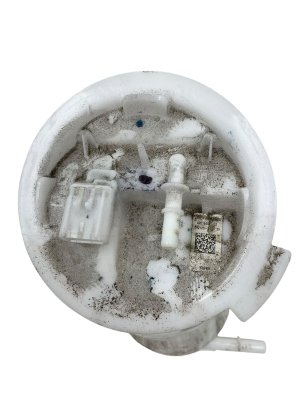
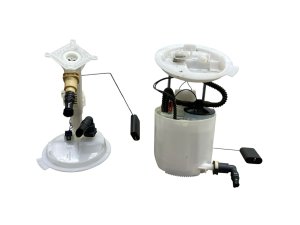
New Aftermarket Parts Available
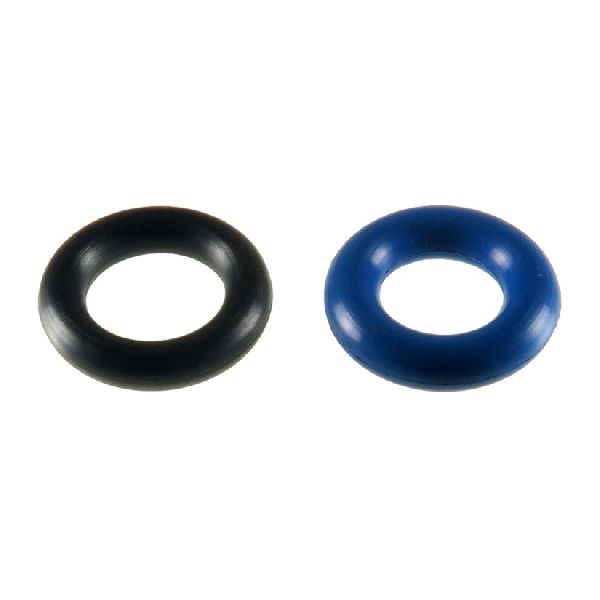

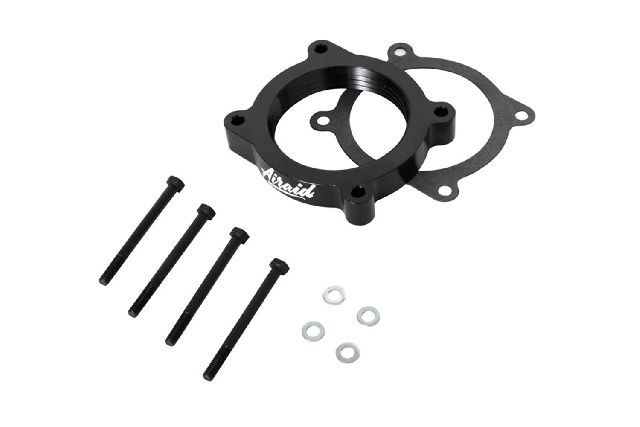

The information in this article is provided for general reference and educational purposes only. Vehicle specifications, procedures, and part compatibility can vary by production date, trim level, and region. Always consult your vehicle's factory service manual and verify part numbers before purchasing or performing repairs. Safety-critical components such as airbags, seat belts, and braking systems should be installed by a qualified professional.
- Ford Mustang:
- 🎬 Helpful Videos
- 🛍️ Shop This Part
- What's Unique About the 2015-2023 Ford Mustang
- Symptoms You May Notice
- Most Likely Causes
- Rare But Worth Checking
- Technical Service Bulletins (TSBs) & Recalls
- Diagnosis Steps
- Parts You'll Likely Need
- Related Codes That Often Appear With This One
- Platform-Specific Known Issues
- Mechanic-Grade Diagnostic Values
- Scan Tool Commands That Help
- Wiring & Ground Locations
- Real Owner Repair Stories
- Model Year Variations Within This Range
- Diagnostic Flowchart
- Other Known Issues on This Vehicle
- Used vs. New Parts: Buying Guide for This Vehicle
- Real Owner Stories
- 2007 Ford Mustang GT
- Related OBD-II Codes
- Frequently Asked Questions
- 🎟️ Get 5% Off