

P0191 on 2012-2018 Ford Focus 2.0L: Causes and Fixes for Fuel Rail Pressure Faults
P0191 on a 2012-2018 Ford Focus usually points to a faulty Fuel Rail Pressure (FRP) sensor or a failing High-Pressure Fuel Pump (HPFP). Replacing the sensor is a common first step and costs about $40-$80 for the part. If that doesn't work, the HPFP is the next likely culprit, which is a more expensive repair. Owners often report this code alongside P0087 (Fuel Pressure Too Low) when the HPFP is failing. A known hidden issue is a chafed wiring harness near the intake manifold that can cause an in
- P0191 means the fuel rail pressure reading is not what the engine computer expects.
- The most likely fix is replacing the Fuel Rail Pressure (FRP) sensor, which is relatively inexpensive.
- If a new sensor doesn't solve the issue, the High-Pressure Fuel Pump (HPFP) is the next most probable cause, especially on cars with over 100,000 miles.
- Driving with this code can lead to stalling and is a potential safety risk; prompt diagnosis is recommended.
- Due to the very high pressures in the GDI fuel system, repairs beyond the sensor may be best left to a professional.
What's Unique About the 2012-2018 Ford Focus

The 2012-2018 Focus uses a Gasoline Direct Injection (GDI) engine, which features both a low-pressure fuel pump in the tank and a high-pressure fuel pump (HPFP) driven by the camshaft. Code P0191 specifically relates to this high-pressure side, which operates at pressures from ~750 PSI at idle to over 2,000 PSI under load. While the Fuel Rail Pressure (FRP) sensor is a common failure point, the HPFP itself is also a known issue on this platform, sometimes leading to similar pressure-related codes like P0087 when it can no longer meet the pressure demanded by the PCM.
Symptoms You May Notice
- Check Engine Light is on
- Engine hesitation or stumbling on acceleration
- Significant loss of engine power, feeling 'sluggish'
- Rough or unstable idle
- Engine stalling, sometimes when coming to a stop or during low-speed city driving
- Hard starting or extended cranking time
- Reduced fuel economy
- Engine surging or bucking erratically
- Replacing the in-tank fuel pump when the issue is with the high-pressure system (HPFP or FRP sensor).
- Replacing fuel injectors when the problem is a lack of pressure, not faulty injectors.
- Replacing the FRP sensor without first verifying that the actual fuel pressure isn't the problem (i.e., a failing HPFP).
Most Likely Causes

- Faulty Fuel Rail Pressure (FRP) Sensor 🔴 High Probability The sensor is exposed to intense heat cycles and vibration on the engine's fuel rail. Over time, its internal electronics can fail, causing it to send erratic or out-of-range voltage signals to the PCM.
How to confirm: Use an OBD-II scanner to monitor live data for 'Fuel Rail Pressure'. With Key On, Engine Off (KOEO), the pressure should be low but not zero. At idle, it should be stable. If the reading is stuck at a high value (e.g. 4.8V), reads zero, or fluctuates wildly without engine speed changes, the sensor is the primary suspect.
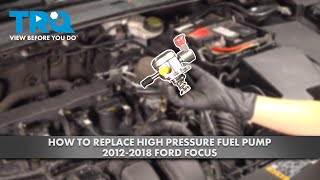
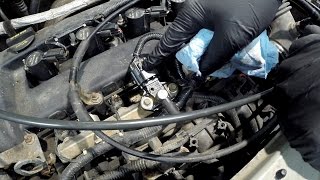
Typical fix: Replace the Fuel Rail Pressure sensor located on the high-pressure fuel rail. 🎬 Watch: Step-by-step guide to replacing the fuel rail pressure sensor. This requires depressurizing the system for safety.
Est. part cost: $40-$80 - Failing High-Pressure Fuel Pump (HPFP) 🟡 Medium Probability The HPFP is a mechanical pump driven by the camshaft that can wear out, especially after 80,000-120,000 miles. When it fails, it cannot generate the pressure commanded by the PCM, causing a range/performance error, often accompanied by P0087.
How to confirm: With a scan tool, graph 'Desired Fuel Rail Pressure' vs. 'Actual Fuel Rail Pressure' during a test drive. Under heavy acceleration, the actual pressure should closely track the desired pressure. If the actual pressure consistently lags or drops significantly, the HPFP is the likely cause.
Typical fix: Replace the High-Pressure Fuel Pump. This is a more involved repair that requires depressurizing the fuel system and removing other components for access.
Est. part cost: $250-$500 - Wiring or Connector Issue ⚪ Low Probability The wiring harness to the FRP sensor can become brittle and damaged from engine heat and vibration, leading to corrosion on the pins, a loose connection, or a short/open circuit. A specific chafe point exists where the harness loops around the intake manifold.
How to confirm: Visually inspect the FRP sensor's electrical connector and surrounding wires for any signs of melting, chafing, or green corrosion. Perform a 'wiggle test' on the harness while monitoring live pressure data to see if the reading jumps. Check for a stable 5-volt reference and good ground at the connector with a multimeter.
Typical fix: Repair the damaged section of the wiring harness or replace the connector pigtail.
Est. part cost: $15-$50
Rare But Worth Checking
- Failing in-tank low-pressure fuel pump: If the HPFP is starved of fuel from the tank, it cannot build adequate high pressure. This is less common for P0191 alone but can be a contributing factor, especially if low-pressure codes are also present.
- Clogged fuel filter: The fuel filter is part of the in-tank fuel pump module and is not separately serviceable on this platform. While a severe clog could cause this, it's more likely the pump itself would fail first.
- Powertrain Control Module (PCM) issue: In very rare cases, the PCM itself can be the source of the problem, misinterpreting a correct sensor signal. This should only be considered after all other possibilities, including wiring, have been exhaustively ruled out.
Diagnosis Steps
- Connect an OBD-II scanner and confirm P0191 is present. Check for any other related fuel system codes like P0087 or P00C6.
- Access the live data stream. Monitor the PIDs for 'Fuel Rail Pressure' (FRP), 'Desired Fuel Rail Pressure', and Long Term Fuel Trim (LTFT).
- With the Key On, Engine Off (KOEO), observe the FRP reading. It should show a low residual pressure. If it's zero, maxed out, or fluctuating wildly, suspect the sensor or wiring.
- Start the engine. At idle, the actual and desired pressures should be very close (typically 700-800 PSI). Rev the engine; the actual pressure should track the desired pressure smoothly.
- If the pressure reading is erratic or clearly incorrect, proceed to inspect the sensor. If the pressure is consistently low and fails to meet the desired value under load, suspect the HPFP.
- Turn off the engine and allow it to cool completely. Locate the Fuel Rail Pressure sensor on the fuel rail. Inspect its electrical connector for corrosion, damage, or loose pins. Pay close attention to the harness where it loops around the intake manifold for signs of chafing. Perform a wiggle test on the harness while a helper watches the live data (with key on).
- If the connector looks good, test the wiring. Disconnect the sensor and check for a 5V reference wire, a ground wire (check for low resistance to chassis ground), and signal wire continuity back to the PCM.
- If the wiring and connector are good but the sensor readings are irrational, replace the Fuel Rail Pressure sensor.
- If the sensor and wiring are confirmed good but the actual pressure cannot keep up with the desired pressure (especially under load during a test drive), the High-Pressure Fuel Pump is the most likely cause and should be replaced.
Parts You'll Likely Need

- Fuel Rail Pressure Sensor
(OEM #CM5229, BU5Z-9F972-B)— This sensor is the most common point of failure for code P0191. It fails electronically, providing incorrect data to the car's computer.
Trusted brands: Motorcraft, Bosch, Standard Motor Products (SMP), NTK
OEM price range: $70-$90
Aftermarket price range: $40-$65 - High-Pressure Fuel Pump
(OEM #CM5E-9D376-CB)— This is the second most likely cause. The mechanical pump wears out and can no longer supply the fuel pressure commanded by the computer, especially on higher-mileage vehicles.
Trusted brands: Motorcraft, Bosch
OEM price range: $400-$550
Aftermarket price range: $250-$400
Related Codes That Often Appear With This One
- P0087 — Stands for 'Fuel Rail/System Pressure - Too Low'. It often appears with P0191 because a failing HPFP can cause both a low pressure condition and a performance range fault. Many owners report seeing both codes together.
- P00C6 — Stands for 'Fuel Rail Pressure Too Low - Engine Cranking'. This indicates the system can't build enough pressure to even start the engine, often pointing to a severely failed HPFP or a wiring issue.
- P0171/P0172 — Lean (P0171) or Rich (P0172) codes can appear if the incorrect fuel pressure readings cause the PCM to command the wrong amount of fuel, which is then detected by the oxygen sensors.
Technical Service Bulletins (TSBs) & Recalls
- While no TSB is directly for P0191 on this platform, a related TSB for pre-facelift (pre-2015) models addressed a wiring loom fault that could cause stalling and fluctuating RPMs, symptoms that could be confused with a fuel pressure issue.
Platform-Specific Known Issues
- On the FocusFanatics forum, a user with a 2012 Focus reported P0191 along with stalling. After replacing the FRP sensor did not fix the issue, they replaced the High-Pressure Fuel Pump, which resolved the problem. This highlights the common diagnostic path from sensor to pump.
- A Reddit user on r/FordFocus described a 2016 SE stalling at city stops with code P0087, a classic symptom pointing towards a failing HPFP struggling to maintain pressure at low RPMs after being heat-soaked.
- A known failure point is the wiring harness chafing where it loops around the intake manifold, which can cause a short or open circuit on the 5V reference wire to the FRP sensor, leading to codes P0191, P0192, or P00C6.
Mechanic-Grade Diagnostic Values
- FRP Sensor 5V Reference Wire Voltage (at sensor connector, KOEO) — expected: 5.0 Volts. Failure: A reading near zero (e.g., 90mV) indicates an open or short in the reference circuit, possibly from a known harness chafe point.
- FRP Sensor Signal Wire Voltage (back-probed at sensor, KOEO) — expected: Approximately 0.5V - 0.6V. Failure: A reading near zero (e.g., 0.03V) or a reading stuck high (e.g., 4.8V) suggests a faulty sensor.
- FRP Sensor Signal Wire Voltage (back-probed at sensor, engine at idle) — expected: Approximately 1.0V (corresponds to ~750-800 PSI). Failure: Voltage that does not track with desired pressure or is stuck at a fixed value indicates a sensor or wiring fault.
- FRP Sensor Ground Wire Resistance (at sensor connector to chassis ground, ignition off) — expected: Less than 0.2 Ohms. Failure: High resistance indicates a poor ground connection, which can cause erratic sensor readings.
Scan Tool Commands That Help

- Ford IDS, FORScan, or advanced OBD-II scanner: Live Data Graphing: 'Desired Fuel Rail Pressure' vs. 'Actual Fuel Rail Pressure' — This is the primary method for diagnosing a mechanical fuel pressure issue (like a failing HPFP). During a test drive with heavy acceleration, 'Actual' pressure should closely follow 'Desired' pressure. If it lags or drops significantly, the HPFP is unable to keep up with demand.
Wiring & Ground Locations

- FRP Sensor Harness Chafe Point — The section of the engine wiring harness that loops around the driver's side of the 2.0L GDI intake manifold.. Vibration can cause the harness to rub against the manifold or other components, eventually wearing through the insulation of the wires for the FRP sensor (specifically the 5V reference wire). This creates an intermittent short or open circuit, causing P0191/P0192 and no-start or stalling conditions that can be difficult to diagnose.
Real Owner Repair Stories
- YouTube channel 'Pro Auto Diagnostics' (2013 Ford Focus) — No start, long crank time, stalling, codes P0192 (Fuel Rail Pressure Sensor Circuit Low) and P00C6 (Fuel Rail Pressure Too Low - Engine Cranking).
❌ Tried (didn't work) Initial diagnosis pointed towards a bad sensor or pump, but voltage testing revealed the root cause before parts were replaced.
✅ What actually fixed it The 5V reference wire to the FRP sensor was broken inside the harness where it chafed against the intake manifold. The mechanic repaired the broken wire and rerouted the harness slightly to prevent it from happening again, which fully resolved the issue.
"I Checked Everything" — The Actual Cause
- While a smoke test is not used for this code, a similar pattern exists: a technician may test the FRP sensor and HPFP and find they function correctly on the bench, but the code persists. The actual cause was found to be an intermittent open/short in the wiring harness due to chafing near the intake manifold, which would not be found by testing the components in isolation.
OEM Part Supersession History
CM5E-9D376-CB (High-Pressure Fuel Pump)→CP9Z-9350-B, CM5Z-9350-CA, CP5Z-9350-C— Part number updates and revisions by Ford.
Heads up: These part numbers are generally interchangeable for the 2012-2017 Focus 2.0L application, but always verify fitment with the vehicle's VIN before purchasing.
Diagnostic Flowchart
Other Known Issues on This Vehicle
Issues unrelated to this code that are worth knowing about as an owner of this generation:
- DPS6 PowerShift Automatic Transmission Failure 🔴 High — Extremely common on 2012-2016 models. Symptoms include shuddering, hesitation, jerky shifts, and complete loss of drive. (Ref: Multiple lawsuits and warranty extensions (e.g., to 7 years/100,000 miles) were issued, but the underlying design flaw persists.)
- Faulty Canister Purge Valve (CPV) 🟠 Medium — Widespread across 2012-2018 models, causing stalling, rough idle, and difficulty starting, especially after refueling. (Ref: Ford Recall #18S32 (NHTSA #18V735) was issued to reprogram the PCM and replace the valve if necessary. A follow-up recall was issued as the first fix was not always properly applied.)
- Failed Passenger-Side Engine Mount 🟠 Medium — Common failure item leading to excessive engine vibration felt in the cabin, particularly at idle or in reverse. (Ref: While TSBs existed for older models regarding debris in mounts, the Mk3 failure is typically due to the hydraulic mount itself collapsing.)
- Electronic Power Steering Failure 🔴 High — Affects some models, particularly the 2012-2014 range, causing a sudden and complete loss of power steering assist. (Ref: Often requires replacement of the entire steering rack assembly. No universal recall, but numerous owner complaints filed with NHTSA.)
- Wiring Loom Fault (Pre-facelift models) 🟠 Medium — On pre-2015 cars, a wiring loom fault could cause fluctuating revs and stalling. (Ref: A recall was issued in the US, and some vehicles in other regions received new looms under warranty.)
Used vs. New Parts: Buying Guide for This Vehicle
When a used part is the smart pick: A used wiring harness connector (pigtail) from a junkyard is a perfectly acceptable and cost-effective repair if only the connector is damaged. The main wiring harness itself can also be sourced used, but inspect carefully for the same chafe marks.
Donor-vehicle mileage cap: roughly under 80000 miles for the part to have meaningful remaining life.
What to inspect on the donor part:
- For a wiring pigtail, ensure the plastic isn't brittle and the locking tab is intact.
- Check for any signs of corrosion (green crust) on the metal pins.
- Ensure at least 4-6 inches of wire is attached for easier splicing.
OEM-only on this vehicle (don't cheap out):
- High-Pressure Fuel Pump (HPFP)
Aftermarket brands forum-validated for this vehicle:
- Motorcraft (OEM)
- Bosch (Often the OEM supplier)
Brands owners have reported issues with on this vehicle:
- Unnamed, low-cost HPFPs from online marketplaces are a significant risk. Failure of this part can leave you stranded, and quality control is a known issue with non-reputable brands.
Real Owner Stories
Aggregated from forums and TSBs cited above. Mileages and costs reflect what owners reported in those sources.
2012 Ford Focus SE Hatch 2.0L GDI
Symptoms: P0191 code along with engine stalling.
What fixed it: Replacing the High-Pressure Fuel Pump (HPFP) resolved the issue after replacing the FRP sensor failed to fix it.
Source hint: FocusFanatics - Thread: '2012 Focus SE Hatch P0191'
2016 Ford Focus SE 2.0L GDI
Symptoms: Stalling during city driving after the car is warm and code P0087.
What fixed it: Replacement of the fuel pressure pump (HPFP).
Source hint: Reddit - r/FordFocus - Post Title: 'fuel pressure pump with my ford focus 2016 se 2.0L engine'
Related OBD-II Codes
Frequently Asked Questions
Is there a specific TSB for the P0191 code on my 2012-2014 Ford Focus?
Where is the Fuel Rail Pressure (FRP) sensor located on the 2.0L GDI engine?
I have a 2016 Focus SE that stalls at stoplights; could this be the P0191 code?
Is there a specific wiring problem I should check for on my Focus?
How much should I expect to pay for a new Fuel Rail Pressure sensor part?
My scanner shows the fuel pressure is stuck at 4.8V. Does this mean the sensor is bad?
Helpful Videos


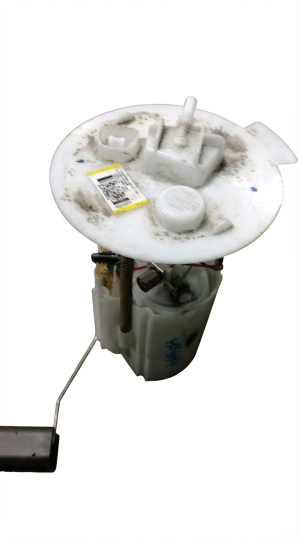
Used OEM Parts in Stock



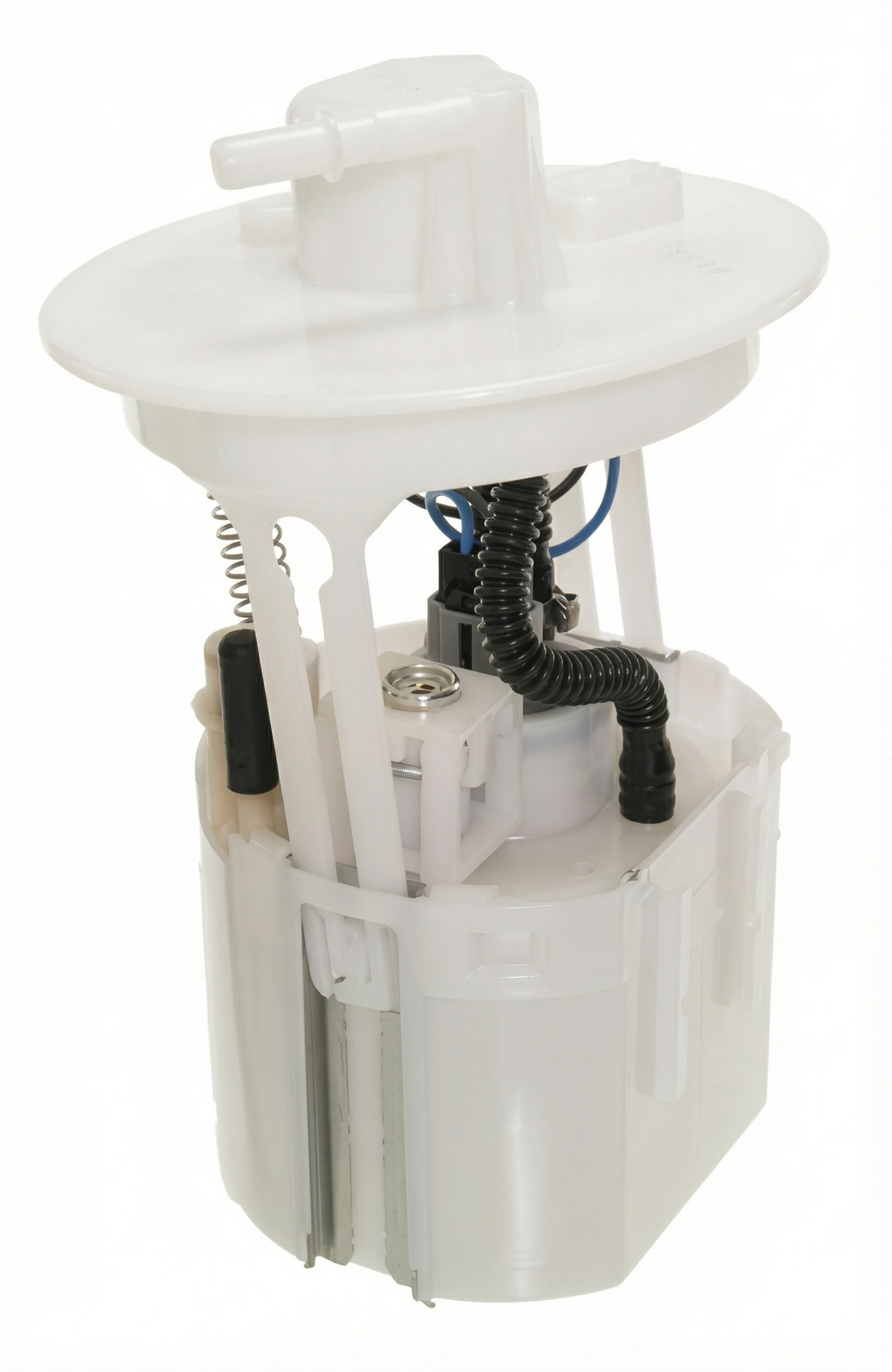

New Aftermarket Parts Available


The information in this article is provided for general reference and educational purposes only. Vehicle specifications, procedures, and part compatibility can vary by production date, trim level, and region. Always consult your vehicle's factory service manual and verify part numbers before purchasing or performing repairs. Safety-critical components such as airbags, seat belts, and braking systems should be installed by a qualified professional.
- Ford Focus:
- 🎬 Helpful Videos
- 🛍️ Shop This Part
- What's Unique About the 2012-2018 Ford Focus
- Symptoms You May Notice
- Most Likely Causes
- Rare But Worth Checking
- Diagnosis Steps
- Parts You'll Likely Need
- Related Codes That Often Appear With This One
- Technical Service Bulletins (TSBs) & Recalls
- Platform-Specific Known Issues
- Mechanic-Grade Diagnostic Values
- Scan Tool Commands That Help
- Wiring & Ground Locations
- Real Owner Repair Stories
- "I Checked Everything" — The Actual Cause
- OEM Part Supersession History
- Diagnostic Flowchart
- Other Known Issues on This Vehicle
- Used vs. New Parts: Buying Guide for This Vehicle
- Real Owner Stories
- 2012 Ford Focus SE Hatch 2.0L GDI
- 2016 Ford Focus SE 2.0L GDI
- Related OBD-II Codes
- Frequently Asked Questions
- 🎟️ Get 5% Off