

P0191 on 2006-2010 Ford Explorer 4.0L: Fuel Pressure Causes and Fixes
On a 2006-2010 Explorer, P0191 is most often caused by a corroded Fuel Pump Driver Module (FPDM) located above the spare tire. Inspecting and replacing this module, which costs about $50-$90 for an aftermarket part, is the most likely fix. Do not replace the fuel pump first. Aftermarket kits like the Dorman 590-001 include improved mounting hardware to prevent a repeat failure.
- For a P0191 code on a 2006-2010 Explorer, always inspect the Fuel Pump Driver Module (FPDM) above the spare tire for corrosion before buying any parts.
- The most common fix is replacing the FPDM, not the fuel pump or the Fuel Rail Pressure (FRP) sensor.
- If you replace the FPDM, use a kit that includes spacers or standoffs to prevent the new module from corroding against the frame.
- Symptoms like stalling and hesitation are serious safety concerns that should be addressed promptly.
What's Unique About the 2006-2010 Ford Explorer

Ford trucks and SUVs from this era, including the fourth-generation Explorer, use an external Fuel Pump Driver Module (FPDM) to control the fuel pump. Ford mounted this aluminum module directly to the vehicle's steel frame crossmember, which is exposed to road salt and moisture, especially in northern climates. This design flaw leads to severe galvanic corrosion between the two dissimilar metals, destroying the module's electronics and casing. This specific failure is the most common cause of P0191 on this platform and is frequently misdiagnosed as a more expensive fuel pump failure, as confirmed by numerous owner complaints and forum discussions.
Symptoms You May Notice
- Check Engine Light is on
- Engine stalling, sometimes intermittently or after warming up
- Hesitation or loss of power, especially when accelerating or going uphill
- Engine may crank but fail to start
- Rough or unstable idle
- Reduced fuel economy
- Sudden loss of all power while driving
- Replacing the fuel pump before inspecting the Fuel Pump Driver Module (FPDM). The FPDM is the most common point of failure and exhibits the same symptoms as a bad pump. This is the number one misdiagnosis for this code on this vehicle.
- Replacing the Fuel Rail Pressure (FRP) sensor without confirming its failure. An owner complaint noted that replacing the sensor did not resolve the issue, which was later suspected to be the fuel pump control module (FPDM).
Most Likely Causes

- Corroded or Failed Fuel Pump Driver Module (FPDM) 🔴 High Probability The FPDM's aluminum body is mounted directly to the steel frame above the spare tire, causing severe galvanic corrosion that destroys the internal circuit board. This is the most widely documented cause for P0191 on these vehicles.
How to confirm: Lower the spare tire and visually inspect the FPDM. Look for a white, crusty powder, cracks in the aluminum casing, or holes corroded through the back. The module may be physically broken or split in two.
Typical fix: Replace the FPDM. Aftermarket kits, like the popular Dorman 590-001, often include rubber spacers or standoffs to mount the new module away from the frame, creating an air gap and preventing the issue from recurring.
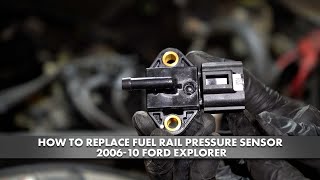
Est. part cost: $50-$130 - Faulty Fuel Rail Pressure (FRP) Sensor 🟡 Medium Probability The sensor provides the pressure reading to the PCM and can fail with age, sending erratic signals. While less common than the FPDM, it is a known failure item.
How to confirm: Using an OBD-II scan tool, monitor the Fuel Rail Pressure (FRP) PID. If the reading is erratic, stuck at one value, or clearly incorrect for the engine's state (e.g., showing high pressure with the engine off), the sensor is likely bad. A reading pegged near 5.0V with the key on, engine off, indicates a failed sensor.
Typical fix: Replace the FRP sensor. On the 4.0L V6, this sensor is located under the upper intake manifold, requiring its removal for access. This makes the repair significantly more labor-intensive than on the V8 model.
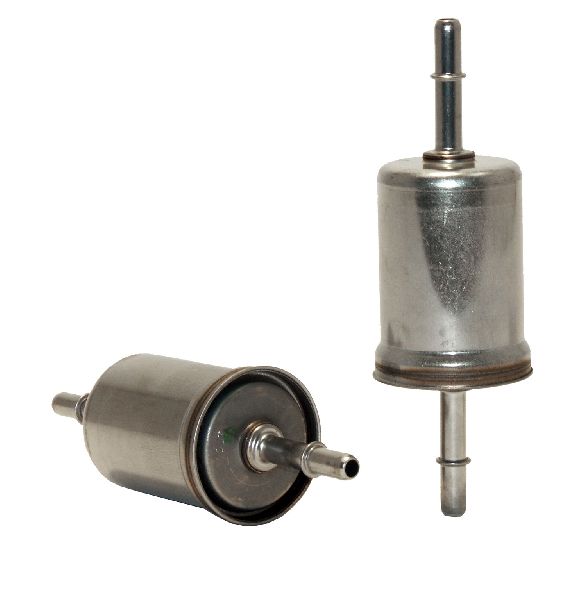
Est. part cost: $40-$110 - Clogged Fuel Filter ⚪ Low Probability As a maintenance item, the filter can become restricted over time, causing fuel pressure to drop under load, which can trigger a P0191.
How to confirm: If the filter has not been replaced in over 30,000 miles, it is suspect. A definitive test involves measuring fuel pressure before and after the filter to check for a pressure drop.
Typical fix: Replace the in-line fuel filter, which is typically located on the driver-side frame rail.
Est. part cost: $15-$30 - Damaged Wiring or Connectors ⚪ Low Probability Wiring to the FPDM can be damaged by road debris or corrosion, and the harness connector itself can fail. The engine harness can also chafe on brackets. TSB 19-2231 notes that P0191 can be caused by an engine harness chafing on the PCM bracket on other Ford trucks.
How to confirm: Inspect the wiring harness and connectors for the FPDM (near the spare tire) and the FRP sensor (on the engine) for corrosion, chafing, or loose pins. Wiggle the harness while monitoring FRP data on a scan tool to see if the reading changes.
Typical fix: Repair or replace the damaged section of the wiring harness or connector.
Est. part cost: $10-$100
Rare But Worth Checking
- Failing In-Tank Fuel Pump: While this can cause low fuel pressure, it is far less common than an FPDM failure on this vehicle. An owner complaint for a different Ford model with code P0191 did find broken bolts on the internal fuel pump. This should only be considered after the FPDM, FRP sensor, and fuel filter have been ruled out.
- Faulty Powertrain Control Module (PCM): This is extremely rare. The PCM should be the last item to be considered after all other possibilities have been exhausted.
- Failed Internal Fuel Pump Relay (in Fuse Box): In some cases, the non-serviceable fuel pump relay (R303), which is internal to the battery junction box (fuse panel), can fail. This causes intermittent stalling and no-start conditions identical to a bad FPDM or pump. Diagnosis involves inspecting the fuse panel for burn marks after removal. The fix requires replacing the entire fuse panel assembly.
Diagnosis Steps

- Scan for any other DTCs. Pay close attention to P1233, which points directly to the FPDM.
- Lower the spare tire to gain access to the Fuel Pump Driver Module (FPDM) on the frame crossmember above it.
- Visually inspect the FPDM for signs of corrosion, cracks, or physical damage. Look for white powder, a cracked case, or holes. If any corrosion is present, replace the module. This is the most likely fix.
- If the FPDM appears pristine, inspect its wiring connector for corrosion or damage. Then, proceed to check the FRP sensor.
- Connect a scan tool and monitor the Fuel Rail Pressure (FRP) PID. Watch for erratic, stuck, or illogical values while the engine is running. With Key On, Engine Off, voltage should be ~0.5V, not pegged at 5V. Wiggle the wiring harness to the sensor to check for intermittent connections.
- Check the fuel filter's service history. If it is old or its condition is unknown, replacing it is inexpensive preventative maintenance.
- If other causes are ruled out, test the FRP sensor's circuit for proper 5V reference voltage, ground, and signal.
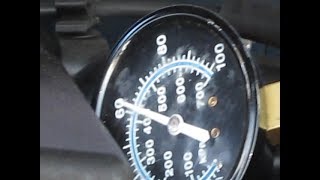
- As a final step, perform a fuel pressure test with a mechanical gauge to verify the actual pressure (should be 30-60 PSI at idle) against the sensor's readings to rule out a failing fuel pump.
Parts You'll Likely Need

- Fuel Pump Driver Module (FPDM)
(OEM #5L8Z-9D370-A)— This is the most common failure point for P0191 on this vehicle due to galvanic corrosion from its mounting location.
Trusted brands: Motorcraft, Dorman (Part #590-001), Standard Motor Products
OEM price range: $80-$130
Aftermarket price range: $50-$90 - Fuel Rail Pressure Sensor (FRP Sensor)
(OEM #3R3Z-9F972-AA)— This sensor provides the pressure reading to the PCM and can fail with age, sending erratic signals. Replacement on the 4.0L V6 is labor-intensive.
Trusted brands: Motorcraft, Bosch, Delphi
OEM price range: $60-$110
Aftermarket price range: $40-$80
Related Codes That Often Appear With This One
- P1233: This Ford-specific code for 'Fuel Pump Driver Module Offline' is a very strong indicator that the FPDM has failed and is the root cause of the P0191.
- P0171 / P0174: 'System Too Lean' codes can appear if the fuel pressure is consistently too low.
- P0193 / P0192: 'FRP Circuit High' or 'FRP Circuit Low' codes point more specifically to an electrical fault in the sensor circuit, rather than a performance issue. Seeing the code change from P0193 to P0192 after unplugging the sensor is a strong confirmation that the sensor itself is bad.
Technical Service Bulletins (TSBs) & Recalls
- Bulletin #TSB 19-2231: While for a different model (F-250), this TSB is relevant as it notes that P0191 can be caused by an engine harness chafing on the powertrain control module (PCM) bracket, highlighting wiring as a potential cause on Ford vehicles.
- Bulletin #TSB 18-2326: Mentions that various Ford models may store DTC P0191, among others, indicating it's a code Ford has addressed in service information across its truck lineup.
Platform-Specific Known Issues
- The mounting of the aluminum FPDM directly to the steel frame crossmember above the spare tire is a significant design flaw that causes the module to fail from corrosion. Aftermarket replacement kits, such as Dorman part #590-001, include standoffs to create an air gap, preventing a repeat failure.
Mechanic-Grade Diagnostic Values
- Fuel Pressure (mechanical gauge) — expected: 30 - 60 PSI at idle. Failure: Pressure is significantly below 30 PSI, is erratic, or drops off under load.
- FRP Sensor Voltage (Key On, Engine Off) — expected: ~0.5 Volts. Failure: Voltage is pegged at or near 5.0 Volts, indicating an internal sensor short or open circuit.
- FRP Sensor Reference Voltage (at connector, key on) — expected: 5.0 Volts. Failure: Voltage is significantly lower than 5.0V, indicating a wiring or PCM issue.
- FRP Sensor Ground Circuit Resistance (at connector) — expected: < 1.0 Ohm. Failure: High resistance indicates a poor ground connection, which can cause incorrect sensor readings.
- FPDM Connector Pin 5 (FPDM PWR) — expected: Battery Voltage (12V+) from inertia switch. Failure: Low or no voltage indicates a problem with the inertia switch, fuse, or the internal fuel pump relay.
Hidden / Shadow Codes Worth Checking
- P1233: Fuel Pump Driver Module Offline. This Ford-specific code is a very strong indicator that the FPDM has failed or lost communication and is the root cause of the P0191. (see via Standard OBD-II scanner.)
- P0193 / P0190: Fuel Rail Pressure Circuit High / Low. If the code changes from P0193 (High) to P0190 (Low) after unplugging the FRP sensor, it strongly confirms the sensor itself is internally shorted and needs replacement. (see via Standard OBD-II scanner.)
Scan Tool Commands That Help
- Ford IDS / Professional Scan Tool: FRP PID Monitoring — Use this to watch the live fuel rail pressure sensor voltage/pressure data. Wiggle wiring harnesses to the FPDM and FRP sensor to see if the reading becomes erratic, indicating a loose connection.
- Ford IDS / Professional Scan Tool: Fuel Pump Command (On/Off or Duty Cycle) — After verifying power and ground to the FPDM, use this bidirectional control to command the fuel pump on. If the pump doesn't run, it confirms a fault with either the FPDM, the pump itself, or the wiring between them.
Wiring & Ground Locations

- FPDM Connector — Above the spare tire, mounted to the frame crossmember.. This is the primary failure point. The connector itself can corrode. Pin 5 should have 12V+ power, Pin 6 is the command signal from the PCM, and Pin 3 is ground.
- G300 — Behind the driver's side kick panel.. This is a major body ground point. A poor connection here can cause a wide range of electrical issues, including those affecting fuel system components.
- G106 — On the right side of the engine compartment.. This is an engine compartment ground. A bad connection could potentially affect the PCM or sensor ground circuits.
- Inertia Switch — Behind the passenger-side kick panel, near the floor.. This safety switch cuts power to the fuel pump circuit in a collision. If it's faulty or partially tripped, it can cause intermittent power loss to the FPDM, leading to P0191.
Real Owner Repair Stories
- Ford Expedition Forum (Ford Expedition (similar platform)) — Random frequent stalling and no-start conditions, P0191 code present. Fuel pressure would drop to near zero when stalling.
❌ Tried (didn't work) Replaced Fuel Rail Pressure Sensor, Replaced Fuel Pump Driver Module (FPDM), Replaced fuel pump three different times, Replaced fuel filter, Replaced Throttle Body and TPS
✅ What actually fixed it The internal, non-serviceable fuel pump relay (R303) inside the main fuse box had burn marks and was failing intermittently. Replacing the entire fuse panel assembly resolved all issues.
When the Usual Fixes Don't Work
- In one documented case, after replacing the FPDM, FRP sensor, and fuel pump multiple times without success, the root cause of P0191 and stalling was discovered to be a failing, non-replaceable relay internal to the main fuse box. This required replacing the entire fuse box assembly to fix the problem, demonstrating that the issue can sometimes be far upstream from the commonly failed components.
OEM Part Supersession History
3R3Z-9F972-AA→3R3Z-9F972-AB— Revision of the Fuel Rail Pressure Sensor.6L2Z-9D372-A→5L8Z-9D370-A— Revision of the Fuel Pump Driver Module.
Model Year Variations Within This Range
- 2006-2010: Some 4.0L V6 models were available as Flex Fuel Vehicles (FFV). These versions use different, larger fuel injectors than the standard gasoline models. Using the wrong injectors could potentially affect fuel pressure and performance.
- 2006-2007: Forum discussions suggest the earlier years of the fourth generation were more prone to certain issues like leaking radiators, though the FPDM corrosion issue applies to the entire generation.
Diagnostic Flowchart
Other Known Issues on This Vehicle
Issues unrelated to this code that are worth knowing about as an owner of this generation:
- 4.0L SOHC Timing Chain Cassette Failure 🔴 High — Very common, especially after 100,000 miles. Often presents as a metallic 'rattle' on cold startup from the front or rear of the engine. (Ref: No recall, but a widely documented engine design flaw. Repair is extremely labor-intensive, often requiring engine removal to replace the rear cassette.)
- 5R55S Transmission Failure 🔴 High — Common failure point. Symptoms include harsh shifting, slipping between gears, flashing 'O/D Off' light, or the wrench light. Worn servo bores or a failed solenoid pack are the most frequent culprits.
- Cracked Plastic Thermostat Housing 🟠 Medium — The OEM two-piece plastic housing is prone to developing cracks or leaking at the seams, causing coolant loss. This is a very common failure. (Ref: No recall, but numerous aftermarket aluminum or improved design plastic replacements are available.)
- Cracked Rear Liftgate Panel (Applique) 🟡 Low — Extremely common cosmetic issue where the plastic panel below the rear window cracks, usually starting near the Ford emblem. This can allow water intrusion into the liftgate. (Ref: No recall. It was the subject of class-action lawsuits.)
Used vs. New Parts: Buying Guide for This Vehicle
When a used part is the smart pick: A used Fuel Rail Pressure (FRP) sensor from a low-mileage, accident-free donor vehicle can be a cost-effective option. Other electronic modules like the PCM could also be sourced used, but may require programming. A used fuel pump assembly is generally not recommended due to wear.
Donor-vehicle mileage cap: roughly under 75000 miles for the part to have meaningful remaining life.
What to inspect on the donor part:
- For an FRP sensor, ensure the donor vehicle was not in a front-end collision.
- Check for any signs of corrosion, heat damage, or brittleness on the part's plastic and wiring pigtail.
- Avoid parts from 'cash for clunkers' vehicles or those that have sat in a junkyard for a long time exposed to the elements.
OEM-only on this vehicle (don't cheap out):
- While not strictly 'OEM-only', it is highly advisable to avoid cheap, unbranded Fuel Rail Pressure sensors, as their accuracy is critical for engine performance.
Aftermarket brands forum-validated for this vehicle:
- FPDM: Dorman (part #590-001) is widely cited as a superior replacement to OEM because its kit includes standoffs to prevent repeat corrosion failures.
- FRP Sensor: Bosch, Delphi, and Standard Motor Products (SMP) are reputable alternatives to Motorcraft.
Brands owners have reported issues with on this vehicle:
- Unnamed, 'white-box' electronic sensors from online marketplaces are frequently cited as being dead-on-arrival or failing prematurely.
Real Owner Stories
Aggregated from forums and TSBs cited above. Mileages and costs reflect what owners reported in those sources.
2006 Ford Explorer 4.0L V6
Symptoms: Multiple symptoms of P0191; community discussion regarding the fuel rail pressure sensor.
What fixed it: Replacing the corroded Fuel Pump Driver Module (FPDM) after a visual inspection confirmed the aluminum casing was damaged.
Source hint: ExplorerForum.com: 'P0191 Fuel Rail Pressure Sensor'
2006 Ford Explorer 4.0L V6 4x4 — 189000 miles
Symptoms: P0191 code; symptoms were temporarily alleviated by using fuel injector cleaner, suggesting a potential fuel delivery obstruction.
What fixed it: The source suggests a potential fuel delivery obstruction rather than a purely electrical fault.
Source hint: Reddit r/MechanicAdvice: 'Code P0191 Ford Explorer 2006 v6 4x4'
2004-2008 Ford F-150
Symptoms: Identical symptoms to the Explorer, including P0191 or P1237 codes caused by a frame-mounted module.
What fixed it: Replacement of the corroded FPDM mounted to the frame.
Source hint: NHTSA complaint ODI #10552617
Related OBD-II Codes
Frequently Asked Questions
Where is the Fuel Pump Driver Module (FPDM) located on my 2006-2010 Explorer?
Why does the FPDM fail so often on this specific Ford platform?
Is there a specific replacement part that prevents this corrosion from happening again?
How difficult is it to replace the Fuel Rail Pressure (FRP) sensor on the 4.0L V6 engine?
Does TSB 19-2231 apply to my P0191 code?
What should the Fuel Rail Pressure reading look like on a scan tool with the key on but engine off?
Helpful Videos
We Have This Part in Stock


The information in this article is provided for general reference and educational purposes only. Vehicle specifications, procedures, and part compatibility can vary by production date, trim level, and region. Always consult your vehicle's factory service manual and verify part numbers before purchasing or performing repairs. Safety-critical components such as airbags, seat belts, and braking systems should be installed by a qualified professional.
- Ford Explorer:
- 🎬 Helpful Videos
- 🛍️ Shop This Part
- What's Unique About the 2006-2010 Ford Explorer
- Symptoms You May Notice
- Most Likely Causes
- Rare But Worth Checking
- Diagnosis Steps
- Parts You'll Likely Need
- Related Codes That Often Appear With This One
- Technical Service Bulletins (TSBs) & Recalls
- Platform-Specific Known Issues
- Mechanic-Grade Diagnostic Values
- Hidden / Shadow Codes Worth Checking
- Scan Tool Commands That Help
- Wiring & Ground Locations
- Real Owner Repair Stories
- When the Usual Fixes Don't Work
- OEM Part Supersession History
- Model Year Variations Within This Range
- Diagnostic Flowchart
- Other Known Issues on This Vehicle
- Used vs. New Parts: Buying Guide for This Vehicle
- Real Owner Stories
- 2006 Ford Explorer 4.0L V6
- 2006 Ford Explorer 4.0L V6 4x4 — 189000 miles
- 2004-2008 Ford F-150
- Related OBD-II Codes
- Frequently Asked Questions
- 🎟️ Get 5% Off