

OBD-II Code P1237: Fuel Pump Driver Module Malfunction
The Ultimate 2026 Guide to P1237: Causes, Diagnosis, and Fixes
- Code P1237 triggers when the Fuel Pump Driver Module (FPDM) detects an electrical fault in the secondary circuit, requiring immediate diagnosis of the module and wiring.
- On 2004-2008 Ford F-150s and Expeditions, a corroded FPDM mounted above the spare tire causes 90% of P1237 codes and requires a $150 replacement with standoff spacers.
- Volkswagen, Audi, and Chevrolet owners must ignore the fuel pump; on these vehicles, P1237 indicates a failed fuel injector circuit costing $500-$800 to repair.
- Never drive with an active P1237 code, as sudden engine stalling at highway speeds creates a severe crash risk and can destroy a $2,000 catalytic converter.
- Perform a 10-minute FPDM bypass test with jumper wires before authorizing a $1,200 fuel pump replacement to definitively isolate the failed component.
What Does P1237 Mean?

Code P1237 indicates the Powertrain Control Module (PCM) detected a fault in the fuel pump's secondary circuit. The Fuel Pump Driver Module (FPDM) controls the pump's speed and voltage. When the FPDM detects an open or shorted wire on its high-current output side, it triggers this code and shuts down fuel delivery.
Technical definition: P1237 is a manufacturer-specific code most commonly defined as 'Fuel Pump Secondary Circuit Malfunction'. The FPDM sends a 75% duty cycle fault signal back to the PCM via the Fuel Pump Monitor (FPM) wire after detecting an electrical open or short in the pump circuit. On Volkswagen, Chevrolet, and Nissan, this code points to a completely different system, such as a fuel injector.
Can I Drive With P1237?
No — Do Not Drive. Do not drive. The fault causes the engine to stall suddenly without warning, creating a severe crash risk at highway speeds. Erratic fuel delivery also destroys the catalytic converter, turning a $150 module replacement into a $2,500 exhaust repair.
Common Causes

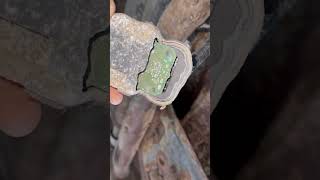
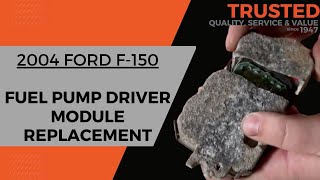
- Corroded Fuel Pump Driver Module (FPDM) (Very Common) — The module's aluminum housing corrodes against the steel frame, destroying internal electronics. This causes 90% of P1237 codes on Ford trucks. 🎬 Watch: A quick fix for P1237 on a Ford F-150.
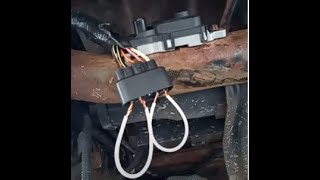
- Damaged Wiring or Connectors (Common) — Wires between the FPDM and fuel pump fray, corrode, or short against the chassis. A melted FPDM connector pigtail is a frequent failure point.
- Failing Fuel Pump (Less Common) — A dying fuel pump draws excessive electrical current, triggering a secondary circuit fault at the FPDM.
- Faulty Aftermarket FPDM (Rare) — Certain aftermarket modules fail to regulate fuel pressure to exact PCM specifications, triggering a persistent false code immediately after installation.
- Tripped Inertia Fuel Switch (Rare) — A sharp pothole impact trips this collision safety switch, cutting power to the FPDM and triggering a circuit fault.
Symptoms
- Engine Stalls or Hesitates — The engine dies unexpectedly while driving or hesitates violently during acceleration.
- Crank, No-Start Condition — The engine cranks normally but refuses to start because the fuel pump receives no power.
- Check Engine Light On — The PCM illuminates the Malfunction Indicator Lamp immediately upon detecting the circuit fault.
- FPDM Duty Cycle at 75% (scan-tool only — no driver-felt sign) — Live scanner data shows the FPDM sending a steady 75% duty cycle signal, confirming a secondary circuit fault.
Diagnostic Flowchart

Tap your situation to follow the diagnostic path that matches what you're seeing on this code.
Common Fixes & Costs
- Replace Fuel Pump Driver Module (FPDM)
— Parts: $45-$100, Labor: $75-$200, ~0.6 hr book time
(DIY)
: OEM
: OEM - Replace Fuel Pump Assembly
— Parts: $200-$700, Labor: $300-$900, ~3.2 hr book time
(Professional)
: OEM
: OEM - Repair Damaged Wiring or Connectors — Parts: $10-$50, Labor: $100-$300, ~2.5 hr book time (Intermediate)
- Replace FPDM Connector Pigtail — Parts: $20-$60, Labor: $100-$250, ~1.5 hr book time (Intermediate)
DIY vs Professional
- Replace Fuel Pump Driver Module (FPDM) — Beginner: True
Tools: ['Socket wrench set (8mm and 10mm)', 'Spare tire removal tools', 'Flashlight'] - Replace Fuel Pump Assembly — Beginner: False
Tools: ['Fuel tank removal tools', 'Fuel line disconnect tools', 'Floor jack', 'Safety glasses'] - Repair Damaged Wiring or Connectors — Beginner: False
Tools: ['Multimeter', 'Wire strippers', 'Soldering iron', 'Heat shrink tubing']
Used vs. New Parts: Buying Guide
When a used part is worth it: Never buy a used Ford FPDM. The original design is flawed, and a used part will fail quickly from corrosion. Always buy a new module that includes standoff spacers.
Donor-vehicle mileage cap: roughly under 50000 miles for the part to have meaningful remaining life.
Donor quality checklist:
- Verify the donor vehicle is from a state without road salt.
- Inspect the aluminum housing for pitting or white chalky corrosion.
Decision logic:
- If The part is a Ford FPDM from a 2004-2008 truck → Buy new. New aftermarket kits include spacers to prevent the original corrosion issue.
- If The part is inexpensive new (under $100) → Buy new. The savings from a used part are not worth the risk of repeat labor.
Warranty tradeoff: Used salvage parts offer a 30-day warranty. New OEM parts carry a 2-year warranty.
Worst-case if a used part fails: $300 to replace a failed used FPDM and pay for labor twice.
What Happens If You Wait — Timeline
- 0-1 month: Intermittent fault. Check Engine Light turns on and off. Occasional engine hesitation during acceleration. (MPG impact: 0-2%% · Added cost: $0)
- 1-3 months: Consistent fault. Engine stalls frequently at idle or when stopping. Vehicle becomes hard to start. (MPG impact: 5-10%% · Added cost: $100 in wasted fuel)
- 3-6 months: Severe drivability issues. Engine stalls unpredictably at highway speeds. Inconsistent air-fuel ratio begins melting the catalytic converter. (MPG impact: 10-15%% · Added cost: $150 for towing, plus early catalytic converter damage)
- 6+ months: Complete failure. Vehicle refuses to start. Catalytic converter substrate melts completely, requiring a massive exhaust repair. (MPG impact: N/A (vehicle is undrivable)% · Added cost: $1600-$2500 for catalytic converter replacement)
Cost of Not Fixing It
- Immediate: Sudden engine stalling in traffic creates a major crash hazard. The vehicle will eventually fail to start entirely. (Added cost: Towing costs ($150))
- 1-3 months: Erratic fuel delivery causes a rich or lean air-fuel mixture, overheating the catalytic converter and dropping fuel economy. (Added cost: $100 in wasted fuel)
- 3+ months: The catalytic converter substrate melts from prolonged exposure to unburned fuel, causing a massive exhaust restriction. (Added cost: $1600-$2500 for catalytic converter replacement)
Diagnosis Steps
- Read All Trouble Codes
Use an OBD-II scanner to read all stored codes. If P1233 (FPDM Offline) is present alongside P1237, diagnose P1233 first, as the module lacks power or ground.
Tools: OBD-II Scanner (Beginner) - Inspect the FPDM Visually
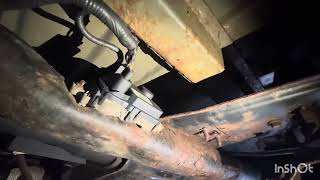
Locate the FPDM (above the spare tire on Ford trucks). Inspect the aluminum housing for heavy corrosion, swelling, or a completely broken casing. A physically destroyed module requires immediate replacement.
Tools: Flashlight, Spare tire removal tools (Beginner) - Check the Inertia Switch
Locate the inertia fuel shutoff switch in the passenger footwell or trunk. Ensure the red button on top is fully pressed down. If popped up, press it to reset power to the FPDM.
Tools: None (Beginner) - Bypass the FPDM to Test the Fuel Pump
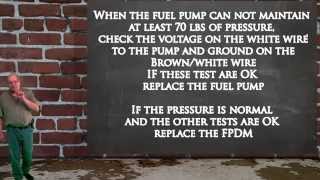
Unplug the FPDM. Create jumper wires to connect the power input pin to the fuel pump power output pin, and the ground input pin to the fuel pump ground output pin. Turn the key 'ON'. If the fuel pump runs, the pump and wiring are good, and the FPDM is bad. If the pump does not run, the pump or wiring is faulty.
Tools: Jumper wires, Wiring diagram (Intermediate) - Test Power and Ground at the FPDM
With the FPDM unplugged and the key 'ON', use a multimeter to verify 12.6V at the power input pin. Measure resistance between the ground pin and the chassis; it must be less than 1 ohm. Missing power or ground indicates a wiring issue before the module.
Tools: Multimeter (Intermediate) - Analyze FPDM Feedback Signal
Using a live data scanner, monitor the FPDM duty cycle PID. A steady 75% duty cycle confirms the FPDM is powered and actively detecting a fault in the circuit to the pump. A 50% signal means the system is currently operating normally.
Tools: Advanced OBD-II Scanner (Advanced) - Inspect Wiring to the Fuel Pump
If the bypass test fails, visually inspect the wiring harness from the FPDM to the fuel pump. Look for chafing, melting, or corrosion where the harness runs along the frame. Repair any damaged sections.
Tools: Flashlight, Pry tools (Intermediate) - Test Fuel Pump Resistance
Disconnect the fuel pump connector. Measure resistance between the power and ground terminals on the pump. A reading of infinite resistance (OL) indicates an open circuit, while near zero ohms indicates a short. Both require fuel pump replacement.
Tools: Multimeter (Advanced) - Check Fuel Pressure
Connect a fuel pressure gauge to the Schrader valve on the fuel rail. If pressure is low or zero after confirming the pump runs during the bypass test, the pump is weak and requires replacement.
Tools: Fuel Pressure Gauge (Advanced)
When This Code Triggers (Freeze-Frame Conditions)
- Engine Coolant Temp: 180-200°F (The fault often appears when the engine is fully warmed up.)
- Engine Load: 30-60% (Occurs under moderate engine load where fuel demand is consistent.)
- Vehicle Speed: 35-55 mph (Frequently triggered at steady city or highway cruising speeds.)
Related Codes
- P1233 — P1233 ('FPDM Offline') means the PCM receives no signal from the FPDM. Diagnose this first by verifying 12V power and ground at the FPDM connector.
- P1235 — P1235 ('Fuel Pump Control Out of Range') points to a problem before the FPDM, such as a broken PCM command wire. P1237 points to a problem after the FPDM.
- P0230 — P0230 ('Fuel Pump Primary Circuit') refers to the low-current circuit between the PCM and the fuel pump relay. P1237 refers to the high-current secondary circuit.
Climate & Environmental Factors
- Road Salt and Humidity: Road salt creates a perfect environment for galvanic corrosion between the aluminum FPDM and the steel frame. Vehicles in the 'Salt Belt' experience FPDM failures at significantly higher rates.
How to Talk to a Mechanic About This Code
Say this: "I have a P1237 code with stalling symptoms. Perform an FPDM bypass test and check for power and ground at the module before quoting a fuel pump replacement."
This prevents the shop from immediately quoting a $1,200 fuel pump replacement without troubleshooting the $150 module first.
Avoid saying:
- Just fix whatever's wrong.
- My truck won't start, I need a new fuel pump.
- Replace the FPDM and see if it works.
Questions to ask before authorizing the repair:
- Did the FPDM bypass test make the fuel pump run?
- Did you find physical corrosion on the FPDM or damage to its wiring connector?
- If you are recommending a fuel pump, how did you confirm the FPDM and its wiring are good?
Where to Take It: Dealer vs Independent vs Chain
- Dealer:
Best for: Vehicles under warranty, Non-Ford vehicles (VW, Audi, Chevy) where P1237 indicates a complex fuel injector fault.
Downsides: Labor rates are 50% higher than independent shops., Refusal to install customer-supplied aftermarket parts. (Typical cost: +50% vs. baseline) - Independent Shop:
The best fit. Most independent shops have extensive experience with the common Ford FPDM failure and perform the repair cost-effectively.
Best for: Out-of-warranty Ford vehicles., Cost-conscious owners seeking a reliable repair.
Downsides: Requires verifying the shop has ASE-certified technicians experienced with Ford electrical systems. (Typical cost: +0% vs. baseline) - Chain Shop:
Avoid for initial diagnosis. Acceptable only if you physically verified the FPDM is destroyed and just need someone to bolt a new one on.
Best for: Simple part replacements if you already diagnosed the issue yourself.
Downsides: High pressure to upsell services., Technicians lack the diagnostic experience to differentiate between a bad FPDM, broken wiring, or a dead pump. (Typical cost: -10% vs. baseline)
When to Walk Away From the Repair
If the estimated repair cost exceeds 40% of the car's private-party value, consider selling it as-is.
- Car worth $4500, fix is $250: Fix it. An FPDM replacement is a minor cost relative to the truck's value.
- Car worth $4500, fix is $1300: Borderline. A fuel pump replacement is a significant cost. Get a second opinion before authorizing the repair.
- Car worth $4500, fix is $3100: Walk away. If the initial P1237 fault destroyed the catalytic converter, the combined repair cost is not economical.
What Scan Tool You Need for This Code
Minimum: A scanner capable of reading manufacturer-specific live data PIDs, specifically the 'FPDM Duty Cycle'.
A $20 code reader leaves you guessing between the FPDM, wiring, or fuel pump. A live data scanner shows the FPDM's 75% duty cycle feedback signal, confirming the module is powered and actively reporting a fault.
Budget: FORScan with OHP OBD2 Adapter (~$60) — Provides dealership-level diagnostics for Ford vehicles via laptop or smartphone, easily accessing the critical FPDM duty cycle and fuel rail pressure PIDs.
Mid-range: Autel MaxiCheck MX808S (~$350) — Offers full system diagnostics, live data graphing, and service functions across all vehicle makes with a fast, user-friendly tablet interface.
Professional: Autel MaxiSys MS906Pro (~$1100) — Provides full bidirectional control, allowing technicians to command the fuel pump to run at specific speeds to definitively test the circuit.
Rent vs buy: Buy the budget FORScan setup if you own a Ford. It pays for itself immediately by preventing a misdiagnosed fuel pump replacement.
How to Clear the Code After You Fix It
- Reconnect the battery.
- Use an OBD-II scan tool to clear the P1237 code from the PCM.
- Perform a complete drive cycle to reset readiness monitors.
Drive cycle (~20 minutes): Cold start and idle for 3 minutes. Drive in mixed city/highway conditions for 20 minutes, including 5 minutes of steady cruising at 55 mph. Allow the vehicle to cool completely.
Readiness monitors affected: Catalyst Monitor, Evaporative System Monitor, O2 Sensor Monitor
Watch out for:
- Disconnecting the battery clears the code but resets all readiness monitors, causing an immediate emissions test failure.
- If the corroded wire or module is not replaced, the code returns immediately upon starting the engine.
Will This Fail Emissions / State Inspection?
Yes — this code typically fails an OBD-II emissions inspection.
- California: An illuminated Check Engine Light is an automatic failure. A full drive cycle must be completed to set readiness monitors before a re-test.
- New York: An active P1237 code results in an automatic OBD-II inspection failure.
Most Commonly Affected Vehicles
- Ford F-150 (2004-2008) — Extremely common. The FPDM's aluminum body mounts directly to the steel frame, causing severe galvanic corrosion. Aftermarket kits include spacers to prevent this.
- Ford Expedition (2005-2008) — Shares the exact FPDM design and mounting location as the F-150, making it equally susceptible to corrosion failure.
- Ford Crown Victoria (2003-2011) — The FPDM is located in the trunk, protecting it from corrosion, but it still fails electronically over time.
- Chevrolet Silverado (2007-2014) — On GM trucks, P1237 is defined as 'Injector Circuit Cylinder 6 Intermittent'. This requires diagnosing the fuel injector, not the fuel pump.
- Volkswagen Jetta / Golf (2010-2016) — On VW models, P1237 points to an 'Open Circuit' for a fuel injector. Ignore the fuel pump and diagnose the injector wiring.
Manufacturer-Specific Notes

- Ford: The aluminum FPDM bolts directly to a steel frame, trapping moisture and causing severe galvanic corrosion. Always use the rubber standoff spacers included with replacement modules to create an air gap and prevent repeat failures.
- Ford (Aftermarket Parts): Certain aftermarket FPDMs (notably Dorman) cause a persistent P1237 code even when brand new due to slight differences in fuel pressure regulation. If a new aftermarket module fails to clear the code, test with an OEM Motorcraft part.
- Volkswagen / Audi: P1237 does not relate to the fuel pump on these vehicles. It is defined as 'Fuel Injector Open Circuit', requiring a diagnostic path focused entirely on the engine bay injectors and ECU.
Real Owner Stories
2005 Ford F-150 with severe frame rust
Truck stalled every mile. P1237 returned immediately after clearing.
What they tried:
- Lowered the spare tire to visually inspect the FPDM.
Outcome: The FPDM was completely broken open from corrosion. Replacing the $70 module resolved the stalling permanently.
Lesson: On Ford trucks in rust-prone areas, visually inspect the FPDM first. The corrosion is often so severe that the part is physically destroyed.
2003 Ford Crown Victoria with crank, no-start
Car cranked but refused to start. Starting fluid confirmed a fuel delivery issue.
What they tried:
- Checked the inertia switch.
- Performed an FPDM bypass test using jumper wires.
Outcome: The bypass test failed to activate the fuel pump. The owner correctly concluded the fuel pump was dead, replaced it, and resolved the no-start condition.
Lesson: The FPDM bypass test prevents misdiagnosis. If the pump runs during the bypass, the FPDM is bad. If it doesn't, the pump or wiring is dead.
2008 Ford F-150 with persistent P1237 after repair
A shop installed a new Dorman FPDM, but the P1237 code and rough idle remained.
What they tried:
- Verified power and ground to the module.
- Swapped the new Dorman FPDM for a used OEM Motorcraft FPDM.
Outcome: The OEM module fixed the issue immediately. The aftermarket part failed to regulate fuel pressure to the PCM's exact specifications.
Lesson: If a P1237 code persists after installing a new aftermarket module, the module itself may be incompatible. Test with an OEM part.
How to Prevent This Code From Triggering
- Install FPDM with Spacers (During FPDM replacement) — Using rubber spacers creates an air gap between the aluminum module and the steel frame, stopping the galvanic corrosion that causes 90% of failures.
- Perform Annual Undercarriage Wash (Once per year after winter) — Removes road salt deposits, slowing down corrosion on the FPDM housing and wiring connectors.
- Apply Dielectric Grease to Connectors (When replacing FPDM) — Seals out moisture and oxygen, preventing the connector pins from corroding and ensuring a solid electrical connection.
Frequently Asked Questions
What does the 'secondary circuit' in P1237 actually mean?
The fuel pump system has two circuits: primary (low-current PCM signal) and secondary (high-current output to the pump). Code P1237 means the Fuel Pump Driver Module (FPDM) detected an open or shorted wire on the high-current secondary side. This isolates the problem to the FPDM, the wiring to the pump, or the pump itself.
What are the most common misdiagnosis mistakes for P1237?
The biggest mistake is replacing a $1,200 fuel pump when a $70 FPDM is the actual culprit. Always perform an FPDM bypass test to isolate the fault before buying parts. Additionally, failing to install standoff spacers on a new Ford FPDM guarantees premature corrosion and repeat failure.
I replaced the FPDM, but the P1237 code came back. What now?
First, inspect the FPDM connector for severe corrosion or bent pins. Second, trace the wiring harness between the FPDM and the fuel pump to locate chafed or broken wires. Finally, suspect a faulty aftermarket FPDM, as some non-OEM brands fail to regulate pressure correctly out of the box.
Can a bad FPDM or P1237 fault damage other parts?
Yes, erratic fuel delivery causes a consistently lean or rich air-fuel mixture. This unburned fuel overheats and melts the catalytic converter's internal substrate. Replacing a destroyed catalytic converter costs between $1,600 and $2,500.
Can I just replace the FPDM to fix P1237?
Replacing the FPDM resolves the issue on most Ford trucks, but this 'parts cannon' approach wastes money if the wiring is broken. Always test for 12V power and a solid ground at the FPDM connector first. If power and ground are present, replacing the module is the logical next step.
Is it hard to replace the Fuel Pump Driver Module yourself?
Replacing the FPDM is a simple 30-minute DIY job requiring only basic hand tools. The module sits on the rear frame crossmember, accessed easily by lowering the spare tire. Remove two bolts, unplug the connector, and install the new module using the provided standoff spacers.
Will a P1237 code cause me to fail an emissions test?
Yes, an active P1237 code illuminates the Check Engine Light, resulting in an automatic emissions test failure. The erratic fuel delivery also spikes harmful tailpipe emissions. You must repair the fault and complete a full drive cycle to reset the readiness monitors before retesting.
Key Takeaways
- Code P1237 triggers when the Fuel Pump Driver Module (FPDM) detects an electrical fault in the secondary circuit, requiring immediate diagnosis of the module and wiring.
- On 2004-2008 Ford F-150s and Expeditions, a corroded FPDM mounted above the spare tire causes 90% of P1237 codes and requires a $150 replacement with standoff spacers.
- Volkswagen, Audi, and Chevrolet owners must ignore the fuel pump; on these vehicles, P1237 indicates a failed fuel injector circuit costing $500-$800 to repair.
- Never drive with an active P1237 code, as sudden engine stalling at highway speeds creates a severe crash risk and can destroy a $2,000 catalytic converter.
- Perform a 10-minute FPDM bypass test with jumper wires before authorizing a $1,200 fuel pump replacement to definitively isolate the failed component.
Helpful Videos


The information in this article is provided for general reference and educational purposes only. Vehicle specifications, procedures, and part compatibility can vary by production date, trim level, and region. Always consult your vehicle's factory service manual and verify part numbers before purchasing or performing repairs. Safety-critical components such as airbags, seat belts, and braking systems should be installed by a qualified professional.
- 🎬 Helpful Videos
- What Does P1237 Mean?
- Can I Drive With P1237?
- Common Causes
- Symptoms
- Diagnostic Flowchart
- Common Fixes & Costs
- DIY vs Professional
- Used vs. New Parts: Buying Guide
- What Happens If You Wait — Timeline
- Cost of Not Fixing It
- Diagnosis Steps
- When This Code Triggers (Freeze-Frame Conditions)
- Related Codes
- Climate & Environmental Factors
- How to Talk to a Mechanic About This Code
- Where to Take It: Dealer vs Independent vs Chain
- When to Walk Away From the Repair
- What Scan Tool You Need for This Code
- How to Clear the Code After You Fix It
- Will This Fail Emissions / State Inspection?
- Most Commonly Affected Vehicles
- Manufacturer-Specific Notes
- Real Owner Stories
- 2005 Ford F-150 with severe frame rust
- 2003 Ford Crown Victoria with crank, no-start
- 2008 Ford F-150 with persistent P1237 after repair
- How to Prevent This Code From Triggering
- Frequently Asked Questions
- What does the 'secondary circuit' in P1237 actually mean?
- What are the most common misdiagnosis mistakes for P1237?
- I replaced the FPDM, but the P1237 code came back. What now?
- Can a bad FPDM or P1237 fault damage other parts?
- Can I just replace the FPDM to fix P1237?
- Is it hard to replace the Fuel Pump Driver Module yourself?
- Will a P1237 code cause me to fail an emissions test?
- Key Takeaways
- 🎟️ Get 5% Off