

P0191 on 2004-2019 Ford E-350: Fuel Rail Pressure Sensor Causes and Fixes
On a Ford E-350 with a gas engine, code P0191 is most often caused by a corroded Fuel Pump Driver Module (FPDM) located on the frame rail. This module's aluminum body corrodes when mounted directly to the steel frame, causing erratic fuel pressure, stalling, or a no-start condition. Before replacing the expensive fuel pump or sensor, inspect the FPDM for corrosion. A new module, often supplied with spacers to prevent future failure, costs around $40-$80 and is a common DIY fix.
- Before buying any parts for a P0191 code, find and inspect the Fuel Pump Driver Module (FPDM) on the driver's side frame rail for corrosion. This is the most likely cause.
- If the FPDM looks good, replace the fuel filter as the next step. It's inexpensive and a common cause of fuel pressure dropping under load.
- Do not replace the expensive fuel pump unless you have ruled out the FPDM, fuel filter, and confirmed low fuel pressure with a mechanical gauge.
- Symptoms like power loss when going uphill are a classic sign of this issue on a work van.
What's Unique About the 2004-2019 Ford E-350

For this generation of Ford E-350, the most common culprit for fuel pressure issues is not the fuel pump or sensor, but a separate computer called the Fuel Pump Driver Module (FPDM). Ford mounted this aluminum module directly to the van's steel frame rail, which traps moisture and road salt, causing severe galvanic corrosion between the two dissimilar metals. This corrosion destroys the module's electronics, leading to erratic fuel pressure and a P0191 code, with symptoms that perfectly mimic a failing fuel pump, such as stalling, hesitation, or a crank-no-start condition. Always check the FPDM before assuming a more expensive part has failed.
Generation note: This guide covers the fourth generation of the Ford E-Series (2003-present), including the major facelift in 2008. The location of key components like the Fuel Pump Driver Module (FPDM) and Fuel Rail Pressure (FRP) sensor are consistent across the gasoline engine models in this year range. The FPDM is a notoriously common failure point on these vans due to corrosion.
Symptoms You May Notice
- Engine cranks but fails to start.
- Sudden stalling, either while driving or at idle.
- Significant loss of power, especially when accelerating or climbing hills.
- Engine hesitation or stumbling.
- Rough or erratic idle.
- Check Engine Light is illuminated.
- Increased fuel consumption.
- Replacing the fuel pump before inspecting the Fuel Pump Driver Module (FPDM). The FPDM is a much more common failure point on these vans and is significantly cheaper and easier to replace. Its failure symptoms are identical to a bad fuel pump.
- Replacing the Fuel Rail Pressure (FRP) sensor without verifying fuel pressure with a mechanical gauge. Low fuel pressure from a bad pump, filter, or FPDM will set a P0191 code, but it is not the sensor's fault.
Most Likely Causes

- Failed Fuel Pump Driver Module (FPDM) 🔴 High Probability The FPDM's aluminum body is mounted directly to the steel frame rail, typically on the driver's side, causing severe galvanic corrosion that destroys the module over time. This is a well-documented design flaw across many Ford trucks and vans of this era.
How to confirm: Locate the FPDM on the inside of the driver-side frame rail, often near the fuel filter. Visually inspect it for heavy corrosion, cracks, or holes in the aluminum casing. If it is chalky, crumbling, or cracked, it is almost certainly the cause. The presence of code P1233 alongside P0191 is a strong confirmation.
Typical fix: Replace the Fuel Pump Driver Module. The new part, especially from aftermarket brands like Dorman, should come with rubber spacers or standoffs to mount it away from the frame, creating an air gap that prevents future corrosion.
Est. part cost: $40-$80 - Clogged Fuel Filter 🟡 Medium Probability The fuel filter is a standard maintenance item that is often neglected. A clogged filter restricts fuel flow, causing pressure to drop under load, which can trigger a P0191 code.
How to confirm: If the filter hasn't been replaced in over 30,000 miles, it's suspect. Replacement is often easier and cheaper than diagnostic testing. A definitive test involves measuring fuel pressure before and after the filter to check for a significant pressure drop.
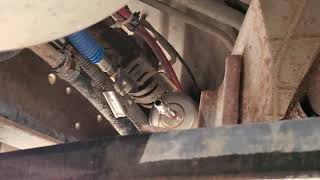
Typical fix: Replace the fuel filter. It is located on the driver-side frame rail, often near the FPDM. 🎬 Watch: How to swap out a clogged fuel filter.
Est. part cost: $15-$30 - Faulty Fuel Rail Pressure (FRP) Sensor 🟡 Medium Probability
How to confirm: Use a scan tool to read live data for the Fuel Rail Pressure (FRP) PID. Compare this reading to a mechanical fuel pressure gauge connected to the fuel rail's test port (if available). NOTE: Many 5.4L and 6.8L engines in this range do NOT have a Schrader valve test port, making a mechanical gauge test difficult. If the scan tool reading is erratic, incorrect, or does not match the mechanical gauge (if testable), the sensor is likely bad. Normal idle pressure is around 35-45 PSI. The sensor is located on the fuel rail on top of the engine.
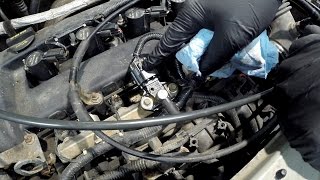
Typical fix: Replace the Fuel Rail Pressure sensor. This involves relieving fuel pressure, disconnecting the vacuum line and electrical connector, and unbolting the sensor from the fuel rail. 🎬 See this walkthrough for replacing the Fuel Rail Pressure sensor.
Est. part cost: $50-$150 - Failing Fuel Pump ⚪ Low Probability
How to confirm: After confirming the FPDM and fuel filter are good, test fuel pressure. If pressure is consistently low (e.g., below 35 PSI at idle) or drops significantly under load, the pump is likely weak. NHTSA ODI #10780588 describes a severe failure where a vehicle stalled at 45 MPH and was unable to crank; technicians found broken bolts holding the internal fuel pump and verified a total loss of fuel pressure alongside code P0191.
Typical fix: Replace the in-tank fuel pump assembly. This is a labor-intensive job that requires dropping the fuel tank.
Est. part cost: $200-$450 - Damaged Wiring or Poor Ground ⚪ Low Probability
How to confirm: Visually inspect the wiring harnesses and connectors for the FRP sensor and FPDM for any signs of damage, corrosion, or loose pins. Manufacturer Bulletin #TSB 19-2231 notes that on some Ford trucks, an engine harness chafe on the powertrain control module (PCM) bracket can cause an illuminated MIL with code P0191.
Typical fix: Repair or replace the damaged section of the wiring harness or clean/replace the faulty ground strap. 🎬 Watch: How a bad ground strap can mimic fuel pump failure.
Est. part cost: $5-$100
Rare But Worth Checking
- Faulty Powertrain Control Module (PCM): This is extremely rare. Manufacturer Bulletin #TSB 18-2326 indicates that certain vehicles may exhibit an illuminated MIL with DTC P0191 stored in the PCM, requiring specific service procedure steps to correct the software or module condition.
- Tripped Inertia Switch: The inertia switch, designed to cut power to the fuel pump in a collision, can sometimes be tripped by a sharp jolt or impact. It is located in the passenger footwell area behind the kick panel. Ensure the button on top is pressed down before diagnosing other components.
- Faulty Fuse Box / Internal Relay: In some cases, the internal, non-serviceable relay within the fuse box that powers the fuel system can fail, causing intermittent power loss to the FPDM and fuel pump. This can mimic FPDM failure but is much less common.
Diagnosis Steps

- Read all fault codes with an OBD-II scanner. Note any other codes present, especially P1233, which strongly points to the FPDM.
- Check the Inertia Switch. Locate the switch in the passenger-side footwell/kick panel area and ensure the button is fully depressed.
- Visually Inspect the FPDM. Locate the Fuel Pump Driver Module on the driver-side frame rail. Inspect it closely for corrosion, cracks, or a swollen case. If it is heavily corroded, replace it. This is the most common fix.
- Check the Fuel Filter. If the FPDM appears to be in good condition (or has already been replaced), replace the fuel filter if its service history is unknown. This is inexpensive and rules out a common restriction point.
- Monitor Fuel Pressure Electronically. Connect a scan tool and monitor the Fuel Rail Pressure (FRP) PID. With the key on, engine off (KOEO), the pressure should prime and hold. At idle, it should be stable (e.g., 35-45 PSI). Watch for dropouts or erratic behavior while driving.
- Verify with a Mechanical Gauge. If possible, connect a mechanical fuel pressure gauge. The pressure should be around 35-45 PSI at idle for these engines. Compare the gauge reading to the scan tool's PID reading. Note that many of these engines lack a test port.
- Isolate the Sensor vs. Delivery. If the mechanical pressure is good but the scan tool reading is bad, the FRP sensor or its wiring is the problem. Test the sensor's connector for 5V reference, ground, and a signal that changes with pressure. If both readings are low, the problem is fuel delivery (pump or FPDM).
- Test the FPDM/Pump Circuit. If you suspect the pump after checking the FPDM visually, you can test for voltage at the pump connector while a helper cranks the engine. The FPDM sends a variable voltage, so seeing some power indicates the FPDM is at least partially working, pointing more toward a weak pump. No voltage could mean a bad FPDM or a wiring issue between the PCM, FPDM, and pump.
Parts You'll Likely Need

- Fuel Pump Driver Module (FPDM)
(OEM #4C2Z-9D372-BA (superseded by other numbers, verify by VIN))
Related Codes That Often Appear With This One
- P1233 — This Ford-specific code means 'Fuel Pump Driver Module Disabled or Offline'. It directly points to a problem with the FPDM and is often seen alongside P0191, making the FPDM the primary suspect.
- P0171 — System Too Lean (Bank 1). If the fuel pressure is too low, the engine will run lean, triggering this code.
- P0174 — System Too Lean (Bank 2). Same as P0171, but for the opposite cylinder bank.
- P1000 — OBD Systems Readiness Test Not Complete. This code often appears after the battery has been disconnected or codes cleared during diagnosis of intermittent stalling issues related to P0191.
Platform-Specific Known Issues
- The primary vehicle-specific issue is the failure of the Fuel Pump Driver Module (FPDM) due to galvanic corrosion caused by its aluminum housing being mounted directly against the vehicle's steel frame. Aftermarket replacement kits often include spacers to prevent this from happening again.
Mechanic-Grade Diagnostic Values
- Fuel Rail Pressure (FRP) at Idle (Scan Tool) — expected: 35-45 PSI. Some sources report higher pressures up to 65 PSI at idle on the 6.8L V10.. Failure: Pressure drops significantly under load (e.g., below 35 PSI) or is consistently low.
- FRP Sensor Signal Voltage — expected: 0.5V - 4.5V (Key On, Engine Off/Running).. Failure: Voltage is stuck high (near 5.0V) or low (near 0V), or does not change with engine load.
- FRP Sensor 5V Reference (VREF) — expected: ~5.0V at the sensor connector (typically Brown/White wire) with key on, sensor unplugged.. Failure: Voltage is significantly lower than 5.0V or is absent, indicating a wiring or PCM issue.
- FPDM Fuel Pump Control (FPC) Signal from PCM — expected: Approximately 50% duty cycle during engine cranking.. Failure: No duty cycle signal or a signal that is stuck high/low, suggesting a PCM or wiring fault.
- FPDM Fuel Pump Monitor (FPM) Signal to PCM — expected: Should show a 50% duty cycle if there are no faults detected by the FPDM.. Failure: A 25% or 75% duty cycle indicates a fault (e.g., pump circuit open/shorted, or FPDM failure).
- FPDM Ground Circuit Voltage Drop — expected: Less than 0.1V (100mV).. Failure: Voltage reading is higher than 0.1V, indicating high resistance in the ground circuit, which can cause erratic FPDM operation.
Scan Tool Commands That Help

- Ford IDS (or equivalent high-level scanner): FRP_DSD (Fuel Rail Pressure Desired) PID — Use this PID to compare the PCM's commanded fuel pressure against the actual FRP reading. If the actual pressure consistently fails to meet the desired pressure under load, it points to a fuel delivery issue (pump, filter, FPDM) rather than a sensor fault.
- Ford IDS (or equivalent high-level scanner): Fuel Pump Command (%) — This bidirectional control allows you to command the fuel pump to a specific duty cycle. You can use this to verify that the FPDM and fuel pump respond to commands from the scan tool, helping to isolate the fault between the PCM, wiring, and the FPDM/pump assembly.
Wiring & Ground Locations
- FPDM Connector — On the Fuel Pump Driver Module, located on the driver-side frame rail, often behind the fuel filter.. This connector is exposed to the elements and is a common point for corrosion and wiring damage. Key pins to test are Pin 5 (Power from inertia switch) and Pin 3 (Ground).
- FRP Sensor Connector — On the fuel rail, top of the engine.. Testing for 5V reference (Brown/White wire), ground (Grey/Red wire), and signal return (Orange/Green wire) at this connector can quickly determine if the sensor is faulty or if there's a wiring issue back to the PCM.
- Frame-to-Body Ground Strap — A braided strap connecting the vehicle body to the frame, often located on the passenger side.. This strap is critical for proper grounding of various components. It is known to corrode and break, causing a loss of ground to the fuel pump and FPDM, perfectly mimicking a failed pump or module and leading to a P0191 code.
- Inertia Switch — Passenger footwell, behind the kick panel.. This switch cuts power to the FPDM. If tripped, there will be no voltage at the FPDM power input pin, leading to a no-start and fuel pressure codes. It must be checked and reset before further diagnosis.
Real Owner Repair Stories
- Reddit user in r/MechanicAdvice (2006 Ford Econoline E-350 5.4L) — P0191 code, no-start or stalling.
❌ Tried (didn't work) Replaced fuel pump, Replaced fuel filter, Replaced fuel rail pressure sensor, Replaced fuel pump driver module (FPDM), Checked fuses and relays
✅ What actually fixed it The ground strap from the frame to the body on the passenger side was broken. Repairing the ground connection resolved all issues. - YouTube channel 'Rusty Revival' (2011 Ford E-350) — Engine died while driving on the highway, no fuel pressure, lost communication with fuel pump control module.
❌ Tried (didn't work) Replaced in-tank fuel pump, Replaced Fuel Pump Driver Module (FPDM)
✅ What actually fixed it A deteriorated and fractured frame-to-body ground strap on the passenger side was the cause. Temporarily fixing the connection with a jumper cable allowed the van to start, confirming the bad ground was the root problem. - ScannerDanner Forum user 'bruce.oliver' (2005 Ford E-350 6.8L) — P0191 code, fuel pressure at idle was 65 PSI but dropped into the low 40s or even 37 PSI under hard acceleration.
❌ Tried (didn't work) Initial diagnosis and data logging
✅ What actually fixed it The final fix was replacing the fuel pump. The voltage to the pump would increase to over 13V on acceleration, but the pressure would still drop, indicating the pump itself was weak and could not keep up with demand. - NHTSA ODI #11478786 — An owner reported multiple failures of fuel system equipment with code P0191 occurring two and three times per day on a vehicle with only 22,000 miles.
- NHTSA ODI #10446792 — A report mentions that the fuel rail pressure sensor was replaced due to a P0191 code, but the issue remained unresolved, suggesting a deeper problem common in northern states where corrosion is prevalent.
When the Usual Fixes Don't Work
- In several documented cases, owners replaced the FPDM, fuel pump, and FRP sensor based on the P0191 code, but the issue persisted. The final solution was found to be a broken or corroded main ground strap between the vehicle's body and frame, typically on the passenger side. This highlights that a fundamental electrical issue can mimic the failure of every major component in the fuel delivery system.
OEM Part Supersession History
4C2Z-9D372-BA→6C2Z-9D372-A— Standard part number update and revision by Ford.Multiple Ford PNs (e.g., 4L3Z9D370A, 5L8Z9D370A, 6C2Z9D372A)→Dorman 590-001 (Aftermarket)— The Dorman part is a popular aftermarket replacement that directly addresses the corrosion flaw of the OEM design by including a powder-coated housing and rubber mounting standoffs to create an air gap.
Heads up: While widely used, some users have reported minor connector fitment issues with aftermarket modules compared to the OEM part.
Model Year Variations Within This Range
- 2004-2008 vs 2009-2019: While the fundamental cause (FPDM corrosion) is common across the range, the 2008 facelift introduced a new front-end design resembling the Super Duty trucks. This did not significantly alter the location or function of the FPDM, FRP sensor, or fuel filter for the gasoline engines, which remained consistent on the frame rail.
Diagnostic Flowchart
Other Known Issues on This Vehicle
Issues unrelated to this code that are worth knowing about as an owner of this generation:
- Ford 5.4L/6.8L 3-Valve Spark Plug Breakage 🔴 High — Extremely common on 3-valve engines built before late 2007. The original two-piece spark plug design allows carbon to build up, causing the plug to seize in the head and break during removal. (Ref: TSB 08-7-6 provides a specific, multi-step procedure for removing the plugs to minimize breakage.)
- Broken Exhaust Manifold Studs 🟠 Medium — Very common on both the 5.4L V8 and 6.8L V10 engines. Heat cycles and corrosion cause the factory steel studs to break, especially those at the rear of the cylinder head, resulting in an exhaust leak ticking noise that is most prominent on a cold start.
- Front Ball Joint and Control Arm Bushing Wear 🟠 Medium — Common on these heavy-duty chassis, especially the 2WD models. Worn ball joints or control arm bushings lead to a rattling or clunking noise from the front end when going over bumps.
- Heater Core Leaks (Passenger Vans) 🟠 Medium — Passenger van models with auxiliary rear heat are prone to leaks from the long aluminum coolant lines running to the rear heater core or the core itself. This can be caused by corrosion or electrolysis (stray voltage in the coolant).
- Ignition Coil on Plug (COP) Failure 🟡 Low — Failure of individual ignition coils is a common cause for misfires (P030X codes). The boots can also deteriorate, allowing spark to arc to the cylinder head. It's recommended to replace the boots whenever changing spark plugs.
Used vs. New Parts: Buying Guide for This Vehicle
When a used part is the smart pick: A used Fuel Pump Driver Module (FPDM) from a junkyard is a poor choice. The failure is due to a design flaw (corrosion), so a used part is likely to have the same issue or fail soon. Other components like wiring harnesses or connectors can be sourced used if they are in excellent physical condition.
Donor-vehicle mileage cap: roughly under 50000 miles for the part to have meaningful remaining life.
What to inspect on the donor part:
- For an FPDM: Do not buy used. The risk of corrosion is too high.
- For a fuel pump: Avoid used pumps. It's a high-labor job, and a used pump's remaining lifespan is unknown.
- For wiring/connectors: Inspect for any cut or spliced wires, corrosion on pins, or brittle plastic housings.
OEM-only on this vehicle (don't cheap out):
- While not strictly OEM-only, many professional technicians prefer the fit and finish of a Motorcraft (OEM) FPDM, even though aftermarket versions have design improvements.
Aftermarket brands forum-validated for this vehicle:
- FPDM: Dorman (specifically the OE FIX version 590-001), Spectra Premium, Standard Motor Products (SMP). These brands are known for including standoffs to prevent future corrosion.
- FRP Sensor: Motorcraft, Bosch, Standard Motor Products.
Brands owners have reported issues with on this vehicle:
- Unbranded, no-name electronic parts from online marketplaces should be avoided due to high failure rates and poor quality control.
Real Owner Stories
Aggregated from forums and TSBs cited above. Mileages and costs reflect what owners reported in those sources.
2010 Ford F-150
Symptoms: Owner experienced symptoms leading to a P0191 code diagnosis.
What fixed it: Replacement of the Fuel Pump Driver Module (FPDM).
Source hint: fordf150.net thread titled 'viewtopic.php?t=71707'
2006 Ford Expedition
Symptoms: Random frequent stalling and no-start conditions accompanied by a P0191 code.
What fixed it: Replacing a failing internal relay in the main fuse box.
Source hint: expeditionforum.com thread titled 'p-0191-code-and-random-frequent-stall-no-start'
2005 Ford Expedition
Symptoms: Intermittent stopping/stalling with codes P0191, P1000, and P1233.
What fixed it: Diagnostic process started with the Fuel Pump Driver Module (FPDM).
Source hint: Reddit r/MechanicAdvice thread titled 'intermittent_stopping_with_return_code_p0191'
Related OBD-II Codes
Frequently Asked Questions
Where is the Fuel Pump Driver Module (FPDM) located on my Ford E-350?
Why does the FPDM fail so often on Ford trucks and vans from this era?
I see code P1233 along with P0191 on my E-350; what does that mean?
How can I prevent the replacement FPDM from corroding again?
Can I test the fuel pressure on my 5.4L or 6.8L E-350 with a mechanical gauge?
What should the fuel pressure reading be at idle for my E-350?
Is there a simple switch that could cause a no-start and P0191?
Helpful Videos
We Have This Part in Stock


The information in this article is provided for general reference and educational purposes only. Vehicle specifications, procedures, and part compatibility can vary by production date, trim level, and region. Always consult your vehicle's factory service manual and verify part numbers before purchasing or performing repairs. Safety-critical components such as airbags, seat belts, and braking systems should be installed by a qualified professional.
- Ford E-350:
- 🎬 Helpful Videos
- 🛍️ Shop This Part
- What's Unique About the 2004-2019 Ford E-350
- Symptoms You May Notice
- Most Likely Causes
- Rare But Worth Checking
- Diagnosis Steps
- Parts You'll Likely Need
- Related Codes That Often Appear With This One
- Platform-Specific Known Issues
- Mechanic-Grade Diagnostic Values
- Scan Tool Commands That Help
- Wiring & Ground Locations
- Real Owner Repair Stories
- When the Usual Fixes Don't Work
- OEM Part Supersession History
- Model Year Variations Within This Range
- Diagnostic Flowchart
- Other Known Issues on This Vehicle
- Used vs. New Parts: Buying Guide for This Vehicle
- Real Owner Stories
- 2010 Ford F-150
- 2006 Ford Expedition
- 2005 Ford Expedition
- Related OBD-II Codes
- Frequently Asked Questions
- 🎟️ Get 5% Off