

P0191 on 2021-2023 Ford Bronco: Fuel Rail Pressure Sensor Range/Performance Guide
For a 2021-2023 Bronco, code P0191 most often points to a faulty Fuel Rail Pressure Sensor on the engine's high-pressure fuel rail. Another common cause is a failing Fuel Pump Driver Module (FPDM). Replacing the sensor costs around $100-$200 for the part.
- P0191 on your Bronco points to a problem with the high-pressure fuel system, indicating the measured pressure is out of spec.
- The most likely culprit is the Fuel Rail Pressure Sensor itself. Check its live data with a scanner for erratic readings.
- Don't overlook the Fuel Pump Driver Module (FPDM). It's a known failure point on Ford trucks and can cause the fuel pressure problems that trigger this code.
- Due to the very high pressures in the direct injection fuel system, this repair is best left to professionals unless you are experienced and have the correct tools and safety procedures.
What's Unique About the 2021-2023 Ford Bronco
The 2021-2023 Bronco uses a sophisticated direct-injection (GDI) fuel system with two fuel pumps: a low-pressure pump in the tank and a high-pressure, engine-driven pump. Code P0191 specifically relates to the high-pressure side that feeds the injectors, which can operate at pressures exceeding 2,000 PSI. While the sensor itself is a common failure point, these trucks also use a Fuel Pump Driver Module (FPDM) to control the low-pressure pump. On the Bronco, the FPDM is located on a bracket attached to the evaporative emission canister mounting bracket, which is a more protected location than on older F-150s where it was prone to corrosion. However, 🎬 Watch: Why you should replace this module before it fails. failure of this module can still starve the high-pressure pump and trigger this code. Notably, some 2021-2023 Broncos were part of a recall for defective low-pressure fuel delivery modules that could lead to stalling, which can be related to this code.
Symptoms You May Notice
- Check Engine Light is on
- Significant loss of engine power, especially during acceleration
- Engine hesitates, jerks, or runs rough
- Engine is hard to start or requires long cranking
- Vehicle may stall unexpectedly
- Noticeable decrease in fuel economy
- Engine runs rough at idle
- Replacing the high-pressure fuel pump (HPFP) before confirming it's the problem. The HPFP is expensive and generally reliable; the issue is more often with the sensor, the low-pressure fuel supply, or the FPDM.
- Replacing fuel injectors. While a leaking injector can cause pressure loss, it's less common to trigger P0191 than a sensor or pump issue.
Most Likely Causes
- Faulty Fuel Rail Pressure Sensor 🔴 High Probability The sensor operates in a high-heat, high-pressure environment and its internal electronics can fail over time, sending erratic or incorrect voltage signals to the PCM. These sensors are sensitive electronic devices that can fail without warning.
How to confirm: Use an OBD-II scanner to monitor live data for 'Fuel Rail Pressure'. If the reading is stuck at 0, maxed out, or fluctuates wildly with the key on and engine off, the sensor is likely bad. A constant 5V reading from the sensor also indicates a failure. Compare the live data reading to a mechanical pressure gauge reading on the fuel rail; a significant discrepancy points to a bad sensor.
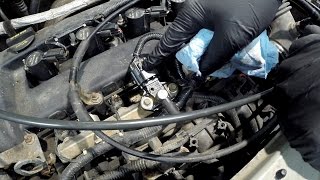
Typical fix: Replace the Fuel Rail Pressure Sensor. This sensor is located on the high-pressure fuel rail on the engine. Ensure the fuel system is properly depressurized before attempting replacement. 🎬 See this walkthrough on replacing the fuel rail pressure sensor.
Est. part cost: $80-$200 - Failing Fuel Pump Driver Module (FPDM) 🟡 Medium Probability While better protected than on older Ford trucks, the FPDM can still fail electronically, interrupting power to the low-pressure fuel pump. This starves the high-pressure pump, causing a pressure drop under load that triggers P0191.
How to confirm: Locate the FPDM on the evaporative emission canister bracket and inspect its connector for corrosion or damage. A diagnostic tool may show a loss of communication with the module or related codes. If fuses and relays are good but there is no power to the in-tank pump, the FPDM is a primary suspect.
Typical fix: Replace the Fuel Pump Driver Module. The module unplugs and is removed from its bracket.
Est. part cost: $70-$150 - Wiring or Connector Issue 🟡 Medium Probability The wiring harness for the fuel rail pressure sensor is in the engine bay and can be damaged by heat, causing insulation to become brittle or wires to break. Connectors can also corrode or loosen, leading to an intermittent or lost signal.
How to confirm: Visually inspect the wiring harness and connector going to the fuel rail pressure sensor for any signs of melting, chafing, or corrosion. Use a multimeter to check for a stable 5-volt reference, good ground, and a logical signal voltage at the connector pigtail.
Typical fix: Repair the damaged section of the wiring harness or replace the connector pigtail.
Est. part cost: $15-$50 - Weak Low-Pressure Fuel Pump or Clogged Fuel Filter ⚪ Low Probability A failing in-tank fuel pump or a clogged fuel filter can't supply enough fuel to the high-pressure pump, causing the rail pressure to drop under load. A dirty filter can overwork the pump, leading to premature failure. Some 2021-2023 Broncos were recalled for faulty low-pressure fuel pumps that could fail, especially in warmer weather.
How to confirm: Perform a fuel pressure test on the low-pressure side of the system to see if it meets specifications. A significant drop in pressure under acceleration points to a weak pump or restriction.
Typical fix: Replace the in-tank fuel pump assembly, which typically includes a new fuel filter sock.
Est. part cost: $250-$500
Rare But Worth Checking
- Powertrain Control Module (PCM) Fault: This is rare, but a software glitch or internal hardware failure in the PCM can cause it to misinterpret the sensor's signal. Check for any available PCM software updates before considering replacement, as this can sometimes resolve erroneous codes.
- Failing High-Pressure Fuel Pump (HPFP): While the HPFP is generally reliable, a mechanical failure within the pump can prevent it from building adequate pressure. This is less common than sensor or low-side supply issues and is a more expensive repair.
Diagnosis Steps
- Connect an OBD-II scanner and check for any other stored codes, paying attention to P0087, P00C6, or lean codes (P0171/P0174).
- View live data for 'Fuel Rail Pressure (FRP)' and 'Desired Fuel Rail Pressure'.
- With the key on, engine off, observe the FRP reading. If it's erratic, zero, or an impossibly high number, suspect the sensor or its wiring. A healthy system should hold some residual pressure. If it bleeds off quickly, it could indicate a leak or faulty pump check valve.
- If the reading seems plausible, start the engine. Compare the actual FRP to the desired FRP at idle and while carefully raising the RPM. A large discrepancy or a pressure that can't keep up with the desired value points to a fuel delivery problem (pump, filter, FPDM).
- Inspect the wiring and connector at the Fuel Rail Pressure Sensor for damage, heat stress, or corrosion.
- Locate and inspect the Fuel Pump Driver Module (FPDM) and its electrical connector for corrosion or physical damage. It is located on a bracket near the evaporative emission canister. 🎬 Watch: A helpful guide on testing the fuel pump driver module.
- If a fuel delivery issue is suspected, perform a pressure test on the low-pressure fuel system to rule out the in-tank pump and filter.
- If all other components test good, the issue is most likely a faulty Fuel Rail Pressure Sensor. Before replacing, ensure the system is safely depressurized by letting the vehicle sit for several hours or by using a proper service procedure.
Parts You'll Likely Need
- Fuel Rail Pressure Sensor
(OEM #K2GZ-9F972-B (Motorcraft CM-5296) or EJ7Z-9F972-A (Motorcraft CM-5233))— This sensor is the most frequent cause of P0191, as its readings are what directly trigger the code. It is a critical input for the direct injection system.
Trusted brands: Motorcraft, Bosch, Delphi
OEM price range: $120-$200
Aftermarket price range: $70-$130 - Fuel Pump Driver Module (FPDM) — A common failure point on Ford trucks that leads to fuel pressure issues. Failure interrupts power to the low-pressure pump.
Trusted brands: Motorcraft, Dorman
OEM price range: $100-$150
Aftermarket price range: $60-$90
Related Codes That Often Appear With This One
- P0087 — P0087 (Fuel Rail/System Pressure - Too Low) often appears with P0191 when there is a genuine lack of fuel pressure from a failing pump or clogged filter.
- P0171/P0174 — These 'System Too Lean' codes can be logged if the incorrect fuel pressure reading causes the PCM to deliver too little fuel, creating a lean air-fuel mixture.
- P00C6 — P00C6 (Fuel Rail Pressure Too Low - Engine Cranking) can appear if the system fails to build sufficient pressure during startup, pointing towards a weak pump or major leak.
Technical Service Bulletins (TSBs) & Recalls
- TSB 22-2428: Some 2021-2023 Bronco models may require a PCM software update for various transmission-related issues. While not directly for P0191, updating the PCM is a good practice if other diagnostics don't find a fault.
Platform-Specific Known Issues
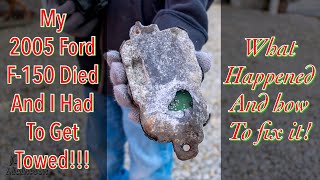
- source — On the Ford F-150 forums, a user with a 2005 F-150 experienced a P0191 code along with rough running, stalling, and a no-start condition. The root cause was a failed Fuel Pump Driver Module (FPDM), which is a well-documented issue on that platform. This highlights the importance of checking the FPDM on the Bronco as well.
- Discussion on Fuel Pressure Bleed-Down: In a forum for Ford owners, a user with a 1.0L EcoBoost noted that code P0191 would only appear after the car sat for several hours. This suggested that the high-pressure fuel system was bleeding down pressure over time, and the sensor correctly reported a value lower than what the PCM expected on startup.
Mechanic-Grade Diagnostic Values
- High-Pressure Fuel Rail Pressure (FRP) Sensor Voltage — expected: 0.5V to 4.5V operational range. Voltage below 0.5V may be seen after a cold soak and is normal.. Failure: Voltage stuck below 0.27V (short to ground) or above 4.76V (open/short to power) for more than 5 seconds will trigger a fault.
- Low-Pressure Fuel System Pressure (In-tank pump) — expected: Approximately 50-65 PSI.. Failure: Pressure that drops significantly under load or does not meet the minimum specification points to a weak in-tank pump, clogged filter, or FPDM issue.
- High-Pressure Fuel System Pressure (HPFP Output) — expected: Ranges from ~200-400 PSI at idle up to 2150 PSI or more under load.. Failure: Inability to build pressure to match the PCM's desired pressure value on a scan tool, especially under acceleration.
- Fuel Pump Driver Module (FPDM) - Fuel Pump Control (FPC) Signal — expected: A duty cycle signal between 5% and 50% is considered a valid 'ON' command from the PCM.. Failure: A signal outside this range, or no signal, indicates a problem with the PCM or the wiring to the FPDM.
- Fuel Pump Driver Module (FPDM) - Fuel Pump Monitor (FPM) Signal — expected: A 50% duty cycle signal sent back to the PCM indicates the FPDM is functioning correctly.. Failure: A 25% duty cycle indicates an open circuit or issue with the fuel pump itself; a 75% duty cycle indicates the FPDM did not receive a valid FPC signal from the PCM.
Scan Tool Commands That Help
- Ford IDS (Integrated Diagnostic System): Fuel Pump Command (On/Off) — To manually command the low-pressure fuel pump on to verify its operation and check for power/ground at the pump, bypassing the FPDM control logic. This helps isolate a bad pump from a bad FPDM or wiring.
- Ford IDS (Integrated Diagnostic System): KOER (Key On, Engine Running) Self-Test — This test runs the engine through a series of checks and can help identify intermittent fuel pressure issues under controlled conditions that may not be apparent during a simple drive.
- Ford IDS (Integrated Diagnostic System): Live Data Graphing: FRP_DSD vs FRP — Graphing the Desired Fuel Rail Pressure (FRP_DSD) against the actual Fuel Rail Pressure (FRP) is the primary diagnostic step. A significant lag or inability for the actual pressure to meet the desired pressure points towards a mechanical fuel delivery issue (pump, filter) rather than a sensor fault.
Wiring & Ground Locations
- Engine Block Ground — Main battery negative cable connects directly to the engine block. A secondary pigtail from this cable often provides a body ground to the inner fender/wheel well area.. A poor main engine ground can cause erratic behavior in all engine sensors, including the Fuel Rail Pressure sensor, leading to incorrect readings and fault codes.
- General Body Grounds — Ground points are located behind the kick panels near the speakers and in the rear cargo area behind the trim panels. Any unpainted bolt that fastens to the body or frame can serve as a ground.. The Fuel Pump Driver Module (FPDM) and in-tank fuel pump rely on a solid chassis ground. A corroded or loose ground in the rear of the vehicle can cause intermittent fuel pump operation, leading to P0191.
- FRP Sensor Connector — On the high-pressure fuel rail on the engine. It is a 3-wire connector.. This is the primary connection point for the sensor. The pins are for 5V reference, signal return, and ground. Damage or corrosion here directly causes P0191, P0192, or P0193.
Real Owner Repair Stories
- Bronco6G Forum user (2021 Ford Bronco Badlands 2.7L) — Vehicle went into limp mode, Check Engine Light on with code P0191.
❌ Tried (didn't work) Initial dealer diagnosis was inconclusive.
✅ What actually fixed it The dealer found a Technical Service Bulletin (TSB) related to the high-pressure fuel pump. They replaced the high-pressure fuel pump, which resolved the code and the limp mode issue.
OEM Part Supersession History
Unknown→WPT-1308— This is the service part number for the Fuel Rail Pressure Sensor connector pigtail.
Heads up: This connector is listed as interchangeable for 2021-2024 Bronco models with the 2.7L and 3.0L engines.
Model Year Variations Within This Range
- 2021-2023: A recall was issued for certain 2021-2023 Broncos for faulty low-pressure fuel delivery modules (FDM) that could fail, particularly in warm weather, causing a stall. The issue was traced to a supplier manufacturing change in June 2021. Vehicles built between July 2021 and July 2022 were most affected by warranty claims. This faulty FDM is a direct potential cause for code P0191.
Diagnostic Flowchart
Other Known Issues on This Vehicle
Issues unrelated to this code that are worth knowing about as an owner of this generation:
- 2.7L EcoBoost Intake Valve Failure 🔴 High — Affects a specific batch of engines built between May and October 2021. Failure can be catastrophic. (Ref: Ford Customer Satisfaction Program 21N08, NHTSA Recall 22V-429)
- Molded-in-Color (MIC) Hardtop Quality Issues 🟠 Medium — Widespread on 2021-2022 models. Issues include a 'snakeskin' or honeycomb pattern appearing, delamination, and poor fitment leading to leaks and wind noise. (Ref: Warranty replacements with an improved 'MIC 2.0' top are the common fix.)
- 10R60/10R80 10-Speed Transmission Problems 🟠 Medium — Some owners report harsh/delayed shifting, shuddering, or premature component failure. Issues are often related to the valve body or CDF clutch drum. (Ref: Multiple TSBs exist, including TSB 23-2352 and TSB 23-2250, addressing shift quality issues.)
- Cracked Fuel Injectors (Bronco Sport) 🔴 High — Primarily affects the Bronco Sport with the 1.5L engine, but is a known issue within the EcoBoost family. Can cause fuel leaks and risk of fire. (Ref: NHTSA Recall 22V-859)
- General Build Quality Concerns 🟡 Low — Reports of loose interior trim, rattles, and minor electronic glitches with the SYNC system are noted by some owners across model years.
Used vs. New Parts: Buying Guide for This Vehicle
When a used part is the smart pick: For this repair, using used parts is generally not recommended for the electronic sensors or the fuel pumps. A used wiring harness connector pigtail from a reputable salvage yard could be a viable option if the new part is unavailable, provided it is in excellent condition with no corrosion or brittleness.
Donor-vehicle mileage cap: roughly under 40000 miles for the part to have meaningful remaining life.
What to inspect on the donor part:
- For a connector pigtail, inspect for any signs of melted plastic, cracked insulation, or green corrosion on the pins.
- Ensure there is at least 6 inches of flexible, undamaged wire attached.
- Verify the donor vehicle was not in a front-end or fire-related accident.
OEM-only on this vehicle (don't cheap out):
- Fuel Rail Pressure Sensor
- High-Pressure Fuel Pump (HPFP)
- Low-Pressure Fuel Pump / Fuel Delivery Module (FDM)
Aftermarket brands forum-validated for this vehicle:
- Motorcraft (OEM)
- Bosch
- Dorman (for FPDM and connector pigtails)
Brands owners have reported issues with on this vehicle:
- No-name, unbranded electronic sensors from online marketplaces should be avoided due to high failure rates and inconsistent quality.
Real Owner Stories
Aggregated from forums and TSBs cited above. Mileages and costs reflect what owners reported in those sources.
2005 Ford F-150
Symptoms: The vehicle experienced rough running, stalling, and eventually a no-start condition.
What fixed it: Replacement of the failed Fuel Pump Driver Module (FPDM).
Source hint: Ford F150 Forum (f150forum.com) and vehicle_specific_issues 'Owner Experience with P0191 on F-150 EcoBoost'
Ford 1.0L EcoBoost (Generic Platform)
Symptoms: The P0191 code would only appear after the car sat for several hours.
What fixed it: The issue was identified as the high-pressure fuel system bleeding down pressure over time, causing the sensor to report a value lower than expected by the PCM on startup.
Source hint: vehicle_specific_issues 'Discussion on Fuel Pressure Bleed-Down'
Related OBD-II Codes
Frequently Asked Questions
Where is the Fuel Pump Driver Module (FPDM) located on my 2021-2023 Ford Bronco?
Is there a recall for the fuel pump on my 2021-2023 Bronco that could cause P0191?
Could a PCM update fix my P0191 code on the Bronco?
How can I tell if my Fuel Rail Pressure Sensor is failing using a scanner?
I have a 2021 Bronco with the 2.7L EcoBoost; are there other major engine issues I should be aware of while diagnosing fuel codes?
Why does my P0191 code only appear after the vehicle has been sitting for several hours?
Helpful Videos
We Have This Part in Stock


The information in this article is provided for general reference and educational purposes only. Vehicle specifications, procedures, and part compatibility can vary by production date, trim level, and region. Always consult your vehicle's factory service manual and verify part numbers before purchasing or performing repairs. Safety-critical components such as airbags, seat belts, and braking systems should be installed by a qualified professional.
- Ford Bronco:
- 🎬 Helpful Videos
- 🛍️ Shop This Part
- What's Unique About the 2021-2023 Ford Bronco
- Symptoms You May Notice
- Most Likely Causes
- Rare But Worth Checking
- Diagnosis Steps
- Parts You'll Likely Need
- Related Codes That Often Appear With This One
- Technical Service Bulletins (TSBs) & Recalls
- Platform-Specific Known Issues
- Mechanic-Grade Diagnostic Values
- Scan Tool Commands That Help
- Wiring & Ground Locations
- Real Owner Repair Stories
- OEM Part Supersession History
- Model Year Variations Within This Range
- Diagnostic Flowchart
- Other Known Issues on This Vehicle
- Used vs. New Parts: Buying Guide for This Vehicle
- Real Owner Stories
- 2005 Ford F-150
- Ford 1.0L EcoBoost (Generic Platform)
- Related OBD-II Codes
- Frequently Asked Questions
- 🎟️ Get 5% Off