

P0191 on 2010-2014 Chevrolet Silverado 1500: Fuel Pressure Causes and Fixes
On a 2010-2013 Silverado, P0191 is most often caused by a corroded Fuel Pump Driver Module (FPDM) located near the spare tire. For 2014 models, it can also be the high-pressure fuel pump. Inspecting the FPDM and its ground connection is the first step before replacing the sensor or fuel pump.
- For 2010-2013 models, always inspect the Fuel Pump Driver Module (FPDM) near the spare tire for corrosion before buying any parts.
- If you also have code P069E, the FPDM is almost certainly the problem.
- Check the fuel rail pressure sensor's electrical connector for corrosion, as this is a known issue covered by a GM service bulletin (20-NA-197).
- Confirm whether you have a bad sensor or a real pressure problem by comparing a scan tool reading to a mechanical fuel gauge.
- Be aware that the 2014 model has a different (direct injection) fuel system, which adds more potential causes like the high-pressure fuel pump.
What's Unique About the 2010-2014 Chevrolet Silverado 1500
The 2010-2014 year range is split across two truck generations with different fuel systems. On the 2010-2013 (GMT900) trucks, the most common culprit for P0191 is not the sensor itself, but the frame-mounted Fuel Pump Driver Module (FPDM), which is highly susceptible to corrosion and bad grounds due to its location above the spare tire. For the 2014 model (K2XX), which introduced direct injection, the system is more complex, adding a high-pressure mechanical fuel pump (HPFP) located under the intake manifold that can also be a source of the problem.
Generation note: Yes, this range covers two generations. 2010-2013 models are the GMT900 platform with port injection. For these, P0191 diagnosis focuses on the low-pressure pump, the Fuel Pump Driver Module (FPDM), and the fuel rail pressure sensor. The 2014 model year introduced the K2XX platform with direct injection, which adds a high-pressure mechanical fuel pump (HPFP) to the system. On a 2014, P0191 can be caused by issues in either the low-pressure or high-pressure circuits, making diagnosis more complex.
Symptoms You May Notice
- Check Engine Light is on
- Hard starting or long crank times
- Engine stalling, especially at idle
- Reduced engine power or "limp mode"
- Poor acceleration and hesitation, sometimes described as a 'stutter' at cruising speeds.
- Rough idle
- Decreased fuel economy
- No-start condition
- Replacing the fuel rail pressure sensor without first inspecting the Fuel Pump Driver Module (FPDM) for corrosion, especially on 2010-2013 models.
- Replacing the entire fuel pump assembly when the cheaper FPDM was the actual point of failure.
- On 2014 models, replacing the expensive high-pressure fuel pump (HPFP) when the issue was actually with the low-pressure in-tank pump or the FPDM.
Most Likely Causes
- Failing Fuel Pump Driver Module (FPDM / FPCM) 🔴 High Probability The module is mounted on the frame crossmember above the spare tire, making it highly vulnerable to water, salt, and corrosion, which damages the electronics, connector, and ground connection. This is a very well-documented failure point on GM trucks of this era.
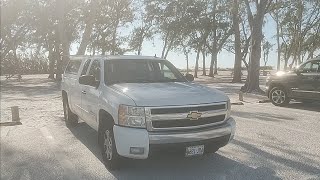
How to confirm: Visually inspect the module and its connector for heavy corrosion or physical damage. If code P069E is also present, the FPDM is the primary suspect. 🎬 Watch this video to troubleshoot and repair these two common codes. A common diagnostic test is to use jumper wires to bypass the module; if the truck starts and runs, the module is bad.
Typical fix: Replace the Fuel Pump Driver Module. The replacement part often comes with standoffs to create an air gap and prevent future moisture buildup. The new module must be programmed to the vehicle's VIN.
Est. part cost: $70-$195 - Faulty Fuel Rail Pressure Sensor (FRPS) or Connector 🟡 Medium Probability GM issued Technical Service Bulletin (TSB) 20-NA-197 specifically for corrosion in the FRPS electrical connector causing this code and a host of others. The sensor itself can also fail from heat and vibration.
How to confirm: With a scan tool, compare the fuel pressure reading to a mechanical gauge connected to the fuel rail. If the scan tool reading is erratic or doesn't match the mechanical gauge, the sensor or its circuit is faulty. Inspect the connector for green or black corrosion or damaged pins. A 'wiggle test' on the harness while watching scan data can reveal a bad connection.
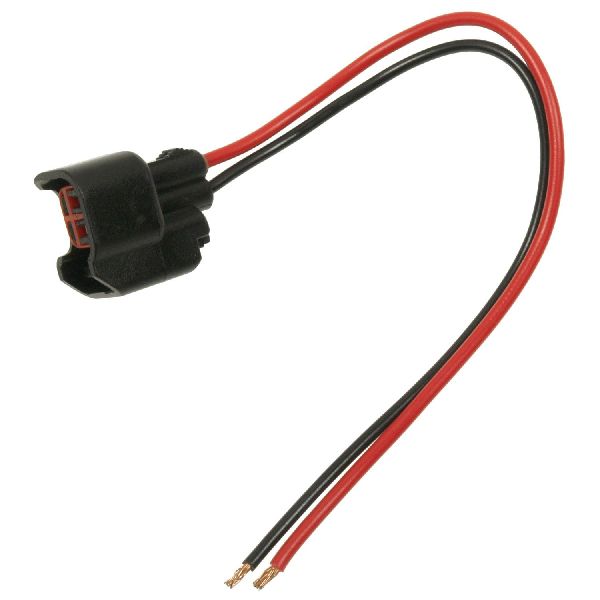
Typical fix: First, try cleaning the connector with electrical contact cleaner and applying dielectric grease. If that fails, or if damage is visible, replace the connector pigtail (GM Part #19367009). If the sensor is confirmed bad, replace it and its O-ring.
Est. part cost: $40-$125 - Weak or Failing In-Tank Fuel Pump 🟡 Medium Probability
How to confirm: Perform a fuel pressure test with a mechanical gauge. For 2010-2013 models, key-on pressure should be around 55-62 PSI. If pressure is low, drops off under load, or is erratic (and the FPDM has been ruled out), the pump is likely failing.
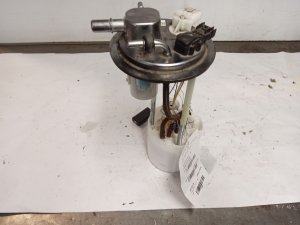
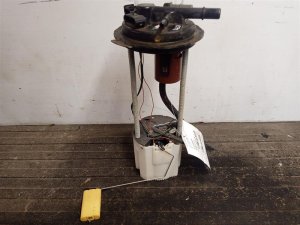
Typical fix: Replace the in-tank fuel pump module assembly. The fuel filter is integrated into this module and is not separately serviceable. This can often be done by loosening the bolts on one side and removing them on the other to tilt the truck bed up, rather than dropping the fuel tank.
Est. part cost: $250-$500 - Failing High-Pressure Fuel Pump (HPFP) (2014 models only) 🟡 Medium Probability The introduction of direct injection in 2014 brought the HPFP, which is mechanically driven by the camshaft. These pumps are a known failure point and can leak fuel into the crankcase, diluting the engine oil.
How to confirm: On a scan tool, monitor both desired and actual high-side fuel pressure; a large discrepancy indicates a problem. Another key symptom is a rising oil level or a smell of gasoline in the engine oil. This is an expensive part, so thorough diagnosis is critical.
Typical fix: Replace the high-pressure fuel pump. This is an intensive repair that involves removing the intake manifold. The high-pressure fuel line is single-use and must also be replaced. An oil change is mandatory if fuel contamination is suspected.
Est. part cost: $300-$600
Rare But Worth Checking
- Fuel System Contamination: GM has issued several TSBs (e.g., PIP5151F) regarding fuel contamination from poor fuel quality or debris causing hard starts and setting P0191. If other causes are ruled out, a fuel sample should be taken and inspected.
- Damaged Wiring Harness: A wiring harness could be chafed or shorted against the frame or engine components, causing an intermittent signal from the sensor. A thorough visual inspection of the harness from the sensor to the PCM may be required. One owner fixed a persistent P0191 by replacing the harness between the fuel rail and ECM.
Diagnosis Steps
- Scan the PCM for all stored trouble codes. Note if P069E or P0087 are present, as they provide critical clues.
- Drop the spare tire and locate the Fuel Pump Driver Module (FPDM) on the frame crossmember.
- Disconnect and thoroughly inspect the FPDM and its wiring harness connector for any signs of white, green, or black corrosion. Check the module's ground wire to the frame for integrity. If corrosion is present, this is the most likely cause.
- Locate the Fuel Rail Pressure Sensor (FRPS) on the fuel rail in the engine bay.
- Inspect the FRPS electrical connector for corrosion, per TSB 20-NA-197. Clean if necessary or replace the pigtail if damage is found.
- Connect a scan tool and monitor the fuel rail pressure reading. Observe if it is erratic, stuck, or seems illogical for the engine's state (e.g., reading high pressure with the engine off).
- Connect a mechanical fuel pressure gauge to the service port on the fuel rail.
- Compare the mechanical gauge reading to the scan tool data. For 2010-2013 models, pressure should be 55-62 PSI. If the readings differ significantly, the FRPS is likely bad. 🎬 See a step-by-step guide on how to diagnose the P0191 code. If both readings are low or erratic, the problem is with the fuel supply (pump or FPDM).
- If the FPDM is suspected (especially with a no-start), bypass it with jumper wires as a test. If the truck starts and runs with the module bypassed, the FPDM is confirmed to be faulty.
- For 2014 models, if low-side pressure is good, investigate the high-pressure system. Check for fuel in the oil and monitor high-pressure readings with a scan tool.
Parts You'll Likely Need
- Fuel Pump Driver Module (FPDM)
(OEM #20877116 (superseded by 20791901, 20898936))— This is the most common failure point for P0191 on 2010-2013 models due to its exposed location on the frame leading to corrosion.
Trusted brands: ACDelco, Dorman (601-022), Wells
OEM price range: $100-$150
Aftermarket price range: $70-$120 - Fuel Rail Pressure Sensor (FRPS)
(OEM #12673824)— The sensor can fail internally or its connector can corrode (per TSB 20-NA-197), sending incorrect signals to the PCM. 🎬 Watch this breakdown of fuel rail pressure sensor circuit performance issues.
Trusted brands: ACDelco, Bosch, Delphi
OEM price range: $70-$125
Aftermarket price range: $40-$80 - In-Tank Fuel Pump Module Assembly — If the FPDM and sensor are good, a weak or failing pump is the next logical cause of low or erratic fuel pressure.
Trusted brands: ACDelco, Delphi, Carter
OEM price range: $350-$500
Aftermarket price range: $200-$350
Related Codes That Often Appear With This One
- P069E — This code specifically indicates a fault within the Fuel Pump Control Module (FPCM/FPDM). If seen with P0191, it makes the FPDM the number one suspect.
- P0087 — This code means 'Fuel Rail/System Pressure - Too Low'. It often appears with P0191 when the root cause is a weak fuel pump or failing FPDM that cannot supply adequate pressure.
Technical Service Bulletins (TSBs) & Recalls
- 20-NA-197: Malfunction Indicator Lamp (MIL) Illuminated - DTC P0191... This condition may be caused by corrosion or damage at the fuel pressure sensor electrical connector. The fix involves inspecting the terminals and, if corrosion or damage is found, replacing the connector pigtail (Part No. 19367009) and applying dielectric grease.
- PIP5151F: Diagnostic aid for hard start, no start, and fuel pressure DTCs (P0087, P0088, P0191) due to fuel contamination. Reinforces that the issue may not be a single component but a system-wide problem requiring a fuel sample inspection.
- PIP4949D: A TSB related to hard start/no-start conditions that can be associated with P0191, further pointing to the need for a comprehensive fuel system diagnosis rather than just replacing the sensor.
Platform-Specific Known Issues
- A common repair story involves an owner first replacing the FRPS with no success. After that also fails, they replace the in-tank fuel pump. The code remains until the actual culprit, the corroded Fuel Pump Driver Module (FPDM), is finally replaced and programmed.
Mechanic-Grade Diagnostic Values
- Low-Pressure Fuel System (2010-2013) — expected: 55-62 PSI (Key On, Engine Off). Failure: Pressure below 55 PSI indicates a weak pump or FPDM issue.
- High-Pressure Fuel System at Idle (2014+) — expected: ~580-900 PSI. Failure: Pressure is extremely high (e.g., 2500 PSI) or fails to build from the low-pressure baseline (~70 PSI).
- Fuel Rail Pressure Sensor (FRPS) 5V Reference — expected: 4.8V - 5.2V. Failure: Voltage outside this range indicates a wiring issue or a fault in the PCM.
- Fuel Rail Pressure Sensor (FRPS) Signal Voltage — expected: ~0.5V - 1.8V (Key On, Engine Off). Failure: Voltage is stuck near 0V (short to ground) or 5V (open circuit/short to power). Unplugging the sensor should result in a 0 PSI reading on a scan tool; shorting the 5V reference to the signal wire will result in a maxed-out reading (e.g., 4,622 PSI).
- FRPS Connector Pinout (GMT900) — expected: Pin 1: 5V Reference (Brown/White or similar). Pin 2: Low Reference/Ground (Black or similar). Pin 3: Signal (Light Green or similar).. Failure: Incorrect voltages or lack of continuity on any pin.
Scan Tool Commands That Help
- GDS2 / Tech2 or equivalent professional scanner: Fuel Pump Relay / FPDM Command — Use this bidirectional control to command the fuel pump ON and OFF directly. This bypasses other inputs and allows you to verify the FPDM's ability to energize the pump, the pump's operation, and the integrity of the wiring between them. If the pump runs with this command but not otherwise, the issue is likely with the PCM command signal or the FPDM itself.
- GDS2 / Tech2 or equivalent professional scanner: Fuel Pressure Control — On 2014+ models, this allows a technician to command a specific fuel pressure and observe if the high-pressure fuel pump and its control solenoid can achieve and maintain it. This helps differentiate between a faulty HPFP, a sensor issue, or a low-side supply problem.
Wiring & Ground Locations
- G400 / G401 — On the driver's side frame rail, typically behind the rear tire, near the spare tire location.. This is the primary chassis ground point for rear-of-vehicle components, including the Fuel Pump Driver Module (FPDM). Corrosion at this location is extremely common and creates high resistance, causing the FPDM to malfunction and trigger P0191 and P069E, even if the module itself is functional.
- FPDM/FPCM Connector — Connected to the Fuel Pump Driver Module, located on the frame crossmember above the spare tire.. This connector is the central point for FPDM power (Red/White wire), ground (Black wire), PCM command signal (Dark Green/White wire), and output to the fuel pump (Grey and Pink wires). Water intrusion and corrosion here can cause opens or shorts on any of these critical circuits.
- ECM/PCM Ground — On the engine block, typically at the rear of the driver's side cylinder head.. A poor engine ground can cause erratic behavior from multiple sensors that use the block as a ground reference, including the FRPS. While less common than the FPDM ground issue, it can cause difficult-to-diagnose sensor performance codes.
Real Owner Repair Stories
- Go-Parts / YouTube (2007 Chevrolet Silverado (GMT900, similar to 2010-2013)) — Check Engine Light with P0191 and P069E, low fuel pressure, and a no-start condition.
❌ Tried (didn't work) Replaced the Fuel Rail Pressure Sensor., Replaced the in-tank fuel pump.
✅ What actually fixed it Replacing the corroded Fuel Pump Control Module (FPCM/FPDM) and programming the new module to the vehicle's VIN resolved all codes and symptoms. - Reddit user on r/gmcsierra (GMC Sierra (newer model, but logic is applicable)) — Persistent P0191 code, especially when decelerating.
❌ Tried (didn't work) Replaced fuel rail pressure sensor., Replaced the entire fuel rail assembly., Replaced the fuel rail a second time.
✅ What actually fixed it The dealership identified and replaced the wiring harness between the fuel rail and the Engine Control Module (ECM), which had an intermittent internal fault. - Technical repair video (GM Truck with similar fuel system) — P0191 with extremely high low-side fuel pressure (over 70 PSI).
❌ Tried (didn't work) Verifying power and ground to the FPDM, which tested good., Confirming the FRPS was accurately reporting the high pressure.
✅ What actually fixed it The cause was an internal short-to-ground within the in-tank fuel pump hanger assembly. A deteriorated rubber isolator allowed the pump's metal case to ground against the hanger, bypassing FPDM control and causing the pump to run at 100% speed continuously.
"I Checked Everything" — The Actual Cause
- While a smoke test is not used for this code, a similar pattern exists where standard electrical tests can be misleading. In one documented case, the FPDM had proper power and ground, and the scan tool correctly showed the FPDM was commanding a low duty cycle, yet fuel pressure was stuck at maximum. The root cause was not the FPDM or its primary wiring, but an internal short inside the fuel tank's pump assembly. A deteriorated boot allowed the pump to ground itself out, causing it to run at full speed regardless of the FPDM's command. This type of hidden electrical fault inside a mechanical part is missed by standard external wiring checks.
OEM Part Supersession History
20877116→20791901, 20827745, 20850927, 20898936— Standard part evolution and potential design improvements to enhance durability or moisture resistance.
Heads up: The replacement module must be programmed to the vehicle's VIN using GDS2 or similar software to function correctly.
Model Year Variations Within This Range
- 2010-2013: Diagnosis should heavily prioritize the Fuel Pump Driver Module (FPDM) and its ground (G400/G401) on the frame rail. The corrosion issue with the FPDM is the signature failure for P0191 on these GMT900 trucks.
- 2014: Diagnosis becomes more complex, involving two separate fuel systems. The high-pressure fuel pump (HPFP) becomes a primary suspect, along with its potential to leak fuel into the crankcase. There is no Schrader valve for a mechanical gauge on the high-pressure side; pressure must be monitored via a scan tool.
Diagnostic Flowchart
Real Owner Stories
Aggregated from forums and TSBs cited above. Mileages and costs reflect what owners reported in those sources.
2007 Chevrolet Silverado 5.3L
Symptoms: Experienced a stutter or hesitation between 40-55 mph along with intermittent P0191 and P069E codes.
What fixed it: Replaced the fuel pump. The owner noted they accessed the pump by lifting the truck bed rather than dropping the tank.
Source hint: Reddit r/ChevyTrucks - 'p0191 and p069e on 07 silverado 5.3'
Chevrolet Silverado
Symptoms: Truck had persistent P0191 and P069E codes. A mechanical gauge showed low fuel pressure at 44-45 PSI instead of the required 55-62 PSI.
What fixed it: Replaced the Fuel Pump Control Module (FPCM/FPDM). The owner initially replaced the fuel rail pressure sensor and the in-tank fuel pump, which corrected the pressure but didn't clear the codes until the module was finally replaced.
Source hint: YouTube - 'Chevy Silverado p0191 and p069e troubleshoot + repair'
2024 GMC Sierra Duramax
Symptoms: Persistent P0191 code that would not clear even after replacing multiple sensors and the fuel rail.
What fixed it: Replaced the wiring harness between the fuel rail and the ECM, which was found to have a damaged pin.
Source hint: Reddit r/gmcsierra - 'P0191'
Related OBD-II Codes
Frequently Asked Questions
Does TSB 20-NA-197 apply to my Silverado for code P0191?
Why is my Silverado showing both P0191 and P069E codes?
My 2014 Silverado 5.3L has code P0191 and the engine oil smells like gas. What does this mean?
How can I test if the Fuel Pump Driver Module (FPDM) is causing my no-start condition?
Do I need to drop the fuel tank to replace the fuel pump on my 2010-2013 Silverado?
What should the fuel pressure be when testing my 2010-2013 Silverado 1500?
Helpful Videos
Used OEM Parts in Stock



New Aftermarket Parts Available


The information in this article is provided for general reference and educational purposes only. Vehicle specifications, procedures, and part compatibility can vary by production date, trim level, and region. Always consult your vehicle's factory service manual and verify part numbers before purchasing or performing repairs. Safety-critical components such as airbags, seat belts, and braking systems should be installed by a qualified professional.
- Chevrolet Silverado 1500:
- 🎬 Helpful Videos
- 🛍️ Shop This Part
- What's Unique About the 2010-2014 Chevrolet Silverado 1500
- Symptoms You May Notice
- Most Likely Causes
- Rare But Worth Checking
- Diagnosis Steps
- Parts You'll Likely Need
- Related Codes That Often Appear With This One
- Technical Service Bulletins (TSBs) & Recalls
- Platform-Specific Known Issues
- Mechanic-Grade Diagnostic Values
- Scan Tool Commands That Help
- Wiring & Ground Locations
- Real Owner Repair Stories
- "I Checked Everything" — The Actual Cause
- OEM Part Supersession History
- Model Year Variations Within This Range
- Diagnostic Flowchart
- Real Owner Stories
- 2007 Chevrolet Silverado 5.3L
- Chevrolet Silverado
- 2024 GMC Sierra Duramax
- Related OBD-II Codes
- Frequently Asked Questions
- 🎟️ Get 5% Off