

P0175 on 2019-2021 Ram 1500: "System Too Rich Bank 2" Causes and Fixes
P0175 on a 2019-2021 Ram 1500 means the engine's Bank 2 (passenger side) is getting too much fuel. The most common causes are a faulty upstream oxygen sensor or a leaking fuel injector. However, multiple TSBs exist, so the first step should be checking for a PCM software update at a dealership, as this often resolves the issue. If a part is needed, the O2 sensor is the most likely fix, costing around $50-$100.
- P0175 means Bank 2 is running rich (too much fuel, not enough air).
- Before replacing parts, check with a dealer if your truck needs a PCM software update, as several TSBs mention this code.
- The most common mechanical fault is a bad upstream (pre-catalyst) oxygen sensor on Bank 2.
- A leaking fuel injector on Bank 2 is the second most common mechanical fault.
- Driving with this code can ruin your expensive catalytic converter over time, so address it promptly.
What's Unique About the 2019-2021 Ram 1500

For the 2019-2021 Ram 1500, the P0175 code is frequently mentioned in multiple Technical Service Bulletins (TSBs) alongside other seemingly unrelated codes like P0456 (EVAP Leak). These TSBs (including 18-033-25 REV. A) often point towards software updates for the Powertrain Control Module (PCM) as the primary fix. This indicates that the factory diagnostic logic for detecting a rich condition was overly sensitive. This makes checking for and performing an available PCM reflash at a dealership a crucial and often required first step, which is unique compared to older vehicles where a mechanical fault is almost always the immediate cause. A cracked passenger-side exhaust manifold is also a surprisingly common issue on this generation, which can draw in air and confuse the O2 sensor, leading to an incorrect rich command from the PCM.
Diagnostic Flowchart

Tap your situation to follow the diagnostic path that matches what you're seeing on this vehicle.
Symptoms You May Notice
- Check Engine Light is on
- Reduced fuel economy
- Rough idle
- Engine hesitation or lack of power during acceleration 🎬 Watch: A breakdown of P0175 causes and common fixes.
- Strong smell of gasoline from the exhaust
- In severe cases, black smoke from the tailpipe
- Engine oil smells like gasoline due to fuel dilution
- Replacing the downstream (post-catalyst) O2 sensor. The downstream sensor's primary job is to monitor catalyst efficiency, not for primary fuel trim. The upstream sensor (Sensor 1) is used for air-fuel ratio control.
Most Likely Causes

- Powertrain Control Module (PCM) Software Update Needed 🔴 High Probability Multiple TSBs (S2118000013, 18-033-25 REV. A) list P0175 and confirm that a PCM reflash is the specified repair to correct overly sensitive diagnostic parameters that can falsely trigger the code. This is the most important first step.
How to confirm: A Ram dealership or a qualified shop with access to OEM software (like wiTECH) can check your vehicle's VIN against available TSBs and software updates.
Typical fix: Update the PCM software to the latest version. This is a dealer-only or specialty shop procedure.
Est. part cost: $0-$200 (depending on dealer labor rates and warranty status) - Faulty Upstream Oxygen (O2) Sensor 🔴 High Probability O2 sensors are wear-and-tear items. A lazy or failing sensor can send incorrect, slow, or biased signals to the PCM, causing it to enrich the fuel mixture unnecessarily. Owners on forums like 5thgenrams.com report this as the ultimate fix, even after a PCM flash didn't solve the problem.
How to confirm: Use an OBD-II scanner to monitor the live data for the Bank 2, Sensor 1 O2 sensor. Its voltage should fluctuate rapidly between approximately 0.1 and 0.9 volts. If it's stuck high (e.g., >0.8V) or responds much slower than the Bank 1 sensor, it's likely faulty.
Typical fix: Replace the Bank 2, Sensor 1 (upstream, passenger side) oxygen sensor.
Est. part cost: $40-$120 - Leaking Fuel Injector(s) on Bank 2 🟡 Medium Probability An injector can get stuck partially open or have a worn internal seal, causing it to leak excess fuel into one or more cylinders on Bank 2. A user on RamForum.com confirmed a leaking injector on cylinder 4 (part of Bank 2) was their issue.
How to confirm: Perform a fuel pressure leak-down test; if pressure drops after the engine is off, an injector may be leaking. Alternatively, after the engine has run, pull the spark plugs on Bank 2 (cylinders 2, 4, 6, 8) and check for a wet, fuel-soaked plug.
Typical fix: Replace the faulty fuel injector(s). It's often recommended to replace them as a set on the affected bank.
Est. part cost: $50-$150 per injector - Faulty Manifold Absolute Pressure (MAP) Sensor ⚪ Low Probability The MAP sensor measures engine load. If it incorrectly reports a higher load (lower vacuum) than is actually present, the PCM will command more fuel, leading to a rich condition across both banks, but it can sometimes trigger a code on one side first.
How to confirm: With the key on and engine off, the MAP sensor reading on a scan tool should be close to the current barometric pressure. At idle, compare its reading to a mechanical vacuum gauge; a significant discrepancy points to a bad sensor.
Typical fix: Replace the MAP sensor.
Est. part cost: $30-$80
Rare But Worth Checking
- High Fuel Pressure: A failing fuel pressure regulator or a restriction in the fuel return line can cause system-wide high fuel pressure, forcing too much fuel through the injectors. This usually affects both banks (P0172 and P0175), but can sometimes trigger a code on one side first.
- Leaking EVAP Purge Valve: If the EVAP purge valve sticks open, it can allow unmetered fuel vapors from the charcoal canister to enter the intake manifold at the wrong time, creating a rich condition. This is often accompanied by an EVAP system code like P0456, which is explicitly mentioned alongside P0175 in TSBs.
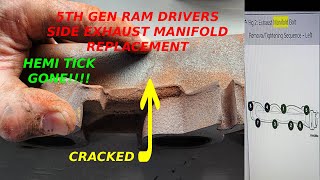
- Cracked Passenger Side Exhaust Manifold: A crack in the exhaust manifold before the O2 sensor can pull in outside air during the exhaust pulse, fooling the O2 sensor into thinking the engine is running lean. The PCM then overcompensates by adding fuel, causing a genuinely rich condition. This is a known issue on 5th Gen Rams. 🎬 Watch: How to replace a cracked 5th Gen exhaust manifold.
Diagnosis Steps

- Read the codes with an OBD-II scanner and confirm P0175 is present. Note any other codes, especially P0172 or P0456.
- Crucial First Step: Check for applicable TSBs for your VIN. A PCM software update is the manufacturer-specified fix in many cases and should be performed before replacing parts.
- Use the scanner to view live data. Focus on Long-Term Fuel Trim (LTFT) for Bank 2. A strong negative number (e.g., -15% to -30%) confirms the PCM is trying to remove fuel.
- Compare the Bank 2, Sensor 1 (upstream, passenger side) O2 sensor voltage graph to the Bank 1, Sensor 1 graph. The Bank 2 sensor should fluctuate rapidly. If it's stuck high (above 0.8v) or is very slow, it's a primary suspect.
- Inspect the intake system for any obvious issues and check the engine air filter. A severely clogged filter can restrict airflow and contribute to a rich condition.
- If the O2 sensor appears to be functioning and the PCM is updated, investigate the fuel system. Check for leaking fuel injectors on Bank 2 via a fuel pressure leak-down test or by inspecting the spark plugs.
- Test the MAP sensor to ensure it's reading correctly at key-on/engine-off and at idle, comparing its output to a mechanical gauge if possible.
- If no issues are found, consider testing fuel pressure to ensure it's within the manufacturer's specification.
Parts You'll Likely Need
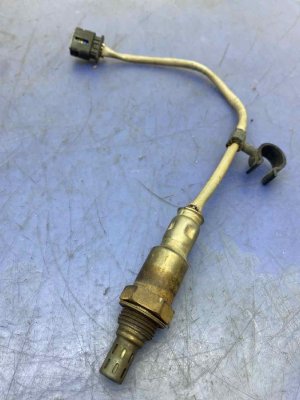
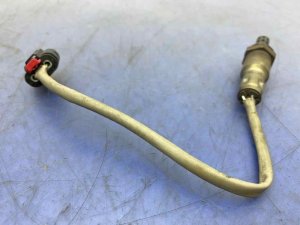
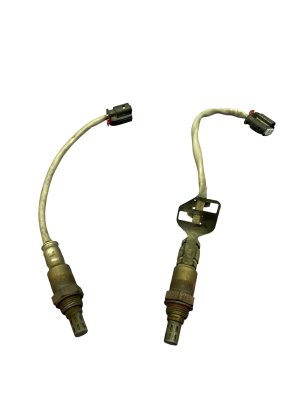
- Upstream Oxygen Sensor (Bank 2, Sensor 1)
(OEM #68305842AA)— This sensor is the most common hardware failure point for a single-bank rich condition. It directly measures the oxygen in the exhaust and provides the primary data for fuel adjustments.
Trusted brands: Mopar, NTK, Denso, Bosch
OEM price range: $80-$150
Aftermarket price range: $40-$100 - Fuel Injector
(OEM #05036333AC)— A leaking fuel injector is the second most likely hardware cause, as it directly adds excess fuel to the system, bypassing PCM control.
Trusted brands: Mopar, Standard Motor Products (SMP), Bosch
OEM price range: $100-$180
Aftermarket price range: $50-$120
Related Codes That Often Appear With This One
- P0172 — This is the equivalent 'System Too Rich' code for Bank 1. If both P0172 and P0175 are present, it points to a problem affecting the entire engine, such as a MAP sensor, fuel pressure issue, or leaking EVAP purge valve.
- P0300, P0302, P0304, P0306, P0308 — These are misfire codes. An excessively rich mixture can foul spark plugs and cause misfires on the affected cylinders of Bank 2 (cylinders 2, 4, 6, 8 on a V8).
- P0456 — This 'EVAP System Small Leak' code is mentioned alongside P0175 in several manufacturer TSBs, suggesting a direct link through faulty PCM software logic affecting both systems. (TSB #18-033-25, #1807022, #1805820)
Technical Service Bulletins (TSBs) & Recalls

- S2118000013: Mentions P0175 - Fuel System 2/1 Rich.
- 18-033-25 REV. A: Lists P0175 as one of several codes that may be addressed by a PCM software update.
- 18-033-25: Lists P0175 as one of several codes that may be addressed by a PCM software update.
- 1807022: Lists P0175 as one of several codes that may be addressed by a PCM software update.
- 1805820: Lists P0175 as one of several codes that may be addressed by a PCM software update.
Platform-Specific Known Issues
- Multiple Technical Service Bulletins (TSBs) exist for the 2019-2021 Ram 1500 that include code P0175. Bulletins #18-033-25, #1807022, and #1805820 specifically mention P0175 in a list of DTCs that may be resolved with a PCM software update.
- Owner experiences frequently describe a repair path where a dealership first performs the PCM software update per the TSB. If the P0175 code returns, the next and most often successful repair is the replacement of the Bank 2, Sensor 1 oxygen sensor.
- Cracked exhaust manifolds, particularly on the passenger side (Bank 2), are a common complaint for this generation. This can introduce unmetered air into the exhaust stream before the O2 sensor, causing it to send false 'lean' signals and forcing the PCM to create a rich condition.
Mechanic-Grade Diagnostic Values
- Fuel Pressure (at fuel rail) — expected: 59 +/- 5 PSI. Failure: Pressure below 54 PSI indicates a weak pump; pressure significantly above 64 PSI could indicate a regulator issue. Pressure should hold steady after the pump primes; a drop indicates a leak (e.g., injector).
- Upstream O2 Sensor (Bank 2, Sensor 1) Voltage — expected: Rapidly fluctuating between ~0.1V (lean) and ~0.9V (rich) on a warmed-up engine.. Failure: Voltage is stuck high (e.g., > 0.8V), stuck low, or switches very slowly compared to the Bank 1 sensor.
- Fuel Injector Coil Resistance — expected: Approximately 11.5 to 14.5 ohms, with all injectors being very close to each other.. Failure: An injector with resistance significantly higher or lower than the others, or an open/shorted reading. A 2020 Ram 5.7 owner measured healthy injectors at 11.5 ohms. Older service data suggests a range up to 14.5 ohms.
- MAP Sensor Voltage (Key On, Engine Off) — expected: ~4.5 - 5.0 Volts, corresponding to atmospheric pressure.. Failure: Voltage significantly lower than expected for the altitude.
- MAP Sensor Voltage (Engine Idling) — expected: ~1.4 - 1.9 Volts, corresponding to high engine vacuum.. Failure: Voltage significantly higher than expected at idle, indicating the sensor is not correctly reading vacuum.
Scan Tool Commands That Help
- wiTECH or equivalent professional scanner: O2 Sensor Heater Test — To verify the heater element within the O2 sensor is functioning correctly. The PCM uses PWM to control the heater, and a fault here can affect sensor performance, especially during warm-up.
- wiTECH or equivalent professional scanner: Fuel Trim Reset — After replacing a component like a fuel injector or O2 sensor, resetting the learned long-term fuel trim values forces the PCM to start its learning process from a baseline, which can resolve issues faster.
Wiring & Ground Locations
- No Schrader Valve — On the fuel rail of the 5.7L Hemi engine.. Unlike older vehicles, 5th Gen Rams do not have a Schrader valve on the fuel rail for easily checking fuel pressure. A special adapter that tees into the fuel line is required to connect a pressure gauge, making diagnosis more complex for DIYers.
- Bank 2 Upstream O2 Sensor Connector — On the passenger side of the engine, connected to the sensor located in the exhaust manifold before the catalytic converter.. This is the primary sensor for Bank 2 fuel control. Verifying voltage and signal at this connector is a key diagnostic step. A poor connection or damaged wiring here will directly cause fuel control issues and potentially P0175.
Real Owner Repair Stories
- 5thGenRams Forum User (2019 Ram 1500 with 66k miles) — Engine ticking sound, exhaust leak noise.
❌ Tried (didn't work) Assumed it was broken exhaust manifold bolts, but they were intact., Fixed a separate exhaust leak at the resonator connection.
✅ What actually fixed it Discovered a crack in the passenger side (Bank 2) exhaust manifold after removing the heat shield. The user was planning to replace the manifold with an aftermarket part or shorty headers. - 5thGenRams Forum User (2021 Ram 1500 with 41k miles) — Ticking sound on cold start that goes away quickly, later identified as an exhaust leak.
❌ Tried (didn't work) Initial visual inspection revealed nothing obvious.
✅ What actually fixed it After research, looked behind the passenger side heat shield and confirmed a cracked exhaust manifold. The owner planned to pursue a powertrain warranty claim for the repair.
When the Usual Fixes Don't Work
- While TSBs and common knowledge point to a PCM flash or O2 sensor replacement, a significant number of owners on 5th Gen Ram forums have ultimately traced P0175 (or its symptoms like an exhaust tick) to a cracked passenger-side exhaust manifold. This is a mechanical failure that causes a diagnostic error. The crack allows oxygen to be pulled into the exhaust stream, making the O2 sensor report a false lean condition. The PCM then compensates by adding fuel, which results in the P0175 rich code. This is often missed because technicians focus on the sensor and fuel system components rather than the manifold itself.
Model Year Variations Within This Range
- 2019-2021: The 5.7L Hemi was available with or without the eTorque mild-hybrid system. The eTorque system replaces the alternator with a motor-generator unit but does not change the fundamental operation of the fuel injection or exhaust monitoring systems related to P0175. Diagnosis for P0175 remains the same for both eTorque and non-eTorque models.
Helpful Videos



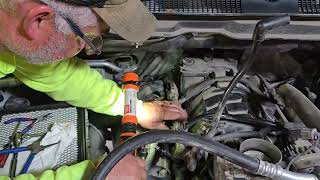
Used OEM Parts in Stock

New Aftermarket Parts Available



The information in this article is provided for general reference and educational purposes only. Vehicle specifications, procedures, and part compatibility can vary by production date, trim level, and region. Always consult your vehicle's factory service manual and verify part numbers before purchasing or performing repairs. Safety-critical components such as airbags, seat belts, and braking systems should be installed by a qualified professional.
- Ram 1500:
- 🎬 Helpful Videos
- 🛍️ Shop This Part
- What's Unique About the 2019-2021 Ram 1500
- Diagnostic Flowchart
- Symptoms You May Notice
- Most Likely Causes
- Rare But Worth Checking
- Diagnosis Steps
- Parts You'll Likely Need
- Related Codes That Often Appear With This One
- Technical Service Bulletins (TSBs) & Recalls
- Platform-Specific Known Issues
- Mechanic-Grade Diagnostic Values
- Scan Tool Commands That Help
- Wiring & Ground Locations
- Real Owner Repair Stories
- When the Usual Fixes Don't Work
- Model Year Variations Within This Range
- 🎟️ Get 5% Off