

P0175 on 2006-2008 Lexus RX400h: System Too Rich Bank 2 Causes and Fixes
P0175 on a 2006-2008 RX400h usually means the engine is getting too much fuel on Bank 2. The most common causes are a faulty Bank 2 Air/Fuel ratio sensor (the upstream O2 sensor) or a dirty Mass Airflow (MAF) sensor. Cleaning the MAF is an easy first step, but replacing the A/F sensor is the most frequent fix. This code points to an issue on the cylinder bank closer to the radiator.
- P0175 means your engine is running rich (too much fuel) on Bank 2, the cylinder bank near the radiator.
- The most likely cause is a failing Air/Fuel Ratio sensor (Bank 2, Sensor 1) or a dirty Mass Airflow (MAF) sensor.
- Start your diagnosis by cleaning the MAF sensor—it's cheap, easy, and a common fix.
- Do not ignore this code. Driving for too long with a rich condition can ruin your catalytic converter, leading to a much more expensive repair.
What's Unique About the 2006-2008 Lexus RX400h
On this specific Lexus model, the P0175 code is very commonly traced back to a failing upstream oxygen sensor, which Toyota/Lexus calls an Air/Fuel (A/F) Ratio Sensor. These Denso-made sensors can become lazy or biased over time, sending incorrect information to the computer. Bank 2 is the front bank, closer to the radiator, making the A/F sensor (Sensor 1) relatively easy to access from the engine bay. Another frequent culprit is a dirty Mass Airflow (MAF) sensor, which is a simple component to clean as a first diagnostic step. While other issues can cause a rich condition, these two parts account for a majority of P0175 cases on the RX400h.
Symptoms You May Notice
- Check Engine Light is on
- Reduced fuel economy
- Rough idle or stalling
- Hesitation or lack of power during acceleration
- Strong smell of gasoline from the exhaust
- Black smoke from the tailpipe in severe cases
- Replacing the downstream (Sensor 2) oxygen sensor. The P0175 code is set based on readings from the upstream (Sensor 1) Air/Fuel ratio sensor, which measures the air-fuel mixture before the catalytic converter.
- Assuming a vacuum leak. Vacuum leaks typically introduce unmetered air, which leads to a lean condition (codes P0171, P0174), not a rich one. A ClubLexus forum member correctly pointed this out in a discussion about rich codes.
Most Likely Causes
- Faulty Bank 2 Air/Fuel Ratio Sensor (Sensor 1) 🔴 High Probability The upstream oxygen sensors (A/F sensors) on Toyota and Lexus vehicles of this era are a common failure item. They lose accuracy over time, sending incorrect data to the ECU. Denso is the original equipment manufacturer.
How to confirm: Use an OBD-II scanner to monitor the live data for the Bank 2, Sensor 1 voltage or current. A healthy sensor will fluctuate rapidly. A sensor that is stuck high (rich) or responds slowly is likely faulty.
Typical fix: Replace the Bank 2, Sensor 1 Air/Fuel Ratio sensor. Bank 2 is the bank closer to the radiator, making this sensor more accessible than Bank 1. An oxygen sensor socket is highly recommended for removal.
Est. part cost: $80-$180 - Dirty or Faulty Mass Airflow (MAF) Sensor 🟡 Medium Probability The MAF sensor wire can become contaminated with dirt, oil, and debris from the air filter over time, causing it to misread the amount of air entering the engine. Over-oiled aftermarket air filters are a common source of contamination.
How to confirm: Inspect the sensor element for contamination. A P0101 code may also be present. You can attempt to clean it with a dedicated MAF sensor cleaner spray as a first step. Several forum users report success with this method.
Typical fix: Clean the MAF sensor with a specialized cleaner. Do not touch the delicate wires. If cleaning doesn't resolve the issue or the code returns, the sensor may need to be replaced. Always use an OEM Denso part if replacing.
Est. part cost: $10 (cleaner) - $150 (new sensor) - Leaking Fuel Injector(s) ⚪ Low Probability An injector can get stuck partially open or have a degraded seal, causing it to leak excess fuel into one or more cylinders on Bank 2.
How to confirm: Perform a fuel pressure leak-down test. After turning the engine off, the fuel rail pressure should hold steady. If it drops, it could indicate a leaking injector. You can also pull the spark plugs on Bank 2 and check for one that is black and sooty, indicating a rich condition in that specific cylinder.
Typical fix: Replace the faulty fuel injector(s). It is often recommended to replace them as a set on the affected bank.
Est. part cost: $70-$200 per injector
Rare But Worth Checking
- High Fuel Pressure: If both P0172 (Bank 1 Rich) and P0175 (Bank 2 Rich) are present, the issue is more likely systemic. A faulty fuel pressure regulator can cause excessive pressure across the entire fuel rail, forcing too much fuel into all cylinders.
- Faulty Engine Coolant Temperature (ECT) Sensor: If the ECT sensor incorrectly tells the computer the engine is cold, the computer will command a richer fuel mixture, similar to a cold start. This can trigger a rich code.
Diagnosis Steps
- Use an OBD-II scanner to confirm the P0175 code and check for any other related codes (like P0172, P0101).
- Check long-term and short-term fuel trims with the scanner. High negative numbers (e.g., -15% or more) confirm the computer is actively trying to correct a rich condition.
- Inspect the air intake system between the MAF sensor and the throttle body for any blockages or a severely clogged air filter.
- Locate the Mass Airflow (MAF) sensor right after the air filter box. Unplug it, remove it, and carefully clean it using only dedicated MAF sensor cleaner. Do not touch the sensor wires. Allow it to dry completely before reinstalling.
- Clear the codes by disconnecting the battery for 20 minutes to reset the ECU's fuel trims, then test drive the vehicle for 50-100 miles to allow the ECU to relearn. If the code returns, proceed.
- Monitor the live data from the Bank 2, Sensor 1 (A/F sensor). If it's slow to respond or stuck at a high voltage (indicating rich), it is the primary suspect.
- If the A/F sensor and MAF sensor seem okay, test the fuel pressure to ensure it is within the manufacturer's specifications.
- As a final step, if other possibilities are exhausted, consider testing the Bank 2 fuel injectors for leaks by checking for fuel pressure drop after shutdown or inspecting spark plugs for fouling.
Parts You'll Likely Need
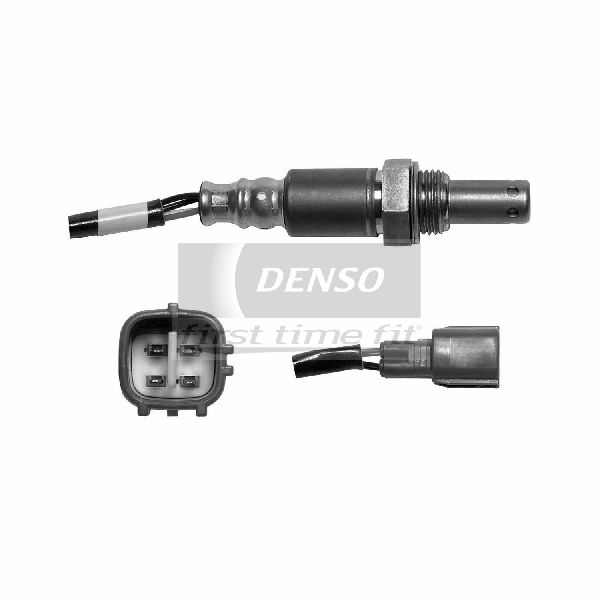
- Air/Fuel Ratio Sensor (Bank 2, Sensor 1)
(OEM #89467-48050)— This is the most common failure part for a P0175 code on this vehicle. It directly measures the air-fuel mixture that the code is based on. Bank 2 is the front sensor, closer to the radiator.
Trusted brands: Denso (OEM), NGK/NTK
OEM price range: $150-$220
Aftermarket price range: $80-$150 - Mass Airflow (MAF) Sensor
(OEM #22204-22010)— A dirty or faulty MAF sensor is the second most common cause, as it provides the primary engine load input for fuel calculations. Cleaning is often sufficient, but replacement may be needed.
Trusted brands: Denso (OEM)
OEM price range: $120-$180
Aftermarket price range: $60-$110 - MAF Sensor Cleaner — This is a low-cost first step to rule out contamination of the MAF sensor before replacing parts.
Trusted brands: CRC, WD-40 Specialist
Aftermarket price range: $10-$15
Related Codes That Often Appear With This One
- P0172 — This is the 'System Too Rich' code for Bank 1. If both P0172 and P0175 are present, it points to a problem affecting the entire engine, such as the MAF sensor or a fuel pressure issue, rather than a component on a single bank.
- P0101 — This code indicates a problem with the Mass Airflow (MAF) sensor's performance or range. Its presence strongly suggests the MAF sensor is the root cause of the rich condition, as seen in owner forum discussions.
- P0430 — This code means 'Catalyst System Efficiency Below Threshold (Bank 2)'. A long-term rich condition can overwhelm and eventually damage the catalytic converter, causing this code to appear alongside P0175.
Technical Service Bulletins (TSBs) & Recalls
- L-SB-0016-16: While not directly for P0175, this TSB addresses failures of the brake actuator assembly, which causes multiple warning lights (ABS, VSC, etc.) to illuminate. It's a critical, common issue on this platform that owners should be aware of, as warning light clusters can be confusing.
- L-SB-0027-15: Addresses an issue on 2007 models where the oxygen sensor readiness monitor may not complete for emissions testing, requiring an ECU update. This is relevant for owners failing inspection even without a specific sensor fault code.
Platform-Specific Known Issues
- A/F Sensor Accessibility: The P0175 code refers to Bank 2, which is the cylinder bank closer to the radiator on the 3MZ-FE engine. This makes the Bank 2 Air/Fuel sensor (Sensor 1) significantly easier to access and replace than the Bank 1 sensor, which is located on the firewall side of the engine.
Mechanic-Grade Diagnostic Values
- Fuel Pressure at Idle — expected: 304 - 343 kPa (44 - 50 psi). Failure: Pressure significantly above this range indicates a faulty fuel pressure regulator. Pressure below this range could be a weak pump or clogged filter.
- Air/Fuel Ratio Sensor Heater Resistance — expected: 0.8 - 1.4 ohms at 68°F (20°C). Failure: A resistance reading outside this range indicates a failure of the sensor's internal heater element, requiring sensor replacement.
- Long Term Fuel Trim (Bank 2) — expected: Within +/- 10% from zero at idle.. Failure: A persistent, large negative value (e.g., -15% to -35%) is a definitive sign that the ECM is compensating for a rich condition on Bank 2.
- Lexus/Toyota Injector Resistance — expected: 13.4 - 14.2 ohms at 68°F (20°C). Failure: A reading significantly outside this range can indicate a faulty injector coil.
Hidden / Shadow Codes Worth Checking
- P1150: A/F Sensor Circuit Range/Performance Malfunction (Bank 2 Sensor 1). This is a manufacturer-specific code that points directly to a performance issue with the sensor responsible for setting the P0175 code. (see via Professional scan tools or Toyota's Techstream software. Some consumer-grade scanners may also display P1xxx codes.)
- P1153: A/F Sensor Circuit Response Malfunction (Bank 2 Sensor 1). This code indicates the sensor's signal is not changing quickly enough, confirming a 'lazy' or failing sensor. (see via Professional scan tools or Toyota's Techstream software.)
- P1155: A/F Sensor Heater Circuit Malfunction (Bank 2 Sensor 1). If this code is present with P0175, the A/F sensor has an internal electrical fault and must be replaced. (see via Professional scan tools or Toyota's Techstream software.)
Scan Tool Commands That Help
- Toyota Techstream: Active Test: Control the Fuel Pump / Speed — This command allows a technician to manually turn on the fuel pump without the engine running. It is essential for verifying the fuel pump is operational and for performing an accurate fuel pressure test at the rail.
- Toyota Techstream: Data List -> Fuel Trim — Monitoring the Short Term (SFT) and Long Term (LFT) fuel trims for Bank 2 is the primary way to confirm the rich condition. A large negative number confirms the ECM is subtracting fuel to compensate for an overly rich mixture detected by the A/F sensor.
Wiring & Ground Locations
- Main Engine Ground — The primary ground path runs from the negative terminal of the 12V auxiliary battery to the vehicle chassis and also to the engine block itself.. A corroded or loose ground connection at the engine block or chassis can create a floating ground, causing incorrect and erratic voltage readings from sensors like the A/F sensor and MAF sensor, potentially leading to false rich codes.
- Bank 2 A/F Sensor Connector — The electrical connector for the Bank 2 (front) A/F sensor is located in the engine bay, clipped to a bracket on the engine or firewall, making it accessible from above.. This connector is the primary point for testing the sensor's heater resistance and checking for voltage signals to and from the ECM. Verifying a clean, secure connection here is a key step before condemning the sensor or wiring harness.
"I Checked Everything" — The Actual Cause
- A common diagnostic procedure for fuel mixture issues is a smoke test of the intake system to find vacuum leaks. However, this test will not identify a faulty EVAP (Evaporative Emission Control) purge valve that is stuck open. A stuck-open purge valve allows un-metered fuel vapor from the charcoal canister to be drawn into the intake manifold, creating a rich condition that a smoke test would miss entirely. If primary causes like the A/F and MAF sensors check out, the EVAP purge valve is a likely culprit.
When the Usual Fixes Don't Work
- A common misdiagnosis for rich codes involves blaming any visible crack or tear in the air intake system. However, it is critical to know where the tear is relative to the MAF sensor. A tear in the intake boot *after* the MAF sensor will allow un-metered air to enter the engine, which the ECM does not see. This causes the actual air-fuel mixture to be lean, triggering lean codes (P0171/P0174), not rich codes. A rich code (P0175) suggests the MAF is *over-reporting* airflow or an excess of fuel is being added elsewhere (e.g., leaking injector, bad A/F sensor).
OEM Part Supersession History
89467-08010→89467-48050— Standard part revision and consolidation by the manufacturer for the Bank 2 Air/Fuel Ratio Sensor.
Heads up: The parts are interchangeable; 89467-48050 is the correct current replacement.22204-0D030→22204-22010— Part revision for the Mass Airflow (MAF) Sensor.
Heads up: The parts are interchangeable; 22204-22010 is the correct current replacement.
Model Year Variations Within This Range
- 2006-2008: The core powertrain (3MZ-FE engine and hybrid system) and its related fuel and emissions components are consistent across the 2006-2008 model years. The causes and fixes for P0175 are not known to vary by year within this range. Minor differences like the introduction of TPMS in 2007 do not affect this diagnosis.
Diagnostic Flowchart
Other Known Issues on This Vehicle
Issues unrelated to this code that are worth knowing about as an owner of this generation:
- Hybrid Inverter Failure 🔴 High — Common enough to trigger multiple safety recalls (NHTSA 11V342000, 13V396000). Affects 2006-2008 models. (Ref: Safety Recalls Issued)
- Brake Actuator Assembly Failure 🔴 High — A well-documented problem causing ABS, VSC, and brake warning lights. Can lead to a soft pedal or loss of braking assist. (Ref: TSB L-SB-0016-16; Warranty Enhancement Program ZLG)
- Engine Oil Sludge Buildup 🟠 Medium — A known issue with the 3MZ-FE engine, often caused by extended oil change intervals or lower quality oil. Can lead to oil consumption and, in severe cases, engine failure.
- Valve Cover Gasket Oil Leaks 🟡 Low — Very common on high-mileage 3MZ-FE engines. The rear valve cover is particularly prone to leaking onto the exhaust manifold, causing a burning oil smell.
- Water Leak into Hybrid Battery Compartment 🔴 High — A documented issue where water can intrude into the area under the rear seat, potentially damaging the hybrid battery and its ECU.
Used vs. New Parts: Buying Guide for This Vehicle
When a used part is the smart pick: For this repair, a used part from a reputable salvage yard is a reasonable choice for mechanical components like fuel injectors or an EVAP purge valve, provided the donor vehicle is low-mileage and has no history of engine issues.
Donor-vehicle mileage cap: roughly under 80000 miles for the part to have meaningful remaining life.
What to inspect on the donor part:
- Check for a clean donor vehicle without signs of front-end collision or engine fire.
- For fuel injectors, try to get the entire fuel rail with injectors intact to avoid damaging seals during removal.
- Ask for the VIN of the donor car to verify its year and mileage.
- Inspect electrical connectors for corrosion or damage.
OEM-only on this vehicle (don't cheap out):
- Air/Fuel Ratio Sensor
- Mass Airflow (MAF) Sensor
Aftermarket brands forum-validated for this vehicle:
- Denso (OEM for sensors)
- NGK/NTK (A reputable alternative for A/F sensors)
Brands owners have reported issues with on this vehicle:
- Unnamed, no-brand 'white box' sensors sold on online marketplaces are highly likely to fail prematurely or be out of specification from the start, causing the code to return.
Real Owner Stories
Aggregated from forums and TSBs cited above. Mileages and costs reflect what owners reported in those sources.
2007 Lexus RX400h 3.3L V6
Symptoms: Check Engine Light is on with codes P0430, P0172, P0175, and P0101.
What fixed it: The owner was advised that the Mass Airflow (MAF) sensor was the most likely culprit and that cleaning it is the correct first step.
Source hint: ClubLexus.com: Thread 'RX400H - P0172 & P0175 - System Too Rich' (2021)
Related OBD-II Codes
Frequently Asked Questions
I have a 2007 RX400h and my oxygen sensor readiness monitor won't complete for emissions. Is there a fix?
Which Air/Fuel sensor should I check first for a P0175 code on my RX400h?
Can I just clean the MAF sensor on my Lexus RX400h to fix the P0175 code?
My RX400h has multiple warning lights including ABS and VSC along with the check engine light. Is this related to P0175?
Are there any specific part brands I should use for the A/F or MAF sensors?
Could an aftermarket air filter be causing my P0175 rich condition?
Helpful Videos

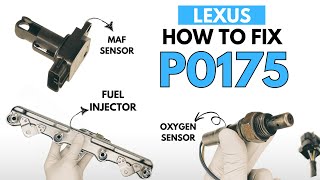
![How to Fix LEXUS P0175 Engine Code in 3 Minutes [2 DIY Methods / Only $8.99]](https://img.youtube.com/vi/Y7wbr5i3N-4/mqdefault.jpg)
Used OEM Parts in Stock

New Aftermarket Parts Available



The information in this article is provided for general reference and educational purposes only. Vehicle specifications, procedures, and part compatibility can vary by production date, trim level, and region. Always consult your vehicle's factory service manual and verify part numbers before purchasing or performing repairs. Safety-critical components such as airbags, seat belts, and braking systems should be installed by a qualified professional.
- Lexus RX400h:
- 🎬 Helpful Videos
- 🛍️ Shop This Part
- What's Unique About the 2006-2008 Lexus RX400h
- Symptoms You May Notice
- Most Likely Causes
- Rare But Worth Checking
- Diagnosis Steps
- Parts You'll Likely Need
- Related Codes That Often Appear With This One
- Technical Service Bulletins (TSBs) & Recalls
- Platform-Specific Known Issues
- Mechanic-Grade Diagnostic Values
- Hidden / Shadow Codes Worth Checking
- Scan Tool Commands That Help
- Wiring & Ground Locations
- "I Checked Everything" — The Actual Cause
- When the Usual Fixes Don't Work
- OEM Part Supersession History
- Model Year Variations Within This Range
- Diagnostic Flowchart
- Other Known Issues on This Vehicle
- Used vs. New Parts: Buying Guide for This Vehicle
- Real Owner Stories
- 2007 Lexus RX400h 3.3L V6
- Related OBD-II Codes
- Frequently Asked Questions
- 🎟️ Get 5% Off