

P0175 on 2011-2014 Dodge Challenger 6.4L HEMI: System Too Rich Bank 2 Causes and Fixes
P0175 on your 6.4L Challenger means the passenger side of the engine (Bank 2) is getting too much fuel. The most common causes are a faulty upstream O2 sensor or a leaking fuel injector. Before replacing parts, check for any available PCM software updates from a dealer, as several Technical Service Bulletins (TSBs) exist for this issue.
- P0175 means the passenger side (Bank 2) of your 6.4L HEMI is running rich (too much fuel).
- Before buying parts, check with a Dodge dealer if your vehicle needs a PCM software update, as per TSB 18-037-14.
- The most likely parts to fail are the Bank 2 upstream O2 sensor or a leaking fuel injector on that bank.
- Use a scan tool to watch fuel trims and O2 sensor data; this is the most effective way to diagnose the problem without guessing.
- If you also have a P0300 misfire code and hear engine ticking, a more serious mechanical issue could be the root cause.
What's Unique About the 2011-2014 Dodge Challenger
The 6.4L HEMI uses a speed-density system, which relies on a Manifold Absolute Pressure (MAP) sensor instead of a Mass Airflow (MAF) sensor to measure engine load. This makes diagnosis slightly different from many other vehicles. An inaccurate MAP sensor can directly cause a rich condition. Additionally, several Technical Service Bulletins (TSBs) exist for reprogramming the PCM on these vehicles, which can sometimes resolve fuel trim issues without replacing any parts. TSB 18-037-14 Rev. B and TSB 18-039-15 specifically address powertrain improvements for the 2014 model year. While sensor and injector failures are common, it's also worth noting that in some cases, rich codes on HEMI engines can be an early symptom of mechanical issues like camshaft and lifter wear, sometimes known as "Hemi tick".
Symptoms You May Notice
- Check Engine Light is on
- Poor fuel economy
- A strong smell of gasoline from the exhaust
- Rough or unstable idle
- Black smoke coming from the exhaust pipe
- Hesitation or lack of power during acceleration
- Engine misfires
- Replacing the downstream (post-catalyst) O2 sensor. The upstream sensor (Sensor 1) is the primary sensor used for fuel control; the downstream sensor's main job is to monitor catalyst efficiency.
- Replacing parts without checking for PCM software updates first. A simple reflash can solve the problem in some cases.
Most Likely Causes
- Faulty Upstream Oxygen (O2) Sensor 🔴 High Probability O2 sensors are wear-and-tear items that degrade over time. A lazy or biased sensor can incorrectly tell the PCM the engine is lean, causing it to add too much fuel. Oil contamination from a leak can also travel down the wiring and foul the sensor.
How to confirm: Use a scan tool to monitor the live data for the Bank 2, Sensor 1 O2 sensor. Its voltage should fluctuate rapidly between approximately 0.1V and 0.9V. If it's stuck high (e.g., >0.8V) or has a slow, lazy response compared to the Bank 1 sensor, it's likely faulty.
Typical fix: Replace the Bank 2, Sensor 1 (upstream, right side) O2 sensor. Bank 2 is the passenger side.
Est. part cost: $40-$120 - Leaking Fuel Injector(s) 🟡 Medium Probability Injectors can become stuck partially open due to carbon buildup or internal failure, or develop a poor seal, allowing excess fuel to drip into one or more cylinders on Bank 2.
How to confirm: Perform a fuel pressure leak-down test. After priming the system, the pressure should hold steady. If it drops quickly, an injector may be leaking. You can also remove the fuel rail with injectors attached, place paper towels under them, and prime the system to see which one drips. Another method is to pull the spark plugs on Bank 2 and look for one that is black and sooty or smells strongly of fuel.
Typical fix: Replace the faulty fuel injector(s) on Bank 2. It's often recommended to replace them as a set on that bank for even performance.
Est. part cost: $70-$200 per injector - Outdated PCM Software 🟡 Medium Probability Dodge released several software updates for the PCM to improve diagnostics and system performance. TSB 18-037-14 Rev. B and TSB 18-039-15 address powertrain control improvements for 2014 models. Customer Satisfaction Notification V51 also addresses a software issue where fault codes could not be erased, which could be relevant during diagnosis.
How to confirm: A Dodge dealership or a well-equipped independent shop with a wiTECH scan tool can check your vehicle's current software version against the latest available updates for your VIN.
Typical fix: Reprogram the Powertrain Control Module (PCM) with the latest manufacturer software. This requires a specific procedure, including maintaining battery voltage between 13.2 and 13.5 volts.
Est. part cost: $0-$200 (labor cost for flashing) - Faulty Manifold Absolute Pressure (MAP) Sensor ⚪ Low Probability The MAP sensor provides critical engine load information to the PCM. If it incorrectly reports high load (low vacuum), the PCM will command more fuel, leading to a rich condition across both banks, but it can sometimes manifest on a single bank first.
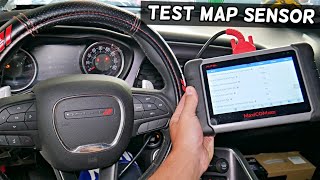
How to confirm: With a scan tool, check the MAP sensor reading at idle (should be a low frequency or low voltage) and compare it to a known good vehicle or specification. The reading should change instantly in response to throttle changes. At idle, voltage should be 1.0-2.0V. 🎬 Watch: How to test the MAP sensor on a Dodge Challenger.
Typical fix: Replace the MAP sensor.
Est. part cost: $30-$80 - High Fuel Pressure ⚪ Low Probability
How to confirm: Connect a fuel pressure gauge to the fuel rail's service port. Check the pressure at idle and compare it to the manufacturer's specification, which is approximately 59 psi +/- 5 psi (407 kPa +/- 34 kPa). If it's too high, the fuel pressure regulator, which is part of the fuel pump module, may be at fault.
Typical fix: Replace the fuel pump module assembly, which typically includes the regulator.
Est. part cost: $250-$500
Rare But Worth Checking
- EVAP Purge Valve Stuck Open: If the evaporative emissions purge valve sticks open, it can allow un-metered fuel vapors from the charcoal canister to be drawn into the engine at idle, creating a rich mixture. This usually affects both banks (P0172 and P0175) but can sometimes be isolated.
- Internal Engine Mechanical Fault: In some cases on HEMI engines, this code can appear with misfire codes (like P0300) and be a symptom of a more serious issue like a worn camshaft lobe and failed lifter, a known problem sometimes called 'HEMI tick'. This should be investigated if common causes are ruled out and other symptoms like a rhythmic ticking noise from the engine are present.
Diagnosis Steps
- Check for other DTCs. If codes like P0172, P0300, or any sensor circuit codes are present, address them as part of the diagnosis.
- Check for PCM Software Updates. Contact a dealer to see if TSB 18-037-14 Rev. B, TSB 18-039-15, or Customer Satisfaction Notification V51 applies to your VIN. This is a common and often overlooked fix.
- Analyze Live Data. Using a scan tool, monitor Short-Term (STFT) and Long-Term Fuel Trim (LTFT) for Bank 2 at idle and while driving. For P0175, you will see highly negative numbers (e.g., -15% or lower) as the PCM tries to remove fuel.
- Inspect the Bank 2 Upstream O2 Sensor. Watch its voltage on the scan tool. If it's stuck high (above 0.8V) or responds much slower than the Bank 1 sensor, it is a primary suspect.
- Test Fuel Pressure. Connect a fuel pressure gauge and verify the pressure is within OEM specs (approx. 59 psi). High pressure points to a regulator or fuel pump issue.
- Inspect for Leaking Fuel Injectors. Perform a fuel pressure leak-down test. If pressure drops after the engine is off, suspect a leak. Pulling the spark plugs on Bank 2 to check for a wet or sooty plug can help isolate the cylinder.
- Inspect the Air Intake System. Check for a severely clogged engine air filter, which can restrict airflow and cause a rich condition.
- Test the MAP Sensor. Ensure its readings are logical and change with engine load. Compare readings to Bank 1 if possible.
- Check for Mechanical Issues. If all else fails, especially if misfire codes and ticking noises are present, perform a compression test and inspect the valve train for issues like worn camshaft lobes.
Real Owner Stories
Dodge owners have reported various drivability issues associated with this code. For instance, NHTSA ODI #11415608 describes a situation where the engine bucks and skips, accompanied by P0175 and several misfire codes including P0302 and P0304. In another case involving the same manufacturer, NHTSA ODI #11534233 notes that a vehicle began shaking while on a trip, with P0175 and P0172 remaining active for nearly two months despite the replacement of spark plugs, O2 sensors, and fuel injectors.
Parts You'll Likely Need
- Upstream Oxygen Sensor (Bank 2, Sensor 1)
(OEM #5149171AB)— This is the primary sensor for fuel control on the passenger side bank and is a common failure point causing rich conditions.
Trusted brands: Mopar, NTK/NGK, Bosch, Denso
OEM price range: $80-$150
Aftermarket price range: $40-$120 - Fuel Injector
(OEM #05038337AC (supercedes 5038337AA, 5038337AB))— A leaking fuel injector is a frequent cause of a rich condition isolated to a single bank.
Trusted brands: Mopar, Bosch, Standard Motor Products (SMP)
OEM price range: $150-$250
Aftermarket price range: $70-$200
Related Codes That Often Appear With This One
- P0172 — System Too Rich (Bank 1). If both P0172 and P0175 are present, it indicates a problem affecting both engine banks, such as a faulty MAP sensor, high fuel pressure, or a clogged air filter.
- P0300 — Random/Multiple Cylinder Misfire. A severe rich condition can foul spark plugs and cause misfires. Conversely, a significant mechanical issue causing misfires can also lead to unburnt fuel in the exhaust, triggering a rich code.
- P0302, P0304, P0306, P0308 — Cylinder misfire codes for Bank 2 (passenger side). These can help pinpoint a specific leaking injector if only one cylinder misfire code is present along with P0175.
Technical Service Bulletins (TSBs) & Recalls
- TSB 18-037-14 Rev. B: 'Flash: 6.4L Powertrain Diagnostic And System Improvements For MIL Illumination' - Specifically for 2014 Challenger/Charger with 6.4L and manual transmission.
- TSB 18-039-15: 'Flash: 6.4L Powertrain Diagnostic And System Enhancements' - For 2014 Challenger/Charger/300 with 6.4L, addresses various drivability and cluster issues.
- Customer Satisfaction Notification V51: 'Reprogram Powertrain Control Module' - Addresses an issue where Permanent Fault Codes (PFC) could not be erased after a repair, which could complicate diagnosis. Affects a wide range of vehicles including 2011-2014 models with the 6.4L engine.
Platform-Specific Known Issues
- A known issue
Mechanic-Grade Diagnostic Values
- Fuel Injector Coil Resistance — expected: ~12-13 Ohms. Failure: A reading of 0 Ohms (short), infinite Ohms (open), or a value significantly different from other injectors.
- Upstream O2 Sensor Heater Resistance — expected: 5-10 Ohms (when cold). Failure: An open circuit (infinite resistance) or a reading far outside the expected range.
- MAP Sensor Voltage (Key On, Engine Off) — expected: ~4.5V - 5.0V. Failure: A significantly lower voltage suggests a faulty sensor or wiring issue.
- MAP Sensor Voltage (Engine at Idle) — expected: 1.0V - 2.0V. Failure: Voltage remains high (near KOEO reading) or does not respond to throttle changes.
- Long Term Fuel Trim (LTFT) Trigger — expected: Within +/- 10%. Failure: A P0175 code may be set when negative fuel trim exceeds -15% to -30% as the PCM tries to correct the rich condition.
Hidden / Shadow Codes Worth Checking
- Mode $06, Monitor ID for O2 Sensors: Mode $06 contains the results of the PCM's most recent self-tests for non-continuously monitored components. It can show if an O2 sensor is close to failing its performance thresholds, even if it hasn't failed badly enough to set a specific sensor fault code. This allows a technician to spot a borderline sensor that may be causing the fuel trim issue. (see via Requires a scan tool capable of displaying Mode $06 data. The specific Monitor ID (MID) and Component ID (CID) must be referenced for the vehicle.)
Scan Tool Commands That Help
- wiTECH (or equivalent): O2 Sensor Heater Test — This is a bidirectional command that manually activates the heater circuit for a specific O2 sensor. It helps confirm if the heater element is working, which is crucial for sensor accuracy, especially during cold starts and warm-up.
- wiTECH (or equivalent): Fuel Trim Reset — After a repair is completed (like fixing a leaking injector or replacing a MAP sensor), the long-term fuel trim adaptations should be reset. This forces the PCM to relearn the fuel strategy immediately with the new/repaired components, rather than slowly adjusting from the old, incorrect values.
- wiTECH (or equivalent): Injector Kill / Balance Test — This function allows a technician to disable one injector at a time while monitoring engine RPM or O2 sensor data. When a leaking injector is disabled, the rich condition on that bank should immediately correct itself, confirming the faulty injector.
Wiring & Ground Locations
- G26a (6.4L) — Located at the left rear of the engine.. This is a primary engine block ground. The PCM and its sensors, including the O2 sensors, rely on clean and solid grounds to provide accurate voltage signals. A poor connection here can cause floating voltages and erroneous sensor readings, potentially leading to a false rich code.
- PCM Location — Located at the right rear of the engine compartment.. Knowing the PCM's location is critical for performing continuity and voltage drop tests on the O2 sensor, MAP sensor, and fuel injector circuits. Technicians need to test wiring from the component connector back to the PCM connector to rule out harness damage.
- G100 / G101 — G100 is at the left front of the engine compartment; G101 is at the right front.. These are main engine compartment grounds. While G26a is a more direct engine ground, corrosion or looseness at these points can affect the overall electrical stability of the powertrain control system.
OEM Part Supersession History
5038337AA, 5038337AB→05038337AC— Standard part revision and improvement by the manufacturer.5149171AA, 68066160AA→5149171AB— Standard part revision and consolidation for multiple applications.
Heads up: This part number is used for both upstream and downstream positions on many Chrysler/Dodge/Jeep V8 applications. Ensure you are ordering for the correct position (Bank 2, Sensor 1).
Model Year Variations Within This Range
- 2014: Specific PCM software updates (TSB 18-037-14 Rev. B and TSB 18-039-15) were released to address powertrain control logic, which can resolve false rich codes on this model year without part replacement.
Diagnostic Flowchart
Related OBD-II Codes
Frequently Asked Questions
Does TSB 18-037-14 Rev. B apply to my 2012 Dodge Challenger 6.4L?
I replaced the O2 sensor and fixed the rich condition, but the P0175 code won't clear. What is wrong?
Which oxygen sensor needs to be replaced for P0175 on the 392 HEMI?
What should the fuel pressure be on my 6.4L Challenger when diagnosing this code?
How can I tell if a leaking fuel injector is causing the rich condition on Bank 2?
Does this P0175 issue affect other SRT8 models?
Helpful Videos
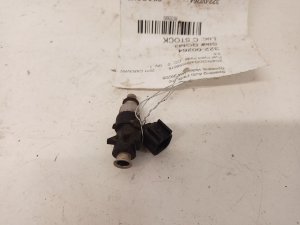
Used OEM Parts in Stock
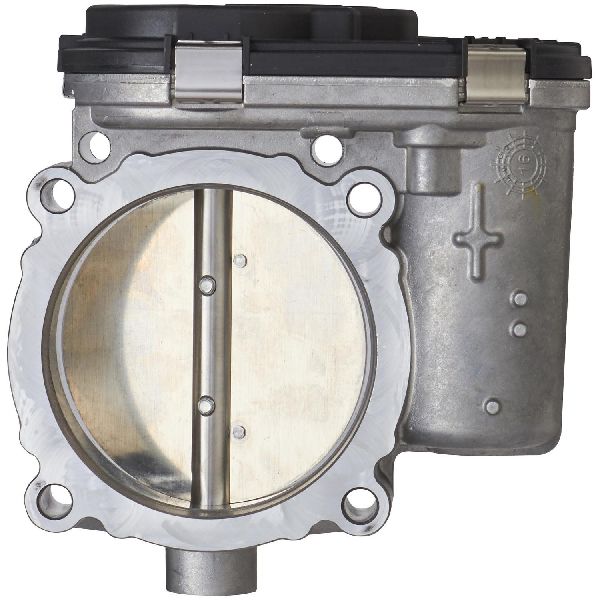
New Aftermarket Parts Available



The information in this article is provided for general reference and educational purposes only. Vehicle specifications, procedures, and part compatibility can vary by production date, trim level, and region. Always consult your vehicle's factory service manual and verify part numbers before purchasing or performing repairs. Safety-critical components such as airbags, seat belts, and braking systems should be installed by a qualified professional.
- Dodge Challenger:
- 🎬 Helpful Videos
- 🛍️ Shop This Part
- What's Unique About the 2011-2014 Dodge Challenger
- Symptoms You May Notice
- Most Likely Causes
- Rare But Worth Checking
- Diagnosis Steps
- Real Owner Stories
- Parts You'll Likely Need
- Related Codes That Often Appear With This One
- Technical Service Bulletins (TSBs) & Recalls
- Platform-Specific Known Issues
- Mechanic-Grade Diagnostic Values
- Hidden / Shadow Codes Worth Checking
- Scan Tool Commands That Help
- Wiring & Ground Locations
- OEM Part Supersession History
- Model Year Variations Within This Range
- Diagnostic Flowchart
- Related OBD-II Codes
- Frequently Asked Questions
- 🎟️ Get 5% Off