

P0174 on 2011-2019 Ford Explorer 3.5L: Causes and Fixes for Lean Bank 2
On a 2011-2019 Ford Explorer with the 3.5L V6, code P0174 is most often caused by a vacuum leak from a failed intake manifold gasket, a cracked PCV hose, or a broken fitting on the air intake tube. Cleaning the Mass Airflow (MAF) sensor is another common, low-cost fix to try first. A failing canister purge valve is also a known cause. A shop repair for an intake gasket can cost between $400 and $800.
- P0174 means Bank 2 (radiator side) is running lean (too much air).
- The most common causes on the 3.5L Explorer are vacuum leaks (especially intake gaskets and PCV hoses) and a dirty MAF sensor.
- Do not replace the O2 sensor first; it is almost always just reporting the problem.
- If you also have a P0171 code, the problem is likely something that affects both banks, like the MAF sensor or a major vacuum leak.
- A smoke test is the most effective way to pinpoint hard-to-find vacuum leaks.
What's Unique About the 2011-2019 Ford Explorer

The 3.5L Cyclone V6 engine family is known for vacuum leaks, particularly from the intake manifold gaskets, which can become brittle over time. While many vehicles can get this code from a dirty MAF sensor, Explorers and their platform-mates are also prone to issues with the PCV system, including cracked hoses or broken plastic fittings on the main air intake tube that allow unmetered air to enter the engine, directly causing this lean code. Another common failure point on these engines is the canister purge valve, which can stick open and create a vacuum leak. Owner complaints on similar Ford engines frequently point to failed intake gaskets or vacuum hoses as the root cause.
Symptoms You May Notice
- Check Engine Light is on
- Rough idle
- Hesitation or stumbling during acceleration
- Reduced engine power
- Poor fuel economy
- A hissing sound from the engine bay at idle, indicating a vacuum leak
- Hard or difficult braking if the brake booster vacuum hose is the source of the leak.
- Replacing the oxygen (O2) sensor. The O2 sensor is usually doing its job correctly by reporting the lean condition. The P0174 code indicates the problem is with the air or fuel delivery, not typically the sensor itself, unless it is accompanied by other O2 sensor-specific codes.
Most Likely Causes

- Vacuum Leak (Intake Manifold Gaskets, PCV Hoses, Air Intake Tube) 🔴 High Probability The intake manifold gaskets and various rubber/plastic vacuum hoses can become brittle and crack with age and heat cycles. A very common failure is the small plastic fitting for a PCV hose on the main air intake tube breaking off, often during air filter service. The brake booster hose is another potential leak source.
How to confirm: Listen for a hissing noise at idle. With the engine running, carefully spray short bursts of brake cleaner or starter fluid around the intake manifold gaskets and vacuum lines. If the engine RPM changes, you've found the leak. A professional smoke test is the most definitive way to find a leak. Visually inspect the air intake tube between the MAF sensor and throttle body for cracks or broken fittings.
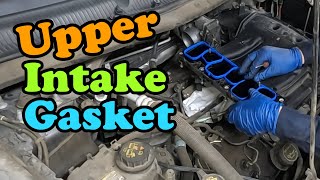
Typical fix: Replace the failed gasket or hose. The intake manifold gaskets require removing the upper intake manifold for access. If the air intake tube fitting is broken, the entire tube assembly must be replaced.
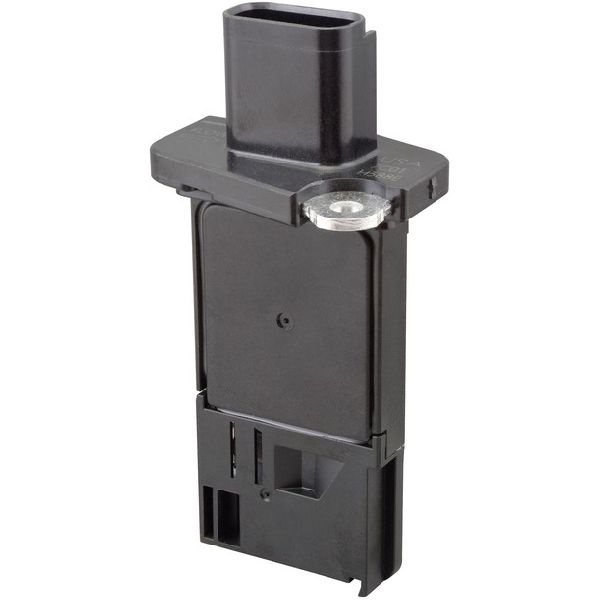
Est. part cost: $20-$100 for hoses, $50-$150 for intake gasket set, $80-$150 for air intake tube assembly. - Dirty or Faulty Mass Airflow (MAF) Sensor 🟡 Medium Probability Oil and dirt from the air filter or PCV system can contaminate the delicate sensor wire over time, causing it to under-report the amount of air entering the engine. This leads the PCM to command less fuel than necessary, creating a lean condition.
How to confirm: Remove the sensor from the air intake tube (usually two screws) and inspect the internal wires. If they appear dirty, cleaning is a good first step. A scan tool showing long-term fuel trims that are high at idle but improve (move closer to zero) at higher RPM can indicate a vacuum leak, whereas a faulty MAF sensor often causes high fuel trims across all RPM ranges.
Typical fix: Clean the sensor using only dedicated MAF sensor cleaner spray. Do not touch the wires. If cleaning doesn't resolve the issue, replace the sensor.
Est. part cost: $10 for cleaner, $70-$150 for a new sensor. - Faulty Canister Purge Valve 🟡 Medium Probability The canister purge valve (part of the EVAP system) is a common failure item on many Ford vehicles. It can become stuck open, creating a constant vacuum leak that allows fuel vapors from the charcoal canister to be drawn into the intake manifold at the wrong time.
How to confirm: With the engine running, disconnect the electrical connector and the vacuum line from the purge valve. Place your finger over the port on the valve; if you feel any suction, the valve is stuck open and needs to be replaced.
Typical fix: Replace the canister purge valve. It is typically an easy-to-access part located on or near the intake manifold.
Est. part cost: $30-$70 - Weak Fuel Pump or Clogged Fuel Filter ⚪ Low Probability While not specific to this platform, fuel pump performance can degrade over time, reducing fuel pressure and volume. The 2011-2019 Explorer has a non-serviceable fuel filter integrated into the in-tank fuel pump module, meaning the entire assembly must be replaced if the filter is clogged or the pump fails.
How to confirm: Connect a fuel pressure gauge to the fuel rail's test port (if equipped) and verify the pressure is within the manufacturer's specification at idle and under load.
Typical fix: Replace the in-tank fuel pump module.
Est. part cost: $250-$500
Rare But Worth Checking
- Exhaust Leak: A crack or leak in the exhaust manifold or pipe before the upstream O2 sensor can allow outside air to be pulled into the exhaust stream. This fools the O2 sensor into thinking the engine is running lean, causing it to incorrectly add fuel and potentially trigger the code.
- Clogged Fuel Injectors: If one or more fuel injectors on Bank 2 are partially clogged, they won't deliver the commanded amount of fuel, leading to a lean condition on that bank. This is less common than vacuum leaks or MAF issues.
- Faulty PCV Valve (Integrated in Valve Cover): On some 3.5L/3.7L Cyclone engines, the PCV valve itself is integrated into the valve cover and is not separately serviceable. If the internal diaphragm ruptures, it creates a significant vacuum leak. The entire valve cover must be replaced to fix the issue.
Diagnosis Steps

- Read the codes: Use an OBD-II scanner to confirm P0174 and check for any other codes, especially P0171.
- Inspect for vacuum leaks: Visually inspect all vacuum hoses, the air intake tube (especially the PCV connection point), and the PCV system for obvious cracks, disconnections, or damage. Listen for hissing sounds with the engine running.
- Clean the MAF sensor: As a simple and low-cost first step, remove and clean the MAF sensor using a dedicated cleaner. Allow it to dry completely before reinstalling.
- Check fuel trims: Use a scan tool to monitor short-term and long-term fuel trims at idle and at 2,500 RPM. High positive numbers (e.g., +15% or more) confirm the lean condition. If trims are high at idle but normalize at higher RPM, a vacuum leak is the most likely cause.
- Test the Canister Purge Valve: With the engine running, disconnect the vacuum line from the purge valve and check for suction. There should be none at idle. If suction is present, the valve is faulty.
- Perform a smoke test: If a vacuum leak is suspected but not visible, introduce smoke into the intake system with the engine off. Smoke will escape from any leaks, making them easy to spot.
- Test fuel pressure: Connect a fuel pressure gauge to check if the fuel pump is delivering adequate pressure according to factory specs.
- Inspect O2 sensor operation: While less likely to be the cause, you can use a scan tool to graph the upstream O2 sensor voltage to ensure it is fluctuating properly and not stuck in a low-voltage (lean) state.
Parts You'll Likely Need

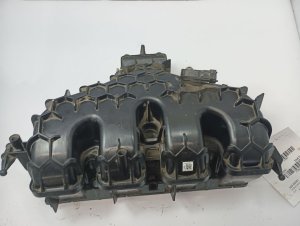
- Intake Manifold Gasket Set
(OEM #BR3Z-9E436-A (Upper to Lower))— These gaskets are a very common failure point on the 3.5L V6, causing vacuum leaks that trigger lean codes.
Trusted brands: Motorcraft, Fel-Pro, Mahle
OEM price range: $60-$90
Aftermarket price range: $30-$60 - Canister Purge Valve
(OEM #AU5Z-9C915-B)— A common failure item on many Fords that sticks open, causing a vacuum leak and lean codes.
Trusted brands: Motorcraft, Dorman, Standard Motor Products
OEM price range: $40-$60
Aftermarket price range: $25-$45 - Mass Airflow (MAF) Sensor
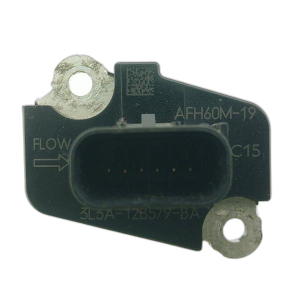
(OEM #7T4Z-12B579-A)— A dirty or failing MAF sensor is a frequent cause of lean codes on many Fords. Cleaning is often effective, but replacement is sometimes necessary.
Trusted brands: Motorcraft, Hitachi, Bosch
OEM price range: $120-$180
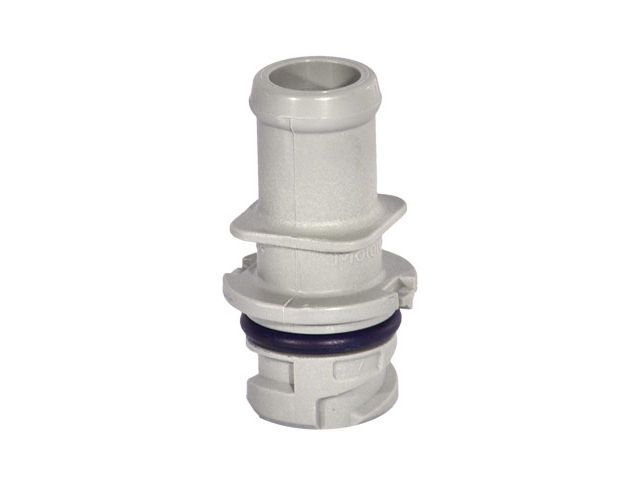
Aftermarket price range: $60-$120 - PCV Valve Hose Assembly — The various plastic and rubber hoses in the PCV system can crack or break, causing unmetered air to enter the intake.
Trusted brands: Motorcraft, Dorman
OEM price range: $40-$80
Aftermarket price range: $20-$50
Related Codes That Often Appear With This One
- P0171 — P0171 is the identical 'System Too Lean' code, but for Bank 1. If both P0171 and P0174 are present, it strongly suggests a problem that affects the entire engine, such as a faulty MAF sensor, a large vacuum leak at the intake plenum (like a purge valve or brake booster hose), or low fuel pressure.
Technical Service Bulletins (TSBs) & Recalls
- TSB 19-2091: While for the Ford Transit, it lists P0174 as a possible code resulting from water entry into the engine compartment, highlighting an environmental cause.
- TSB 21-2106: Also for the Transit, this TSB connects P0174 with EVAP system codes due to a kinked vent line, suggesting a rare but possible link to the EVAP system.
Platform-Specific Known Issues
- A known issue on Ford V6 engines is a vacuum leak from a broken vacuum hose between the intake manifold and the brake booster, which can trigger P0174.
- Failed upper and lower intake manifold gaskets are a well-documented problem leading to lean codes on the 3.5L Cyclone V6 engine family.
- A small plastic nipple on the air intake tube where a PCV hose connects is notoriously brittle and often breaks during routine maintenance like an air filter change, creating an immediate vacuum leak.
Mechanic-Grade Diagnostic Values
- Fuel Injector Resistance (Port Injected 3.5L) — expected: 11-18 Ohms. Failure: A reading significantly higher or lower than the expected range, such as 24 kOhms, indicates a failed injector.
- Long Term Fuel Trim (LTFT) at Idle — expected: Close to 0%, typically within +/- 10%. Failure: Sustained positive values of +15% or higher, often reaching the limit of +25% or +29%, confirm a lean condition that the PCM is trying to correct.
- Fuel Trim Behavior on RPM Increase — expected: For a vacuum leak, high positive LTFT at idle should decrease and move closer to 0% at 2,500 RPM. For a fuel delivery issue, LTFT will remain high or increase with RPM.. Failure: If fuel trims improve at higher RPM, it strongly suggests a vacuum leak. If they worsen, it points toward a fuel delivery problem like a weak pump or clogged filter.
Wiring & Ground Locations
- Engine Harness Chafe Points — The main engine wiring harness may chafe against the ECM/TCM bracket, the driver-side upper control arm, and the shock tower bolt.. While not a direct cause of P0174, harness chafing can cause shorts in various sensor circuits, leading to erratic behavior and potentially incorrect data being sent to the PCM, which could complicate diagnosis. Inspecting these areas is good practice if other electrical gremlins are present.
Real Owner Repair Stories
- Reddit user on r/FordExplorer (2018 Ford Explorer Sport 3.5L EcoBoost) — P0171 and P0174 codes appearing a few days after purchase. Long term fuel trims were at +29% on both banks.
❌ Tried (didn't work) Smoke, water, and propane tests for vacuum leaks (none found), Cleaning injectors, Replacing intake manifold seals, Checking MAP sensor, fuel rail pressure, and O2 sensor readings via scan tool (all appeared within spec)
✅ What actually fixed it Replacing all six fuel injectors and the fuel rail pressure sensor resolved the lean codes. - ScannerDanner Forum user (Ford Explorer EcoBoost 3.5L) — P0171 and P0174 codes.
❌ Tried (didn't work) Initial diagnostics for vacuum leaks and other common causes were inconclusive.
✅ What actually fixed it Replacing all six fuel injectors. The user noted the old injectors looked clogged and nasty, and fuel economy improved after the replacement.
"I Checked Everything" — The Actual Cause
- In a documented case on a 2018 Explorer Sport with P0171/P0174, extensive smoke, water, and propane tests revealed no vacuum leaks. The long-term fuel trims were stuck at +29%. The ultimate fix was replacing all six fuel injectors and the fuel rail pressure sensor, indicating that clogged injectors were causing the lean condition across both banks, not an unmetered air leak.
OEM Part Supersession History
AU5Z-9C915-B→AU5Z-9C915-E— Ford periodically updates parts to improve reliability or address failure patterns. The canister purge valve is a common failure item, and this part has been superseded multiple times (A, B, C, D, E).
Heads up: The latest version (AU5Z-9C915-E) is the recommended replacement for all previous versions for affected models. Using an older stock part is not advised.
Model Year Variations Within This Range
- 2011-2015: The standard engine was the 290-hp 3.5L naturally aspirated V6. A 2.0L EcoBoost four-cylinder was optional but only with FWD. The MyFord Touch infotainment system was common and often criticized.
- 2016-2019: A mid-cycle refresh occurred in 2016, featuring a redesigned front fascia and a new top-tier Platinum model. The 2.0L EcoBoost was replaced by a more powerful 2.3L EcoBoost four-cylinder that could be paired with AWD. Later models received the improved Sync 3 infotainment system. The 3.5L V6 remained the base engine.
Diagnostic Flowchart
Other Known Issues on This Vehicle
Issues unrelated to this code that are worth knowing about as an owner of this generation:
- Internal Water Pump Failure 🔴 High — Commonly occurs between 80,000 and 150,000 miles. Failure can be catastrophic.
- Power Transfer Unit (PTU) Failure 🔴 High — Can fail under 100,000 miles. Ford claimed the fluid was 'lifetime,' but it overheats and breaks down.
- Exhaust Fume / Carbon Monoxide Intrusion 🔴 High — Affects 2011-2017 models. Subject of a major NHTSA investigation and a Ford customer satisfaction program. (Ref: NHTSA Investigation PE16-013, Ford Customer Satisfaction Program 17N03)
- Electronic Throttle Body Failure 🟠 Medium — Common on 5th generation Explorers, can occur at various mileages. (Ref: Ford extended warranty for some models.)
- Cracked Rear Suspension Toe Links 🔴 High — Widespread enough to trigger multiple recalls across 2011-2017 models. (Ref: NHTSA Recalls 19V-435, 20V-675, 21V-250)
Used vs. New Parts: Buying Guide for This Vehicle
When a used part is the smart pick: For this repair, used parts are generally not recommended for sensors or wear items. However, a used structural component like an air intake tube or a section of wiring harness from a low-mileage donor vehicle could be a cost-effective option if the original is physically broken.
Donor-vehicle mileage cap: roughly under 75000 miles for the part to have meaningful remaining life.
What to inspect on the donor part:
- For hoses and plastic parts, check for any signs of brittleness, cracking, or heat damage.
- Ensure any electrical connectors on a used harness are free of corrosion and the locking tabs are intact.
- Verify the donor vehicle is from a similar climate to avoid parts that are excessively weathered or corroded (e.g., avoid parts from heavy salt-belt regions if possible).
OEM-only on this vehicle (don't cheap out):
- Mass Airflow (MAF) Sensor: Aftermarket MAF sensors are notoriously problematic and can cause persistent performance issues. Stick with a Motorcraft/OEM sensor if replacement is necessary.
- Fuel Injectors: While some aftermarket brands are acceptable, OEM (Motorcraft) or a reputable OE supplier like Bosch provides the most reliable performance and correct flow rates.
Aftermarket brands forum-validated for this vehicle:
- Purge Valve: Dorman, Standard Motor Products (SMP), and Duralast are widely available and considered reliable aftermarket replacements for the OEM part.
- Intake Gaskets: Fel-Pro is a highly respected brand for gaskets and seals in the aftermarket.
Brands owners have reported issues with on this vehicle:
- Unbranded or 'white-box' sensors and fuel injectors from online marketplaces should be avoided as their quality and calibration are often poor, leading to a repeat of the same or new fault codes.
Real Owner Stories
Aggregated from forums and TSBs cited above. Mileages and costs reflect what owners reported in those sources.
2010 Ford Edge 3.5L
Symptoms: Running lean with P0171 and P0174 codes and experiencing hard brakes.
What fixed it: Repairing the brake booster vacuum leak.
Source hint: Reddit r/FordEdge: 2010 ford edge with a 3.5. Running lean
2015 Ford Edge 3.5L
Symptoms: Simultaneous appearance of P0171 and P0174 codes.
What fixed it: Identifying and repairing a vacuum leak affecting both engine banks.
Source hint: Ford Edge Forum: Error codes P0171 and P0174
Ford 3.5L Cyclone V6
Symptoms: Lean codes appearing immediately after engine service.
What fixed it: Replacing the air intake tube due to a broken plastic PCV hose fitting.
Source hint: YouTube: Ford 3.5L / 3.7L - P0171 P0174 Common Causes, Tips For Diagnosing a Lean Conditon
Ford V6 (General)
Symptoms: Lean codes P0171 and P0174 triggered after an oil change.
What fixed it: Reconnecting a PCV hose that was accidentally disconnected during service.
Source hint: YouTube: Ford Explorer 4.0L V6 SOHC P0171 P0174 Lean Codes- Common Cause
Related OBD-II Codes
Frequently Asked Questions
I just changed my air filter and now I have a P0174 code. What could I have done wrong?
My Explorer has a P0174 code and the brakes feel very hard to press. Are these related?
Does TSB 19-2091 apply to my Ford Explorer if I have a P0174 code?
Can a faulty EVAP component cause a P0174 lean code on this vehicle?
If I need to replace my fuel filter to fix a P0174, where is it located on the 2011-2019 Explorer?
How can I tell if my P0174 is caused by a vacuum leak or a dirty MAF sensor using a scan tool?
Helpful Videos
Used OEM Parts in Stock


New Aftermarket Parts Available


The information in this article is provided for general reference and educational purposes only. Vehicle specifications, procedures, and part compatibility can vary by production date, trim level, and region. Always consult your vehicle's factory service manual and verify part numbers before purchasing or performing repairs. Safety-critical components such as airbags, seat belts, and braking systems should be installed by a qualified professional.
- Ford Explorer:
- 🎬 Helpful Videos
- 🛍️ Shop This Part
- What's Unique About the 2011-2019 Ford Explorer
- Symptoms You May Notice
- Most Likely Causes
- Rare But Worth Checking
- Diagnosis Steps
- Parts You'll Likely Need
- Related Codes That Often Appear With This One
- Technical Service Bulletins (TSBs) & Recalls
- Platform-Specific Known Issues
- Mechanic-Grade Diagnostic Values
- Wiring & Ground Locations
- Real Owner Repair Stories
- "I Checked Everything" — The Actual Cause
- OEM Part Supersession History
- Model Year Variations Within This Range
- Diagnostic Flowchart
- Other Known Issues on This Vehicle
- Used vs. New Parts: Buying Guide for This Vehicle
- Real Owner Stories
- 2010 Ford Edge 3.5L
- 2015 Ford Edge 3.5L
- Ford 3.5L Cyclone V6
- Ford V6 (General)
- Related OBD-II Codes
- Frequently Asked Questions
- 🎟️ Get 5% Off