

P0174 on 2002-2005 Ford Explorer 4.0L V6: Causes and Fixes for Lean Bank 2
On a 2002-2005 Explorer with the 4.0L SOHC V6, code P0174 is almost always caused by a vacuum leak. The most common culprits are failed intake manifold gaskets or a cracked PCV hose assembly. Expect to pay $20-$50 for parts for a DIY fix, with the intake gasket job being significantly more labor-intensive.
- Assume you have a vacuum leak. On the 4.0L SOHC Explorer, P0174 is almost always caused by unmetered air entering the engine.
- Start with the most likely culprits: Inspect the PCV hoses and elbows for cracks, and then check the intake manifold gaskets for leaks.
- A smoke test is the fastest and most accurate way to find the source of the leak.
- Do not replace the oxygen sensors unless you have definitively ruled out all other possibilities. They are rarely the cause of the problem.
- Cleaning the MAF sensor is a cheap and easy diagnostic step that may solve the issue if a vacuum leak isn't found.
What's Unique About the 2002-2005 Ford Explorer

The 4.0L SOHC V6 engine in this generation of Explorer is notorious for developing vacuum leaks from specific, well-documented failure points. Unlike many other vehicles where a lean code might point to a fuel pump or MAF sensor first, on this platform, the intake manifold gaskets and PCV system hoses are the prime suspects. These components are known to degrade, harden, and crack over time, creating the exact unmetered air leaks that cause the P0174 code. Ford TSB 03-16-1 specifically addresses this, pointing to leaking isolator bolts and port gaskets in the intake manifold area as a primary cause.
Symptoms You May Notice
- Check Engine Light is on
- Rough or surging idle, especially when the engine is cold
- Hesitation or stumbling during acceleration
- Reduced fuel economy; NHTSA ODI #10112262 notes a report where gas mileage dropped significantly to approximately 10 MPG prior to the codes appearing.
- Hissing or whistling noises from the engine bay that may change with RPM.
- Stalling when coming to a stop
- Replacing the oxygen (O2) sensors. The O2 sensor is what detects the lean condition and reports it to the computer; it is usually doing its job correctly. Replacing the sensor without fixing the underlying vacuum leak or fuel delivery issue will not solve the problem and is a common wasted expense.
Most Likely Causes


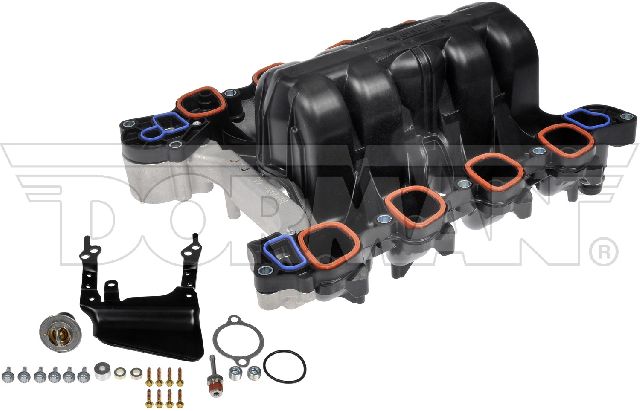
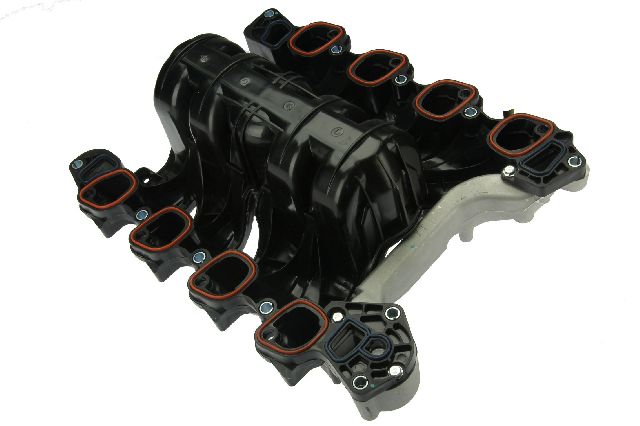
- Leaking Intake Manifold Gaskets & Isolator Bolts 🔴 High Probability The O-ring style gaskets between the upper and lower intake manifolds are made of a material that hardens, flattens, and cracks over time. The plastic intake manifold contracts when cold, opening a gap around the hardened gaskets. Furthermore, the rubber on the special 'isolator bolts' that secure the manifold also degrades, creating another leak path. This is the most infamous failure point on this engine for lean codes.
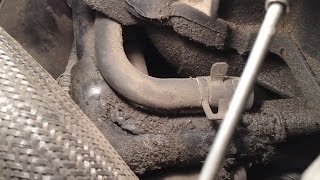
How to confirm: With the engine running, spray a non-flammable liquid like brake cleaner or a small amount of propane around the intake manifold sealing surfaces. If the engine's idle speed changes or stumbles, a leak is present. A smoke test is the most definitive and safest method to pinpoint the exact location of the leak. 🎬 Watch: Diagnosing rough idle and lean codes on the 4.0L TSB 03-16-1 specifically warns against using carb cleaner for this test as it can damage IMRC bearings.
Typical fix: Replace the upper and lower intake manifold port gaskets and the intake manifold isolator bolts. Per TSB 03-16-1, the updated isolator bolts have green rubber, not black. The updated intake gaskets are often blue, whereas the original failing ones were pale green. NHTSA ODI #10190784 documents a case where replacing the intake manifold gasket and MAF sensor resolved the P0174 code.
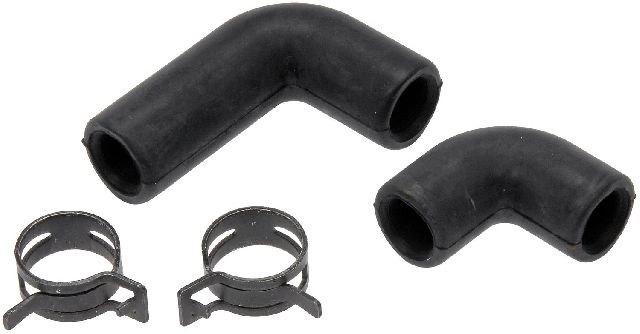
Est. part cost: $40-$100 (for gaskets and bolts) - Cracked PCV Hose or Elbow 🔴 High Probability The rubber hoses and elbows in the Positive Crankcase Ventilation (PCV) system are exposed to significant heat and oil vapor. This causes them to become brittle, mushy, or cracked, especially the elbow connecting to the back of the intake manifold. The hose becomes so oil-saturated and swollen that it no longer seals properly on its connection points.
How to confirm: Visually inspect all PCV hoses for cracks, splits, or soft/mushy spots. The main elbow is often collapsed or split on the underside, which can be hard to see without removing it. A smoke test will quickly reveal a leak in this system.
Typical fix: Replace the failed hose assembly. It is often sold as a complete unit. The OEM part number is typically 4L2Z-6758-AA for the 2004 model year, but always verify with VIN. NHTSA ODI #10322944 describes a similar repair where air leaks in the air hose assembly required replacement of the air tube assembly to clear P0171 and P0174.
Est. part cost: $20-$50 - Dirty Mass Airflow (MAF) Sensor 🟡 Medium Probability Oil vapors from the PCV system or fine dust that gets past the air filter can coat the delicate hot wire of the MAF sensor. This contamination causes the sensor to under-report the amount of air entering the engine, leading the computer to inject too little fuel, causing a lean condition.
How to confirm: A dirty MAF sensor often causes lean conditions that worsen as RPMs and engine load increase. Remove the sensor and visually inspect the small wires inside. If they appear dirty, cleaning is warranted. Unplugging the MAF sensor while the engine is running and observing a change in idle behavior can also point to a faulty sensor, but this is not a definitive test.
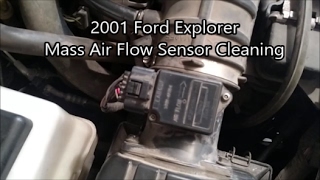
Typical fix: Clean the sensor using only a dedicated MAF sensor cleaner spray. Do not touch the sensor wires with anything. Let it dry completely before reinstalling. 🎬 See how to safely clean your MAF sensor If cleaning doesn't resolve the issue, the sensor may need to be replaced.
Est. part cost: $10 (for cleaner)
Rare But Worth Checking
- Weak Fuel Pump or Clogged Fuel Filter: While less common than vacuum leaks on this engine, low fuel delivery can cause lean codes. If vacuum leaks have been ruled out, it's worth testing the fuel pressure. For the returnless system on these models, pressure should be a steady 60-65 PSI at idle. A significant drop under load indicates a problem.
- Leaking Fuel Pressure Regulator: A leak in the fuel pressure regulator's vacuum line can cause a drop in fuel pressure or introduce unmetered air. TSB 03-16-1 notes that a loose-fitting vacuum line on the regulator is a possible cause.
- Leaking Brake Booster or Vacuum Hose: The brake booster operates on engine vacuum. A leak in the booster diaphragm or the hose leading to it can create a large, unmetered air leak, resulting in lean codes. NHTSA ODI #10199477 describes a situation where a broken vacuum hose from the intake manifold to the brake booster caused P0171 and P0174 codes. If the brake pedal feels hard or you hear a hiss when applying the brakes, this should be investigated. A major leak in the booster supply hose can cause a loss of power brakes.
Diagnosis Steps

- Check for other codes. If P0171 is also present, it strongly suggests a large vacuum leak affecting the whole engine, like the intake gaskets or PCV hose.
- Visually and physically inspect the engine bay. Look for obviously disconnected or cracked vacuum hoses. Pay close attention to the PCV hose assembly that runs from the valve cover around the back of the intake. Check if the elbows are soft, swollen, or loose.
- Perform a vacuum leak test. The most effective and safest method is a smoke test, which will make any leaks in the intake manifold gaskets, PCV system, or other vacuum lines visible. Alternatively, you can carefully spray short bursts of brake cleaner around suspected leak points and listen for a change in engine idle, but be aware of the fire risk and warnings in TSB 03-16-1.
- If no vacuum leaks are found, clean the Mass Airflow (MAF) sensor. Remove the sensor from the intake tube and spray the internal wires with dedicated MAF sensor cleaner. Let it dry completely before reinstalling.
- If the problem persists, test the fuel system. Connect a fuel pressure gauge to the fuel rail's Schrader valve. The pressure should be stable and within the manufacturer's specification (around 65 PSI). Watch for pressure dropping under engine load.
- Only after confirming there are no vacuum leaks and fuel pressure is correct should you consider a faulty oxygen sensor as the cause.
Parts You'll Likely Need
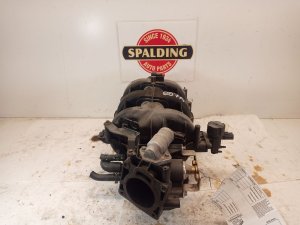
- Intake Manifold Gasket Set — This is the most probable cause of P0174 on the 4.0L SOHC engine due to the original gaskets hardening and leaking over time. The updated gaskets are often a different color (blue or green).
Trusted brands: Fel-Pro (P/N: MS98015T is widely cited), Victor Reinz, Motorcraft
OEM price range: $50-$90
Aftermarket price range: $30-$60 - Intake Manifold Isolator Bolts
(OEM #W705503S430 (Verify by VIN))— TSB 03-16-1 specifically calls for replacing these bolts as their integrated rubber seals fail, causing vacuum leaks. They are a critical part of the intake gasket job. Aftermarket versions like Dorman 55164 are available.
Trusted brands: Motorcraft, Dorman
OEM price range: $40-$60 (for a set)
Aftermarket price range: $25-$40 (for a set) - PCV Hose Assembly
(OEM #4L2Z-6758-AA (Example for 2004, verify by VIN))— The rubber elbows on this assembly are a very common failure point, becoming oil-soaked, soft, and splitting, leading to large vacuum leaks.
Trusted brands: Motorcraft, Dorman, Gates
OEM price range: $40-$70
Aftermarket price range: $20-$50
Related Codes That Often Appear With This One
- P0171 — P0171 is the 'System Too Lean' code for Bank 1 (passenger side). A significant vacuum leak, such as from the intake manifold gaskets or PCV system, will affect the entire engine, causing both banks to run lean and often setting both codes together.
- P0300, P0301-P0306 — These are misfire codes. A severe lean condition prevents proper combustion by creating a mixture that is difficult to ignite, leading to misfires in one or more cylinders.
Technical Service Bulletins (TSBs) & Recalls
- Ford TSB 03-16-1: Addresses P0171/P0174 codes directly. It instructs technicians to replace the intake manifold port gaskets (9H486) and isolator bolt assemblies (9S479) with updated parts. It explicitly warns against replacing MAF/O2 sensors or the intake manifold itself unless other diagnostics prove them faulty.
- Ford TSB 04-24-18: Supersedes the previous TSB and reiterates the repair procedure for lean codes P0171/P0174 on 4.0L SOHC engines, confirming the intake gasket and isolator bolt issue was persistent across several model years.
- NHTSA ODI #10203595: An owner report references a TSB for P0174 and P0171 that called for the replacement of the vacuum line, isolator bolts, valve cover, and port seals.
Platform-Specific Known Issues
- Cold-Start Rough Idle: The intake manifold gaskets are known to fail specifically when the engine is cold, causing a very rough idle that may improve as the engine warms up and the plastic manifold expands, temporarily sealing the leak.
- Hi:
Mechanic-Grade Diagnostic Values
- Fuel Pressure (Key On, Engine Off) — expected: 60-65 PSI. Failure: Pressure significantly below 60 PSI indicates a potential fuel pump, filter, or regulator issue.
- Long Term Fuel Trim (LTFT) at Idle — expected: Within +/- 10%. Failure: A reading of +25% or higher, which then decreases as RPMs are raised to ~2500, strongly suggests a vacuum leak.
- Long Term Fuel Trim (LTFT) at 2500 RPM (constant speed) — expected: Closer to 0% than the idle reading. Failure: If LTFT stays high (e.g., > +15%) or increases with RPM, it points away from a vacuum leak and more toward a fuel delivery issue or a faulty MAF sensor.
- Mass Airflow (MAF) Sensor Reading at Idle — expected: Approximately 4-7 g/s for the 4.0L engine.. Failure: A reading significantly lower than 4 g/s at a stable warm idle suggests the sensor is dirty or failing, causing the PCM to calculate an incorrect (too low) fuel delivery.
- Mass Airflow (MAF) Sensor Voltage at Idle — expected: ~0.86 Volts at 800 RPM. Failure: Voltage significantly different from the expected value at a given RPM can indicate a faulty sensor.
Wiring & Ground Locations
- G100 / G101 — Left front of the engine compartment, on or near the fender apron.. These are primary grounds for components in the engine bay. A corroded or loose connection here can affect sensor readings, including those for the MAF and O2 sensors, potentially causing incorrect data to be sent to the PCM.
- G104 — Right rear of the engine compartment.. This ground serves various components on the right side of the engine bay. Poor grounding can lead to erratic sensor behavior and contribute to difficult-to-diagnose electrical issues that may mimic fuel system problems.
- PCM Power Ground — Pins 40 and 60 on the 60-pin EEC-IV PCM connector (for earlier models, but concept is similar for later PCMs).. The PCM itself requires a solid ground reference. An issue with the PCM's own ground can corrupt all of its calculations, including fuel trim adjustments, leading to various fault codes.
- Bank 2 Upstream O2 Sensor Connector — On the driver's side exhaust manifold, before the catalytic converter. The connector is typically attached to a bracket on the transmission bellhousing or nearby frame.. This is the primary sensor that triggers the P0174 code. Checking for voltage, ground, and signal integrity at this connector is a key diagnostic step. A damaged wire or corroded pin can cause a false lean signal.
Real Owner Repair Stories
- ScannerDanner Forum User (2014 Ford Explorer 3.5L Ecoboost (different engine but same codes and diagnostic logic)) — P0171 and P0174 codes with LTFT at +29%. Smoke tested, changed O2 sensors, MAP sensors, plugs, and coils with no success.
❌ Tried (didn't work) Smoke test (found no leaks), Replacing all O2 sensors, Replacing MAP sensors, Replacing spark plugs and coils, Resetting Keep Alive Memory (KAM)
✅ What actually fixed it Replacing all 6 fuel injectors. The old injectors were described as 'nasty' and clogged, preventing proper fuel flow. - Ford-Trucks.com Forum User (2000 F350 V10 (different engine, same code)) — P0174 appeared immediately after having an exhaust leak (in front of the catalytic converter) repaired. Engine ran poorly and would hesitate.
❌ Tried (didn't work) Cleaning MAF sensor, Checking for vacuum leaks, Replacing fuel filter, Checking fuel pressure
✅ What actually fixed it The user's experience directly links the appearance of the P0174 code to the repair of an exhaust leak, suggesting the leak was masking another issue or the repair itself altered exhaust flow dynamics, possibly pointing towards a now-revealed clogged catalytic converter.
"I Checked Everything" — The Actual Cause
- In a case involving a 2018 Explorer with P0171/P0174, the owner performed multiple smoke tests which revealed no vacuum leaks. After also cleaning injectors and replacing intake seals to no avail, the final solution was replacing the fuel injectors and the fuel rail pressure sensor. This highlights that if a smoke test is negative, the next logical step is to thoroughly investigate the fuel delivery system for low volume, not just low pressure.
Model Year Variations Within This Range
- 2002-2005: The 4.0L SOHC engine was first introduced in the 1997 Explorer, while the Ranger did not receive it until 2001. While the basic long block is the same across these years, accessories, intake manifolds, and fuel systems can differ between an Explorer and a Ranger of the same year. When sourcing used parts, it's critical to get them from another 2002-2005 Explorer to ensure compatibility of these external components.
Diagnostic Flowchart
Real Owner Stories
Aggregated from forums and TSBs cited above. Mileages and costs reflect what owners reported in those sources.
Ford Explorer 4.0L SOHC V6
Symptoms: Rough idle and check engine light with codes P0171 and P0174.
What fixed it: Replacing the upper and lower intake gaskets and bolts.
Source hint: ExplorerForum.com - 'P0171 & P0174 Codes'
1998 Ford Ranger 4.0L
Symptoms: Check engine light with P0171 and P0174 codes, especially prevalent in cold weather.
What fixed it: Diagnosed intake manifold gasket failure after verifying fuel pressure was at the correct ~65 PSI specification.
Source hint: Ford-Trucks.com - 'P0171,P0174 CEL Light 98 Ranger 4.0L'
Ford Explorer 4.0L V6 SOHC
Symptoms: Lean codes P0171 and P0174 caused by unmetered air entering the engine.
What fixed it: Reattaching a disconnected or loose breather tube on the air intake snorkel.
Source hint: YouTube - 'Ford Explorer 4.0L V6 SOHC P0171 P0174 Lean Codes- Common Cause' by Ford Tech Makuloco
2004 Ford Explorer
Symptoms: Lean codes P0171 and P0174 with a significant vacuum leak.
What fixed it: Replacing the PCV hose assembly, which was found to be oil-soaked, swollen, and loose on its fittings.
Source hint: YouTube - '2004 Ford Explorer Lean P0171 P0174: Fixing Fords Across America' by Ford Tech Makuloco
Related OBD-II Codes
Frequently Asked Questions
Does Ford have a TSB for the P0174 code on the 4.0L SOHC engine?
Why does my Explorer idle so rough when it's cold but gets better as it warms up?
Should I use carb cleaner to find the vacuum leak on my 4.0L Explorer?
What color should the updated intake manifold gaskets and isolator bolts be?
Is the PCV hose a common cause for P0174 on the 2004 Explorer?
Should I replace my MAF or O2 sensors if I get a P0174 code?
Helpful Videos
Used OEM Parts in Stock
New Aftermarket Parts Available



The information in this article is provided for general reference and educational purposes only. Vehicle specifications, procedures, and part compatibility can vary by production date, trim level, and region. Always consult your vehicle's factory service manual and verify part numbers before purchasing or performing repairs. Safety-critical components such as airbags, seat belts, and braking systems should be installed by a qualified professional.
- Ford Explorer:
- 🎬 Helpful Videos
- 🛍️ Shop This Part
- What's Unique About the 2002-2005 Ford Explorer
- Symptoms You May Notice
- Most Likely Causes
- Rare But Worth Checking
- Diagnosis Steps
- Parts You'll Likely Need
- Related Codes That Often Appear With This One
- Technical Service Bulletins (TSBs) & Recalls
- Platform-Specific Known Issues
- Mechanic-Grade Diagnostic Values
- Wiring & Ground Locations
- Real Owner Repair Stories
- "I Checked Everything" — The Actual Cause
- Model Year Variations Within This Range
- Diagnostic Flowchart
- Real Owner Stories
- Ford Explorer 4.0L SOHC V6
- 1998 Ford Ranger 4.0L
- Ford Explorer 4.0L V6 SOHC
- 2004 Ford Explorer
- Related OBD-II Codes
- Frequently Asked Questions
- 🎟️ Get 5% Off