

P0174 on 2007-2014 Ford Edge: Causes and Fixes for Lean Condition (Bank 2)
This code means Bank 2 of your engine is running lean (too much air, not enough fuel). The most common causes are vacuum leaks from failed intake manifold gaskets or a leaking brake booster. Expect to pay $150-$400 for gasket replacement.
- P0174 means the engine's Bank 2 (front side, by the radiator) is getting too much air or not enough fuel.
- Before buying any parts, perform a smoke test. The most likely cause on a 2007-2014 Edge is a vacuum leak from old intake gaskets, a cracked hose, or a bad brake booster.
- If you have both P0174 and P0171 codes, the problem is almost certainly a vacuum leak or a dirty MAF sensor.
- Do not replace the oxygen sensor unless you have ruled out all other possibilities; it is usually just reporting the problem correctly.
- Cleaning the Mass Airflow (MAF) sensor is a cheap and easy diagnostic step that can sometimes fix the issue.
What's Unique About the 2007-2014 Ford Edge

On the Ford 3.5L/3.7L Cyclone V6, lean codes like P0174 (and its companion P0171 for Bank 1) are frequently caused by unmetered air entering the engine. While many issues can cause this, this engine family is particularly known for vacuum leaks from aging intake manifold gaskets and failing brake boosters. These issues are common enough that owners should investigate them first before suspecting more complex fuel system problems.
Generation note: This guide covers the first generation Ford Edge (2007-2010) and its facelift (2011-2014). The 3.5L V6 was standard, with the 3.7L V6 available in the Sport model from 2011-2014. The causes and fixes for P0174 are generally the same across this entire year range as the core engine architecture is shared.
Symptoms You May Notice
- Check Engine Light is on
- Rough or unstable idle
- Hesitation or stumbling during acceleration
- Reduced engine power
- Poor fuel economy
- A hissing sound from the engine bay, indicating a vacuum leak
- A diesel-like rattling sound on light acceleration, as described by some owners experiencing lean conditions
- Replacing the oxygen sensor first. The O2 sensor is often just the messenger reporting the lean condition. The actual cause is usually a vacuum or fuel delivery issue.
- Replacing fuel injectors. While a clogged injector can cause a lean condition, it's less common than vacuum leaks on this engine and would typically be accompanied by a misfire code for a specific cylinder (e.g., P0302, P0304, P0306).
Most Likely Causes

- Vacuum Leak (Intake Manifold Gaskets, PCV Hoses, Brake Booster) 🔴 High Probability The intake manifold gaskets (both upper and lower) and various vacuum hoses on the 3.5L/3.7L V6 can become brittle and crack over time due to heat cycles, creating a path for unmetered air to enter the engine. Leaking brake boosters are also a known issue on this platform, creating a large vacuum leak. NHTSA ODI #10199477 highlights a similar Ford failure where a vacuum hose from the intake manifold to the brake booster was found broken, requiring the removal of the intake manifold to facilitate the repair.
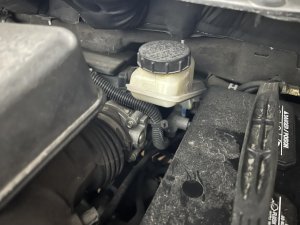
How to confirm: Perform a smoke test on the intake system to see if smoke escapes from the gaskets or any hoses. Alternatively, with the engine running, carefully spray brake cleaner or starter fluid around the intake manifold gaskets; a change in engine idle indicates a leak. For the brake booster, listen for a hissing sound when the brake pedal is pressed. For a potential internal intake gasket leak, some technicians suggest removing the oil fill cap with the engine running; a significant change in idle could indicate an internal leak.
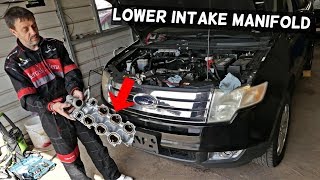
Typical fix: Replace the leaking gaskets or hoses. Both upper and lower intake gaskets should be replaced at the same time. 🎬 See this walkthrough for replacing the lower intake manifold gaskets. If the brake booster is leaking, it must be replaced.
Est. part cost: $30-$150 - Dirty or Faulty Mass Airflow (MAF) Sensor 🟡 Medium Probability Dirt, debris, or oil residue can accumulate on the MAF sensor's delicate hot wire, causing it to inaccurately measure the amount of air entering the engine. This leads the computer to calculate the wrong amount of fuel needed. A rule of thumb is that at idle, a healthy MAF on the 3.5L engine should read approximately 3.5 grams/second on a scan tool; a significantly lower reading (e.g., ~2.0 g/s) can indicate a faulty or contaminated sensor.
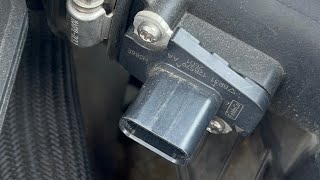
How to confirm: Remove the MAF sensor from the air intake tube and visually inspect it for contamination. You can try cleaning it with a dedicated MAF sensor cleaner (like CRC 05110). 🎬 Watch: How to clean or replace the MAF sensor on your Ford. Never use brake or carburetor cleaner. If cleaning doesn't resolve the issue, the sensor needs to be replaced.
Typical fix: Clean the MAF sensor with a specialized cleaner. If cleaning doesn't resolve the issue, the sensor needs to be replaced. It is highly recommended to use an OEM Motorcraft sensor over cheaper aftermarket alternatives.
Est. part cost: $10-$15 (cleaner), $120-$200 (new Motorcraft sensor) - Failed Upstream Oxygen (O2) Sensor ⚪ Low Probability The O2 sensor is what detects the lean condition. While it can fail and send incorrect readings, it's more often correctly reporting a problem caused by something else. It's a common misdiagnosis to replace the sensor when the real issue is a vacuum leak.
How to confirm: Use a scan tool to monitor the live data from the Bank 2 Sensor 1. A healthy sensor will show rapidly fluctuating voltage between approximately 0.1V and 0.9V. A lazy or stuck sensor is faulty. The best confirmation is to fix all other potential causes (like vacuum leaks) first.
Typical fix: Replace the Bank 2, Sensor 1 (upstream) oxygen sensor.
Est. part cost: $50-$120 - Low Fuel Pressure (Weak Pump, Clogged Filter) ⚪ Low Probability
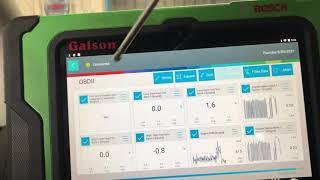
How to confirm: Connect a fuel pressure gauge to the fuel rail and check if the pressure is within the manufacturer's specified range. Fuel delivery issues often affect both banks, triggering P0171 and P0174 together. 🎬 Watch: Real-world diagnosis of P0171 and P0174 codes on an Edge.
Typical fix: The fuel filter on the Edge is typically part of the in-tank fuel pump module and not serviced separately. If pressure is low, the entire fuel pump assembly usually needs to be replaced.
Est. part cost: $250-$500 (pump)
Rare But Worth Checking
- Leaking or Stuck-Open Canister Purge Valve: The canister purge valve (or EVAP purge solenoid) controls the flow of fuel vapors from the charcoal canister to the intake manifold. If it sticks open, it can create a constant vacuum leak, causing a lean condition. To test, disconnect the electrical connector and the intake-side hose with the engine running. Place your finger over the valve's nipple; if you feel any vacuum, the valve is stuck open and must be replaced.
- Cracked Air Intake Hose: A crack or break in the plastic air intake tube between the MAF sensor and the throttle body allows unmetered air to enter the system. NHTSA ODI #10322944 notes that air leaks in the air hose assembly can trigger both P0171 and P0174, requiring replacement of the tube assembly. A common failure point is a small nipple on the side of the main hose that connects to a PCV line; it can become brittle and break off, especially during air filter changes.
- Chafed O2 Sensor Wiring Harness: On similar Ford platforms, TSBs have been issued for the O2 sensor wiring harness rubbing against the transmission or other components, causing a short or open circuit. This can lead to erratic or false signals being sent to the PCM, triggering a lean code. A visual inspection of the harness routing for Bank 2 Sensor 1 is warranted if other causes are ruled out.
- Incorrect Flex Fuel Learning: According to Manufacturer Bulletin #SSM 49050, some Ford vehicles may exhibit P0171 and P0174 due to incorrect flex fuel learning, which can be caused by refueling habits such as adding only small amounts of fuel.
Diagnosis Steps

- Check for other codes. Use a scanner to see if P0171 or any misfire codes are also present, which can help narrow down the cause.
- Analyze fuel trims. Use a scan tool to monitor Short Term Fuel Trim (STFT) and Long Term Fuel Trim (LTFT) for Bank 2. High positive numbers (e.g., LTFT > 15-20%) confirm the computer is adding fuel to correct a lean condition. If trims are high at idle but normalize at higher RPM, suspect a vacuum leak.
- Inspect for obvious vacuum leaks. Visually check all vacuum hoses, the PCV lines, and the air intake tube for cracks, breaks, or loose connections. Listen for hissing sounds around the intake manifold and brake booster.
- Perform a smoke test. This is the most effective way to find hard-to-see vacuum leaks. Introduce smoke into the intake system and watch for it escaping from gaskets, hoses, or the brake booster.
- Clean and inspect the MAF sensor. Remove the sensor and clean it with a dedicated MAF sensor cleaner. Check for any damage to the sensor or its wiring. Check the live data reading at idle to see if it's plausible (around 3.5 g/s for the 3.5L).
- Test the Canister Purge Valve. With the engine running, disconnect the valve's electrical connector and check for vacuum at the valve's port. If vacuum is present, it has failed open.
- Test fuel pressure. If vacuum leaks and the MAF sensor are ruled out, check the fuel pressure at the fuel rail to ensure the pump is supplying enough fuel.
- Test the O2 Sensor. As a final step, test the Bank 2 upstream O2 sensor to ensure it is responding correctly and not sending false lean signals.
Parts You'll Likely Need

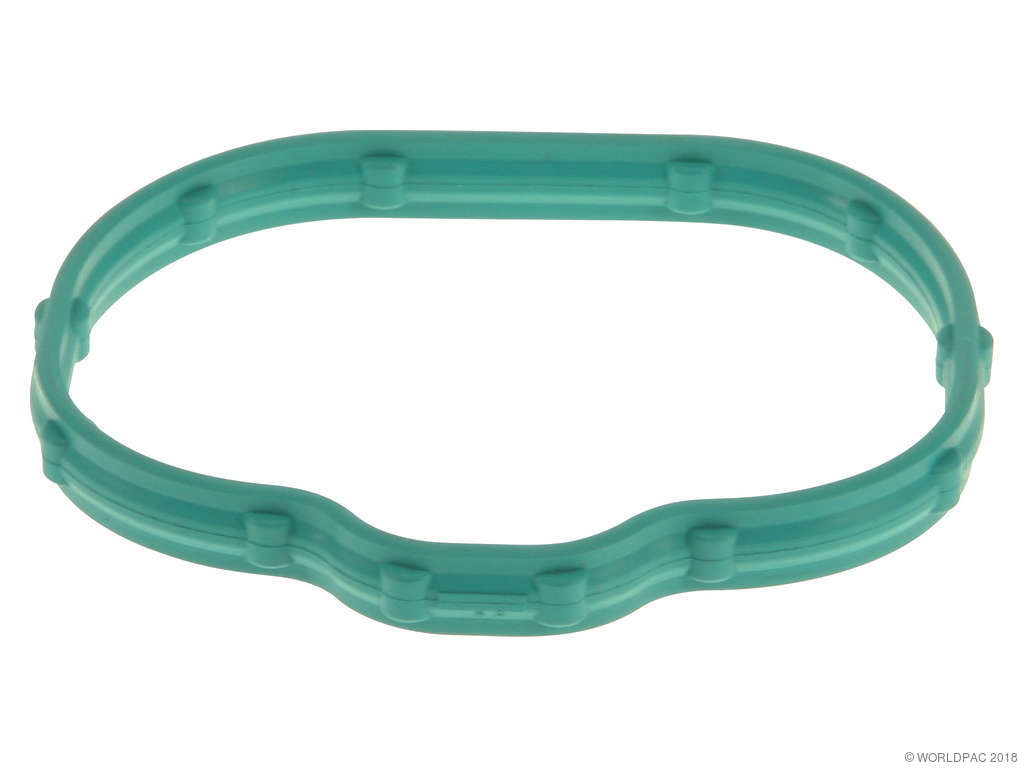
- Intake Manifold Gasket Set (Upper and Lower)
(OEM #Motorcraft AT4Z-9H486-A (Upper/Plenum), 7T4Z-9E436-A (Lower))— This is one of the most frequent failure points leading to vacuum leaks and lean codes on the 3.5L/3.7L V6. It is critical to replace both upper and lower sets.
Trusted brands: Motorcraft, Fel-Pro (MS 97118-1), Victor Reinz
OEM price range: $40-$60
Aftermarket price range: $25-$55 - Brake Booster
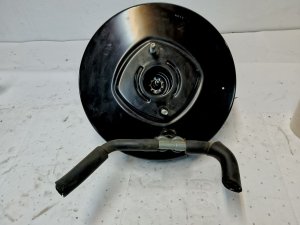
(OEM #8T1Z-2005-B (example, varies by year))— A leaking brake booster creates a significant vacuum leak and is a known issue on the Ford Edge platform that can cause P0171 and P0174 codes.
Related Codes That Often Appear With This One
- P0171 — This is the identical 'System Too Lean' code but for Bank 1 (firewall side). When both P0171 and P0174 appear together, it strongly suggests a problem that affects the entire engine, such as a major vacuum leak (intake gaskets, brake booster), a faulty MAF sensor, or low fuel pressure.
- P0300, P0302, P0304, P0306 — These are misfire codes (P0300 for random, P030x for a specific cylinder). A severe lean condition can prevent proper combustion, leading to misfires on the affected bank (Bank 2 cylinders are 2, 4, 6).
Technical Service Bulletins (TSBs) & Recalls
- Ford TSB 03-16-1 - Mentions replacing intake gaskets and a specific vacuum hose for lean conditions on some Ford V6 engines.
- Ford TSB 98-23-10 - Describes how a dirty MAF sensor can cause lean codes on Ford vehicles.
- Manufacturer Bulletin #SSM 49050 - Notes that P0171 and P0174 may be triggered by incorrect flex fuel learning, often related to refueling habits.
Mechanic-Grade Diagnostic Values

- Long Term Fuel Trim (LTFT) at Idle — expected: Close to 0% (+/- 5%). Failure: Sustained positive values above +10%. The Check Engine Light is typically triggered when LTFT exceeds +12.5% to +25%. If trims are high at idle but decrease significantly toward 0% at 2500 RPM, a vacuum leak is strongly indicated.
- Mass Airflow (MAF) Sensor Reading — expected: Approximately 3.5-4.0 grams/second at idle; 8 g/s at 1500 RPM; 13 g/s at 2500 RPM.. Failure: Readings are significantly lower than expected for a given RPM, indicating the sensor is dirty or failing and under-reporting airflow.
- Upstream O2 Sensor (Bank 2, Sensor 1) - Wideband Type — expected: On many modern Fords, this is a wideband sensor. Instead of voltage, monitor current (mA) and Equivalence Ratio. Current should be near 0 mA at stoichiometry (14.7:1 air/fuel ratio).. Failure: Current will be positive during a lean condition and negative during a rich condition (e.g., up to +2 mA on decel, down to -1 mA at WOT). A sensor that is stuck or slow to respond is faulty.
- Upstream O2 Sensor (Bank 2, Sensor 1) - Zirconia Type — expected: If a conventional zirconia sensor is used, voltage should rapidly fluctuate between approximately 0.2V (lean) and 0.8V (rich) about once per second on a warm engine.. Failure: Voltage is stuck low (e.g., < 0.2V) or is very slow to switch, indicating a biased or failed sensor.
- Canister Purge Valve Solenoid Resistance — expected: Approximately 20-33 ohms. One source cites a specific OEM valve at 32.5 ohms.. Failure: Resistance is significantly outside the 20-33 ohm range, or shows an open circuit (infinite resistance), indicating a failed solenoid coil.
Scan Tool Commands That Help
- FORScan, Ford IDS, or equivalent: Fuel Trim Analysis (Idle vs. 2500 RPM) — This is a primary diagnostic step. Command the engine to hold idle, record LTFT. Then, command it to hold 2500 RPM and record LTFT. A significant drop in fuel trims at higher RPM strongly points to a vacuum leak, which has less effect as engine airflow increases.
- FORScan, Ford IDS, or equivalent: EVAP Purge Solenoid On/Off Command — Use this bidirectional control to test the canister purge valve. With the engine running, command the valve closed (0%) and check for vacuum on the intake port; there should be none. Command it open (e.g., 50%) and confirm that vacuum is now present and the engine idle changes slightly. This directly tests the valve's mechanical function.
Wiring & Ground Locations
- G104 (example identifier) — On the engine block, near the side. Access may require removing the battery and battery tray.. A poor main engine ground can cause erratic behavior and incorrect readings from multiple sensors, including those that influence fuel calculations, potentially leading to lean codes.
- Forward Frame Rail Grounds — Behind the front bumper cover, there are ground points on the frame rails. One connects to the main wiring harness that routes up towards the engine and PCM.. These grounds are critical for the proper operation of components in the front of the engine bay, including potentially the PCM itself. Corrosion or looseness here can cause a variety of electrical issues.
- Firewall Ground — On the firewall, located behind the power steering fluid reservoir.. This ground point serves various components in the engine bay. A loose or corroded connection here can lead to floating grounds and unreliable sensor data.
Real Owner Repair Stories
- Jaguar Forums user 'pragmatic' (2004 Jaguar XJ8 (similar V8 engine diagnosis for P0171/P0174)) — P0171 and P0174 codes with Long Term Fuel Trims at +19.5%.
❌ Tried (didn't work) Performed a smoke test, which revealed and led to the repair of a leaking intake hose plug. However, the codes remained.
✅ What actually fixed it The user suspected the brake booster. They disconnected the booster's vacuum line and plugged it. The engine was started, and fuel trims quickly began to drop. Replacing the brake booster with a used unit from a junkyard permanently fixed the lean codes. - Tacoma World user (2007 Toyota Tacoma V6) — P0171 and P0174 codes accompanied by a loss of power braking and a hissing sound when holding the brake pedal.
❌ Tried (didn't work) Initial diagnosis was uncertain, owner was reading about fuel pump issues.
✅ What actually fixed it The confirmed cause was a failed brake booster creating a large vacuum leak, which triggered both the lean codes and the braking issue. - NHTSA ODI #10190784 — An owner reported a P0174 code on a Ford V6 engine. After replacing the intake manifold gasket and the MAF sensor, the vehicle was confirmed to be running fine.
- NHTSA ODI #11587782 — An owner reported ongoing issues with a rough idle and generic lean codes P0171 and P0174. The vehicle also stored code P061A:00-28 and randomly shut off at a stop sign.
"I Checked Everything" — The Actual Cause
- A common scenario where an intake smoke test passes is when the root cause is an exhaust leak *before* the upstream Bank 2 oxygen sensor (e.g., a cracked exhaust manifold or a bad manifold-to-head gasket). This leak sucks in fresh air, which the O2 sensor reads as a lean condition. The PCM then incorrectly adds fuel to Bank 2, causing high fuel trims and the P0174 code, even though there are no intake vacuum leaks. The correct diagnostic step in this case is to perform a smoke test on the cold exhaust system to find the leak.
Diagnostic Flowchart
Other Known Issues on This Vehicle
Issues unrelated to this code that are worth knowing about as an owner of this generation:
- Internal Timing-Chain-Driven Water Pump Failure 🔴 High — Common after 80,000-120,000 miles. Failure can be catastrophic, leading to coolant mixing with engine oil.
- Power Transfer Unit (PTU) Fluid Leak / Overheating (AWD Models) 🔴 High — Common across all years. The PTU fluid overheats, degrades, and leaks out, leading to eventual failure of the unit.
- Door Ajar Warning Light Stays On 🟡 Low — Extremely common. Can happen at any mileage.
Used vs. New Parts: Buying Guide for This Vehicle
When a used part is the smart pick: For this repair, used parts are a viable option for structural components like the plastic air intake tube or a complete intake manifold if cracked. A used brake booster can also be a cost-effective solution, as demonstrated in owner forums, but it carries the risk of having limited remaining life.
Donor-vehicle mileage cap: roughly under 100000 miles for the part to have meaningful remaining life.
What to inspect on the donor part:
- For brake boosters: Inspect the vacuum port for any signs of oily residue, which could indicate a leaking master cylinder on the donor car.
- For hoses: Ensure the rubber is still pliable and free of visible cracks or hardening.
- For intake manifolds: Check carefully for any hairline cracks, especially around bolt holes and seams.
OEM-only on this vehicle (don't cheap out):
- Mass Airflow (MAF) Sensor
- Oxygen (O2) Sensors
Aftermarket brands forum-validated for this vehicle:
- O2 Sensors: NTK, Denso, Bosch (often the original OE suppliers).
- Gaskets: Fel-Pro is a widely trusted aftermarket brand for intake manifold gaskets.
Brands owners have reported issues with on this vehicle:
- Unnamed or 'white-box' electronic sensors (MAF, O2) are frequently reported on forums as being improperly calibrated, causing persistent codes or poor performance.
Real Owner Stories
Aggregated from forums and TSBs cited above. Mileages and costs reflect what owners reported in those sources.
2007-2014 Ford Edge 3.5L V6
Symptoms: Check engine light on with both P0171 and P0174 codes present.
What fixed it: Found a vacuum hose for the brake booster that was not fully connected behind the battery.
Source hint: https://www.fordedgeforum.com/topic/18531-error-codes-p0171-and-p0174/
Ford Five Hundred 3.0L/3.5L V6
Symptoms: High fuel trims at idle that correct themselves and normalize at higher RPMs.
What fixed it: Diagnosed as a vacuum leak, specifically suggesting an internal intake gasket leak via the oil cap test.
Source hint: https://www.ford-forums.com/threads/p0171-and-p0174.237194/
Related OBD-II Codes
Frequently Asked Questions
Does Ford TSB 03-16-1 apply to my Edge's lean condition?
What should the MAF sensor reading be on my 3.5L Edge at idle?
Can I use any cleaner to fix my MAF sensor?
Is there a specific brand of MAF sensor I should buy for the 2007-2014 Edge?
How can I check if my brake booster is causing the P0174 lean code?
What is the 'oil cap test' mentioned for the Ford 3.5L V6 engine family?
Helpful Videos
Used OEM Parts in Stock


New Aftermarket Parts Available


The information in this article is provided for general reference and educational purposes only. Vehicle specifications, procedures, and part compatibility can vary by production date, trim level, and region. Always consult your vehicle's factory service manual and verify part numbers before purchasing or performing repairs. Safety-critical components such as airbags, seat belts, and braking systems should be installed by a qualified professional.
- Ford Edge:
- 🎬 Helpful Videos
- 🛍️ Shop This Part
- What's Unique About the 2007-2014 Ford Edge
- Symptoms You May Notice
- Most Likely Causes
- Rare But Worth Checking
- Diagnosis Steps
- Parts You'll Likely Need
- Related Codes That Often Appear With This One
- Technical Service Bulletins (TSBs) & Recalls
- Mechanic-Grade Diagnostic Values
- Scan Tool Commands That Help
- Wiring & Ground Locations
- Real Owner Repair Stories
- "I Checked Everything" — The Actual Cause
- Diagnostic Flowchart
- Other Known Issues on This Vehicle
- Used vs. New Parts: Buying Guide for This Vehicle
- Real Owner Stories
- 2007-2014 Ford Edge 3.5L V6
- Ford Five Hundred 3.0L/3.5L V6
- Related OBD-II Codes
- Frequently Asked Questions
- 🎟️ Get 5% Off