

P0172 on 2009-2013 Subaru Forester EJ25: Causes and Fixes for Rich Fuel Mixture
On a 2009-2013 Subaru Forester with the EJ25 engine, code P0172 is most often caused by a failing front air/fuel (A/F) ratio sensor or a dirty Mass Airflow (MAF) sensor. Cleaning the MAF sensor with a dedicated cleaner is an inexpensive first diagnostic step. However, the most common definitive fix is replacing the front A/F sensor (Bank 1, Sensor 1), which typically costs $120-$250 for a reliable OEM-quality part from a brand like Denso.
- Start with the simplest and cheapest steps: inspect the air filter and clean the MAF sensor with dedicated cleaner.
- The most likely failed part is the front Air/Fuel (A/F) ratio sensor (Bank 1, Sensor 1). Use a quality replacement like Denso.
- Do not replace the rear O2 sensor; it does not control the fuel mixture.
- Ignoring this code will lead to poor performance, bad fuel mileage, and will eventually destroy your catalytic converter, a much more expensive repair.
- If you have a turbocharged (XT) model, check for boost leaks in the intake piping between the turbo and the engine.
What's Unique About the 2009-2013 Subaru Forester

On the naturally aspirated EJ25 engine used in this generation of Forester, the P0172 code is a very common issue that mechanics and owners have narrowed down to a few key culprits. Unlike some vehicles where the cause can be a wide-ranging mystery, experience shows the problem is almost always a failing front Air/Fuel (A/F) ratio sensor that has become slow or inaccurate with age, or a Mass Airflow (MAF) sensor that is dirty and misreading airflow. These two components should be the primary focus of your diagnosis before looking at less likely causes like fuel pressure issues or vacuum leaks. When the Check Engine Light illuminates for this fault, Subaru's system also typically disables the cruise control and causes its indicator light to flash.
Symptoms You May Notice

- Check Engine Light is on
- Flashing cruise control light on the dashboard
- Poor or reduced fuel economy
- Rough, hunting, or unstable idle
- Hesitation or stumbling during acceleration, sometimes described as feeling 'sluggish'
- Strong smell of gasoline from the exhaust
- Black smoke from the tailpipe, especially under acceleration
- Engine stalling in some cases
- A whistling noise that changes with RPM may indicate a vacuum leak, which can sometimes trigger this code
- Replacing the rear (downstream) oxygen sensor. This sensor's primary job is to monitor the catalytic converter's efficiency and it has very little input on fuel trim. The front (upstream) A/F sensor is the one that controls the air-fuel ratio.
- Replacing the catalytic converter. A P0172 code, if ignored, will eventually destroy the catalytic converter and may cause a P0420 code to appear. The converter failure is a symptom of the rich condition, not the cause. A user on Reddit noted their mechanic suspected a failing cat after finding sand in the old O2 sensor, which is a sign of the converter breaking down due to the rich condition.
Most Likely Causes

- Failing Front Air/Fuel (A/F) Ratio Sensor 🔴 High Probability The front A/F sensor (also called the upstream O2 sensor or Bank 1 Sensor 1) is a known high-failure item on this platform. With age and constant exposure to exhaust gases, its internal heater can fail or its chemical ability to accurately and quickly read the air-fuel mixture degrades, causing it to send a false 'rich' signal to the ECM.
How to confirm: Use an OBD-II scanner with live data capabilities. A healthy sensor's voltage should fluctuate rapidly. A failing sensor may be slow to respond or stuck at a high voltage (e.g., above 0.8v), indicating a rich mixture. Another key indicator is observing long-term fuel trim (LTFT) values that are highly negative, such as -20% or lower. The heater circuit can be tested for resistance and should typically read between 2-5 ohms.
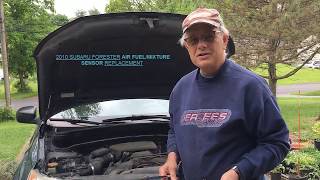
Typical fix: Replacement of the Bank 1 Air/Fuel Ratio Sensor. 🎬 Watch this step-by-step guide to replacing the upstream sensor. Using an OEM or high-quality brand like Denso or NTK is highly recommended, as cheaper aftermarket sensors are known to fail prematurely or not perform to OEM specifications. See Model-Year Variations for specific part numbers.
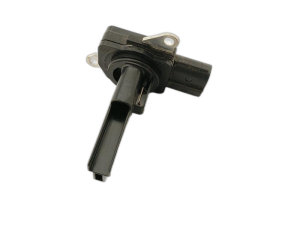
Est. part cost: $120-$250 - Dirty or Faulty Mass Airflow (MAF) Sensor 🔴 High Probability The MAF sensor sits in the intake tract and can become contaminated with dirt, oil, and other debris over time, especially if an aftermarket oiled air filter is used. This contamination causes it to under-report the volume of air entering the engine, leading the ECM to inject a corresponding amount of fuel that is too rich for the actual airflow.
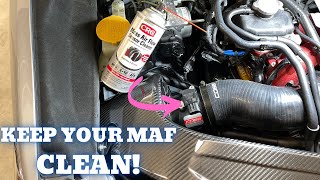
How to confirm: First, attempt to clean the sensor using only dedicated MAF sensor cleaner spray. 🎬 See how to safely clean your MAF sensor wires. Do not touch the delicate sensor wires. If cleaning doesn't resolve the issue, and live data shows illogical readings, the sensor may have failed. A healthy MAF on a 2.5L engine should read approximately 4-5 g/s at idle.
Typical fix: Clean the MAF sensor as a first step. If the problem persists, replace the MAF sensor assembly. Using an OEM-quality brand like Denso or Hitachi is recommended.
Est. part cost: $15 (cleaner) - $220 (new sensor) - Leaking Fuel Injector 🟡 Medium Probability An injector can become stuck partially open due to internal wear or debris, allowing excess fuel to drip into a cylinder even when it's not commanded to fire. This adds unmetered fuel to the mixture.
How to confirm: After the engine has been off for a while, pull the spark plugs. A plug that is wet with fuel or significantly blacker and sootier than the others points to a leaking injector in that cylinder. A professional can also perform a fuel injector balance test.
Typical fix: Replace the faulty fuel injector and its seals. It's often recommended to replace them as a set to ensure balanced fueling.
Est. part cost: $70-$150 per injector - Faulty Fuel Pressure Regulator ⚪ Low Probability The diaphragm inside the regulator can rupture, allowing excess fuel pressure to build in the fuel rail. It can also leak raw fuel directly into the intake manifold via its vacuum line, which creates a significant rich condition.
How to confirm: Locate the fuel pressure regulator and disconnect its vacuum hose. If there is a strong smell of raw fuel or visible liquid fuel in the hose, the regulator has failed and must be replaced. A fuel pressure test can also confirm if pressure is above the manufacturer's specification, which should be around 45-58 PSI.
Typical fix: Replacement of the fuel pressure regulator.
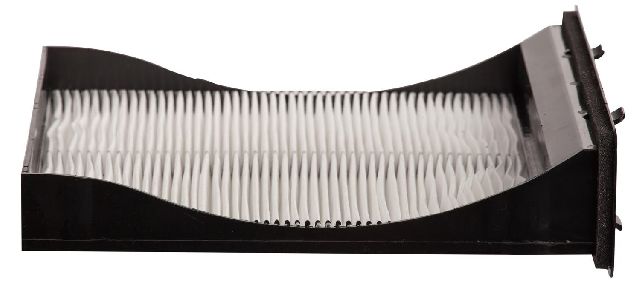
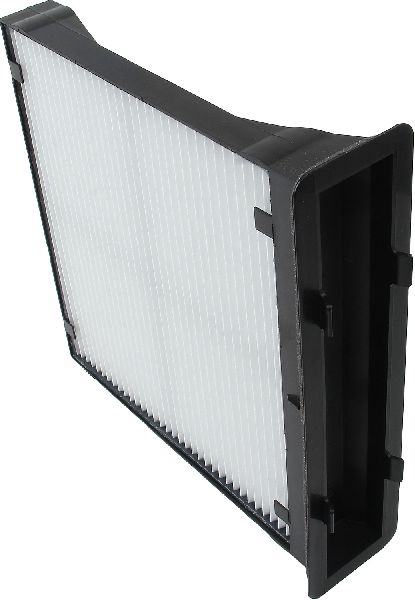
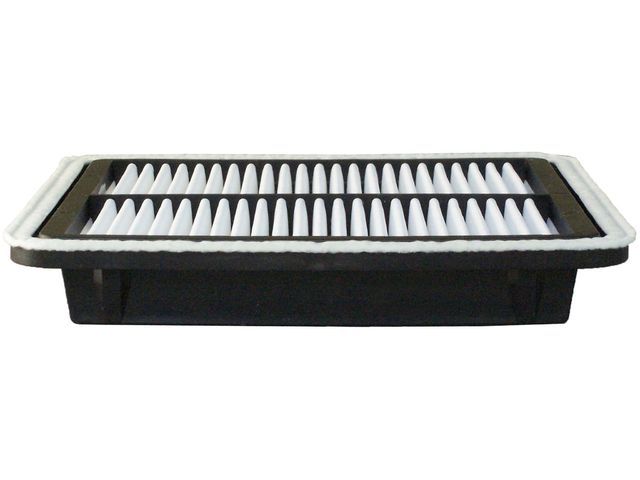
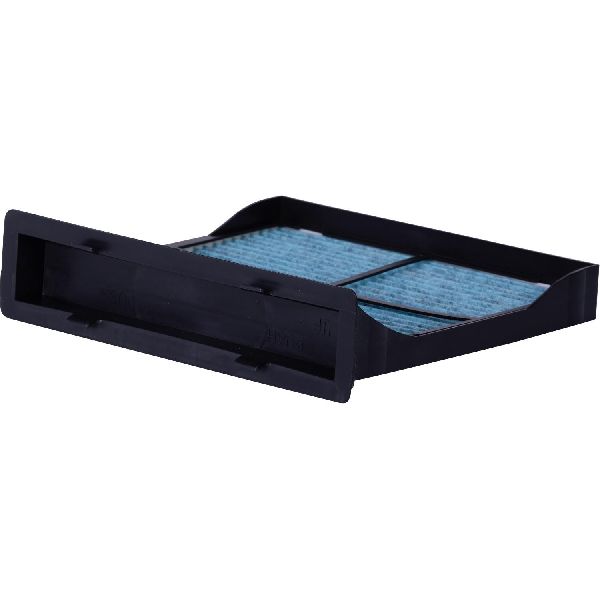
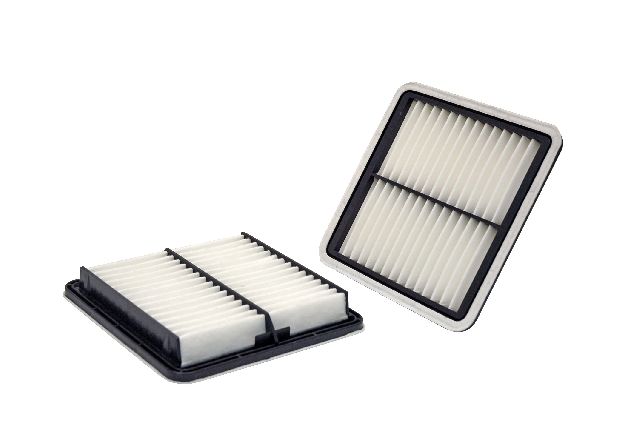
Est. part cost: $50-$100 - Clogged Engine Air Filter ⚪ Low Probability A severely neglected and clogged air filter can physically restrict the amount of air entering the engine. The MAF sensor will read lower airflow, but if the restriction is severe enough, the resulting mixture can still become rich.
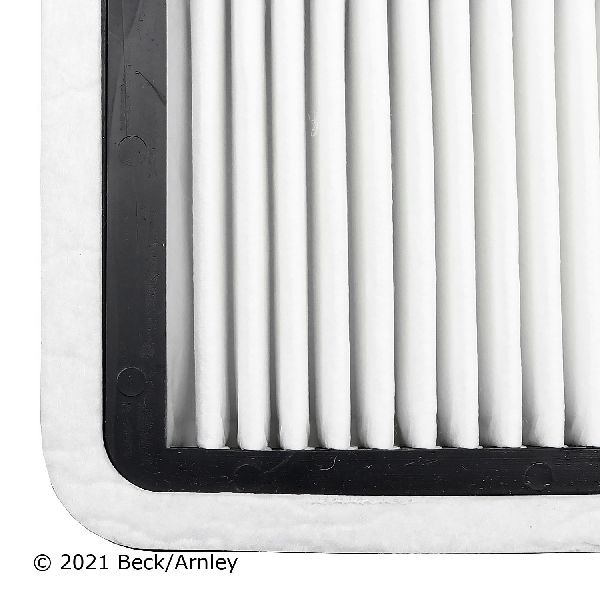
How to confirm: Visually inspect the engine air filter. If it is black, full of debris, and light cannot pass through it, it needs to be replaced. This is a basic maintenance item that should be checked first.
Typical fix: Replace the engine air filter.
Est. part cost: $15-$30
Rare But Worth Checking
- Leaking Intake Manifold or Vacuum Hoses: While vacuum leaks typically cause lean codes (P0171), a large leak in a specific location, particularly in the PCV system, can sometimes confuse the ECM and lead to a P0172 code. A user on Reddit with an '09 Forester reported a whistling noise along with the code, which can be a sign of a vacuum leak.
- Faulty Engine Coolant Temperature (ECT) Sensor: If the ECT sensor incorrectly tells the ECM that the engine is always cold, the computer will continuously command a richer fuel mixture intended for cold starts, which can lead to a P0172 code once the engine is warm.
- Contaminated Engine Oil: Engine oil that is heavily contaminated with fuel (often from a separate issue like a leaking injector) can have its vapors drawn into the intake through the PCV system, adding unmetered fuel and contributing to a rich condition.
Diagnosis Steps

- Read the code with an OBD-II scanner and check for any other stored codes. Note the flashing cruise control light, which is normal for Subarus with a CEL.
- Inspect the engine air filter. Replace if it is dirty or clogged.
- Inspect the intake system for any obvious cracks, loose hoses, or disconnected clamps, especially between the MAF sensor and the throttle body. Listen for whistling sounds.
- Carefully remove and clean the Mass Airflow (MAF) sensor using only dedicated MAF sensor cleaner. Allow it to dry completely before reinstalling.
- Reset the code (by disconnecting the battery or using a scanner) and drive the vehicle to see if the code returns. If it does, proceed to more advanced diagnostics. 🎬 Watch a full diagnostic walkthrough for fixing rich fuel codes.
- Using a scan tool with live data, monitor Long Term Fuel Trim (LTFT) and Short Term Fuel Trim (STFT) for Bank 1. For P0172, you will likely see LTFT at or below -20%.
- Monitor the front A/F sensor voltage. A healthy sensor fluctuates rapidly, while a lazy or failed sensor may be stuck high (above 0.8V).
- If the A/F sensor and MAF sensor appear to be functioning correctly, investigate fuel pressure and check for leaking injectors.
Parts You'll Likely Need

- Front Air/Fuel Ratio Sensor (Bank 1, Sensor 1)
(OEM #22641AA480)— This is the most common part to fail and directly cause the P0172 code on this vehicle due to age and degradation. It provides the primary signal for fuel trim adjustments.
Trusted brands: Denso (OEM supplier, part 234-9120 is a common equivalent), NTK
OEM price range: $180-$250
Aftermarket price range: $120-$180 - Mass Airflow (MAF) Sensor
(OEM #22680AA380)— The second most common cause. It becomes contaminated and provides incorrect (low) airflow readings to the ECM, causing an overly rich fuel mixture.
Trusted brands: Denso (OEM supplier), Hitachi
OEM price range: $190-$270
Aftermarket price range: $80-$150 - Engine Air Filter
(OEM #16546AA090)— A simple and inexpensive maintenance item that should be checked first, as a severe clog can restrict airflow and contribute to a rich condition.
Trusted brands: Subaru (OEM), Bosch, Wix
OEM price range: $25-$40
Aftermarket price range: $15-$30
Related Codes That Often Appear With This One
- P0300, P0301, P0302, P0303, P0304 — A rich condition can foul spark plugs and cause misfires in one or more cylinders. If a single cylinder misfire code (e.g., P0301) is present, it may point to a specific leaking fuel injector for that cylinder.
- P0420 — If the P0172 code is left unaddressed for a long time, the excess unburnt fuel will overheat and damage the catalytic converter, leading to a 'Catalyst System Efficiency Below Threshold' code. This is an expensive consequence of not fixing the root cause of P0172.
Platform-Specific Known Issues
- For turbocharged Forester XT models with the EJ255 engine, a boost leak in the intake tract after the turbocharger is a very common cause of a P0172 code. A leak allows metered air to escape, causing the mixture to be richer than intended. A smoke test is the best way to find these leaks.
Mechanic-Grade Diagnostic Values
- Long-Term Fuel Trim (LTFT) at code trigger — expected: -10% to +10%. Failure: Exceeding -20% to -25%, indicating the ECM is consistently removing large amounts of fuel.
- Front A/F (O2) Sensor Voltage — expected: Rapidly fluctuating between approximately 0.1V and 0.9V on a traditional sensor.. Failure: Stuck consistently high (above 0.8V), indicating a persistent rich reading.
- Mass Airflow (MAF) Sensor at idle — expected: For a 2.5L engine, approximately 4.25 to 4.75 g/s. A general rule is 1.7-1.9 g/s per liter of displacement.. Failure: Significantly lower than expected reading, which would cause the ECM to calculate less fuel, leading to a rich condition if the reading is false.
- Fuel Pressure — expected: 45-58 PSI.. Failure: Pressure significantly above the specified range indicates a faulty regulator or pinched return line.
- Front A/F Sensor Heater Circuit Resistance — expected: Approximately 2 to 5 ohms.. Failure: An open circuit (infinite resistance) or a short (zero resistance) indicates the internal heater has failed, which can cause slow sensor response and trigger codes.
Wiring & Ground Locations
- E23, E24, B18, B262, B379 — These are various Subaru wiring diagram identifiers for the front oxygen (A/F) sensor connector.. When testing the sensor's resistance or voltage at the connector, knowing the correct plug identifier helps locate it in service manual wiring diagrams to ensure the correct pins are being tested.
Real Owner Repair Stories
- Reddit user on r/SubaruForester (2017 Forester (similar FB engine and systems)) — P0172 code, rough running.
❌ Tried (didn't work) Replacing the front A/F ratio sensor., Replacing the rear O2 sensor.
✅ What actually fixed it The user reported that after replacing the transmission control module (TCM) for a separate issue, the P0172 code stopped appearing. A technician suggested that a failing TCM can alter shift points and RPMs, confusing the ECU's fuel mixture calculations and erroneously triggering rich/lean codes. - Reddit user on r/SubaruForester (Year not specified, but symptoms match platform.) — Persistent P0172 code.
❌ Tried (didn't work) Cleaning the MAF sensor., Resetting the ECM.
✅ What actually fixed it Replacement of the front (first) O2 sensor. The user noted the old sensor was filled with 'sand', which the mechanic identified as a sign of the catalytic converter beginning to fail due to the prolonged rich condition.
"I Checked Everything" — The Actual Cause
- A smoke test is designed to find vacuum leaks, which typically cause a lean code (P0171). For a P0172 rich code, the most common causes are a faulty front A/F sensor or a dirty MAF sensor. Neither of these issues would be revealed by a smoke test. Therefore, a 'clean' smoke test should immediately shift the diagnostic focus to the sensors responsible for measuring air and exhaust composition.
OEM Part Supersession History
Subaru 22641AA211, 22641AA32A, 22641AA490→Denso 234-9120 (aftermarket equivalent)— Standard part lifecycle and OEM supplier branding.
Heads up: This part is for 2009-2010 EJ253 engines. It is not compatible with 2011-2013 FB25 engines.Subaru 22670AA251→Subaru 22670AA252— Part revision for the fuel pressure regulator.
Model Year Variations Within This Range
- 2009-2010 (EJ253 Engine): Uses the SOHC EJ253 engine. The correct front Air/Fuel ratio sensor is the Denso 234-9120 or equivalent Subaru part numbers 22641AA211, 22641AA32A, 22641AA490.
- 2011-2013 (FB25B Engine): Uses the DOHC FB25B engine. While diagnostic principles are the same, the front Air/Fuel ratio sensor is a different part. The correct sensor is typically Denso 234-9123 or an equivalent part for these model years. Using the sensor for the 2010 model will not work correctly.
Diagnostic Flowchart
Other Known Issues on This Vehicle
Issues unrelated to this code that are worth knowing about as an owner of this generation:
- Excessive Oil Consumption 🔴 High — More common on the 2011-2013 models with the FB25 engine, but also reported on the earlier EJ25. Can start as early as 60,000 miles. Caused by issues with piston rings. (Ref: TSB 02-157-14R was issued, which involved an oil consumption test and potential short block replacement for eligible vehicles under an extended warranty.)
- Head Gasket Failure 🟠 Medium — A well-known issue on Subaru's EJ-series engines, though less frequent on the SOHC EJ253 in the 2009-2010 models compared to earlier generations. Typically manifests as external oil leaks rather than internal coolant leaks. Failures often occur between 100,000-150,000 miles. (Ref: No specific recall, but it is a widely documented repair. Some owners report receiving goodwill assistance from Subaru if the failure occurs at lower mileage.)
- Timing Belt Maintenance 🔴 High — This applies only to the 2009-2010 models with the EJ25 engine. The timing belt, tensioner, and idler pulleys require replacement at 105,000 miles. Failure to do so will result in catastrophic engine damage.
- Rattling Exhaust Heat Shields 🟡 Low — Very common across all model years. The thin metal heat shields around the exhaust components rust and the spot welds break, causing a metallic rattling or buzzing noise at certain RPMs.
Used vs. New Parts: Buying Guide for This Vehicle
When a used part is the smart pick: Used parts are generally not recommended for the primary causes of this code. However, if a secondary component like an intake air duct, a section of the wiring harness, or a throttle body assembly is found to be the cause, a used part from a reputable auto recycler can be a cost-effective option.
Donor-vehicle mileage cap: roughly under 80000 miles for the part to have meaningful remaining life.
What to inspect on the donor part:
- For wiring: Check for any signs of brittleness, cracking, or previous repairs/splices.
- For mechanical parts (intake, etc.): Inspect for cracks, warping, or missing hardware.
- Verify the donor vehicle was not in a front-end collision that could have stressed the component.
OEM-only on this vehicle (don't cheap out):
- Front Air/Fuel Ratio Sensor: While not strictly 'OEM-only', using a proven OE manufacturer like Denso or NTK is critical. Cheap, unbranded sensors are notorious for failing quickly or being out-of-spec on Subarus.
- Mass Airflow (MAF) Sensor: Similar to the A/F sensor, it is highly recommended to use an OEM (Denso, Hitachi) or a top-tier aftermarket replacement. Avoid no-name brands.
Aftermarket brands forum-validated for this vehicle:
- Denso for Air/Fuel and MAF sensors
- NTK (a brand of NGK) for Air/Fuel sensors
- Beck/Arnley for components like fuel pressure regulators
Brands owners have reported issues with on this vehicle:
- Unbranded, 'white box' sensors from online marketplaces.
- Oiled air filters, as excess oil can contaminate the MAF sensor and cause a P0172 code.
Real Owner Stories
Aggregated from forums and TSBs cited above. Mileages and costs reflect what owners reported in those sources.
2009-2013 Subaru Forester EJ25
Symptoms: Check Engine Light on and flashing cruise control light.
What fixed it: Replacing the 'first O2 sensor' (front Air/Fuel ratio sensor) resolved the code after other fixes were attempted.
Source hint: Reddit user report cited in forum_citations
2009-2013 Subaru Forester EJ25
Symptoms: P0172 code present; testing showed the upstream sensor was dead.
What fixed it: Installation of a new NTK brand upstream O2 sensor.
Source hint: YouTube repair on a Subaru with P0172
2011-2013 Subaru Forester FB25 — ~60000 miles
Symptoms: Excessive oil consumption.
What fixed it: Potential short block replacement under TSB 02-157-14R.
Source hint: TSB 02-157-14R
Related OBD-II Codes
Frequently Asked Questions
Why is my cruise control light flashing along with the Check Engine Light on my 2010 Forester?
Is there a TSB for oil consumption on my 2011-2013 Forester that might be related to engine issues?
What brand of front Air/Fuel ratio sensor should I use for my EJ25 engine?
Can I clean the sensor in the intake to fix the P0172 rich condition?
I have a Forester XT; is there a specific part I should check for a P0172 code?
What should the MAF sensor reading be at idle for my 2.5L Subaru engine?
Helpful Videos
Used OEM Parts in Stock
New Aftermarket Parts Available

The information in this article is provided for general reference and educational purposes only. Vehicle specifications, procedures, and part compatibility can vary by production date, trim level, and region. Always consult your vehicle's factory service manual and verify part numbers before purchasing or performing repairs. Safety-critical components such as airbags, seat belts, and braking systems should be installed by a qualified professional.
- Subaru Forester:
- 🎬 Helpful Videos
- 🛍️ Shop This Part
- What's Unique About the 2009-2013 Subaru Forester
- Symptoms You May Notice
- Most Likely Causes
- Rare But Worth Checking
- Diagnosis Steps
- Parts You'll Likely Need
- Related Codes That Often Appear With This One
- Platform-Specific Known Issues
- Mechanic-Grade Diagnostic Values
- Wiring & Ground Locations
- Real Owner Repair Stories
- "I Checked Everything" — The Actual Cause
- OEM Part Supersession History
- Model Year Variations Within This Range
- Diagnostic Flowchart
- Other Known Issues on This Vehicle
- Used vs. New Parts: Buying Guide for This Vehicle
- Real Owner Stories
- 2009-2013 Subaru Forester EJ25
- 2009-2013 Subaru Forester EJ25
- 2011-2013 Subaru Forester FB25 — ~60000 miles
- Related OBD-II Codes
- Frequently Asked Questions
- 🎟️ Get 5% Off