

P0172 on 2018-2023 Kia Stinger 3.3L: System Too Rich (Bank 1) Causes and Fixes
On the 3.3L Kia Stinger, code P0172 most often points to a faulty upstream oxygen (O2) sensor on the passenger side or a leaking fuel injector. A failing high-pressure fuel pump is also a notable, though less frequent, cause. Expect to pay $150-$250 for an OEM O2 sensor.
- P0172 on the Stinger 3.3T indicates a rich fuel mixture on Bank 1 (passenger side).
- The most common causes are a failed upstream O2 sensor, a leaking fuel injector, or a faulty high-pressure fuel pump (HPFP).
- Check for fuel smell in the oil to help differentiate between a sensor issue and a fuel delivery (injector/HPFP) issue.
- The code P0088 (Fuel Pressure Too High) appearing alongside P0172 strongly points to the HPFP as the culprit.
- On 2018 models, a wiring harness recall (SC170) should be investigated as it can cause symptoms similar to a bad O2 sensor.
What's Unique About the 2018-2023 Kia Stinger
The Kia Stinger's 3.3L V6 is a twin-turbocharged, gasoline direct injection (T-GDI) engine. This technology uses a high-pressure fuel pump (HPFP) to inject fuel directly into the cylinders. While this improves efficiency and power, it also makes the fuel system more complex. Components like the HPFP and direct injectors are common failure points that can lead to a P0172 code, a scenario less frequent on older port-injected engines. While the related 2.0L Stinger has a recall (SC281 / NHTSA 23V634) for its HPFP sticking, the 3.3L model does not have the same recall, though a separate recall exists for a leaking turbo oil feed line and HPFP failures are still a known concern.
Symptoms You May Notice
- Check Engine Light is on
- Poor fuel economy
- Rough or unstable idle
- Strong smell of gasoline from the exhaust or through cabin vents
- Black smoke from the tailpipe
- Engine hesitation or sputtering during acceleration
- Engine stalling, especially at low speeds
- Hard starting, especially when cold
- Replacing the catalytic converter. A damaged catalytic converter is almost always a symptom of a long-term rich condition, not the cause of it. The rich mixture overheats and melts the converter. Fix the P0172 code first.
- Replacing the downstream (post-catalyst) O2 sensor. The downstream sensor's primary job is to monitor catalyst efficiency. The upstream (pre-catalyst) sensor is the one that provides the main data for air-fuel mixture control.
Most Likely Causes
- Faulty Upstream Oxygen (O2) Sensor 🔴 High Probability O2 sensors are wear-and-tear items that degrade over time from heat and contaminants. A sensor that incorrectly reads a lean condition will cause the ECM to add excess fuel, triggering a P0172 code. For 2018 models specifically, check for recall SC170, as a damaged wiring harness can mimic a failed O2 sensor.
How to confirm: Use an OBD-II scanner to monitor the live data for the Bank 1, Sensor 1 O2 sensor. A healthy sensor's voltage should fluctuate rapidly. A sensor that is slow to respond or has a biased voltage is likely faulty. Before replacing, inspect the wiring harness near the driver's side fender for chafing on 2018 models.
Typical fix: Replace the Bank 1 (passenger side) upstream (pre-catalytic converter) oxygen sensor.
Est. part cost: $100-$250 - Leaking Fuel Injector(s) 🟡 Medium Probability Direct injectors operate under very high pressure and can be prone to mechanical failure or developing leaks over time, dripping excess fuel into a cylinder. This is a known issue in GDI engines.
How to confirm: A strong sign is the smell of raw fuel on the oil dipstick, indicating oil dilution. A professional can perform a fuel injector balance test. You can also pull the spark plugs on Bank 1; a plug that is black, sooty, and wet with fuel compared to others indicates a leak in that cylinder.
Typical fix: Replace the faulty fuel injector(s) on Bank 1. It is often recommended to replace all three on that bank at the same time, along with their seals.
Est. part cost: $80-$200 per injector - Failing High-Pressure Fuel Pump (HPFP) or Fuel Pressure Regulator 🟡 Medium Probability The HPFP is a mechanically driven pump subject to wear. While the 3.3T doesn't have the same recall as the 2.0T, failures in the wider engine family are known to occur, sometimes causing over-pressurization. A faulty regulator can also cause excessive fuel pressure. NHTSA ODI #11578804 describes a situation where a misfire and engine shutdown resulted in code P0172, with the recommended fix being the replacement of the High Pressure Fuel Pump.
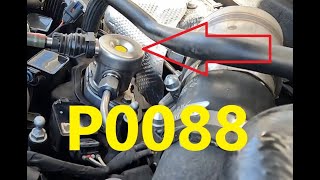
How to confirm: Use a scan tool to monitor fuel rail pressure. If it's significantly higher than the specified value, it points to a problem with the HPFP or regulator. This may also set a P0088 code (Fuel Rail Pressure Too High).
Typical fix: Replace the high-pressure fuel pump or the fuel pressure regulator.
Est. part cost: $400-$700 for an HPFP - Dirty or Faulty Mass Airflow (MAF) Sensor ⚪ Low Probability The MAF sensor can become contaminated with dirt and oil, causing it to send inaccurate airflow readings to the ECM. If it incorrectly reports more air than is actually entering, the ECM will inject too much fuel.
How to confirm: Inspect the MAF sensor element for dirt or debris. Cleaning it with a dedicated MAF sensor cleaner may resolve the issue. If the problem persists, the sensor may need replacement.
Typical fix: Clean the MAF sensor with a specialized cleaner. If cleaning doesn't work, replace the sensor.
Est. part cost: $20 for cleaner, $100-$200 for a new sensor
Rare But Worth Checking
- Stuck-Open EVAP Purge Solenoid: If the EVAP purge valve sticks open, it can allow un-metered fuel vapors from the charcoal canister to enter the intake manifold at the wrong time, creating a rich mixture.
- Clogged Engine Air Filter: A severely clogged air filter can restrict airflow to the engine, creating a fuel-rich imbalance. This is a simple and inexpensive item to check first.
- Faulty Manifold Absolute Pressure (MAP) Sensor: A faulty MAP sensor can send incorrect pressure readings to the ECM, leading to improper fueling calculations. Some owners have replaced this sensor while chasing rich codes.
Diagnosis Steps
- Read the codes with an OBD-II scanner and check for any other accompanying codes, especially P0175 or P0088.
- Inspect the engine air filter. A severely clogged filter is an easy fix and should be checked first.
- Check the oil dipstick for a strong smell of gasoline, which would indicate a leaking fuel injector or a serious HPFP issue.
- Use a scan tool to monitor live data. Watch the short-term and long-term fuel trims for Bank 1. A significant negative number (e.g., -15% or more) confirms the rich condition. Also, observe the Bank 1, Sensor 1 (upstream) O2 sensor voltage to see if it is fluctuating properly or stuck.
- For 2018 models, inspect the front wiring harness near the left fender for any signs of chafing or damage, as per recall SC170. NHTSA ODI #11390539 notes a case where a vehicle entered limp home mode with codes P0172 and P0175, and the owner was informed of a "loose wire," reinforcing the need to check electrical connections.
- Inspect the MAF sensor for contamination and clean it with dedicated MAF sensor cleaner if it appears dirty.
- If fuel is not in the oil and wiring is intact, the O2 sensor is a high-probability culprit. Replace the Bank 1 upstream O2 sensor.
- If fuel is present in the oil or the O2 sensor replacement does not fix the issue, further diagnosis of the fuel system is needed. Use a scan tool to monitor fuel rail pressure for values significantly above specification, which points to the HPFP.
- If fuel pressure is normal but fuel is in the oil, suspect a leaking fuel injector on Bank 1. Isolate the cylinder by checking spark plugs for fouling.
Parts You'll Likely Need
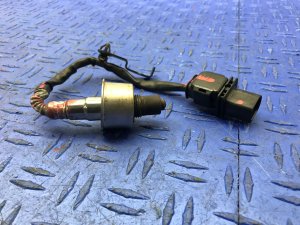
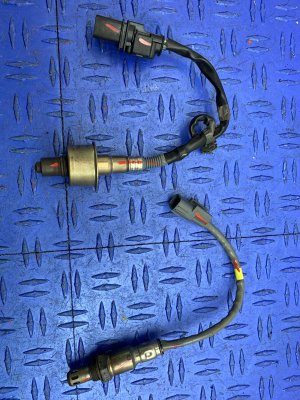
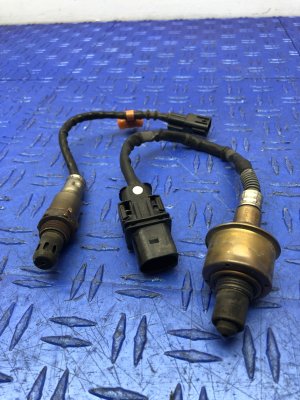
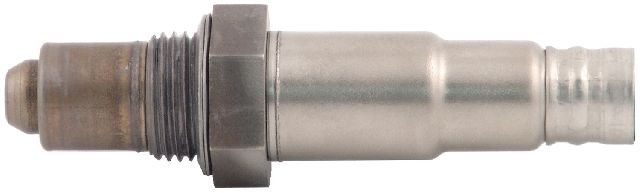
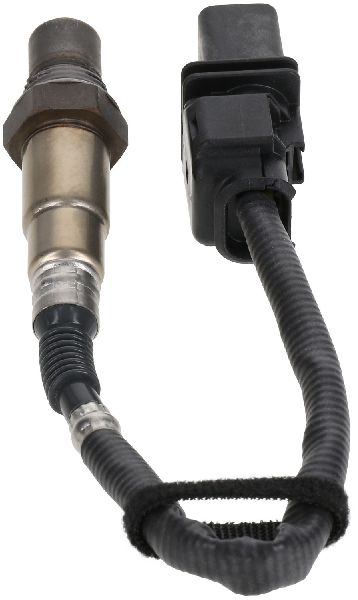
- Upstream Oxygen Sensor (Bank 1)
(OEM #39210-3L000)— This is the primary sensor for air-fuel ratio control on Bank 1 and is a common wear item. A faulty sensor is a high-probability cause for P0172.
Trusted brands: Bosch, NGK/NTK, Denso, Kia OE
OEM price range: $170-$290
Aftermarket price range: $80-$160 - Fuel Injector
(OEM #35310-3L000)— A leaking direct injector is a common cause of a rich condition on a single bank in GDI engines.
Trusted brands: Bosch, Kia OE
OEM price range: $150-$250
Aftermarket price range: $80-$150 - High-Pressure Fuel Pump (HPFP)
(OEM #35320-3L000)— Though less common than O2 sensors, a failing HPFP can cause over-pressurization and is a known issue in the wider Hyundai/Kia GDI engine family.
Trusted brands: Kia OE, Vitesco Technologies
OEM price range: $400-$700
Aftermarket price range: $250-$500
Related Codes That Often Appear With This One
- P0175 — This is the 'System Too Rich' code for Bank 2 🎬 Watch: Understanding causes and fixes for the P0175 code (driver's side). If both P0172 and P0175 are present, it points to a problem affecting the entire engine, such as the MAF sensor or fuel pressure regulator, rather than a component specific to one bank like an O2 sensor or injector.
- P0088 — This code means 'Fuel Rail/System Pressure - Too High 🎬 See how to diagnose and repair high fuel rail pressure'. It strongly suggests the cause of the rich condition is a failing high-pressure fuel pump or its internal regulator.
- P0301, P0303, P0305 — These are misfire codes for cylinders 1, 3, and 5, which are all on Bank 1. A severely leaking fuel injector can foul the spark plug in its cylinder, causing a misfire along with the rich condition.
- P016B — This code for 'Too Rich Off Idle' is sometimes seen with P0172 and points towards a fuel control issue, with owners often suspecting the HPFP or injectors.
Platform-Specific Known Issues
- 2018 Model Wiring Harness Chafing (Recall SC170): On 2018 Stingers, the front wiring harness can rub against a sharp edge on the left fender body panel, causing an electrical short. This can damage the circuit for the Bank 2 (driver's side) O2 sensor, but it is worth inspecting for any P0172 (Bank 1) diagnosis as well, as it points to potential wiring vulnerabilities.
Mechanic-Grade Diagnostic Values
- High-Pressure Fuel Rail Pressure (Idle) — expected: ~30-35 bar (~435-515 PSI). Failure: Pressure that spikes erratically to 2,500+ PSI when revved, or pressure that is significantly higher or lower than expected at idle.
- High-Pressure Fuel Rail Pressure (Wide-Open Throttle) — expected: Should climb smoothly to over 150 bar (~2,175 PSI). Failure: Pressure that lags, spikes erratically, or fails to reach target pressure under load.
- Low-Pressure Fuel Pump (In-Tank) — expected: ~50 PSI (Key On, Engine Off), holding steady or slightly increasing under load.. Failure: Pressure significantly below 50 PSI, or pressure that drops under load.
- Long-Term Fuel Trim (LTFT) for Bank 1 — expected: At or near 0% (+/- 5%). Failure: A strong negative value, typically exceeding -10% to -15%, indicates the ECM is consistently removing fuel to compensate for a rich condition.
Scan Tool Commands That Help
- Kia GDS (Global Diagnostic System) / KDS: ECU Upgrade — This function is used to apply software updates to the Engine Control Module. It is required for certain Technical Service Bulletins (TSBs), such as SC281 for the 2.0L Stinger's HPFP, and may be necessary after replacing certain components to ensure compatibility and proper function.
- Kia GDS (Global Diagnostic System) / KDS: Flight Record / Trigger Module — This function records vehicle data during a drive cycle. It is extremely useful for diagnosing intermittent issues that do not occur at idle or in the service bay, allowing a technician to capture sensor data at the exact moment the fault occurs.
- Kia GDS (Global Diagnostic System) / KDS: Component Actuation / Guided Troubleshooting — Allows a technician to manually activate specific components (like injectors or solenoids) to test their function and follow step-by-step diagnostic procedures provided by Kia for a specific trouble code.
Wiring & Ground Locations
- 91860-J5010 (Part Number) — This is the part number for the main 'Engine Ground Wiring Assembly'. Main engine grounds typically connect from the engine block or cylinder head to the vehicle's chassis/frame in the engine bay to ensure a solid ground path for the engine's electrical systems.. A poor engine ground can cause erratic sensor readings, including from the oxygen sensors and fuel system sensors. This can lead to incorrect data being sent to the ECM, potentially causing it to create a rich condition when none exists. Verifying the integrity of this ground strap is a crucial step in diagnosing electrical faults.
Real Owner Repair Stories
- YouTube video by Jonny Rodriguez (2018 Kia Stinger) — P0088 (Fuel Rail Pressure Too High), engine hesitation, power loss, engine shaking.
❌ Tried (didn't work) The diagnosis pointed away from electrical issues because the code took 30-40 seconds of revving to reappear, whereas an electrical fault would typically reappear instantly.
✅ What actually fixed it Replacing the High-Pressure Fuel Pump (HPFP). The technician noted the old pump's internal spring was more compressed than the new one's. Scan tool data confirmed the fix, with pressure holding steady at ~515 PSI at idle instead of spiking to 2,500-3,000 PSI when revved. - Reddit user in r/kia (2016 Kia Optima SXL (Similar GDI engine family)) — Persistent P0172 code for 18 months, constant Check Engine Light.
❌ Tried (didn't work) Multiple trips to the dealer., Replacing the catalytic converter., Replacing O2 sensors multiple times., A $550 'tune-up and fuel service'.
✅ What actually fixed it The original poster did not confirm the final fix, but another user with the same car and symptoms (including gas in the oil) stated the most likely causes are a leaking fuel injector or a failing HPFP, with leaking injectors being the '#1 culprit' for the car. This story is valuable for highlighting the common misdiagnosis path of replacing O2 sensors and cats first. - NHTSA ODI #11578804 — An owner reported that their vehicle experienced a misfire and shut down, triggering the P0172 code. The reported resolution was to replace the High Pressure Fuel Pump.
When the Usual Fixes Don't Work
- In several owner-documented cases (often on similar Kia/Hyundai GDI engines), replacing the Bank 1 O2 sensor—the most common initial fix—did not resolve the P0172 code. The code would often return within a few days or weeks. The ultimate resolution frequently required a more in-depth diagnosis of the high-pressure fuel system, culminating in the replacement of either a leaking fuel injector or the high-pressure fuel pump (HPFP) itself, especially when symptoms like fuel smell in the oil were present.
OEM Part Supersession History
35320-3L000→35320-3L100 or 35320-3L110— Unknown, likely minor internal revisions or manufacturing changes.
Heads up: An eBay seller notes that the original part number may interchange with the newer numbers depending on the vehicle's production date, implying that checking the VIN is critical when ordering a replacement.
Model Year Variations Within This Range
- 2022-2023: For the 2022 model year refresh, the 3.3L Twin-Turbo V6 received a new electronically-controlled variable exhaust system. This change resulted in a minor power increase from 365 hp to 368 hp. The core fuel system and engine components related to code P0172 remained the same.
Diagnostic Flowchart
Other Known Issues on This Vehicle
Issues unrelated to this code that are worth knowing about as an owner of this generation:
- Flickering Oil Pressure Light at Idle 🟠 Medium — Common issue, particularly on 2018-2021 models. The light appears at warm idle and disappears with RPM increase. It's usually a faulty oil pressure switch, not low pressure. (Ref: No specific recall, but a known service issue. The switch is labor-intensive to replace as it's under the intake manifold.)
- Electronic Wastegate Actuator (EWGA) Failure/Rattle 🟠 Medium — A rattling noise from the turbo area, especially on shutdown, or a loss of boost pressure can indicate a problem with the EWGA. Adjustment or replacement may be needed. (Ref: No recall, but a known issue. The actuator is often replaced with the turbocharger assembly.)
- Left Turbocharger Oil Feed Pipe Leak 🔴 High — Affects 2018-2023 models. The oil feed pipe and hose assembly can deteriorate and leak oil onto hot exhaust components, increasing fire risk. (Ref: Recall SC281 / NHTSA 23V-634.)
- Paint Chipping/Cracking 🟡 Low — Particularly notorious on the 'Sunset Yellow' color due to a supplier defect causing poor adhesion, but owners of other colors also report higher-than-average chipping, especially on the front fascia and hood. (Ref: Stop-sale was issued for yellow models, with Kia offering repaints or buybacks to some early customers.)
- Brake Judder and Vibration 🟠 Medium — Many owners of 3.3T models with Brembo brakes report premature vibration and pulsing during braking, often misdiagnosed as warped rotors. The issue is widely attributed to the material of the OEM brake pads.
- HECU (Brake Control Unit) Fire Risk 🔴 High — An internal electrical short in the Hydraulic Electronic Control Unit (HECU) can occur, potentially causing an engine compartment fire even when the car is off. (Ref: Recall for 2018-2021 models.)
Used vs. New Parts: Buying Guide for This Vehicle
When a used part is the smart pick: For this specific trouble code, sourcing used parts is generally not recommended due to the nature of the common failures. However, for unrelated repairs, structural or cosmetic parts are safe to source from a donor vehicle.
Donor-vehicle mileage cap: roughly under 30000 miles for the part to have meaningful remaining life.
What to inspect on the donor part:
- For any used electronic part (like a sensor or harness), inspect for corrosion, cut wires, or brittle plastic.
- If considering a used HPFP or injector (high risk), it should only be from a documented low-mileage vehicle that was not in a severe front-end collision.
OEM-only on this vehicle (don't cheap out):
- High-Pressure Fuel Pump (HPFP)
- Fuel Injectors
Aftermarket brands forum-validated for this vehicle:
- NTK (for Oxygen Sensors)
- Denso (for Oxygen Sensors)
- Bosch (for Oxygen Sensors and Fuel Injectors)
Brands owners have reported issues with on this vehicle:
- Unbranded, no-name sensors and fuel system components from online marketplaces are highly likely to fail prematurely or be out-of-spec from the factory.
Real Owner Stories
Aggregated from forums and TSBs cited above. Mileages and costs reflect what owners reported in those sources.
2018 Kia Stinger 3.3L Twin-Turbo V6
Symptoms: Owner reported a recurring P0172 code for fuel too rich that persisted for 18 months.
What fixed it: The diagnosis process for this vehicle family often involves checking for oil dilution or monitoring O2 sensor voltage fluctuations, though the specific resolution for this long-term issue often points toward the fuel system or sensors.
Source hint: Reddit r/kia thread titled 'p0172_code_fuel_too_rich_recurring_for_18_months/'
2018-2023 Kia Stinger 3.3L Twin-Turbo V6
Symptoms: No boost condition accompanied by potential engine codes.
What fixed it: While P0172 relates to fuel trim, issues in the turbo system such as the Electronic Wastegate Actuator (EWGA) or turbocharger assembly can affect engine performance and air-fuel ratios.
Source hint: stingerforum.org thread titled 'no-boost.3639/'
2018 Kia Stinger 3.3L Twin-Turbo V6
Symptoms: Misfire and engine shutdown followed by a check engine light.
What fixed it: According to NHTSA ODI #11578804, the resolution for these symptoms and the resulting P0172 code was to replace the High Pressure Fuel Pump.
2019 Kia Stinger 3.3L Twin-Turbo V6
Symptoms: Vehicle entered limp home mode at an intersection with multiple error codes including P0172, P0175, and P061B.
What fixed it: NHTSA ODI #11390539 notes that the owner was advised by the dealer that the issue was caused by a loose wire.
Related OBD-II Codes
Frequently Asked Questions
Could the 2018 Kia Stinger recall for the wiring harness cause my P0172 code?
I smell gasoline on my oil dipstick; is this related to the P0172 code on my 3.3L Stinger?
Is the P0172 code common on other vehicles with the same 3.3T engine?
Can a dirty air filter cause a P0172 on the Stinger 3.3L?
How do I know if my Stinger's High-Pressure Fuel Pump (HPFP) is causing the rich code?
Helpful Videos

Used OEM Parts in Stock
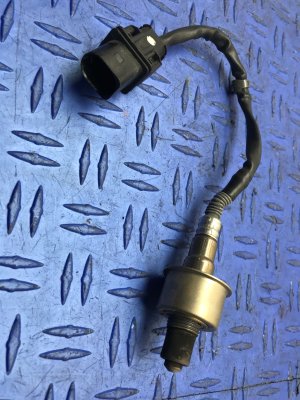
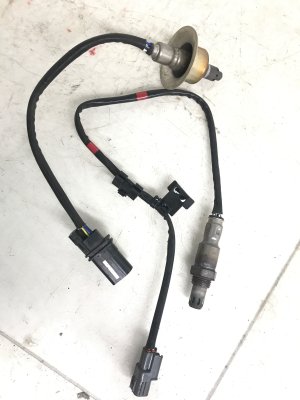
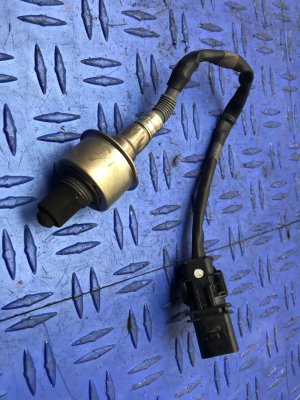
New Aftermarket Parts Available


The information in this article is provided for general reference and educational purposes only. Vehicle specifications, procedures, and part compatibility can vary by production date, trim level, and region. Always consult your vehicle's factory service manual and verify part numbers before purchasing or performing repairs. Safety-critical components such as airbags, seat belts, and braking systems should be installed by a qualified professional.
- Kia Stinger:
- 🎬 Helpful Videos
- 🛍️ Shop This Part
- What's Unique About the 2018-2023 Kia Stinger
- Symptoms You May Notice
- Most Likely Causes
- Rare But Worth Checking
- Diagnosis Steps
- Parts You'll Likely Need
- Related Codes That Often Appear With This One
- Platform-Specific Known Issues
- Mechanic-Grade Diagnostic Values
- Scan Tool Commands That Help
- Wiring & Ground Locations
- Real Owner Repair Stories
- When the Usual Fixes Don't Work
- OEM Part Supersession History
- Model Year Variations Within This Range
- Diagnostic Flowchart
- Other Known Issues on This Vehicle
- Used vs. New Parts: Buying Guide for This Vehicle
- Real Owner Stories
- 2018 Kia Stinger 3.3L Twin-Turbo V6
- 2018-2023 Kia Stinger 3.3L Twin-Turbo V6
- 2018 Kia Stinger 3.3L Twin-Turbo V6
- 2019 Kia Stinger 3.3L Twin-Turbo V6
- Related OBD-II Codes
- Frequently Asked Questions
- 🎟️ Get 5% Off